
Subscribe now for full access and no adverts
The French soldiers marching south through Lorraine pulled their grey-white coats tightly around them and wrapped their necks in scarves to ward off the frigid weather of north-eastern France in December 1674. They belonged to the command of Marshal Henri de La Tour d’Auvergne, Viscount of Turenne – the 63-year-old veteran of many wars and campaigns, who had first risen to prominence decades earlier during the Thirty Years War. The marshal now planned to launch a surprise attack on the imperial army fielded by the Holy Roman Empire in Upper Alsace. His own army had therefore set out on 5 December on a 150-mile trek in order to bear down on the much larger imperial host.
Field Marshal Alexander Hippolyte, Prince of Bournonville – the commander of the imperial troops – assumed that the French had suspended military operations for the coming winter and were many miles to the north. It must have seemed a sound assumption given that 17th-century armies rarely fought in the winter. But Turenne was a bold strategist and battlefield tactician who often undertook daring expeditions to outwit his foe.
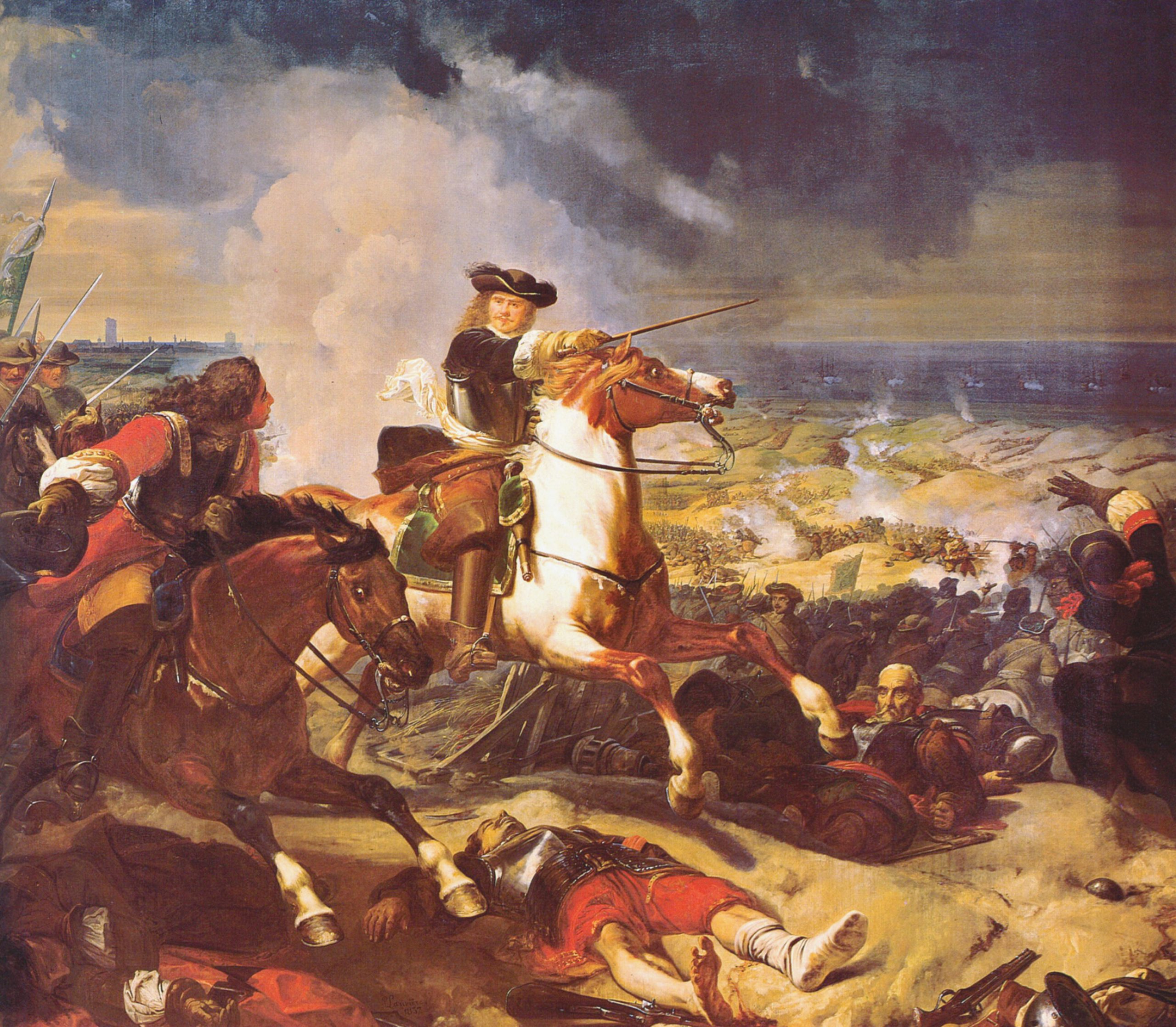
With just 30,000 troops under his command, Turenne had to come up with a way to outsmart the much larger imperial army – which, with the recent addition of 20,000 soldiers led by Frederick William, Elector of Brandenburg (widely famed as the ’Great Elector’ for his military and political achievements), had 57,000 troops. As early as April 1674, Turenne had been contemplating a strategic flank march that, if successful, would compel the imperial army to retreat eastwards to the right bank of the Rhine.
The allied commanders did not suspect that Turenne would attack them just four days after Christmas. But Turenne’s soldiers, like their commander, were determined to win a great battle in Alsace that winter. ‘Believe me, there must never be a fighting man at rest in France so long as there is a German on this side of the Rhine in France,’ Turenne told one of his closest confidants.
Exacting revenge
When Louis XIV married his cousin Maria Theresa of Spain in 1660, he claimed that her dowry was not paid. Louis saw this as an opportunity to go to war with Spain in order to annex the Spanish Netherlands and the eastern region of Franche-Comté – two areas adjacent to France that would serve as buffer zones to absorb enemy attacks in future wars. Louis asserted that these territories had ‘devolved’ to him as part of the marriage agreement, hence the one-year conflict in 1667-1668 was known as the War of Devolution.
Although both regions were technically part of the Habsburg Holy Roman Empire, they were ruled at the time by the Spanish Crown. In the War of Devolution, Louis relied on his two veteran marshals, Turenne and Louis II de Bourbon, Prince of Condé, to conduct military operations to seize the two territories. While Turenne led the French offensive against the Spanish Netherlands, the Prince of Condé invaded Franche-Comté. Yet before Turenne could complete his conquest of the Spanish Netherlands, a triple alliance of the Dutch Republic, England, and Sweden came to the aid of the Spanish, and forced Louis to the peace table.