Subscribe now for full access and no adverts
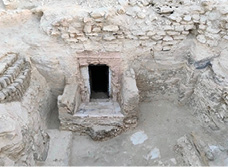
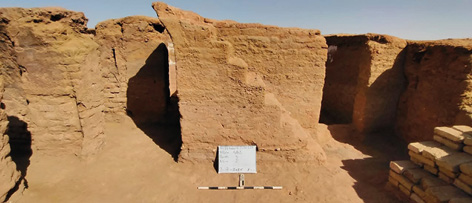
Three rock-cut tombs belonging to high officials of the early New Kingdom have been discovered by an Egyptian team in the Bubasteion necropolis at Saqqara. The tombs are inscribed with their biographies, and provide important evidence of Egypt’s foreign relations during this period. The first tomb belonged to a high-ranking administrative and military official, the ‘hereditary prince’ and ‘overseer of foreign lands’ Mentuhotep. His tomb contains hunting scenes and depictions of offering bearers, as well as an image of Mentuhotep seated with his mother Ahhotep. A burial shaft found in the tomb will be excavated next season. The owner of the second tomb was Pariemwia (also known as Samut), the ‘chief merchant of the House of Ptah’. Inscriptions in the tomb preserve the names of his family, including his wife Tuy, his mother Atbiu (a ‘singer of Amun’), and four children. The poorly preserved third tomb belongs to ‘overseer of the house’ Nehsy and his wife Neferu-Ptah, and contains an inscription mentioning the return of an Egyptian commander from Naharin – the Egyptian name for the Kingdom of Mitanni (in modern-day Syria).


Text: Sarah Griffiths / All images: Ministry of Tourism and Antiquities