Subscribe now for full access and no adverts
Radiocarbon dating of human remains excavated over a period of centuries at Brading Roman Villa on the Isle of Wight has revealed that these individuals died within a short period of time in the late Roman period, with evidence of cut marks and animal scavenging on some of the bones indicating that they may have been victims of a violent event.
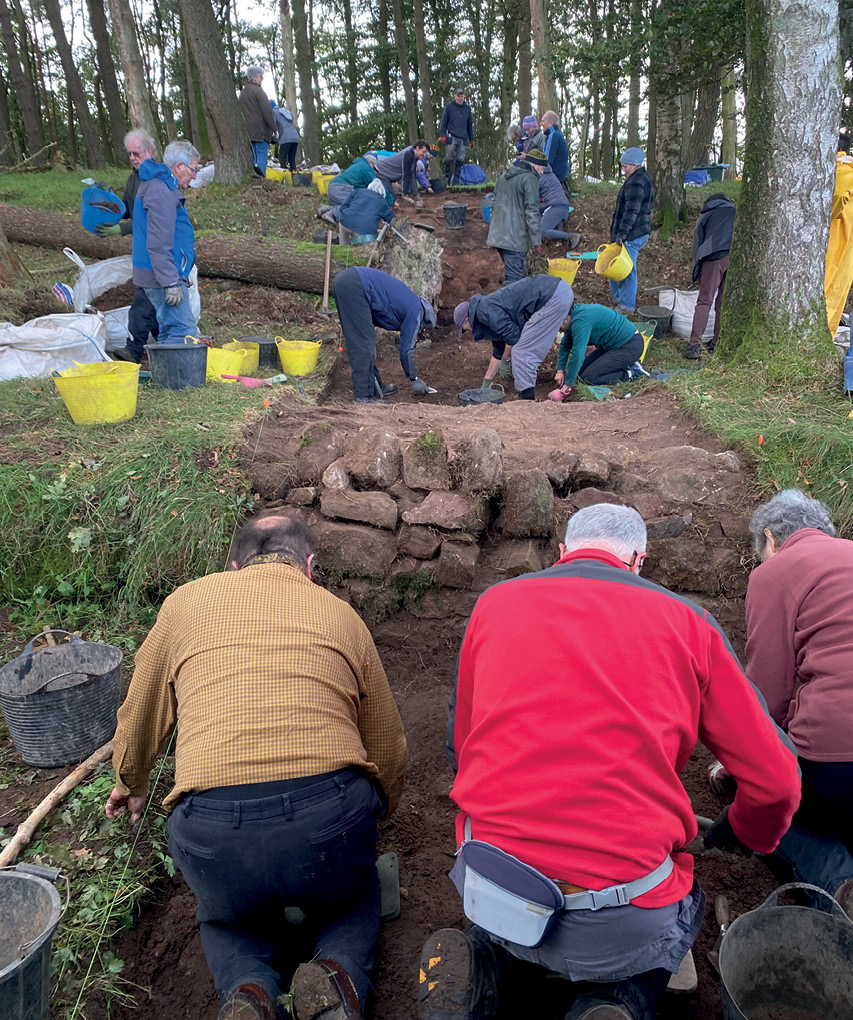
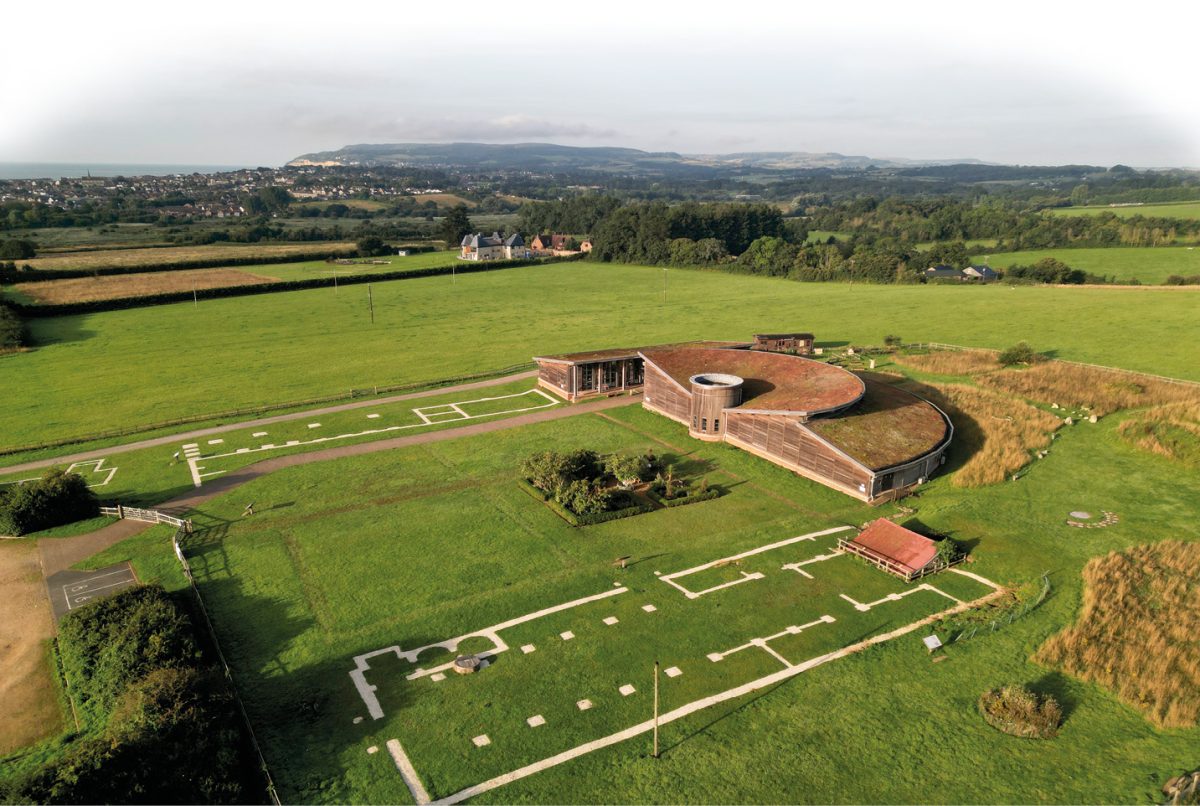
Brading Roman Villa, which is located at the east end of the island, was first excavated in 1880-1881, uncovering the complex’s west range and its famously outstanding mosaics. The villa was next excavated between 1995 and 1996, in the wake of flooding, while construction of a new cover building resulted in a further dig in 2003-2005. A final series of excavations exploring the villa’s development was conducted between 2008 and 2010 (see CA 280). Disarticulated human remains were found in all but the last phase of digging at the villa, scattered within its rooms and outside its buildings, while the partial skeleton of an adolescent was found with the remains of three dogs in a well beneath the northern range.
In the early 2000s, analysis by Dr Rebecca Redfern revealed the presence of at least four adults and two newborns, most of whom were found in the west range. One of the adult femurs showed signs of fine cuts and animal gnawing, while a cut mark was also found on one of the adolescent’s ribs. Unfortunately, as most of the bone was recovered during the 19th-century excavation, we have little information about its context.
To learn more about the circumstances of these individuals’ deaths, Professor Michael Fulford from the University of Reading and Professor Derek Hamilton, now at the University of St Andrews, carefully selected five bones that were likely to have come from different individuals for radiocarbon dating. One of the samples failed to provide a date, but the others all fell within the same window of c.AD 250-400, and statistical modelling suggests that their deaths probably occurred at the same time or over a short period.
To try to narrow down the date, Mike and Derek turned to other evidence from the villa. Previous research by Dr Philippa Walton had found that the site’s coin profile was unusual for the Isle of Wight, and was more in keeping with finds from Hampshire. The expected peak in coin values between AD 330 and 348, seen at almost all Romano-British rural sites, was also absent, suggesting that something unusual may have been happening at Brading around this time.
Might historical sources hold the key? There appears to have been some kind of crisis in Roman Britain in AD 342, which prompted a visit by the Emperor Constans in early 343 and the subsequent posting of reinforcements. Further upheaval followed the suicide of the usurper Magnentius in 353, after which Constantius II took revenge on his enemy’s supporters. Ammianus Marcellinus describes how many people (including the innocent) in Britain were tortured, imprisoned, and executed: could Brading have fallen victim to this purge? Its grand reception suite was abandoned for a brief period during the second half of the 4th century (giving primacy to the suite at the north end of the west range), though coins suggest a resurgence in AD 364-378. Could this gap, and the site’s remodelling, reflect disruption or dispossession?
M Fulford and D Hamilton (2026) ‘Brading Roman Villa: evidence of a Late Roman massacre?’, Britannia; available online (open access) at https://doi.org/10.1017/S0068113X26100816.
Image: Brading Roman Villa Trust