Subscribe now for full access and no adverts
Among great builders known from pharaonic Egypt, few can rival the king responsible for the construction of the last surviving ancient wonder of the world: the Great Pyramid of Giza. It is therefore perhaps surprising that Khufu (‘Cheops’ to the Greeks) is represented by so little surviving statuary. While various fragments of stone sculpture bear his name, the only complete work in existence that can be attributed to him based on an inscription (his Horus name, Medjedu) was discovered during excavations by the Egypt Exploration Society at Abydos in 1902.
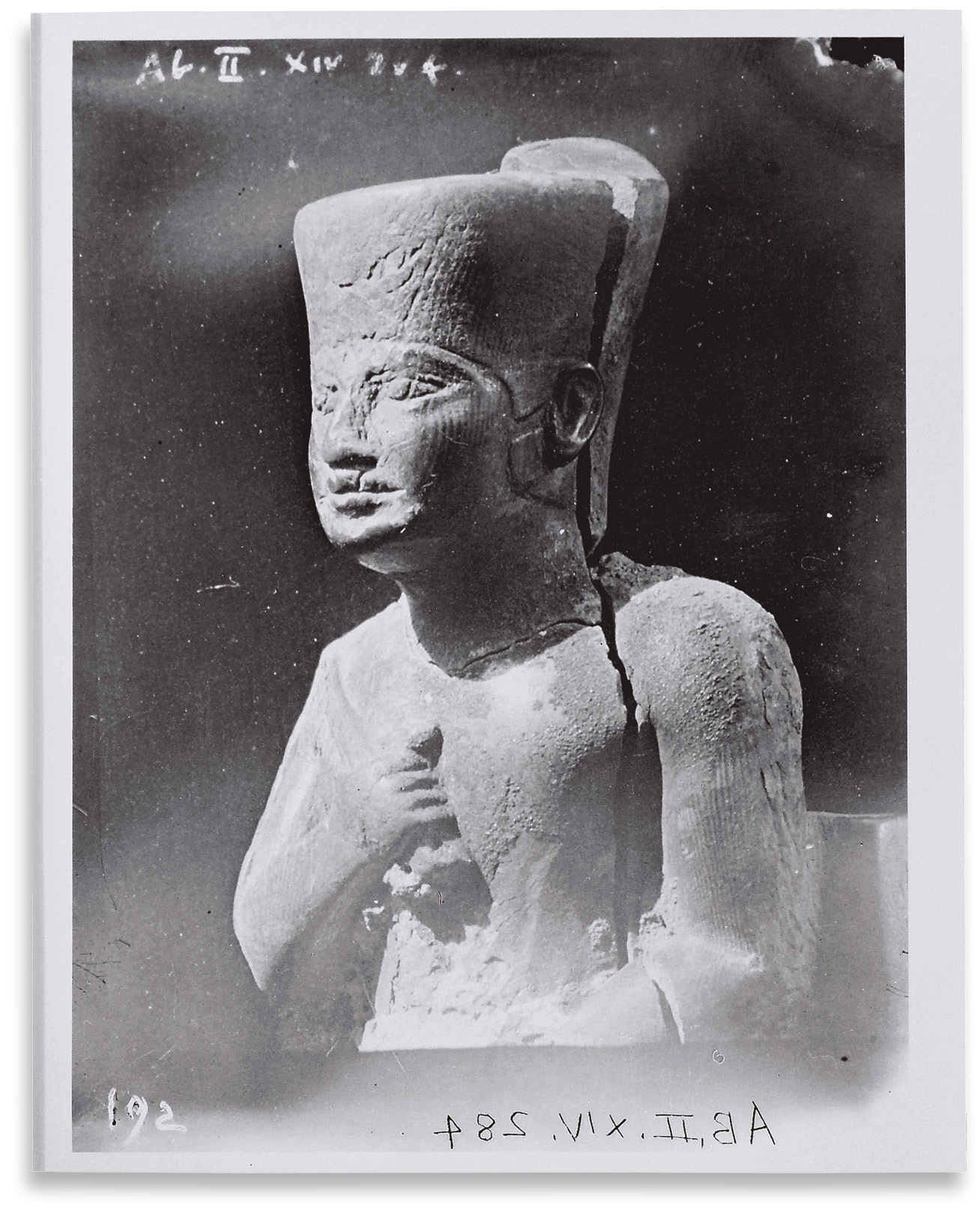
At only 7.5 centimetres tall, the statuette has more in common with an amulet than most temple statues – and it may have been intended to function as such. It is made from ivory and was found with its head broken off. The English archaeologist who led the excavations, W M Flinders Petrie, describes his workers sifting for the missing part for two weeks. The king is shown wearing the red crown of Lower Egypt, missing its tall back part. This truncated form of the headgear influenced the costume designers of Howard Hawks’ 1955 film Land of the Pharaohs, in which Khufu is played by Jack Hawkins.
Some debate exists about the original date of the piece. Although Herodotus and other Classical authors record accounts of him as a tyrant, Khufu was venerated millennia after his death. An active cult for the pharaoh at Abydos may explain why an object such as this was created. Even the distinctive way that the crown curls under and around the ear could be a detail emulating much older models – so the statuette could be contemporary with the Fourth Dynasty or a product of Twenty-Sixth Dynasty archaism.
This is one of the items featured in S Boonstra and C Price, Ancient Egypt in 50 EES Discoveries, which is to be published in autumn 2024.