Subscribe now for full access and no adverts
Dear Editor,
Following the publication of my article ‘Colourful costumes: clothing of goddesses, gods, kings, and queens’ in Ancient Egypt magazine (AE 148), where I presented my work recreating royal and divine attire from New Kingdom tomb paintings, I wanted to give readers an update on my research.
I attended the April 2025 annual meeting of the American Research Center in Egypt (ARCE) in San Francisco, and had a display of the research and future publication of a compilation of journal articles under the title Patterned Fabrics in Aegean and Egyptian Art. My display consisted of six tri-folds, 12 notebooks of relevant articles, and a copy of my 2004 book The Coptic Tapestry Albums. One notebook had a copy of the peer-reviewed paper ‘Woven patterns on the tunic of Tutankhamun’ from the Journal of the American Research Center in Egypt (JARCE); another contained my recent AE article.
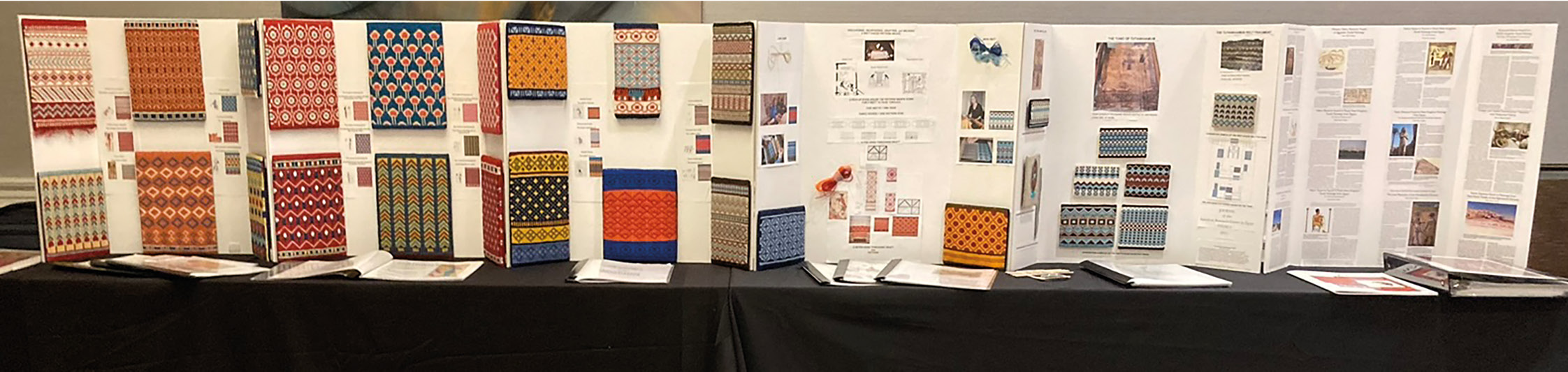
Since the 15 articles that will be published were only available to members of the Complex Weavers (CW) organisation, the ARCE meeting was an opportunity to introduce the research to the Egyptology world, and to show them the scope of the research and publications. I met many friends from different ARCE chapters and organisations, and was especially pleased to meet many young, eager students of Egyptology. Some were working in the field and had been finding textiles, tools, flax, and linen. A few were even learning to weave.
Over 100 samples were woven for CW Journal articles, some of which had been exhibited at the Eugene Textile Center. I discussed exhibiting the samples within an Egyptology setting, and also donating the samples to a museum or academic collection for a continuation of the research project by other scholars.
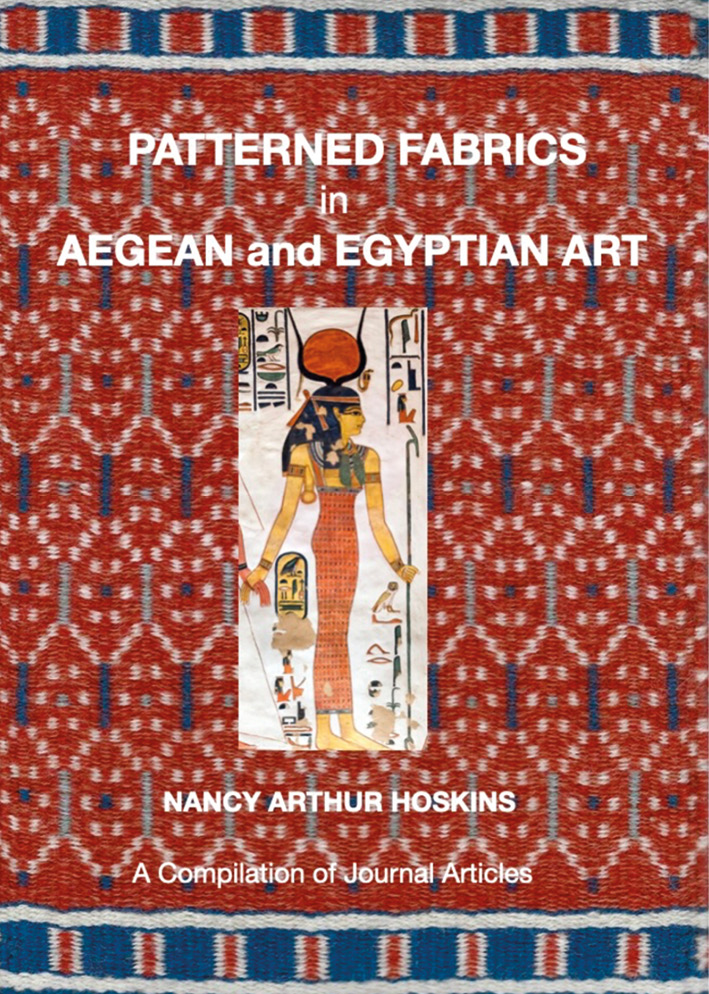
My thanks go to Dr Emily Teeter, former president of ARCE and editor of JARCE, who edited several of my articles, Dr Mie Ishii, Textile Conservator at the Grand Egyptian Museum, who has provided me with up-to-date information on Tutankhamun’s tunic, and Salima Ikram (Distinguished University Professor at the American University in Cairo), a personal friend, who has been very supportive of the research.
The 2026 April Annual ARCE meeting will be in Denver, and the Handweavers Guild of America’s Convergence will be in Denver in July 2026. The plan is to have the book published early in 2026 and available at both conferences.
Nancy Arthur Hoskins
Dear Editor,
My dad, W B Harer Jr, is a regular contributor to AE magazine and owns a replica statue of the goddess Taweret that has quite a history, which I thought readers might like to hear.
The Taweret statue is one of many sculpture reproductions originally created for the 1963 movie Cleopatra, starring Elizabeth Taylor. Made of fibreglass and painted in shiny gold, the replica is nearly identical to the statue of her in the Egyptian Museum in Cairo, but with two distinct differences: the position of the legs and feet, and the bizarre addition of a unicorn’s horn on her head. She can be spotted three hours and 45 minutes into the movie, standing in the sand at the abandoned camp of Mark Antony’s soldiers.
After filming, the Taweret statue had a second life in an MGM prop warehouse, where TV and movie studios would select items as backdrops for their various shows. Taweret appeared in at least two episodes of Lost In Space. Experiencing financial difficulties, MGM sold the contents of seven sound-stages for $1.5 million to auctioneer David Weisz. Hundreds of thousands of items were auctioned by him in 1970. It is purported that Weisz recouped eight times what he paid from eager nostalgia enthusiasts, including film star Debbie Reynolds, who spent much of her life amassing one of the largest collections of Hollywood memorabilia.
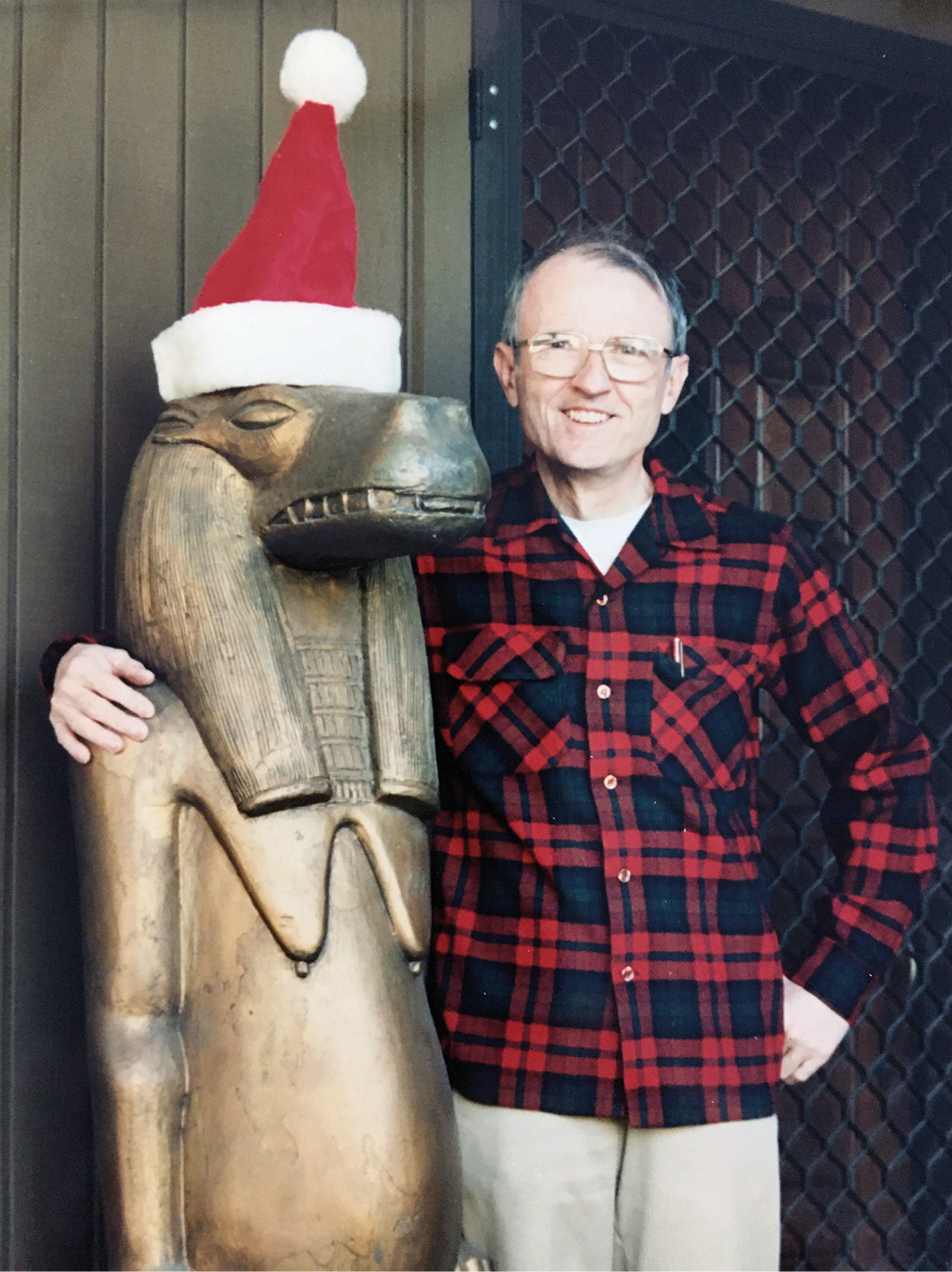
Taweret was up for sale at a Sotheby’s auction in Los Angeles around 1976. Mom headed off to the auction with instructions from Dad to purchase Taweret. She was the highest bidder at just over $300. As the ancient Egyptian Goddess of Maternity, Taweret served in the office of OB-GYN Medical Group of San Bernardino where Dad worked for ten years, during which time there were no maternal mortalities. After the group dissolved in 1985 and Dad stopped obstetrics, she came to guard the family house, standing outside the front door. Each Christmas, she is adorned with a red-and-white Santa hat, and has appeared in more than one annual Christmas photo.
In 1994, a contingent of ninja-inspired high-school students scaled the fence of our complex and kidnapped her for a homecoming float. This can’t have been easy, as she is five-foot-ten and weighs 80 pounds. A friend spotted Taweret on the pickup truck float in the parade and contacted Mom, who called the high-school principal. The kids that brought Taweret back (a bit worse for wear from her travels) claimed not to be the individuals who had taken her in the first place. Refinishing Taweret to her former glory became a project for Dad. He gave her a good scrub and tediously sanded her. He brushed on a white undercoat primer and sprayed her with gold metallic paint.

She remains a faithful guardian and protector. She guarded my parent’s condominium in Seattle from 2006 through 2019, until she moved residence to my brother’s front entryway, where she greets everyone who comes in with her big toothy grin.
Cynthia Harer Gibbs
Email the Editor peter@ancientegyptmagazine.com with your comments.