
Subscribe now for full access and no adverts
The Sea Vixen originated with de Havilland’s DH 110 design of 1947, developed to meet RAF and Fleet Air Arm requirements for a jet-powered all-weather and night fighter. The RAF eventually adopted the simpler Gloster Javelin, but the DH 110 formed the basis for the development of the Sea Vixen, which finally entered service in 1959.
The type retained the twin-boom tail layout of de Havilland’s earlier Vampire and Venom fighters but was a far more powerful aircraft, with a top speed of 690mph (1,110kph; Mach 0.91). In keeping with the accepted wisdom of the period, a two-man crew was regarded as essential for the carrier-borne all-weather/night-fighter role, but the Vixen’s prolonged development meant that much of its layout was obsolescent by the time that it reached front-line squadrons.
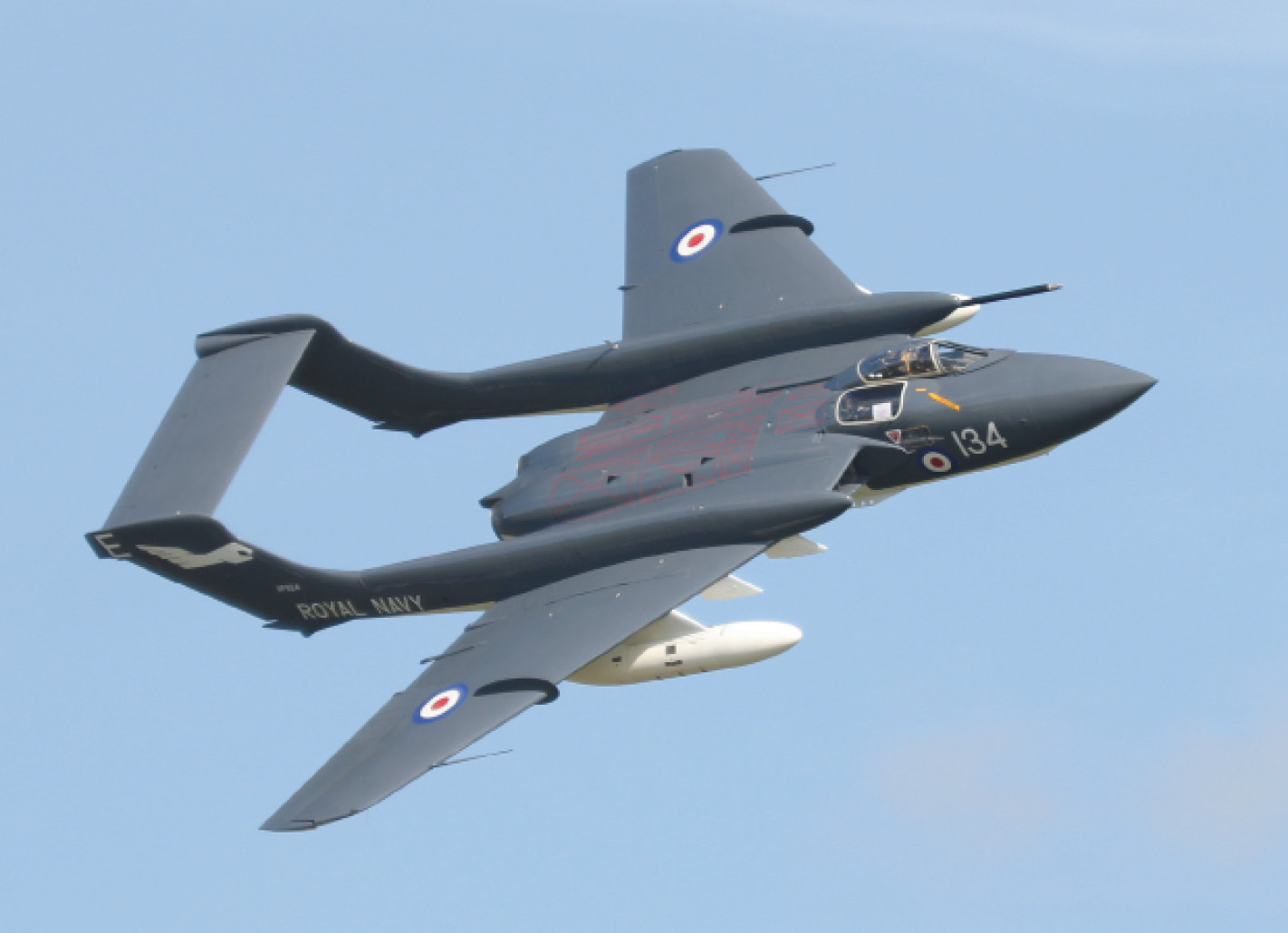
The aircraft’s Air Intercept 18 (AI 18) radar had a reasonable performance by the standards of the time, but the displays on its primitive screens could only be read easily in darkness. This requirement was met by offsetting the cockpit to the left, allowing the observer’s (radar operator/navigator’s) seat to be buried within the forward fuselage, a position which soon became known as ‘the coal hole’. The only access was through a flush-fitting top hatch – on the first Sea Vixens, designated FAW 1 (Fighter All-Weather 1), it had only a tiny Perspex panel, and even this was fitted with a blackout blind.
In an emergency, the hatch had to be jettisoned before the observer could eject, and this delay caused several fatalities. In the later FAW 2 version, the hatch had a much larger frangible Perspex panel so that the observer could eject straight through it. FAW 2s were also fitted with the much-improved Martin-Baker Mk 6 ejection seats, with an underwater ejection capability.
Worsening problems
In common with many fighters of the era, the Sea Vixen suffered from a mistaken belief that air-to-air missiles had made guns obsolete. The DH 110 was to have been armed with four 30mm Aden cannon, but these were replaced with four first-generation Firestreak air-to-air missiles when the Sea Vixen’s design was finalised.
Unfortunately, missile technology was far less advanced than its enthusiasts believed. The Firestreak had a maximum range of only four miles (6.5km), and relied on the aircraft’s radar to set it on course to a target until the missile’s relatively primitive infrared homing mechanism could take over. This system could have worked well enough against its primary targets, such as Soviet Tu-95 ‘Bear’ turbo-prop maritime reconnaissance/bombers, but would probably have struggled against agile fighter opposition. The FAW 2 carried the far-more-capable Red Top air-to-air missile.
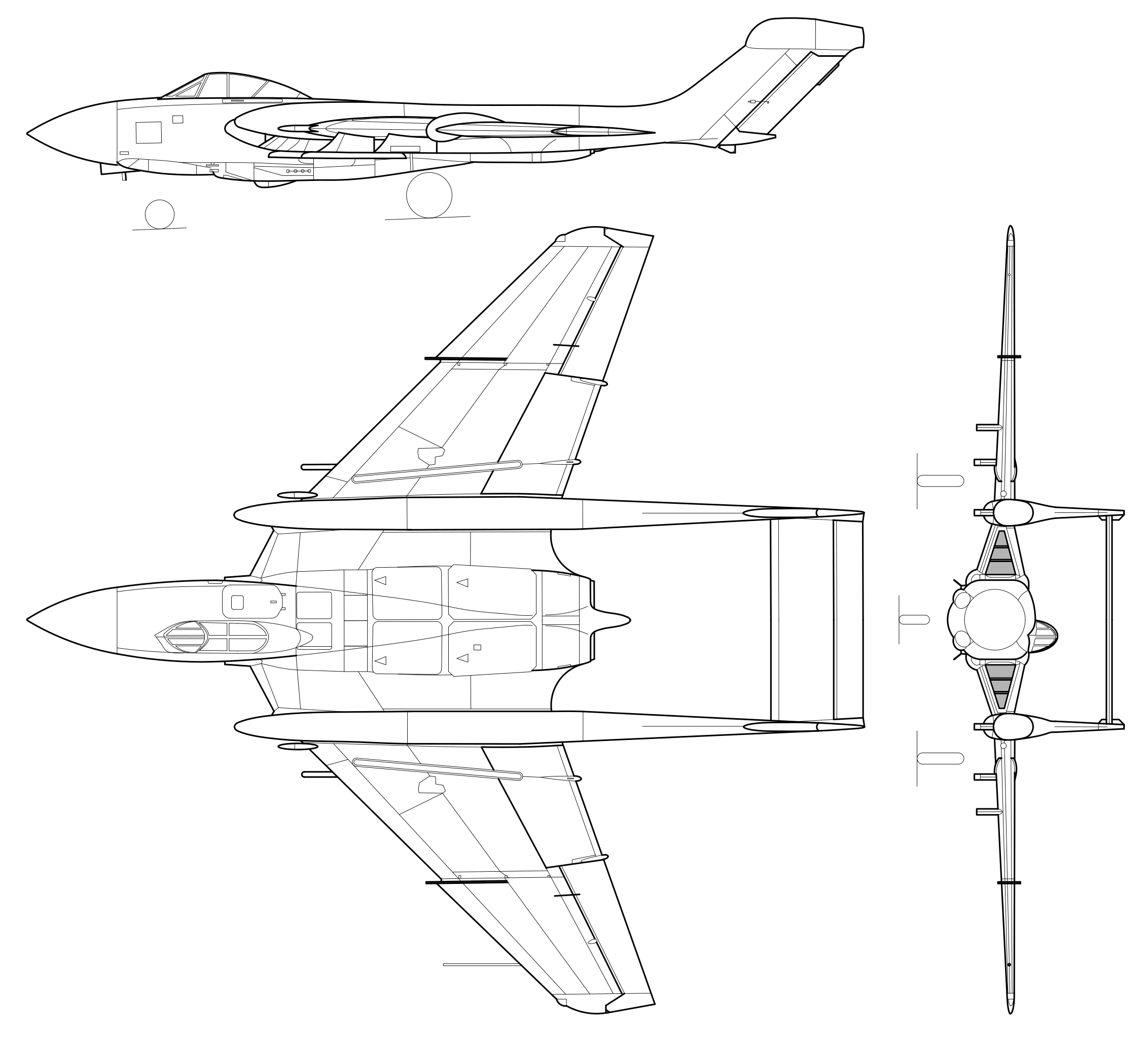
Strengths: good radar performance, top speed of 690mph (1,110kph)
Weaknesses: dangerous ejection procedure, obsolescent layout
The type’s problems were worsened as it was saddled with roles for which it had never been designed, including ground attack. It was even cleared for use as an ‘emergency’ tactical nuclear bomber carrying a single Red Beard 15/20 kiloton bomb.
Of the 145 Sea Vixens completed, 55 were lost in accidents, together with two prototype DH 110s. Thirty of these were fatal incidents, 21 of which involved the deaths of both pilot and observer. The type was finally withdrawn from service in 1972.
Image: Wikimedia Commons