Subscribe now for full access and no adverts
The word ‘samurai’ conjures dramatic images of Japanese warriors clad in elaborate armour, wielding lethally swift swords and bound by strict codes of honour. A new exhibition running at the British Museum moves beyond martial stereotypes, however, drawing together around 280 objects to tell a more nuanced story that also highlights artistic endeavours, the role of women, and the enduring cultural legacy of these famous figures.
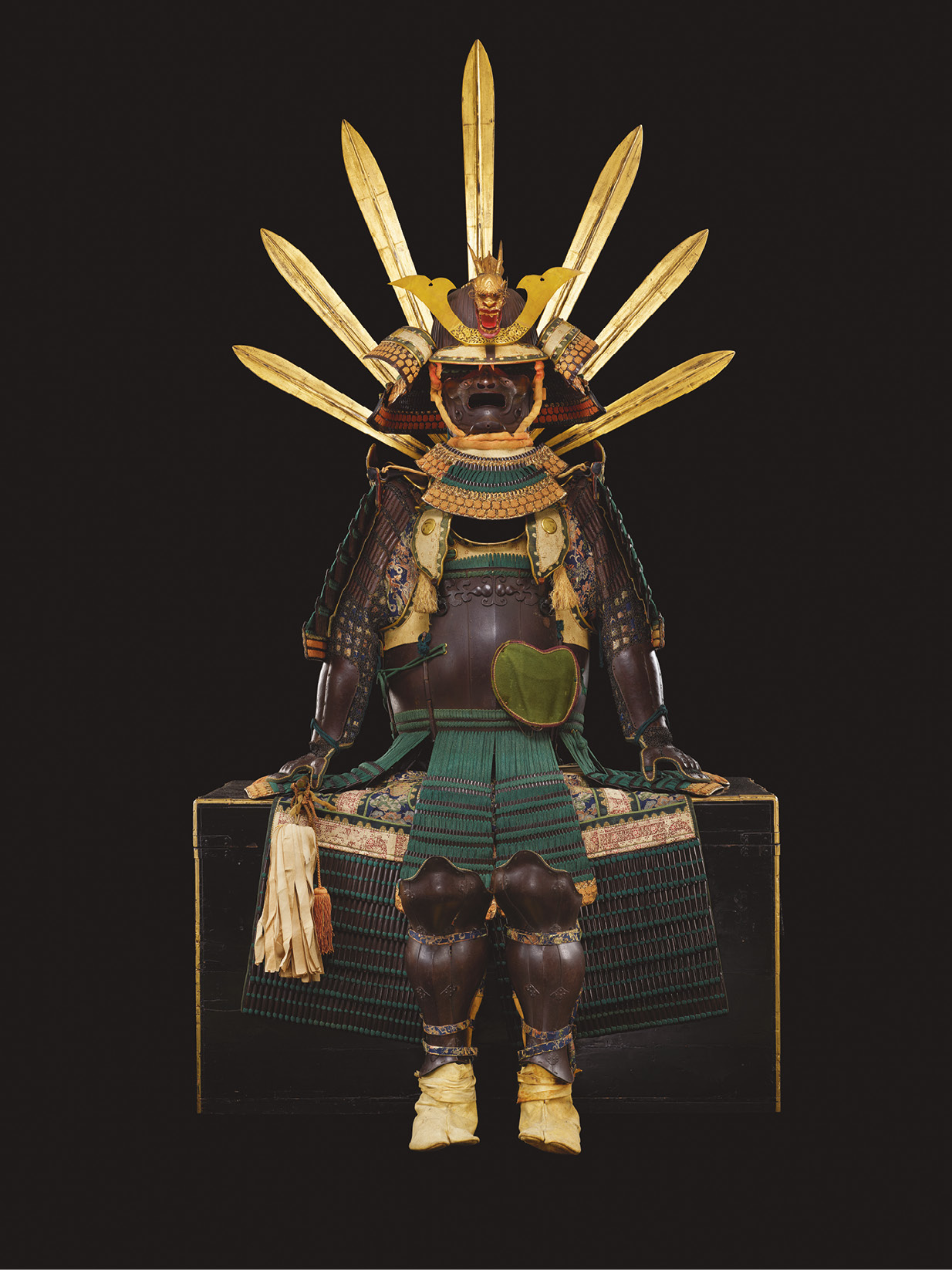
That is not to say that visitors hoping to feast their eyes on weapons and war-gear will be disappointed – as soon as you enter the atmospherically lit gallery you are met by a magnificent ensemble, its helmet and ‘iris-leaf’ standard glinting with gold, while other finely worked examples can be found throughout the exhibition. Their varied forms reflect how designs evolved in response to the changing needs of warriors, the development of new combat techniques, and, from the mid-16th century, the introduction of firearms to Japan by Portuguese traders.
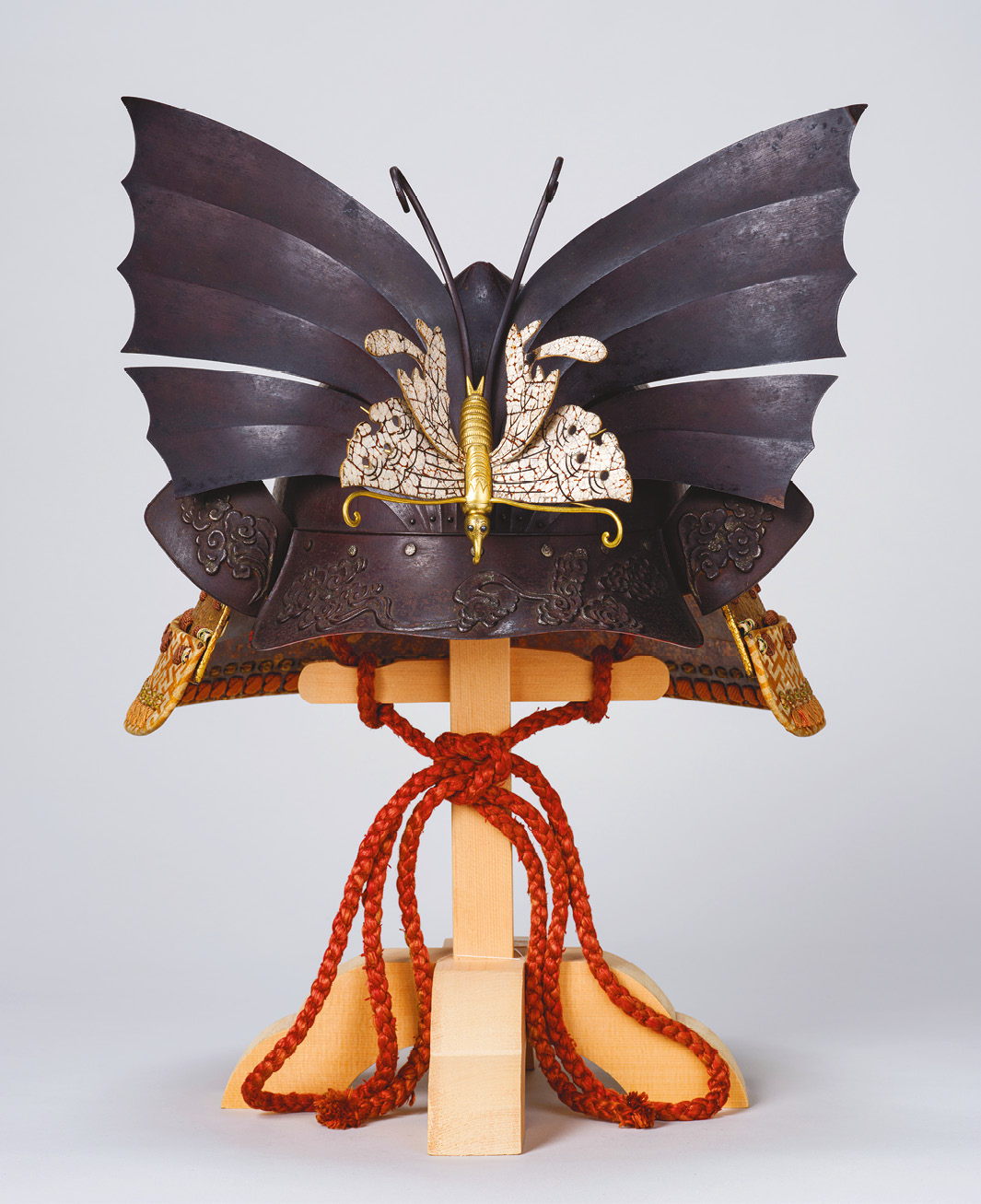
Among these impressive armaments, some are surprisingly playful in their inventiveness – chief among them a helmet shaped like the top of an aubergine, and another whose ‘horns’ prove, on closer inspection, to be curved edamame bean pods. Elsewhere, a sweetly miniaturised suit of armour designed for the son of a high-ranking samurai family reminds us that, having honed their skills over centuries of conflict between rival clans, during the ‘long peace’ of the Tokugawa shogunate (1603-1868) samurai settled into a new role as a hereditary class of bureaucrats.
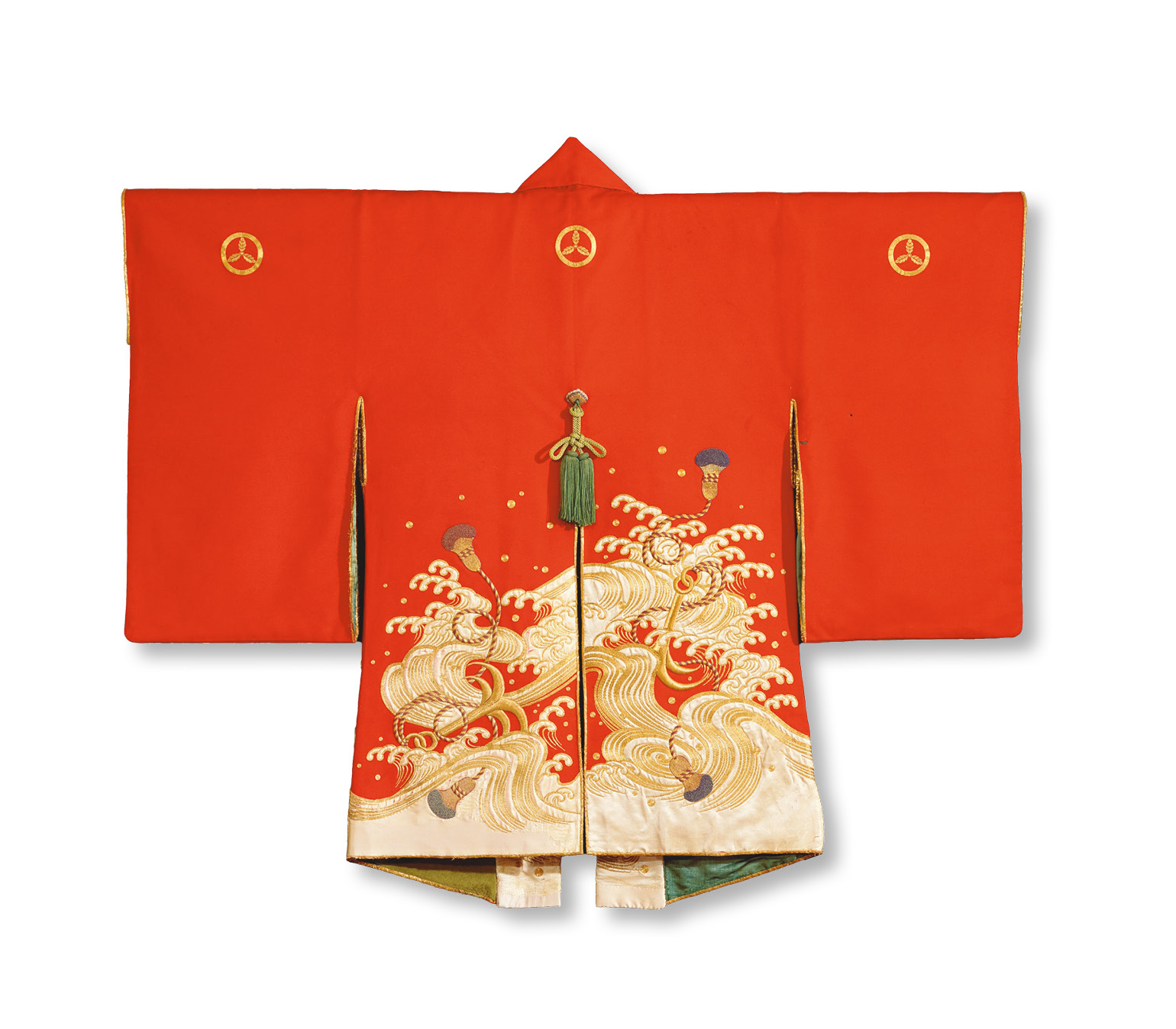
Women made up 50% of this new group, and their less-frequently told stories speak through displays of clothing and personal possessions, as well as images proving that they, too, were more than capable of wielding weapons when required. One of the most striking sights in this section is a vibrantly red hood and jacket that were worn by a female firefighter based at Edo Castle in what today is Tokyo. In this largely timber city, we learn, fires were so common that they were nicknamed ‘flowers of Edo’: a reminder of the dangers that men and women alike had to guard against even in times of peace and prosperity.
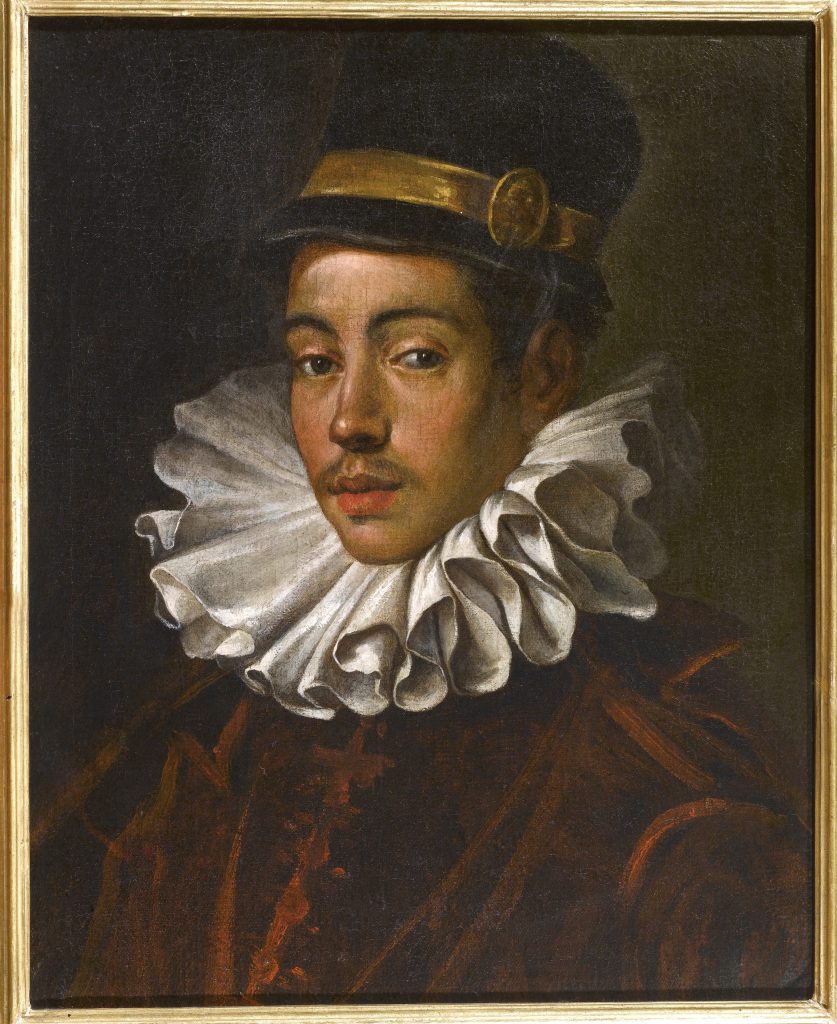
On a nearby wall, a surprisingly youthful face gazes calmly across the gallery: an image of Ito¯ Mancio, a young samurai who was 13 years old when he led Japan’s first diplomatic mission to Europe in 1582. The embassy’s ultimate destination was the Vatican, but Ito¯ paused to have his portrait painted while passing through Venice – he is shown dressed in European style, with a frothy ruff framing his boyish features. In this area, we also find two suits of armour that represent other political initiatives some 300 years apart. They were given to British royalty (James VI and I, and Queen Victoria’s son Prince Alfred), but these were not just prestigious presents. They were intended as potent reminders of Japan’s military power, too – a warning for ambitious Western nations who were beginning to jostle for influence in the Pacific region – and for modern viewers they show how samurai symbolism endured long after such armour ceased to be commonly worn into battle.
Another rich theme within the exhibition is the contrast between the brutal reality of warrior life and the scholarly pursuits of peacetime: samurai were expected to be educated and artistically accomplished as well as skilled in combat. Diverse displays showcase ornate folding screens and delicate paintings of cherry blossoms and dozing cats, but we also find erotic shunga prints, and scrolls variously decorated with blood-spurtingly realistic battlefields and more whimsical scenes including a charming late 16th-century imagining of a monkey wedding. Just as impressive as the wealth of different objects on display – which are drawn from the British Museum’s own collections, together with items from 29 national and international lenders – is the attention to detail that has gone into the exhibition’s design. The long, rectangular space of the Sainsbury Gallery has been completely transformed through the effective use of atmospheric lighting, historically inspired soundscapes, and scenery evoking traditional architecture, as well as a dramatic battle sequence played out in silhouette on one of the walls.
Despite their privileged position, however, samurai could not, in the end, stand against the modernising tide of the Meiji Restoration, and in the late 19th century they were abolished as a class. The final part of the exhibition traces how their image was repeatedly reimagined as samurai faded from living memory, from romantic idealism to nationalist nostalgia to wartime propaganda, as well as more recent depictions in anime, computer games, and film. In this last category, the samurai silhouette famously inspired the look of Darth Vader in Star Wars – a character who appears at the end of the exhibition in a witty complement to the golden suit seen at its entrance, bookending the displays with two towering figures in iconic armour.
Further information: Samurai runs at the British Museum until 4 May 2026; see www.britishmuseum.org/samurai for more details.