Subscribe now for full access and no adverts
REVIEW BY MICHAEL TUNNICLIFFE
This important work claims to be the first authoritative edition to combine both transliteration and translation of the Amarna Letters since their publication by Norwegian linguist J A Knudtzon in 1915. The 1992 volume by W L Moran (an American Assyriologist) included a translation only and no transliteration. The current work is linked to a ‘digital first’ project to make these texts available more widely.
The letters come from the period 1358-1325 BC and were discovered in the 1880s at Amarna, the site of Akhenaten’s capital Akhetaten. The brief introduction to the book gives an account of the murky discovery of the tablets and their acquisition by various museums and private collectors, and a review of the editions and translations since then. The text of the letters is in Akkadian cuneiform, but with dialect differences representing both Canaanite and Hurrian speech. The editors conclude that they are written using a certain amount of scribal jargon, rather than representing actual speech patterns.
Knudtzon organised the correspondence with the 44 longer letters from the Great Powers (Babylon, Assyria, Hatti, Mitanni) coming first. These were followed by the shorter ones from the vassal rulers of the Canaanite city-states, organised from north to south. These fractious petty rulers fought among themselves and always sought to justify their actions using fawning language before the pharaoh. Many are hard-pressed by dissident groups including the Habiru, and by the growing power of the Hittites. They appeal to the pharaoh to send soldiers, and warn that otherwise the lands may slip out of Egyptian control. So these letters open an important window on foreign relations in the Amarna Age.
This new volume does not include the letters from Great Powers; it focuses only on the Syro-Levantine correspondence. Once again, they are ordered according to place from north to south. However, the arrangement is slightly different from that of Knudtzon, although his standard identification number is still used for each of the letters. The text is set out in parallel columns, with transliteration alongside the new translation. Explanatory philological footnotes deal with issues of translation, especially where the tablets are incomplete and reconstruction is necessary to make sense of them. Space precludes any commentary on the texts themselves. So this is a specialist volume for those who want access not just to a translation but to a critical edition of the texts in transliteration. For the more general reader, the older volume by Moran will probably be more accessible – and cheaper!
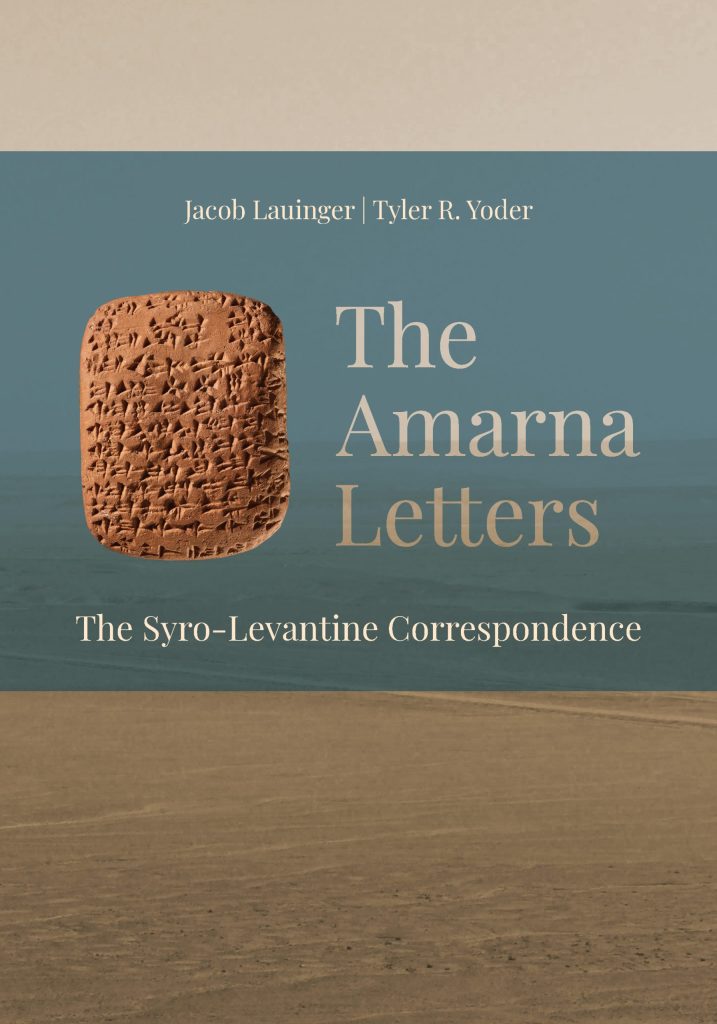
The Amarna Letters: The Syro-Levantine Correspondence
by Jacob Lauinger and Tyler R Yoder
Lockwood Press, 2025
ISBN 978-195-745-483-2
Hardback, £101.50