Subscribe now for full access and no adverts
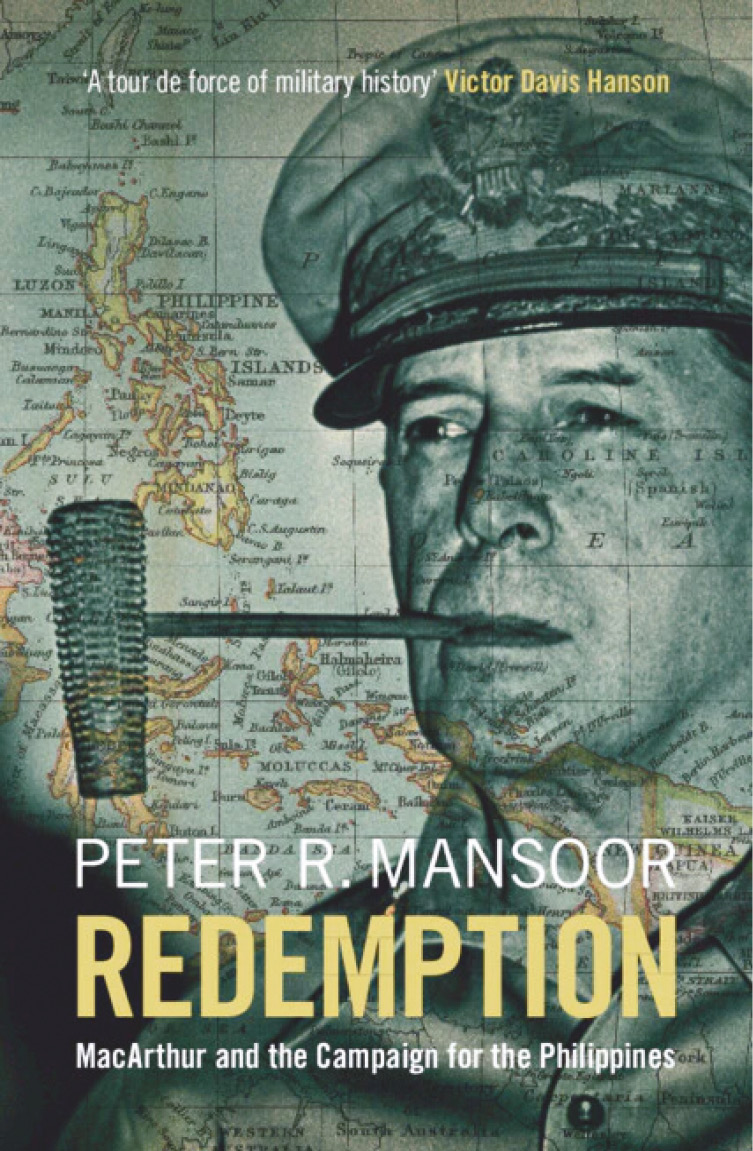
REVIEW BY GRAHAM GOODLAD
General Douglas MacArthur is arguably the most controversial military leader in US history. His command career was bookended by two divisive episodes. As Army Chief of Staff in 1932, he earned notoriety for forcibly removing the ‘Bonus Army’ of unemployed servicemen protestors from Washington DC. Almost two decades later, he was sacked by President Truman, following a public falling out over his call to extend the Korean War to China. It was with the Philippines, however – a US territory from 1898 to 1946 – that MacArthur’s career was inextricably entwined. He served there as a young officer before World War I, and returned to head the Philippines armed forces and to superintend the defence of the islands in 1935.
As Peter Mansoor notes in the preface to Redemption, biographies of MacArthur are numerous, yet there are relatively few complete histories of his 1944-1945 Philippines campaign. In writing about the Pacific conflict, it has been overshadowed by, for example, multiple studies of the Battles of Iwo Jima and Okinawa. True, there are several books about individual actions in the Philippines, such as the sea battle at Leyte Gulf – the largest naval engagement in history – and the intense, Stalingrad-style struggle for control of Manila. But what Peter Mansoor has now given us is an up-to-date, single-volume narrative of the whole campaign.
Mansoor, a retired US Army colonel, now professor at Ohio State University, writes fluently and engagingly. The breadth and depth of his research is demonstrated in the book’s footnotes and its wide-ranging guide to further reading. Japan’s occupation of the Philippines in the first half of 1942, which is generally better known than the later reconquest, is covered in the first chapter. The retaking of New Guinea, which formed a prelude to the Philippines campaign, is the subject of Chapter 2. The greater part of Redemption is concerned with the intense period from the US landings at Leyte in October 1944 to the end of hostilities ten months later – the operation that cancelled out the capitulation of three years before.
‘I have returned’
The author is fair in his explanation of why US resistance to the Japanese collapsed so dramatically. Washington had long failed to provide adequate resources, and the indigenous defence forces never really lived up to expectations. But the defeat was also due to MacArthur’s errors, particularly his insistence on mounting an unsustainable forward defence. This meant that when US troops were eventually obliged to retreat to the Bataan peninsula, they had to abandon many of their supplies. MacArthur also failed to mobilise his aircraft in time to save them from destruction by Japanese bombers, which launched a lightning raid on the US base at Clark Field. Seriously misjudging the invading army’s capability, he ended up with his forces bottled up on Bataan and the island fortress of Corregidor. After MacArthur and his staff had been evacuated to Australia on President Roosevelt’s orders, dwindling rations finally forced the beleaguered garrison to surrender.
Mansoor acknowledges MacArthur’s missteps that contributed to the disaster. He notes his failings, notably his egotism, deviousness, and love of publicity, alongside his positive points – his courage, willingness to embrace innovation, and strategic vision. MacArthur’s contradictions are laid bare, his enduring loyalty to the small team who served under him on Bataan jostling with his self-centred refusal to share the limelight. Mansoor quotes Australian Field Marshal Thomas Blamey, who said of MacArthur that ‘the best and the worst things you hear about him are both true.’
Ultimately, the author seeks to rehabilitate his subject as a great commander, after the appearance of critical revisionist studies such as James Ellman’s 2023 MacArthur Reconsidered. Mansoor chronicles in detail MacArthur’s preparations for the recovery of the Philippines – his use of intelligence, harnessing of air power, and development of amphibious warfare techniques.
The best and the worst things you hear about him are both true.
There was a fundamental strategic dilemma in 1944-1945 on how best to fight the Pacific War. MacArthur’s preference for an invasion of the Philippines brought him into conflict with those who regarded Formosa (modern Taiwan) as a better stepping stone for an assault on the Japanese homeland. MacArthur saw the retaking of the Philippines as the only secure way to cut off the flow of resources, particularly oil, from the Dutch East Indies to Japan. He argued that focusing on Formosa would leave US forces vulnerable to attack from undefeated Japanese troops in the rear. There was also a moral imperative to liberate an American territory that had been subjected to a brutal occupation – and, unlike on Formosa, the liberators could confidently expect support from a cooperative civilian population.
Mansoor makes a persuasive case for MacArthur without falling into the trap of hero worship. By launching the Philippines campaign, while other US forces hopped across the central Pacific directly towards Japan, he forced the enemy to spread their scarce resources ever more thinly across a vast area of ocean. This is a broadly positive judgement with which not all historians will agree. The suspicion remains that it was a personal crusade for MacArthur, driven by a need to restore his reputation after being ingloriously obliged to leave the islands two years earlier. At the time, the Chief of Naval Operations, Admiral Ernest King, argued for bypassing the Philippines entirely.
The cost of Victory
The human cost was higher than in any other Pacific operation. The month-long battle for Manila alone left more than 1,000 US soldiers, 16,000 Japanese, and a staggering 100,000 Filipino civilians dead. The city was in ruins, without basic facilities for the traumatised survivors. Admittedly, the outcome was due as much to the Japanese decision to inflict wanton destruction as to the effects of American artillery and armour. But, in a wry aside, Mansoor reminds us that his subject uniquely underestimated the scale of the task ahead: ‘By this time, it was clear to commanders not named MacArthur that the Japanese were going to defend the heart of the city…’.
Some material will be new to many readers. The guerrilla campaign waged by Filipinos has been treated in a specialist monograph, Awaiting MacArthur’s Return, written by one of Mansoor’s graduate students, James Villanueva. Mansoor has incorporated the book’s key findings into his own work, bringing to centre stage the part played by these fighters in paving the way for the US landings. The guerrillas remained at large in the hinterland, where the Japanese never gained full control, aided by a small number of Americans who stayed at liberty after most of their compatriots were taken prisoner. They ran terrible risks, with several of their leaders mercilessly executed by the occupying army. Lacking training and equipment, they compensated with their knowledge of the terrain and commitment to freeing their homeland.
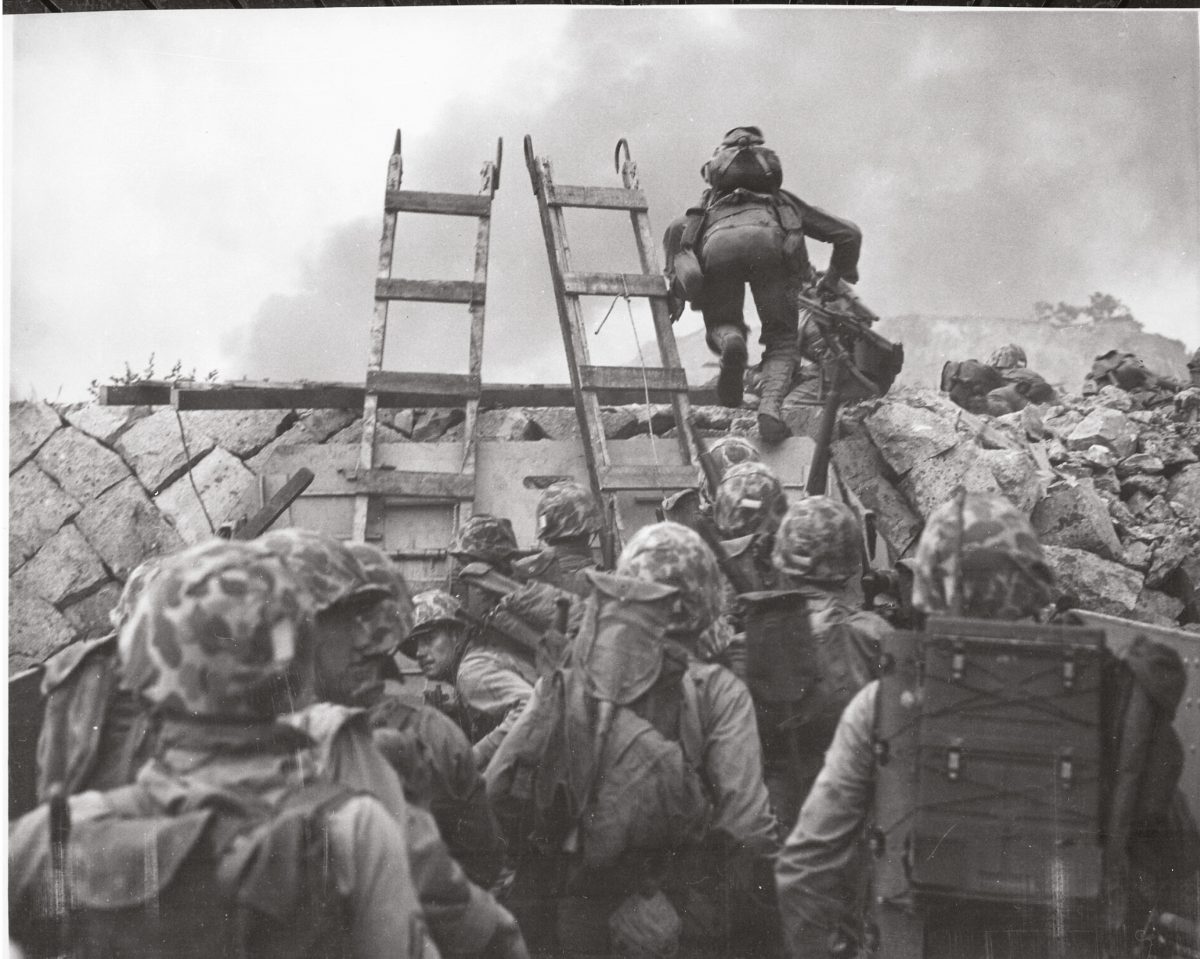
Mansoor provides a compelling narrative of the US combat experience. The iconic moments are vividly reported. We witness MacArthur wading through the surf at Leyte to deliver his electrifying announcement to the population: ‘People of the Philippines: I have returned.’ As the fighting moves inland, we are given a description of what it was like to struggle through knee-deep mud and scramble over mountain ridges, with the ever-present danger of ambush by a ruthless and determined foe. Troops used flamethrowers, grenades, and demolition charges against Japanese defenders concealed in a labyrinth of caves and foxholes.
Meanwhile, engineers worked to lay down improvised airfields and roads in an environment where unforgiving terrain and extreme temperatures were no less of a challenge than enemy soldiers. Here the bulldozer was as important a weapon as the tank. Japanese atrocities are not neglected but, unlike in some accounts of the Pacific conflict, they are not allowed to dominate the narrative. There are glimpses of the suffering of the occupiers, too. Culturally conditioned not to surrender, surviving Japanese soldiers were driven back into the interior of the islands, where many perished from hunger or disease.
Mansoor rescues from relative neglect the subordinates who served with MacArthur. We meet Richard Sutherland, his long-serving chief of staff, whose close relationship with his boss was abruptly ended after MacArthur objected to the presence of Sutherland’s mistress. More harmonious was MacArthur’s professional partnership with Air Force General George Kenney, architect of US air supremacy in the region. Nor should we forget General Jonathan Wainwright, who was left behind in 1942 to perform the unenviable task of surrendering US forces, and who then endured three years of captivity. We learn less about the opposing Japanese leaders. Towards the end of the book, however, we read about the trial of General Yamashita, executed for war crimes carried out by his troops which he did not directly sanction – thereby setting a legal precedent that remains controversial.
Peter Mansoor has performed a valuable service by putting the longest and bloodiest campaign in America’s Pacific War firmly on the map. His ability to move between high-level strategy and the grim reality of close-quarters fighting makes Redemption a compelling read. This was undoubtedly one of the outstanding military history publishing events of 2025.
Redemption: MacArthur and the campaign for the Philippines
Peter R Mansoor
Cambridge University Press, hbk, £30
ISBN 978-1009541190