Subscribe now for full access and no adverts
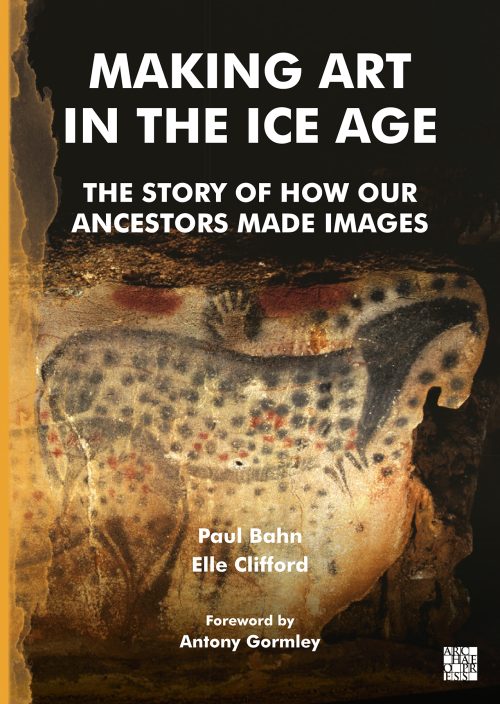
In 2024, Paul Bahn and Elle Clifford published Living in the Ice Age, adapting their 2022 publication Everyday Life in the Ice Age for a younger audience. In my review of their 2024 publication (CWA 126), I discussed how, following the publication of the National Curriculum framework in 2013, Year 3 teachers were handed a new history unit to teach – ‘Prehistoric Britain’. Like many others, I was stumped, with no idea of where to begin. ‘If only we’d all had a copy of Living in the Ice Age then’, I remarked. Now, with Making Art in the Ice Age, Bahn and Clifford have done it again, producing a perfect introduction to the subject of Upper Palaeolithic art, one that should find a place in every classroom, library, and collection of anyone with an interest in human prehistory.
Over the course of 94 colourful and well-illustrated pages, Bahn and Clifford have taken this monumental and deeply mysterious part of our human story and succeeded in creating an accessible, engaging, and fascinating resource.
From the very beginning, the authors have clearly understood the questions that children – and, indeed, all of us – may ask. In response, they have presented ideas, images, and questions that not only inform and illuminate, but that also invite us to consider what our own responses should be. It is, perhaps, here that the ‘answers’ lie.
The book is scaffolded by the vast extent of Paul and Elle’s travels, experiences, research, and study, and presented with the features of an exemplary ‘junior non-fiction’ text. We are shown how cave art was discovered, what people drew and painted (as well as what they did not!), which techniques were used, and how we can know how old the art is.
We have these answers thanks to multidisciplinary and scientific approaches, but it takes an expert to make the complex simple. The authors not only succeed in this as they guide the novice, but they are also able to offer depth and pose questions even for an academic and wider readership.
A core strength of the book is its rejection of the ‘sterile museum’ perspective. Instead, it places the art of the Ice Age into a living, breathing, and, in many ways, very familiar world.
To understand these images, we must consider the environment in which they were made. We may initially engage in cave art today from a visual, aesthetic perspective, but this book wants more for us than that. We are asked to wonder about the acoustics of caves, the flickering effects of tallow lamps, the tactile experience of the artist’s fingers and the rock wall, and the reasons for creating art. Many preconceptions and assumptions are dismissed, opening up space for new thoughts and connections.
The question of ‘why do we make art?’ is given to the British sculptor Antony Gormley, and his response provides a beautiful foreword to this book. ‘What makes us human?’, he asks, and in just a few short paragraphs he helps us to see that cave art is not (solely) about who we were, but who we are. Finding our own answers may be the most vital, frightening, and beautiful thing we can do, and is perhaps the most essential in a world that looks as it does today.
REVIEW BY SIMON NORTON
Making Art in the Ice Age: The Story of How Our Ancestors Made Images
Paul Bahn and Elle Clifford
Archaeopress, £14.99
ISBN 978-1805830887