
Subscribe now for full access and no adverts
REVIEW BY NICK HEWITT
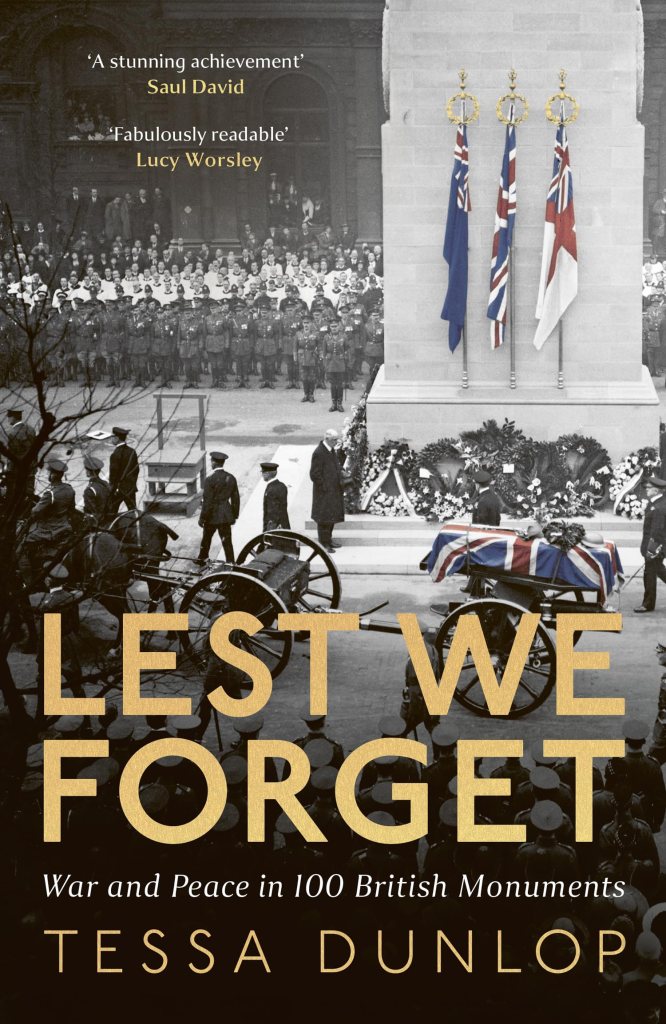
Historian and broadcaster Tessa Dunlop has energetically breathed life into the ‘history in a hundred’ format with her enthralling new book, which should be essential reading not just for those with an interest in war and commemoration, but for anyone wanting a fresh perspective on British identity (or identities) in these divisive times. Her book is no mere catalogue – it is a concise but thought-provoking exploration of what it means to be British.
War monuments surround us. Sometimes they represent a community’s only significant piece of public art, and are often cherished and well-maintained, but they are nonetheless not always seen or read; we pass them by, and they vanish in plain sight. In Lest We Forget, Dunlop shows how these monuments can also be portals to a vast vault filled with human stories of endurance, determination, and valour, or pain, division, and suffering.
Dunlop’s great strengths are empathy and a warm and accessible narrative style; we even meet her mother, on a filthy day at the Commando Memorial in the Highlands. In a very personal journey around the UK, she introduces not only inanimate works of metal and stone, but also an extraordinary cast of characters, whose lives are interwoven with the memorials she describes. Creating a memorial is almost always a symbolic act, representative of the values of its time. What they stand for can change as years pass and Dunlop, recognising this, fearlessly weaves in contemporary political and moral debate throughout. Readers may not always agree with her, but she deftly avoids preaching and most will appreciate the opportunity to reflect on different points of view.
The Imperial War Museum’s War Memorials Register has recorded a staggering 100,000 such monuments. Framing a coherent narrative around just 100 of them was a challenge to which the author has risen admirably. Her approach is chronological for earlier periods (for which memorials are more scarce), beginning with the Romans, and running through five carefully constructed chapters on the Vikings, the Normans, various British dynastic wars of the early Middle Ages, the Hundred Years War, the Wars of the Roses, the Tudor period, the British Civil Wars, and the Jacobite uprisings.
Each chapter is illustrated by between two and six monuments, and it is the event they commemorate, not the age of the memorial, that determines their place. So Boadicea and Her Daughters, Dunlops’s first example, dates from 1902 not the 1st century AD. The golden age of memorialisation is really the 19th century and, appropriately, Dunlop devotes 70 memorials to the period from 1815 to the present day, beginning with the Napoleonic Wars and wars of Empire, with chapters too on the Crimean War and Second Boer War.
With the huge uptick in public commemoration that followed the World Wars of the last century, Dunlop’s approach inevitably becomes more thematic, with chapters devoted to the great national monuments like the Cenotaph in Whitehall, local community memorials, and memorials remembering military units, individual ‘great men’, the Falklands War, and the grim counterinsurgencies since 1945. Dunlop excels at throwing light on largely muted narratives, and she gives due attention to the commemoration of servicewomen, service personnel of colour, and the suffering of civilians.
Lest We Forget is a welcome addition to the small body of literature devoted to British war memorials, and the way we remember war’s victims. It has lots to say about what it means to be British today. Highly recommended.
Lest We Forget: War and Peace in 100 British Monuments
Tessa Dunlop
Harper Collins, hbk, 400pp (£22)
ISBN 978-0008713140