Subscribe now for full access and no adverts
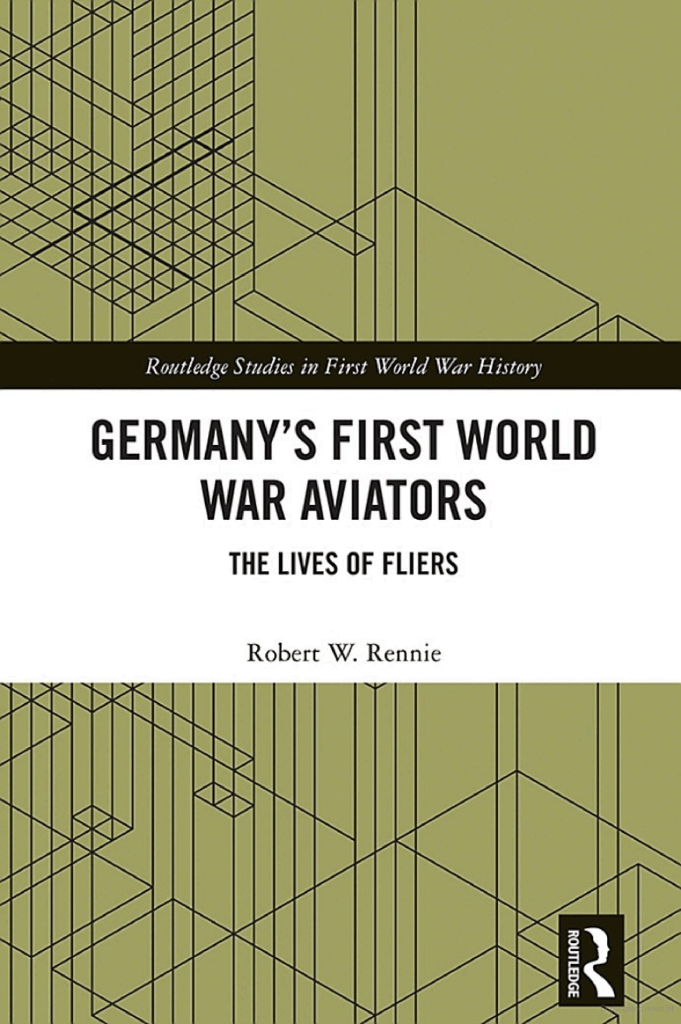
Since the late 1990s, the study of World War I has moved beyond the constraints of military history to embrace an increasingly multidisciplinary agenda. Not least in this has been the adoption and incorporation of anthropological and archaeological perspectives, focusing increasingly on the visceral experiences and memories of those who fought in war, rather than those who directed it. Embodying the danger and intensity of a new kind of conflict that this war created was powered flight, and the flimsy aircraft that contested the airspace above the Western Front battlefields. The extraordinary story of Germany’s WWI aviators is explored here from various insightful perspectives, and complements in its similarly contextual approach Melanie Winterton’s recent work on RAF pilots (The Archaeology of the Royal Flying Corps: trench art, souvenirs and lucky mascots, Pen & Sword, 2022).
Many books deal with these early wartime flyers – German, French, British – but focus either on the developing technical details of their aircraft or the first-hand accounts of pilots. Here, Robert Rennie focuses solely on German aviators and draws on technology as a starting point for investigating the complex and potentially lethal confrontation of war and culture in ways that were virtually impossible before 1914. We are confronted with the physical and psychological challenges experienced by the pilots, the chivalric ‘heroisation’ of aviators such as Manfred von Richthofen and Oswald Boelcke by the German public, and the changing perception of time, speed, and geography that aerial combat and reconnaissance photography heralded.
Flying was a new way of combining bravery and technology, transforming previously ‘empty’ airspace into a dangerous but thrilling conflict dimension. For the human body, the open-air cockpits and rarified altitudes would prove uniquely testing. Freezing cold, breathlessness, disorientation, noise, and smell, along with the fear of being wounded or killed, assaulted the already heightened senses of these early aviators in ways never experienced before. Reactions varied, though superstition was common. The authorities went to great lengths to identify and retrieve the bodies of those killed, and elaborate funerals were held, reinforcing the pilots’ high social standing.
These aspects of an aviator’s life forged a new identity of status, privilege, and display. One obvious example was the freedom they had to decorate their aircraft, a process melding man and machine with a visual expression of individuality and (sometimes) regional allegiance. The aviator Hans Böhning painted one of his Albatros DVs with the Bavarian state crest and a second with the state flag, later replaced by an ace of spades. The communal identity of pilots joined pride in regional heritage to create a unique lifestyle, as seen in the fashioning of German living quarters in Flanders.
The author wields his formidable knowledge of the specialist literature to make a timely and significant contribution to the subject, opening up new perspectives on aerial warfare, its German practitioners, and their cultural dimensions. However, the visual richness of this research, though frequently commented on, is nowhere to be seen: there is only one photograph. Given the book’s boundary-pushing achievement, there is strangely little reference to the sizeable (and pertinent) literature on the senses and human behaviour, the pivotal role of aerial photography in assessing wartime landscapes, and the many recent publications utilising interdisciplinary approaches to investigate conflict space, landscape, and WWI material culture – of which the aircraft and their pilots are arguably the most extraordinary examples.
REVIEW BY NICHOLAS SAUNDERS
Germany’s First World War Aviators: the lives of fliers
Robert W Rennie
Routledge, hbk, 168pp, £155
ISBN 978-0367086299