Subscribe now for full access and no adverts
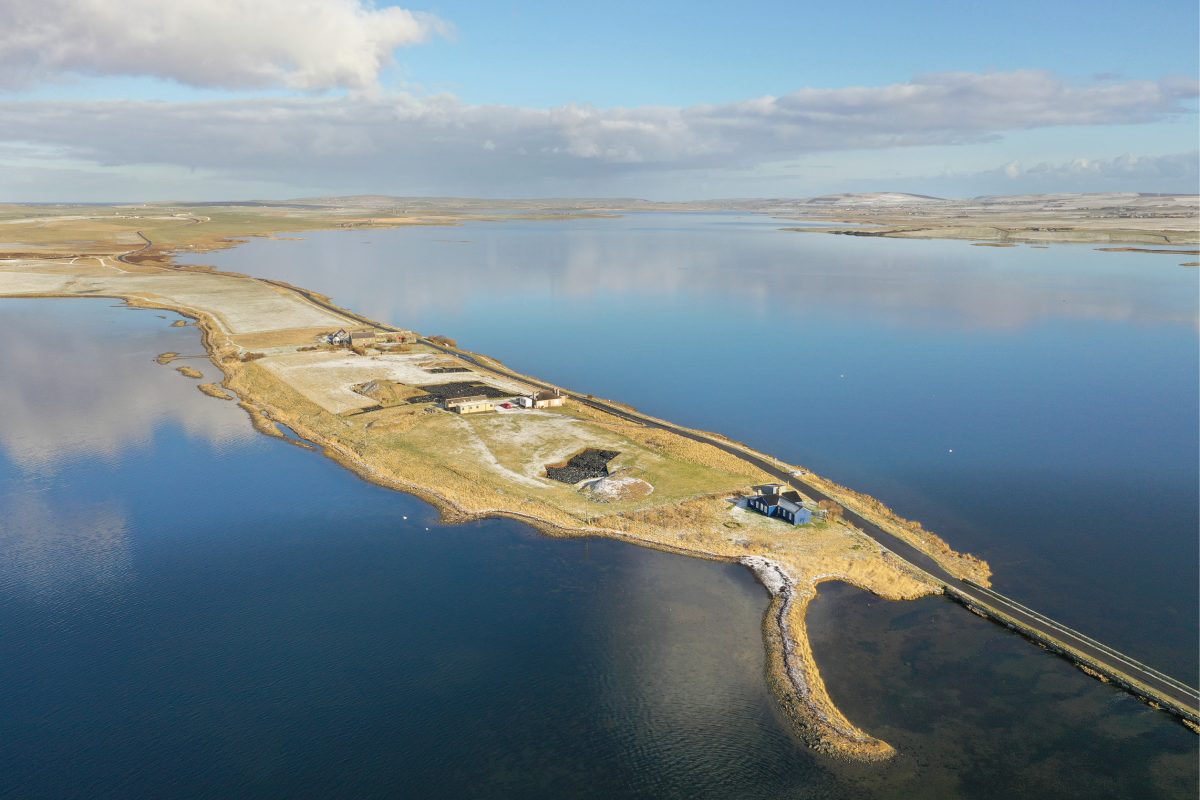
The remains of a rare Neolithic cairn have recently been excavated at Holm in East Mainland, Orkney, showing that, despite 19th-century plundering, many of its main features survived, including a number of burials.
In Orkney, most chambered tombs survive as upstanding monuments, but the tomb at Holm had become buried beneath pasture after the top of the monument was largely robbed out in the late 18th/early 19th century to build a nearby farmhouse. The site was subject to antiquarian investigations in 1896, when it was reported in The Orcadian that the farmer’s son had discovered traces of walling, as well as a stone macehead, a ball, and eight skeletons. Now modern archaeological work has revealed its full story.
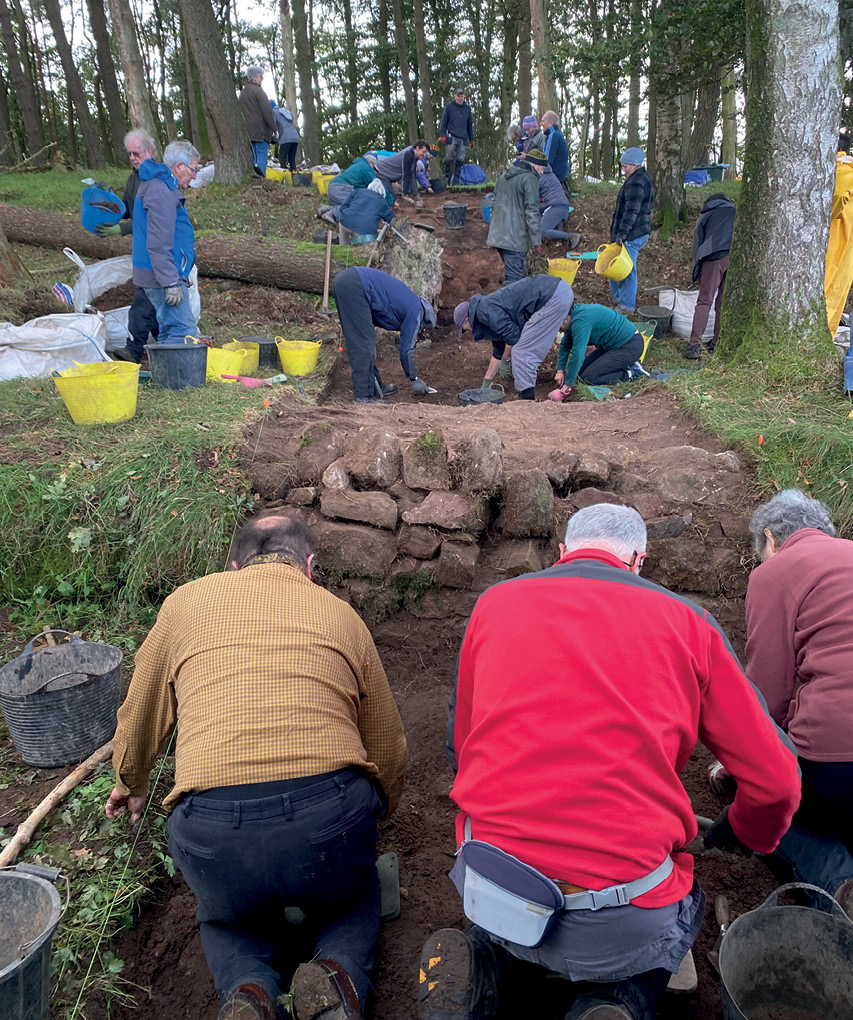
An initial geophysical survey was carried out in 2021 to determine if anything was left of the cairn after the 19th-century interventions. Then, after traces of walling were found, a three-week excavation was carried out this past autumn, led by Dr Hugo Anderson-Whymark from National Museums Scotland and Professor Vicki Cummings from Cardiff University, and including students from the University of Central Lancashire. This work revealed the footprint of the large cairn, showing that it was circular in outline and around 15m in diameter, with a rectangular inner chamber measuring 7-8m across, surrounded by six cells with curved walls (above). The inside of the cairn appears to have been accessed via a passage some 7m long that would have been blocked with a stone slab. This is a similar plan, both in layout and in the number of side cells, to that seen at other cairns in Orkney, such as those at Quanterness and Quoyness.
Commenting on these surviving remains, Dr Anderson-Whymark said: ‘Orkney is exceptionally rich in archaeology, but we never expected to find a tomb of this size in such a small-scale excavation. It’s incredible to think this once impressive monument was nearly lost without record, but fortunately just enough stonework has survived for us to be able to understand the size, form, and construction of this tomb.’
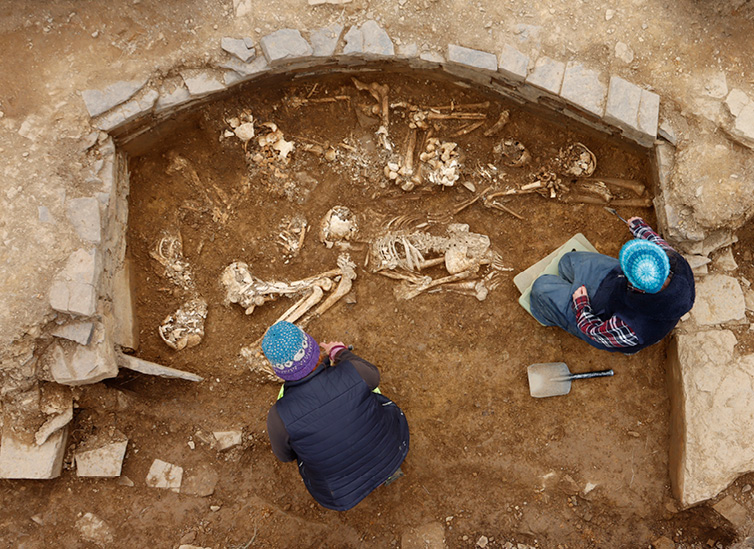
In addition to the chamber’s foundations, 14 articulated skeletons were discovered, comprising men, women, and children, two of whom were positioned as if they were embracing. A number of disarticulated remains were also found in a stone side cell, and the way in which the skeletons had been arranged suggests that they were buried over a period of time, a chronology that it is hoped radiocarbon dating will fine-tune. Backfill from Victorian exploration of the tomb revealed clues, too, including more human remains, as well as pottery fragments, stone tools, and a bone pin.
Commenting on the discovery of the human remains, Professor Cummings said: ‘The preservation of so many human remains in one part of the monument is amazing, especially since the stone has been mostly robbed for building material. It is incredibly rare to find these tomb deposits, even in well-preserved chambered tombs, and these remains will give new insights into all aspects of these people’s lives.’
It is hoped that post-excavation study of the remains, including aDNA analysis, will reveal more about the people buried in the cairn, including their kinship, diets, and migration patterns. Excavations at the site are planned to continue next year, when more details may well be uncovered.
Photo: National Museums Scotland