Subscribe now for full access and no adverts
Ancient Alaskan house uncovered
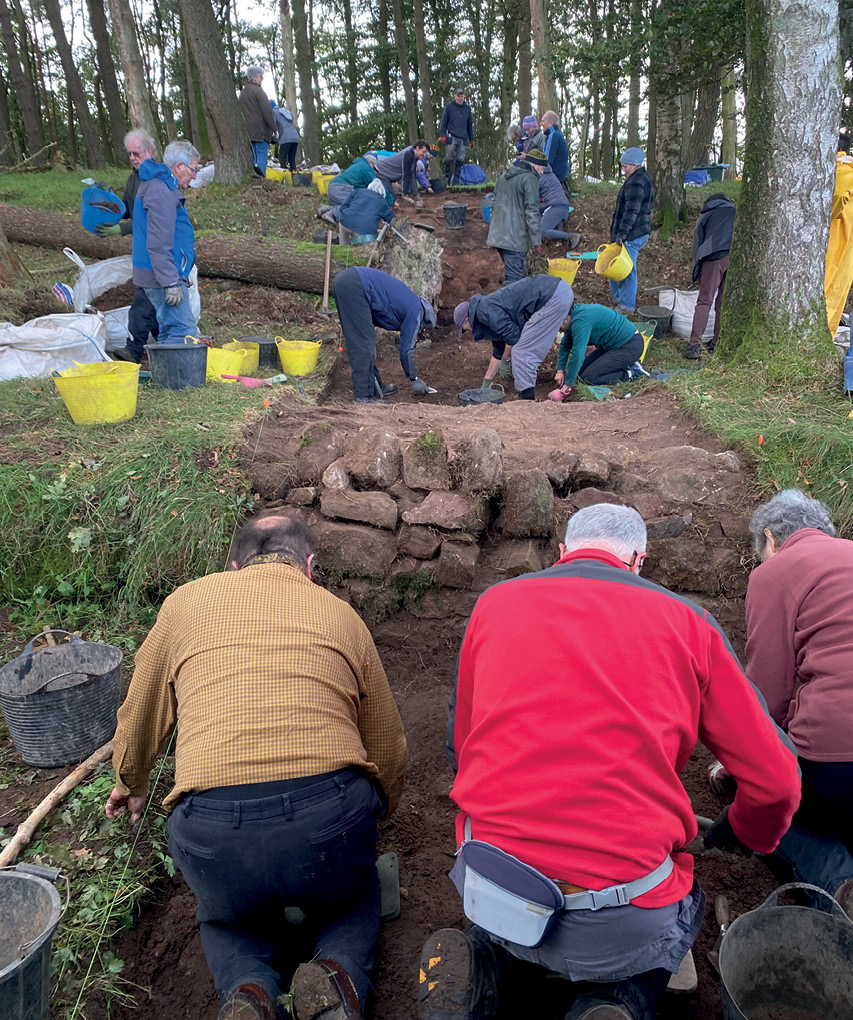
Excavations on the shore of Karluk Lake on Kodiak Island in Alaska have revealed a 3,000-year-old ancestral Alutiiq house, so well preserved that woven grass mats were still present on the floor.
The house was found to be oval in plan and made of sod with wooden planks lining the floor. Measuring 6m by 4m inside, the house is substantially bigger than the team from the Alutiiq Museum, who excavated the site, had expected. It was previously thought that the ancestral Alutiiqu people would have only used such lakeside houses for a brief period in the autumn to catch salmon. Its size suggests that they may have stayed there longer or used the site more extensively than expected, and it could be that they built complex houses at every stop on their seasonal round.
A meteoric discovery
New analysis of a Bronze Age arrowhead, found near Lake Biel in Switzerland 150 years ago, has revealed that it is made of iron from a meteorite.
This was not initially unexpected, as it was already suspected that some of the prehistoric objects from the lake may have been made from the 170,000-year-old Twannberg meteorite that fell nearby. The research showed, however, that only one of the Lake Biel objects was made from a meteorite (the arrowhead in question) and that it did not come from the Twannberg example. The amount of nickel present in the arrowhead was double that found in the Twannberg meteorite, indicating that it must have come from somewhere else.
While not confirmed, it is believed that, based on its composition, the arrowhead was probably made out of the Kaalijärv meteorite, which fell in Estonia around 1500 BC. The research was recently published in the Journal of Archaeological Science (https://doi.org/10.1016/j.jas.2023.105827).

Image: Collection Bernese History Museum. Photo: Thomas Schüpbach
Tattooed in Christ
Recent reanalysis of human remains from a burial discovered in 2016 near the medieval monastic site of Ghazali in northern Sudan has found evidence of a religious tattoo on the unusually well-preserved skin of the individual’s right foot.
Using full-spectrum photography, a team from the Polish Centre of Mediterranean Archaeology at the University of Warsaw revealed a Chi-Rho monogram – a common Christian symbol that combines Greek letters from the name of Christ. The letters alpha and omega were also found to the left of this symbol, signifying that God is the beginning and end of everything.
The individual, who was probably a male aged 35-50 years old, had died in c.AD 667-774. He was found in a lay cemetery, and not in the nearby monastic one, raising further questions about his religious affiliations.
Text: Kathryn Krakowka