
Subscribe now for full access and no adverts
For more than 15 years, archaeologists from Bournemouth University have been excavating a number of sites around Winterborne Kingston, near Bere Regis in Dorset. This long-running project has revolutionised our understanding of the Iron Age in this region, with discoveries ranging from a rare banjo enclosure (see CA 281) to a large open settlement dubbed ‘Duropolis’ (CA 313). Now ongoing excavations around a second banjo enclosure (CA 390) are revealing new details about burial practices and possible sacrificial killings among the local Durotriges people.
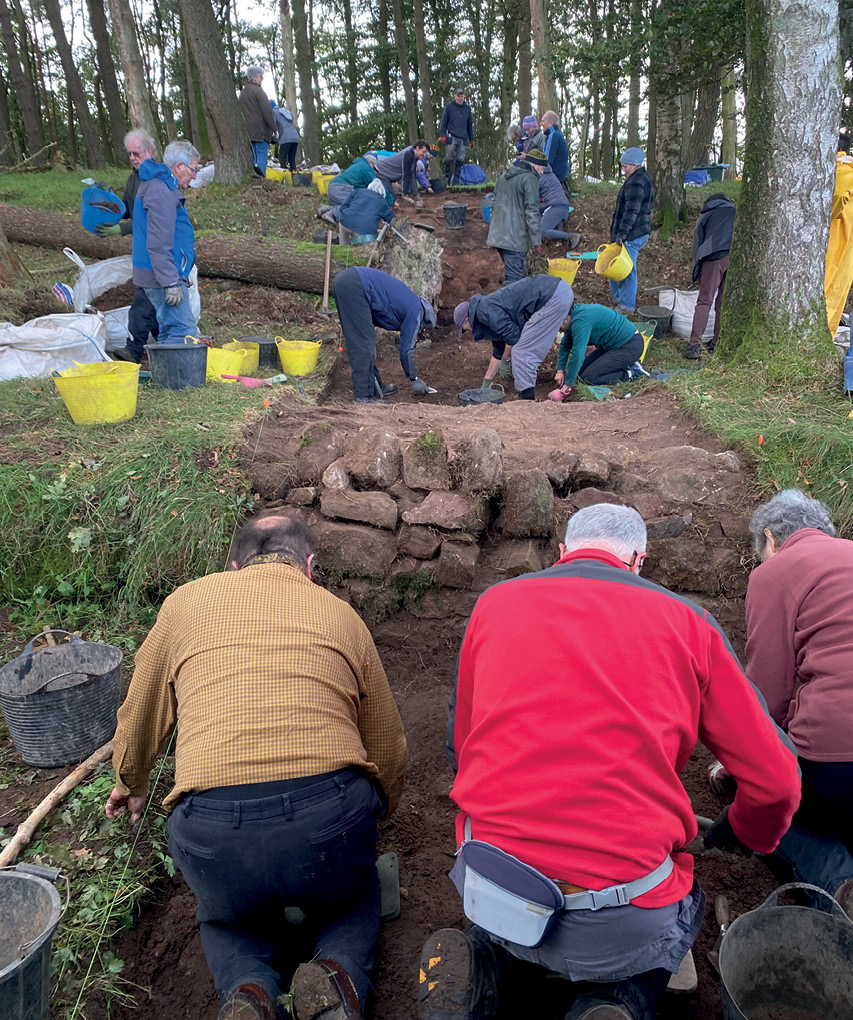
Recent excavations by the team have concentrated on the area in front of the second banjo enclosure’s entrance. As with the first such enclosure, which was excavated in the early 2010s, use of this one appears to have ceased c.100 BC, around the same time that hillforts in this region were also abandoned. In a similar way to the first banjo enclosure, as well as many hillforts, this example appears to have transitioned into a cemetery following its disuse, with many burials uncovered there over the past few digging seasons. With burials beginning before the Roman invasion and continuing for several centuries afterwards, most of the individuals had been placed in a crouched position and were often accompanied by Black Burnished drinking vessels and a joint of meat. Ongoing isotope and DNA analysis has shown that virtually all of these individuals belonged to the same family group (see CA 421) and were probably local to the area. These burial practices largely remained the same until the 4th century AD – and, while much of the cemetery’s lifespan lies within the period of Roman occupation of Britain, no Roman coins, jewellery, or other imports have been found at the site. While the Durotriges do not appear to have integrated into Roman material culture, however, they remained relatively well-off, with isotope analysis showing that they had a diet rich in meat and osteological analysis revealing little evidence of hard, strenuous lives.
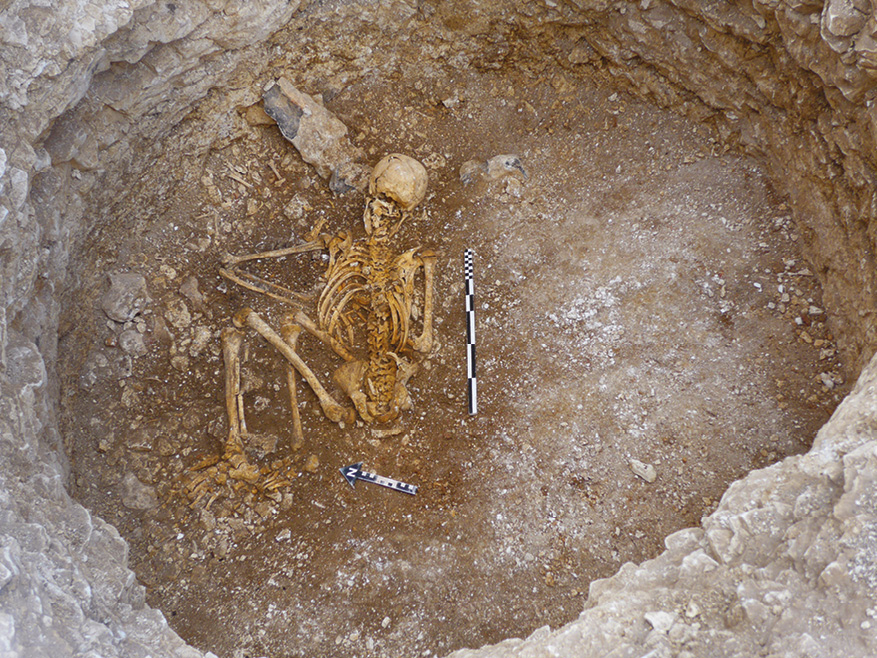
Contrasting with this striking continuity, a small number of more unusual burials have been identified. Two individuals from the first banjo enclosure and three, so far, from this second – including one who was discovered during the most recent digging season (above) – have been found buried face-down in large cylindrical pits, often with their wrists close together, suggesting that they may have been bound. All of these individuals were in their late teens or early 20s when they died and, unlike the other burials from the site, they do not appear to have led an easy life. There is extensive evidence of stress on their skeletons, including lesions on their spines and robust muscle attachments, speaking of a life of hard manual labour. While for the majority of individuals their cause of death is uncertain, one had evidence of sharp force trauma on the cervical vertebrae of the neck, which may be indicative of a ritual killing (see CA 413). Two of the others also displayed trauma, including a cranial fracture and a parry fracture to the arm, which might suggest they had encountered violence near the time of their deaths. It is possible that all of these individuals had been executed, perhaps in front of an audience, before their bodies were thrown down into the pits.
While DNA and isotope analysis is ongoing, preliminary analysis from two of the unusual burials has indicated that they were not local to the area, with one individual possibly having grown up as far away as Derbyshire. While definitive conclusions cannot yet be drawn, it may be that these individuals were chosen for ‘sacrificial’ or ‘ritual’ killing because they were outsiders to the community, perhaps even being slaves or another type of indentured servant. Radiocarbon dating of their remains continues, but the team suspect that these burials may pre-date the majority of the ‘local’ ones. A lack of intercutting between the two types of grave, however, suggests that the locations of the ‘sacrificial’ burials were either well-marked or well-remembered.
The most recent discoveries form part of Episode 1 of Sandi Toksvig’s Hidden Wonders on the More4 channel (for more details, see here).
Text: Kathryn Krakowka / Photo: Bournemouth University