Subscribe now for full access and no adverts
A study of the architecture of ancient Greek temples and sanctuaries dedicated to healing has determined that these spaces were deliberately made accessible to individuals with impaired mobility.
Individuals with mobility impairments were relatively common in ancient Greek society, as demonstrated by literary references, artistic depictions, and bioarchaeological evidence from cemeteries and tombs from throughout the Greek world. Clearly, these individuals made up a significant part of society, but questions about the ways in which their needs were accommodated have largely been overlooked.
A paper recently published in Antiquity (https://doi.org/ 10.15184/aqy.2020.123) reveals a distinct pattern, identified through examination of the presence of ramps at healing sanctuaries compared to non-healing sanctuaries.
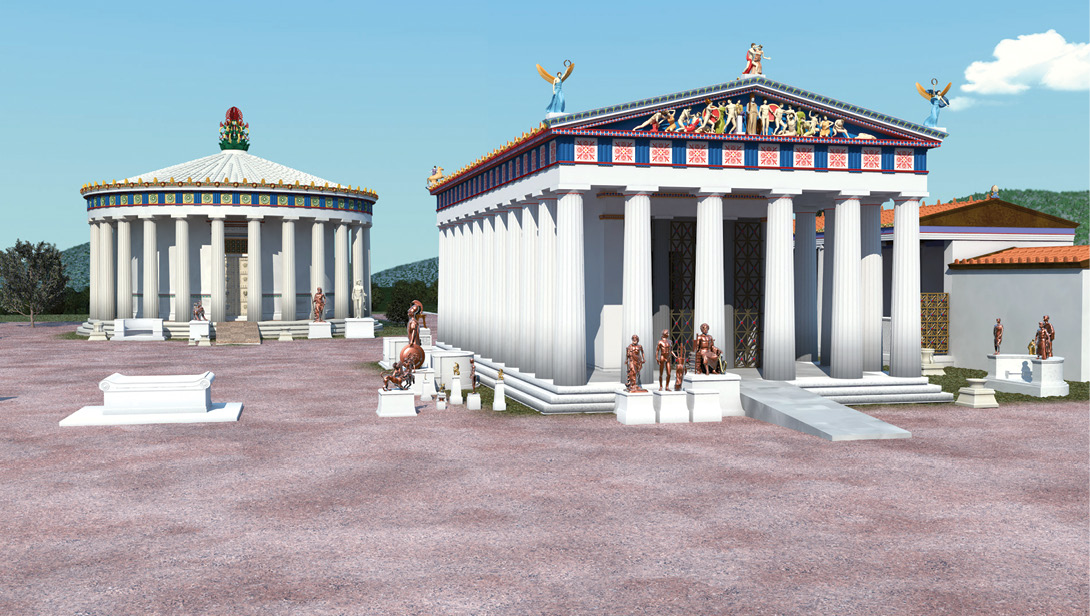
Most ancient Greek temples do not have any ramps allowing easy access into the building for those with reduced mobility. In cases where ramps are present, it is usually in the form of a single ramp on the main temple building, rarely on subsidiary temples or non-temple buildings that are part of the wider sanctuary complex. For example, the Panhellenic Sanctuary of Zeus at Olympia was built with only two ramps, despite being a very large and rich sanctuary.
By comparison, the contemporaneous healing sanctuary of Asclepius at Epidaurus, which was perhaps the most-important healing sanctuary in ancient Greece, has at least 11 ramps, on both temple and non-temple buildings. Similarly, the much- smaller and more-local healing sanctuary of Asclepius at Corinth was built with two ramps, despite its size, one of which runs the whole length of the sanctuary and would have required considerable investment.
This discovery suggests that those who were responsible for constructing healing sanctuaries took into account the fact that they would be visited by individuals with reduced mobility, while the same consideration was not often applied to sanctuaries with other purposes.