
Subscribe now for full access and no adverts
Winchester today is a city of many delights, threaded by the gin-clear waters of the River Itchen, which is no doubt what attracted settlement there in the first place. Some 20km to the south, the river flows into Southampton Water and the Solent, favoured embarkation points for trade and communication with the Continent since the Bronze Age.
The line of the city’s present High Street probably represents an ancient transhumance route (that is, one used for the seasonal movement of livestock) and, as you follow it up the hill that leads to the chalk downs north-west of the city, you will pass William the Conqueror’s castle (c.1067). It is from there, after passing through the Westgate, that Angel Clare looks back down to the County Gaol and the black flag that signals the end of the life of Tess of the d’Urbervilles in Hardy’s tragic novel of that name.
Iron Age introductions
Continuing west after crossing the deep cutting that brings the railway into Winchester, you will reach the green space that is Oram’s Arbour (see CA 2, CA 176, and CA 271). Carinated bowls of roughly 5th- to 4th-century BC date and circular drip gullies representing roundhouses – as well as two post-built structures of similar date found further east in the city – testify to an early Iron Age presence in this location. There then appears to have been a hiatus in the middle Iron Age (4th to mid-2nd century BC), before the main period of occupation began in the later middle Iron Age (from the mid-2nd century BC). It was at this time that a massive V-shaped enclosure ditch was constructed, with a circuit of c.1.85km, a typical depth of about 4m, a maximum recorded depth of 4.9m, and a width of up to 9.5m. Within the enclosure, numerous gullies, pits, post-holes, and hearths have been found as evidence for significant levels of activity and occupation.
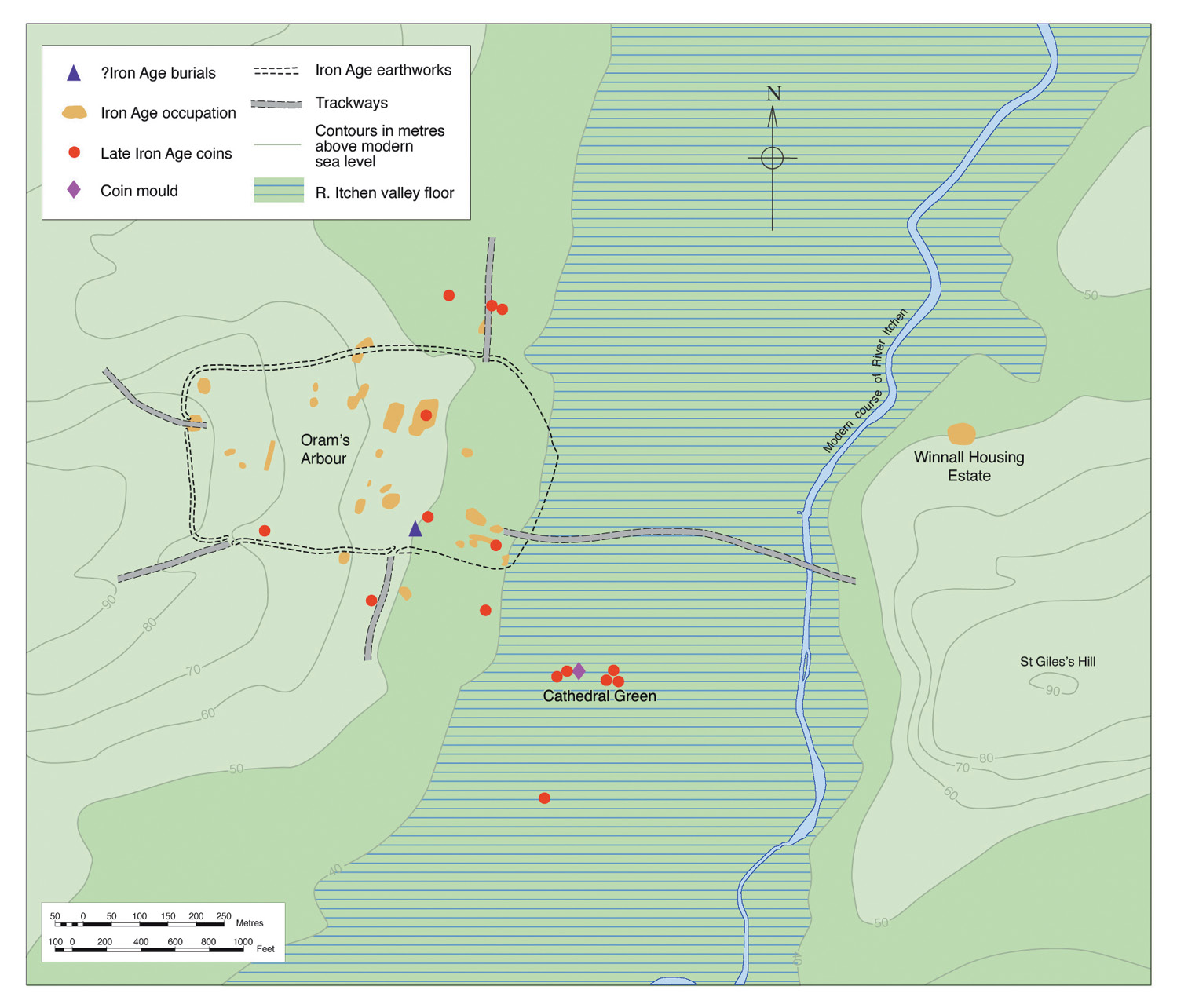
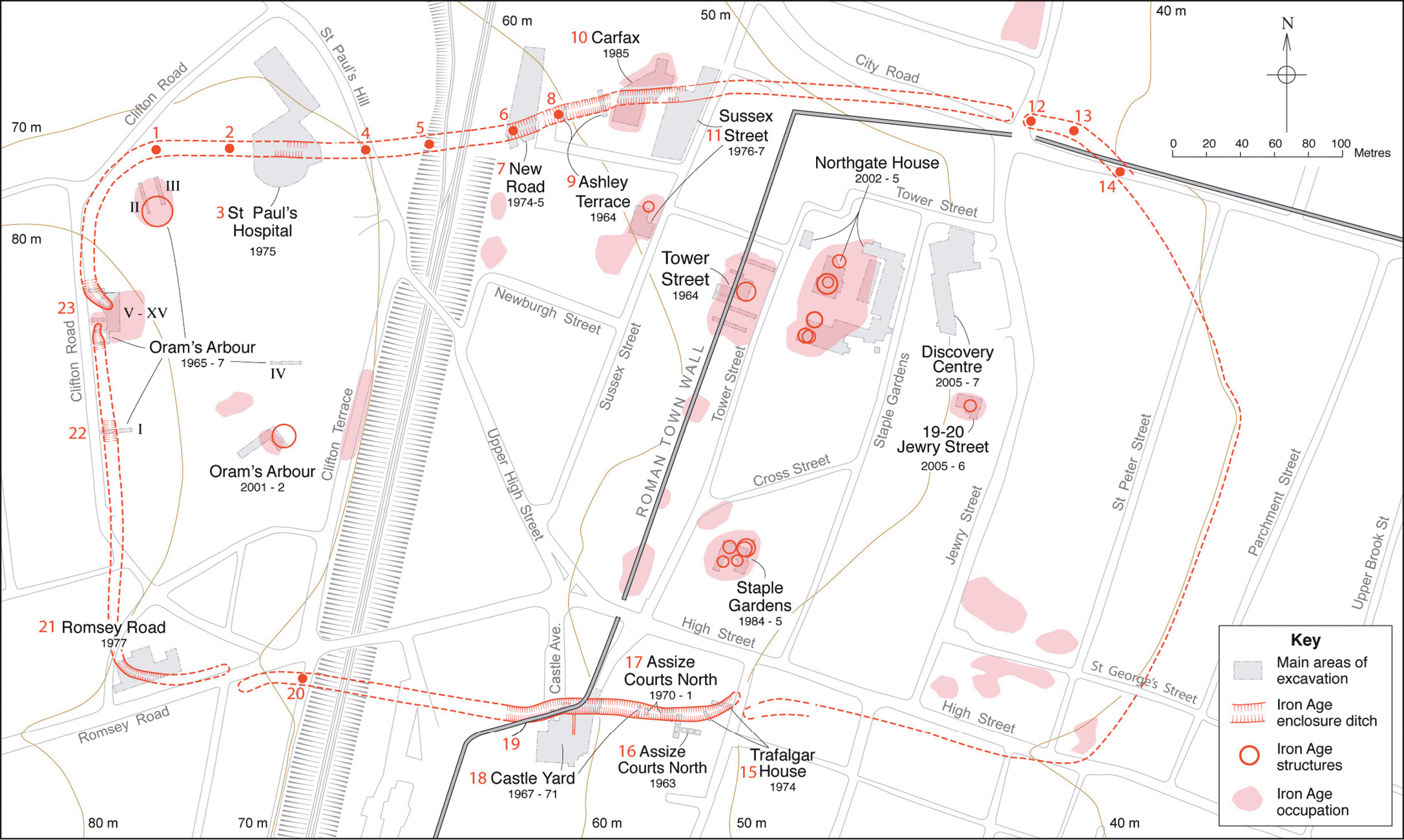
At 20ha, the enclosure was up to four times larger than the majority of contemporary hillforts in south-central Britain, including nearby St Catherine’s Hill (9.3ha), Danebury (5.3ha), Winklebury II (6.8ha), and Beacon Hill (4.4ha), all in Hampshire, as well as Yarnbury (11.5ha) in Wiltshire; for hillforts of a similar size, one has to look to Maiden Castle (19ha) and Hod Hill (22ha), both in Dorset. Oram’s Arbour was also unusual in its situation: hillforts nearly always occupy isolated prominences or hill tops, whereas the Winchester enclosure lies on a hill slope leading down to a long-established Itchen crossing point.
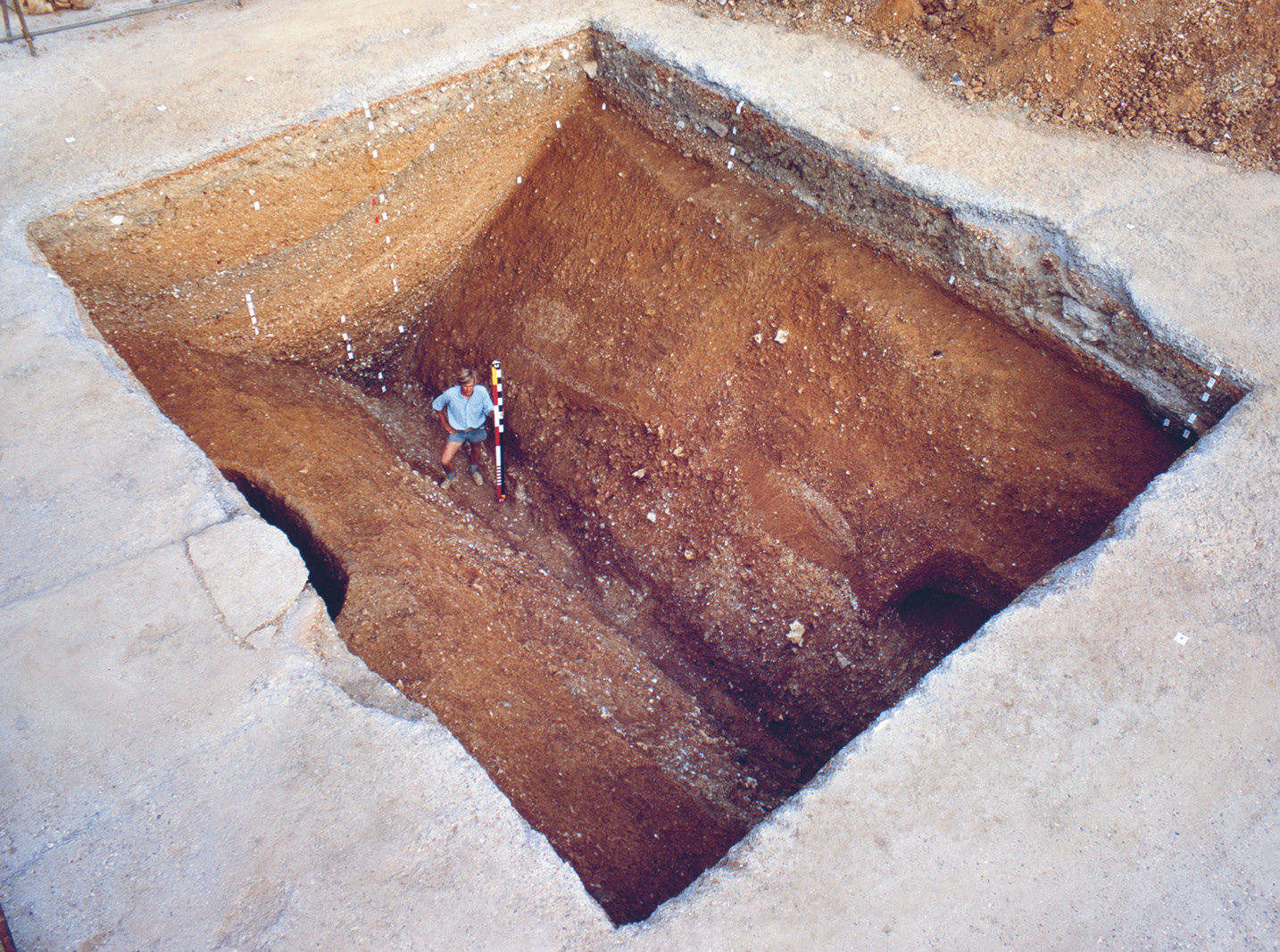
This suggests that control of long-distance communication was a critical part of its function. Certainly, several routes appear to have converged on and passed through Oram’s Arbour, some of which pre-date the enclosure. The authors of the Venta Belgarum volume conclude that the enclosure is too early to be considered as a late Iron Age oppidum, such as those at Colchester, St Albans, Silchester, and Chichester, but it may have served as an earlier form of a multi-function regional political centre for which good communications were essential.
Possible evidence for the site’s long-distance contacts, and its status, is a group of up to 15 Mediterranean coins from the 4th to 2nd centuries BC, which have been recovered from the Winchester area (the majority from central Winchester itself). They include eight or nine Egyptian Ptolemaic bronze coins and a silver obol from the ancient Greek port of Massalia (modern Marseilles) – the most impressive concentration of such coins from Britain – although none of the Winchester examples have been found in a controlled archaeological context, and the extent to which they arrived in the Iron Age rather than later is uncertain.

This period of fairly intensive occupation of the Oram’s Arbour enclosure during the 2nd century BC appears to have been relatively short-lived. Convincing ceramic evidence for Iron Age occupation of the late 1st century BC or later is currently lacking at Winchester, despite much evidence from just outside the study area, including the so-called ‘Winchester hoard’ of mid-1st-century BC gold jewellery found near the multi-phase Iron Age settlement at Owslebury (CA 176).
As we shall see, this is not the last time that Winchester ceased to function as a centre of significant activity for a period of time, only to be revived – perhaps because of its natural topographical advantages. The authors ask whether a shift in political power led to the apparent decline of intensive occupation at Oram’s Arbour, with the integration of Winchester into the southern kingdom of Commius and his successors, and the rise of Chichester and Silchester.

Relics of Roman occupation
The earliest evidence for Roman activity in the Winchester area is a large V-shaped ditch, 4.8m wide and 1.6m deep, dug in the mid-1st century AD with two smaller outer ditches on Lower Brook Street. These appear to represent the north-eastern angle of an enclosure – possibly a fort built by the Roman army as part of its campaigns of AD 43-47. Post- and stake-holes, as well as various brooches, buckles, and harness parts, provide further hints of a small-scale military presence at Winchester in the pre-Flavian period (AD 43-69).
Also datable to this early period of Roman occupation is the road north-west to Mildenhall and Cirencester (now followed in part by the Andover Road, the B3420), where two coins of Gaius (better known as Caligula, r. AD 37-41) were found in the agger, or clay bank, on which the road was set. In addition, the road that ran south to Southampton Water and the New Forest (now followed in part by St Cross Road, the B3335) is datable to the mid-1st century on the basis of a sherd of pre-Flavian Samian ware sealed by the earliest surface. Several of the other principal roads, for which good dating evidence is currently lacking, were also probably constructed in the pre-Flavian period. These include the road north-east to Silchester and London (now the Basingstoke Road, the A33), the road south-east to Chichester, and the road west to Old Sarum.

Winchester clearly occupied a nodal position in the Roman road network, just as it had done in prehistory (and the alignment of some of the seven Roman roads leading to and from Winchester was clearly influenced by pre-existing routes). A decision must have been taken at the beginning of the Flavian period, c.AD 70, to develop Venta Belgarum as the civitas capital (the principal town, market, and administrative centre) for the surrounding region; indeed, its Roman name means the ‘market’ or ‘trading place’ of the Iron Age people known as the Belgae – related, in all probability, to the people who, according to Caesar’s The Gallic Wars, inhabited north-eastern France and Flanders.
The essential outlines of the Roman town, comprising earth and timber defences and a street grid, were established at this time, and it was probably at this period that the natural pattern of river channels and streams was modified, channelling the main course of the Itchen to the east of the town, against St Giles Hill. The effectiveness of the Roman drainage works is indicated by the construction from the late 1st century onwards of numerous buildings at levels below the modern water table.
The probable channel of an aqueduct, comprising a steep-sided ditch with a flat base, has been identified at three places to the north of Winchester, perhaps fed by springs in the Itchen Stoke area some 9km north-east of the city, dating from this same period. The continuation of the aqueduct into the walled area has been identified in the form of a flint-lined channel in the north-west corner of the town. It is assumed that the water supplied the major public and private buildings, as well as bathhouses and fountains, though many chalk-lined wells have been recorded too, supplementing the public supply.
The forum and a Romano-Celtic temple are the only public buildings of Roman Winchester so far identified, but others must have existed and await discovery. Comparison with other towns of Roman Britain suggests that Venta Belgarum probably had public baths and a theatre and/or amphitheatre.


Economic expansion
The investment in the town plan at this early date reflects the ambition of the Roman authorities to make Venta Belgarum a place of major political and economic significance. Enclosing an area of 58ha, the Flavian rampart made Winchester the largest defended town in Britain until the second half of the 2nd century. The only other towns known to have had late 1st-century defences are Colchester (47ha), Gloucester (19ha), and Lincoln (17ha) – all former legionary fortresses – as well as St Albans (40ha).
The authors suggest that the early Flavian development of Winchester may have been part of the general rearrangement of the civil administration of southern Britain during the reign of/or following the death of the client ruler Togidubnus, sometime in the latter part of the 1st century AD. Brought up in Rome, and a friend and supporter of the Emperor Vespasian, he governed south-central Britain from his base at Chichester, collaborated with the Roman occupation, and probably lived well into the late 1st century. The development of Winchester may well have been a reward for his loyalty to Rome by contrast with Boudica (Tacitus, writing c.AD 98, said that Togidubnus ‘remained most loyal up to the time I myself can remember’), and the economic prosperity that his kingdom experienced a consequence of that.

The town was occupied fairly intensively from the Flavian period onwards, mainly with timber buildings to begin with, although numerous fragments of window glass, painted wall plaster, and tesserae indicate that some of these structures were ‘Romanised’, and large quantities of Samian ware, amphorae, and vessel glass provide evidence for Venta as a centre for trade and consumption. Metal-working residues, bone-working waste, and glass-blowing debris hint at the extent to which Winchester was also a place of manufacturing.
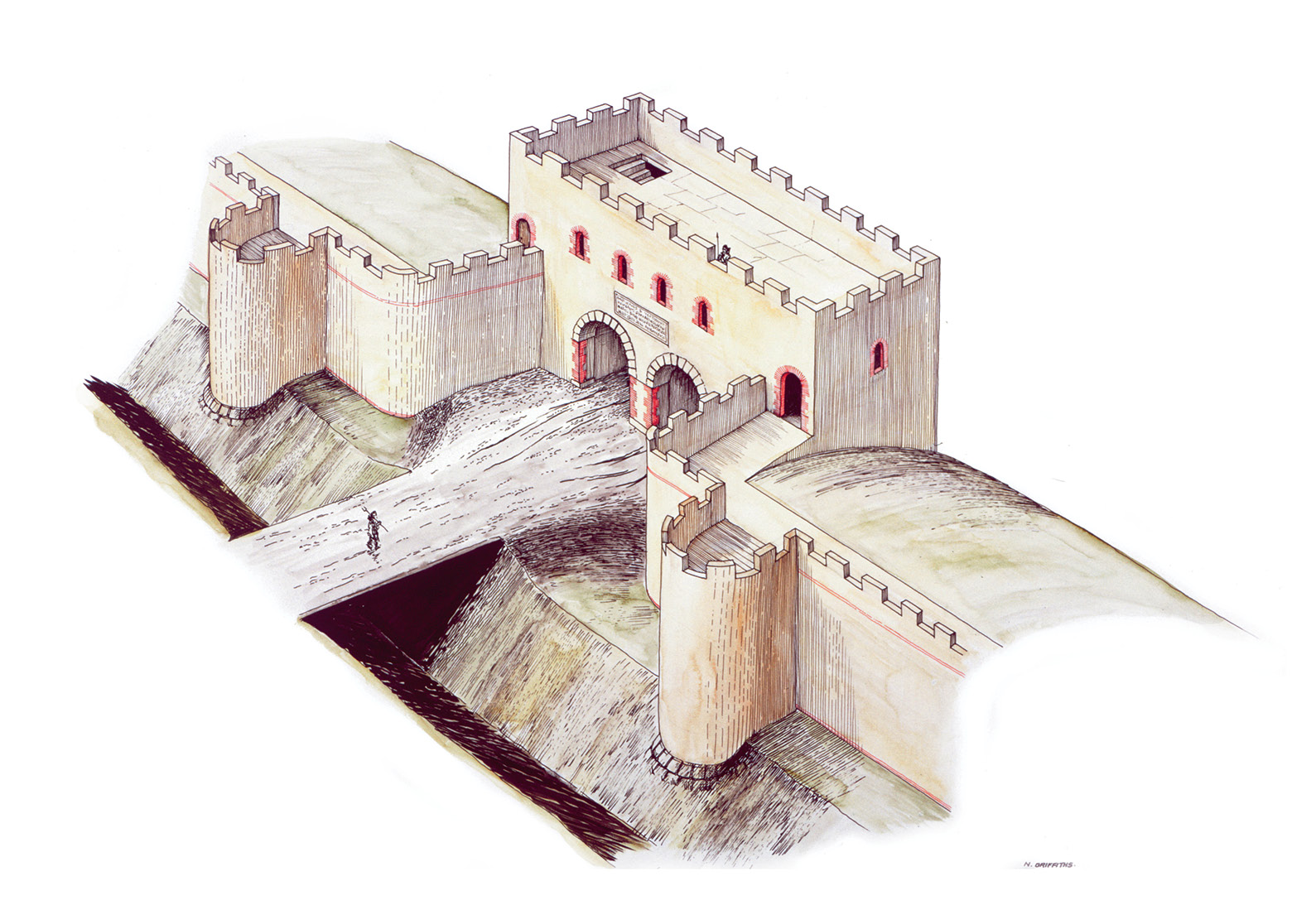
In common with most other Romano-British towns, Venta Belgarum’s subsequent growth is indicated by the widening, heightening, and elaboration of the defences, probably as a sign of civic status rather than from defensive necessity. In the mid- to late 3rd century, the front of the town’s earthen defences was cut back to allow a foundation trench for a wall to be inserted around the whole circuit. Typically 2.7-2.9m wide at its base, the wall was built of large (and usually unknapped) flints laid in clear courses in copious layers of hard buff-cream or pinkish-buff mortar.
With a walled area of 58ha, Winchester was now the fifth-largest town in Britain, after London (128ha), Cirencester (88ha), St Albans (79ha), and Wroxeter (77ha). Numerous large houses were constructed within the walls, either of stone or of timber on stone footings. Under roof tiles of Purbeck limestone, some of the rooms had mosaic floors, hypocausts, glass windows, and painted wall plaster on their walls. The majority of the mosaics can be dated to the late 3rd and first half of the 4th century, coinciding with the surge in laying mosaics in surrounding villas, and there are hints that at least one mosaic-making workshop may have been based in Venta. One particularly fine example, showing a geometrical pattern with dolphins, is now on display in the City Museum.
All this reflected the prosperity of south-central Britain as wealth flowed in from the Continent as a result of high levels of state-contracted and private trade in British agricultural products and textiles. Large-scale imports of Samian tailed off sharply in the 3rd century, to be replaced by huge quantities of fine tableware from the nearby New Forest industry and, to a lesser extent, from Oxford. There was still, however, some small-scale importation of late Roman fine wares from north-eastern and western France and North Africa, as well as amphorae from southern Spain and North Africa (probably bearing olive oil) and from the eastern Mediterranean (carrying wine and/or olive oil). A large quantity of 4th-century vessel glass has also been found, including an unusually rich and diverse range of decorated vessels, which have close parallels in the Rhineland, Gaul, and Italy.
Decline into decrepitude
According to the historian Ammianus Marcellinus, Count Theodosius arrived in Britain in AD 368 with a field army of 2,000 troops to deal with the problem of what Marcellinus called ‘the barbarian conspiracy’: the concerted efforts of Continental warbands to exploit Britannia’s military weakness. Cemetery evidence suggests that Venta Belgarum might well have served as a base for at least part of this late Roman field army. Among the graves at the Lankhills Roman cemetery, which lay 500m from Winchester’s north gate along the road to Cirencester, is a group of burials datable to the second half of the 4th century, representing a group of soldiers originally from somewhere north of the Danube frontier (CA 266).
The presence of a sizeable military force in southern Britain might also explain the establishment of a state weaving-works at Winchester around AD 400. The Notitia Dignitatum, a register of the official posts and military units of the later Roman empire, refers to the procurator gynaecii in Britannis Ventensis, or the ‘manager of the state weaving-works of Venta in Britain’. Late Roman gynaecea were proto-industrial weaving establishments set up to provide Roman soldiers and officials with clothing. Although two other towns in Britain bore the name Venta (Venta Icenorum, modern- day Caistor St Edmund, see CA 270; and Venta Silurum, modern-day Caerwent, see CA 226), it is most likely that the gynaeceum was located at Winchester and was presumably a significant institution because it is the only one known in Britain.
Increased military involvement may well have come at the expense of town properties and the status of the previous owners, often members of local elites. Despite continuing to function as a Roman urban centre with at least some degree of order (the main internal streets were re-metalled and continued in use, while the water supply still functioned, indicating that there was still some urban organisation and a form of authority that was still able to undertake public works), living standards seem to have declined and many houses were abandoned or destroyed.

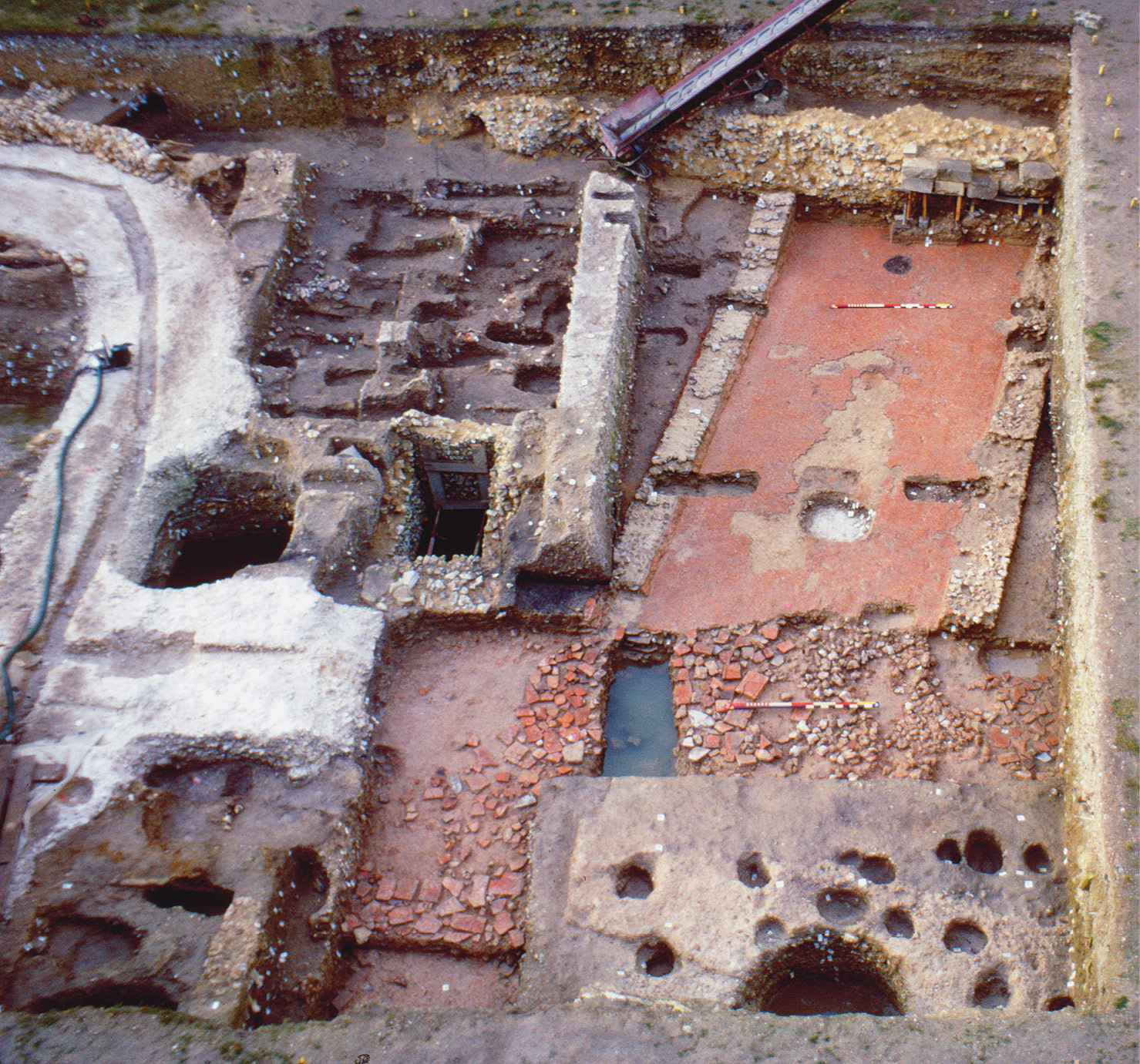
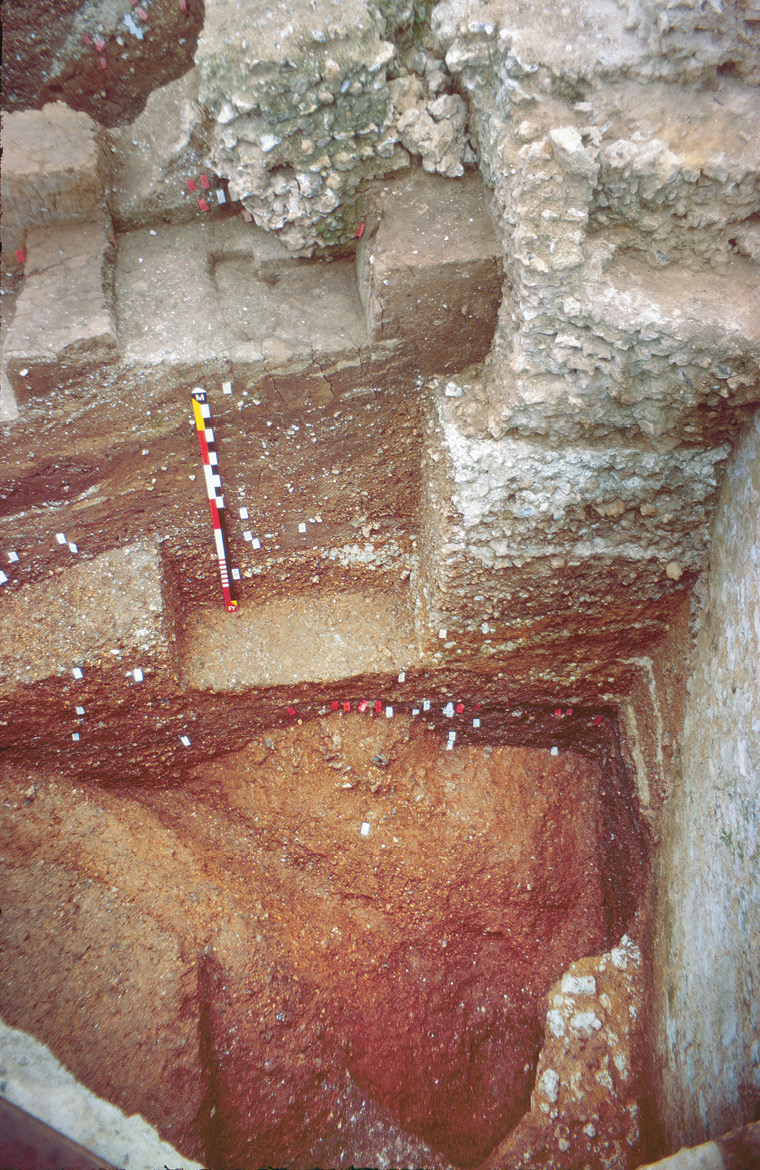
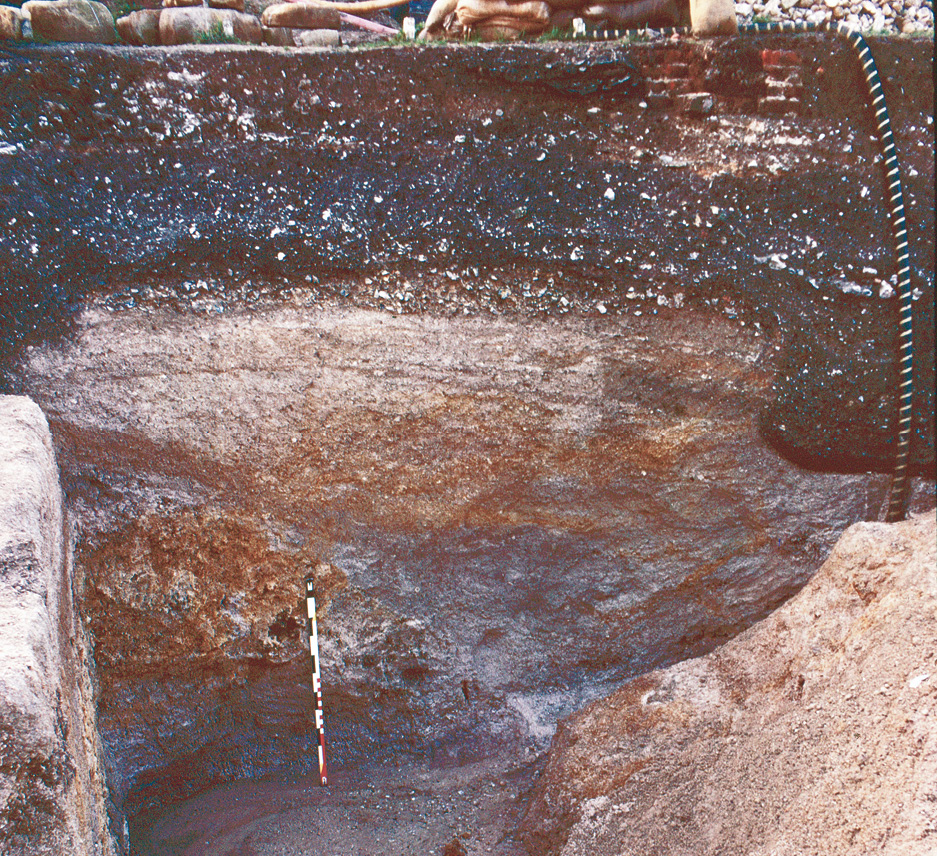
Abve & below: Lower Brook Street 1971, Trench V. This section drawing and photograph illustrate the complexity of the stratigraphy at Winchester, where the mid-1st-century AD fort ditch is cut by the beam slots for two late-1st-century timber buildings. These are in turn overlaid by the successive metallings of the courtyard south of the late Roman workshop, while the Roman sequence is sealed by thick dark medieval layers.
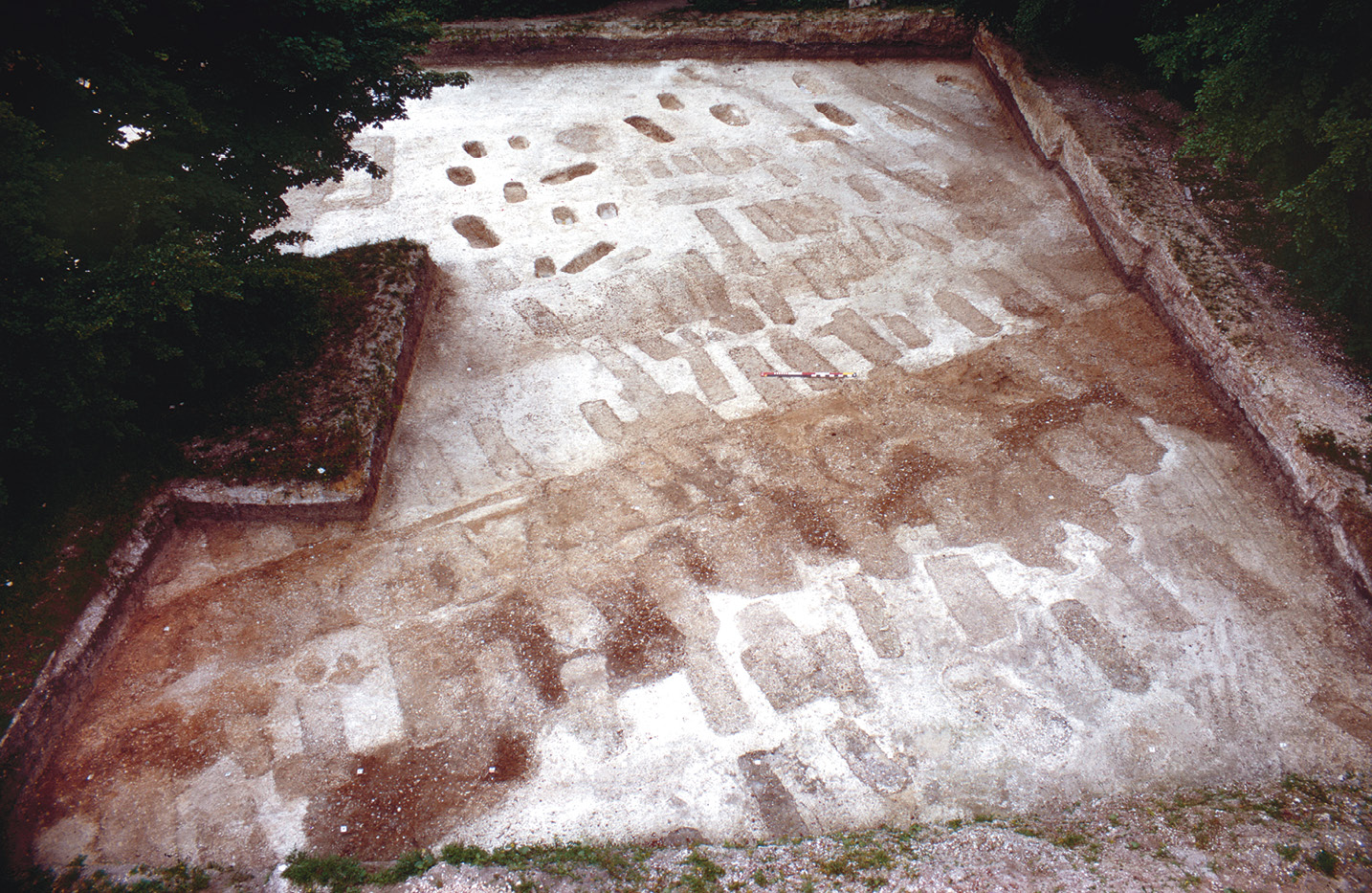
The Roman cemetery at Lankhills provides the clearest evidence for the end of organised life inside the walled town. By c.AD 350, burials had begun to crowd up against the ditch of the cemetery’s eastern boundary; when that boundary was abandoned, burials expanded rapidly eastwards, only to thin out and soon cease altogether, leaving the chalk surface beyond undisturbed by around AD 400 or a little later. Within the walls of Venta, roofs collapsed and small fires were lit within the rooms of once luxurious properties. ‘Dark earth’ began to cover the interiors as wall and roof timbers collapsed and decayed, enriched by animal faeces, compost, and leaf mould – indicative of a dramatic change in the nature of human activity and occupation in Winchester.
Dark earth continued to accumulate for at least another 450 years, and it was also probably in this period that the Roman water-management system broke down, resulting in a significant and lasting rise in the water-table. The streets of the Roman town had almost all been lost by the mid- to late 9th century, when a new grid of streets was laid out. These early medieval streets remain in use today and, though they too are based on a grid, none follows the line of a Roman predecessor with the exception of High Street, which partly follows the main Roman east–west route.
Reincarnated as a royal centre
Finds from the surrounding area tell a very different story, however: they show a concentration of settlements, cemeteries, and isolated finds from the 5th to 7th centuries in the Itchen valley within a radius of 5km (3 miles) to the north and south of the former Roman town. Similar patterns of settlement have been observed elsewhere in the countryside around former Roman walled places, as if such towns, although deserted, were remembered as centres from which some form of authority was exercised, including rights of control and taxation over surrounding territories.

The authors argue that something like this might have happened with the former Roman town of Venta, which, they say, would provide an answer to the central question in the post-Roman history of Winchester: how to explain the decision to build a church and establish a bishopric inside a former place that was apparently deserted? That church, later known as Old Minster, was built by Cenwalh (King of Wessex, AD 642-672) sometime in the years between his conversion to Christianity c.646 and the date, probably between 660 and 663, when the king appointed Wine as the first bishop of Winchester.
Christianity had been brought to Wessex 20 or so years before by the missionary priest Birinus. He arrived from Rome via Genoa in 635, and was established as the first bishop of the West Saxons at Dorchester-on-Thames in Oxfordshire by Cynegils (King of Wessex, AD 611-642). While Birinus was initially buried at Dorchester in 649-650, his body was relocated to the Winchester church when it was completed. This was a large, structurally sophisticated cruciform structure, erected on deep and carefully laid foundations of Roman rubble recovered from nearby buildings. It was the first-known masonry building (except for Birinus’ own church at Dorchester) to be erected since the Roman period in what was to become Wessex. A church like this with Continental parallels can only have been built, say the authors, under the direction of someone who had arrived from northern Italy with Birinus, and had perhaps been responsible for building Birinus’ Dorchester church in the years immediately after 635.

Since we know so little archaeologically about large parts of the walled town, despite decades of excavation, it is possible that Venta was not entirely deserted, and that there might well have been a royal palace there. The area immediately west of the Old and New Minsters and of the present cathedral (now occupied in its northern half by the cathedral cemetery) is the best candidate for the location of the possible base of early medieval power.
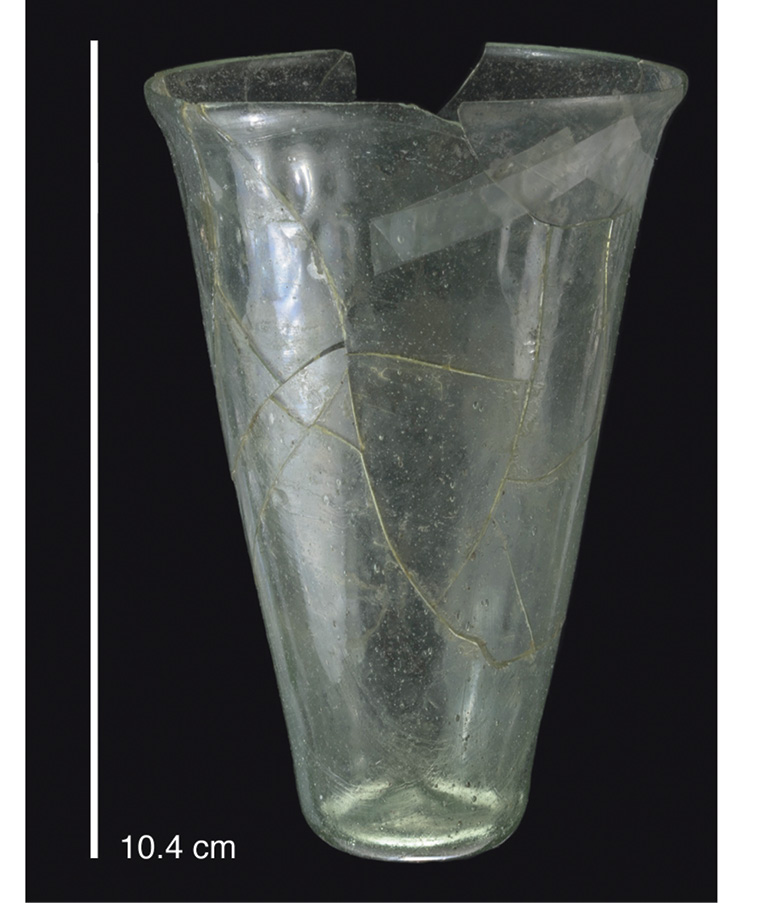
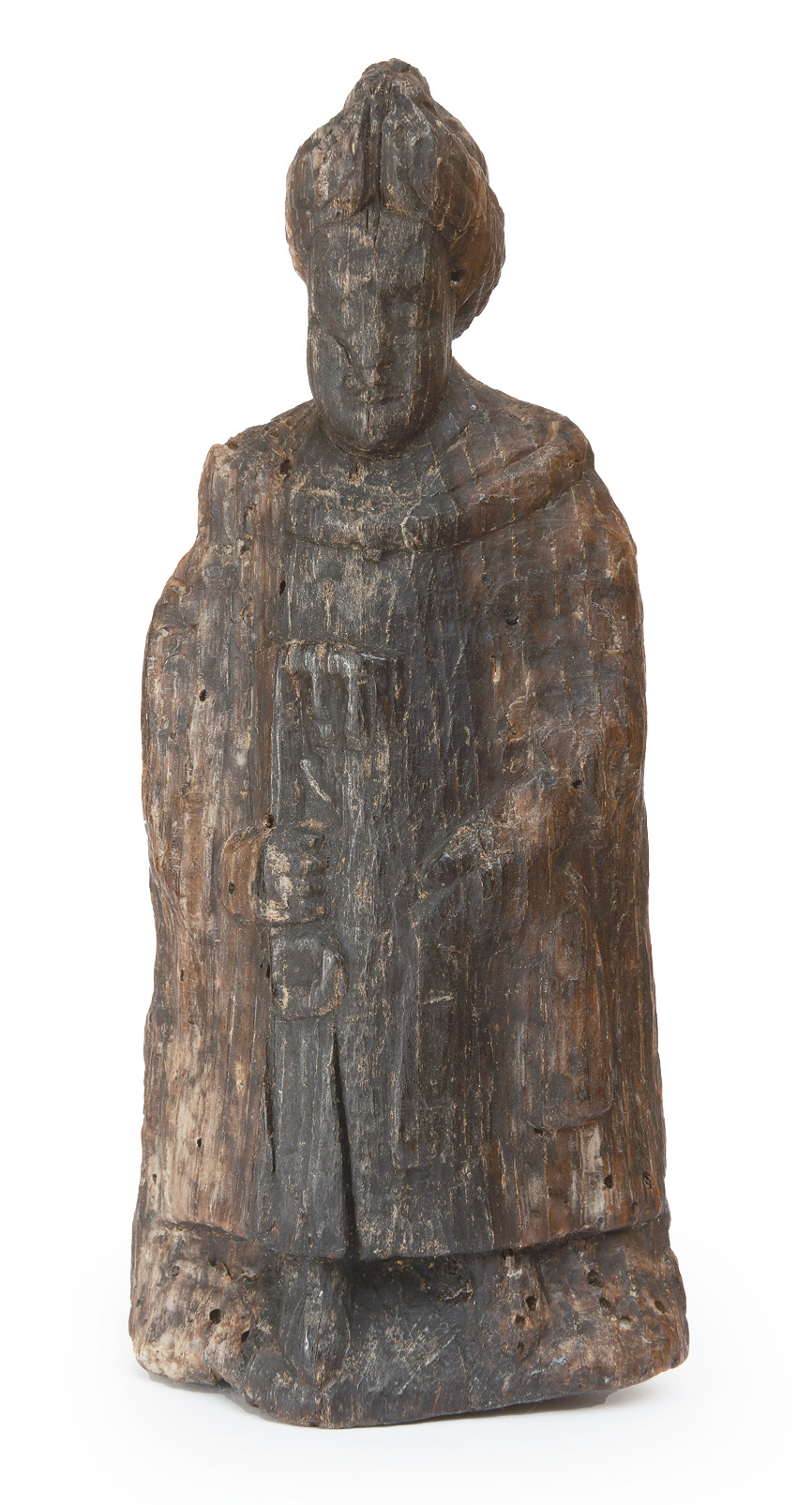
Above & below: Signs of possible continuity within the walls of Winchester include this remarkably complete 4th-century mould-blown conical glass beaker from a probable well that also contained possible Anglo-Saxon pottery and two probably early Anglo-Saxon spearheads.

Apart from Old Minster and two more sites with timber and/or stone structures, there is at present little other clear archaeological evidence for occupation in central Winchester in the period c.650-850. At some point in the second half of the 9th century, a new system of streets was laid out in a single operation, and the town defences were renewed. St Swithun, Bishop of Winchester (852-863), appears to have been responsible for the construction of a new bridge across the Itchen, outside the east gate of the town.
Then, in 901, Edward the Elder (eldest son and successor of Alfred the Great, r. 899-924) acquired land immediately north of the Old Minster for a new monastery known as New Minster (CA 344). This was built and dedicated in 903, and its plan appears to have been based on the church at St Denis, outside Paris, where French kings were buried. New Minster was designed to provide a burial church for Edward’s father (whose body was translated from Old Minster to New Minster probably at the dedication in 903; see CA 288), his mother Ealhswith, and their descendants (two of Edward’s sons were subsequently buried at New Minster, followed by Edward himself in 924, and King Eadwig in 959).
Edward the Confessor was crowned in Old Minster in 1043, and it was used for the burial of at least eight kings, including Cnut (d. 1035), as well as his wife Emma (d. 1052), and their son Harthacnut (d. 1042). Following the Norman Conquest, Winchester remained one of the main urban centres of England until at least the 14th century, although it declined in relation to other towns from the mid-12th century, when its close association with the Crown gradually began to weaken.
Further reading: Francis M Morris and Martin Biddle (2023) Venta Belgarum: Prehistoric, Roman, and Post-Roman Winchester Available as a two-volume hardback (£240) or .pdf eBook (only £16 for personal use). Order direct from the publisher at http://www.archaeopress.com and save 25% with the voucher code 680925. This discount is valid until 30 June 2024.
All images: © Winchester Excavations Committee, unless otherwise stated