
Smallhythe Place: Romans, royal ships, and a rural retreat

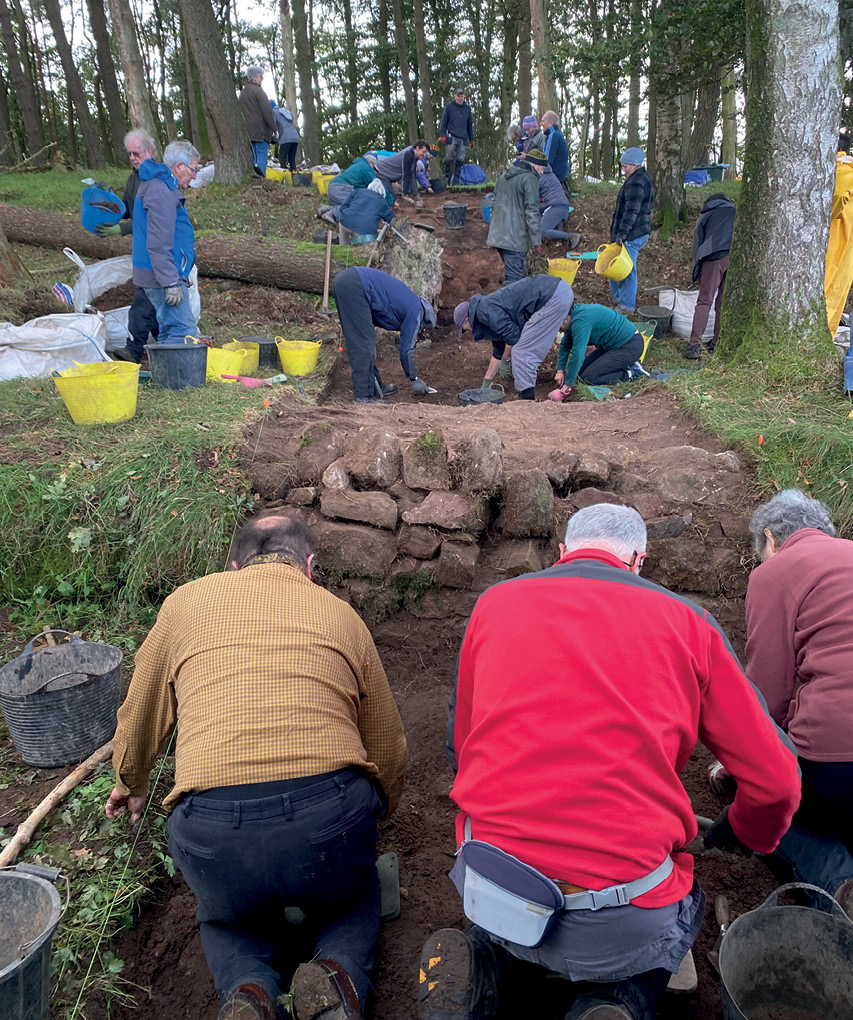
Smallhythe Place, a National Trust property in Kent, is home to a picturesque timber-framed house with enigmatic origins, while the surrounding landscape preserves unique traces of a medieval shipbuilding centre that served several kings. Over the last three years, a team of more than 100 archaeologists have excavated 21 trenches (and a series of boreholes) to help bring the site’s story to light once more. Nathalie Cohen highlights some of the project’s key discoveries.
Start
This article is from Current Archaeology issue 410


Subscribe now for full access and no adverts

Today, Smallhythe Place is best known as the former home of the Victorian actress Ellen Terry and her daughter Edith ‘Edy’ Craig. Ellen acquired ‘The Farm’ and the neighbouring Elfwick and Forstal Fields in 1899, before buying the nearby Priests’ House and Yew Tree Cottage in 1914. The Priests’ House was Edy’s home, where she lived in a lifelong trio with her partners, the painter Clare ‘Tony’ Atwood and writer Christabel Marshall (also known as ‘Christopher St John’). Edy was an influential costume designer, producer, director, and suffragette, and Smallhythe at this time was a radical, creative space, visited by Virginia Woolf, Vita Sackville-West, and Radclyffe Hall. After Ellen’s death in 1928, Edy turned the main house into a museum dedicated to her mother, and also transformed the late 17th-century Barn into a theatre: a role that it still performs today. Edy and her partners continued to live on the site until her death in 1947, after which the property was given into the care of the National Trust.
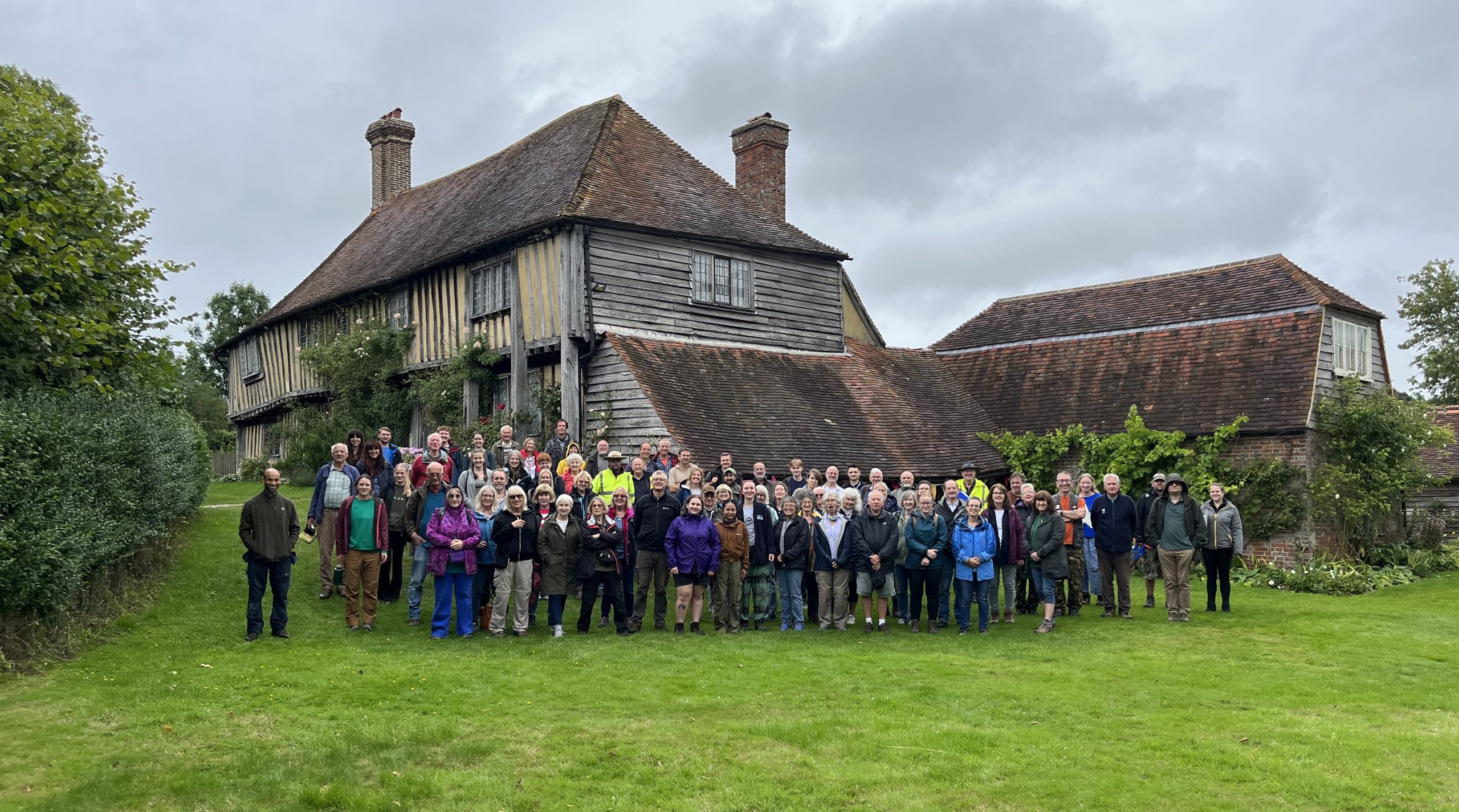
Smallhythe Place is a timber-framed house set in an intriguing archaeological landscape. For the last three years, archaeologists have been exploring its surroundings; this team photo was taken in 2023. Photo: National Trust/Nathalie Cohen

Echoes of this bohemian episode have come to light during our recent excavations, and in previous work on the site. In 2014, HB Archaeology and Conservation Ltd recorded the remains of an early 20th-century water pump located to the north of the main house. It would originally have been donkey-driven, but it was mechanised in the late 1920s, during which time Ellen Terry’s gardener’s initials were added to the concrete platform. Some of the finds from our recent investigations in the garden and in Forstal Field relate directly to Ellen and Edy’s occupancy. Trenches excavated next to the Priests’ House and at the western end of the field both uncovered dumps of late 19th- to early 20th-century rubbish, very similar in make-up to material that was recovered during Archaeology South-East’s work in 2006.

Together, they include flowerpots; fragments of porcelain and other ceramics including plates, cups, and saucers; pieces of marmalade jars and other containers; a decorated bit of bone, which may have formed part of a pen or a cosmetic tool; a toothbrush and toothpaste bottle; and a large collection of discarded glass bottles for drinks (including gin) and medicines. Our metal-detecting survey also produced a screw top from a tube of artist’s paint (associated with ‘Tony’ Atwood?), as well as a seal with a cameo, dating to c.1825 – could this have been bought as costume jewellery for the theatre and lost in the garden after a performance? Examining these artefacts gives us illuminating and intimate insights into the daily lives of the unconventional women who lived at Smallhythe in the early decades of the 20th century – a community vividly depicted in Atwood’s 1919 painting of the site.
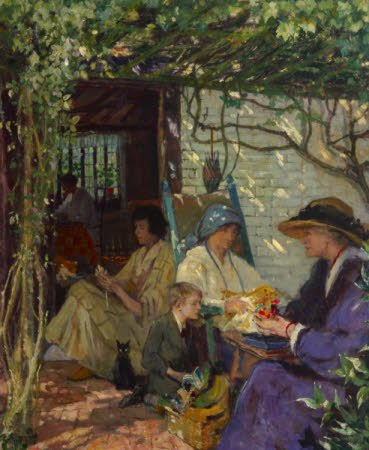
Clare ‘Tony’ Atwood’s  The Terrace outside the Priests’ House depicts the creative world in which she  lived with her partners, Edy Craig and Christabel Marshall, at Smallhythe. Image: National Trust

‘There is no haven there’

Before Ellen Terry’s purchase of Smallhythe Place and the surrounding fields, the site was a small farmstead: historic mapping shows that once there were more agricultural buildings ranged around a yard to the north of the Barn, and excavations and landscape survey have revealed evidence for ponds, field drains, cobbled yard surfaces, and small buildings – possibly agricultural or commercial – in Elfwick Field. Cattle and sheep bones suggest that these animals were being bred and butchered on the site, and harness fittings, horseshoe fragments, a farrier’s nail, and bones indicate the use of horses, too.

Adding to this picture, a vivid description of the Georgian settlement at Smallhythe comes from the Kent historian Edward Hasted in 1798: ‘The hamlet of Smallhyth, commonly called Smallit, is situated somewhat more than three miles from the town of Tenterden, at the southern boundary of this parish, close to the old channel of the river Rother, over which there is a passage from it into the Isle of Oxney. The inhabitants were formerly, by report, very numerous, and this place of much more consequence than at present, from the expressions frequently made use of in old writings of those infra oppidum and intra oppidum de Smallhyth; the prevalent opinion being, that the buildings once extended towards Bullen westward; no proof of which, however, can be brought from the present state of it, as there remain only three or four straggling farm-houses on either side, and a few cottages in the street near the chapel.’

Why had Smallhythe declined to such an extent? The gradual silting up of the northern branch of the River Rother, described as ‘only a creeke of salt water where no ship can come but only lyters and such kind of small vessels’ in a mid-16th-century enquiry, was exacerbated by the deliberate breaching in 1636 of the medieval Knelle Dam upstream from Smallhythe, and thus the waterway became increasingly unusable for larger vessels during the post-medieval period. This was the driver for the gradual decline in prosperity and population at Smallhythe, although the site continued to function as a ferry point and, by the 18th century (at the latest), as the location of a bridge-crossing leading to the Isle of Oxney and the route onwards to Rye and Winchelsea to the south.
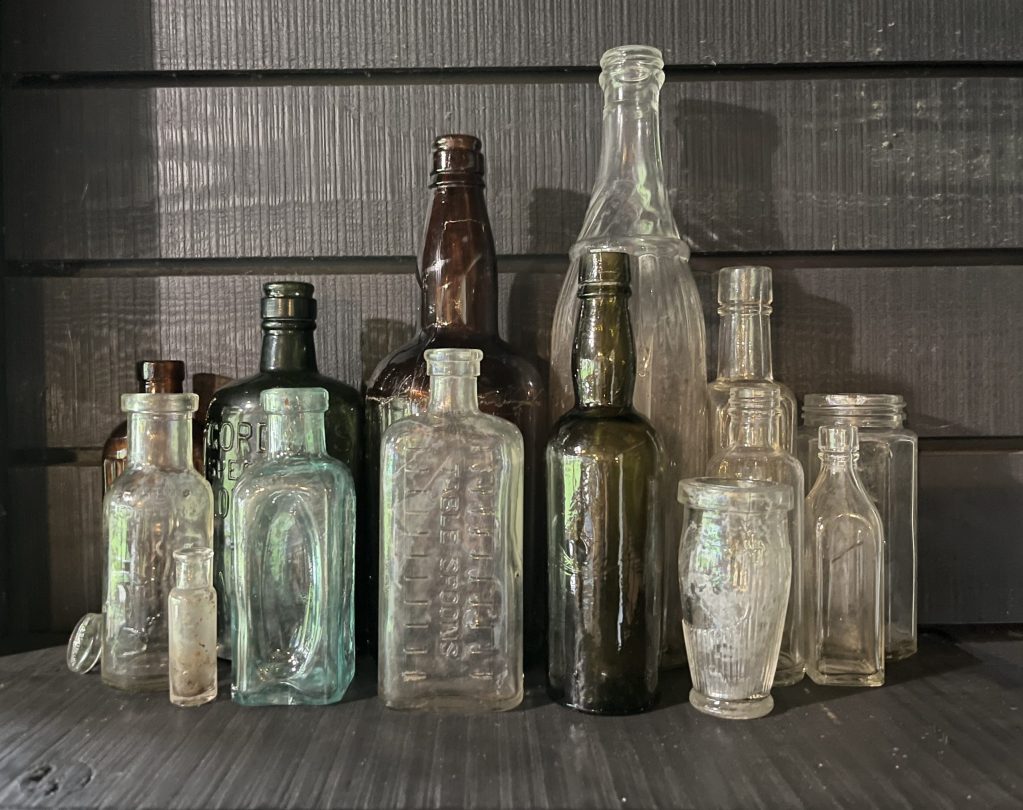
Above & below: Some of the finds reflecting the period when Smallhythe was owned by Ellen Terry and Edy Craig: a series of glass bottles from the Forstal Field midden, and a cameo found in the garden. Images: National Trust/Nathalie Cohen

This later period of the site’s life was reflected in an interesting assemblage of 17th- and 18th-century finds recovered during our 2021-2022 excavations (material from the 2023 investigations is currently undergoing post-excavation assessment). They included copper-alloy items such as a late 16th-/early 17th-century bar mount with loop, a mid-17th-century spur buckle, an 18th-century shoe-buckle fragment, many (many!) pins, buttons, and a post-medieval disc weight. The pottery, meanwhile, included a mixture of locally made glazed red or buff earthenwares, as well as regional imports from the Surrey–Hampshire Border ware industry, from London (notably London stoneware and tin-glazed wares), from Essex (Essex-type black glazed earthenware), and from the Midlands (Staffordshire combed slipware and white salt-glazed stoneware). Some products had come from even further afield, however, as represented by sherds from the German Frechen industry, as well as a German stoneware Westerwald mug.

As for more substantial remains, a small trench in the southern corner of Smallhythe Place Garden revealed our only evidence for surviving waterlogged timbers, in the form of the corner of a structure made of oak, comprising two vertical posts and a plank with a ‘broad arrow’ mark. This symbol is believed to have been used from the 14th century onwards to mark government property within a specific naval or military context. As the plank does not appear to have been part of a ship, it is plausible that it could have come from a government shipbuilding facility – or at least a facility with access to official supplies.

A detail from Emanuel Bowen’s map of Sussex, 1760. Smallhythe lies just over the border, in Kent. Images: National Trust/Nathalie Cohen

Unfortunately, dendrochronological dating for the find was unsuccessful, but the presence of the broad arrow mark, combined with the evidence of sawn conversion for the timbers, suggests an early post-medieval date, which we hope we will be able to refine through the dating of pottery recovered from surrounding layers. As for what the structure was, it could represent part of a waterfront revetment or jetty, or possibly a bridge caisson. The origins of the broad arrow mark are somewhat obscure, but there does seem to be an explicit association of the symbol with both royal and naval interests – for example, an early 17th-century document records the requirement for all trees meant for naval use to bear ‘the sovereign’s mark’. It is extraordinarily tempting to wonder whether this tradition was established earlier, and whether medieval- and Tudor-period timbers at Smallhythe were ever marked for the monarch’s use.

Who lived in medieval Smallhythe?

The ‘landing place’, or ‘hythe’, that gives Smallhythe its suffix is recorded from the late 12th to early 13th century: documents held in the archives of Canterbury Cathedral attest to individuals named Robert and William ‘the small’ (parvus) holding land to the north of the landing place, with responsibilities for maintaining sea and freshwater defences. While we have only recovered a small assemblage of ceramics of this date during the excavations at Smallhythe, the pottery record more clearly shows the population growth known to have taken place during the later 13th and into the 14th century, with the presence of products made locally in Rye, as well as imported Gascon and Flemish wares. Documentary evidence also demonstrates increasing activity at the settlement during this period, associated with the growth in maritime activity and related industries, and the movement of goods across the Channel.

The only evidence for surviving waterlogged timbers uncovered by the recent project. They are thought to be possibly early post-medieval in date. Image: National Trust/Nathalie Cohen
A post-medieval copper-alloy disc weight, discovered during the 2021-2022 excavations. Image: National Trust/David Fletcher

Smallhythe reached the peak of its success as a port and a centre of ship-handling during the 15th to early 16th century, when we know that land in Elfwick Field was owned by the Knights of St John (the Knights Hospitaller). Intriguingly, excavation revealed a substantial masonry building of chalk and limestone, lying alongside Smallhythe Road: might this have been connected to the warrior monks? We know, too, that the local society was dominated by several wealthy families involved in shipbuilding at this time: one of the most successful and significant residents was Robert Brigandyne, Clerk of the King’s Ships from 1495 to 1523, under both Henry VII and Henry VIII.

Smallhythe Place’s 1530s wall paintings, shown under ultraviolet light.Image: National Trust/Matthew Champion

As for the beautiful timber-framed house of Smallhythe Place itself, there has been much debate about the exact date of its construction. Again, dendrochronological dating has been unsuccessful, but an early 16th-century origin seems most likely. Local tradition tells of a ‘great fire’ in Smallhythe in 1514- 1515, which is reported to have destroyed much of the village. While we have found no archaeological evidence of Tudor-era fire damage, there does appear to have been something of a building boom during the early 16th century, with the Chapel of St John the Baptist, the Priests’ House, and Smallhythe Place itself all built (or rebuilt) at this time.

Overlooking the remains of a late medieval building excavated during the 2022 investigations. Photo: Isle Heritage

Sitting by the crossing point, the house boasts early 16th-century decorative wall paintings, and the oriel windows in the Parlour (now the Terry Room) had views southwards across the river channel to the Isle of Oxney and to the west out to Smallhythe Road. There is an unusual double front door arrangement, suggestive of private and public entranceways, and it is also clear that the building was once much larger: post-medieval and mid-19th-century alterations have removed the northern and southern ranges that once existed there. It has traditionally been known as the house of the ‘portreeve’, or port warden, but there is no evidence to support this attribution (a portreeve is known from medieval documents downstream at Appledore, but there are no references to anyone holding this office at Smallhythe). Similarly, the Priests’ House has long been associated with the home of Robert Brigandyne. However, it has been speculated that this cottage would have been too modest a residence for a man of such status, and that Smallhythe Place itself – with the evidence for embellishments indicative of wealth and influence – could have been a more fitting home for the ‘Keeper of the King’s Ships’.

The Grand Mistress, here depicted in the Anthony Roll, was built for Henry VIII at Smallhythe in 1545 1456. Image: From The British Library archive, MS 22047 f.1r.

Ships fit for a king

Although you would not think it now, looking out across the fields, medieval Smallhythe was one of the most significant shipbuilding centres in England, producing vessels for a number of kings of England in the 15th and 16th centuries. We know that the Marie, a 100-ton vessel, was built there for Henry IV (r. 1399-1413), while Henry V (r. 1413-1422) commissioned the 1,000-ton Jesus, as well as the George, a 120-ton balinger (a vessel that could be rowed as well as sailed). The last of the royal ships to be built at Smallhythe were Henry VIII’s Grand Mistress and The Great Gallyon in 1545-1546. As a unique survival of a medieval shipbuilding site, Smallhythe is highly significant for the study of nautical archaeology of the period, but much of the archaeological evidence for this industry is very subtle. Traces of the shipyard are just visible as earthworks in the fields to the east and west of Smallhythe Place, while a medieval shipbuilder’s axe is held in the collections of nearby Tenterden Museum, and dozens of iron ship-nails and roves – the distinctive diamond-shaped washers used to fix the boards of clinker-built vessels in place – have been found across the neighbourhood.

In 1998, Time Team visited the site to carry out a number of surveys, including a study of aerial photographs, geophysics, and the opening of several exploratory trenches. A joggled futtock (frame element) from a small vessel was found during this investigation, as well as numerous iron fastenings and clench nails, while the Team also partially excavated a late medieval kiln, which probably made bricks that were used to line the galleys of the kings’ ships (creating a fireproof box for cooking in an otherwise wooden environment). Subsequent excavations undertaken by commercial units ahead of infrastructure works (such as the installation of sewage-treatment plants) have added to this picture, and our recent community research project has led to an even more detailed understanding of the medieval shipyard.

Overlooking the foreshore trenches. While today these fields are dry, they were once part of a busy medieval waterfront and shipbuilding centre. Photo: National Trust/Sam Milling

During 2021-2023, we carried out landscape surveys to map the surviving earthworks, and also relocated the kiln explored by Time Team more than 20 years earlier, as well as evidence for a road running east–west, which is known as ‘Strand Syde’ from documentary records of 1474 and depicted on a map of 1594. Further evaluation trenching has established the line of the medieval foreshore, where we uncovered the remains of one of the ‘mud docks’ in which medieval ships would have been constructed. This was a very basic form of shipyard, in which you would dig a big hole close to the river, build your ship, then breach the bank so that the vessel could sail out into open water. These discoveries featured in the 2024 season of the BBC’s Digging for Britain – and further evidence of this industry emerged during a metal-detecting survey that we carried out to learn more about the density and distribution of iron nails and roves across the entire site.

An unused medieval rove found during metal-detecting survey. Image: National Trust/Sam Milling

We can tell from the roves that shipbuilding, -breaking, and -repair were all taking place at Smallhythe, as we have found both used and unused examples of these items. It appears, too, that roves must have been plentiful and readily available, as they were dropped in their thousands on the muddy foreshore, with apparently little concern about recovering them. These iron artefacts also show us that the vessels at Smallhythe were constructed using clinker building techniques (with overlapping planks) rather than the later tradition of carvel building (with hull planks laid edge-to-edge). This change in ship technology occurred in England from the late 15th century, and it is interesting to note that the 600-ton Regent, was built using carvel construction in 1487-1488 for Henry VII at Reading Street, around two miles downstream.

This change of location was probably prompted by the gradual silting up of the River Rother, which made Smallhythe no longer suitable for building large vessels during the closing decades of the 15th century. Henry VIII’s vessels were probably also constructed in shipyards to the east of Smallhythe Place during the mid-16th century. This shift downstream may have encouraged the construction or renovation of new residences of some status, too, among them Smallhythe Place itself, as the area was no longer associated with industry.

Romans by the river

There were earlier – and more surprising – finds during our excavations as well. Although small quantities of Roman material had previously been found at Smallhythe during Archaeology South-East’s investigations in Forstal Field, and in a geophysical survey of the Elfwick Field by the Hastings Area Archaeological Research Group, the discoveries made during 2021-2023 have rewritten our understanding of the area during the first centuries of the 1st millennium AD.

We have discovered a previously unrecorded Roman riverside settlement, occupied from the 1st to the late 3rd centuries, with evidence for timber buildings, iron smelting, rubbish pits, and boundary ditches. During a watching brief on another sewage treatment plant project in the garden of Yew Tree Cottage, Archaeology South-East found a late Roman deposit of dumped building material, indicative of a masonry building with underfloor heating.

That this settlement was associated with the Roman fleet (the Classis Britannica) is confirmed by the discovery of 25 tiles stamped with the mark of the fleet (CLBR), as well as pottery imported from the Continent, demonstrating Smallhythe’s links with the wider Roman Empire.

This Roman tile is stamped ‘CLBR’, the mark of the Roman fleet, or Classis Britannica. Image: National Trust/James Dobson

Two finds offer an insight into the private lives and beliefs of the occupants of Roman Smallhythe. The first is an incredibly rare head of a figurine of the god Mercury, made from pipeclay. Religion was a central part of daily life in most Roman provinces, and statues as well as portable figurines of gods were worshipped by both the Roman elite and the ordinary citizens in their homes. Pipeclay figurines were made of clays local to central Gaul (modern-day France) and the Rhine-Moselle region, and were exported to other parts of the Empire; however, most of the figures found in Britain are of female deities, with the majority depicting Venus. Mercury was the god of all the fine arts, as well as commerce and financial success, but – while he is the most commonly depicted deity in metal figurines – pipeclay examples are extremely rare, with fewer than ten so far found from Roman Britain. The complete figurine probably would have depicted Mercury standing, either draped with a chlamys (a short cloak) or naked, holding his characteristic caduceus (staff with intertwined snakes). 

An extremely rare pipeclay head depicting the Roman god Mercury. Image: National Trust/James Dobson

Dr Matthew Fittock, an expert on ceramic figurines in Roman Britain, noted that ‘pipeclay figurines were mainly used by civilians for private religious practice in domestic shrines and occasionally in temples and the graves of often sick children. Rather than pieces being discarded because they were broken, there is evidence to suggest that deliberately breaking some figurine heads was an important ritual practice, whereas whole figurines are usually found in graves. Few single pipeclay heads are known in Britain, some of which may have been votive offerings. Finds like this at Smallhythe provide an extremely valuable insight into the religious beliefs and practices of the culturally mixed populations of the Roman provinces.’

The second find awaits further investigation and micro-excavation under lab conditions: it is a complete Roman pot that had been deposited within a construction cut. While we have been able to partially reconstruct some of the broken vessels we found during the excavation, this example was not disposed of as fragments discarded with refuse, but was instead deliberately buried whole. It will be fascinating to learn what is contained within in it – watch this space for further news.

Why was this Roman pot buried intact at Smallhythe? It is hoped that micro-excavation of its contents might shed some light on its purpose. Images: National Trust/Nathalie Cohen

Acknowledgements

Nearly 200 people have directly participated over the three years of #TheDig project, both on- and off-site, including members of the Hastings Area Archaeological Research Group, the Wealden Archaeology Group, the Canterbury Young Archaeologists Club, Tenterden Museum and History Explorers Club, independent specialists and professional archaeologists supporting the fieldwork and post-excavation assessments, staff from National Trust properties at Smallhythe, Bodiam Castle, Scotney Castle, Sissinghurst, Chartwell, and Polesden Lacey, and students from York, London, Oxford, Cardiff, Canterbury, Durham, Manchester, and Leicester universities, and local schools. Thousands more have joined us for site tours and during visits to the property to see archaeology in action, and we look forward to welcoming many more in the future as we research and archive the collection and share the results of our work.

Funding for the project at Smallhythe Place was generously provided by the National Trust’s Roman Research Fund, the Robert Kiln Fund, the Society of Antiquaries, the Royal Archaeological Institute, and the William and Edith Oldham Charitable Trust.

Images: National Trust/Nathalie Cohen
Further information: Finds from the excavations, including the Mercury figurine, are now on display at Smallhythe Place, and reports on the archaeological investigations are accessible via the National Trust’s Heritage Records Online (search for MNA153490 at https://heritagerecords.nationaltrust.org.uk). You can also see 3D models of buildings, trenches, and artefacts, created by David Fletcher, at SketchFab: https://sketchfab.com/nationaltrustarchaeology.

By Country

Popular
UKItalyGreeceEgyptTurkeyFrance

Africa
BotswanaEgyptEthiopiaGhanaKenyaLibyaMadagascarMaliMoroccoNamibiaSomaliaSouth AfricaSudanTanzaniaTunisiaZimbabwe

Asia
IranIraqIsraelJapanJavaJordanKazakhstanKodiak IslandKoreaKyrgyzstan
LaosLebanonMalaysiaMongoliaOmanPakistanQatarRussiaPapua New GuineaSaudi ArabiaSingaporeSouth KoreaSumatraSyriaThailandTurkmenistanUAEUzbekistanVanuatuVietnamYemen

Australasia
AustraliaFijiMicronesiaPolynesiaTasmania

Europe
AlbaniaAndorraAustriaBulgariaCroatiaCyprusCzech RepublicDenmarkEnglandEstoniaFinlandFranceGermanyGibraltarGreeceHollandHungaryIcelandIrelandItalyMaltaNorwayPolandPortugalRomaniaScotlandSerbiaSlovakiaSloveniaSpainSwedenSwitzerlandTurkeySicilyUK

South America
ArgentinaBelizeBrazilChileColombiaEaster IslandMexicoPeru

North America
CanadaCaribbeanCarriacouDominican RepublicGreenlandGuatemalaHondurasUSA

Discover more from The Past

Subscribe now to keep reading and get access to the full archive.

Continue reading