Subscribe now for full access and no adverts
As many legends are based on real people and events, I believe that Joseph, son of Jacob and Rachel, was a real person of Hebrew faith who held a high office in ancient Egypt. Joseph is prominent in the Bible of Christian tradition, in Jewish legends (Midrash and Aggadah), and in the Qur’an of the Islamic religion. When in Egypt, he was given an Egyptian name, which the Bible states was ZAPHENATH PAANEAH. The actual name in Egyptian may never be known, as we do not have the original hieroglyphic symbols. However, there are several possible renditions.
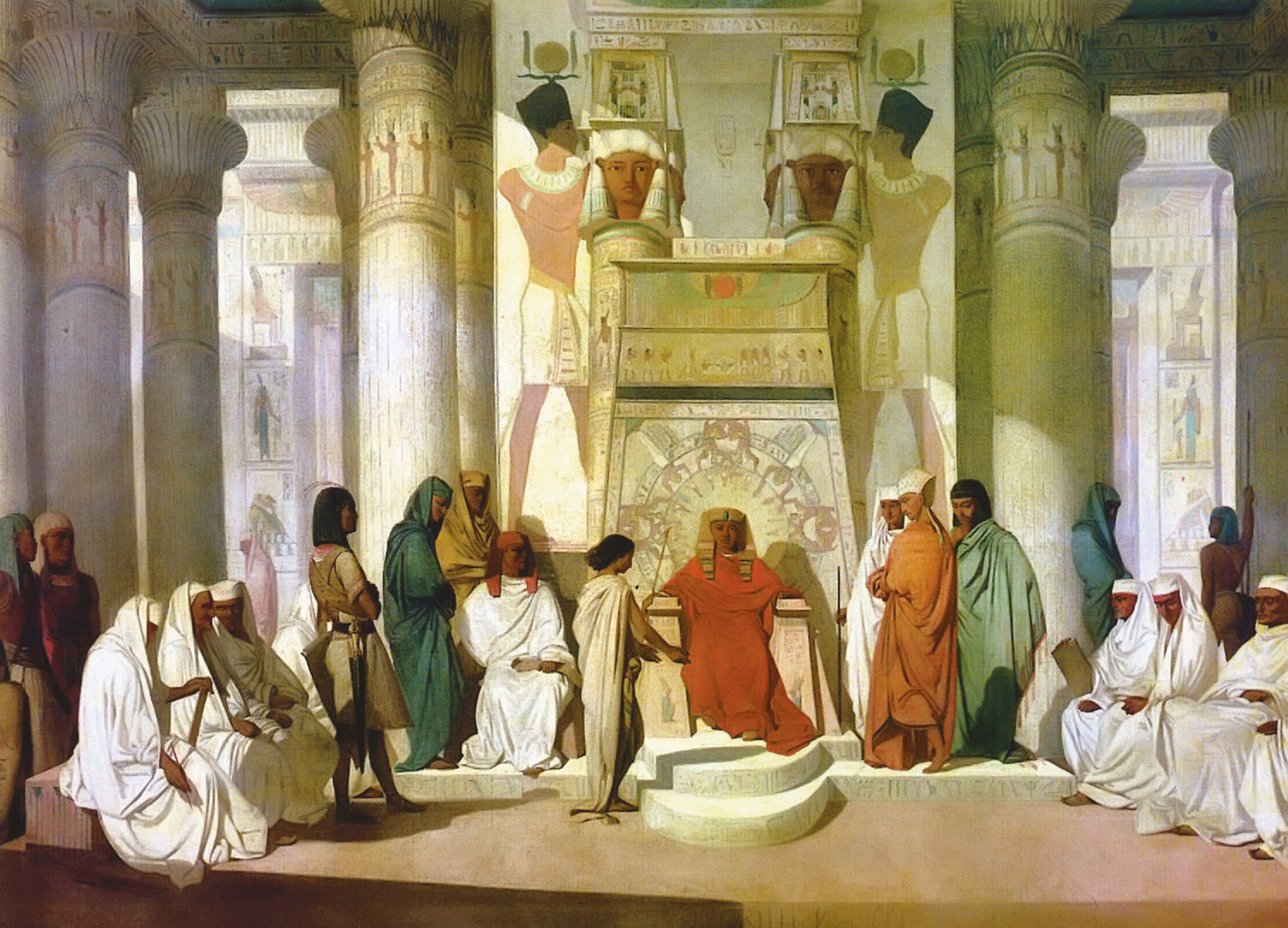
Joseph in Egypt
Joseph was probably born c.1710 BC. From an early age, he was an interpreter of dreams for his brothers and his father Jacob. According to the Bible, he was sold into slavery in Egypt by his jealous brothers. While in prison after false accusations of attempted rape, Joseph interpreted the dreams of the royal butler and also the royal baker. Later on, he was able to decipher Pharaoh’s dreams, following which, at the age of about 30, he became vizier in charge of the agriculture and granaries of northern Egypt c.1680 BC, during the early Hyksos era.

In ancient Egypt, food scarcities usually occurred during periods of civil war, when there was a lack of strong central government, or following an extended period when the Nile did not flood sufficiently to irrigate the land. To combat starvation, ancient Egyptians dug canals for irrigation and amassed grain into storehouses. According to the Bible, Joseph stored up grain during seven years of good harvests so that the people would not starve during the following seven years of famine.
This famine was probably the same one as reported by Bebi, a nobleman of Elkab in southern Egypt, in the later Thirteenth Dynasty. On Bebi’s tomb inscription, he tells us: ‘I was one who amassed grain. I was loved for good and was vigilant in winter. When the famine came upon us for a number of years, I gave grain to my community upon each famine’. The seven-year famine mentioned in the Bible occurred c.1673 to 1666 BC. This time-frame would fit well, as the Hyksos were still trying to consolidate power in northern Egypt after their capture of Memphis.
Translating Joseph’s name
It is the Book of Genesis that records Joseph being given the name ZAPHENATH PAANEAH in Egypt. Is there a similar translation in both ancient Egyptian and Hebrew? There seems to be a reasonable match.
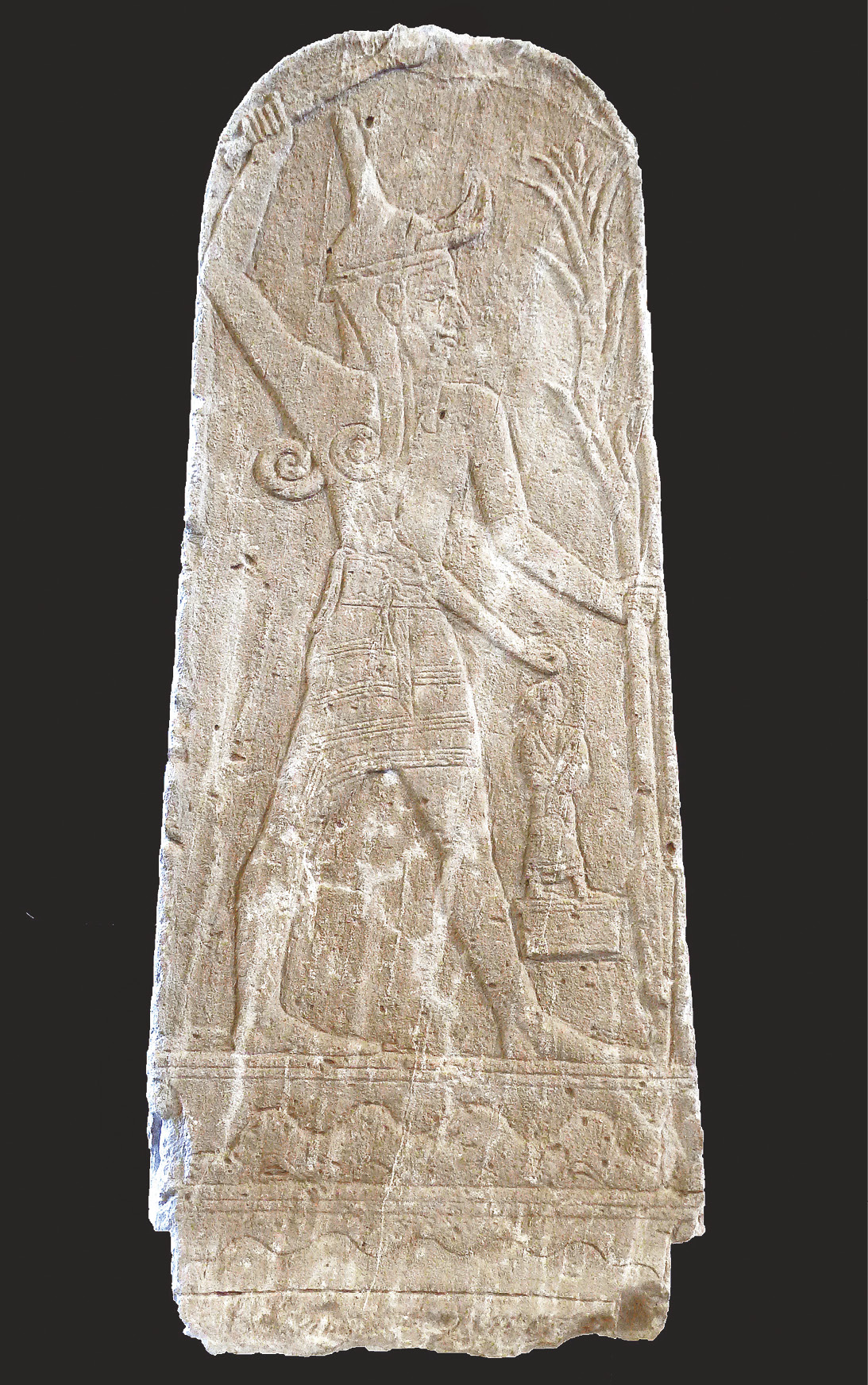
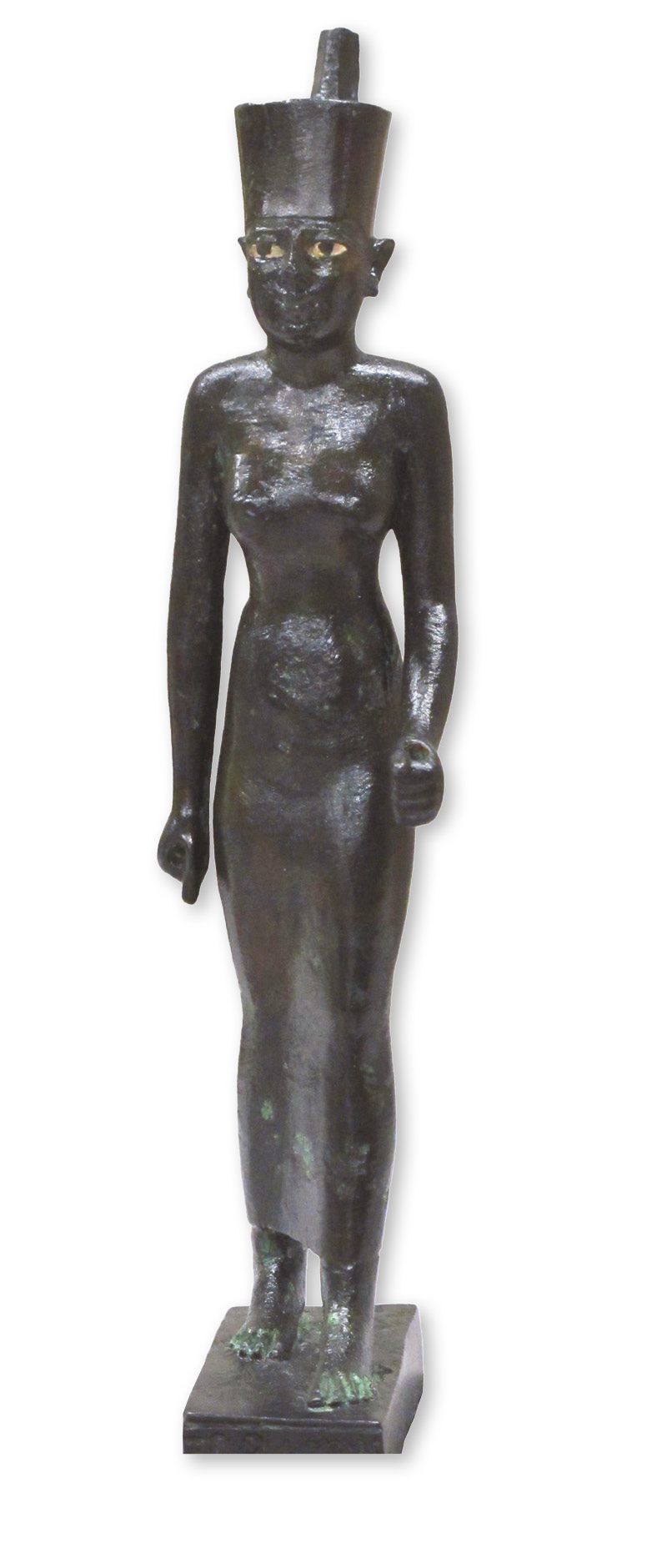
In ancient Egyptian, the first word, ZAPHENATH, can be broken down into zap-nat. This seems to refer to the Canaanite god Ba’al Zaphon and to the Egyptian goddess Neith. Zap(o)nu refers to the north: Zaphon. Nat is contained in the last part of the name of Joseph’s Egyptian wife, Asenath (as nath). In Egyptian, Asenath can be decoded as ‘tongue of or belonging to Neith’.
The second word, PAANEAH, can be broken down as pa-a-ne-akh or ah-t, which can be translated as: ‘This (pa) authority (a) he (ne) who introduces desired future consequences or exhortations (akh) or entreaties or petitions (ah-t)’.
Joseph’s given Egyptian name in Hebrew is TSOPHNATH PA‘NEACH. The first word, TSOPHNATH, can be shown to refer to the North (Tsaphon), and probably to Neith (Nath). The god, Ba’al Tsaphon, was known as ‘Lord of the North’. In Hebrew, the second word, PA‘NEACH, means to ‘decipher or decode’. Hence, this word comes from both the ancient Egyptian and Hebrew with only very minimal transliteration. Josephus’s rendering of the Egyptian name of Joseph, Psonthom phanech, as ‘revealer of secrets’ seems to be accurate!
Two Deities
Therefore, in both the Egyptian and Hebrew translations, Joseph appears to be named after two gods, each from a different culture. The Canaanite god Ba’al Tsaphon was associated with Mount Tsaphon (Jebel Aqra) in the north of Phoenicia. In Hebrew, Ba’al means either ‘lord’ or ‘master’, and Tsaphon renders as ‘north’, ‘hidden’, or ‘winter’. This deity was known as ‘Lord of the North’. Ba’al Tsaphon was compared with the Egyptian god Set and the Hyksos god Sutekh. In the era of Joseph, Ba’al Tsaphon in the Bible had a positive image.
The second deity in Joseph’s name is Egyptian. From the earliest times, Neith was revered as the goddess of war, creation, and weaving, particularly in the north. Her symbols were two bows, tied in a package, and also crossed arrows, sometimes combined with a shield.
Other possible translations
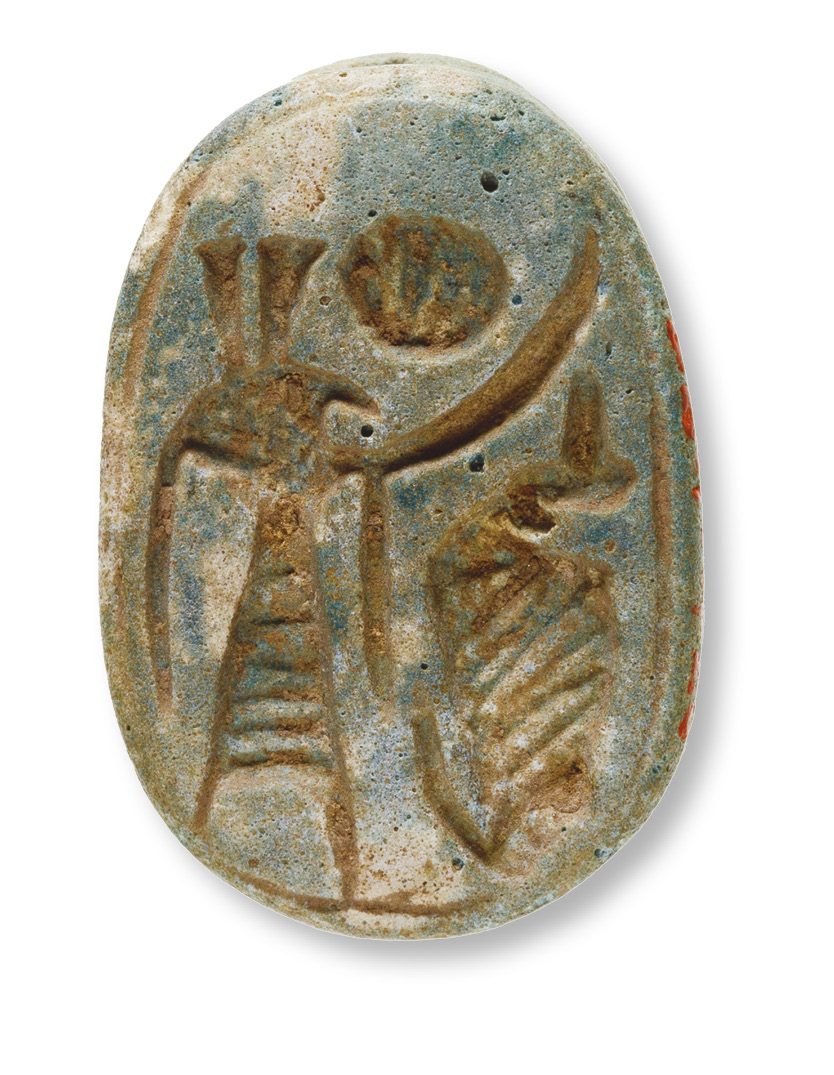
In ancient Egyptian, there is one possible rendering with hardly any transpositioning problems. The Egyptian would be zaf-en-ath followed by pa-a-ne-akh or ah-t. Zaf-en-ath translates as ‘He who seizes on account of food’. The pa-a can be read as ‘this authority’, the ne signifies ‘he’, and akh or ah-t becomes ‘fertile land’. This interpretation comes directly from the ancient Egyptian with no transliteration. In this case, the final expression would be ‘He who seizes on account of food, this authority of fertile land’. This reading is also reasonable considering the Bible’s story. However, there is no ancient Hebrew counterpart in derivation or sound to this translation.
Other possible Egyptian translations include Zap(o)nu nat, which means Ba’al Zaphon and Neith, followed by pa-a-ne-akh or ah-t, which can be read as ‘he, the authority, of fertile land’. Another reading is zaf-en-ath followed by pa-a-ne-akh or ah-t, which can be interpreted as ‘He who seizes on account of food and this authority who introduces desired future consequences, exhortations, entreaties, or petitions’. There are no Hebrew derivations for these two versions.

In a positive way, Joseph lived well within both the Hebrew (Canaanite) and Egyptian cultures. He forgave many people, overcame adversity of prison and slavery, practised diplomacy by allowing his Hebrew family to migrate to Egypt, spoke many languages (decipherer of dreams), and used common sense in prudently providing for the upcoming food shortages. All of this was reflected in the different translations his Egyptian name. All versions of his name incorporate two deities (Ba’al Tsaphon and Neith), both of whom would have been known to the Hyksos rulers. In Egypt today, Joseph is remembered in the name of an important canal that helps to irrigate the Fayum: the Bahr Yussef, ‘the waterway of Joseph’
Dr Joseph L Thimes is a retired professional in diverse fields, who has a particular interest in forensics, DNA, and human anatomy. He is a regular contributor to AE magazine, including articles on famine (AE108), fishing (AE121), and Tutankhamun’s family DNA (AE133).