
Subscribe now for full access and no adverts
Today, Rendlesham is a rural village near Woodbridge in south-east Suffolk, but for a long time it was an intriguing footnote in the story of early medieval East Anglia. The site appears briefly in Bede’s Ecclesiastical History, where it is described as a vicus regius or ‘royal settlement’. Like the Northumbrian power centre at Yeavering, some 250 miles (400km) to the north, Bede depicts Rendlesham as a place of royally sanctioned baptism during the 7th century, and interest in its early medieval importance grew exponentially following the discovery of Sutton Hoo’s princely burials just four miles away in 1939. However, unlike Yeavering (whose palatial complex was first excavated by Brian Hope-Taylor in the 1950s, with subsequent investigations most recently including fieldwork led by Durham University and The Gefrin Trust; see CA 384 and 405), Rendlesham’s reputed royal residence proved stubbornly elusive, with several different locations within the parish suggested. Fieldwalking in the 1980s had produced quantities of 5th- to 9th-century pottery in fields to the north and west of the parish church of St Gregory, indicating occupation of this period, but there was little or nothing to suggest a settlement of the status described by Bede.
Over the last two decades, though, this picture has dramatically changed, thanks to a series of linked archaeological initiatives that have gradually teased clues from the Suffolk soil, bringing a long-vanished community back into brilliant focus. During the course of this work, individual discoveries were published in archaeological journals, but now the team’s wider interpretations have been brought together in a comprehensive monograph, complemented by a paper in Medieval Archaeology that summarises three years of excavation on the site (both are open access online; see ‘Further information’ below). Their findings add illuminating new details to our knowledge not only of elite early medieval activity within the immediate area of the Deben river valley, but of wider landscapes of power that appear to have been more organised, more interconnected, and more enduring than was previously thought. Here, we will explore some of the key themes from this research, tracing the rise and decline of this major power centre, placing it within its wider context, and examining what it means for our understanding of the early East Anglian kingdom.

Searching for a settlement
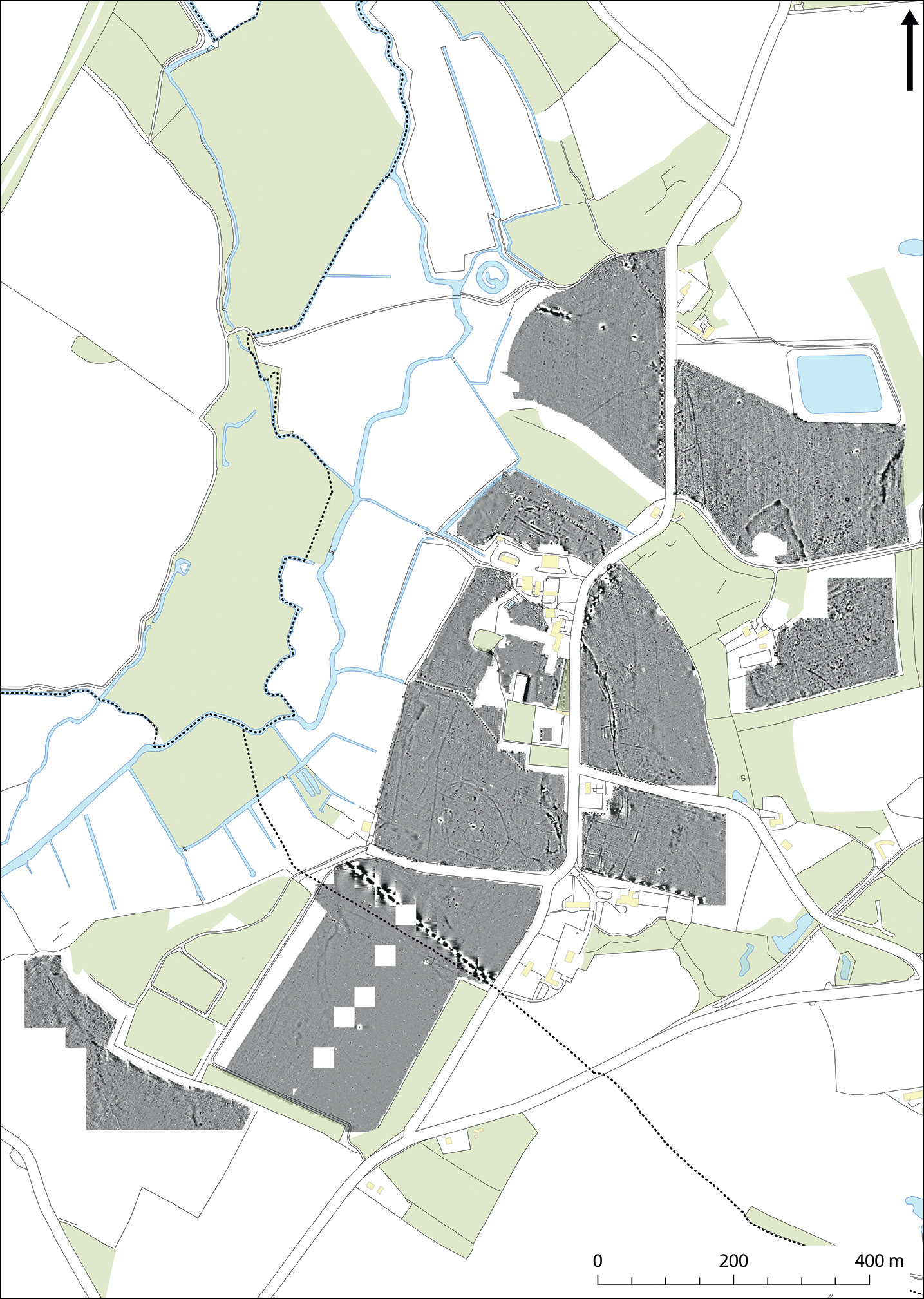
The story of Rendlesham’s rediscovery begins in earnest in 2007, when the owner of nearby Naunton Hall raised the alarm about illegal metal-detecting on his land. Suffolk County Council Archaeological Service sprang into action, organising a controlled survey by four trusted detectorists who had all worked with the council or on commercial excavations in the past. Their investigation produced coins and other metal finds testifying to 5th- to 8th-century activity with a distinctively high-status emphasis – so, in light of these finds (and faced with further illegal metal-detecting raids on Naunton Hall’s fields), the pilot study was extended and expanded. Between 2008 and 2014, the same team of detectorists systematically examined the entire estate – an area of c.170ha (420 acres) – and, combined with geophysical surveys and a detailed examination of aerial photographs of the area, this work provided vital clues to the settlement’s nature, location, and extent.
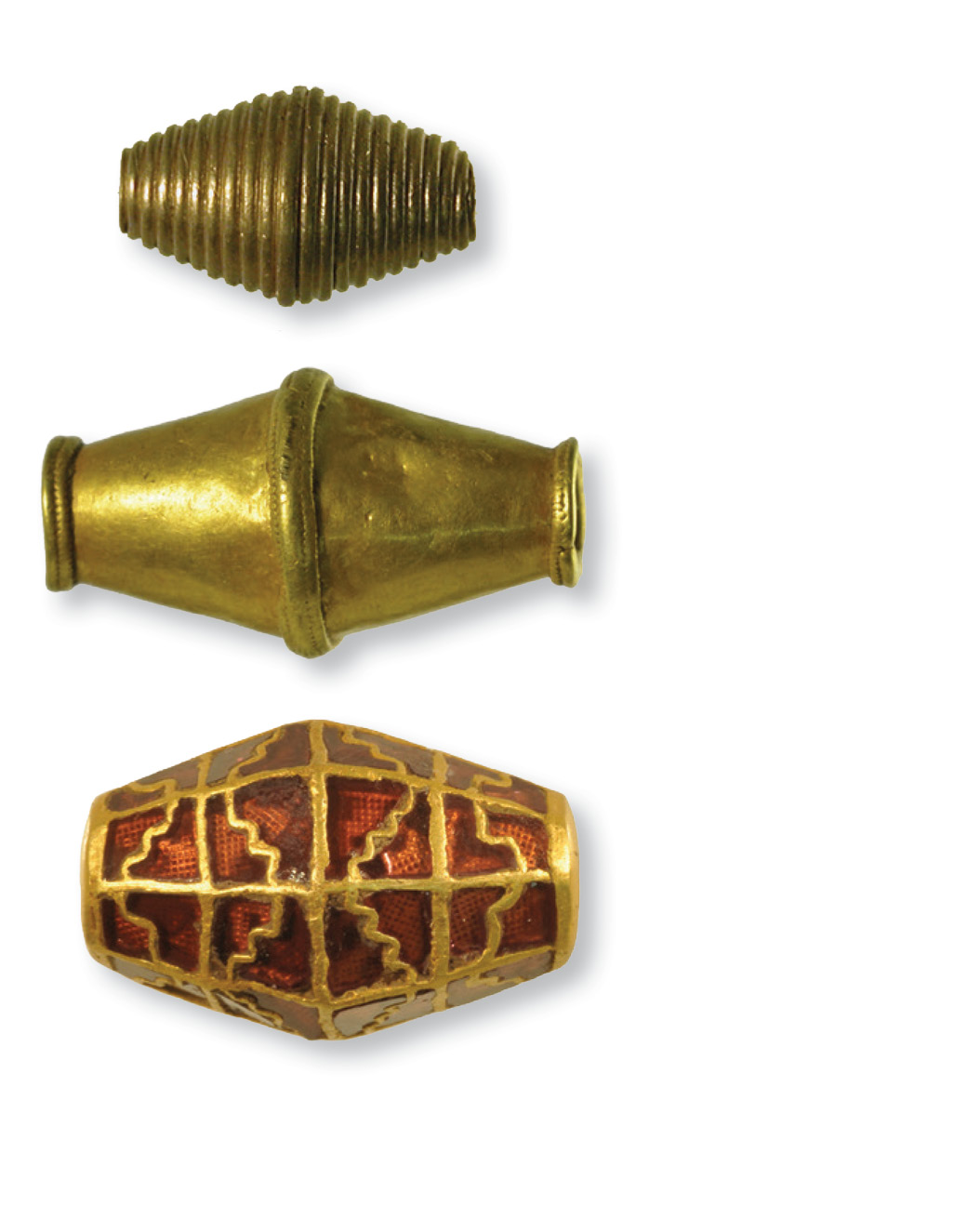
Of the 5,000 or so items that were recovered from the plough soil during these investigations, 27% belonged to the early medieval period. To put that figure in context, the project team note that early medieval finds make up just 5% of all discoveries recorded by the Portable Antiquities Scheme for the whole of Suffolk. The strikingly skewed proportion at Rendlesham therefore points to a significant focus of activity in this area – but where was the settlement itself? The precise find spot of every metal-detected object had been carefully logged using GPS in order to build up a picture of the distribution and density of this intriguing artefact-scatter, and geophysical surveys undertaken over the greatest concentration of finds revealed a complex array of underlying archaeological features. Trial-trenching followed in 2013, revealing that some of these were Grubenhäuser, the characteristic sunken featured structures associated with early medieval settlements.

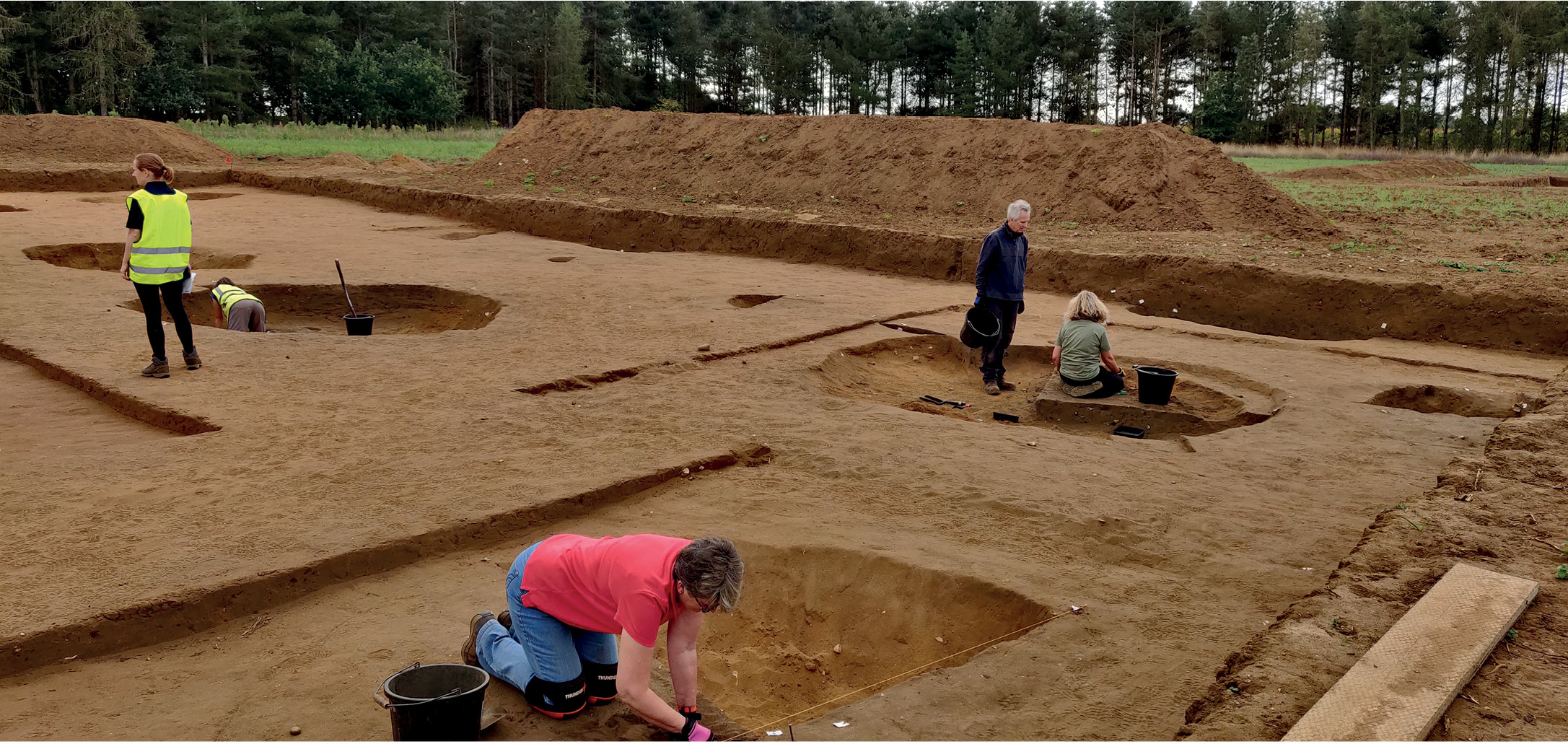
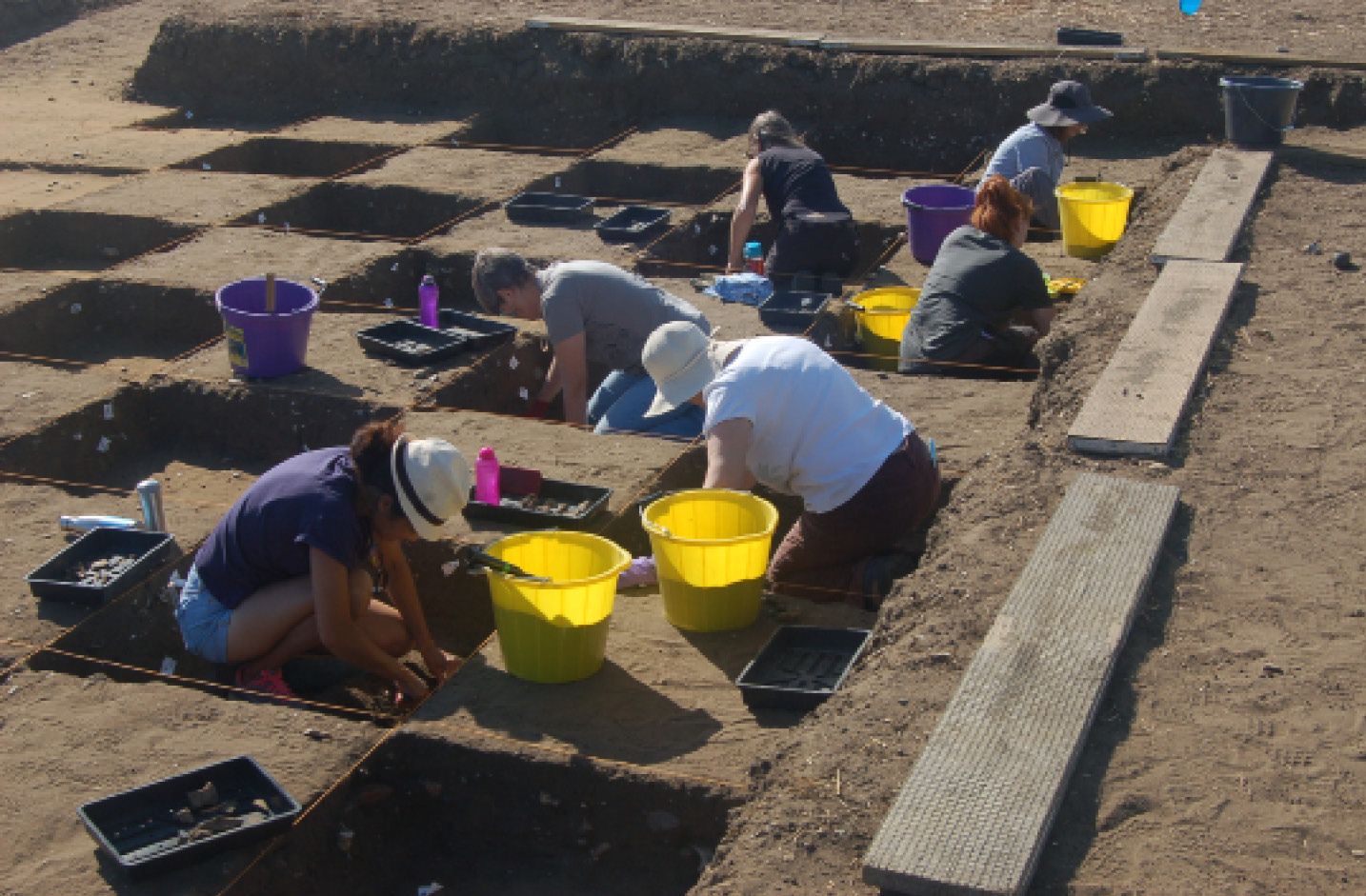
Until this point, the team emphasise, this was never a grand project, but a succession of short initiatives operating around the agricultural calendar and working from one portion of funding to the next. A step-change in the scale of their work came in 2017, though, when a grant from the Leverhulme Trust funded expert analysis of the enormous dataset represented by the metal-detected finds, which sparked a 3.5-year multidisciplinary project based at University College London Institute of Archaeology, the University of East Anglia, and the Fitzwilliam Museum in Cambridge. Complementing this work, another major grant (this time from the National Lottery Heritage Fund) supported the creation of ‘Rendlesham Revealed’, a community archaeology project run by Suffolk County Council Archaeological Service. Drawing together diverse local groups (see below), this initiative carried out three summer excavations between 2021 and 2023, targeting key features identified during the previous geophysical surveys. The twin threads of this research weave together a detailed picture of both elite and everyday activities in 5th- to 8th-century East Anglia, seen through the lens of the largest and materially richest settlement of its date yet identified in England.
Communities excavating communities
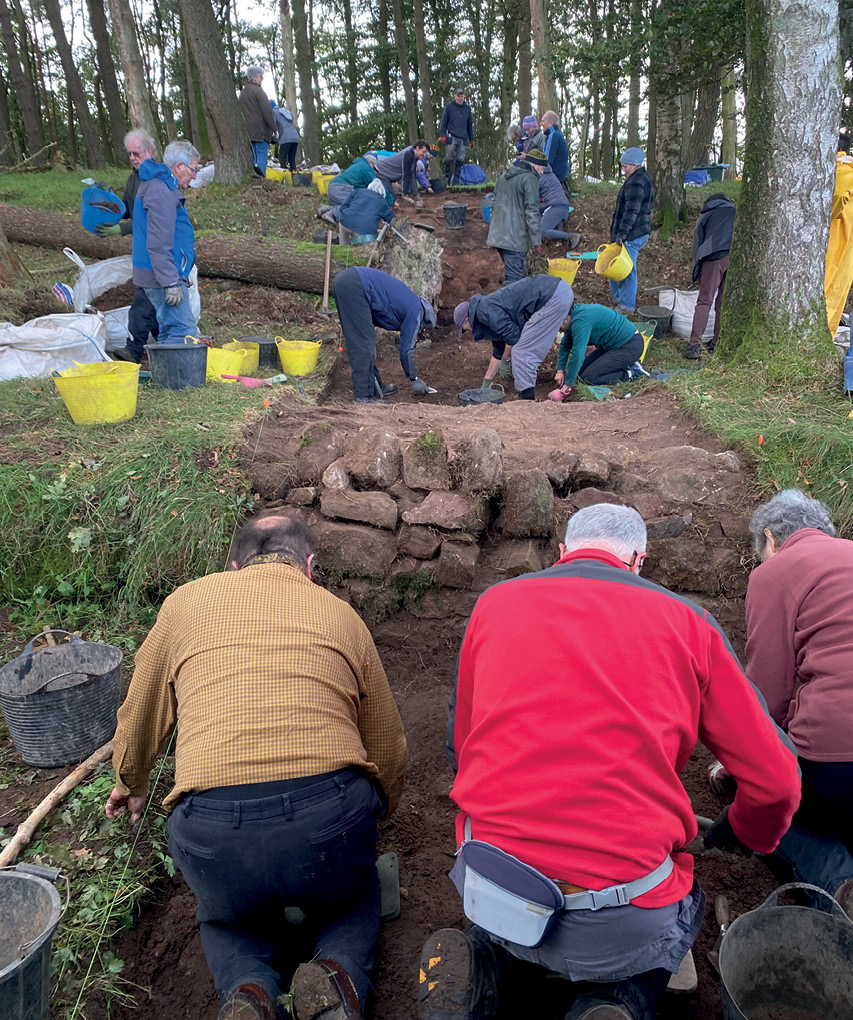
Throughout the duration of ‘Rendlesham Revealed’, the community archaeology project brought together diverse groups – from professional archaeologists, academics, local museum staff, and metal-detectorists to schoolchildren and adults from the surrounding area – to help investigate the early medieval settlement and its surroundings (the initiative also included geophysics, geoenvironmental surveys, and fieldwalking away from the immediate area of excavation). From the outset, it was designed as a volunteer initiative with guidance and training provided by a small professional core, together with a huge network of supporters. With the enthusiastic backing of the National Lottery Heritage Fund, the team were keen to include local groups who were less likely to have opportunities to access archaeology, including young people aged 12-16 with caring responsibilities for a family member (who were able to participate as part of a respite initiative organised with Suffolk Family Carers) and adults with mental health difficulties (whose involvement was facilitated by Suffolk Mind). Some within this last group had not left their house for several years, but have since gone on to join classes and volunteer for other activities, the project team report.

Hallmarks of greatness
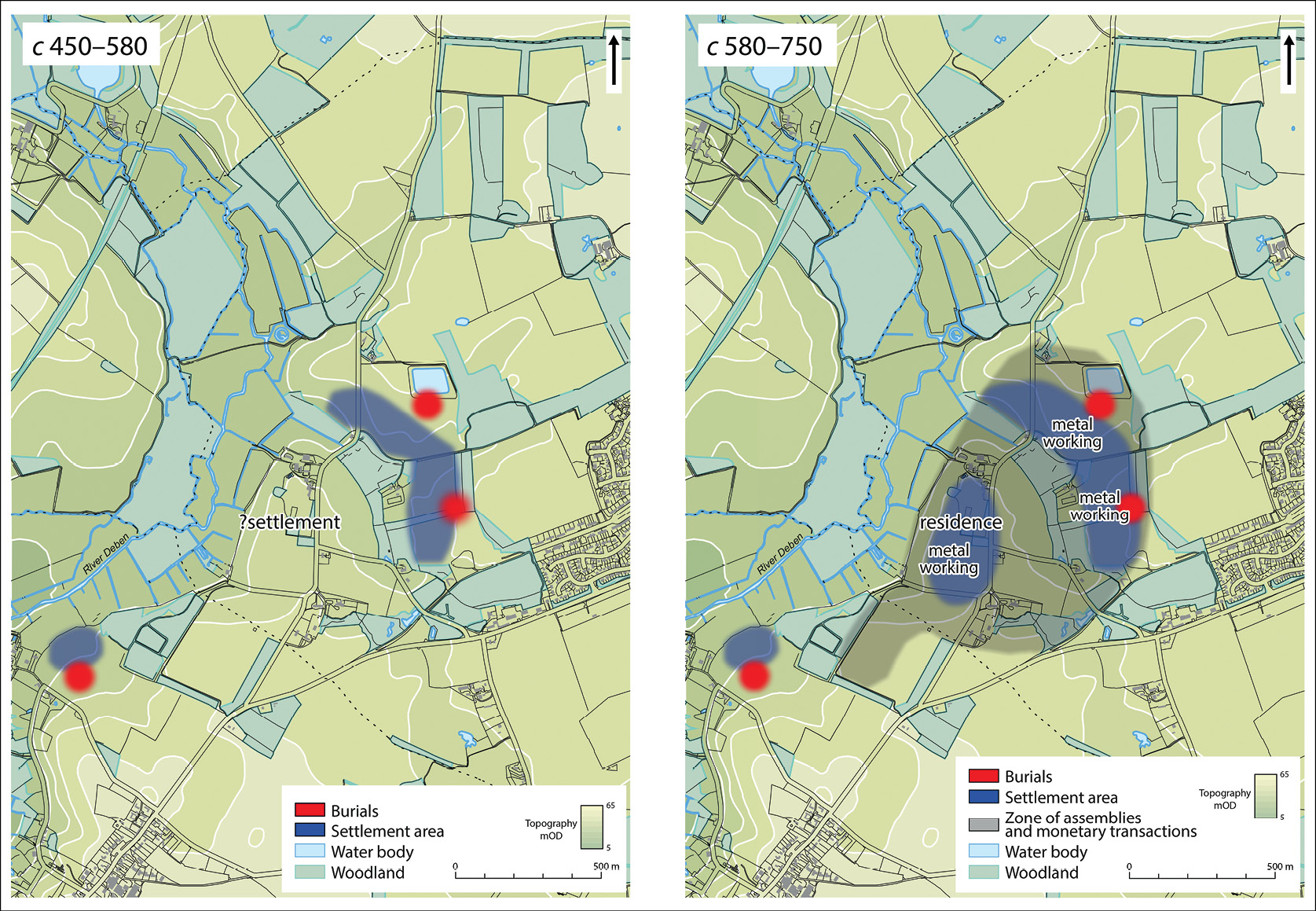
From the detailed chronology presented by the project’s findings we can tell that there was already an extensive (if fairly dispersed) settlement at Rendlesham by the early-to-middle 5th century. Formed of scattered farmsteads and at least one cemetery, this initial occupation covered an area of around 18ha (44.5 acres), and its inhabitants appear to have included people with cultural or ancestral connections across the North Sea. Artefacts from this period include cruciform brooches with parallels in Germany, the Netherlands, and southern Scandinavia; a gilded silver brooch showing a horse and its rider in profile, which is similar to examples from France and the Netherlands; and gilded silver fragments from a Snartemo-Sjörup-type sword belt and gold bracteates, both from southern Scandinavia. Among the people at Rendlesham were individuals of wealth and status – perhaps even a warrior elite, given the martial finery available to them – from this region.
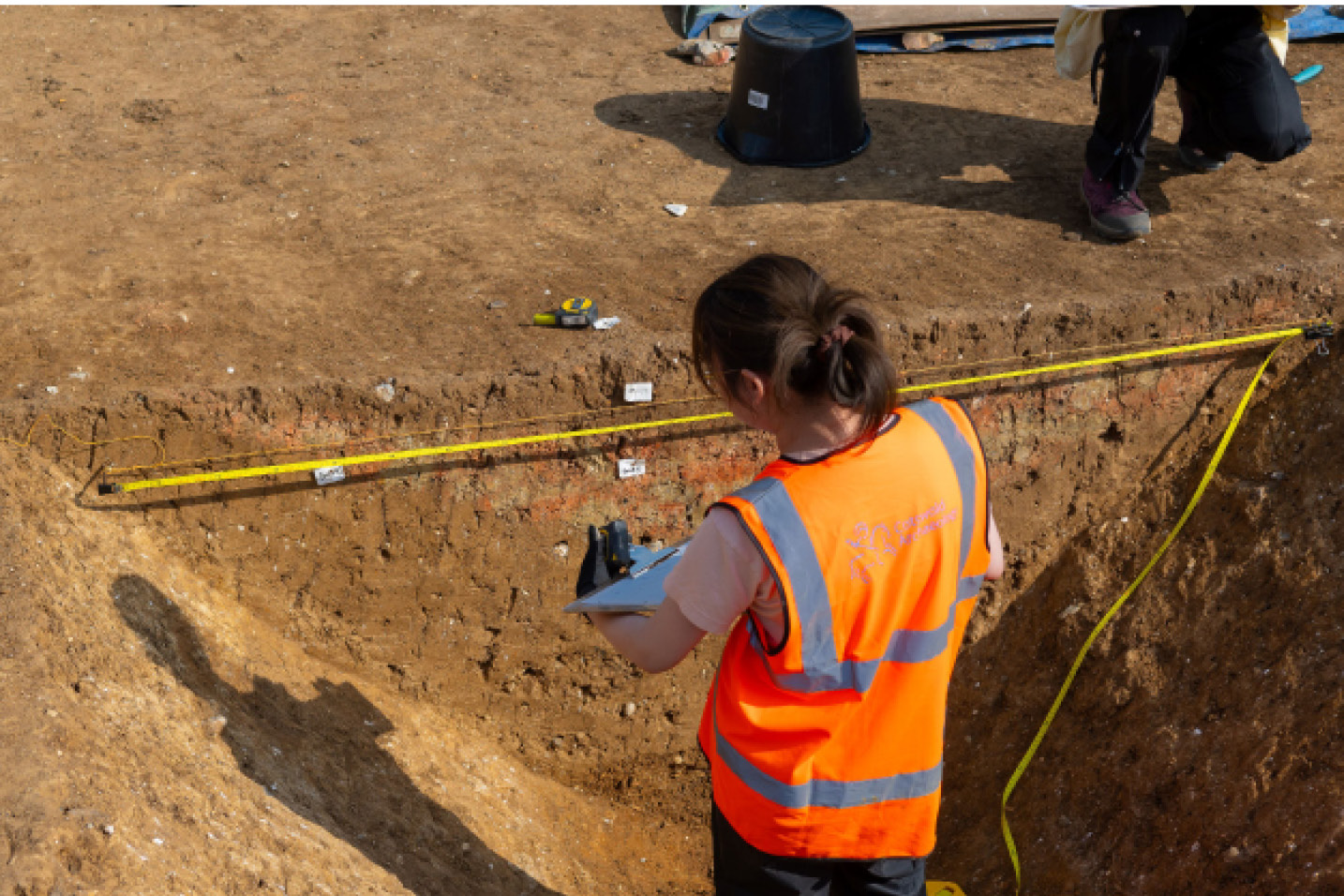
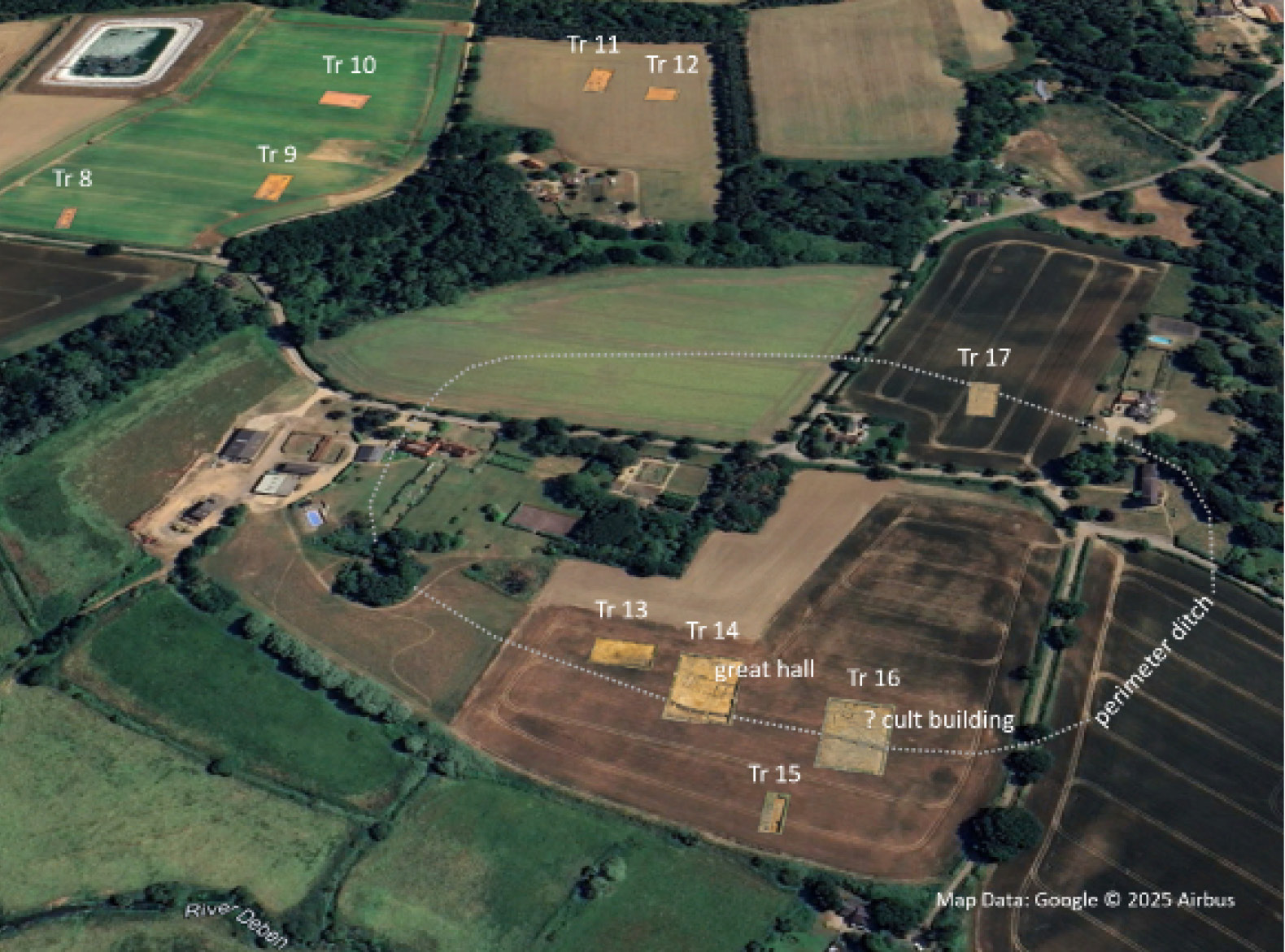
If the site was locally significant even by this early stage, however, in around AD 570/580 the settlement saw a dramatic leap in size and status. Now covering an area of around 50ha (124 acres), this phase of the site’s use produced exceptionally high-quality metalwork, including gold and garnet jewellery reminiscent of objects from Sutton Hoo and the Staffordshire Hoard, as well as some of the earliest post-Roman coins known in England. Elite activity appears to have been focused on a promontory overlooking the River Deben, where (magnetometry and aerial photos revealed) a substantial ditch encircled an area of 12-15ha (30-37 acres). Excavation during ‘Rendlesham Revealed’ produced material for radiocarbon dating which shows that the perimeter ditch was dug in the late 6th or earlier 7th centuries and was backfilled in the early 8th century. There was no sign of any accompanying bank, suggesting that this may have been more of a symbolic boundary rather than a defensive feature, but it still represented an impressive obstacle, measuring 2.8m (9.2ft) wide at the top, with a V-shaped profile descending to a depth of at least 1.5m (4.9ft).
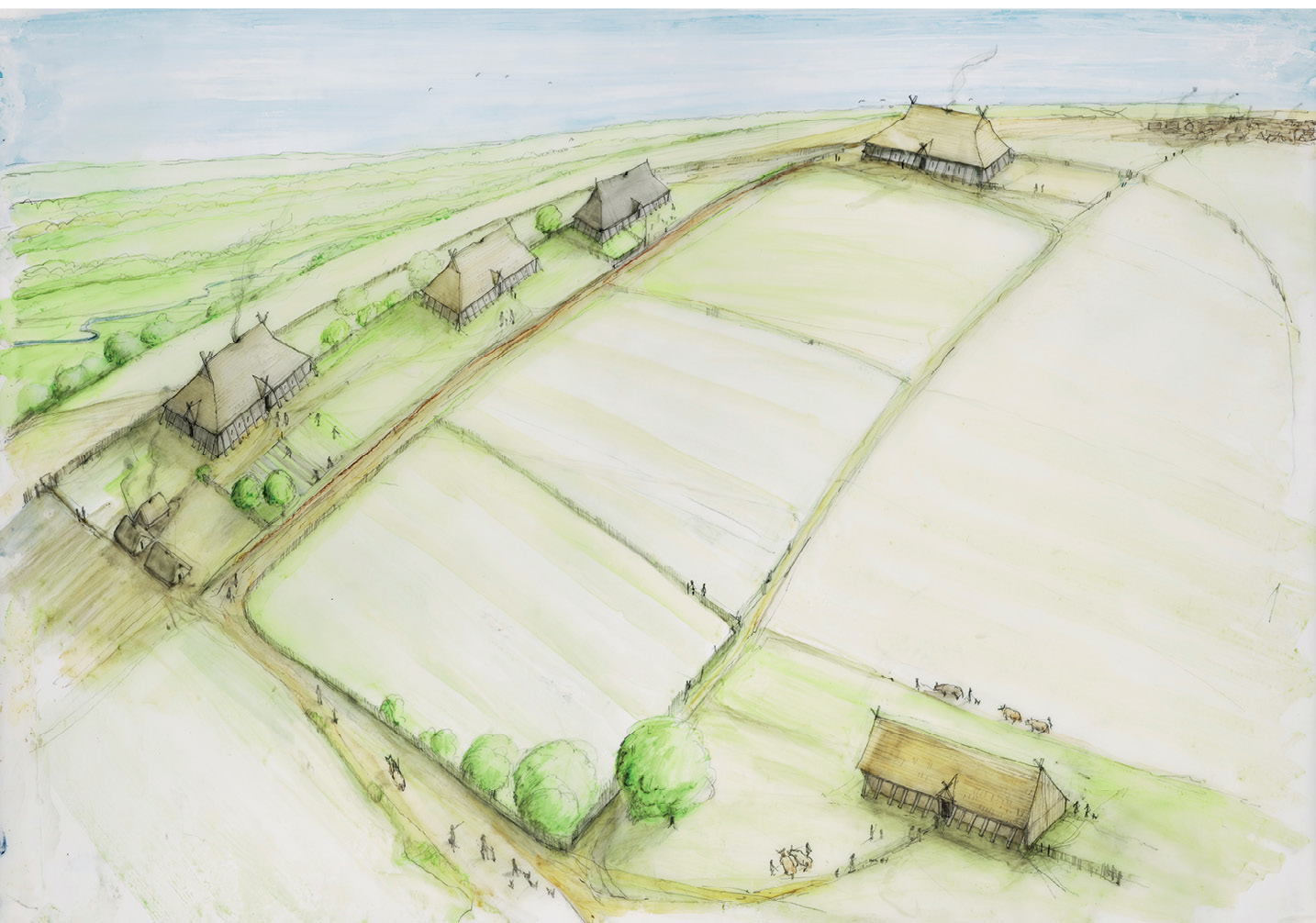
Within this enclosed space, substantial structures once stood, including a timber hall whose footprint had first been spotted as a cropmark in aerial photos and was excavated during the second season of fieldwork. Measuring 23m by 11.5m (75ft by 38ft), its outline was formed from a continuous foundation trench with additional external post-holes: a design strikingly similar to a hall excavated at Cowdery’s Down in Hampshire, and one that suggests that its walls were not fully load-bearing, but that the weight of the roof was supported by outer posts serving as buttresses. Elements of the walls themselves survived as fragments of daub, some of which preserved the impression of wattle, and some of which were lime-washed. This latter feature had practical benefits in terms of weatherproofing, but would also have given the hall a gleaming white exterior that would have made it visible for miles around.
Radiocarbon dating suggests that the hall was built and used from the mid-7th century to the early 8th century. Although it would have been many times larger than an average dwelling of the period (probably representing one of the biggest buildings that many local people would see in their lifetimes), and was unquestionably an elite structure, the project team note that there are larger examples than Rendlesham’s of the ‘great hall’ tradition of the 6th to 8th centuries. They wonder if this might not be the compound’s principal building, but only part of a larger complex of monumental timber halls, like at Yeavering. Three more structures were identified within the compound during the community excavation’s third and final season – one of which, located 60m (197ft) south of the hall, offered another potential parallel with the aforementioned Northumbrian site. It was relatively modest in size, measuring 10m by 5m (33ft by 16ft), but it had a foundation trench that was much larger and deeper than would be expected for these dimensions – more substantial even than that of the nearby hall. Surviving timber settings speak of large posts standing at each corner, with four more in its interior. This robust design might indicate a particularly tall building – and, given the level of material investment in its creation, one with a special purpose.
As for what this purpose might be, the project team point to (albeit larger) ‘cult houses’ from Migration Period Scandinavia and, closer to home, Building D2 at Yeavering, which shares a similar size, plan, and spatial relationship to timber halls with the Rendlesham structure. Brian Hope-Taylor interpreted D2 as a pre-Christian temple; could this be an East Anglian equivalent? Bede writes about the region’s 7th-century rulers continuing to honour their traditional deities even after apparently adopting Christianity, bemoaning how King Rædwald (who died c.625) was baptised in Kent but, on returning home, swiftly set up twin altars to Christ and the gods of his ancestors. Rædwald is also one of the chief candidates for Sutton Hoo’s Mound 1 ship burial, and it is tempting to situate his shrine and royal residence a few miles up the Deben at Rendlesham. This link was favoured by Rupert Bruce-Mitford, but Bede makes no mention of Rendlesham (or any specific location) in his account of Rædwald’s apostasy. If not Rædwald’s, however, it is possible that this was at least a cult house, with ritual practices (both private and public) plausibly forming a key part of early medieval rulership.
Elite activity
From Old English literature, we know that extravagant displays of hospitality, gift-giving, and feasting were important ways of expressing authority and reinforcing social bonds, and echoes of these practices might be found in some of Rendlesham’s fine metalwork – as well as in seemingly more mundane material: the domestic refuse disposed of on the promontory and used to backfill the perimeter ditch. Within this, huge quantities of bone from cattle and pigs speak of butchery on a massive scale, with a particular focus on young, tender animals – a wasteful form of consumption, and a conspicuous display of the resources available to the compound’s inhabitants. To supply these feasts, the settlement must have maintained enormous herds of its own and/or been able to demand tribute or rent-in-kind from subordinate settlements in the surrounding area.
The refuse also attests to the early medieval community eating sheep (albeit in smaller numbers than cattle and pigs); chickens and geese; oysters, fish, and eel; and deer. The hunting of this last animal might reflect elite pastimes, too, as might the excavated remains of horses and sparrowhawks. Domestic cats and dogs were present as well, the latter being large, wolf- like types that would have been valuable hunting and guard animals, and perhaps cherished companions too. They were clearly well cared for, enjoying (isotope analysis attests) a meat-rich diet.

Despite this evidence for elite occupation, though, the project team do not interpret Rendlesham as a tribal capital or a pre-eminent dynastic seat. Instead, they envisage the site as just one of several similar power centres that were periodically frequented by a peripatetic court: a place where tribute could be collected, retainers rewarded, religious rites overseen, envoys and traders engaged with, and local administrative and judicial processes enacted before the king and his entourage moved on. This theatre of power was only made possible, however, by the presence of a permanent ancillary settlement dedicated to farming and craft production. To the north-east of the ‘royal’ compound at Rendlesham, geophysical surveys and trial-trenching revealed the presence of a dense cluster of Grubenhäuser and pits which produced plentiful evidence of these more everyday activities.
Productive work
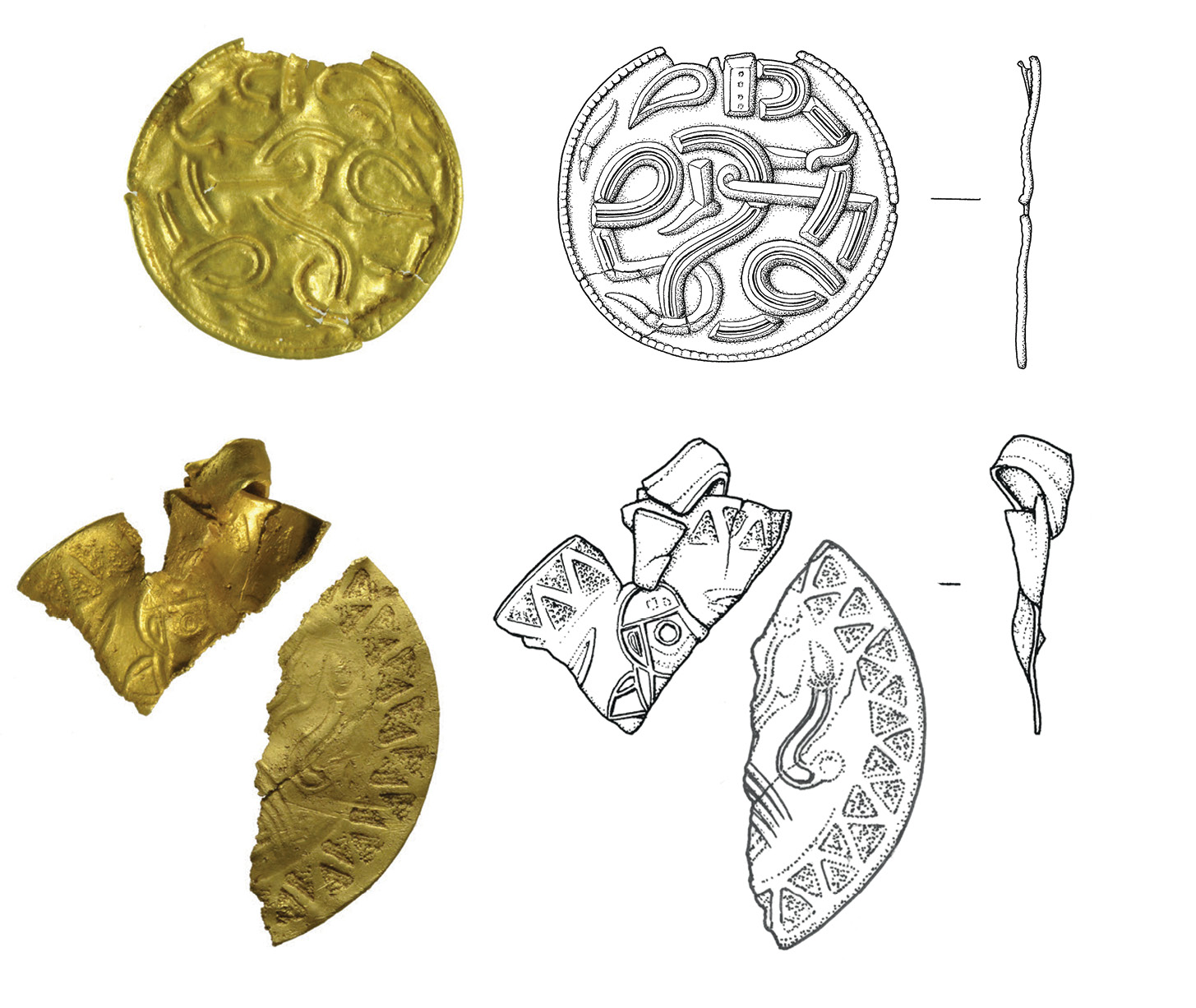
As well as raising (and processing) livestock, Rendlesham’s farmers were cultivating wheat, barley, rye, and oats. Textile production, bone- and antler-working, and pottery were also important occupations, as was non-ferrous metalworking, which appears to have been practised in dedicated parts of the wider settlement, as well as within the enclosed area (perhaps reflecting a periodic workshop that served the royal household when they were in residence). From fragments of moulds and failed castings, scraps of metal awaiting recycling and globules of spilled molten material, and complete artefacts, we can tell that Rendlesham’s smiths were catering to diverse needs and budgets, producing plain copper-alloy pins, buckles, and bag catches in large numbers to serve the general settlement, as well as creating exceptional ornaments from precious metals. Within this latter group are artefacts with striking similarities to items from Sutton Hoo: a gold-and-garnet sword pyramid reminiscent of the Mound 1 treasures, and a gilded harness fitting with animal interlace decoration and a central setting of garnet or red glass that has clear parallels with two examples from Mound 17. At Rendlesham we can see the same expressions of elite identity that were selected for burial at Sutton Hoo – but being employed and enjoyed by the living.
Also reminiscent of Sutton Hoo are some of the imported luxuries that the inhabitants of Rendlesham were able to access, including hanging bowls from northern or western Britain, ‘Coptic’ vessels from the eastern Mediterranean, and garnets from India or Sri Lanka. Prestigious objects like these are traditionally thought to have come to 6th-/7th-century England through diplomatic gift exchanges, passing step-by-step from ruler to ruler. The Rendlesham team argue instead for direct imports brought to the settlement by merchants – that is, through market-driven rather than socially driven forces, indicating a level of political organisation that is not typically associated with this early period. A key piece of evidence is the presence of a number of Byzantine coins struck between AD 565 and 629. Unlike the gold coins from Merovingian France which were also found across the site (and which may have provided raw materials for some of the ornate objects made at the settlement), these were low-value copper-alloy issues which are not known to have circulated widely in England. The project team suggest that they might instead represent ‘pocket change’ that had arrived with traders from the Byzantine world.

The bigger picture
During its royal heyday, the team argue, Rendlesham was the jurisidictional centre for an extensive region that was broadly equivalent to the catchment of the River Deben, and that the early East Anglian kingdom was a patchwork of such territories. Its pre-eminence was not to last, however. The archaeological evidence speaks of another sharp shift in status around AD 720/730, when the settlement area contracted, the compound’s ditch was backfilled, and the hall was apparently deliberately dismantled (as there is no sign of its timbers decaying in situ). The site was not completely abandoned, but appears to have been reduced to simple farming activity, never regaining its former importance. What caused this dramatic change of fortunes? There were probably multiple factors at play, and this decline was not unique to Rendlesham; the team point to a wider phenomenon of great halls being abandoned across southern Britain in the late 7th and earlier 8th centuries, indicating some kind of shift in how economic and political forces operated. The growing influence of the Church and its increased integration into early medieval power structures surely played a role, the team suggest, while the emergence of more local estate centres as places of administration and taxation – as well as a concentration of long-distance trade at coastal ports – would have made ‘central places’ like Rendlesham redundant. It seems telling that nearby Ipswich soared in prominence and prosperity at exactly the same time that Rendlesham saw a dramatic drop in status and importance.

The archaeological insights from Rendlesham are (currently) unprecedented, but the settlement itself was not. In their monograph the project team outline evidence for similarly high-status activity within the surrounding area, including the boat burials at Sutton Hoo and Snape; the 7th-century monastery of Icanho, described in the Anglo-Saxon Chronicle and possibly located at Iken; and ‘productive sites’ like Hoxne and Coddenham, which are known mainly from scatters of elite metalwork but which could represent unexcavated royal residences on a par with Rendlesham. All of these, the researchers suggest, were part of the same landscape of royal power. The significance of Rendlesham is not that it was unique, but that it offers the clearest insights into how this wider landscape might have operated.
The site challenges traditional interpretations, too, of how early political power developed when, in the aftermath of Roman rule, local leaders emerged whose descendants progressively established wider power through a long process of conquering their neighbours. Early power centres were thought to have been short-lived, with eventual political organisation and administrative stability yoked to the rise of the Church during the ‘Long Eighth Century’ (c.680-720). Rendlesham, however, demands a more nuanced view of this evolution, speaking of a sophisticated society with access to long-distance trade networks; organised, perhaps even centralised, production; and coin-use much earlier than was previously thought.
Within this picture we also find useful context for Sutton Hoo, which has long been a dominant symbol of East Anglian royal power. The prominence of the cemetery within scholarship of the period has tended to focus attention on the dead, the project team argue, but Sutton Hoo’s glamorous grave goods represent only a carefully curated moment compared to Rendlesham’s much-longer lifespan. The similarity of some of the objects found at both sites suggests that the burial goods had been selected from a much greater store of portable wealth that was also actively used by living leaders – and, at Rendlesham, these elite items are accompanied by the diverse detritus of a much wider contemporary community. The finds from this settlement turn the spotlight from how kings were commemorated to how their kingdoms functioned, illuminating not only how power was exercised and expressed, but the everyday agricultural, manufacturing, and mercantile activities of countless anonymous individuals who facilitated the lives of those whose names and deeds have come down to us in sources like Bede’s Ecclesiastical History.
Further information:
• Christopher Scull, Stuart Brookes, and Tom Williamson (eds) (2024) Lordship and Landscape in East Anglia AD 400-800: the royal centre at Rendlesham and its contexts (Society of Antiquaries London Research Report 84; Pen & Sword Books, ISBN 978-0854313075, £50). Also available at https://library.oapen.org/handle/20.500.12657/95717 (open access).
• Christopher Scull, Linzi Everett, and Faye Minter (2024) ‘Excavations at Rendlesham, Suffolk, 2021-2023: investigating an early medieval royal settlement’, Medieval Archaeology 68 (2): 203-228; https://doi.org/10.1080/00766097.2024.2419190 (open access)
• For more details of the ‘Rendlesham Revealed’ project and related resources, see https://heritage.suffolk.gov.uk/rendlesham.
• Please note: the Rendlesham site is on private farmland and has no public access.