People of the past: Building a future for Scotland’s archaeological human remains 

National Museums Scotland holds one of the largest collections of archaeological human remains from Scotland. Following the creation of cutting-edge facilities to care for and study these remains, as well as the recruitment of Scotland’s first Curator of Osteoarchaeology, Jess Thompson, Matthew Knight, Kirsty Owen, Adrián Maldonado,  Bethany Simpson, and Vesna Podržaj explore what excavated individuals can tell us about past populations, and consider the ethical issues surrounding such research.
Start
This article is from Current Archaeology issue 430


Subscribe now for full access and no adverts

Around 2450 BC, a young woman migrated across the North Sea and travelled through the landscape we now call Scotland. Isotopes – chemical clues captured in her teeth – tell us that she had travelled from an area of geology very different to that of the Isle of Coll, in the Inner Hebrides, where she ended her days. When the woman died, she was buried there in a wood-lined grave, accompanied by a small, cord-impressed Beaker vessel consistent with styles found in the Lower Rhine valley in mainland Europe. Recent analysis of the woman’s genetic ancestry confirmed that she had Continental origins, suggesting that she was a first-generation migrant into Bronze Age Britain.

This intrepid individual lay undisturbed for thousands of years until her grave was excavated in 1976, close to modern Sorisdale, and her remains were moved to what was then known as the National Museum of Antiquities of Scotland (now National Museums Scotland). Her beaker was quickly recognised as a ‘foreign’ item, but it was suggested that it could have been an heirloom or passed along from somebody else. Thanks to more recent biomolecular analyses, however, we now have exceptional evidence of this woman’s long migration to reach an island off the west coast of Scotland more than 4,000 years ago. Research into her remains, now stored at the National Museums Collection Centre in north Edinburgh, has allowed the long-forgotten story of her life to be told once more – and it is just one of thousands of narratives to be revealed from Scotland’s archaeological human remains. 

The skeletal remains of the young woman from Sorisdale, Coll, and the Beaker that accompanied her to the grave more than 4,000 years ago. Photo: Neil Hanna

Human remains, human stories  

Excavated human remains, like those from Sorisdale, provide an intimate connection with people who lived hundreds, or even thousands, of years ago. Their bones and other tangible traces preserve a vast array of insights into their experiences – including diet, disease, migration, and kinship – as well as hinting at how communities dealt with death. The plethora of biomolecular and scientific techniques now available for studying people from the past, ranging from radiocarbon dating to analysis of ancient microbiomes and genetic ancestry, is still rapidly developing. Such analyses, taken in tandem with what assessments of an individual’s skeleton can tell us about their age, sex, health, and lifestyle, as well as archaeological insights into how people expressed their culture and identity, are revealing more information than ever before about biological and sociocultural change. The physical remains of the people who populate Scotland’s past preserve rich histories of identity formation, cultural contact, and religious change over millennia.  

While it can be easy to get carried away with the exciting potential of these scientific analyses, these advances also mean that research protocols and the ethical care, curation, and storage of human remains need to be more rigorous than ever. Human remains continue to be uncovered and excavated, either by chance or through professional investigations, but there is not always a clear trajectory for them to enter museum storage or be appropriately assessed for research (see below). This climate of discovery, research potential, and increased awareness of ethical standards poses various challenges for the heritage sector. Many museums and archaeological units have minimal storage capacity available for them to curate growing collections, and they often lack specialist staff with osteological knowledge. It is these challenges that sparked the development of Scotland’s Archaeological Human Remains Collection (SAHRC) project. 

 Jess Thompson, Scotland’s first Curator of Osteoarchaeology, and NMS curator Matt Knight studying the Sorisdale woman’s teeth. Photo: Neil Hanna

What happens to human remains found in Scotland?  

In Scotland, all discoveries of human remains must be reported to the police, even if they are likely to be archaeological. Since the launch of the Scottish Heritage Crime Group in 2019, much has been done to upgrade and formalise the procedure for reporting such discoveries, ensuring that attending officers and those advising them understand the archaeological and ethical sensitivities of human remains and archaeological sites more generally. The procedure in place now ensures that, once remains are identified as human and not of interest to the police, a response is determined in most cases by the local authority archaeologist or – if the find has been made on a scheduled monument or a site in state care – by Historic Environment Scotland. The HES-led Human Remains and Emergency Excavations Call-Off Contract may be used  in circumstances where human remains are discovered unexpectedly, such as in areas of eroding coastline. 

Once a site has been excavated, human remains then undergo post excavation analysis, just as any other archaeological assemblage would. In Scotland, archaeological finds are managed through the Treasure Trove process (see https://treasuretrovescotland.co.uk), and therefore, where there are associated finds, there is a procedure which ensures their allocation to an accredited museum. For discoveries comprising only human remains, the procedure has historically been less clear but, going forward, Treasure Trove could provide a route here, too. Human remains cannot be owned and therefore cannot be legally transferred in the same way as artefacts, which are Crown property in Scotland. This lack of clarity puts human remains assemblages at risk of loss, damage, or inappropriate practices. 

Active erosion at Wemyss Bay has repeatedly exposed human remains (see CA 407). The ranging poles mark where bones were found during a recent inspection. Photo: SCAPE Trust/Save Wemyss Ancient Caves Society

The start of SAHRC

For several years, colleagues from National Museums Scotland and Historic Environment Scotland had been in regular contact over the difficulties of managing archaeological human remains in Scotland. Key challenges included museum storage issues, sensitivities around creating and displaying images of remains, and ensuring that destructive sampling – involving taking small portions of bone for scientific analysis – was done as minimally as possible. For a long time, we have been acutely aware of the lack of formal guidance on this subject in Scotland, and have instead drawn on approaches from elsewhere (for example, the Advisory Panel on the Archaeology of Burials in England).  

In 2024, following a successful application to the UKRI Arts and Humanities Research Council (AHRC) Research Infrastructure for Conservation and Heritage Science (RICHeS) grant scheme, we launched a collaborative project which had the aim of enhancing storage and research facilities for archaeological human remains found in Scotland.  Not only has the AHRC grant injected much-needed investment into the physical infrastructure necessary for this work, allowing us to establish Scotland’s Archaeological Human Remains Collection at the National Museums Collection Centre in Edinburgh, but their ongoing funding has also made it possible to recruit Scotland’s first Curator of Osteoarchaeology. Thanks to this support, we have an exciting opportunity to work with the wider heritage sector to enhance ethical care practices, standards, and research relating to human remains excavated across Scotland. So, what have we done so far?

Hundreds of people in the NMS human remains collections derive from medieval cemeteries.  Photo: Neil Hanna

National Museums Scotland holds one of the largest collections of archaeological human remains from Scotland, housing individuals from more than 550 sites which span over 8,000 years of history. Some of these people are represented by a single bone, tooth, or lock of hair, but our holdings also include assemblages of hundreds of individuals from medieval cemeteries, as well as a large number of cremated remains, predominantly from the Chalcolithic to Middle Bronze Age. Overall, approximately 2,500 individuals are represented, with at least 350 coming from cremations, and almost 1,000 being drawn from cemeteries dating from the Viking period and later. It is, therefore, unsurprising that this has become one of the most researched areas of the Scottish History and Archaeology collections at National Museums Scotland. Yet, the space available for the human remains collection was struggling to meet the needs of the sector, specifically the continued excavation of remains requiring storage, and increasing demand from researchers. 

Above: The new SAHRC facility shown under construction at the National Museums Collection Centre in Granton, Edinburgh, and (below) the building with the work completed. Photos: Neil Hanna

Reconstructing the bishops of Whithorn Priory   

The human remains from Whithorn Priory in Dumfries and Galloway are a great example of how excavated people can continue to provide new insights even many generations after they came out of the ground. The presbytery, or east end, of the medieval Priory of Whithorn was excavated in 1957-1967, revealing a number of burials whose privileged position before the high altar, combined with their well-built stone coffins and the presence of chalices, croziers, and vestments, confirmed that these were the graves of the medieval bishops, priests, and elite patrons of the church (see CA 245). 

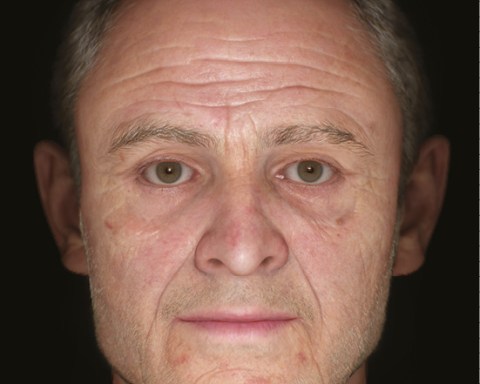
A facial reconstruction (produced by Chris Rynn) of Whithorn Priory SK1, now identified as Bishop Henry (AD 1253-1293).  Image: University of Bradford and Chris Rynn 

The fine grave goods have long been on display at the National Museum of Scotland in Edinburgh, while the skeletal remains were safely stored. Decades later, new techniques including stable isotope analysis and high precision radiocarbon dating were used to link these remains with historical figures such as Bishop Walter (AD 1209-1235), and to reveal aspects of their biographies and diets that we would never have known otherwise. More recently, the Whithorn Trust’s ‘Cold Case Whithorn’ project, reassessing their excavations archive, worked with colleagues at National Museums Scotland  and the University of Bradford to carry out facial reconstructions to allow visitors to come ‘face to face’ with the people of medieval Whithorn. 

These were created using the latest forensic techniques, and details of their appearance such as eye and hair colour were informed by new genetic analyses performed by the Francis Crick Institute, London. This work has been carried out piecemeal over many years.The SAHRC project is now integrating all previous analyses into the long-term curation of the Whithorn Priory human remains, and bringing them to publication in collaboration with colleagues across the UK.  

A 13th-century silver-gilt paten was among the objects found in the grave of SK1 that helped to identify him as a bishop. Image: University of Bradford and Chris Rynn 

A facility fit for the dead 

Recent construction work and store enhancements at the Collection Centre set out to address these issues, installing new bespoke racking to provide 70% extra storage. Beyond creating vital space for new collections, these works also allowed us to develop a facility that will accommodate future research demands and provide space to host visiting researchers. Meanwhile, the installation of new equipment allows analysis and sampling to be carried out on-site; this ensures the safety of the collection and is more ethically sound, as fewer remains will need to be transported to other locations for research. The new equipment includes a high-speed micromotor drill and fumigation hood to enable sampling; a bespoke height-adjustable mobile bench for osteological assessments; reference skeletal casts; and two state-of-the-art Artec  3D scanners. The improved facilities and equipment are an exciting asset for our own work, but they are also available for use by external colleagues. A core aim of AHRC RICHeS grants is to increase accessibility, and further funding is available for projects with this in mind. 

This suite of equipment means that staff and researchers can now quickly and easily 3D-model human remains and take samples on-site for some biomolecular analyses. The scanners ensure a detailed record of the remains can be captured, both before and after analysis, which will be accessible for future research (fulfilling an important recommendation by the British Association for Biological Anthropology and Osteoarchaeology (BABAO) Code of Ethics). Moreover, 3D scans can also be used for interpretative modelling, such as facial reconstructions. These are engagingly visual ways of presenting the past and can help narratives about interesting individuals from the collection to reach a wider audience. 

Presenting the remains themselves, however, can be more complex, and much has been written about best practice for the curation and display of archaeological human remains. In the UK, government guidance is provided by the Department for Culture, Media and Sport (DCMS) Guidance for the Care of Human Remains in Museums (2005), and specialist groups such as BABAO, the Chartered Institute for Archaeologists, and the Museums Association all provide recommendations. In Scotland, Historic Environment Scotland and Museums Galleries Scotland offer guidelines, including storage requirements, guides for public display and research, and an introduction to relevant laws. There are differences between the Human Tissue Act (2004), which applies to England, Wales, and Northern Ireland, and the Human Tissue (Scotland) Act (2006), but both state that archaeological human remains more than 100 years old do not require a licence to curate. 

Project curator Vesna Podržaj testing legacy collections for arsenic. In early museum holdings, toxic substances like arsenic were used to preserve organic materials. Photo: Neil Hanna

These all form best practices which can be adapted to the needs of each museum and collection, although it is hard to implement them without a dedicated team. Alongside the new Curator of Osteoarchaeology, the SAHRC project assembled a team focused on enhancing the ethical curation of human remains within our collection. In line with DCMS guidance, these curatorial staff are building on previous researchers’ work to provide a publicly accessible inventory of the archaeological human remains collection which will be hosted online and updated regularly, allowing interested individuals and prospective researchers to learn more about these holdings. We are also developing a series of internal guidelines covering terms of access for research on the human remains, which will outline standard processes for sample selection, removal, and return, as well as recommendations for the use of images, and considerations for display. Further to these initiatives, we are improving the storage of the human remains in our care, repacking some in custom-sized, acid-free boxes, ensuring that the remains are stable, and removing non-inert materials like bubble wrap and newspaper.  

Many museums are currently critically under-resourced. Our ability to deliver these standards has been assured through funding specifically targeting the heritage sector, but most regional museums and other repositories lack specialist staff with expertise in studying human remains. This is particularly acute in Scotland and is a key reason why the new curatorial role is so critical. To help with this, we are developing specialist workshops on human remains curation. At National Museums Scotland, we coordinated a training and development day for curatorial staff from eight Scottish museums  who regularly engage with archaeological human remains. The workshop covered topics such as how best to pack and store human remains, an overview of destructive sampling methods, and ethical considerations for analysis, sampling, and display. Future work will involve developing relevant guidance that relates specifically to the needs of Scotland’s collections.  

Curator of Osteoarchaeology Jess Thompson preparing to sample bone. Photo: Neil Hanna

Getting skeletons out of the closet 

One critical aspect of this work is the trajectory of human remains excavated in Scotland. Historically, established protocols mean that human remains, particularly those found without artefacts, are kept in storage with no clear process for how they might ultimately be transferred into museums. This situation is starting to change, however. The recent review of the Treasure Trove process in Scotland has opened the door for human remains to be allocated to museums through the legal system, which was previously not possible unless they were associated with artefacts.  

In light of this, we are working to establish the scope of human remains assemblages historically excavated through the Human Remains Call-Off Contract  but which are currently unallocated to museums. In consultation with other museums, we have been identifying where they would be best placed for long-term curation, and considering the future research needs and potential of each. The first of these legacy collections was recently transferred to the National Museums Collection Centre, with others planned to be couriered to Orkney Museum, Museum nan Eilean on the Isle of Lewis, and Kilmartin Museum. The advantages of such moves are that, for the first time, this material will be made available to researchers on publicly accessible databases. 

 Jess Thompson discusses best practice for packing skeletal remains  at the first sector workshop at NMCC, with (from left to right) Lily Barnes, Judith Hewitt, Christina Donald, Sam Ferrer, and Sarah Cameron. Photo: Neil Hanna

All of this work undertaken so far represents only the first steps of a long-term project. Continuing efforts are focused on improving internal standards and processes, including researching historic collections of human remains in our care that are undated or have limited provenance information. Through archival research and radiocarbon dating, we aim to enhance our knowledge of these individuals and ensure that we fully understand the requirements of their storage and future study. Research opportunities continue to emerge, and we welcome proposals for collaboration. Future exhibitions will feature archaeological human remains as well as facial reconstructions, helping us to communicate the contributions of studying human remains to our understanding of the past. Next, we will be working towards producing guidance appropriate to the Scottish heritage sector. This is no mean feat. It requires an extensive collaborative network, and we are fortunate to have UK-wide Project Partners that cover the diverse aspects of curating and researching archaeological human remains.  

At the heart of this project are the people who once lived in the area we call Scotland. It is an immense privilege to care for them and to learn about their lives. We are dedicated to following and contributing to best practice while we navigate the delicate balance of ethical curation and producing exciting, novel research that allows us to better understand and share their histories. 

Curators Matt Knight and Bethany Simpson inspect  a burial and associated Beaker from Juniper Green, Midlothian. Photo: Neil Hanna

Source:
• Jess E Thompson, Curator of Osteoarchaeology, National Museums Scotland 
• Matthew G Knight, Senior Curator of Prehistory, National Museums Scotland 
• Kirsty Owen, Deputy Head of Planning Consents and Advice (Archaeology), Historic Environment Scotland 
• Adrián Maldonado, Project Curator, National Museums Scotland 
• Bethany Simpson, Assistant Curator,  National Museums Scotland 
• Vesna Podržaj, Project Curator,  National Museums Scotland 

Acknowledgements: This work was supported by the Arts and Humanities Research Council (AHRC), part of UK Research and Innovation (UKRI), through the Research Infrastructure for Conservation and Heritage Science (RICHeS) programme. We are grateful for wide-ranging support from colleagues at National Museums Scotland and Historic Scotland in developing this project, as well as the support of our Advisory Board and Project Partners. We thank AOC Archaeology for their help in transferring remains. 

Further reading:
• On Sorisdale:  Mike Parker Pearson et al. (eds) (2019) The Beaker People: Isotopes, Mobility and Diet in Prehistoric Britain (Prehistoric Society Research Paper 7; Oxford: Oxbow).
Iñigo Olalde et al. (2018) ‘The Beaker phenomenon and the genomic transformation of north-west Europe’, Nature 555: 190-196. 
• On Whithorn:  Christopher Lowe (2009) ‘Clothing for the Soul Divine’: burials at the Tomb of St Ninian – excavations at Whithorn Priory, 1957-67 (Edinburgh: Historic Scotland). 
• On ethics: The British Association for Biological Anthropology and Osteoarchaeology (BABAO) guidance and ethics documents can be found at https://babao.org.uk.

By Country

Popular
UKItalyGreeceEgyptTurkeyFrance

Africa
BotswanaEgyptEthiopiaGhanaKenyaLibyaMadagascarMaliMoroccoNamibiaSomaliaSouth AfricaSudanTanzaniaTunisiaZimbabwe

Asia
IranIraqIsraelJapanJavaJordanKazakhstanKodiak IslandKoreaKyrgyzstan
LaosLebanonMalaysiaMongoliaOmanPakistanQatarRussiaPapua New GuineaSaudi ArabiaSingaporeSouth KoreaSumatraSyriaThailandTurkmenistanUAEUzbekistanVanuatuVietnamYemen

Australasia
AustraliaFijiMicronesiaPolynesiaTasmania

Europe
AlbaniaAndorraAustriaBulgariaCroatiaCyprusCzech RepublicDenmarkEnglandEstoniaFinlandFranceGermanyGibraltarGreeceHollandHungaryIcelandIrelandItalyMaltaNorwayPolandPortugalRomaniaScotlandSerbiaSlovakiaSloveniaSpainSwedenSwitzerlandTurkeySicilyUK

South America
ArgentinaBelizeBrazilChileColombiaEaster IslandMexicoPeru

North America
CanadaCaribbeanCarriacouDominican RepublicGreenlandGuatemalaHondurasUSA

Discover more from The Past

Subscribe now to keep reading and get access to the full archive.

Continue reading