Subscribe now for full access and no adverts
The date palm… became associated with all things sweet and pleasant…
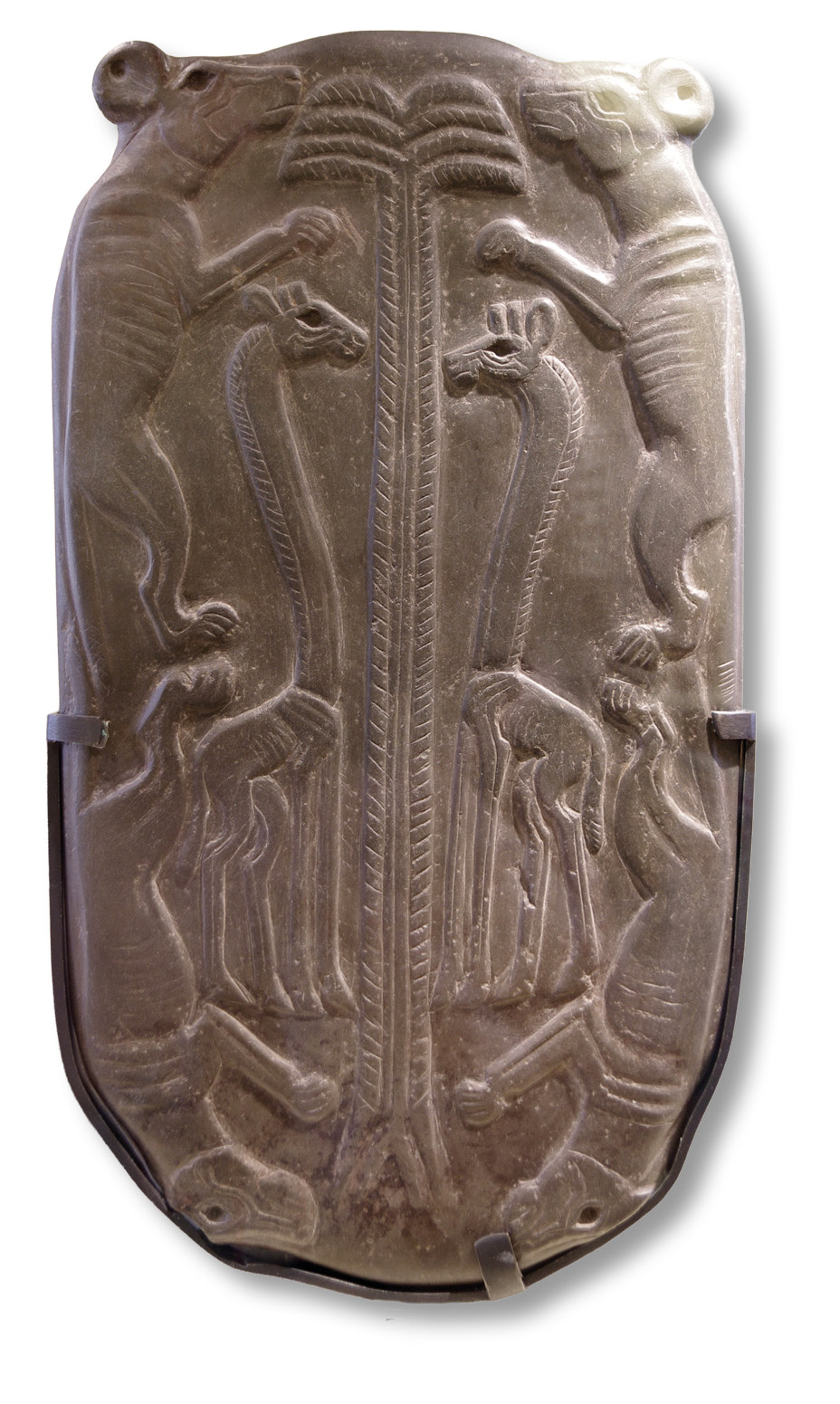
The images of fallen warriors being scavenged by wild animals and carrion crows give a ceremonial palette in the British Museum (EA20971) its nickname: the ‘Battlefield Palette’. This relief is in stark contrast to the idyllic scene on the palette’s reverse, which depicts two giraffes browsing the lower fronds of a palm tree. The comparison of the chaotic aftermath of warfare with the harmony of nature is repeated on the ‘Four Dog Palette’ (E11052) in the Musée du Louvre.
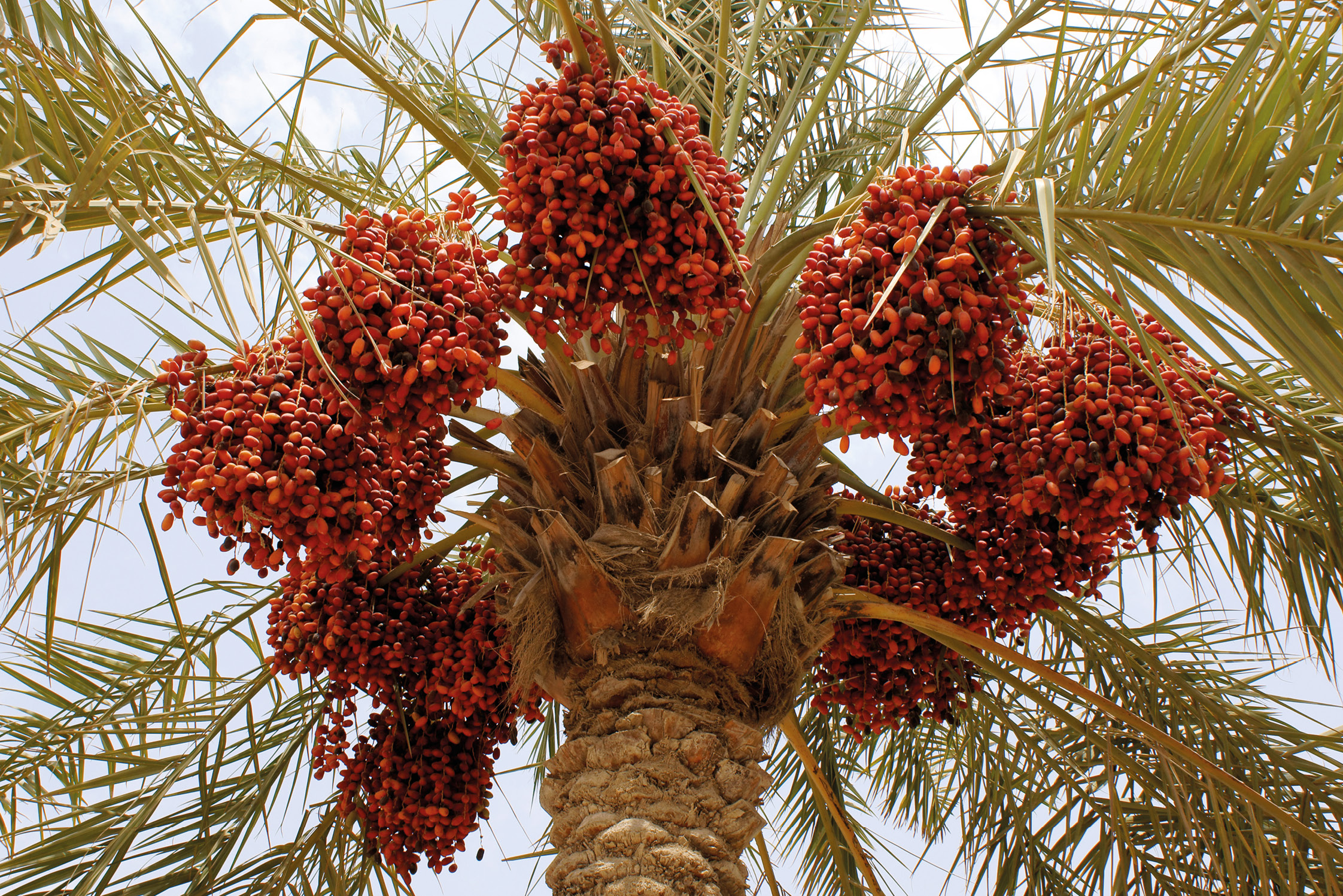
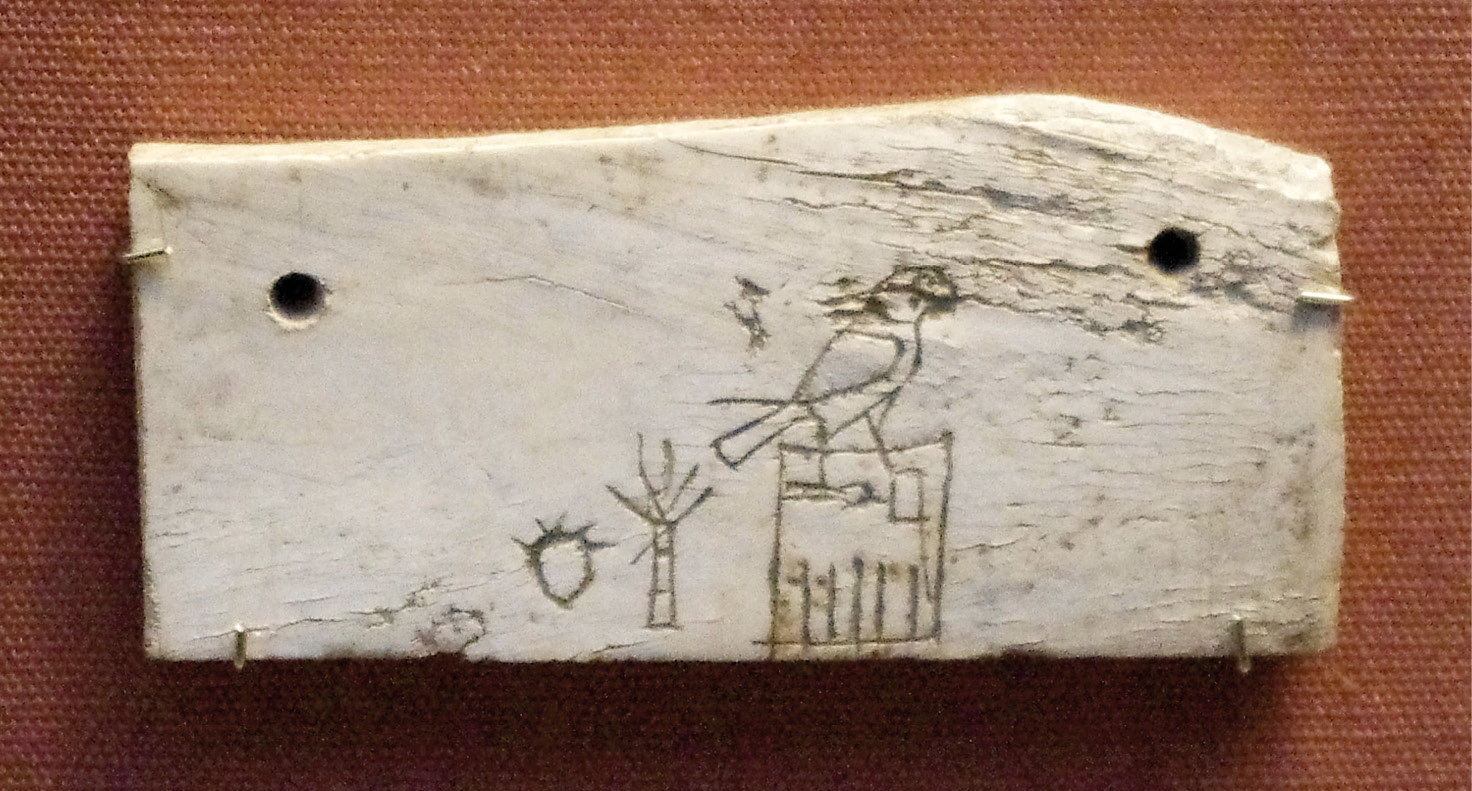
However, these artefacts also bear two of the earliest Egyptian images of the date palm, Phoenix dactylifera, which became associated with all things sweet and pleasant. The name of Bener-ib – a royal lady from the reign of Aha (c.3100 BC) – as inscribed on an ivory plaque found in the Abydos cemetery, is written with the date palm hieroglyph, and may be translated as ‘Sweet of Heart’ or simply ‘Sweetheart’.
Sweet trees
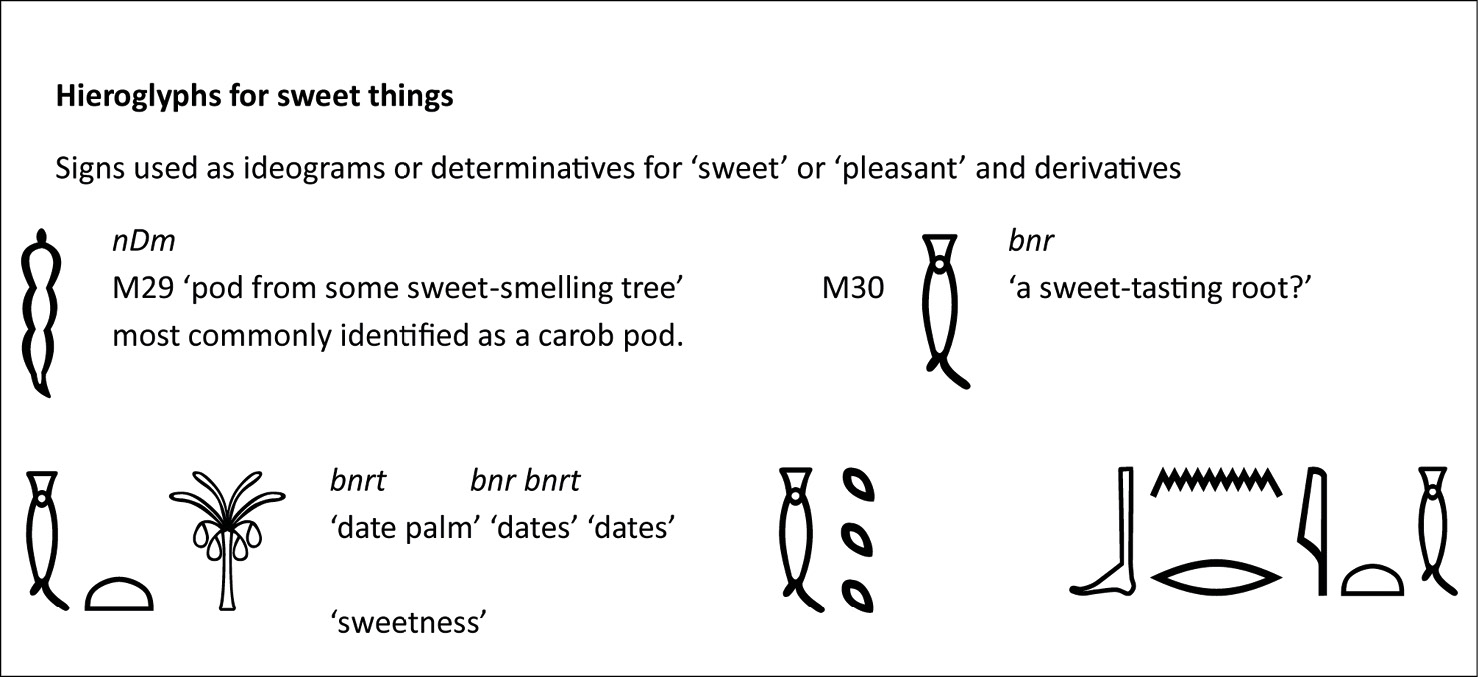
The hieroglyphs for date palm include Gardiner’s sign M30 bnr, described as a ‘sweet-tasting root’, from an unknown plant. The word interpreted as ‘sweet’ in the funerary offering formula phrase ‘every sweet thing’, is indicated by either M30, or M29 nDm, described as a ‘pod from some sweet-smelling tree’, possibly a carob.
The literal translation of bnrt, the accepted word for ‘date palm’, is ‘sweet tree’. Ineni, architect to Thutmose I and Hatshepsut, described digging a lake at Karnak which had ‘banks planted with all kinds of sweet trees’, probably referring to fruit trees in general, and 170 date palms are listed in Ineni’s tomb (TT81) in the inventory of his own orchard. That honey was a luxury is made clear in Rekhmira’s tomb (TT100) by its inclusion among the deliveries of valuables to the Amun temple’s stores. The desirable element of sweetness in the diet of most Egyptians would have come from fruit, and dates have the highest sugar content of all the fruits exploited in ancient times.
Growing date palms
Date palms grow in most soils, but thrive in light, non-enriched sandy soils with a sustained water supply. They can tolerate brackish water or having their roots submerged for lengthy periods, qualities which were advantageous in surviving the Nile’s inundation. In private tombs of the New Kingdom, such as those of Sennedjem (TT1) and Minnakht (TT87), date palms are shown planted on higher ground, around field margins, along the banks of waterways, and in gardens.
In ancient times, date palms were grown in small groups like the fruiting trees towering over Nebamun’s two-storey house (TT90). By contrast, the huge plantations that are so important to the modern Egyptian economy total 15 million or more trees, and yield 1.65 million tonnes of fruit annually.

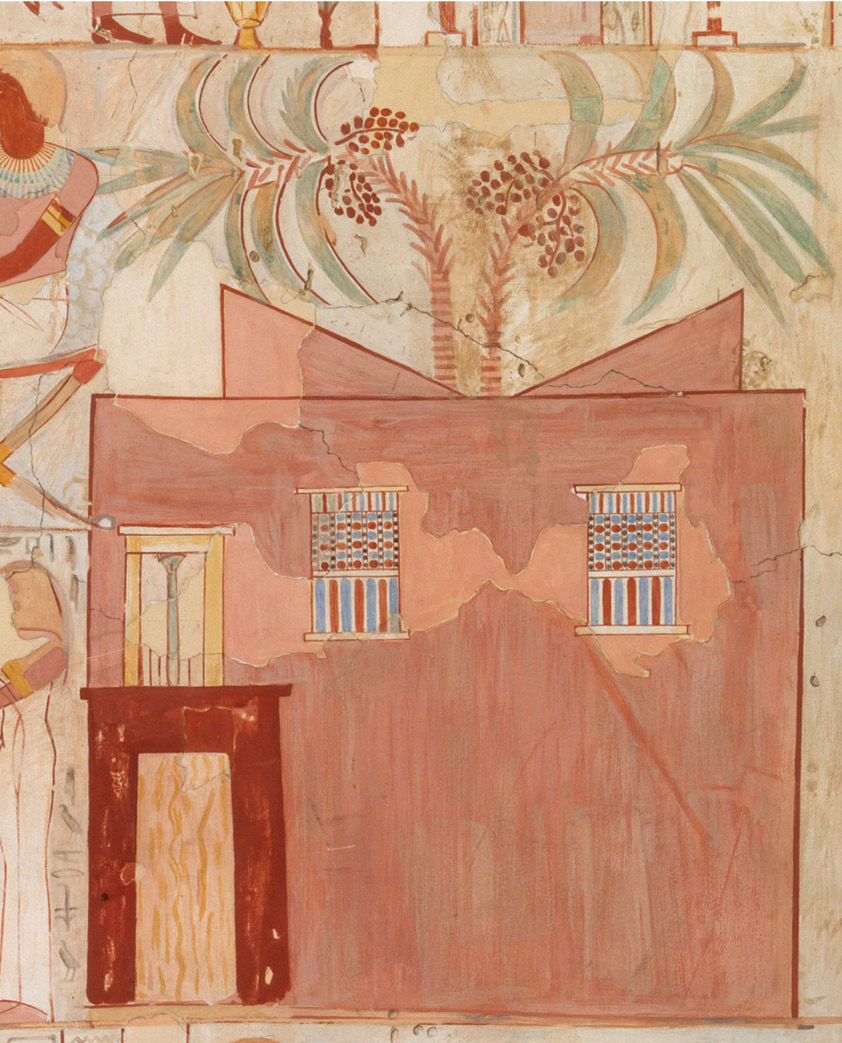
The wild date palm is no longer found in Egypt and evidence, in the shape of fruit and stones, for the domesticated form is rare before the Middle Kingdom. Its exploitation as a food source, rather than for its wood and fibres, probably began when the knowledge of artificial pollination was introduced from Mesopotamia, where the technique is mentioned in cuneiform texts from Ur (c.2300 BC). Palms represent considerable investment in cultivation, being propagated from basal offshoots removed from the parent plant after 3-5 years, and taking ten years or more to reach full productivity. Fruit forms in bunches of dozens of ‘strings’, each bearing 25-35 individual drupes (fruit with stones). Under modern cultivation, a single palm can produce more than 40kg of fruit per annum. Ripening dates turn from yellow to reddish-brown to black and, depending on the intended use, they are harvested at different stages in their development. The trees around Nebamun’s garden pond bear yellow, brown, and black fruit. The high sugar content of dried dates inhibits bacterial decay, allowing long-term storage without spoiling.

Uses for dates
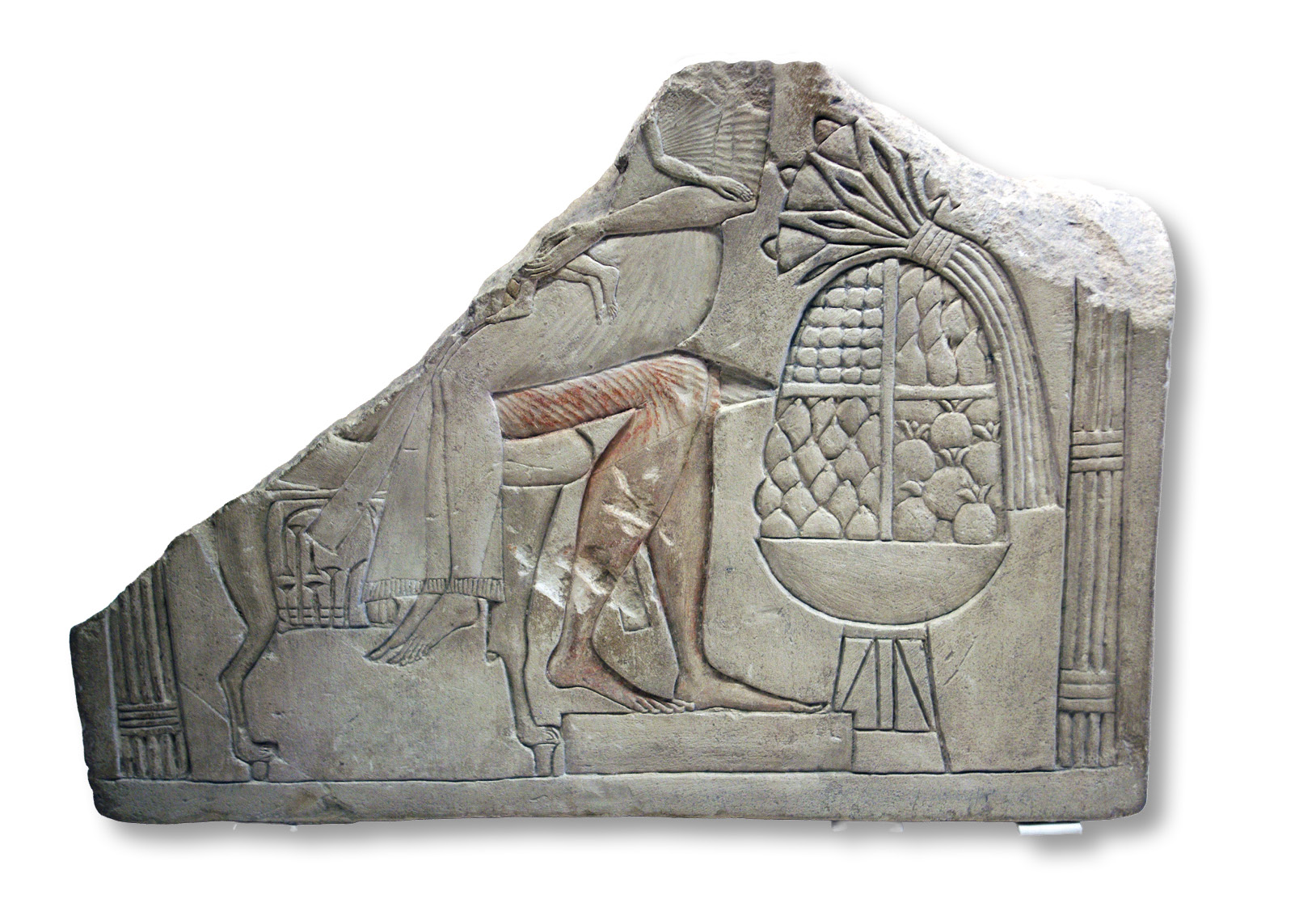
The date palm was not considered sacred to a particular deity but, probably because of its productivity, it was associated with femininity, fertility, and plenty. Bowls or baskets of fruit appear on offering tables, and have been found in tombs, such as that of Kha (TT8).
In medical papyri, the ingredient irp bnr – usually translated as ‘date wine’, but more generically as ‘sweet wine’ – is included in m

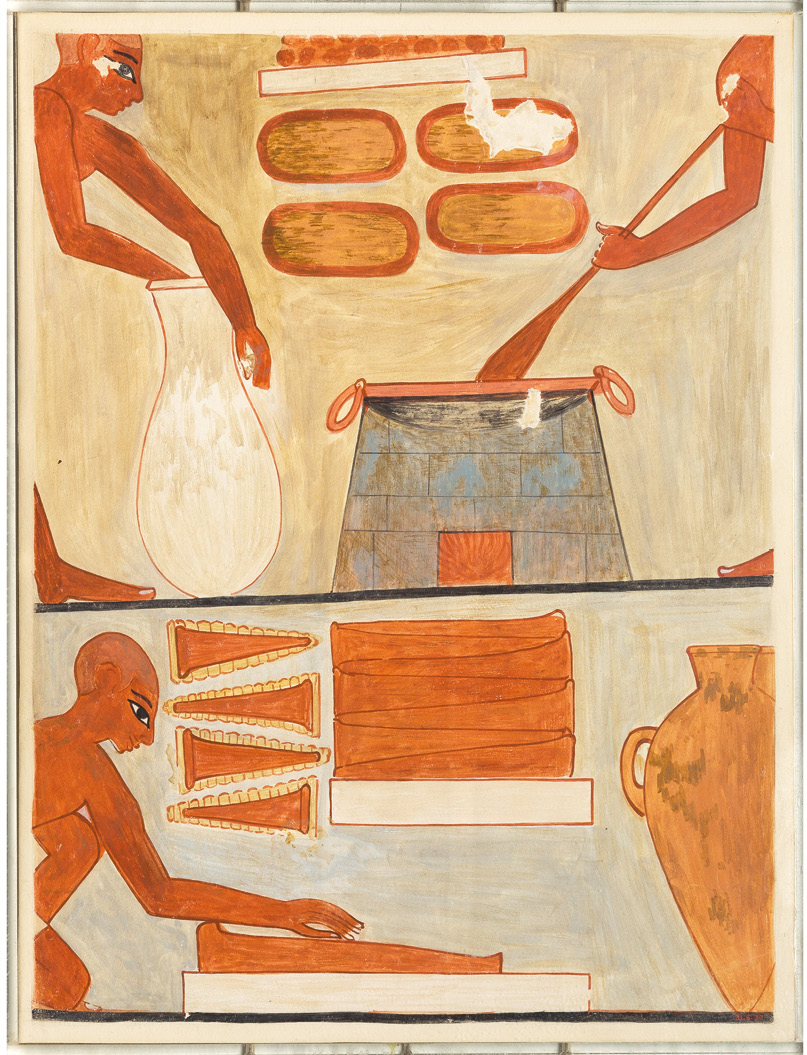
The mention of bnrt in scenes of baking and brewing has led to the common belief that the Egyptian staples of bread and beer were flavoured with dates as an aid to fermentation, a theory not supported by the Egyptian archaeobotanical record. Studies of beer and bread residues point to bnrt, in this context, being a reference to another sweet substance derived from cereals, possibly roasted barley malt. A review of the dental pathology of bodies from the Southern Cemetery at Amarna has shown significant levels of dental caries, typically caused by a high-sugar diet. Over the last 40 years, the retrieval, analysis, and contextualisation of botanical remains across sites has become standard practice, but, even at Amarna, the quantity of date stones found is far less than would be expected for such an important food resource.
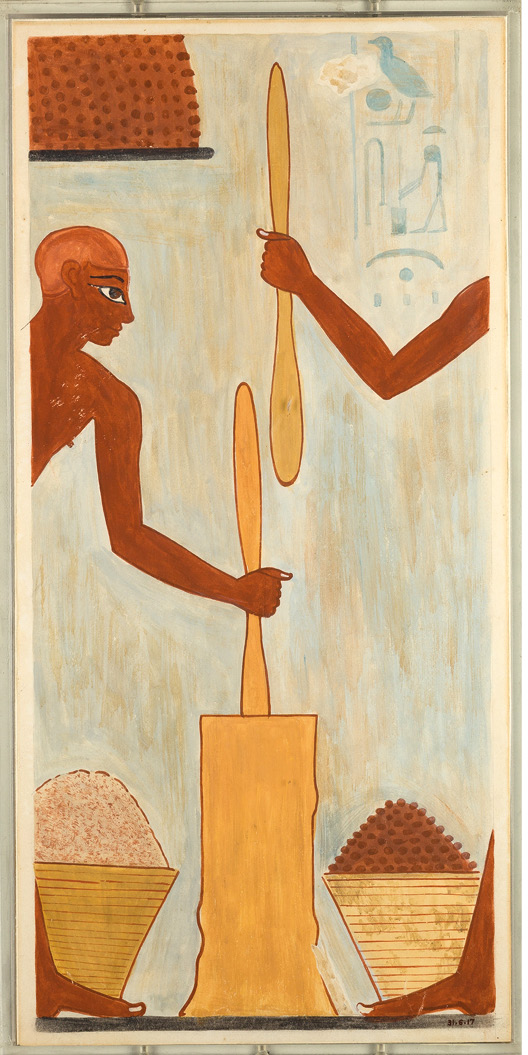
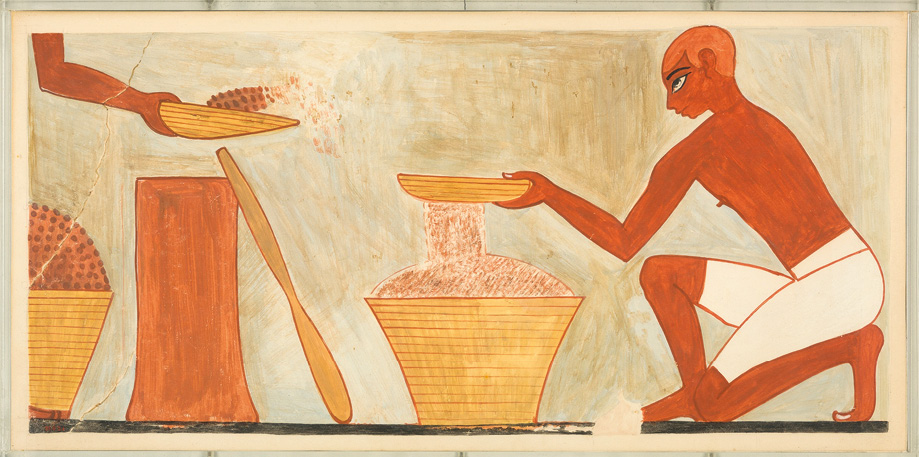
Recent interest in food security and sustainability has promoted studies into the uses of date-processing by-products, principally stones and pomace, the residue of juice- or syrup-extraction. In the Arab world, for centuries, date stones have been included in animal feed, and modern trials prove that they offer a digestible nutritional addition to animal fodder. Ancient farmyard scenes, as in Ti’s Saqqara tomb, show men force-feeding poultry with pellets of a cooked mash of flour and dried fruit, or possibly pomace. Modern experimentation in bakery for human consumption has proved that milled date stones can be an acceptable source of dietary fibre and antioxidants. Ancient Egyptian sweet breads, like the ‘date cakes’ included in offering lists, were prepared in the ‘date room’. Rekhmira’s bakers prepare loaves for temple offerings from sweet ingredients including dates, honey, and a coarse meal of waH (tiger nuts). The Egyptians were resourceful enough to have applied the pounding and sieving processes depicted on wall scenes to obtaining flour or even oil from date stones. Waste not, want not!