Subscribe now for full access and no adverts
Pandemic disease and climate change might seem like contemporary concerns, but the archaeological record has much to tell us about the impact of similar events on communities who lived centuries earlier. Intriguing insights are emerging from an Anglo-Saxon cemetery at Broughton Lodge, near Willoughby-on-the-Wolds in Nottinghamshire, which was excavated during a pioneering community project in the 1960s and has yielded further clues during subsequent scientific research. The high-status artefacts and exotic materials accompanying many of the graves speak of a diverse mix of cultural influences and trade links stretching across Europe and far beyond – but the site is also home to the largest number of multiple burials yet identified at any 6th-century cemetery in England. Why were so many people from this apparently thriving community dying in quick succession? A new exhibition at the University of Nottingham Museum draws together evidence from the original excavations and recent scientific analysis to explore possible causes, and the experiences and beliefs of the people buried there.

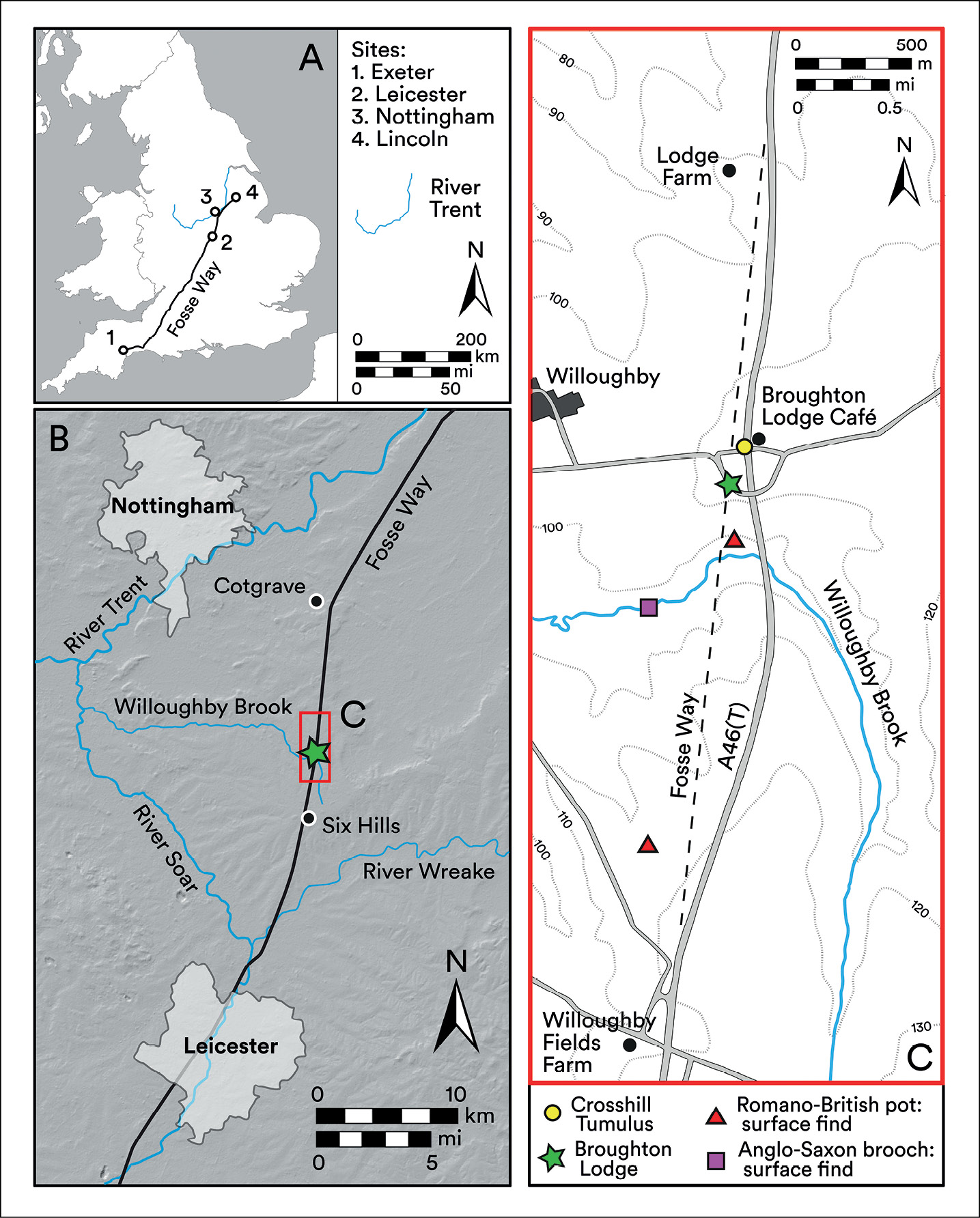
It had long been known that the site, which lies beside the Fosse Way (the Roman road from Exeter to Lincoln), was home to extensive Roman remains, including a large settlement and a cemetery. Evidence of activity dating to this period is described by the 18th-century antiquarian William Stukeley, and more buildings and burials were uncovered during investigations on an adjacent site in 1948-1951. Broughton Lodge’s early medieval significance, however, only became apparent in the 1960s, when the construction of a flyover for the A46 (the modern successor of the Fosse Way) revealed graves and a cobbled surface. Despite the site’s history, the Ministry of Works judged the archaeology to be too damaged to merit further investigation – but luckily the discoveries had come to the attention of Malcolm Dean, a local maths teacher who was also a member of the Thoroton Society of Nottinghamshire, a major county historical and archaeological society.
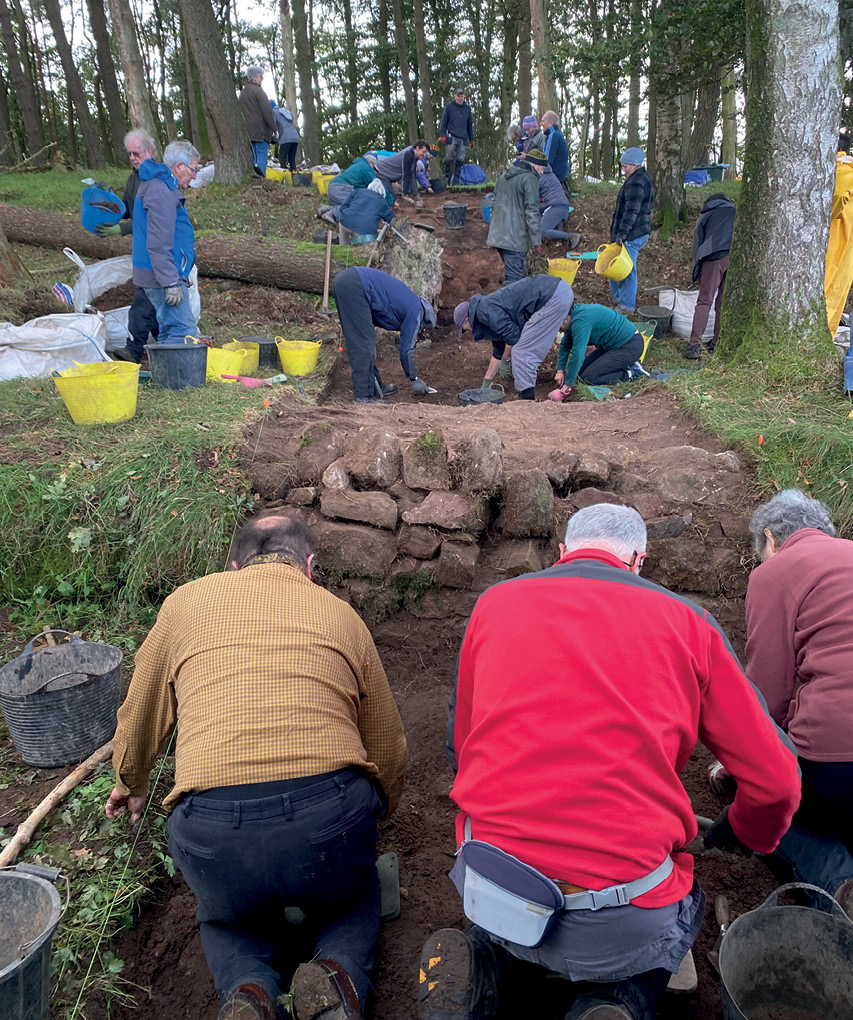
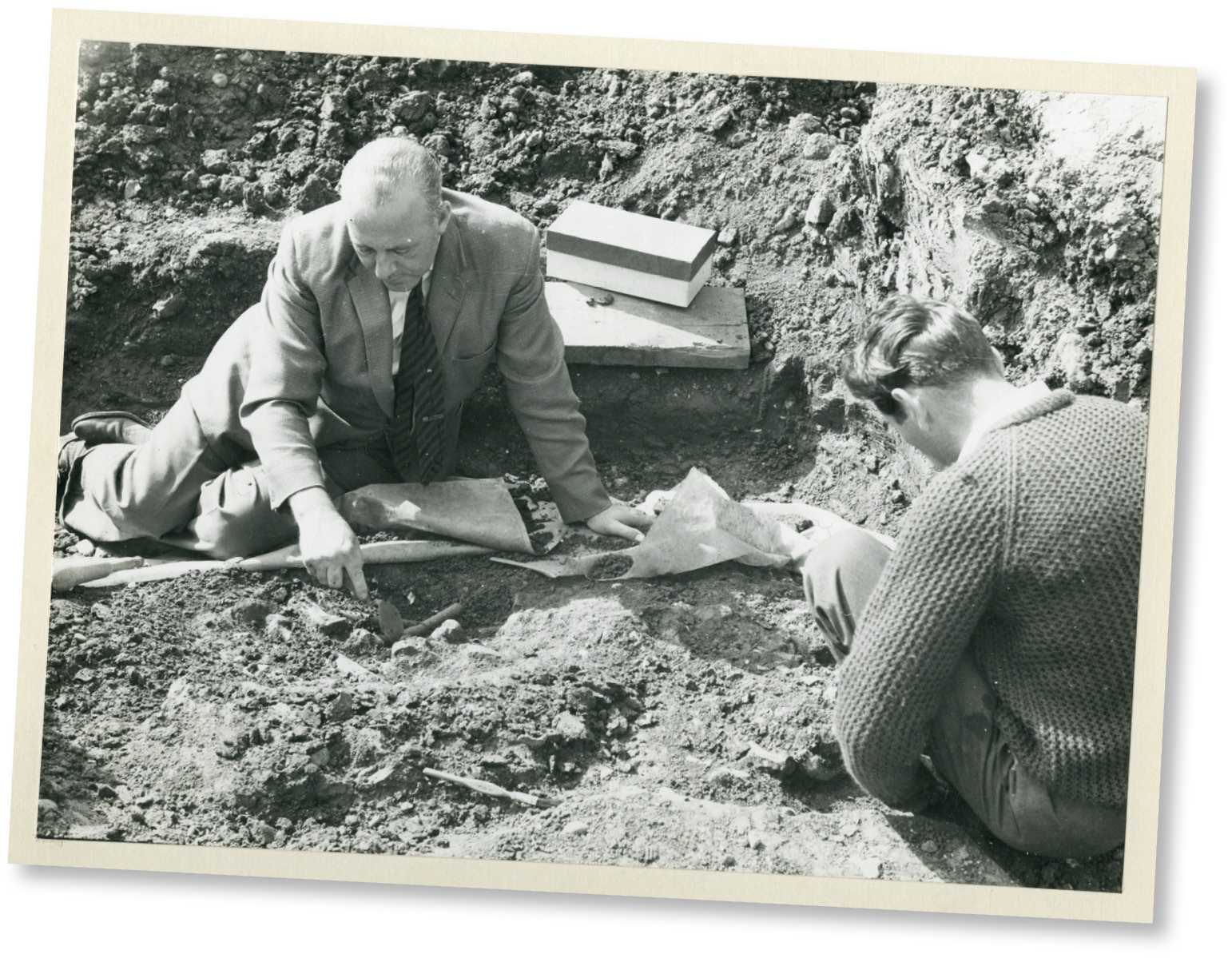
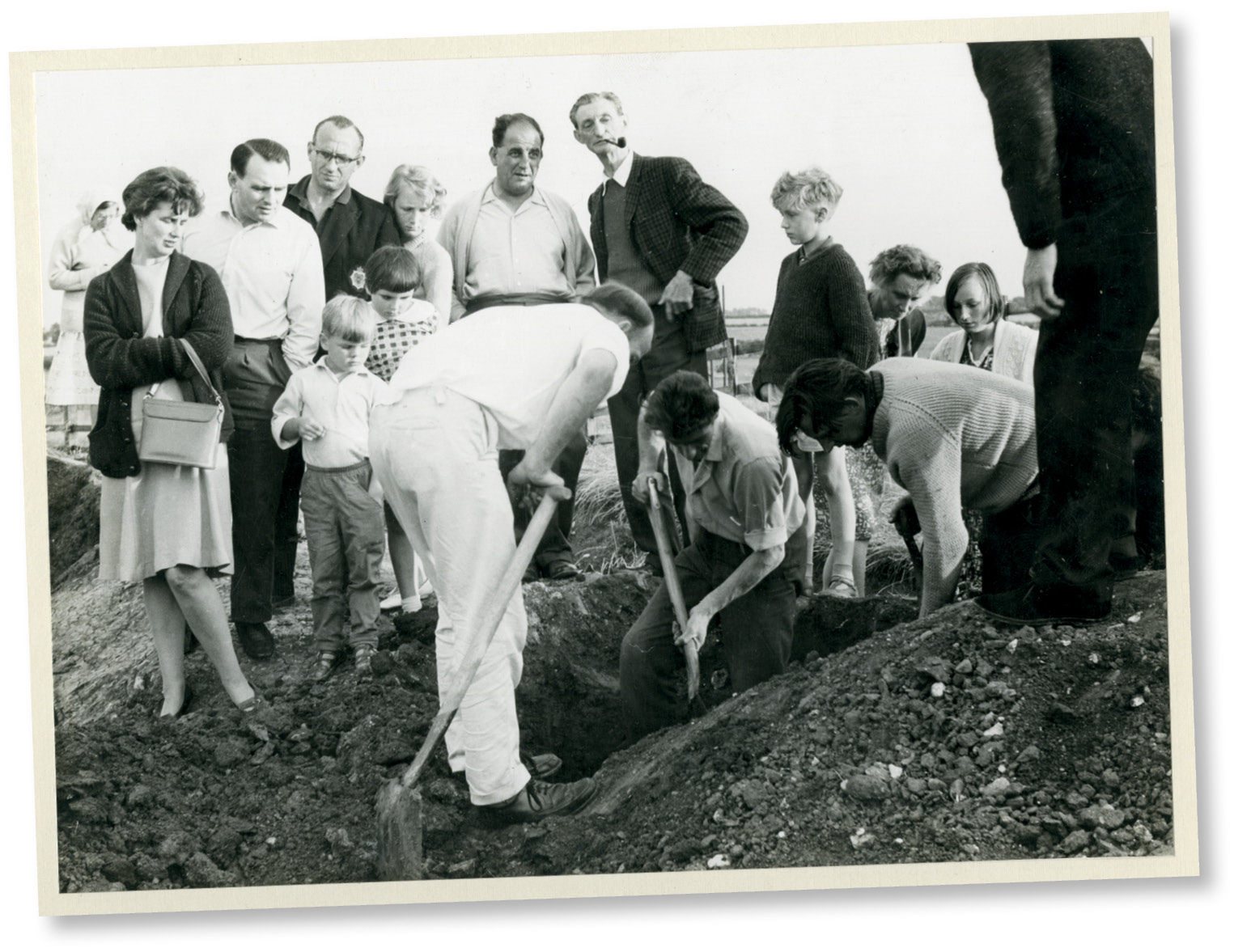
Recognising the site’s potential – and its immediate threat of destruction – Malcolm sprang into action, assembling a team of willing volunteers from the local community to excavate and record the remains before they were lost forever. They were assisted in their endeavours by Alan MacCormick, the newly appointed Curator of Archaeology at Nottingham Castle Museum, as well as by Malcolm’s rigorously methodical approach to excavation, based on a large grid system (well, he was a mathematician!). From 1963-1964 and 1965-1966, two seasons of digging revealed dozens of graves, many of them richly furnished, as well as a section of the original Fosse Way, with the volunteers pressing on undeterred even as the modern roadworks continued around them. These discoveries finally convinced the Ministry of Works of the site’s importance, and they agreed to fund a final phase in 1968.
Tragically, Malcolm was killed in a car crash in 1970, leaving his final report on the findings incomplete, but the work of bringing the site to publication was taken up first by Hazel Wheeler, Director of Excavations for the Trent Valley Archaeological Research Committee (a forerunner of Trent & Peak Archaeology, which is today part of York Archaeology) and, from 1985, by her colleague Gavin Kinsley, who published the resulting monograph in 1993. The excavation archives and finds were shared between Nottingham City Museums and the University of Nottingham Museum and, almost 60 years later, some 40 objects drawn from both collections have been reunited for the first time to help tell the site’s story in the new exhibition co-curated by both institutions. As the displays attest, analysis of the Broughton Lodge burials has shed vivid light on what has proven to be one of the wealthiest and most unusual Anglo-Saxon cemeteries in Nottinghamshire.
Object lessons
In total, around 120 graves were excavated at Broughton Lodge, spanning c.AD 475-580. The artefacts that they contained highlight the diverse cultural influences and expressions of identity that were coming together in England at this time, combining items that reflect traditions from northern Germany, Denmark, and south-west Norway with those of more local styles, as well as materials from even further afield, and some ‘heirloom’ objects dating to the Roman period.
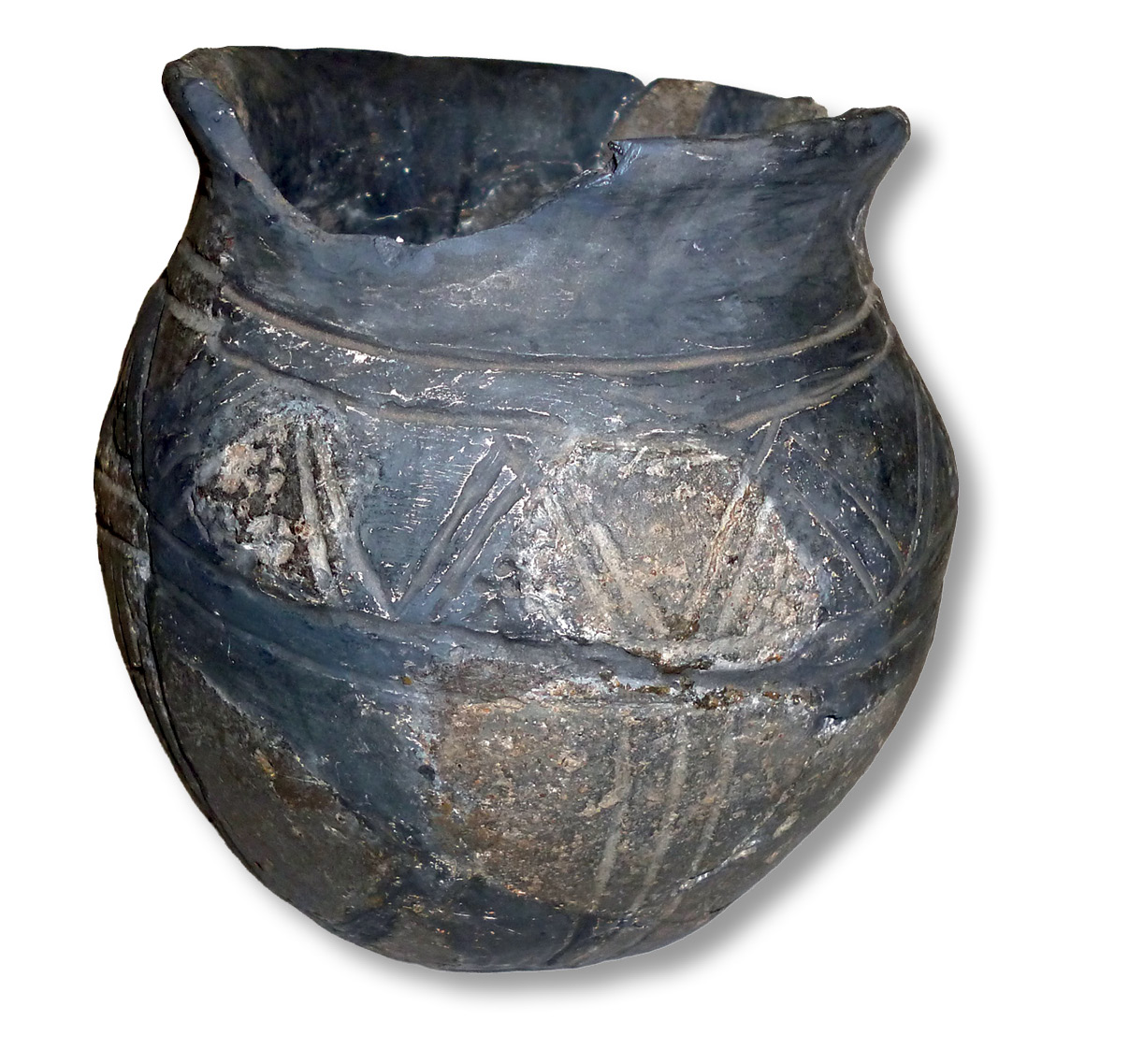
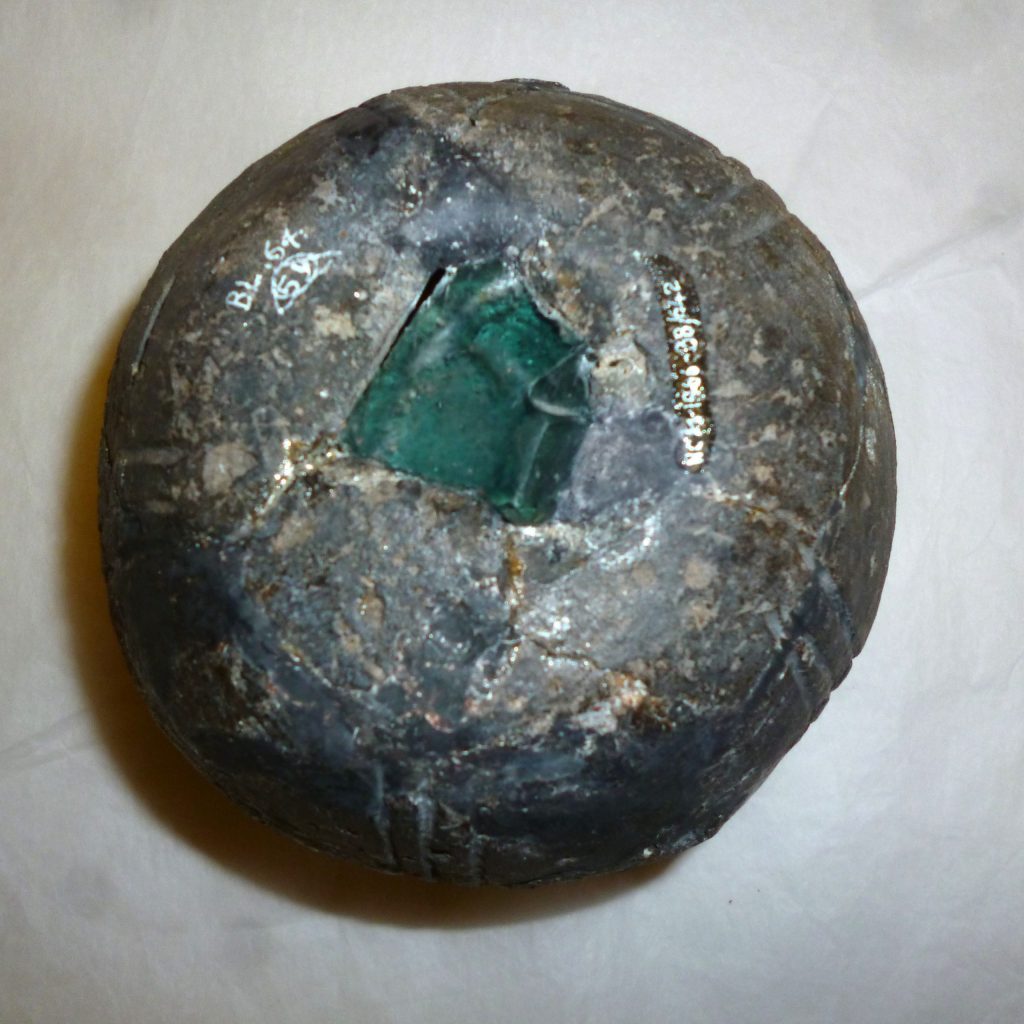
Many of the grave goods are fairly typical of their time: adolescent and adult males were frequently found with iron shield bosses and spearheads, while their female contemporaries tended to have brooches of various types, including the annular (ring-shaped) designs that appear to have developed in 5th-century Britain, and square-headed small-long types which derive from northern Germany and Denmark. Adding to this cosmopolitan picture, some women were buried with necklaces of Baltic amber, and polychrome glass beads from Francia. Other objects were more unusual, however, among them a hand-worked pottery vessel which, at first glance, appeared to be a type that is seen across 5th-century and 6th-century England – but it had a large piece of Roman blue glass set into its base, leading it to be dubbed the ‘window pot’. It was found in Grave 59, the burial of an adolescent who was aged 14, probably male, and was also accompanied by a spear.


Other artefacts testify to the social status of some of the individuals buried on the site. One female grave included a double ‘girdle-hanger’, thought to be a symbol of authority within the household, while another wealthy woman was identified in Grave 3. She had been buried with a pair of annular brooches (which would have secured her dress at the shoulders) as well as a much larger cruciform brooch adorned with gilding and silver decoration. This ostentatious ornament, together with a more fragmentary example from Grave 8, represents trade links with the eastern Mediterranean: its gold probably came from melted-down Byzantine coins, while the mercury used in the gilding process would have come from the same region. The well-dressed woman also had Norwegian-style wrist-clasps to fasten her sleeves, a buckle for her belt, and a much rarer item: a pendant or amulet fashioned from the tooth of a beaver (a species which, 1,400 years later, has just been reintroduced into the region). Two other early medieval examples of such objects are known, also from women’s graves in the East Midlands: at Little Chester in Derby and Wigber Low in the Derbyshire Peak District. It is possible that they represent a regional tradition of protective charms used by women of some status (the Wigber Low example is tipped with gold, while the Broughton Lodge pendant’s top has a green tinge that suggests a now-lost copper-alloy binding). Two pendants made from the teeth of boars or feral pigs were found in female graves on the Nottinghamshire site, too.
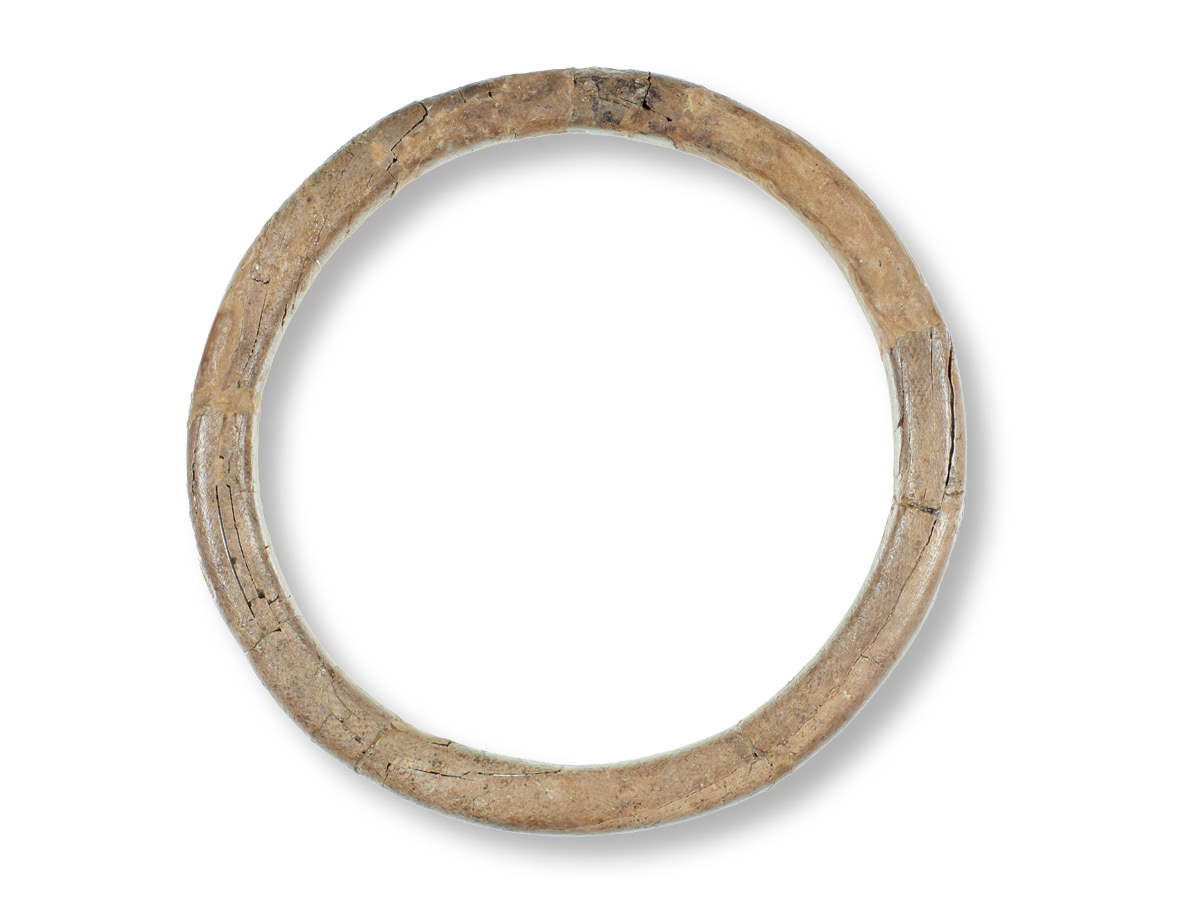
This was not the end of the prestigious objects in Grave 3: the woman was accompanied by a large elephant ivory ring as well, which would have formed the mouth of a now-decayed leather or cloth purse or bag. Another well-preserved example was recovered from Grave 56, while fragments of others were found in two more burials on the site. Recent research on ivory purse-rings by Rowan English (https://doi.org/10.1111/emed.12715), as well as by Dr Katie Hemer and Dr Hugh Willmott (https://doi.org/10.1016/j.jasrep.2023.103943), suggests that they probably come from east Africa, possibly the Rift Valley, and it is thought that the ivory was exported via the Nile Delta in Egypt and across the Mediterranean before arriving in eastern England. (See CA 399 for a 5th- to 6th-century cemetery in Scremby, Lincolnshire, where 20% of the excavated female graves had ivory purse-rings.) The rings themselves are plain, transverse sections sawn through large tusks – indeed, their dimensions are rarely seen in modern elephant populations, highlighting the impact of hunting since the early medieval period.
Mass mortality
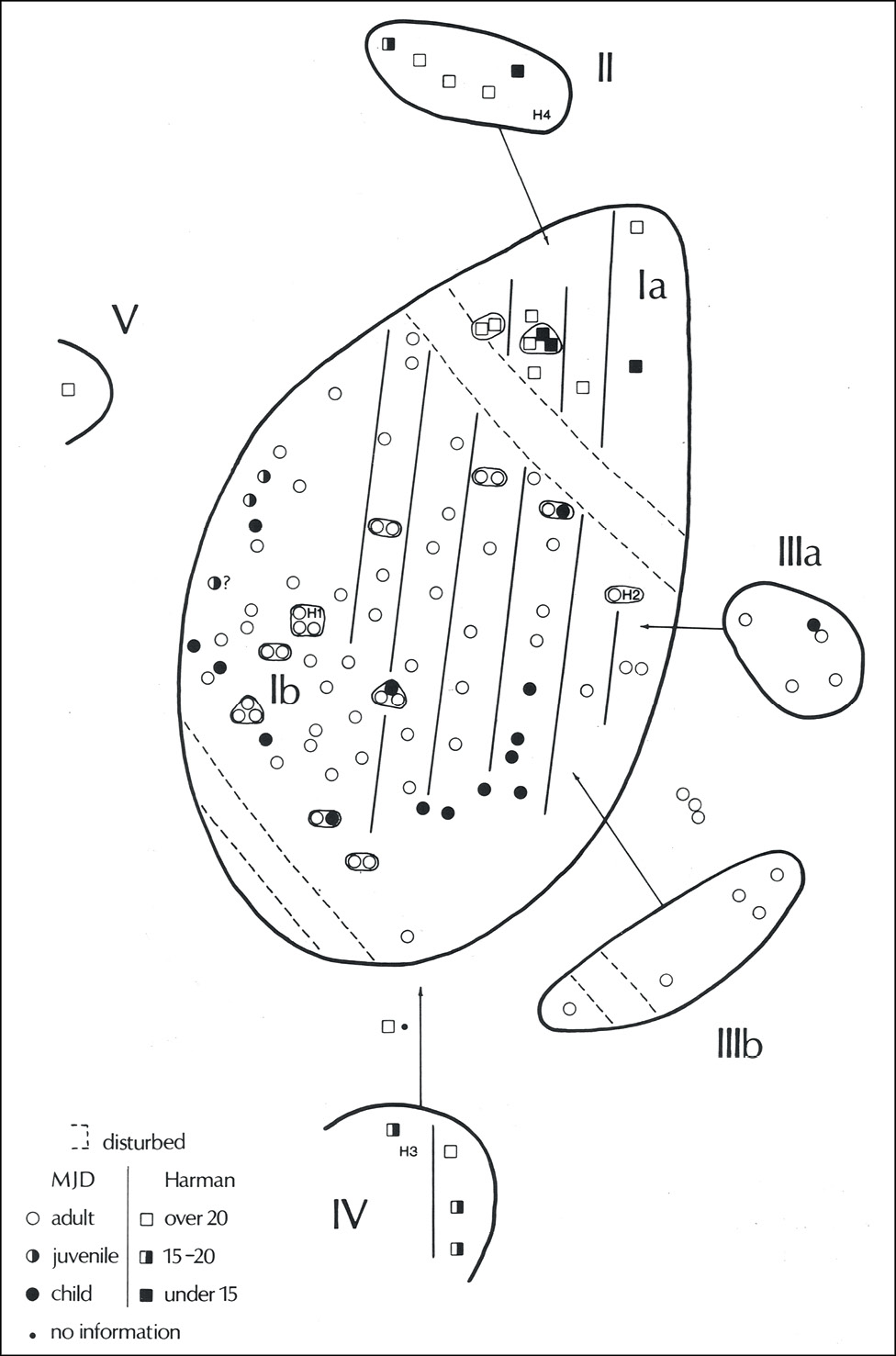
Another striking aspect of the Broughton Lodge cemetery is its unusual number of multiple burials – 12 in all, which, where they can be dated by their grave goods, appear to centre on the middle decades of the 6th century. Each contained between two and four individuals, with men, women, and children all present, in some cases possibly representing family groups. Two of these burials included horses, while another two horses were found adjacent to human graves. With the exception of Graves 14-16, where an individual was buried soon after (and directly on top of) two others, the multiple interments appear to represent single burial events. Why had so many members of this community died over a short period of time?

Might a crisis caused by environmental change hold the key? One of the exhibition’s co-curators, Professor Chris Loveluck, has been involved in recent research which points to a dramatic crash in productive activity in mid-6th-century England. The project, by the Universities of Cambridge and Nottingham (published in Antiquity, https://doi.org/10.15184/aqy.2025.10175; see also CA 428), examined a 5m-long sediment core from Aldborough in Yorkshire, an important metal-production centre in the Roman period. The team wanted to see if this activity had been affected by the end of imperial administration in Britain, but in fact the industry had continued uninterrupted into the immediate post-Roman period, before coming to a sudden halt a century later.
Analysis of tree-rings, polar ice cores, and 6th-century written sources testify to the severe and lasting effects of a ‘volcanic winter’ that caused darkened skies and lowered temperatures across much of the northern hemisphere following an eruption in AD 536. In Britain, this phenomenon would have created a much colder or wetter climate; could the mid-6th-century disruption seen at Aldborough have been caused by climate stress of this kind – and might these changes have had an impact on the Broughton Lodge community, too? Contemporary Irish annals speak of a ‘failure of bread’, and it is possible that crop failures and famine could also have struck eastern England. If this was the cause of so many people dying at Broughton Lodge, however, it must have been an acute crisis of starvation; analysis of dietary isotopes preserved in some of their teeth (undertaken by Dr Fiona Moore) does not indicate long-term poor nutrition.
Another possibility is that the cemetery represents a settlement ravaged by swift-spreading disease – and 6th-century written sources provide a possible cause: the Justinian Plague, which is known to have swept across continental Europe and the Near East in the 540s, with repeated waves in the 550s and 570s-590s. Accounts of the time testify to the devastating impact of this pandemic, though until recently we had no evidence to confirm it reached Anglo-Saxon England. This all changed in 2019, when aDNA analysis of 22 individuals buried at Edix Hill, a Cambridgeshire cemetery spanning c.AD 500-650, revealed that four had tested positive for the strain of Yersinia pestis (the bacterium responsible for bubonic plague) that had circulated in the 540s. These findings (published in PNAS, https://doi.org/10.1073/pnas.1820447116; see also CA 353) were the earliest firm evidence of plague in Britain – and it is contemporary with Borough Lodge’s multiple burials.
Piecing together a pattern
Also like Borough Lodge, the Edix Hill burials are generously furnished, with weapons accompanying many of the men and a variety of dress items found with the women. There are even two examples of bed burials, thought to be an elite funerary practice. This too, then, was a wealthy, well-connected community that appears to have met with a catastrophe. Might the network of trade connections that brought new ideas, object-types, and materials to eastern England have also facilitated the spread of something more deadly?

Frustratingly, due to a combination of unfavourable local soil chemistry and plough damage, skeletal preservation at Broughton Lodge is poor and, while some isotope analysis has been possible from teeth, it has not yet been possible to extract aDNA from those teeth, nor the inner ear bones (the usual sources of human aDNA) to confirm the presence of Y pestis in any of the burials. The site does, however, seem to fit into a wider picture that is beginning to emerge from recent aDNA studies in Germany and southern France, which suggest an increasingly clear link between 6th-century multiple burials and evidence of plague. It may be that future research will identify a similar pattern in eastern England, too; an international project, involving York Archaeology and Chris Loveluck, is currently studying a 6th-century cemetery in Yorkshire that has similar multiple burials to those at Broughton Lodge – but, crucially, the preservation of human remains is much better.
If the Broughton Lodge multiple burials were the result of plague, however, the affected individuals do not appear to have been treated any differently to their neighbours, apart from being interred in groups. These are not hasty mass interments: each person had been respectfully laid to rest and they were accompanied by similar artefacts to those in solo graves. At Edix Hill, too, the people who tested positive for Y pestis were otherwise indistinguishable from the rest of the cemetery population – as were those who showed signs of other diseases that would become highly stigmatised later in the medieval period. One of the bed burials contained the remains of a young woman with leprosy, who had nevertheless been accorded this prestigious rite and an array of high-status grave goods. Far from being outcasts, in the 6th century people with these diseases appear to have remained very much part of their communities. Perhaps we can see another expression of this attitude at Broughton Lodge.

Source:
• Ann Inscker (Curator of Human History, Nottingham City Museums and Galleries) and Chris Loveluck (Professor of Medieval European Archaeology, University of Nottingham) are co-curators of the new Broughton Lodge exhibition.
• Dr Clare Pickersgill is Keeper of the University of Nottingham Museum.
Further information:
• The Anglo-Saxon Cemetery at Broughton Lodge, Willoughby-on-the-Wolds will be at the University of Nottingham Museum at Lakeside Arts until 12 July. The museum is open noon-4pm Thursday to Sunday; entry is free.
• Chris Loveluck and Gavin Kinsley of York Archaeology will give a talk at Lakeside Arts on 3 June, discussing the original Broughton Lodge excavation and new perspectives from recent research. Tickets go on sale on 18 March; see https://lakesidearts.org.uk/BroughtonLodge for more details of this and the exhibition.