
Subscribe now for full access and no adverts
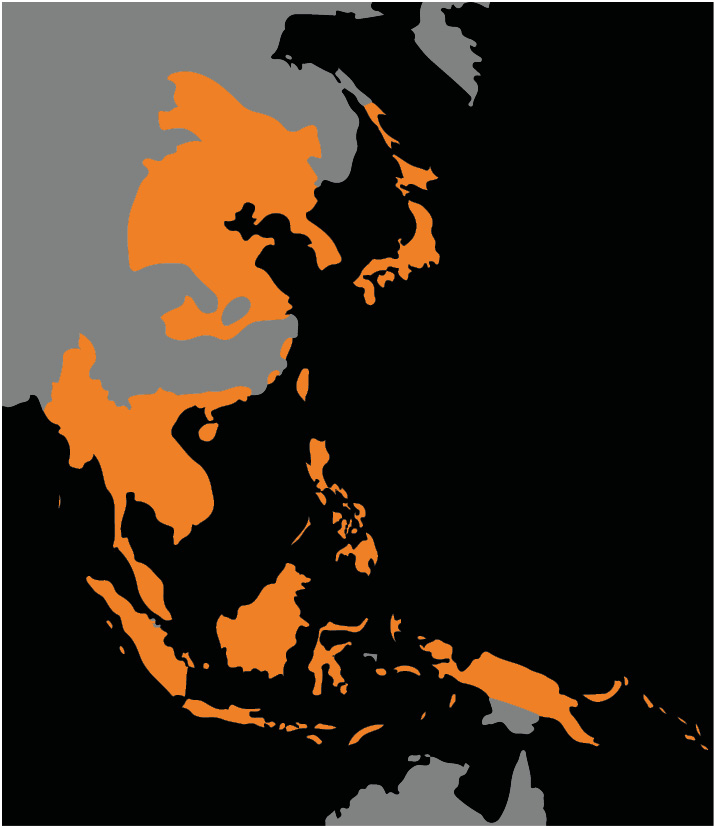
The Japanese surge between December 1941 and June 1942 – between, that is, Pearl Harbor and Midway – created a huge Far Eastern empire comparable with that of the Nazis in Europe.
But at that point Japan’s capacity for expansion was utterly exhausted; in fact, she was highly overextended and would spend the rest of the war fighting on the defensive – a long, brutal, increasingly suicidal war of attrition against massive enemy superiority in manpower and machines.
Japanese wartime decision-making was not entirely rational. Just as Nazi ideology informed Hitler’s fatal decision to attack Russia, so Militarism – the Japanese form of fascism – informed the actions of the Tojo government in Tokyo.
The war-making technology may have been ultra-modern, but the Japanese leadership was guided by a medieval hodgepodge of emperor-worship and samurai warrior-cult. This found expression in bestial behaviour in occupied territories wholly comparable with that of the Nazis in Eastern Europe. The Japanese regime meant murder, torture, and rape on a genocidal scale.
The notion that one might seek to win ‘hearts and minds’ was wholly alien. Subject populations were viewed with contempt for having been defeated and conquered. Henceforward they were to be ruled by terror. Resistance movements therefore developed across the Japanese Empire.
A multi-front war
The Japanese Empire was a vast sprawl made exceptionally vulnerable by the need to defend thousands of islands and tens of thousands of miles of coastline. This vulnerability increased as the massive industrial power of the United States was fully mobilised. With growing air and maritime superiority, the initiative was almost entirely with US forces, which could choose when and where to land and fight.
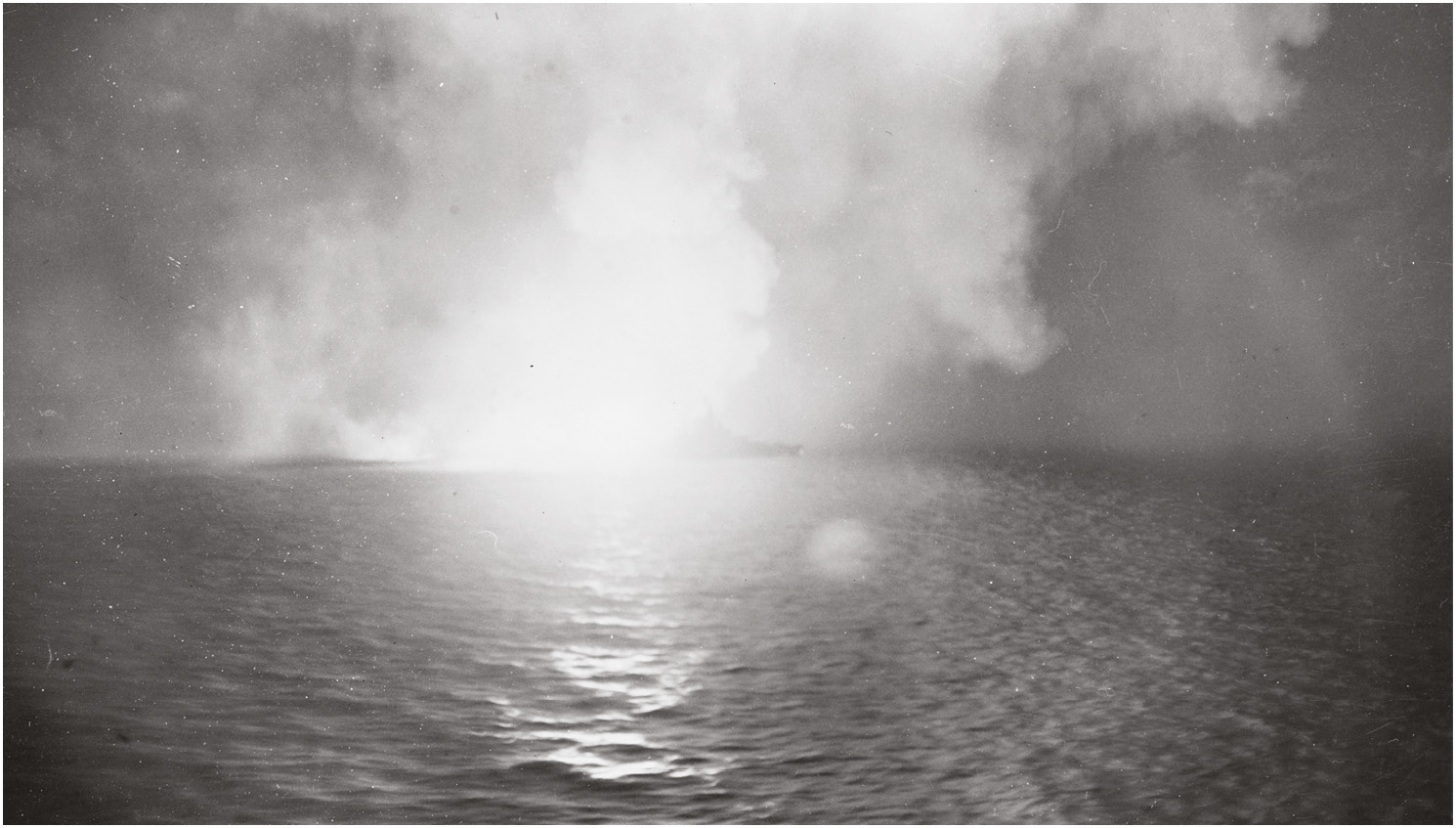
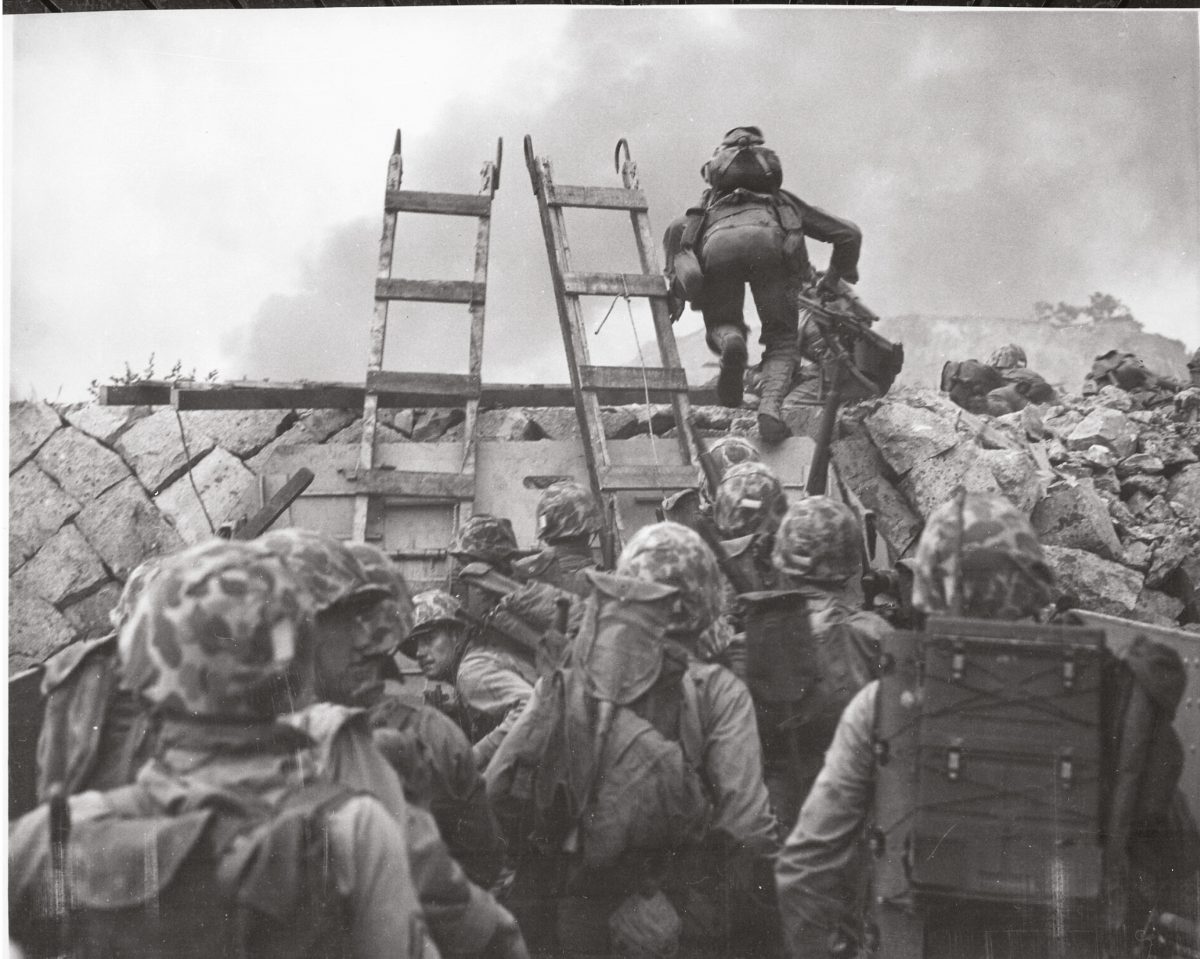
The Japanese were eventually fighting on several fronts – against Nationalist forces in the Chinese hinterland, against the British in Burma, against the US Army in the Philippines, against the US Navy and Marines in the Western Pacific, against the Australians in New Guinea, and against the US Air Force in the skies over Japan.
But the Resistance constituted another front, and one of exceptional and little-appreciated importance.
The war with China had begun in 1931, escalated in 1937, and continued until 1945. The bulk of the Japanese Army throughout this period was deployed in China, both to defend the Chinese coast against conventional Nationalist counter-attack, but also in response to the Chinese strategy of trading ‘space for time’, of scorched earth, and of guerrilla resistance (by both Nationalists and Communists).
China was as central to Japan’s defeat in the Second World War as Russia was to that of Germany in Europe. History shows that China can no more be conquered than Russia. It is too vast and too heavily populated for any invader to take over the whole country. The most that can be achieved is to seize the central state and become assimilated as a new ruling class. The Mongol Yuan dynasty of the 13th and 14th centuries and, to a degree, the Manchu Qing dynasty of the 17th to 20th century are examples.
Japan launched its wider blitzkrieg in December 1941 despite still being hopelessly bogged down in China after three-and- a-half years of full-scale warfare. It was a desperate attempt to solve Japan’s chronic raw-materials shortages so that she could expand her military-industrial capacity. But it could not succeed in the long run.

Guerrilla warfare
Less attention is given to the role of resistance movements for two main reasons: most operations were small- scale, and most were clandestine. Guerrilla operations rarely make headline news. Nor do they yield an abundance of historical documents – maps, photos, orders, after-battle reports, etc – to provide historians with the source material they need. Guerrilla warfare is war in the shadows.
But the impact is often out of all proportion to the investment. Guerrillas often achieve exceptional levels of what military theorists call ‘economy of force’. Small bands using low-tech, even improvised weaponry can overwhelm small posts, ambush local patrols, eliminate collaborators and informers, destroy military equipment and supplies, and sabotage infrastructure like trains, bridges, telegraph lines, and so on.
The guerrilla fighter is protected by invisibility – either because he/she is embedded in the local population and is indistinguishable from them, or because he/she operates from a remote and hidden base. This protection is enhanced by the guerrilla’s ability to choose when, where, and how to strike, ideally on the basis of maximum intelligence and with minimal risk. Hit and run, and survive to fight another day, is the essence of guerrilla warfare.
To deal with this kind of chronic low- level threat, the occupation forces have to disperse into numerous penny-packets guarding thousands of vulnerable locations; but, ideally, never so small as to become easy targets in themselves.
To take the offensive against the guerrillas almost invariably involves attacks on the civilian population from whom they are recruited and among whom they find food, shelter, intelligence, and so on. So counter-insurgency operations are liable to increase popular hostility to the occupier and funnel recruits to the resistance.
During the Second World War, millions of Japanese troops who might have been fighting the Americans, the British, or the Australians were in fact fighting nationalist insurgencies in China, the Philippines, Vietnam, and elsewhere. The contribution of the resistance movements to the defeat of Imperial Japan was enormous.
From resistance to revolution
The scale of the resistance had long-term implications. Despite their brutality, the Japanese had demonstrated the hollowness of the European empires in the Far East. Following defeats like that of the British in Singapore, and given the role of the resistance movements in the subsequent struggle against the Japanese, the restoration of these empires was never going to be straightforward.
The Chinese Communist Party swept to power in 1949, crushing its Nationalist rivals in a three-year civil war, despite massive levels of US support to Chiang Kai-Shek. The British gave up trying to hold India – the ‘jewel in the crown’ – and granted independence in 1947.
The Indonesians declared their independence in August 1945 and went on to defeat a Dutch attempt to restore colonial rule during a four-year insurgency.
The Vietnamese resistance had played a central role in the liberation of the country from the Japanese. The British then used captured Japanese soldiers to contain the Vietnamese nationalist movement pending the arrival of French colonial forces. The French attempt to restore colonial rule turned into an eight-year war, with the French finally defeated at Dien Bien Phu in 1954, after which they withdrew.
But, in a classic instance of Cold War politics, the country was partitioned, and the Americans then attempted to prop up a corrupt client dictatorship in Saigon. They were eventually defeated by an insurgency of North Vietnamese regulars and South Vietnamese guerrillas who were the direct descendants of the anti-Japanese resistance during the Second World War.
Neil Faulkner