Subscribe now for full access and no adverts
Such was the vibrancy of this material assemblage, there was a sense upon excavating the settlement that the Bronze Age people had only just left; that you could almost sense the smells, colours, and wonders of their world – the musk of the damp setting, the crunch of dogs gnawing on pike heads, the fleecy warmth of lambs, the sharp milkiness of brewed porridge, the glint of bronze tools hanging on the wattle walls, the dull thud of a fallen pot.’ So write the authors of Must Farm pile-dwelling settlement, a two-volume monograph recently published by the McDonald Institute for Archaeological Research (see ‘Further information’ below). The books set out the illuminating insights that have been gleaned from a late Bronze Age settlement at Must Farm in Cambridgeshire.
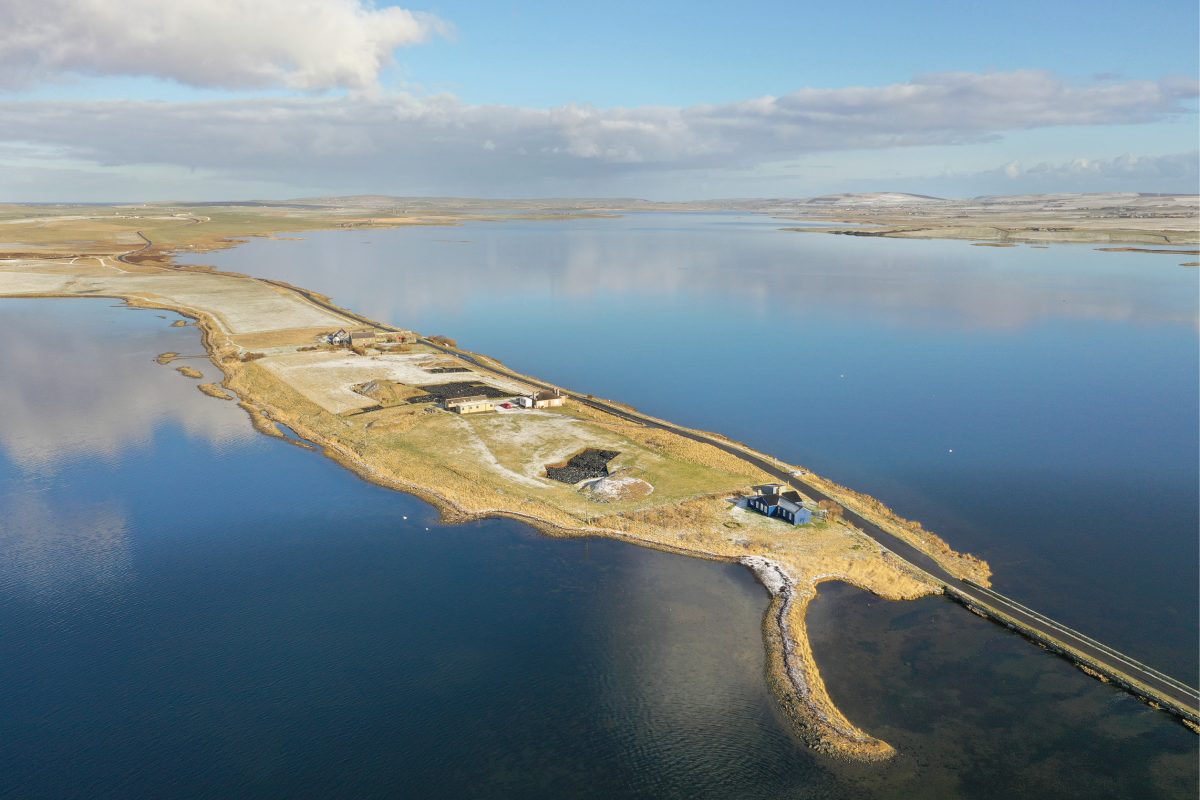
The first hints of Bronze Age activity on the site (which lies on the south-east edge of the Flag Fen Basin) had emerged in the 1970s, when quarrying brought fragments of metalwork and pottery to the surface; further clues came in 1999, when local archaeologist Martin Redding spotted a series of stumps sticking out of a flooded quarry pit. Evaluations by Cambridge Archaeological Unit (CAU) followed in 2004 and 2006, but with no immediate threat to the underlying remains they were left largely undisturbed, albeit with careful monitoring in place. The results of the monitoring and their interpretation were equivocal, and therefore an agreement was reached between Forterra and Historic England to excavate the potentially at-risk remains.
When we documented this excavation and early interpretations of Must Farm in CA 312 and 314, the extent of the emerging archaeology was already exciting: the remains of entire collapsed structures; a wealth of artefacts owned by their inhabitants; and tantalisingly tactile traces of the food this community had eaten, the crafts they had carried out, and the far-reaching trade networks they had accessed before a devastating fire forced them to flee their homes forever. Now, with analysis published in full, the unprecedented level of detail that Must Farm provides, and its potential to challenge long-held assumptions about late Bronze Age life, is dazzlingly clear.
A short-lived settlement
The site was once home to a cluster of structures that stood on stilts above a freshwater ribbon running through the reed swamp. This watercourse (a prehistoric tributary of the Nene) was broad, navigable, and – crucially for our purposes – very slow-flowing. The settlement had not stood for long before it was destroyed in a single catastrophic episode: fire tore through its buildings, consuming floors and collapsing timbers. Structural remains and artefacts alike plunged straight downwards into the sluggish waters below, where they barely shifted before they were buried in soft sediments, preserving detailed floorplans for archaeologists to reconstruct millennia later.
When did these events take place? Dating evidence for the settlement’s construction centres on c.850 BC, and dendrochronological analysis of timbers indicates that they all came from trees felled in the same year, between September and March, perhaps suggesting that the structures had been built at roughly the same time. The fact that the timbers have not been burrowed by woodworm or bark beetles indicates that they had only been in place for a short period before the fire, CAU note. As for when the fatal fire took place, the presence of young (3- to 6-month-old) lambs and stockpiles of flax seeds (a crop harvested in mid-/late August) on the site, together with a striking scarcity of fruit stones, indicates that the site’s occupation had been concentrated in the spring and early summer, with a probable end date in the late summer or early autumn.
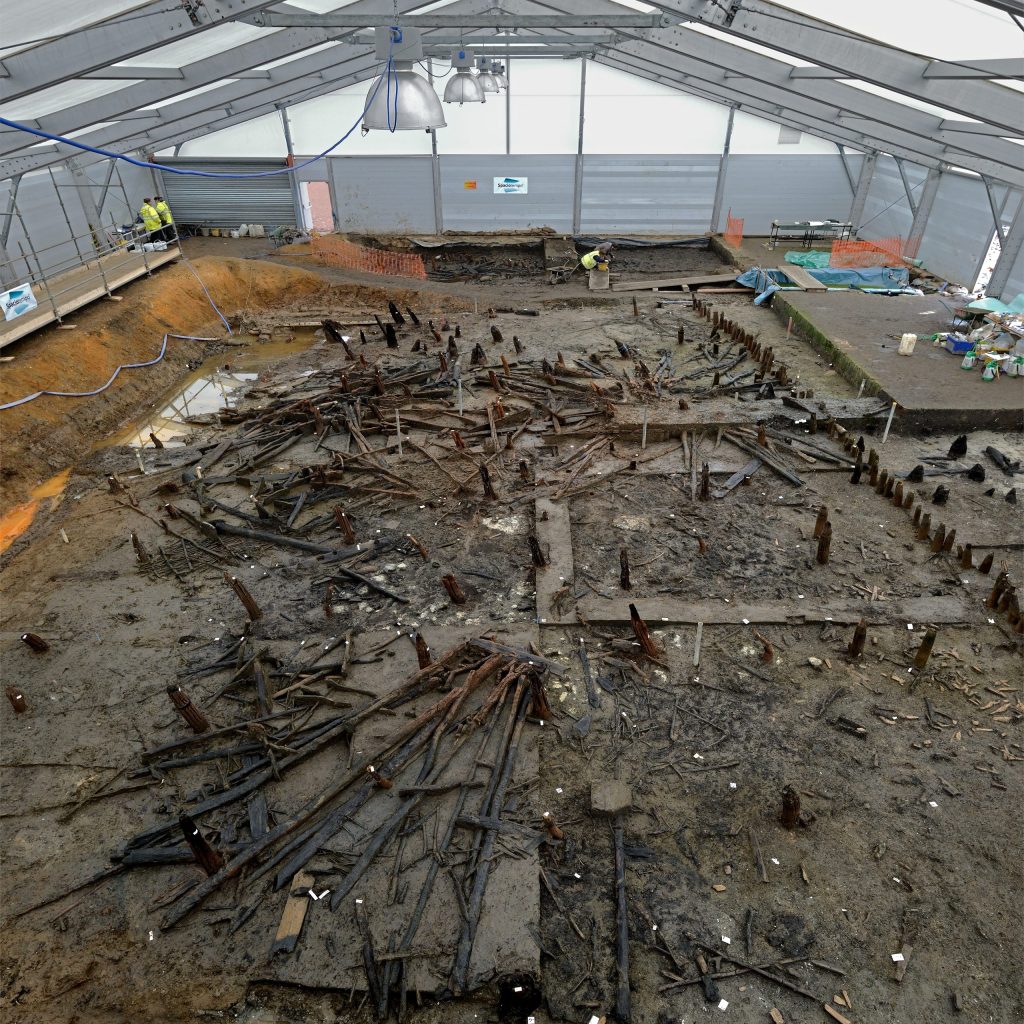
The settlement’s short life is reflected in its shallow stratigraphy: there are only three main layers – representing construction, occupation, and fiery demise – and their combined depth is just 0.15-0.35m. In some places, unburnt woodchips from the shaping of structural timbers are separated from charred material by just a few millimetres of silt. Within these layers, the team have been able to distinguish the charred items that were lost at the time of the fire from the objects that had been thrown away during the settlement’s lifetime. Taken together, they form the largest late Bronze Age domestic assemblage ever found in Britain: an impressive inventory including 128 pottery vessels, 95 pieces of metalwork, at least 56 beads of various materials, and thousands of animal bones; as well as a diverse array of organic items that seldom survive on dry-land sites, among them 193 wooden artefacts ranging from tiny bobbins to cartwheels; and 155 fragments of fibre and textile, from balls of yarn to some of the finest cloth ever found in Bronze Age Europe.

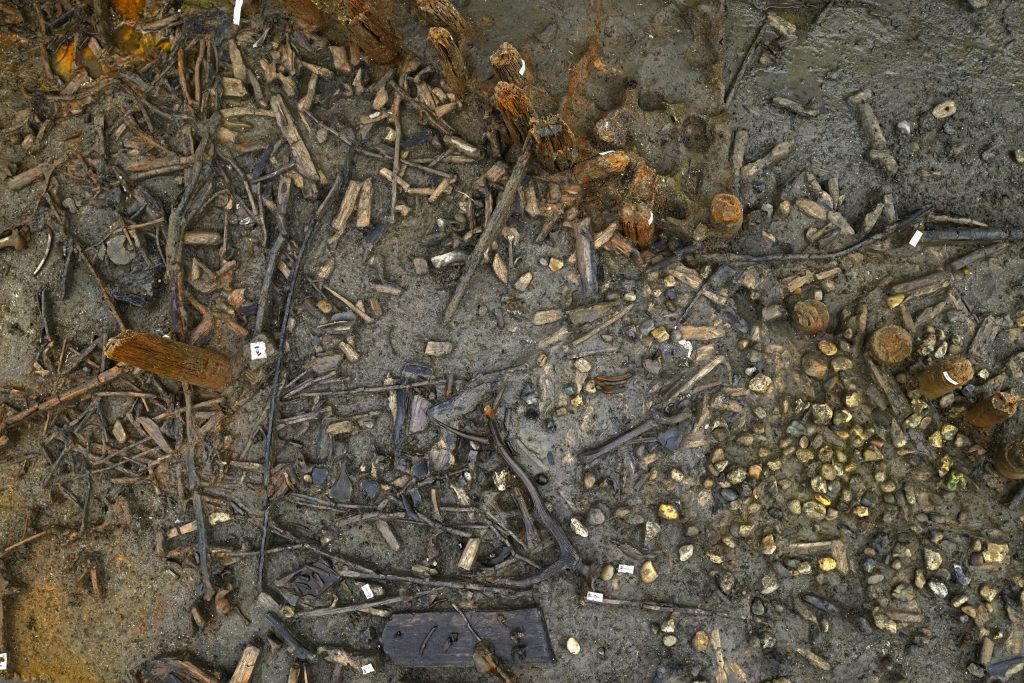
Above: Photogrammetry captures the surviving archaeology at Must Farm; the plan (below) interprets the c.3,000-year-old remains.

Resurrecting sunken structures
What can be said about the settlement itself? The stumps of hundreds of piles pick out the footprints of structures, as well as the line of a tall palisade that once enclosed them, and over and around these lay collapsed timbers, roofing materials, and wattle flooring. From this mass of material, the team have identified five individual structures covering an area of 43m by 18m, but the settlement may have originally been more substantial, as its northern portion was truncated by historical quarrying.
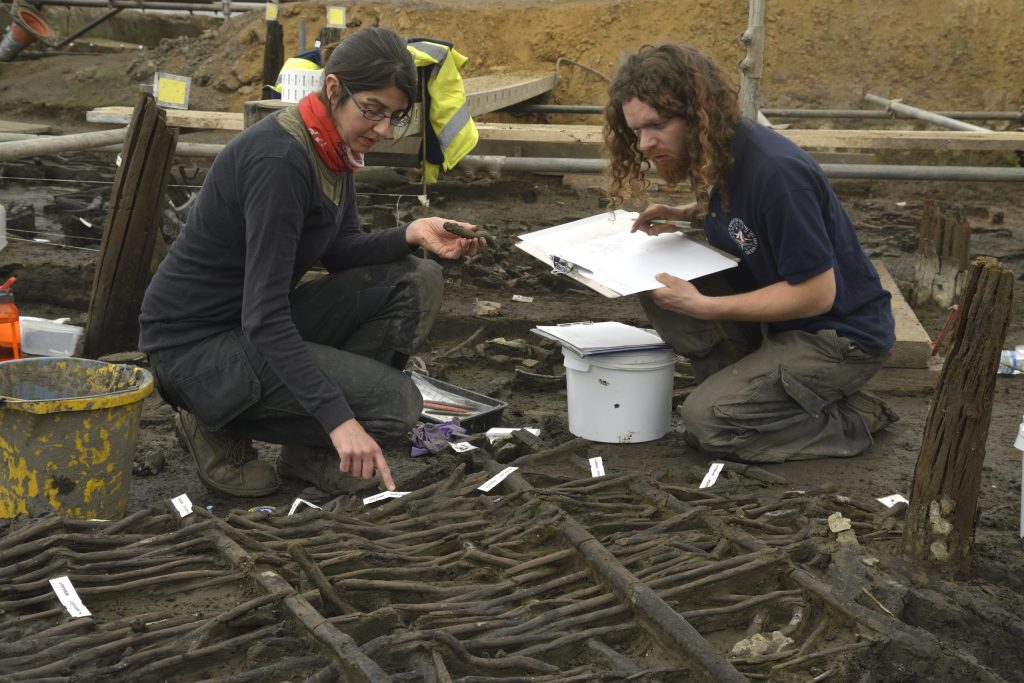
Four of the structures are roundhouses, arranged in apparent pairs (Structures 1 and 3, and Structures 2 and 5), while Structure 4 is more rectangular in form, wedged somewhat awkwardly in the middle. Taking as a model Structure 1 – one of the best-preserved – we can tease apart their construction sequence. First, two concentric rings of evenly spread oak piles were driven into the riverbed, and their tops were linked with horizontal beams, each carefully mortised using metal gouges or chisels. On top of these the floors were laid – not solid planking, but a series of lightweight alder poles supporting wattle panels that were possibly covered with clay and matting made of straw, bracken, or reeds (which would explain why they burnt through so quickly). The walls of the buildings were made of wattle, too, and these were crowned with conical roofs formed from alder and ash rafters interwoven with a lattice of willow rods, possibly topped with turf.
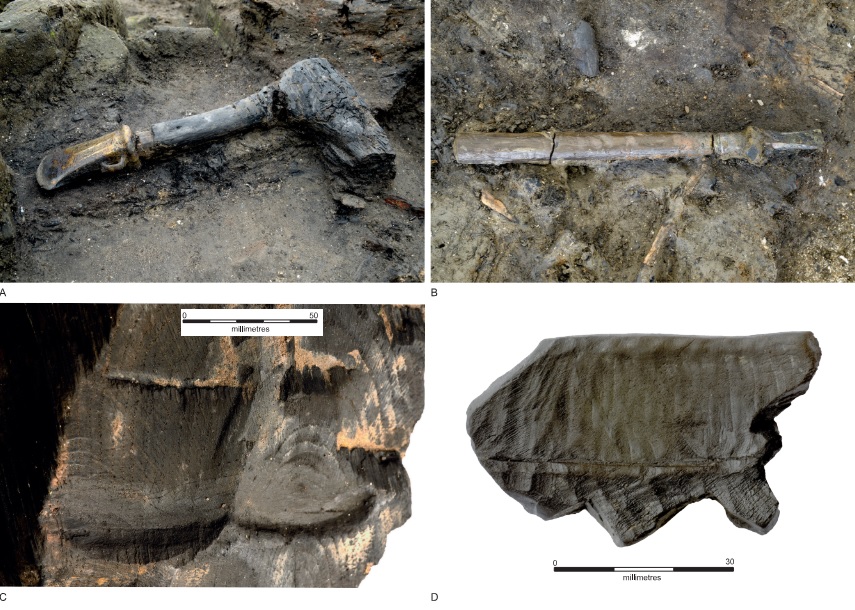
Surviving tool marks attest to the use of axes or adzes to fell the timbers. Axes were also employed in sharpening the ends of piles. Pleasingly, multiple examples of each of the implements identified have been recovered. There is no sign that metal tools were used to split the timbers, so this was probably done using wooden wedges and stone mauls. We can tell that, other than the roundhouses’ ring-beams, structural timbers were not mortised but carefully shaped to rest together, secured not with pegs or treenails, but with twisted withy bindings.

Structure 4 was different in design, but featured a similar arrangement of concentric lines of piles. Its shape (unusual, but not unprecedented on late Bronze Age sites) may have been influenced by the available space; it is thought that this building was a slightly latter addition, being built over Structure 1’s midden and having not had time to accumulate a refuse heap of its own – but, if so, its timbers still came from trees felled in the same year as those of its neighbours, and debris from its construction was found in the same horizon as the other structures.
Light walkways of wattle scaffolding provided paths between the lofty buildings, while the entire settlement was surrounded by a wall of timber posts, their sharpened tops rising c.2m above the riverbed. The line of this palisade had first been sketched out using oak ‘marker’ piles placed at regular intervals, and then each gap was filled with ash uprights. Within the excavated area, 18 oak and 226 ash poles were identified, forming an unbroken wall 49.8m long, but it is thought that the complete oval would have enclosed an area of at least 600m2, with another wattle walkway running around its interior.
Cluttered but comfortable
CAU describes the settlement, tightly packed within the confines of the river channel, as ‘an ordered but somewhat congested space’ – and the same could be said about the structures’ interiors. The Must Farm pile-dwellers had a lot of ‘stuff’ – hundreds of artefacts, as well as items of furniture that may be represented by slender pieces of split and mortised alder and a large sheet of bark. The domestic clutter of their houses is particularly impressive given the short period of their occupation, but these were not simply living spaces. Each structure has yielded extensive evidence of culinary and craft activities, and the distribution of artefacts within each building’s footprint indicates that there had been a degree of zoning, with most of these ‘creative’ tasks performed in its eastern half. The materially ‘quieter’ western portion of each structure may have been reserved for sleeping or storage.
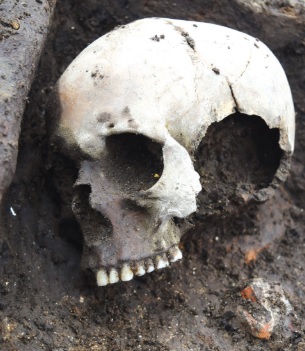
The fen-dwellers were also sharing their space with animals. Articulated remains from a number of lambs were found within the conflagration layer; these had presumably resided in the roundhouses, and been abandoned to their fate. CAU found no evidence that any people had died in the blaze, though they did recover human remains. A near-complete skull and a fragment of another had been placed in one of the middens: the skull’s polished surface suggests repeated handling, and its base showed damage that could reflect decapitation, or modification to help it sit on a flat surface. Could this have been a curated object later buried as some kind of foundational offering? Bronze Age communities from other sites are known to have kept and displayed human remains within their houses (see CA 368), and at Must Farm a handful of other fragments from the conflagration layer (another skull piece, a tooth, a vertebra, and a tibia that also shows signs of modification) are thought to have been stored in one of the structures.
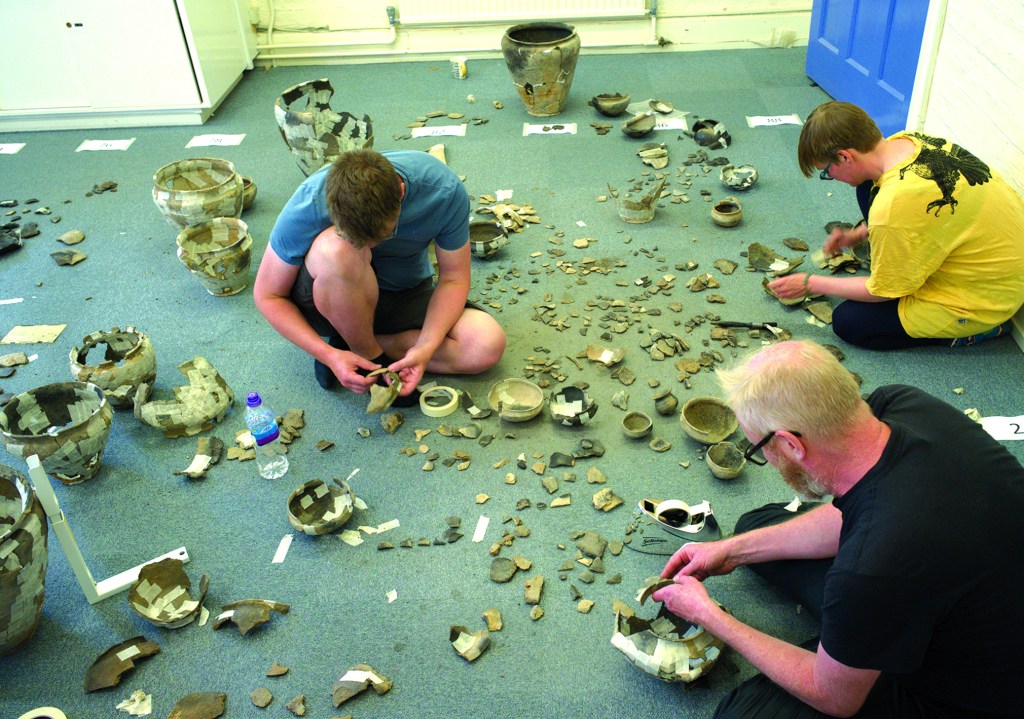
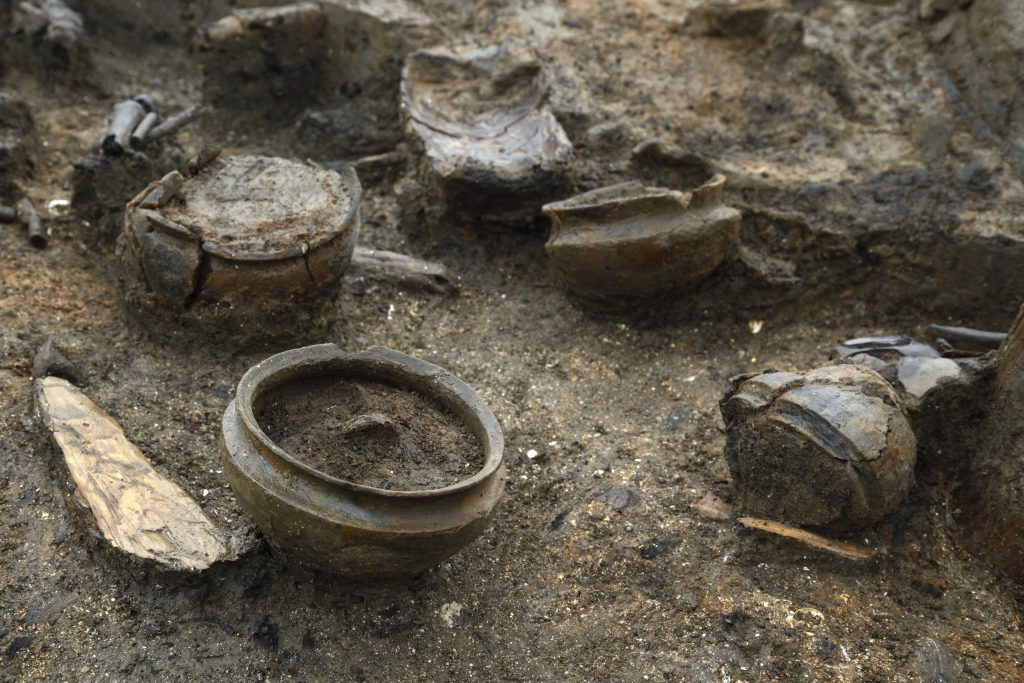
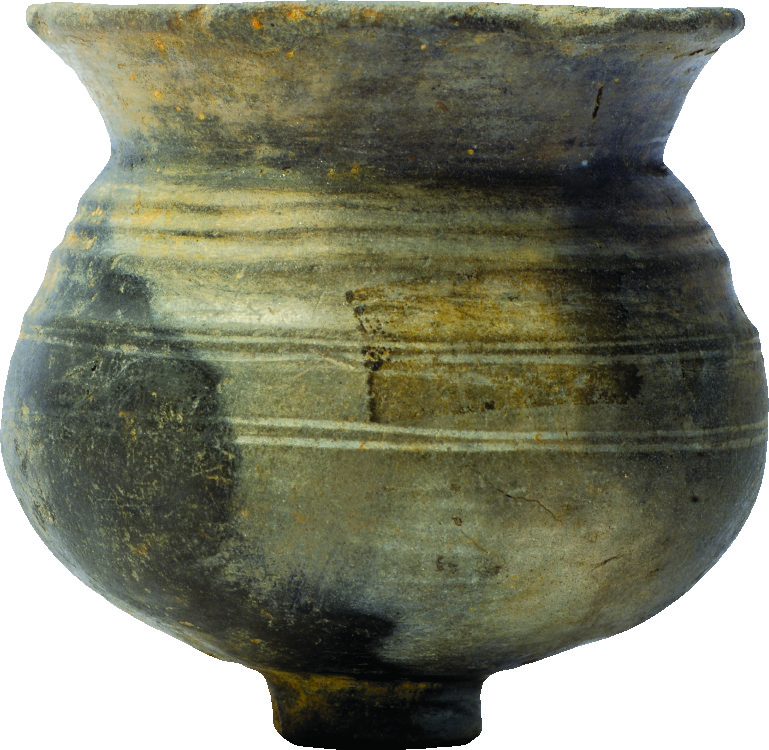
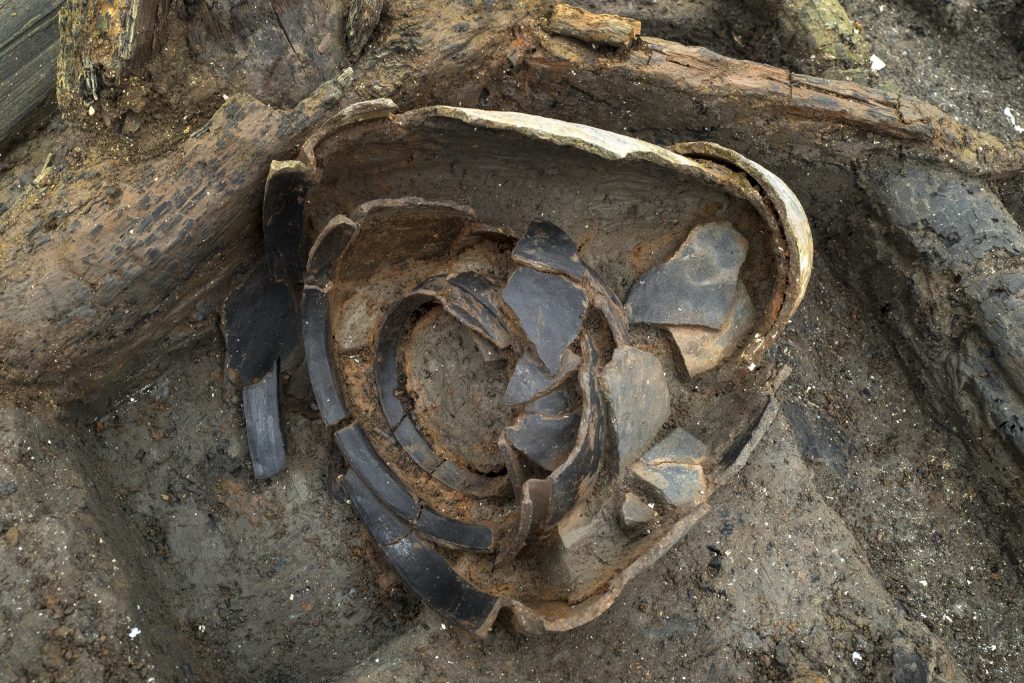
Like many late Bronze Age settlements, one of the most common finds at Must Farm was pottery, with a diverse range including jars, bowls, and cups. Some of the ceramics were crudely made, and CAU wonder if some of the most asymmetrical or roughly finished examples might represent children learning from a more skilled individual. Others were more expertly crafted, with polished exteriors and simple fingernail decorations. Some had been designed as matched sets, found still nested together, and the most accomplished creation was a small poppy-headed cup whose horizontal lines had been confidently applied with a steady hand, showing no overlapping even though paired lines were spaced about 1mm apart.
Many of these were ‘living’ artefacts still in use at the time of the fire, but there were numerous other pots in the surrounding middens that had been broken and discarded by the community. Some 64 ceramics had been smashed before the fire broke out – a high breakage rate given that the settlement had only endured a matter of months – but, despite this conspicuous consumption, the pile-dwellers do not appear to have been wasteful. When the CAU team were carefully refitting fragments of pottery, they found that apparently missing sections of a discarded vessel sometimes appeared in the conflagration layer: it seems that pieces of broken pots had been retained, possibly recycling them as scoops or pourers. Three fragments of an oak bucket had been repurposed, too, as chopping boards, their surfaces peppered with axe marks, and the side of a logboat – broken in antiquity and found in Structure 2 – appears to have been reused as part of a piece of furniture, with a fresh mortise cut through its worn outer face.
More enigmatic was a bucket from Structure 4, which contained a collection of broken metal items including fragments of sword- and knife-blades, scraps of sheet metal, a spearhead, and an axe. Was this a ‘recycling bin’, amassing unwanted materials for recasting, or a stock of bullion to be exchanged for other goods? Alternatively, CAU suggest, here we might see a hoard in the making, awaiting a suitable occasion for deposition.
Must Farm’s menu
What is more universally human and relatable than cooking and eating? Evidence for the sourcing, storage, and preparation of food was found all around the Must Farm structures. As well as grain caches and animal bones, there were some 200 ‘culinary’ artefacts, ranging from stone grinding tools, wooden bowls, and fishing equipment (knotted nets, a possible ceramic weight, and what is thought to be a wooden float) to chopping boards, dough troughs, and ladles. Meanwhile, refuse from the middens reflects a varied diet drawing on woodland, wetland, and farmed resources.
The main plant crops eaten by the Must Farm community were emmer wheat and barley, but meat was also an important part of their diet, with more than 7,500 fragments of mammal bone present. Pig/wild boar and deer were most prevalent, as well as sheep/goat, and a much smaller number of cattle. Only portions of any one animal were present, so it is likely that they were reared and slaughtered on dry land and brought to the settlement ready-jointed. Wild birds were occasionally eaten, too, and fish appear to have been particularly popular, yielding more than 9,000 bones, teeth, and scales. This level of consumption of fish and wild animals is unusual for the period – so much so, that it has previously been suggested that it was taboo in the late Bronze Age and Iron Age – highlighting how preservation conditions can shape our interpretations of the past.
We can gain more direct evidence of what was being eaten from human and canine coprolites found across the site, and from food residues within 76 of the settlement’s pots and 13 of its wooden containers. Analysis of lipid traces and charred food crusts reveals porridges, stews, brewing mashes, doughs, and oily or sugary liquids, while milk and beeswax/honey have been identified through biomolecular analysis. It is even possible to reconstruct specific recipes, as, while most of the 69 pots tested for organic residues produced signatures that could be attributed to one food type/cooking process, 19 had composite characteristics. In eight cases, ruminant meats (mainly deer and sheep/goat) were combined with honey/beeswax, evoking images of venison basted in honey. Dairy products were also found in association with cereals and/or honey/beeswax, a combination suggesting porridge. Most vivid of all is Pot 44, a coarseware bowl found resting on its side under Structure 5 – it was still half-full of a thick wheat-and-animal-fat porridge, a poignant echo of an abandoned meal.
Evidence of industry
Must Farm’s metalwork assemblage is unusually large for a settlement context. More than 50 complete or fragmentary tools have been identified by CAU, all but two coming from the conflagration layer, and many showing signs of use-wear and resharpening. These were not ritual offerings but valuable, still-usable items abandoned by their owners. They include axes, sickles, gouges, and awls, as well as knives, a hammer, and a pair of tweezers, and many still have their wooden handles or hafts intact. Sixteen other items have been interpreted as weapons – fragments of sword blades, a ferrule, and nine spears – though it is possible that this last group actually represents hunting kit, and it is interesting that no complete swords were found. Could such items have been banned within the bounds of the settlement, or might the fen-dwellers have grabbed them for protection as they ran from the safety of the palisaded area?
All of these objects are familiar from hoards, which represent our main source of late Bronze Age artefacts, but their discovery in such numbers, and in a settlement rather than ceremonial context, may help to rebalance interpretations of which were rare or prestigious, and which were actually more readily available than thought. Perhaps their perceived scarcity actually reflects the selective nature of votive offerings, or repeated recycling of metalwork on longer-lived sites.

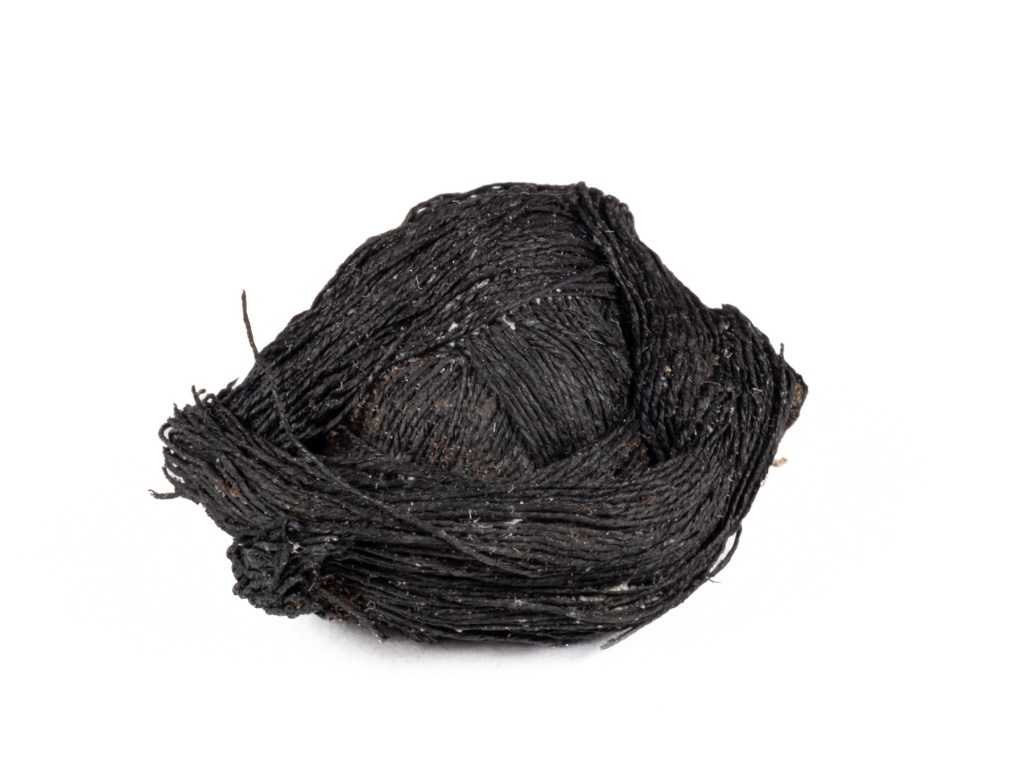
Scattered fairly evenly across the site, these implements suggest a busy, workshop atmosphere within the settlement, with woodworking and possibly metalworking (or, at least, straightening and sharpening blades) taking place. There is evidence of textile production as well: bat-shaped wooden beaters and lozenge-shaped tools are thought to have been used in processing flax, while the site has also yielded numerous loom weights, spindlewhorls, bone awls and needles, balls of yarn, and 40 wooden bobbins (36 still wrapped with thread). Given the distribution of these particular items, it is thought that flax-processing could have taken place in Structure 1 and possibly Structure 5; the fibres were spun into thread in Structures 2 and 4; and the resulting yarn was then returned to Structure 1 for weaving, as a concentration of pyramid-shaped weights hints that this building may have housed an upright loom.

Found half full of porridge, with its wooden stirring spatula still inside, Pot 44 might represent a meal abandoned when fire broke out at Must Farm.
As for what was being produced, 28 fragments of textile have survived, representing a variety of weaves and techniques including tubular selvage reminiscent of contemporary cloth from Scandinavia, and with some showing evidence of stitching and repairs. Some are particularly fine, their thread count on a par with the best known in Bronze Age Europe, though none can be identified as specific objects or garments. We do have some clues as to what people were wearing, though, thanks to the discovery of metal ornaments including a belt/strap fitting, a bracelet fragment, and a stud. The site has also produced dozens of beads, including at least 49 made of blue/green/turquoise glass, and others of amber, siltstone, shale, faience, and tin.

Above & below: Fragile organic remains like this bobbin and ball of yarn were exceptionally well preserved in the waterlogged conditions at Must Farm; they represent rare evidence of textile production.
As well as being eye-catchingly colourful, the beads testify to the far-reaching trade networks that Must Farm tapped into. The shale came from the south coast of England, while the glass beads had made much longer journeys, being mainly made in what is now Iran, though one more likely had Egyptian origins. The disc-shaped tin bead is from Central Europe, with parallels at late Bronze Age lake settlements in Switzerland; the faience came from the Near East; and the amber beads have their origins in Denmark, but probably came to Must Farm via Ireland, as they are of a type known to have formed Irish necklaces that were later divided and distributed across Bronze Age Britain as individual pieces. Not all of the far-travelled items at the settlement were obviously ‘high-status’, however: one of the bobbins was made of boxwood, a species that was only introduced to Britain during the Roman period – its presence on a prehistoric site suggests that the artefact was a Continental import.
Despite the apparent isolation of the reed-bound river channel, Must Farm was clearly part of an interconnected world, able to access a network of wide-ranging waterways that ultimately led to – and across – the North Sea. They were making journeys in the dry lands beyond the fen, too: Structure 3 produced a near-complete cartwheel and part of a second (probably a matched pair), as well as an alder yoke that could have harnessed a single animal.
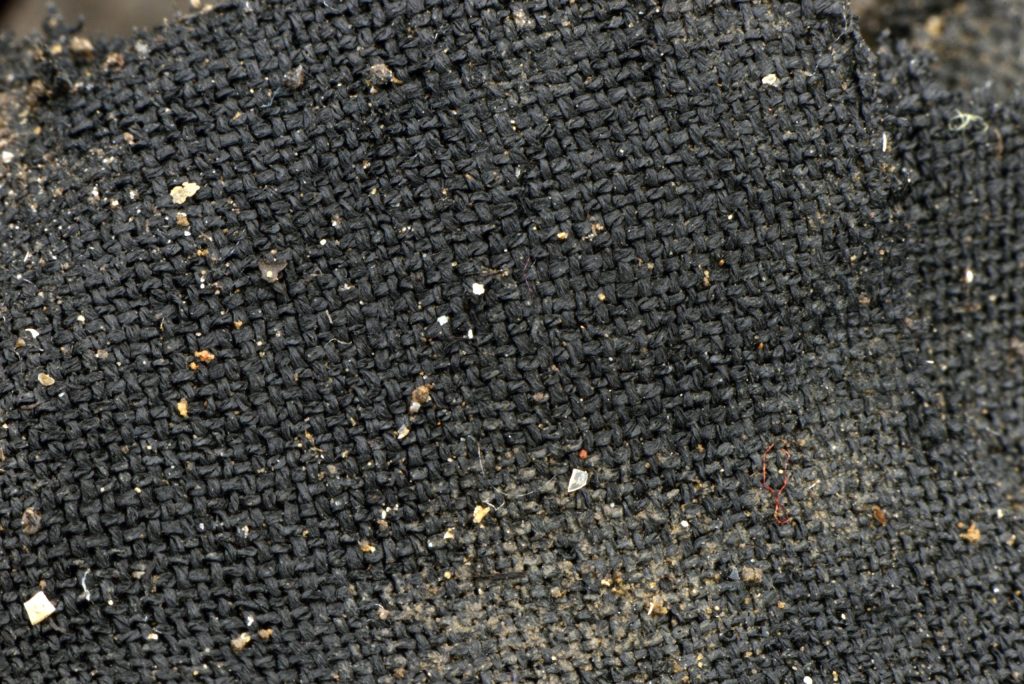
Given the effort that must have gone into creating the sturdily built pile structures, and the quality and value of some of their contents, it seems surprising that there was apparently little effort to rebuild them or recover any possessions. It is possible that the pile-dwellers had come to harm after leaving the safety of their palisaded home, or perhaps items consigned to water were viewed as taking on a sacred character, as evidenced by the many votive offerings that we find in such environments, and retrieving them was taboo. As a third option, perhaps the community was taken in by their neighbours; while Must Farm is unique to us today, the river channel may have been home to many similar settlements yet to be discovered.
Given the exceptional quantity of artefacts found at Must Farm, it is tempting to view the community as somehow elite or otherwise ‘special’, but many of its objects are readily familiar to us from other sites – this is merely an ‘amplified’ version of a dry-land settlement, CAU note, albeit wonderfully well preserved. The value of the Must Farm discoveries lies in their everyday nature. When we compare the site to dry-land roundhouses, which are often reduced to ghostly outlines formed from post-holes, ditches, and scatterings of pits, with their timbers long-decayed and their floor surfaces often shorn away by ploughing, the fenland finds help us to add new colour, detail, and a sense of life to these often austerely ‘empty’ interiors.

Further information:
• M Knight, R Ballantyne, M Brudenell, A Cooper, D Gibson, and I Robinson Zeki (2024) Must Farm pile-dwelling settlement: Volume 1 – landscape, architecture and occupation, McDonald Institute for Archaeological Research, https://doi.org/10.17863/CAM.106697 (open access).
• R Ballantyne, A Cooper, D Gibson, M Knight, and I Robinson Zeki (2024) Must Farm pile-dwelling settlement: Volume 2 – specialist reports, McDonald Institute for Archaeological Research, https://doi.org/10.17863/CAM.106698 (open access).
• An exhibition displaying some of the finds from the site, Must Farm, a Bronze Age Settlement, is running at Peterborough Museum & Art Gallery until 28 September. The museum is open Tuesday to Saturday; entry is free. See http://www.peterboroughmuseum.org.uk/plan-your-visit for more details.
Source:
Grateful thanks to David Gibson, Mark Knight, and Chris Wakefield (CAU), and to Will Fletcher (Historic England), for sharing their insights at the launch event for the monographs.
All images: Cambridge Archaeological Unit