Subscribe now for full access and no adverts
The outermost shrine surrounding Tutankhamun’s sarcophagus is inscribed with the earliest known version of The Book of the Celestial Cow, also known as The Story of the Destruction of Mankind. The text describes the ageing Ra as having ‘flesh of gold, bones of silver, and hair of real lapis lazuli’. The association of the god’s immortality with the incorruptibility of precious materials explains why the king was buried in a solid gold coffin. Statues of the gods were often created in silver, covered or inlaid with gold – symbolic of the silver skeleton encased in golden flesh. Temple building inscriptions listed the materials used to create divine statues, and the decoration of their shrines and barques. Foundation deposits in temples and palaces included samples of the materials pledged to their building and ornamentation in the form of plaques of precious metals and stones. Thutmose III described his Festival Hall at Karnak as being ‘built of fine white Tura stone… the portals of cedar wood overlaid with fine gold with silver [electrum], with lapis lazuli, and turquoise’.
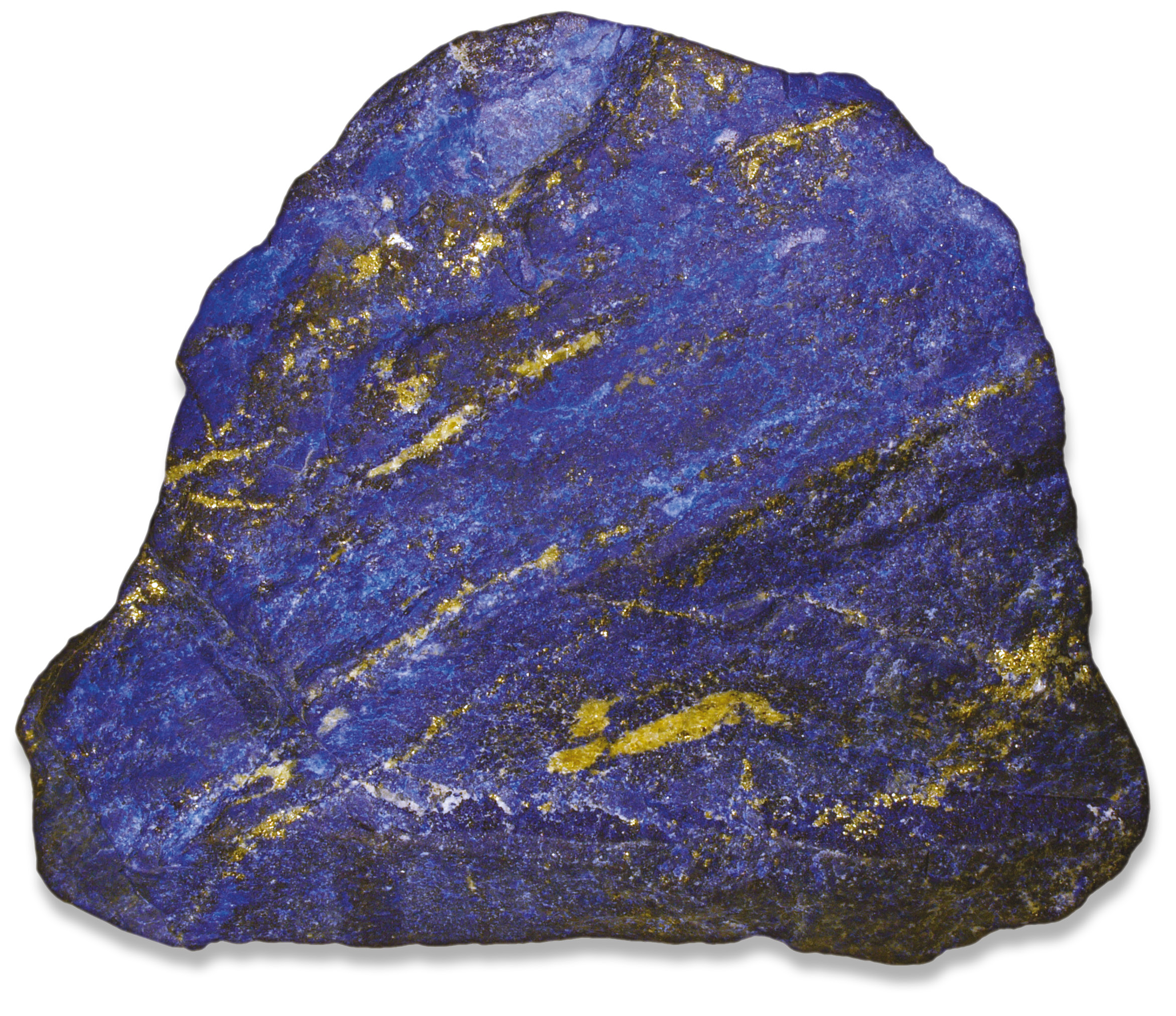
Despite the wealth of natural materials available to the Egyptians, the sources of some of the most desirable minerals were often hundreds if not thousands of miles away, in areas well beyond Egyptian control. In particular, the nearest lapis lazuli quarries were more than 3,000 miles (almost 5,000 km) away from the Nile Delta in Badakhshan, in north-east Afghanistan. It has been suggested that the ancient Egyptian word for lapis lazuli, khesbed, is derived from this toponym, but there is no evidence that ancient Egyptian explorers ever visited the region. Amenhotep III recorded his adornment of the Luxor Temple: ‘with electrum, lapis lazuli, turquoise… and every noble and precious stone from the revenues of the chiefs of every foreign country.’


Lapis lazuli is depicted in New Kingdom temples among the diplomatic gifts from Assyrian, Babylonian, and Hittite kings, and the tribute or taxation from Egypt’s vassal territories of Syria-Palestine. In reality, lapis lazuli, which had been used for decorative purposes from Predynastic times, must have been acquired through a series of commodity exchanges over an extensive network of great antiquity, passing through major trading centres in Mesopotamia, Anatolia, the Aegean, and the Levant.

Lapis lazuli is a metamorphic rock composed of a sodium-alumino-silicate, with up to 50% lazurite, which provides its blue colour. It commonly has inclusions of gold-coloured pyrite and veins of white calcite. The coloration deepens with increasing sulphide content, from pale sky-blue, through vivid royal blue, to darker midnight tones. At 5-6 on the Mohs hardness scale, lapis lazuli is harder than white calcite (alabaster) but similar to turquoise. It is easier to shape than other coloured stones such as red jasper and carnelian, making it suitable for the manufacture of beads and the carving of amulets, seals, and small figurines, as well as inlays for jewellery and furniture.

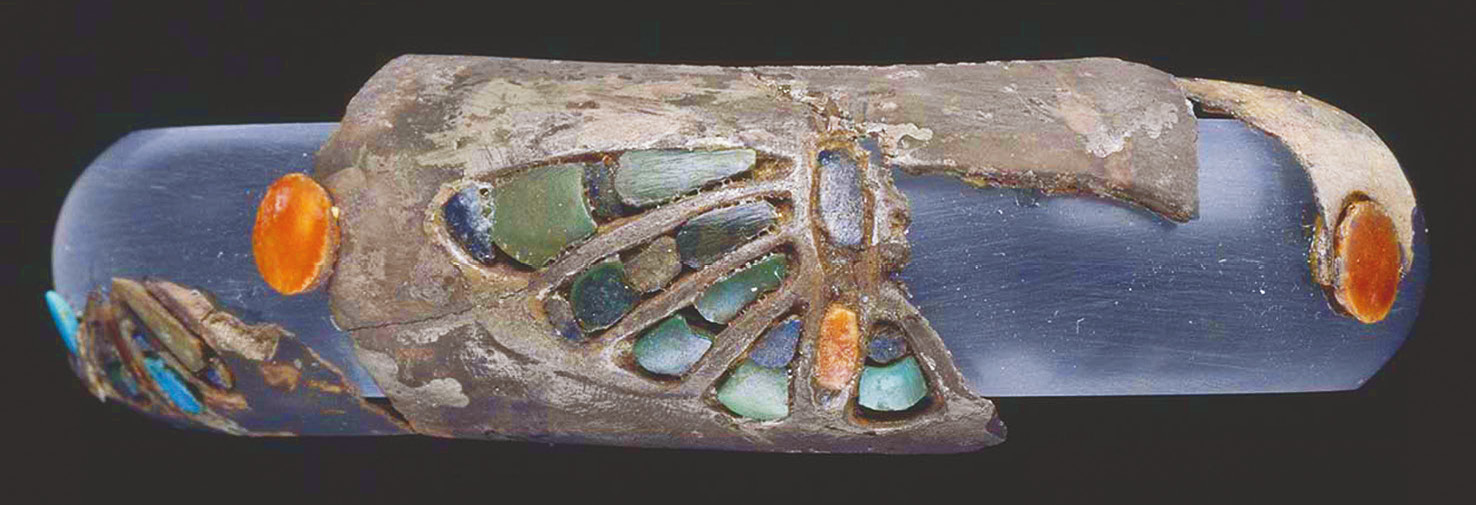
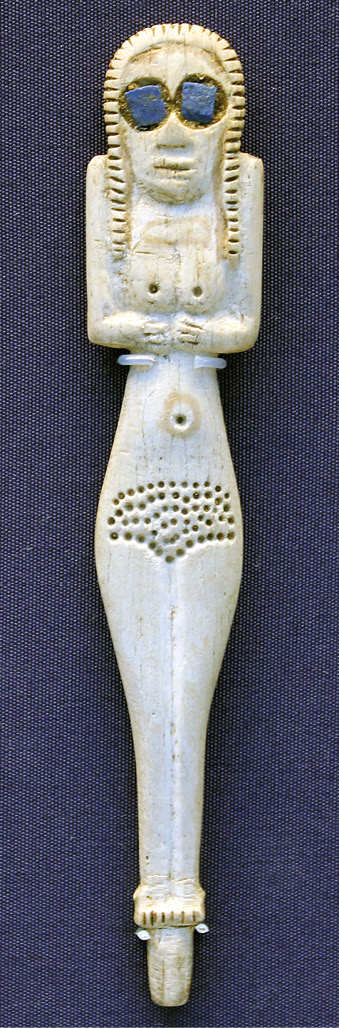
One of the earliest examples of the use of lapis lazuli in Egypt is a female figure of bone with inlaid eyes, dating to the Predynastic period (Naqada I, c.4000-3500 BC). A set of bracelets found in the Abydos tomb of Djer (First Dynasty, c.3000 BC), included beads of lapis lazuli, amethyst, and turquoise. The deep blue stone continued to be used for such items as cylinder seals, scarabs, and amulets, during the early Dynastic period, until there were supply shortages, possibly due to failing trade relations, which are also apparent in the Mesopotamian archaeological record. From the end of the Third Dynasty, lapis lazuli again became available to craftsmen supplying jewellery and funerary goods for royalty. The silver bangles from the burial goods of Queen Hetepheres I, the mother of Khufu, had polychrome stone inlay in the shape of butterflies, which were formed from tiny pieces of the classic Egyptian combination of lapis lazuli, turquoise, and carnelian. (For recent research on these bracelets, see AE 139.) The hoard found in the Montu Temple at Tod, dating to the reign of Middle Kingdom pharaoh Amenemhat II, included two chests packed with beads, seals, blocks, and scraps of lapis lazuli, probably part of a collection of tribute destined for recycling into jewellery and inlay.

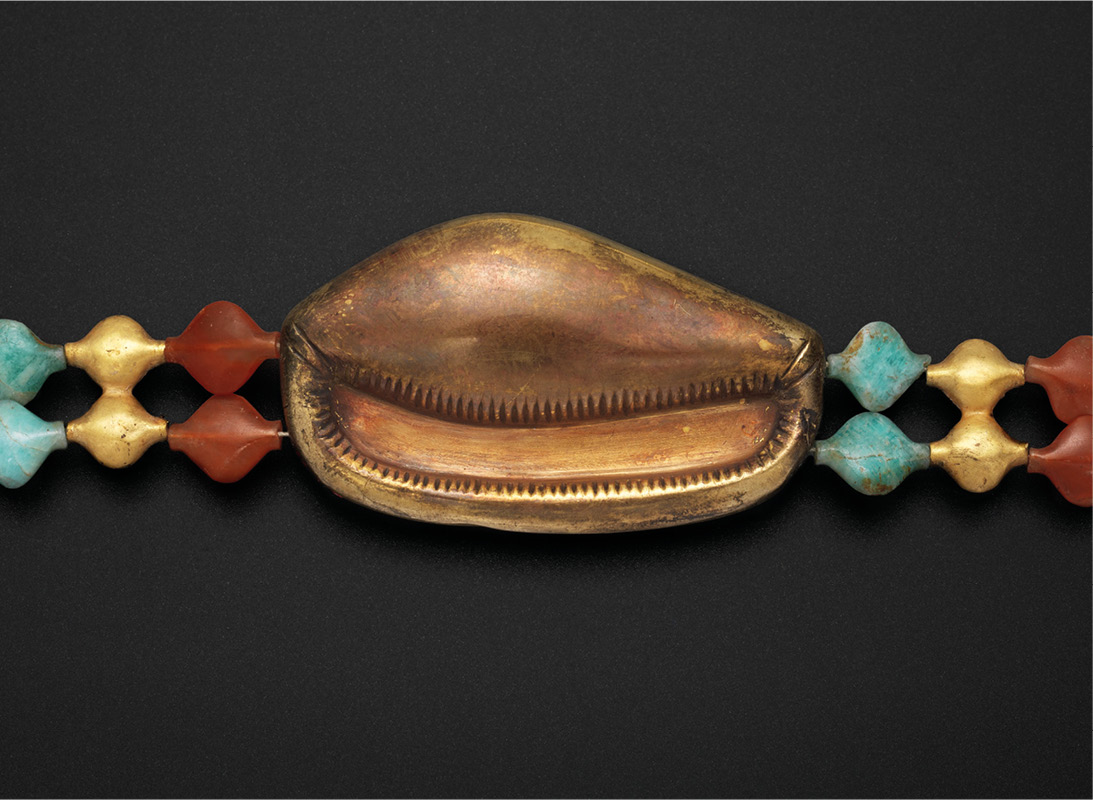
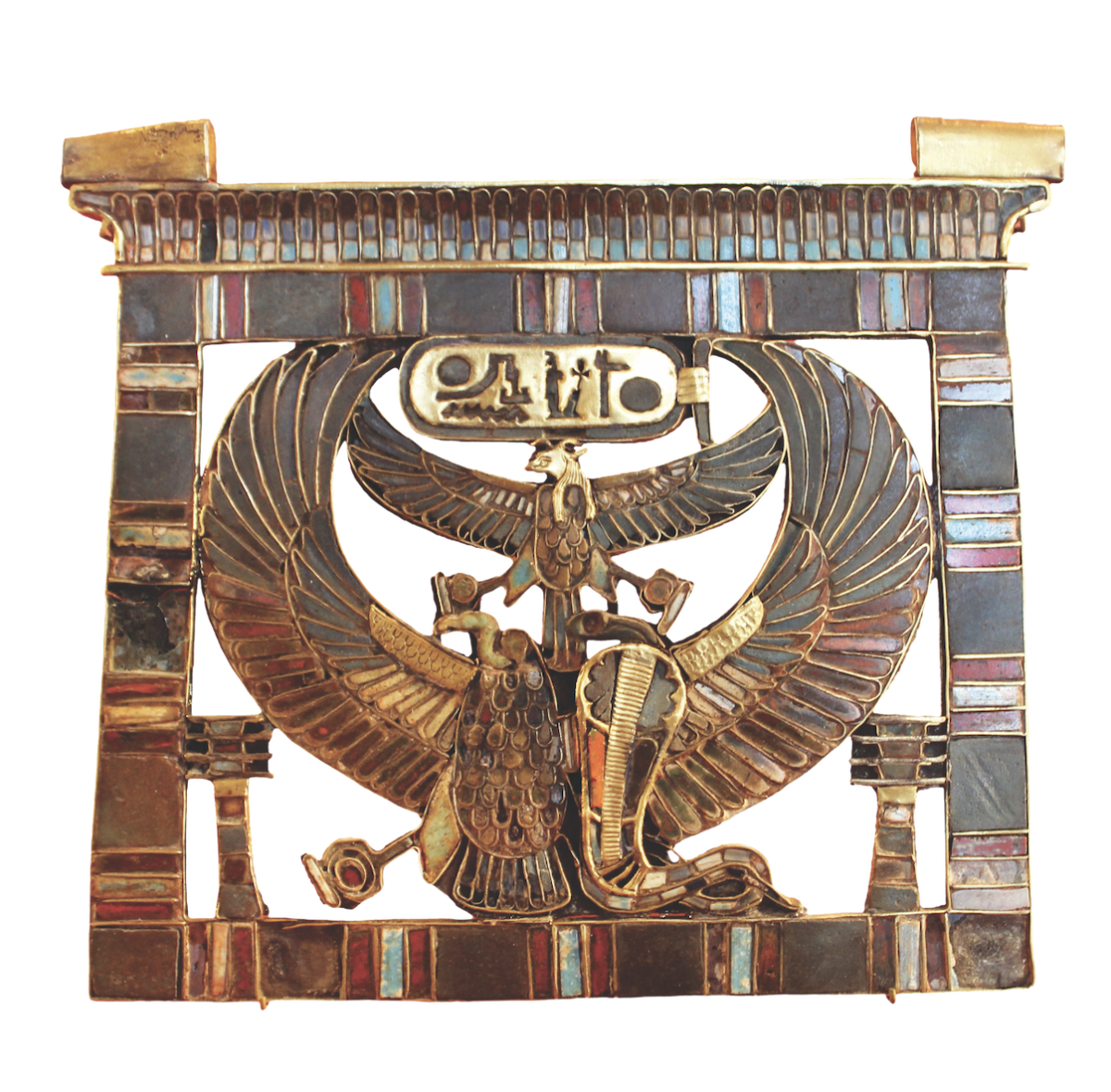
A pectoral of coloured stone inlaid in gold, showing solar falcons flanking the cartouche of Senusret II. The pendant is suspended from a necklace of drop-shaped beads of gold, lapis lazuli, turquoise, and carnelian. From the Middle Kingdom tomb of Princess Sithathoryunet at Lahun, it is now in the Metropolitan Museum of Art, New York.
Lapis lazuli was the preserve of the gods, royalty, and the elite. The quantities of precious commodities required for temple ornamentation are quite astounding. Vizier Useramun, who controlled the vast array of foreign goods stored in the state and temple treasuries under Hatshepsut and Thutmose III, released gold, silver, and lapis lazuli ‘in great quantities’ for royal building projects. At Karnak, Amenhotep III claimed to have donated more than 3,000 deben of lapis lazuli for the decoration of the Amun Temple and 6,406 deben for the Montu Temple (1 deben ≈ 91 grammes). Jewellery from the Middle Kingdom royal pyramid tombs represents some of the best of Egyptian craftsmanship, especially in the cloisonné pectorals. The stone was used for amulets and prestigious funerary jewels, including some given as honours or rewards to royal servants, until the Late Period. In the royal tombs of Tanis, Psusennes I (Twenty-first Dynasty) was buried with a heavy necklace of 56 lapis lazuli ball beads, graduated in diameter (1.8-2.5 cm), while his general Wendjebaendjed had a gold ring with a more modest lapis lazuli wadjet-eye plaque (1.2 cm by 1.1 cm) bearing the name of Ramesses IX (Twentieth Dynasty).

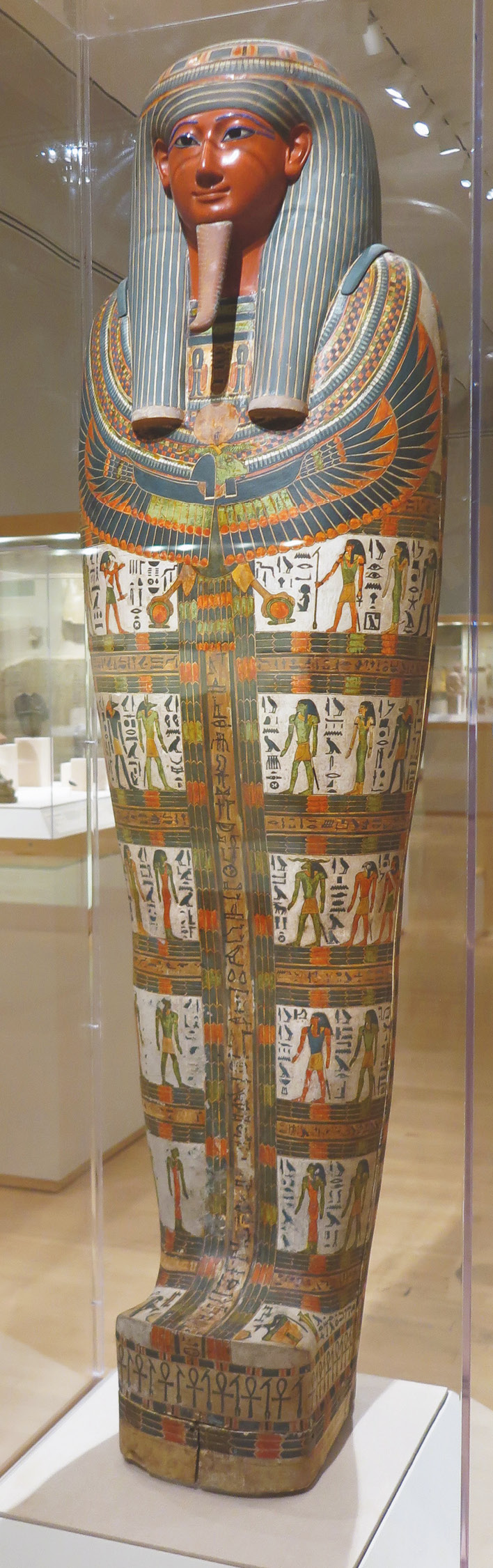
In the New Kingdom, lapis lazuli was in such demand that artificial alternatives were sought in the form of glazed composition (faience) and glass. Knowledge of glass-working was imported from Mesopotamia, and Thutmose III recorded the receipt of tribute in the form of ‘lapis lazuli of Babylon’, which may refer to ingots of opaque blue glass. This development allowed for wider use of deep blue inlay on walls, columns, and doorways, and glass was used freely alongside ‘true’ lapis lazuli in Tutankhamun’s golden mask. On tomb walls and coffins, both royal and private, the gods and the deceased were shown with dark blue hair representing lapis lazuli, but the blue paint was based on an artificially created frit rather than the natural stone. It was not until the 14th century AD that powdered lapis lazuli became aquamarine, the most costly pigment employed by Renaissance artists, deemed especially appropriate for the divine blue robes of the Virgin Mary.

All images: Hilary Wilson, unless otherwise stated