
Subscribe now for full access and no adverts
The decision by St John’s College, in the historic heart of Cambridge, to refurbish various properties just outside its main footprint prompted a series of small-scale excavations by the Cambridge Archaeological Unit, beginning in 2004. These proved illuminating, and in 2007 our work beside the 19th-century Old Divinity School (which stands opposite the college’s grand Tudor Great Gate) uncovered a large quantity of disarticulated human remains. Human bones had also been discovered at the time of the building’s construction, in 1877, and documentary evidence provided the explanation: the medieval Hospital of St John, which was suppressed in 1511 to create St John’s College, had maintained a cemetery in the area.
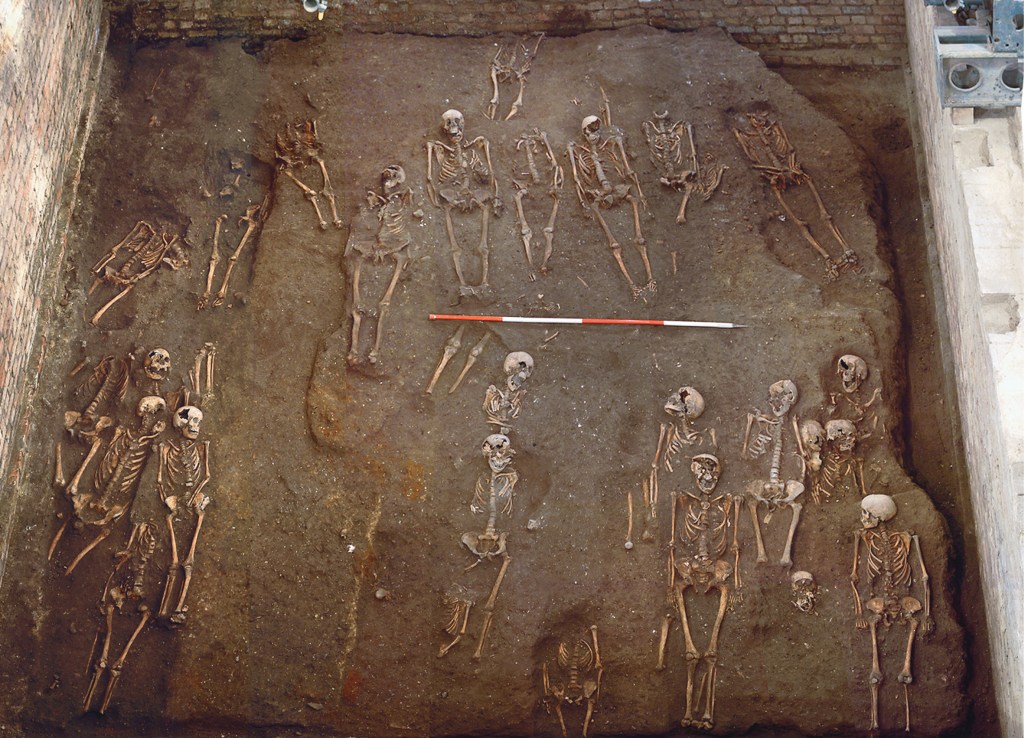
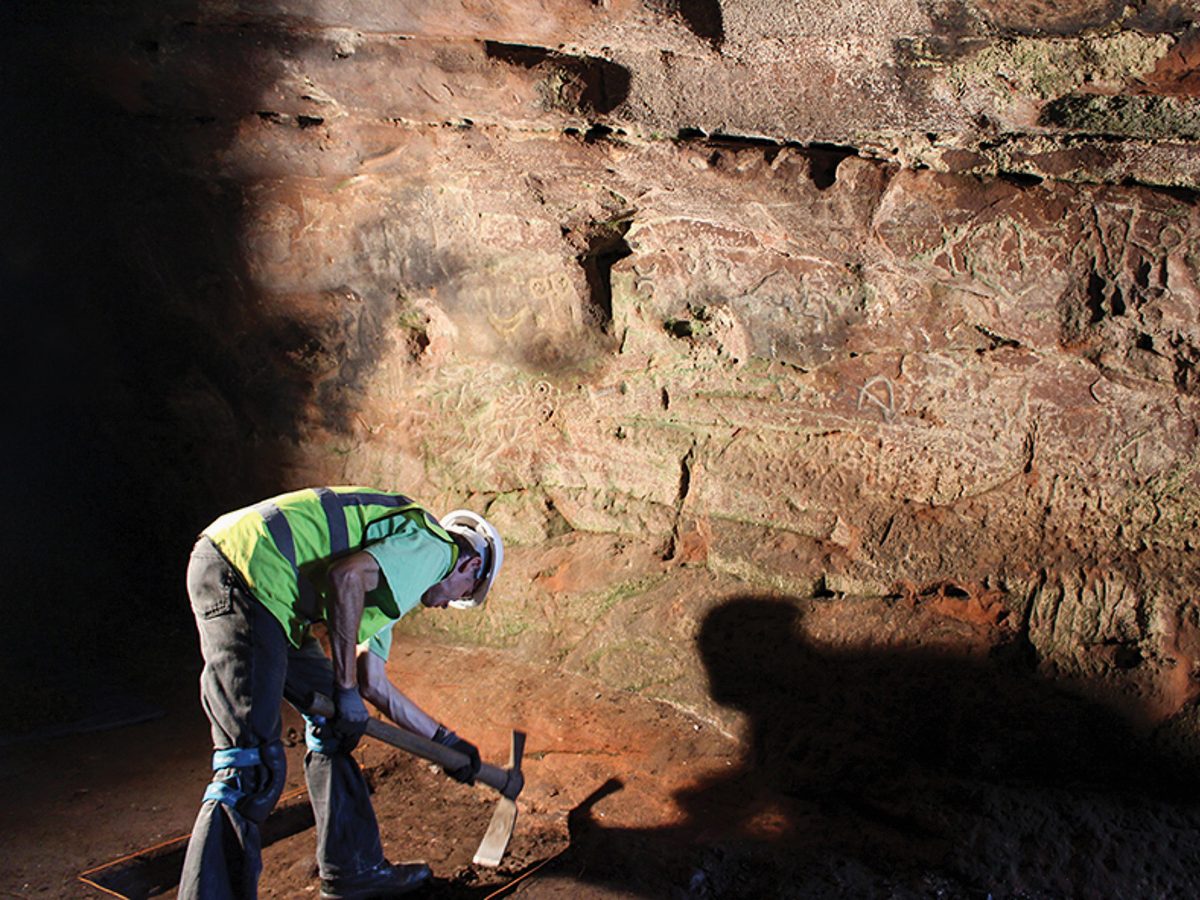
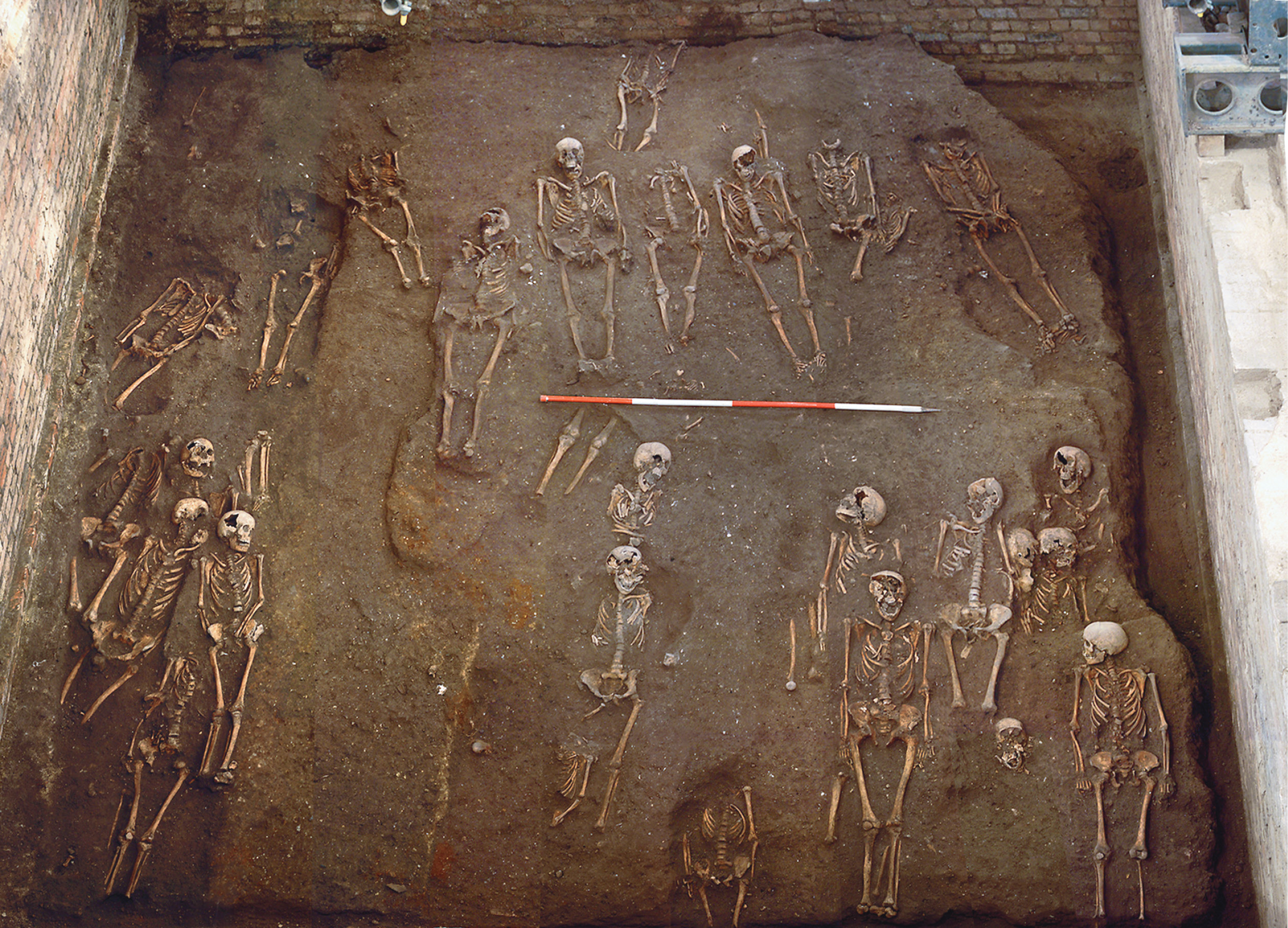
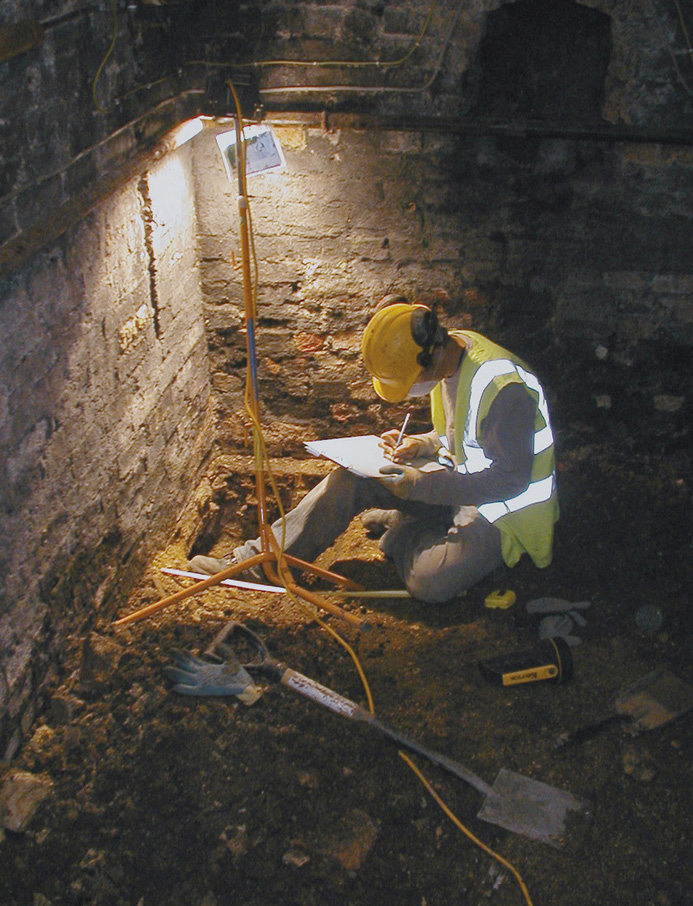
Redevelopment plans for the Old Divinity School included creating a basement within the structure, and while our initial evaluation in 2009 was small and relatively inconclusive, doing little more than confirming the presence of more human remains, in 2010 we returned for a full-scale excavation within the building (see CA 286). At first, the remains that we uncovered were structural rather than human – representing a series of buildings and features dating to the 19th century and earlier – but after a few weeks skeletons began to appear from the soil, and soon densely packed graves had been revealed across the whole area, arranged in multiple layers. It was clear that, once the entire cemetery space had been filled with burials, the hospital authorities had simply repeated the process, creating new, shallower graves on top of their predecessors. The burial ground had been filled at least six times between the early 13th and early 16th centuries, and from this relatively small space our investigations recovered 400 skeletons.
Following analysis, in 2015 an account of the human remains was published in the Archaeological Journal, and while we regarded the project proudly as a thorough and competent piece of developer-funded archaeology, there was a nagging feeling that the skeletons remained a rather anonymous, undifferentiated population, and that we had not properly got to grips with the question of who had been buried in the hospital cemetery. These individuals had almost all been buried in regular rows, following the same rite and without grave goods, in what felt like a rather uniform, depersonalised manner, and our report had treated them in a rather similar style.
We had a chance to change this, however: through a series of serendipitous conversations and meetings, it became apparent that the Department of Archaeology at the University of Cambridge possessed the expertise in several fields, such as stable isotope analysis, ancient DNA, and geometric morphometrics, to greatly enhance our understanding of the skeletons and who they once were. With Professor John Robb taking the lead, in 2016 a successful application to the Wellcome Trust saw the launch of a major research project based at the McDonald Institute for Archaeological Research: ‘After the Plague: health and history in medieval Cambridge’.
Comparing collections
From the outset of ‘After the Plague’, we realised that, in order properly to understand the hospital skeletons, we would need to compare them to groups excavated from other areas of medieval Cambridge. Fortuitously, soon after the project started, another CAU excavation revealed further traces of this period of the city’s past: the remains of Cambridge’s Augustinian friary, together with a portion of its associated burial ground (CA 409). We also relocated another group of skeletons that had been recovered during a much earlier investigation, centred on the cemetery linked to the parish church of All Saints by the Castle in the 1970s. Long before our initiative, in the early days of rescue archaeology, John Alexander (one of the founder members of Rescue – the British Archaeological Trust) discovered human remains while excavating on Castle Hill, a site that he had been exploring since the 1950s. Funding was raised from the Inspectorate of Ancient Monuments (Department of the Environment) and the landowner (coincidentally, also St John’s College) to support a six-week excavation, and this work was directed by Paul Craddock and Vince ‘Greg’ Gregory, together with a small team including a youthful Phil Harding, later of Time Team fame.
Over the course of this investigation, Craddock and Gregory’s team excavated more than 160 skeletons from three areas of the site, while Alexander recovered 30 more from a fourth. The project was highly successful, methodologically innovative in its use of photogrammetric recording, and had ambitious plans to publish the remains along with a contemporary, contrastingly rural cemetery at the deserted village of Clopton that Alexander had excavated in 1964. Unfortunately, as was often the case at this time, post-excavation did not go so well. The skeletons were transferred to the Duckworth Laboratory of Physical Anthropology at the University of Cambridge, where they were studied by Charles Denston, and Craddock and Gregory produced an interim report, but a lack of resources and other factors meant that publication of the results did not progress any further.
By the time the ‘After the Plague’ project began in 2016, the excavations were a barely remembered rumour among local archaeologists – but we were able to track the skeletons down, still safely stored at the Duckworth Laboratory, where they had lain largely undisturbed for four decades since the mid-1970s. In 2017 we also managed to locate Paul Craddock, who still had the original archive for the investigations, and both he and Vince Gregory have generously supported the ‘After the Plague’ project in our efforts ever since. Their help proved vital to our research, as no other parish cemetery in the Cambridge area has been excavated on such a significant scale.

Ruling people in and out
What, then, can we say about the people who were buried at the Hospital of St John? Ironically, it is easiest to start by considering who would not have been interred there. The rule that the hospital adopted in 1250 specifically excluded pregnant women, people with leprosy, the wounded, individuals with major physical impairments, and those with mental illness. There is no evidence that the hospital provided medical treatment: instead, it was more akin to a generalised social care institution, and the people listed above were probably excluded because the hospital could not meet their needs. Not all of these groups would be identifiable skeletally, but we can say with confidence that there were no pregnant women, newborns, young infants, or individuals with major injuries among the excavated individuals. Analysis of ancient DNA did, however, reveal one person with Mycobacterium leprae, a bacterium that causes Hansen’s disease (leprosy), but it is possible that their condition had not been visible at the time that they entered the hospital.
We also know that the masters or priors of the hospital, the clerical brethren, lay brethren, and major benefactors were not buried in the general cemetery – they were instead interred in more prestigious locations in and around the hospital chapel, whose footprint can still be seen in St John’s College’s First Court, beside its 19th-century successor. Known benefactors include Eudo de la Zouche (c.1346-1414), who was chancellor of the university, and Henry Somer (c.1370-1450), a wealthy courtier, landowner, and Member of Parliament, and several grave slabs and brasses associated with such burials still survive at the College.

Finally, the hospital cemetery does not appear to have been used for the burial of plague victims. Although we know from documentary evidence that the Black Death heavily affected the hospital, and while we analysed aDNA from a large number of the excavated skeletons, none tested positive for the bacterium behind this infamous pandemic, Yersinia pestis. Why this was is unclear, but it is possible that during plague outbreaks the hospital closed its doors and buried those who died on its main site (underlying the College), rather than venturing across the street.
If the groups described above were not interred in the hospital cemetery, what can we say about those who were? We are extremely fortunate that many of the early documentary sources relating to the hospital have survived in the archives of St John’s College, where they have been studied by Miri Rubin and Malcolm Underwood. Their research, combined with evidence from other medieval hospitals, suggests several categories of people who might be found within the cemetery population – the most obvious and probably largest set of whom were the hospital inmates, although we lack detailed evidence of who they were. The inmates are only described in very general terms in the surviving documents, with references to the ‘poor and infirm’, ‘weak’, and ‘frail’, ‘the poor and the sick’, other ‘sick’ people, as well as ‘poor scholars’ – a stock phrase that simply means a member of the university who needed financial support. Other potential groups include servants who worked at the hospital, modest benefactors who gave small gifts to the hospital, and ‘corrodians’ – usually relatively wealthy, elderly lay people who (in return for payments of cash or property) were accommodated and fed at religious institutions for the rest of their lives. What, then, has archaeological evidence added to this picture?


An interdict cemetery
First, a little historical context: the hospital was founded between 1190 and 1200, but did not gain the right to bury individuals until around 1204. Documentary sources attest that the cemetery was in existence by around 1230, but its precise origins are unclear – however, intensive radiocarbon dating, including Bayesian analysis, indicates that it was probably established during a period known as the Interdict. When King John (r. 1199-1216) refused to accept Stephen Langton as Archbishop of Canterbury, Pope Innocent III tried to force his hand by placing England and Wales under papal interdict – a consequence of which was that burial in consecrated ground was forbidden. The Interdict lasted from 1208 until 1214, and archaeologists have identified several short-lived burial grounds associated with these restrictions.

The Hospital of St John’s cemetery also appears to have been established during the Interdict – after which it was consecrated and continued in use – meaning that its earliest burials would therefore include everyone associated with the hospital who had died during this brief window. To help clarify this picture, the ‘After the Plague’ project collected information on up to 50 aspects of each of the 400 skeletons from the hospital cemetery, as well as the human remains from the All Saints by the Castle parish cemetery, and the burial ground linked to the Augustinian friary. After comparing all three sites, it rapidly became apparent that the hospital skeletons represented a diverse range of people, and detailed data analysis has enabled us to identify seven groups within this population.

The first, and largest, of these – making up around half the hospital individuals – are essentially similar to other adults buried elsewhere in Cambridge, and we have interpreted them as possibly representing townspeople who had paid for burial in the cemetery (either through gifts when they died, or as corrodians), hospital servants, and individuals who mainly lived normal lives in the Cambridge community until they became hospital inmates late in life, perhaps though poverty. By contrast, another subset of individuals – mainly young women who had died between the age of 18 and 25 – showed signs of having endured poor health and diet through their childhood, their bones also frequently preserving evidence of suffering from tuberculosis. They appear to have been drawn from the poorer elements of Cambridge society, for whom life did follow the stereotype of being nasty, brutish, and short – but were they from the very poorest groups? This question is difficult to answer, but aDNA analysis can provide some clues.

When we examined aDNA for All Saints by the Castle and contemporary rural cemeteries, we found close genetic relationships between some of the individuals, indicating that they were biological kin. No such links were identified among the hospital population, but we know that medieval poverty is likely to have affected entire families and in many cases was multi-generational. The absence of such genetic relationships, then, might suggest that the very poorest members of society had been excluded from the institution, perhaps because they were viewed as particularly undeserving. If this seems harsh, it should be remembered that, to the medieval mind, the role of the hospital was not solely (or even primarily) to provide care for its inmates, but to accrue spiritual benefits for its benefactors through prayer and other activities. A place at the hospital might therefore not be based on who had the greatest need from a modern perspective, but on whose care would be the most spiritually advantageous.
Another set of individuals displayed evidence of childhood poverty similar to the impoverished young women described above, but they had managed to survive well into adulthood, dying in their 40s or even older. The lives of these people were evidently arduous, as their bones typically preserve the marks of intense physical labour, and they were frequently relatively short in stature, perhaps due to poor diet. Contrasting starkly with these individuals was one more group who had apparently led relatively prosperous childhoods and adult lives, with no evidence of poor diet or health, and lived to a good age. These are likely to be members of what medieval people referred to as the ‘shame-faced poor’, whom Miri Rubin describes as individuals who had led comfortable, ‘respectable’ lives before falling on hard times. This group was viewed as being especially deserving of care, and may well have been seen as more acceptable candidates for the hospital than individuals who had experienced lifelong or multigenerational poverty.
Town and gown
Visitors to Cambridge were a common phenomenon in the medieval period, particularly as the settlement hosted Stourbridge Fair, one of the largest annual trade fairs in England. While wealthy individuals who died far from home sometimes had their remains repatriated for burial, for others this was not an option – and as these people did not belong to a local parish community, the hospital may well have buried some of them as an act of charity. Were any such individuals laid to rest at the Hospital of St John? Stable isotope analysis indicates that most of the cemetery population had relatively local origins, within Cambridge itself, or from surrounding villages and the wider region. A few, however, must have grown up much further away, representing our sixth sub-category. While stable isotopes are good for identifying non- local individuals, they are often poor at determining where exactly someone came from, as many locations can produce similar results. In one case, a young woman had strontium isotope values suggesting she could have grown up in south-western or north-western England, Wales, Scotland, Norway, Brittany, central France, or even further afield. She did, however, have genetic affinities with Dutch and Scandinavian populations, and, as we know from documentary and archaeological evidence that Cambridge had trading contacts with Scandinavia, this is the most likely origin.


Finally, some of the skeletons may represent members of the city’s academic community. Until the mid-15th century, Cambridge colleges did not possess their own cemeteries – instead they usually had a close relationship with one of the nearby parish churches where members worshipped and were buried. Given the written references to ‘poor scholars’ mentioned above, St John’s Hospital could well have interred such individuals in its burial ground – and skeletal analysis undertaken by ‘After the Plague’ has proven illuminating in this respect.
Detailed scanning (known as ‘geometric morphometrics’) of the upper arm bones of individuals from the sites we studied revealed that most medieval women from Cambridge have relatively symmetrical humeri, while most men have right-dominant asymmetry. This probably reflects the work they undertook, with men presumably being involved in specialised manual work or heavy labour that mainly involved their right arm; alternatively, this asymmetry could in some cases reflect the regular archery practice that all males aged 15-60 were required to undertake in England from 1252 onwards (we have 14th-century documentary evidence that Cambridge supplied archers for the king’s army). The more evenly shaped arms of women, by contrast, indicate that whatever tasks they were performing used both limbs equally – and, interestingly, there were also a few men who had symmetrical humeri, indicating that they had led a rather different lifestyle than most of their contemporaries. These individuals were of reasonable health, having enjoyed above-average nutrition, and had lived into middle age or older. Our best explanation for this group is that they were scholars, whose largely intellectual profession involved lifting nothing heavier than a large book.

We still do not know the names of any of the individuals buried in the hospital cemetery, so in a literal sense they remain anonymous – however, our analysis has provided a much clearer understanding of the types of people who had been laid to rest there. Among their number were ordinary townspeople; individuals who had endured poverty throughout their (sometimes short) lives, and those who had fallen into difficulty much later; visitors from afar; and struggling scholars – together they offer us a fascinating glimpse of the people who populated the streets of medieval Cambridge. In some respects, these insights feel more meaningful than our knowledge of their fellow citizens who are recorded in contemporary documents; for many of these latter individuals, we have only a name and a date, and know nothing more about the person behind that largely empty label. While the hospital population remain nameless, we can reconstruct through their physical remains the minutiae of their everyday lives, understanding their experiences and the challenges that they probably faced.


Source:
• Craig Cessford is a senior project officer with the Cambridge Archaeological Unit.
• John Robb is Professor of European Prehistory at the Department of Archaeology, University of Cambridge.
Further information: Publication of the ‘After the Plague’ project is ongoing, and further details can be found at http://www.aftertheplague.org.
All images: Cambridge Archaeological Unit, unless otherwise stated

You must be logged in to post a comment.