
Subscribe now for full access and no adverts
The Second World War had been raging for almost exactly a year, and Winston Churchill had been Prime Minister for only three months, when he acknowledged a shattering realisation: Kent’s coastal defences were nowhere near strong enough. During the First World War, the Dover Patrol had maintained Allied control of the Channel, but no such force was in place during the Second World War, and following the fall of France, enemy ships were navigating these waters unhindered. Churchill directly intervened, insisting in August 1940 that ‘we must fight for command of the Strait [of Dover] no matter what form of attack they are exposed to’. He instructed that the heaviest artillery should be placed in this area. This resolution sparked the swiftest and most significant boost to coastal artillery that the UK had ever seen. Gun batteries spread rapidly along the south coast, and one such site was located at Fan Bay, crowning the famous White Cliffs near Dover. There, three closely spaced emplacements, each capable of firing 6-inch (150mm) shells a distance of 14 miles – more than half the width of the Channel – were installed to help close the Channel to enemy ships and to defend the port.
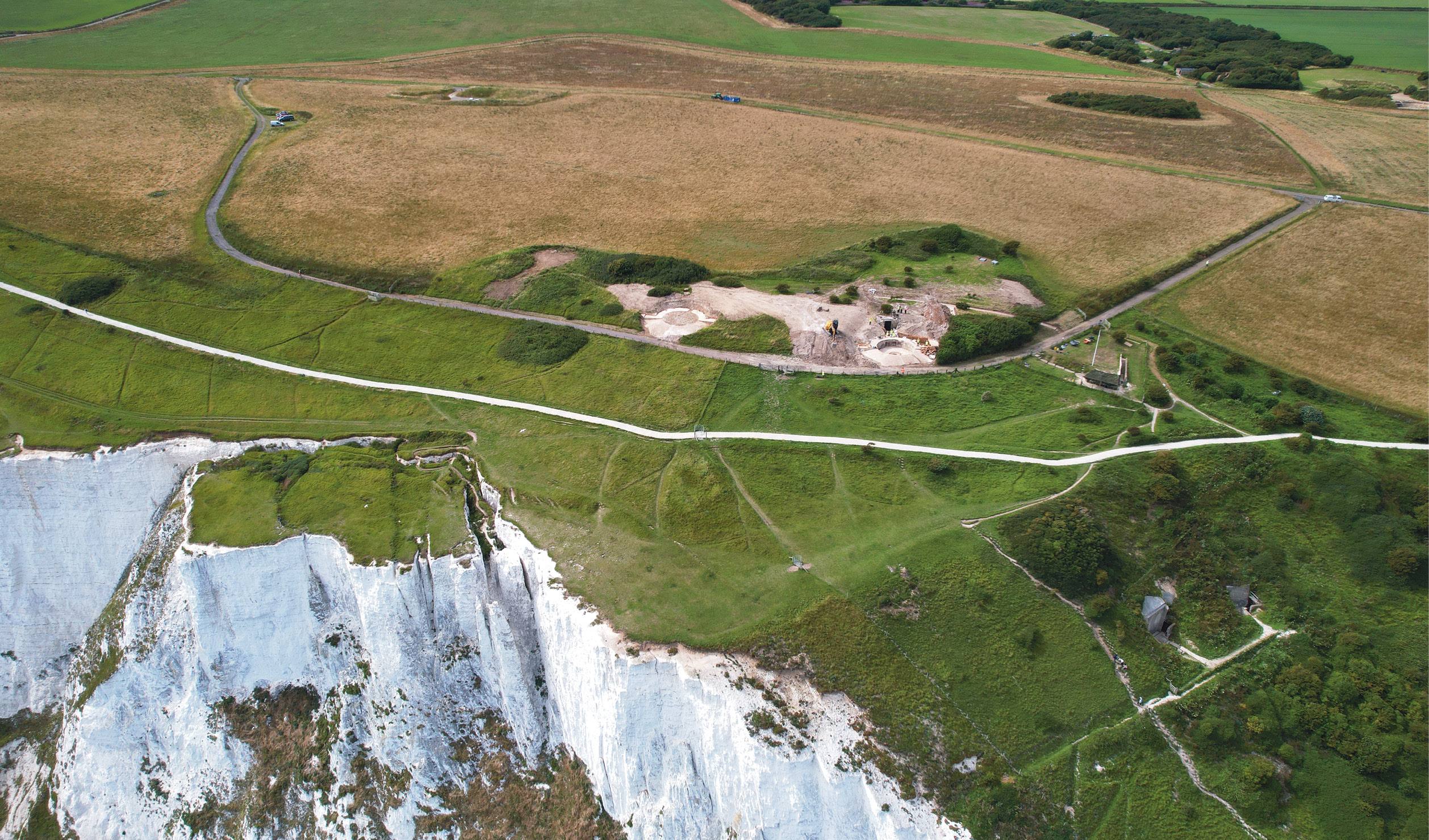
Imposing as they were, the guns of Fan Bay formed only part of a bristling defensive landscape. Located nearby, and operating under the same command, South Foreland Battery was home to bigger, 9.2-inch guns, while Wanstone boasted the largest longest-range breech-loading weapons ever seen on the British mainland: 15-inch guns whose 1,938lb (879kg) shells could strike targets on the French coast. Fan Bay’s guns may have been less impressive in scale and scope, but they could fire more shells per minute, and fire them more precisely, than their larger neighbours, and all three locations, with their differing ranges and attributes, played key and complementary roles in defending the south coast. Together they formed the 540 Coast Regiment, unique within the history of artillery as being purely offensive rather than defensive in nature.
When the war ended, the Fan Bay battery was transformed into a training facility, but the site proved costly to maintain, and its guns were quickly superseded by more advanced technology. In 1952, barely a decade after its initial installation, the battery’s final shot rang out, its guns were removed, and many of the site’s metal structures were dismantled and sold for scrap. The land was left and quickly became derelict, and in the 1970s it came under the merciless gaze of the Eyesore Clearance Programme, whose wrecking ball swept many of the surviving structures from view. Fan Bay was returned to farmland, and any concrete and brick remains that could not be removed were buried in situ and ultimately reclaimed by nature.
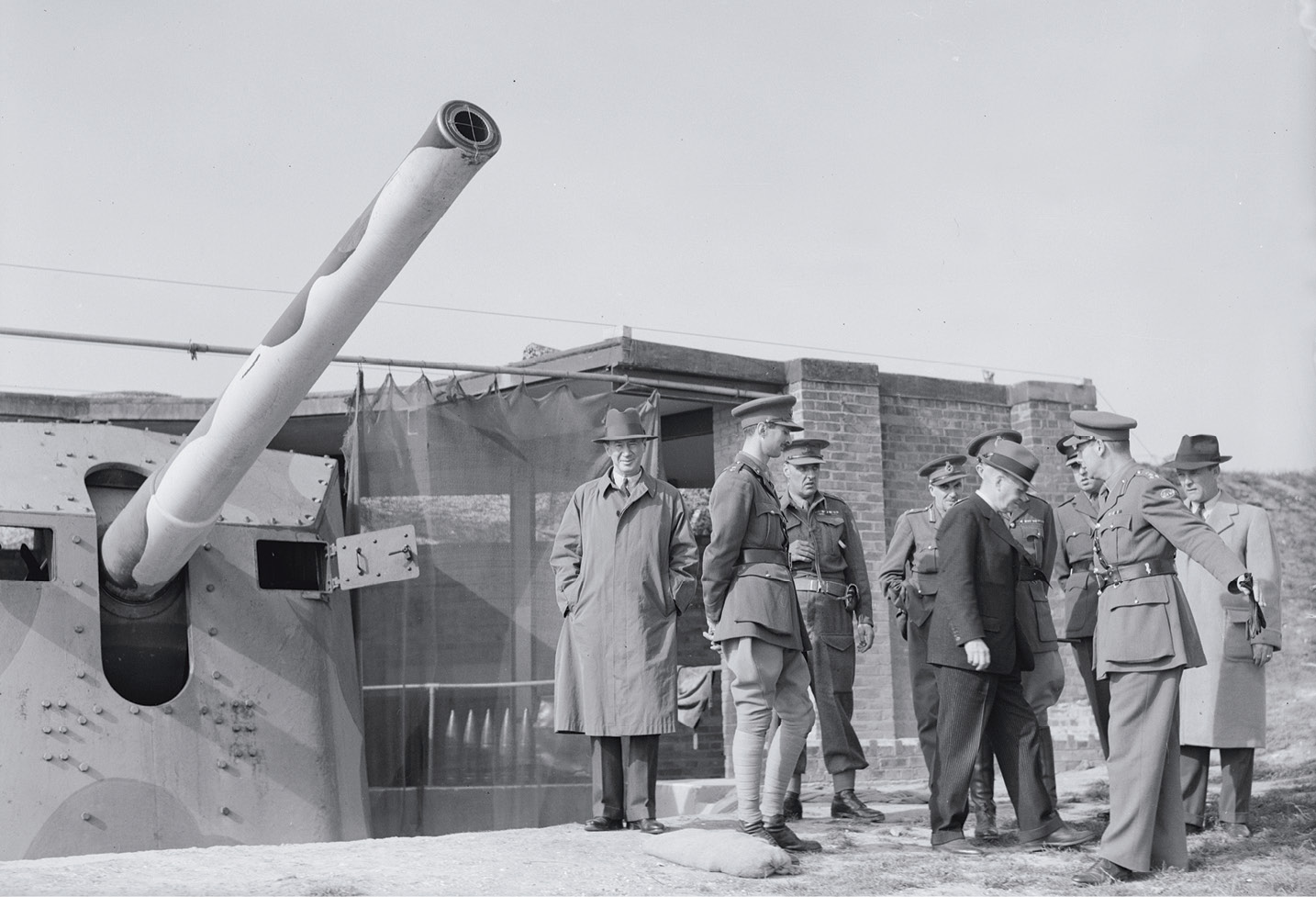

Excavating the emplacement
Hidden from view for more than half a century, these military relics have now been brought to light once more. In October 2022, an exploratory evaluation marshalled an army of volunteers to establish what – if anything – had survived of the three emplacements at Fan Bay. Working with the National Trust and archaeological advisors Isle Heritage CIC, they found that – while much of the superstructure had been destroyed and surviving brickwork was badly damaged – there was still plenty to record at all three sites, including their heavily reinforced concrete gun-pits and the storage lockers and magazines to their rear. At the end of this work, all three areas were carefully covered over again, until a full excavation focused on Number 3 emplacement last July.
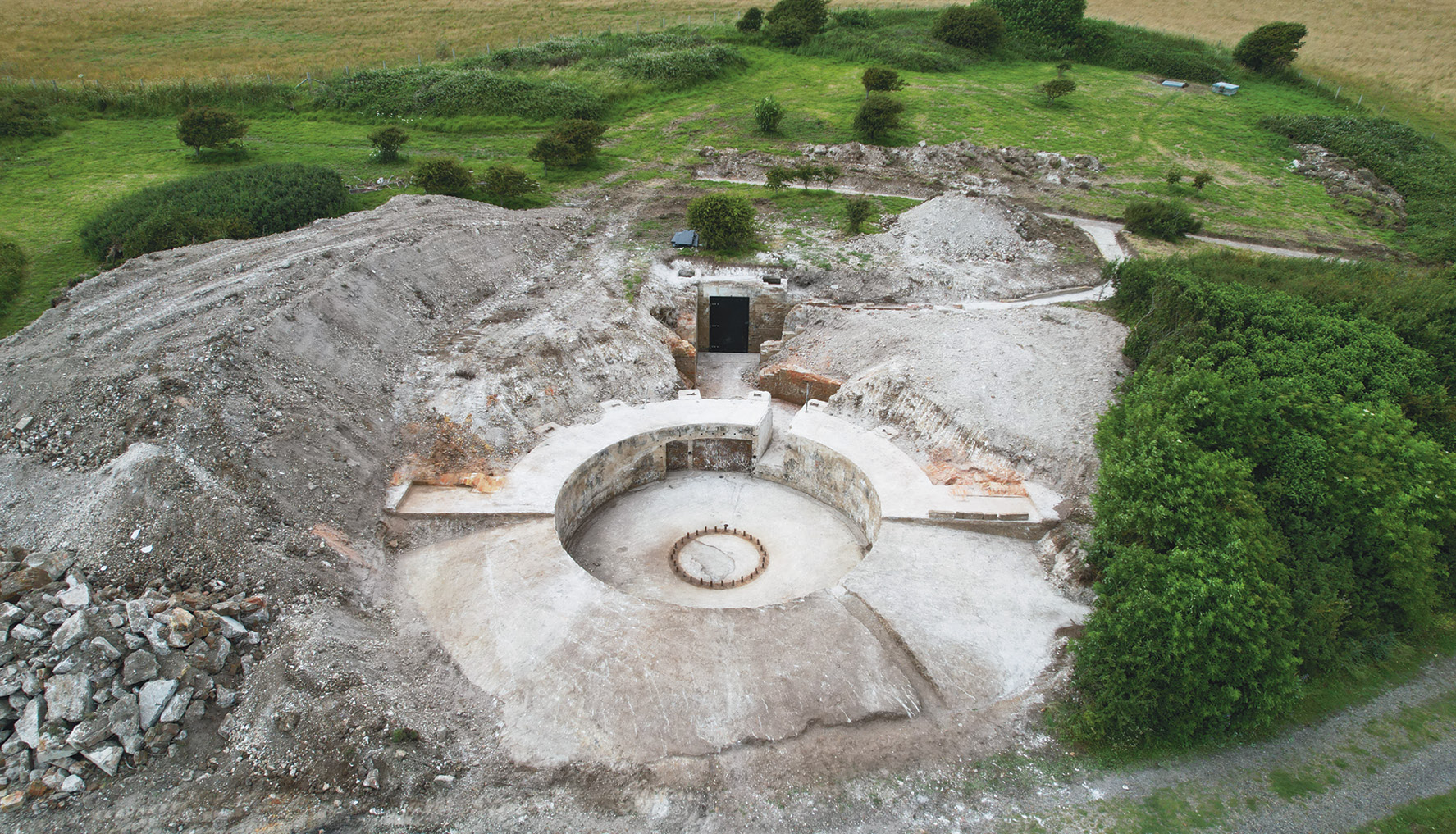

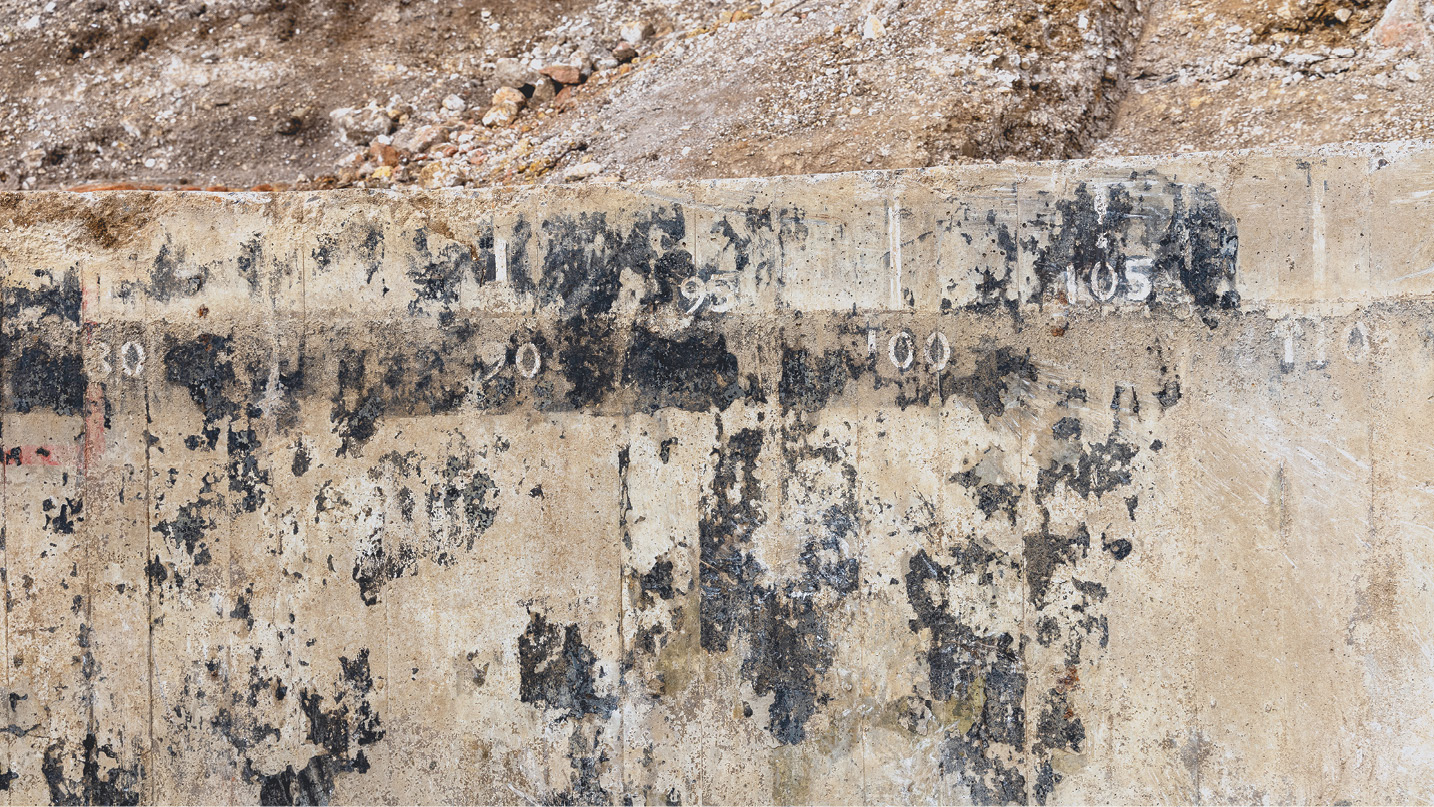
When I visited the two-week project, National Trust archaeologist and Project Manager Jon Barker showed me the impressive remains that had been exposed. A broad concrete circle, radiating from a pivot known as the holdfast, marked where the gun itself would have stood. Once augmented by a brick casemate and a curved roof, today only the base of the deep gun- pit survived, ringed by a broad drain that – despite the summer dates of the excavation – had already been put to the test, Jon said. The pit’s semi-circular retaining wall was marked with a series of compass bearings, their paint still crisp and clear; while directions including heights and bearings would have been sent via mag slip from the Plotting Room (a subterranean structure located 300m to the north), the numbers on the wall could have been used as a back-up when aiming the weapon. Bolts that had once secured the gun still protruded from the ground, and H-shaped pieces of metal – the stubby remains of RSJ pillars – stuck out of the surrounding broken masonry, creating a starkly industrial effect.
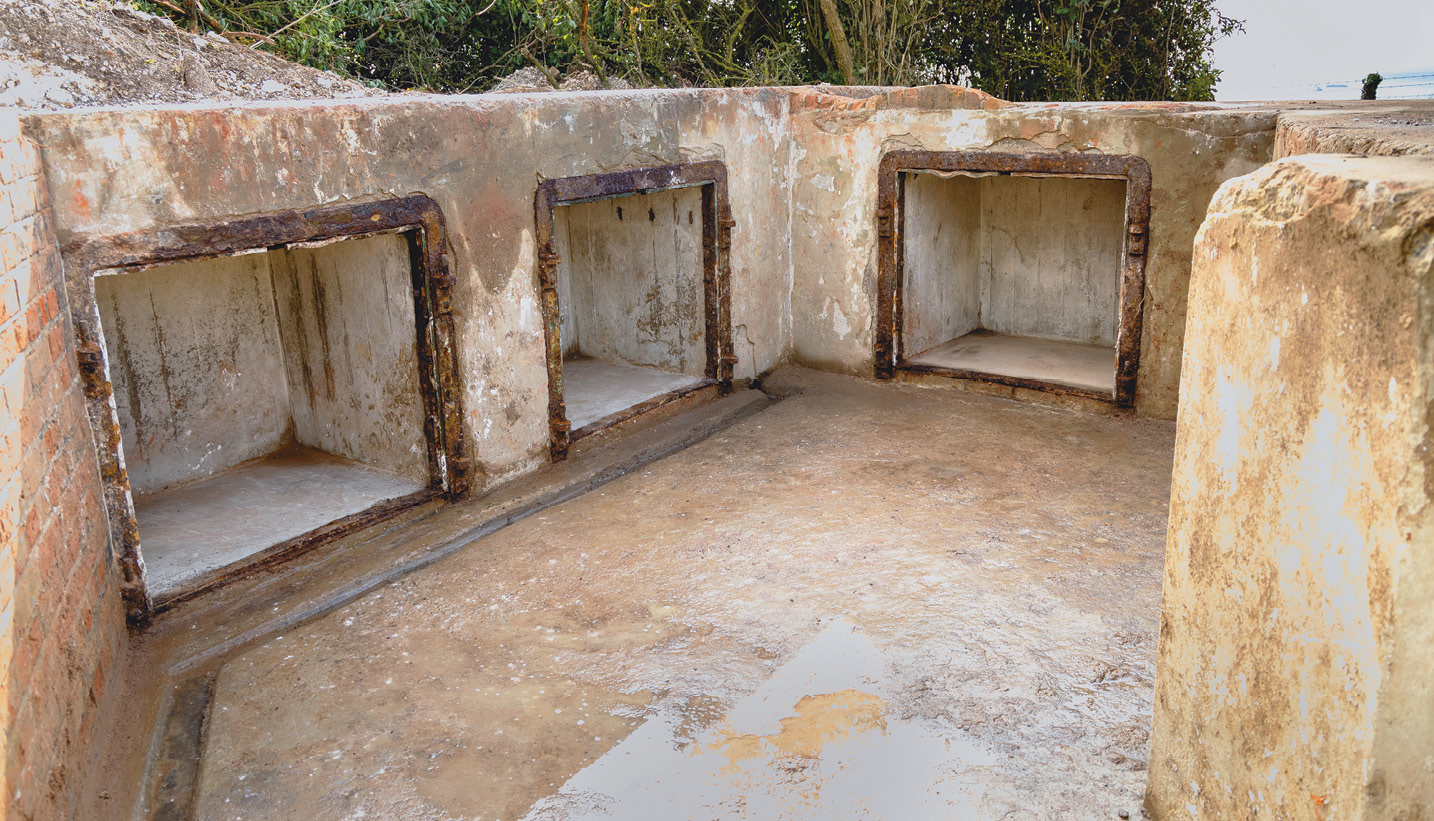
Immediately behind the gun base stood a row of ready-use ammunition lockers, as if the old artillery was waiting to be brought back into working use. Today they are reduced to open-faced cubes, shorn of the double doors that once secured them, though the seal that would have kept their contents dry and safe from sparks still survived around each opening. Behind these, the team found two triangular rooms buried beneath an overgrown bank of earth and rubble. One was a crew shelter with a bench, each of the seats numbered in relation to the different roles of their occupants; the other had a small partition for officers, and a workshop for repairing bits of the guns. Although the main body of these chambers had escaped destruction in the 1970s, their roofs had been sheared off and their brickwork was shattered. The National Trust plans to put in a sleeper and braces to shore up the supporting wall as part of their efforts to conserve the site and eventually open it to the public.
The same motivation has prompted the installation of a power supply and lighting within the large storage magazine at the back of the emplacement. Although its exterior also bore scars from the 1970s, most of its fabric remained intact. I donned a torch-topped hard hat to follow Jon into its damp depths, where he showed me the many little chimneys that would have once served to keep the inner environment dry and stable; the team have also recovered a little Howarth extractor that formed part of this ventilation system. Further clues to how the space had functioned could be seen everywhere: on either side of the main door were two large shafts, one still containing a winch that would have been used to deliver the shells down the ammunition shaft, and further inside the magazine Jon pointed out a series of racks that might have supported shelving or some kind of partition for the various different types of artillery shell. The original door, its hinges made of bronze to reduce any risk of sparks (which would have had disastrous consequences within this enclosed space packed with explosives) stood in situ too, while the small room that had been used to store propellant charges still had its oily anti-spark flooring.

Above & below: Sleepers have been installed around the magazine by the project team to help secure its shattered brickwork and shore up any loose soil and masonry. Although today a damp, dark space, the interior environment of the magazine would once have been carefully controlled, aided by objects like this Howarth extractor. Photos: Chris Tapley

Listening to the past
The First World War was popularly expected to be ‘over by Christmas’, but on Christmas Eve 1914 matters escalated dramatically when the first aerial bomb ever to fall on British soil struck Dover. The port was an essential asset, both for the war effort and for Britain’s commercial interests, so – to help defend the facility from future attacks from the air – Fan Bay became home to two ‘sound mirrors’, decades before another global conflict prompted the installation of its trio of gun emplacements.
These large, upright concrete dishes served as early warning systems, reflecting and focusing the sound of an approaching aeroplane’s engine long before it came into view. Specially trained operators used conical sound-collectors and stethoscopes (and, later, microphones) to detect where on the mirror’s surface the sound was loudest, allowing them to deduce the direction of the aircraft’s approach from up to 25 miles away.
Sound mirrors were installed at many sites on the south and east coasts of England, but few examples survive today, and fewer still in as good condition as those at Fan Bay. Indeed, the earlier of the Fan Bay pair, constructed c.1916, is thought to be one of the oldest surviving examples of this technology in the country.
While sound mirrors were revolutionary in their day, they were made redundant by the development of radar, as well as increases in aircraft speed which reduced their ability to give early alerts. The Fan Bay examples were buried in the 1970s and their precise location – as well as knowledge of their state of preservation – was lost, but in 2014 they were re-excavated by the National Trust, working with Dover Archaeological Group, Canterbury Archaeological Trust, and a host of volunteers (see CA 299 and 324). The remains were scheduled in 2017, and today this innovative apparatus can once more be seen by visitors to the clifftop site.
Going underground
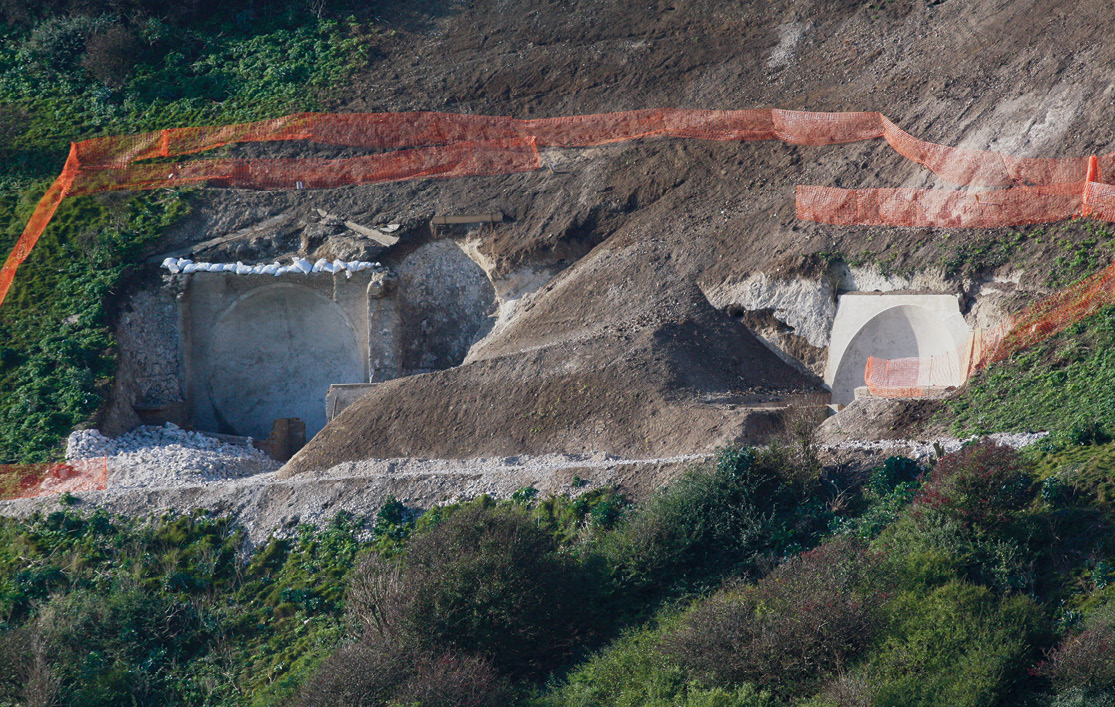
Back in the daylight, and outside the main area of the emplacement, one other key feature that the project had identified was a section of trackway leading on towards Number 2 emplacement, and to another facility whose presence must have prompted a pang of empathy from the dig team. They had shifted six tonnes of earth by hand in order to access the interior of the magazine, which had become choked by a slump of soil, and this had been heavy work – but their task paled into insignificance compared to the labour that had gone into the creation of the nearby Deep Shelter.
This network of tunnels and rooms had been quarried out of the chalk by Royal Engineers over a period of 100 days. It was designed to provide basic (if damp and uncomfortable – but, crucially, shell- and bomb-resistant) sleeping accommodation for the soldiers working on the neighbouring battery. As many as 154 men could find a bunk in the metal-lined passageways, which run a claustrophobic 23m (75ft) underground. Today, volunteer-led tours regularly see intrepid visitors retracing their steps down the original 125 stairs (arranged in three flights) to explore the subterranean space. Like the nearby gun emplacement, the shelter had been abandoned, and its above-ground structure demolished, in the 1950s, but much of its underground extent was left in place, deemed too dangerous and too time-consuming and costly to remove. As a result, much of the tunnels’ metal lining still remains in situ, while some spaces, such as the hospital room, are sprayed with cork to prevent the condensation that otherwise drips from many surfaces. Bare areas of chalk are marked by natural fossils and by graffiti carved by soldiers and later, more illicit, visitors.
Beyond the bay
Last summer’s excavation at Fan Bay represents only part of a wider project exploring the surrounding military landscape. In 2017, the National Trust was able to buy 72ha (178 acres) of land next to the Deep Shelter site, containing not only the three gun emplacements at Fan Bay, but the much larger battery at Wanstone Farm. Thanks to this acquisition, aided by an appeal headed by the late wartime icon Dame Vera Lynn, the Wanstone Rediscovered project was born. Led by the National Trust and funded by the National Lottery Heritage Fund and local donors, this three-year initiative has since 2022 been working to uncover and conserve the historic remains within this area, to share their stories, and potentially ultimately to make them accessible to the public. The project reached its mid-point earlier this year, and the team have already made great progress in illuminating what survives beneath the jungle of scrub and thorn bushes at Wanstone.
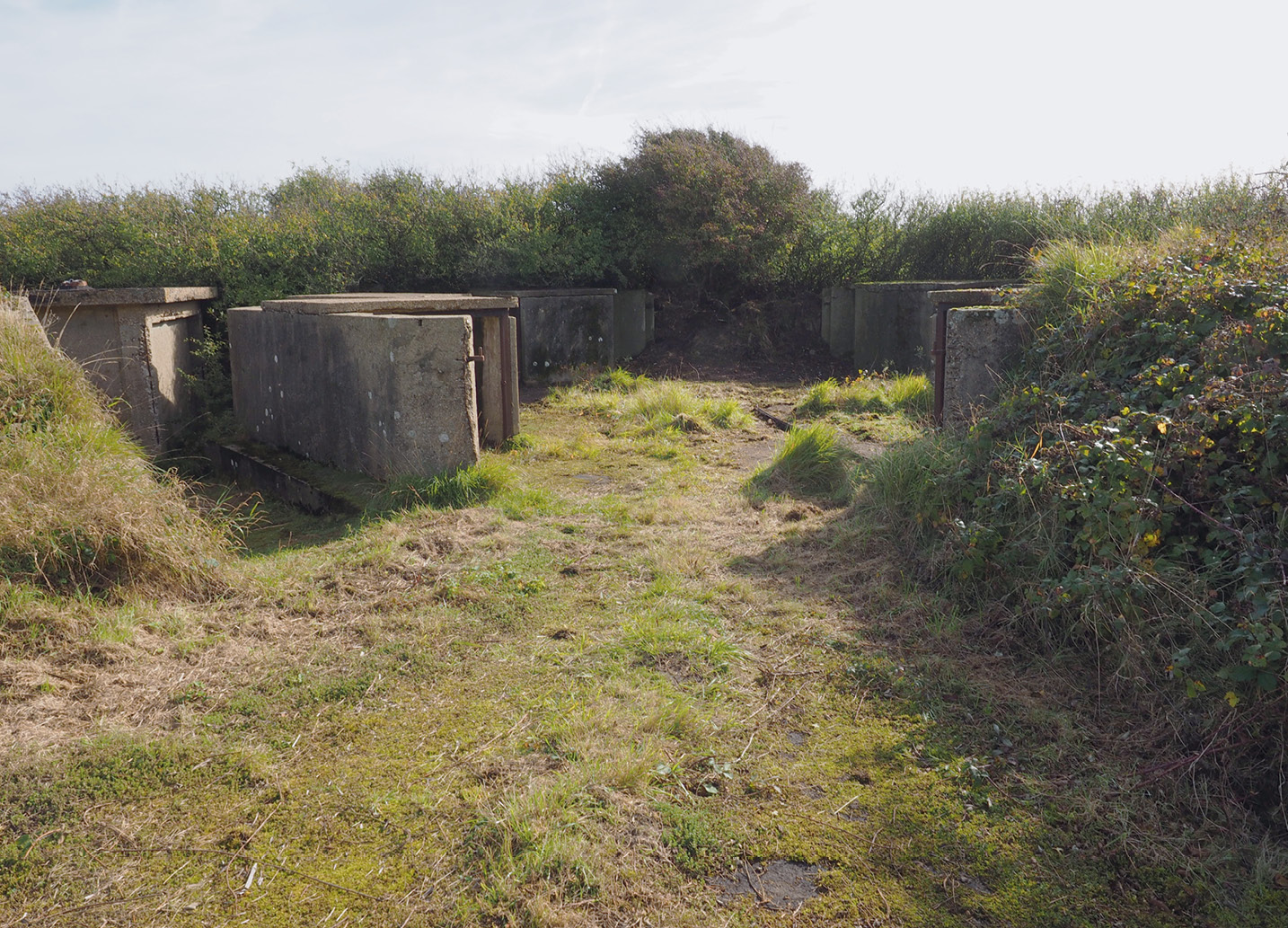
While the site is best-known for the offensive power of its mighty 15-inch guns (of which, more below), the Wanstone site was also home to the earlier D2 (Dover 2) Heavy Anti-Aircraft Battery. Located on the front line, D2 played a particularly active role in the Battle of Britain, during which it fired close to 5,000 shells, and it later helped to support Operation Diver, tasked with intercepting V-1 flying bombs. The site had originally featured mobile guns set in temporary sandbag arrangements, but it swiftly evolved into a much more permanent set-up, with four octagonal concrete pits, each containing a Vickers Armstrong 3.7-inch quick-fire gun. Clustered around these was an array of buildings and roads associated with the operation of the guns, with dark tar, camouflage paint, and netting used to make them harder to spot from the air.
Recent investigations by the Wanstone Rediscovered project established that all four gun emplacements had survived – albeit in a rather overgrown state – with their painted numbering still faintly visible. Each was equipped with six storage lockers, so that the gunners could easily reach for more ammunition whichever way their weapon was facing (the remaining two sides were access gates). More enigmatically, the team found a small room behind Emplacement 3 that they had not previously known about. They are still researching its purpose, Jon said, though it was probably an additional storage space, or may have housed a chemical toilet.

The roads that once served the site have been cleared of vegetation, and the project volunteers are working to uncover and conserve the concrete buildings associated with the battery as well (while taking care to preserve nesting areas and minimise any impact on local wildlife). These structures have suffered the ravages of time, weather, and invasive roots and branches, but the team have been waterproofing roofs with bitumen (a task that also helps to restore the buildings’ wartime appearance) and clearing blocked drains that have caused flooding in some parts of the site.
D2 features a series of semi-subterranean air-raid structures for the gun crews, which have now collapsed. These were made from elephant iron, a thicker gauge metal known for its use in dug-outs during the First World War. These structures are being excavated in partnership with two local secondary schools and with the local college. This activity reflects the community aims of the project, seeking to provide basic archaeological knowledge and work experience for the students. Recently, the volunteers have rescued a surviving elephant shelter from elsewhere in the country, and in the long term they hope to rebuild a surviving example that can also be used by local schools in the future.
Jane and Clem
The D2 battery represents an important part of the site’s story, but the most impressive weaponry associated with Wanstone are its great guns. Constructed in 1941 using spare gunship barrels weighing over 100 tonnes each, these unique weapons were served by their own branch railway to deliver shells and move the heavy-duty cranes used for maintenance. They were nicknamed ‘Jane’ (after a popular Daily Mirror cartoon of the time) and ‘Clem’ (probably referring to Clement Attlee, who was Deputy Prime Minister in the wartime coalition government).
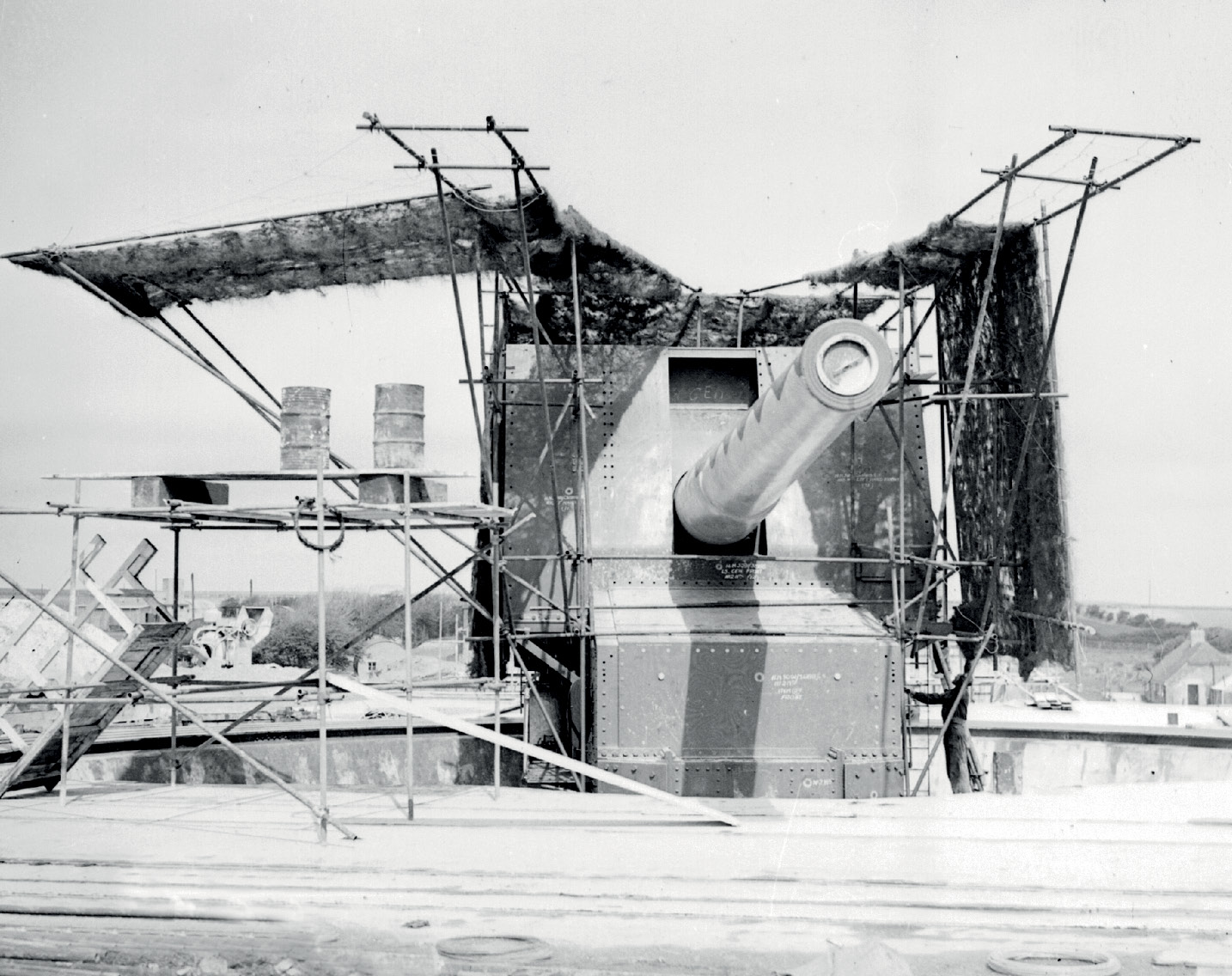
When operational, the site significantly curtailed the use of the Channel by enemy ships – and, when ‘super-charged’, its guns had the ability to reach targets in France. This ability was normally reserved, to reduce barrel wear, but in September 1944 Wanstone was tasked with helping Canadian troops to destroy the Atlantic Wall batteries that remained in operation after D-Day. It is believed that Jane scored a direct hit on Cesar Gun, destroying the site. With peace restored, though, the guns’ huge barrels were cut up for scrap in 1957 and some of the battery’s buildings were bulldozed to allow the land to be ploughed. Before the onset of the Wanstone Rediscovered project, it was not known how much of the emplacement had survived, but an exploratory dig suggested that much of the concrete gun-pits might still be preserved in situ. Since then, more extensive investigations in 2022 by the National Trust and partners Isle Heritage CIC have completely uncovered the surviving remains of Jane, removing tonnes of soil and rubble with the help of Rhino Plant Hire.
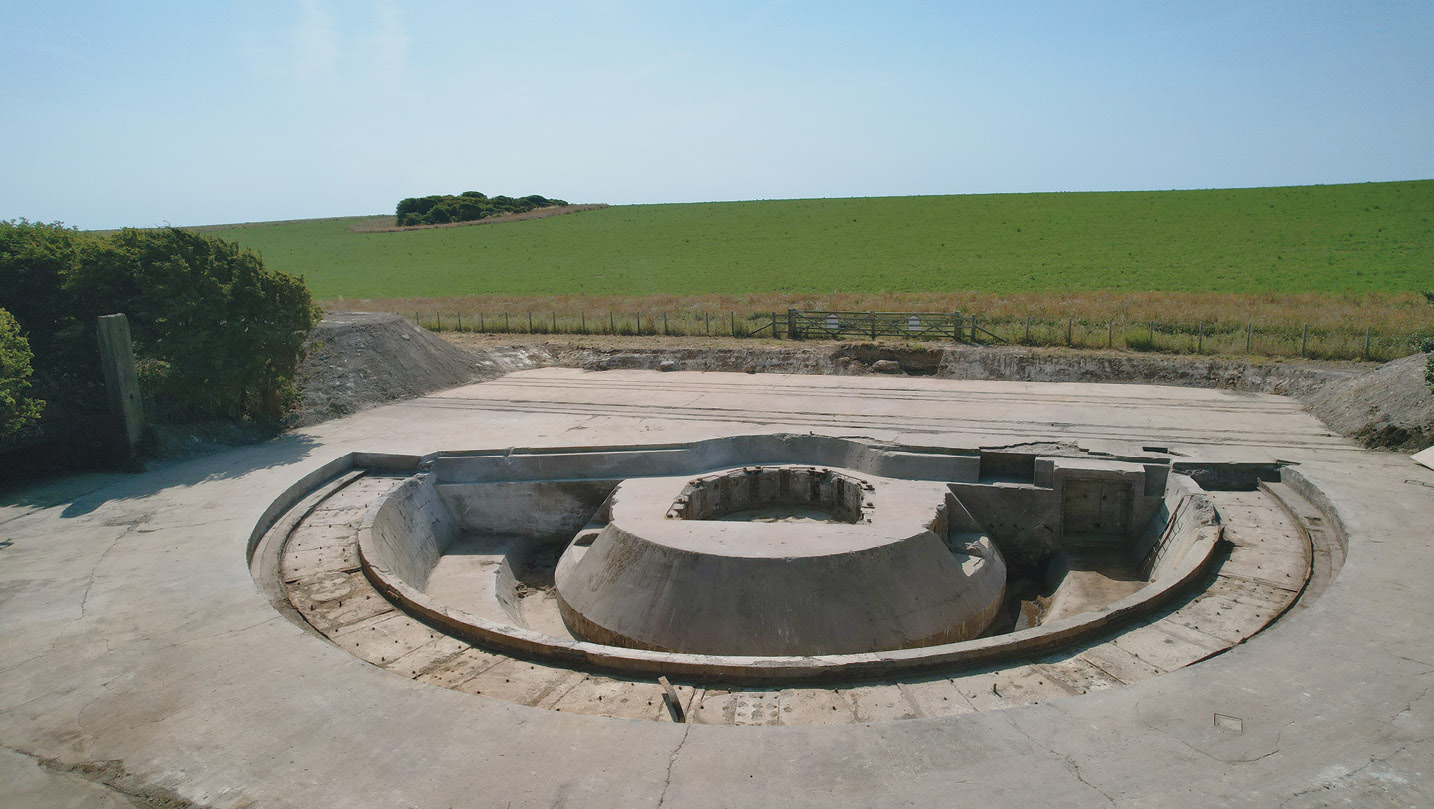
The cavernous concrete space of the gun-pit, exposed to sunlight for the first time in decades, is remarkably well-preserved, and its reinforced holdfast and the breech-pit with its (rather rusty) access ladder were all clearly visible at the time of my visit. Jon also pointed out the remains of the standard-gauge railway that had once carried ammunition and equipment from the nearby Martin Mill station, and, as well as these relics of the site’s working life, we could see evidence of when the gun was dismantled, in the form of abundant cut-off rivets and quantities of iron slag (from the flame-cutting process) in the breech-pit.
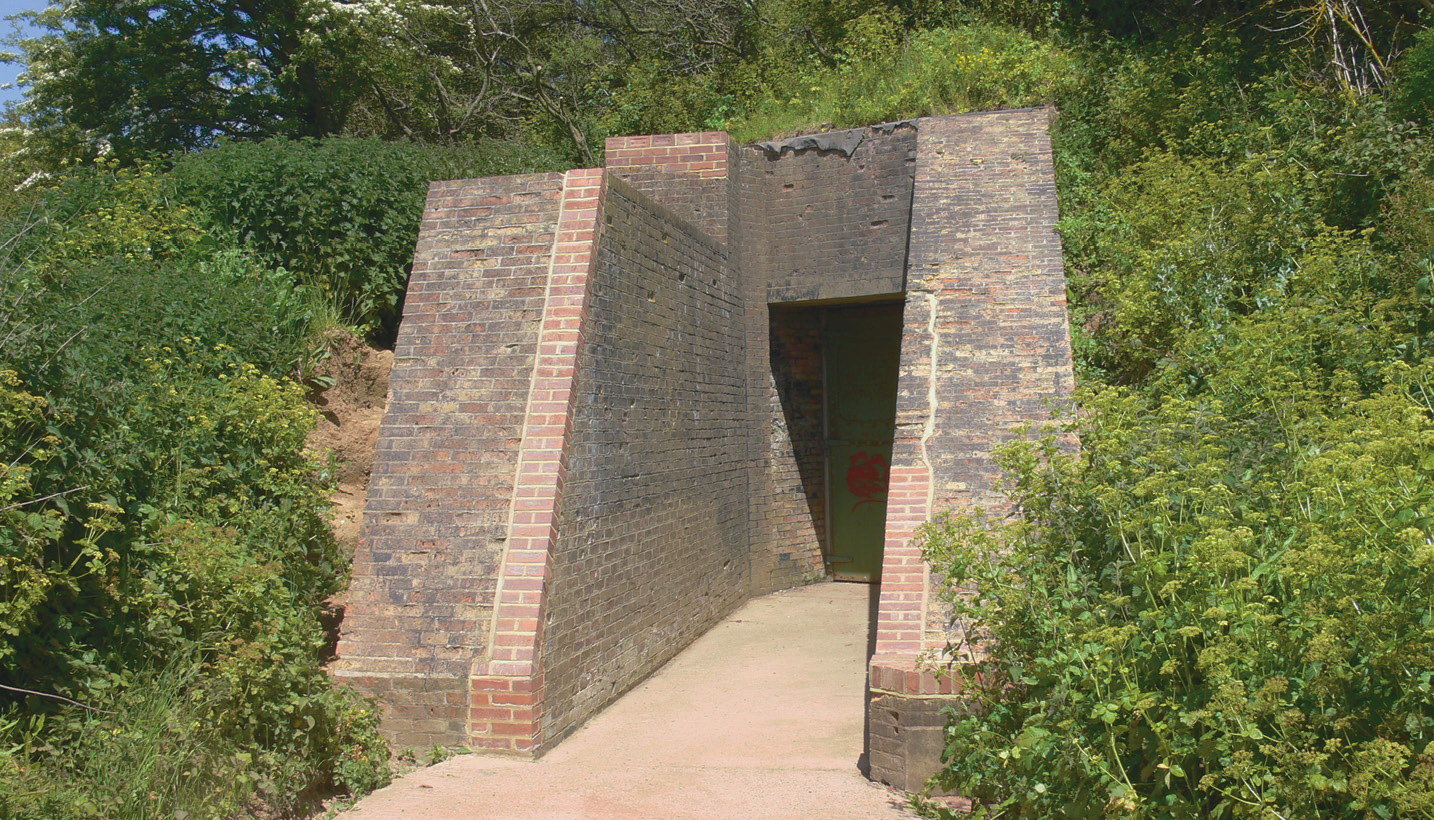
Some of the battery’s buildings, including its imposing magazines, have survived mostly intact, albeit damaged by frost and water. Last spring, the Trust commissioned a specialist bricklayer to replace dilapidated material (carefully copying existing patterns and using bricks that will match their older neighbours once they have aged) and repoint cracks that were letting in rain. All the structures on the site have been secured with new steel doors and window shutters in their original style, too, and safety measures have been put in place to prevent people from falling into the open gun-pit (though it should be noted that this site is not currently open to the public).

As for Wanstone’s future, it might one day become a visitor experience to complement Fan Bay’s historic remains, but this is yet to be decided (and the infrastructure that would make its opening possible is yet to be determined). It is also not yet known whether its twin site, containing the remains of Clem will be fully exposed in the same way; while provisional investigations suggest that this emplacement has survived below the ground as well, because of the lie of the land it is more deeply buried than Jane, so any excavation would be much more challenging. One thing that is sure, though, is that the landscape being explored by the Wanstone Rediscovered team preserves a remarkable time-capsule from one of the most seismic and significant periods of the history of the south coast, and that it still has fascinating stories to tell.
Further information:
• To read more about Wanstone Rediscovered, including the project’s excavation blog and the history of the sites that the team are investigating, see www.nationaltrust.org.uk/visit/kent/the-white-cliffs-of-dover/wanstone-rediscovered-project-at-the-white-cliffs.
• For details of how to visit the Fan Bay site and the Deep Shelter, see www.nationaltrust.org.uk/visit/kent/the-white-cliffs-of-dover/the-fan-bay-deep-shelter-project-at-the-white-cliffs-of-dover.
• Wanstone currently remains fenced off and is not open to the public; please do not try to access the site yourself. Periodic open days will be advertised on the National Trust’s White Cliffs of Dover website (see above) and Facebook page (www.facebook.com/whitecliffsofdover), and visits for special interest groups can be arranged via whitecliffs@nationaltrust.org.uk.