
Subscribe now for full access and no adverts
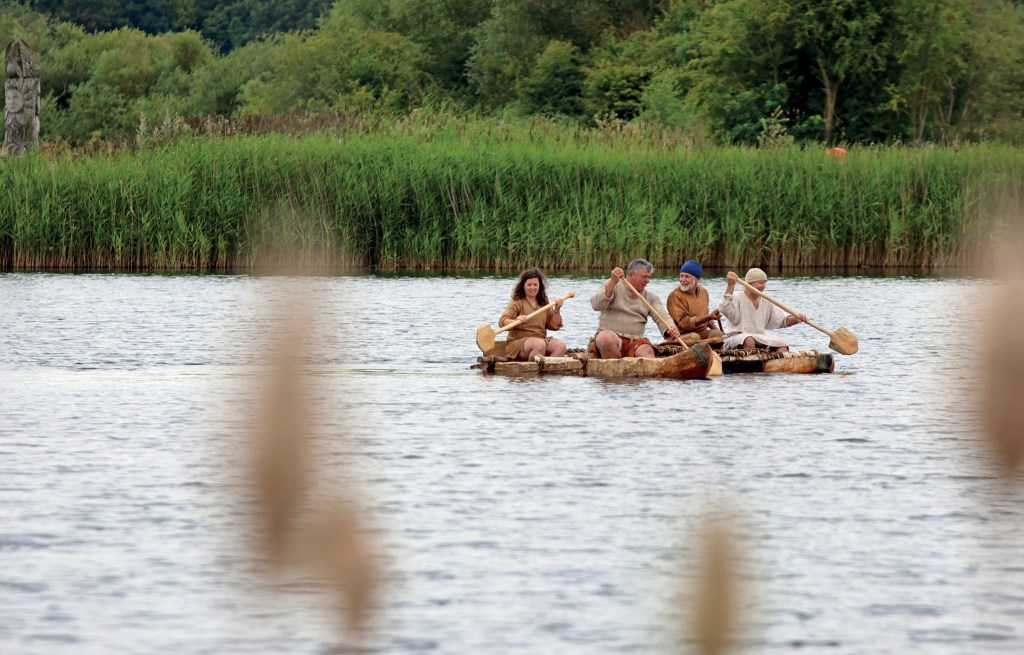
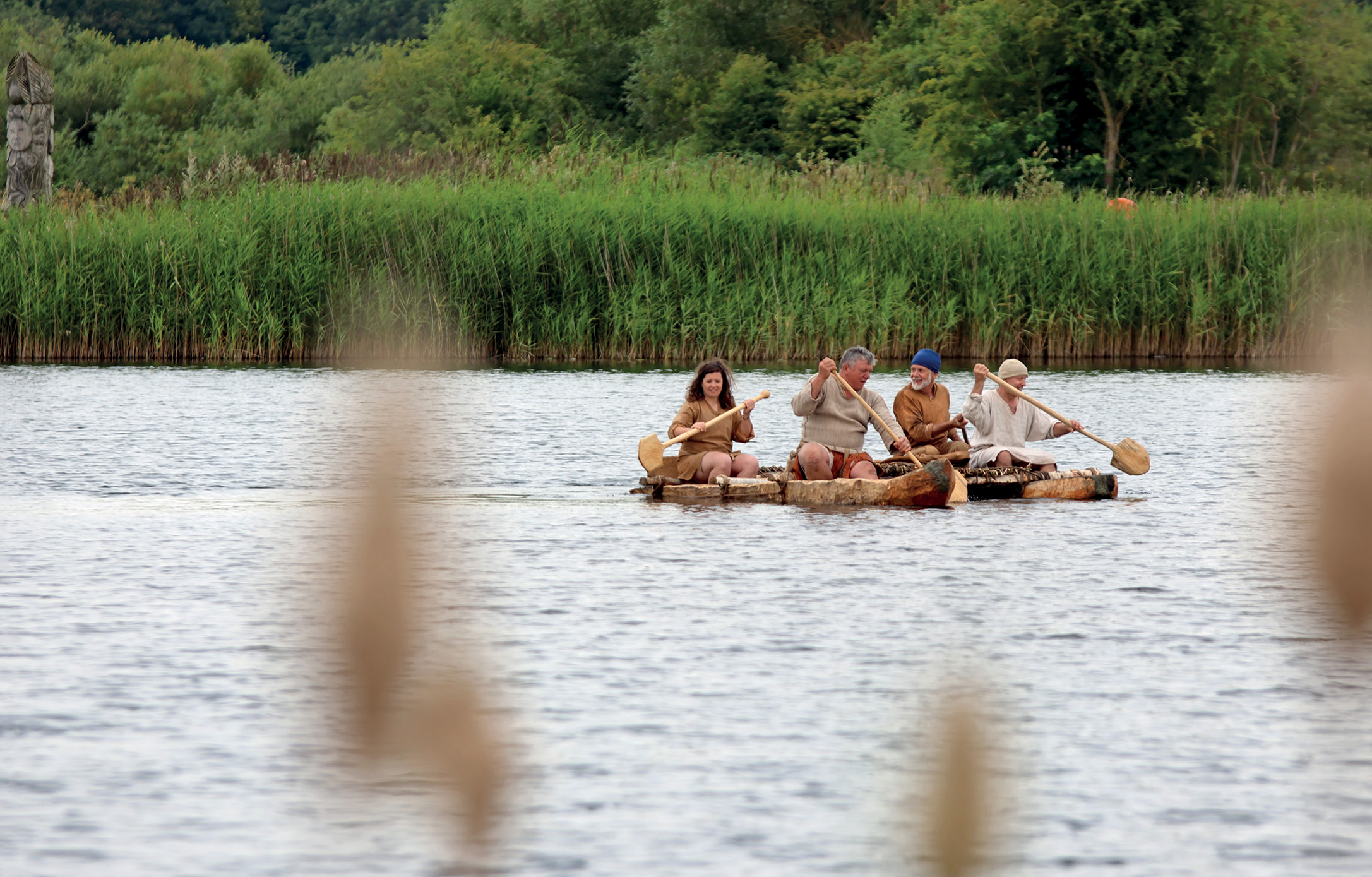
On a sunny afternoon in late July, sleek logboats slipped smoothly past whispering reeds and splashed into the water below. Their determinedly paddling passengers propelled the dug-outs swiftly across the lake, in a scene that would have been a common sight in the wetlands of the Nene Valley 3,000 years ago. This was no prehistoric journey, however, but the culmination of the Big Bronze Age Boat Build, a community archaeology project that has been running at Stanwick Lakes Country Park in Northamptonshire for the last two years.
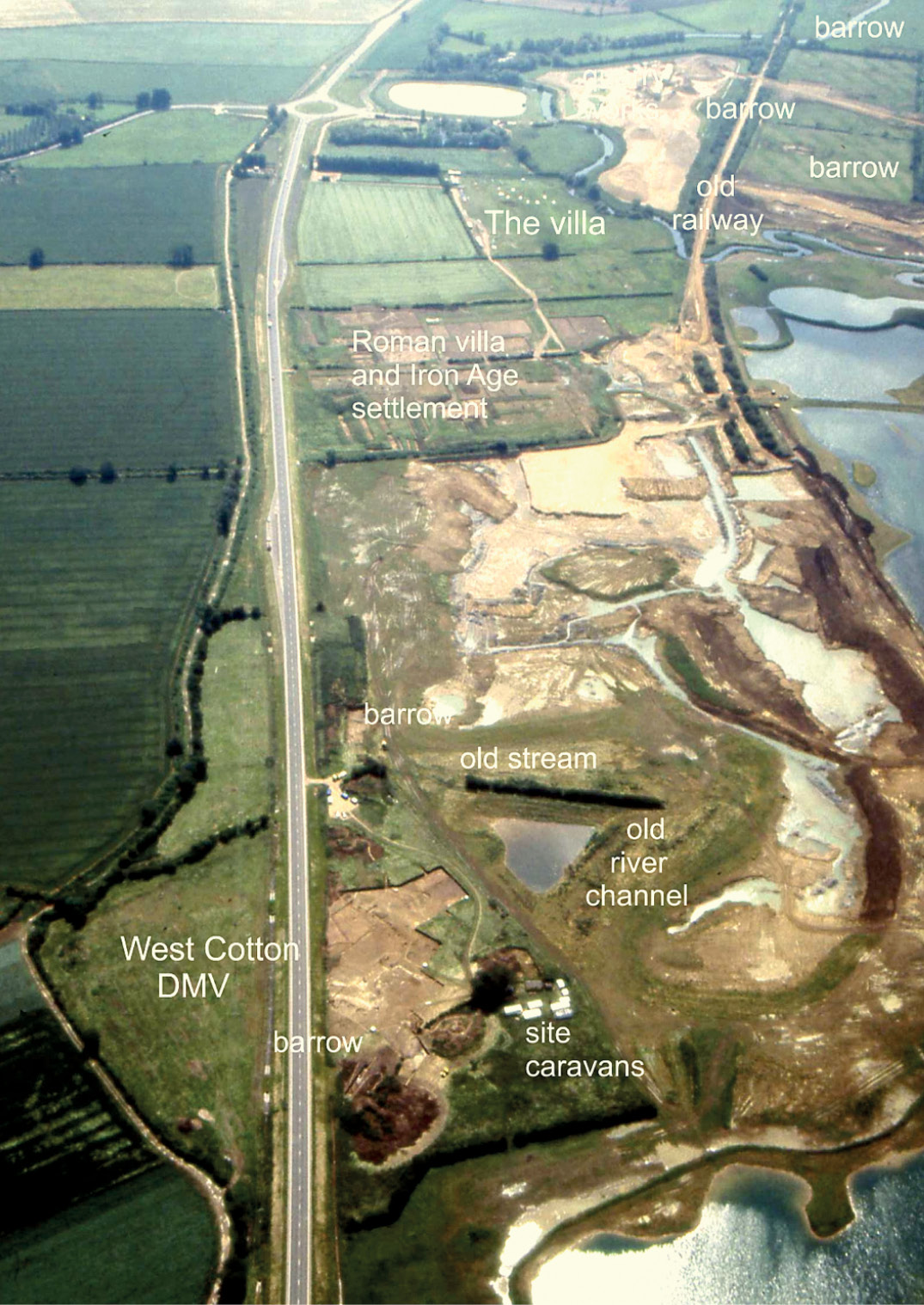
This initiative (supported by The National Lottery Heritage Fund) represents only the latest chapter in the area’s long and illuminating archaeological story. Today, Stanwick Lakes is a 750-acre nature reserve managed by the Rockingham Forest Trust, but its tranquil environment belies a rather more industrial recent past, its landscape shaped by extensive gravel quarrying between 1985 and 2004. These extraction works prompted one of the largest archaeological excavations of its time, investigating c.160 acres and uncovering remains spanning 5,000 years of human history. Discoveries ranged from a Neolithic long barrow and Bronze Age burial mounds to an Iron Age settlement, a Roman villa adorned with geometric mosaics, Saxon structures, and a deserted medieval village (see CA 75, 97, and 106).
When the landscape was flooded to create the nature reserve, many of these sites vanished from view, but for the last 12 years Heritage Fund grants have enabled a number of projects at Stanwick Lakes to help bring the area’s archaeological significance to light once more, and to encourage visitors to interact with some of its centuries-old stories. Early initiatives included the creation of a heritage trail around the lakes, and establishing a small museum within the visitor centre, showcasing some of the 1980s finds, including a Roman mosaic and a late Saxon stone grave cover. (The remainder of the artefacts are currently stored in the county’s publicly accessible archaeological archive – the Northamptonshire Archaeological Resource Centre, or ‘ARC’ – on the nearby Chester House Estate; see https://chesterhouseestate.org/history/the-arc.) More recent work has seen still-visible features cleared and consolidated; the establishment of a Heritage Barn for sharing and teaching traditional crafts; and innovative archaeological reconstructions, many of them developed and built by an army of eager volunteers (see box ‘Living history’ below for more details).
Archaeological clues
It is from this ambitious and imaginative programme that the Big Bronze Age Boat Build was born. Led by Dr James Dilley (an experimental archaeologist specialising in prehistory, and founder of the educational heritage service AncientCraft; see http://www.ancientcraft.co.uk), the Build set out to hand-craft three logboats, based on archaeological evidence and using only techniques and tools available to Bronze Age communities, with the ultimate aim of launching them on the waters of Solstice Lake within the country park.
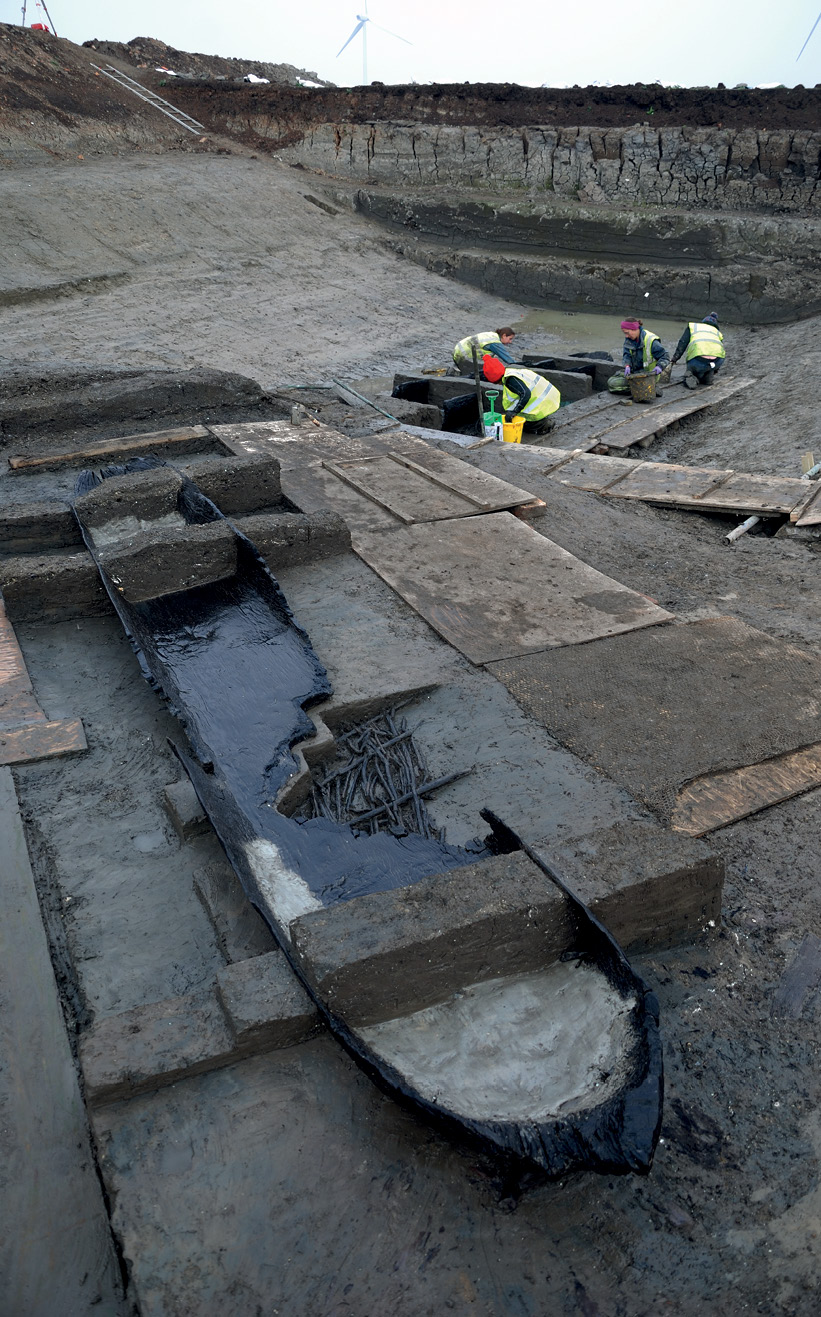
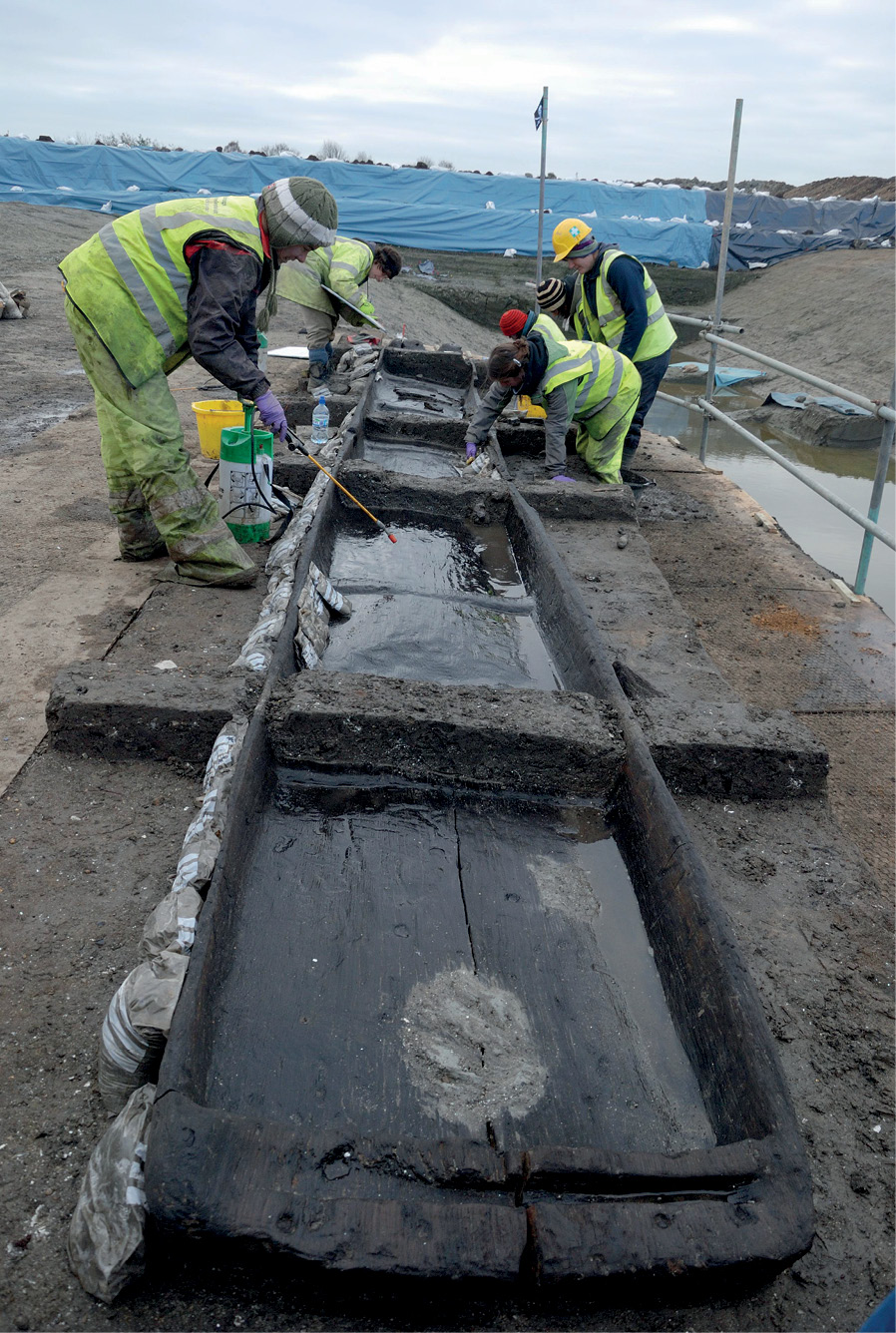
The team drew on Stanwick Lakes’ prehistoric past for inspiration, but also gained invaluable insights from another important archaeological site located around 30 miles to the north-east: Must Farm, near Whittlesey, Peterborough. There, in 2011-2012, Cambridge Archaeological Unit (CAU) were excavating the remains of a long-vanished tributary of the Nene when they discovered nine logboats ranging in date from 1300 BC to 700 BC (see CA 263, though at the time of publication only six boats had been identified). The vessels were all different in design (reflecting their diverse dates and, perhaps, functions), created variously from oak, alder, and lime wood, and ranging in length from 4m to 9m. All of them, however, were dug-out craft created from individual hollowed tree trunks, presenting a rich array of options for the Build team to explore.
These were not the only useful clues that CAU could provide. In 2015-2016, further excavations at Must Farm had revealed that the watercourse was home to Britain’s most completely preserved prehistoric settlement. A cluster of Bronze Age structures had once stood above the channel on stilts, but c.850 BC a devastating fire tore through the settlement, collapsing its buildings and sending them and their contents to the riverbed, where they became buried in sediments. The result was a Bronze Age time capsule that has illuminated everyday life in this period like never before (see CA 312, 319, and 412). Crucially for the Build team, among the many artefacts recovered from the site was an arsenal of woodworking tools, from bronze axes and adzes to chisels and gouges, many of them so well preserved that their wooden handles survived.
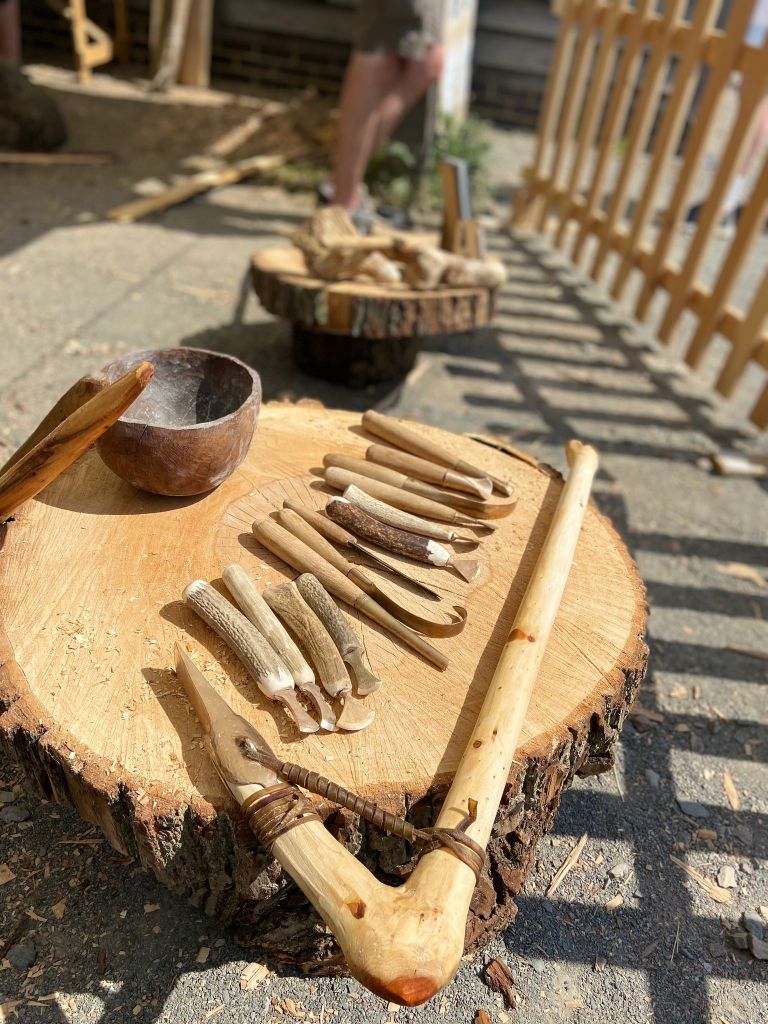
Replica tools were carefully cast at Stanwick Lakes’ Traditional Crafts Barn, and, after receiving their all-important raw materials in the form of fallen lime trees from the nearby Boughton House Estate, the Big Bronze Age Boat Build was ready to begin. Overseen by James Dilley, the volunteers included interested members of the public as well as an archaeologist who had worked on Must Farm: Lizzy Middleton. Speaking to Lizzy at the launch event, she noted how useful it was to see the Bronze Age-style tools being used in real time, and to explore what some of the toolmarks observed on the excavated logboats, as well as other enigmatic aspects such as patches of charring and puddles of clay, might signify in terms of how they were constructed.
Living history
The Big Bronze Age Boat Build is only the latest heritage project to be undertaken at Stanwick Lakes. As well as the heritage trail, Traditional Crafts Barn, and museum mentioned above, recent work has focused on a Bronze Age barrow near the visitor centre. Several such mounds were identified during the 1980s excavations, but all the others now lie under water. Rangers and conservation volunteers have carefully cleared the profile of the overgrown barrow, and have covered it with protective mesh to guard against natural and animal erosion (all this work was done under professional archaeological supervision, and with the approval of Historic England).

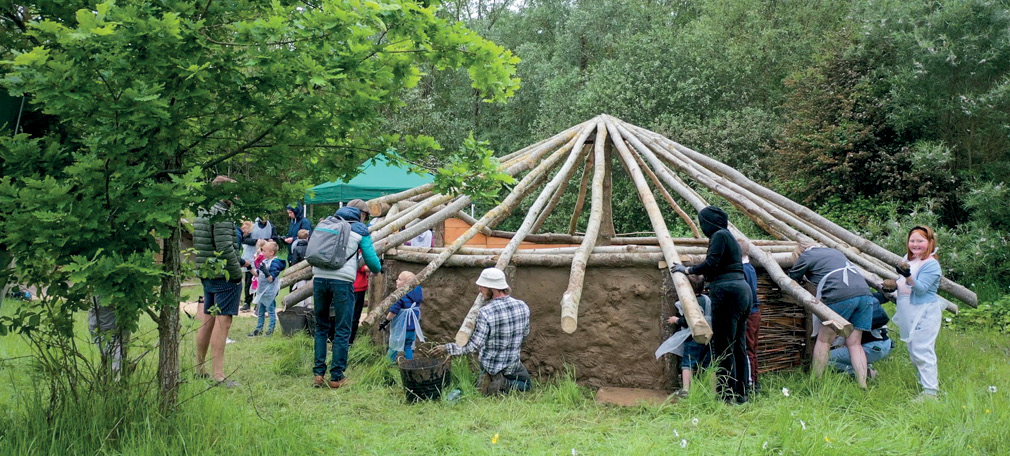
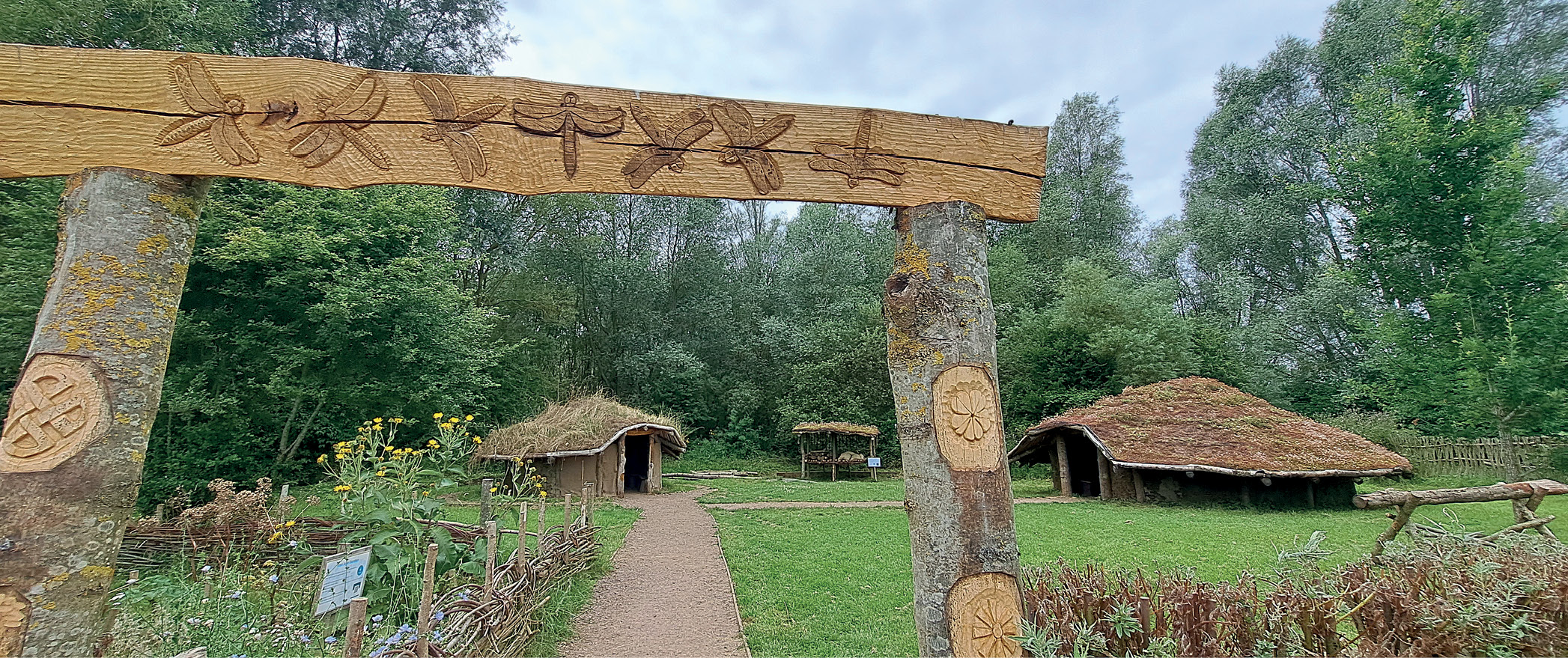
Another initiative turned the spotlight on Stanwick Lakes’ Iron Age remains. During the 1980s, the outlines of over 50 roundhouses (as well as other post-built structures whose soil was full of charred grain, leading them to be interpreted as granaries) were discovered in the centre of the site. Spanning c.400 BC-AD 100, they would not all have been occupied at the same time, but rather represent a settlement occupied over many generations. In 2010, a replica of one of the houses was built at Stanwick Lakes, using local willow and hazel, and roofed with turf, and this was joined by another, larger reconstruction in 2023. This ‘settlement’ required hundreds of volunteer hours to create, including a dedicated community ‘Daub Day’ that saw over 200 locals come to help finish the walls. The roundhouses are now accompanied by a six-post ‘granary’ structure and an Iron Age garden.
Designing dug-outs
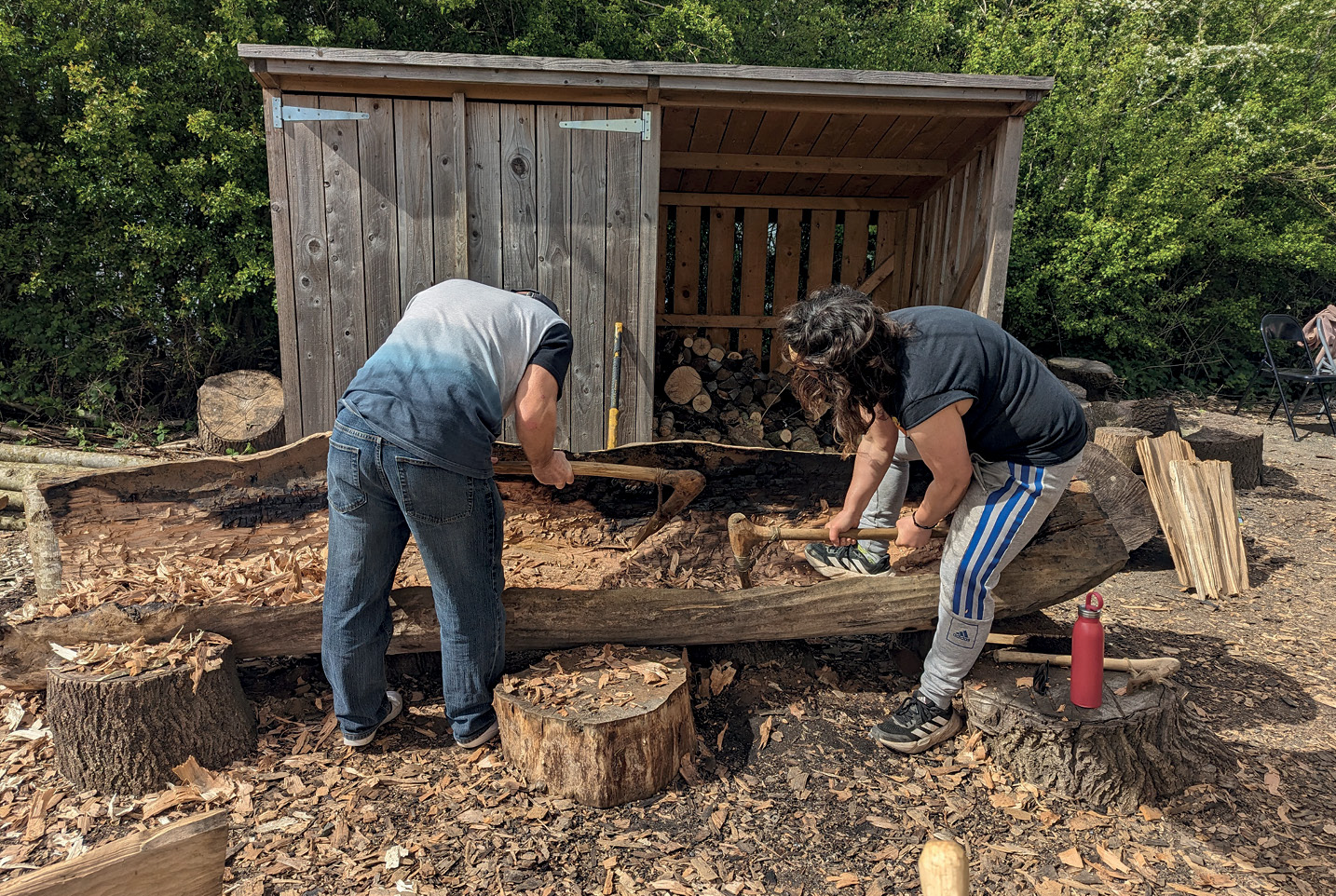
As we do not know exactly how Bronze Age logboats were made, the experimental project used different techniques for their three creations, chipping out the interiors of two, and trying controlled burning to hollow out the third (using clay from the lake bed to help contain this latter process). In all cases, however, the first task was to remove as much bark from the logs as possible, before using hammered-in stakes to split away the top surface, and employing axes and adzes to remove any uneven areas and knots. The discarded bark was gladly taken by members of the Northamptonshire Guild of Weavers, Spinners, and Dyers, who soaked and softened the lime bast (inner fibres) in the lake before using it to make cordage as part of their prehistoric textiles project (see box ‘Weaving the past together’ below).
Once the logs were prepared, the work of hollowing them out took place over numerous weekends across the last two years, with curious members of the public pausing to watch and ask questions as the volunteers chipped away. Thousands of wood chips have been discovered at Must Farm, and James Dilley commented that the project volunteers were essentially recreating this scene a short distance along the Nene.
The burnt-out boat, meanwhile, was supervised by volunteer Aidan Phillips, who has been working as a firefighter for 37 years (currently with Northamptonshire Fire and Rescue) but also co-directs Irthlingborough Archaeological Society. He hopes that the project will have a lasting legacy: after learning about Operation Nightingale (an MOD initiative using archaeological fieldwork to boost the wellbeing of military veterans and wounded service personnel; see CA 282, 383, and 397), he was inspired to create something similar for bluelight workers living with PTSD, stress, and other mental health challenges – and, in 2022, with the blessing of Operation Nightingale co-founder Richard Osgood, Aidan launched Operation Phoenix. In the future, Aidan said, he would love to see the reconstructed logboats travel along the Nene to the coast, involving members of local fire services in the areas that they pass through.
Another aspect of the logboats’ design that the team had to consider was how their stern should be constructed. At least five of the Must Farm vessels were open-ended at the back, with a separate transom board slotted into a groove to fill the gap. Such arrangements created potential weak spots in otherwise unjointed and watertight boats, but they also allowed builders to remove the weaker heartwood found at the base of the tree, replacing it with a board made of harder timber. With an open stern, James Dilley noted, the team also found it much easier to run large splits down the length of the log and take out bigger chunks during the hollowing process – and the open-ended hulls were much lighter to carry, too. There was another, more pragmatic, consideration as well, he added: you can remove a transom board and take it with you, making your logboat much harder to steal.
Two of the project’s reconstructions used transom boards, secured and sealed with clay – a material that is also known to have been used for running repairs on some of the Must Farm boats, and the Build team made sure to carry balls of it during the launch, ready to plug any leaks. The third boat had closed ends like a modern canoe, drawing on some of the other Must Farm vessels, and on earlier examples such as a 10,000-year-old pine logboat from Pesse in the Netherlands.
Weaving the past together
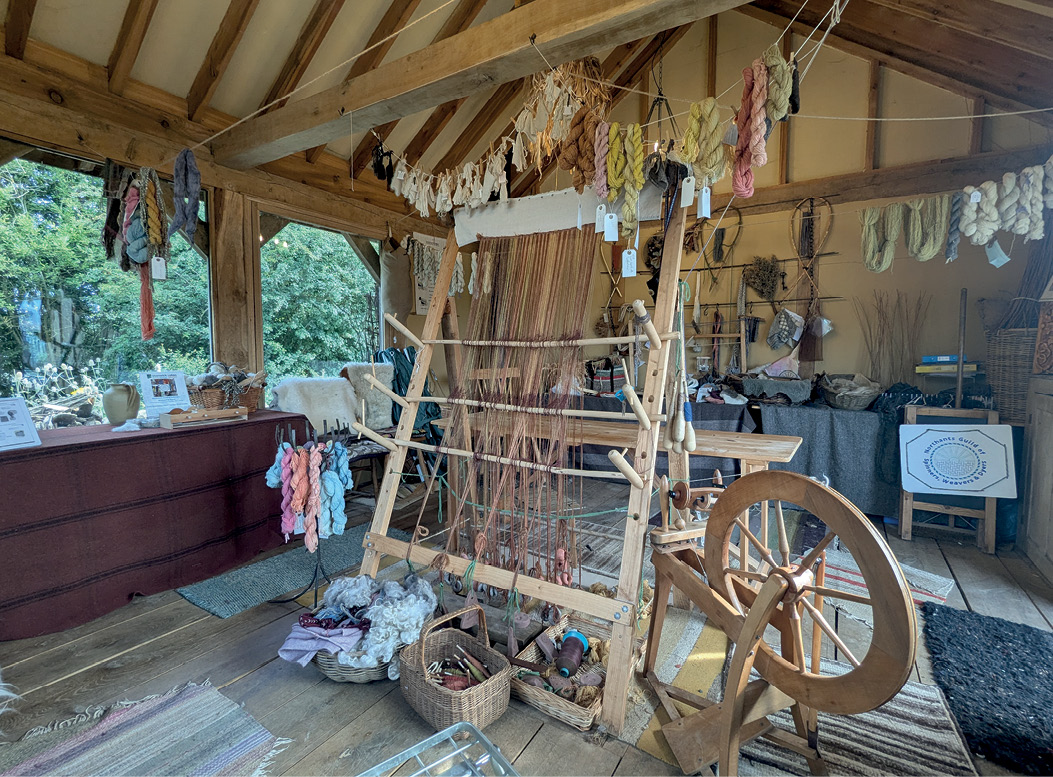
As well as hosting traditional crafts (such as blacksmithing, woodworking, and willow-weaving) in a dedicated building, Stanwick Lakes is home to the Northamptonshire Guild of Spinners, Weavers, and Dyers. Every Wednesday, they meet at the site in their own barn (where visitors are welcome to come and see them at work).
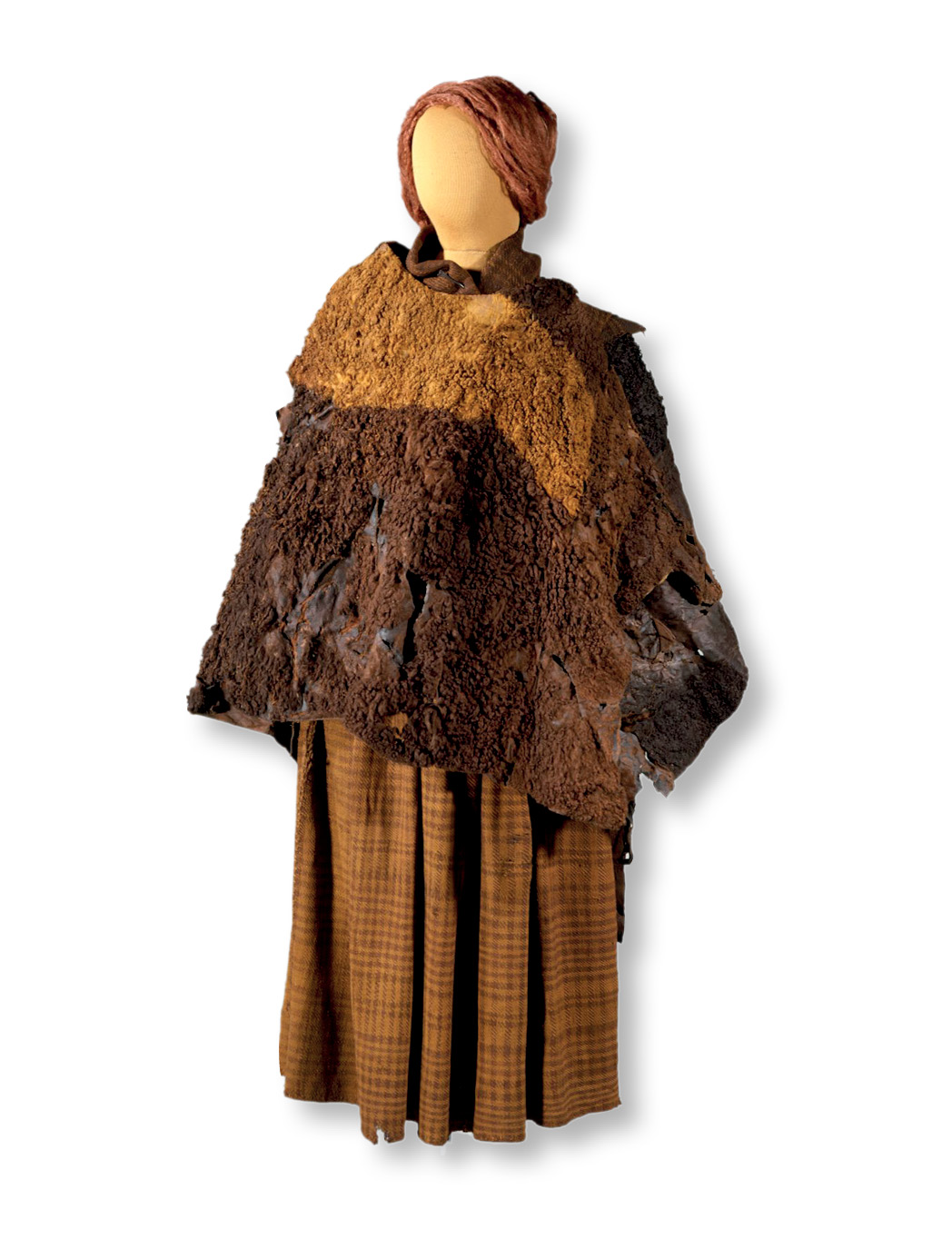
The group are currently exploring evidence for textile products in the Iron Age, drawing on the remarkable organic remains preserved in the Hallstatt salt mines in Austria, and discoveries from peat bogs across Europe. Especially important is the Huldremose Woman, whose body was found in Denmark in the late 19th century. Aged over 40 at the time of her death in the 2nd century BC, her hair, skin, and clothing had all been preserved by the surrounding peat – and it is her garments that are of particular interest to the Guild.
The Huldremose Woman was wearing a checked woollen skirt, a checked woollen scarf fastened with a bird-bone pin, and two lambskin capes. These are so well preserved as to reveal details of their patterns, weaves, and dyes, and, although the bog waters have turned the outfit brown, colour analysis reveals that the skirt was originally blue and the scarf was red.
The Guild are now working to recreate this ensemble, spinning very fine yarn which they have dyed using plants mainly grown at Stanwick Lakes, and weaving on the upright warp-weighted loom in their barn. They hope to display the completed garment at Stanwick Lakes, and in a mobile exhibition.
To learn more about the Northamptonshire Guild of Spinners, Weavers, and Dyers, see https://ngswd.weebly.com.
Plain sailing
The finished boats were put to the test this July, at a special event at Stanwick Lakes that also featured samples of ‘ancient’ food prepared to historical recipes, a Viking camp, the Northamptonshire Guild of Spinners, Dyers, and Weavers, and a display about CAU’s Must Farm excavations.
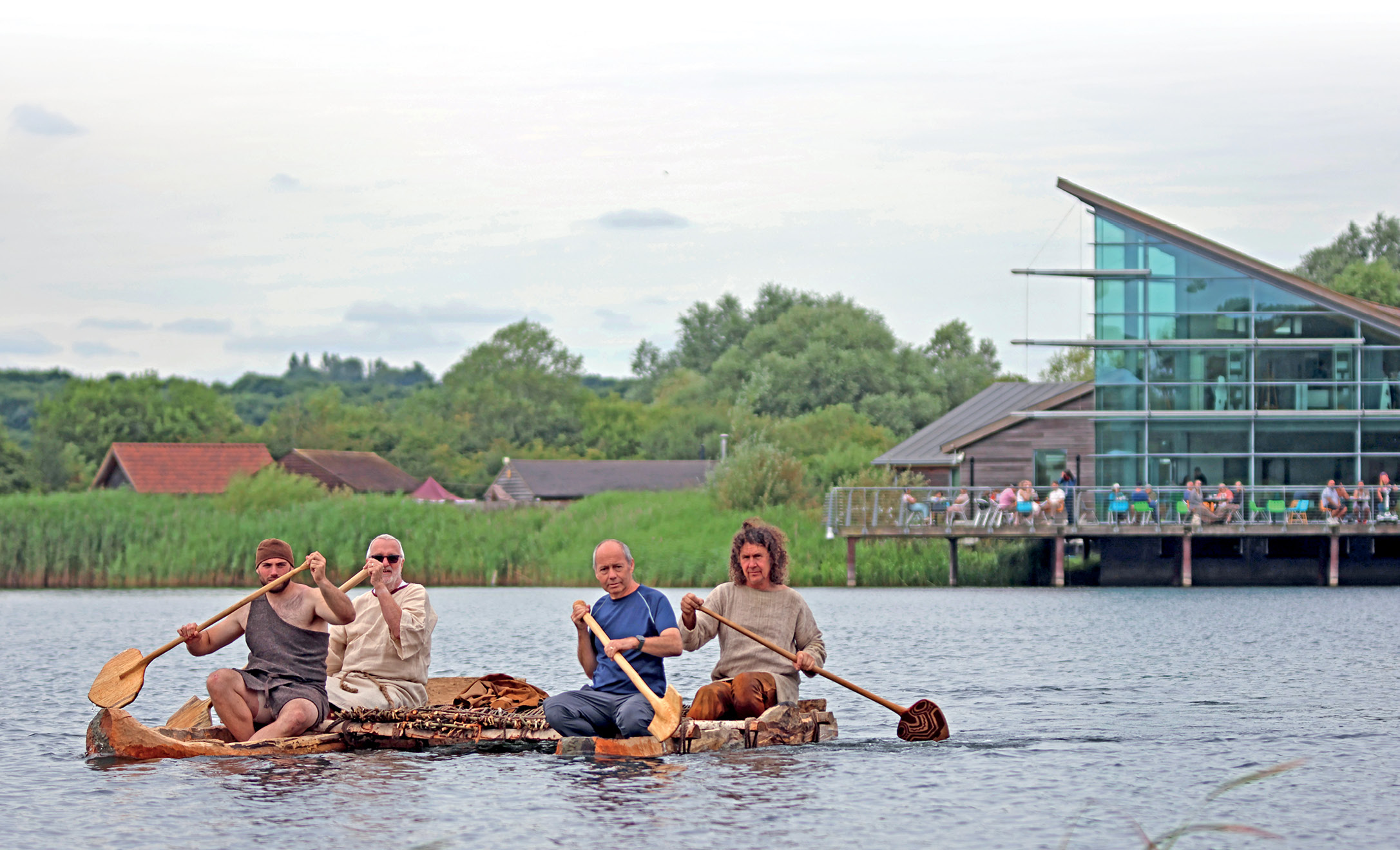
James Dilley began proceedings by casting a replica late Bronze Age sword, before quenching it in the waters of the lake and then ‘killing’ it by bending the blade over his knee to create a sacrificial offering to invoke good fortune for the launch. The gods appear to have been satisfied by the gift, as everything went smoothly. Crowds of visitors watched with bated breath as the transom-built logboats (linked like a Bronze Age catamaran for extra stability) and the closed-end canoe were pushed out on to the waters of Solstice Lake, but the vessels were soon skimming across the water, driven by leaf-shaped paddles based on finds from Denmark.
With the launch a success, the dug-outs were then joined by the Viking re-enactors’ longship, a pair of reconstructed coracles, and a rather more modern inflatable used by Northants Fire and Rescue, creating a colourful regatta to celebrate this latest episode in the living histories of Must Farm and Stanwick Lakes.
Further information:
• To read more about Stanwick Lakes and its heritage programme, see https://stanwicklakes.org.uk.
• For more about the Must Farm excavations, see http://www.mustfarm.com.
• Work on the next Must Farm monograph, which will focus on the palaeochannel and the logboats found within it, is under way. In the meantime, see http://www.mustfarm.com/bronze-age-settlement/publications for open-access online versions of the preceding pair of volumes in the series; these cover the Bronze Age pile settlement itself.
Source:
Grateful thanks to the following people for sharing their insights and expertise during and after my visit to Stanwick Lakes: Dr James Dilley, AncientCraft; Becky Gill, Heritage Manager, Rockingham Forest Trust; Nadia Norman, Heritage Coordinator, Rockingham Forest Trust; Lizzy Middleton, Cotswold Archaeology; Chris Wakefield, Cambridge Archaeological Unit; Aidan Phillips, Irthlingborough Archaeological Society; and Julie Mason, Northamptonshire Guild of Spinners, Weavers, and Dyers.
All images: Rockingham Forest Trust, unless otherwise stated