
Subscribe now for full access and no adverts
When industrial-scale production of ceramics came to an end in Britain in the 5th century, people quickly and readily reverted to the use of organic materials for their domestic needs. (Indeed, the almost overnight abandonment of Roman metal and pottery suggests that use of wood, leather, and vegetable fibres had never ceased, and must have continued side by side with the use of Roman materials.)
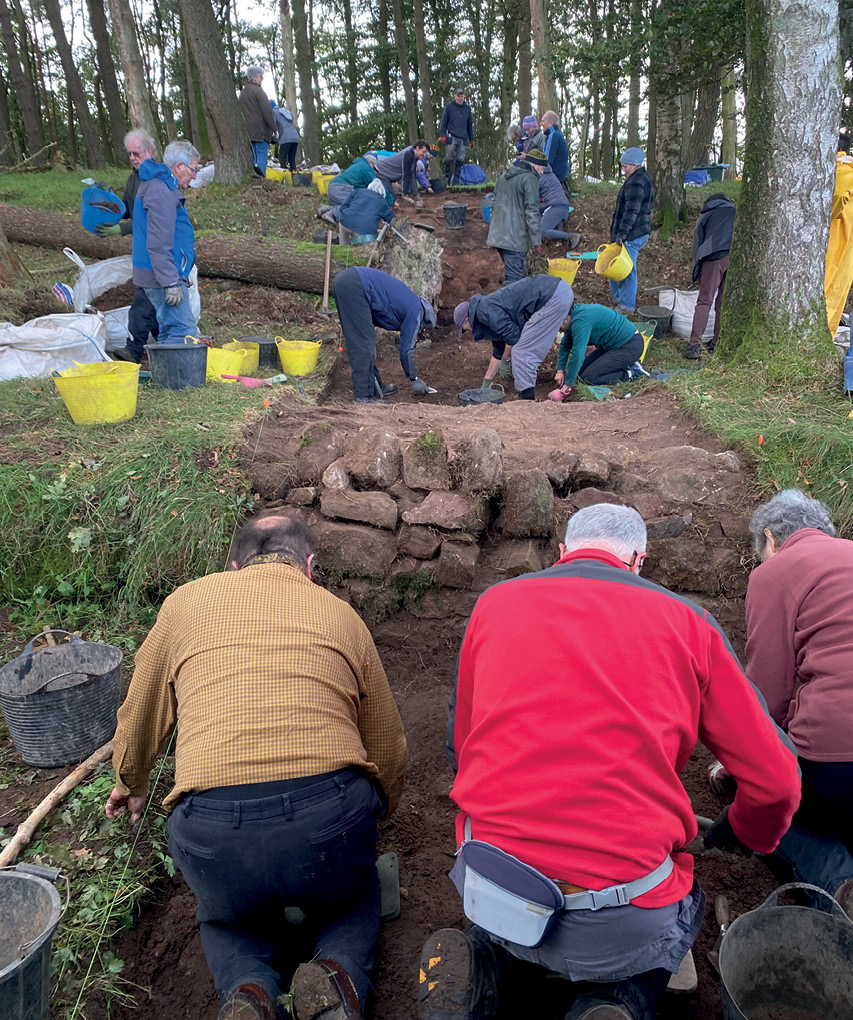
Timber was also the material of choice for buildings, including the earliest churches. Wood was used for the construction of all three pre-Conquest churches in Norwich – under the north-east bailey of the castle, under the main bailey, and beneath St Martin-at-Palace church. The same is true of the churches excavated in Thetford, Brandon, and Great Ryburgh. In every case, the evidence consisted of post-holes or trenches for wall plates cut into the subsoil.

Stephen Heywood (Stone Building in Romanesque East Anglia, 2013) argues that there were no stone churches in the region until 1020, when Cnut paid for the clay walls of the monastery of St Benet, at Holme, to be replaced with masonry. Peter Wade-Martins believes that one other exception in Norfolk is the ruined church at North Elmham, which he excavated from 1967 to 1972, and that he interprets as the site of the late 10th-century cathedral, built before the bishop’s seat was moved to Thetford (in 1071) and then to Norwich (1094).
Although pre-Norman church-builders could construct in masonry (North Elmham being an example), timber was central to pre-Conquest church-building well beyond Norfolk. As Warwick Rodwell puts it (in Anglo-Saxon Church Building, 1986), timber technology was pre-eminent and ‘stonemasonry was by far the lesser craft in the construction industry, down to the end of the 11th century’, even to the extent that some late Saxon churches of stone have decorative features clearly derived from timber framing (the west tower at Earls Barton, Northamptonshire, being the classic example, with its raised flat bands forming triangles and X patterns).
Enter the Normans
The Norman Conquest marks a watershed in the preference for stone for church-building rather than wood – importing into England church-building traditions from the Continent, along with the symbolism of stone as representing the permanence of the Church and, no doubt, a determination to demonstrate the superiority of Norman culture over that of the defeated Anglo-Saxons. (The 12th-century historian William of Malmesbury drew this contrast when he described the Normans as living in noble mansions and Anglo-Saxons in ‘miserable hovels’.) Timber traditions did continue, but the 70-year period from 1070 to 1140 witnessed the phenomenon that has been termed the ‘Great Rebuilding’, when Norman rulers consolidated their power and almost every church, monastery, and cathedral in England was reconstructed in stone.
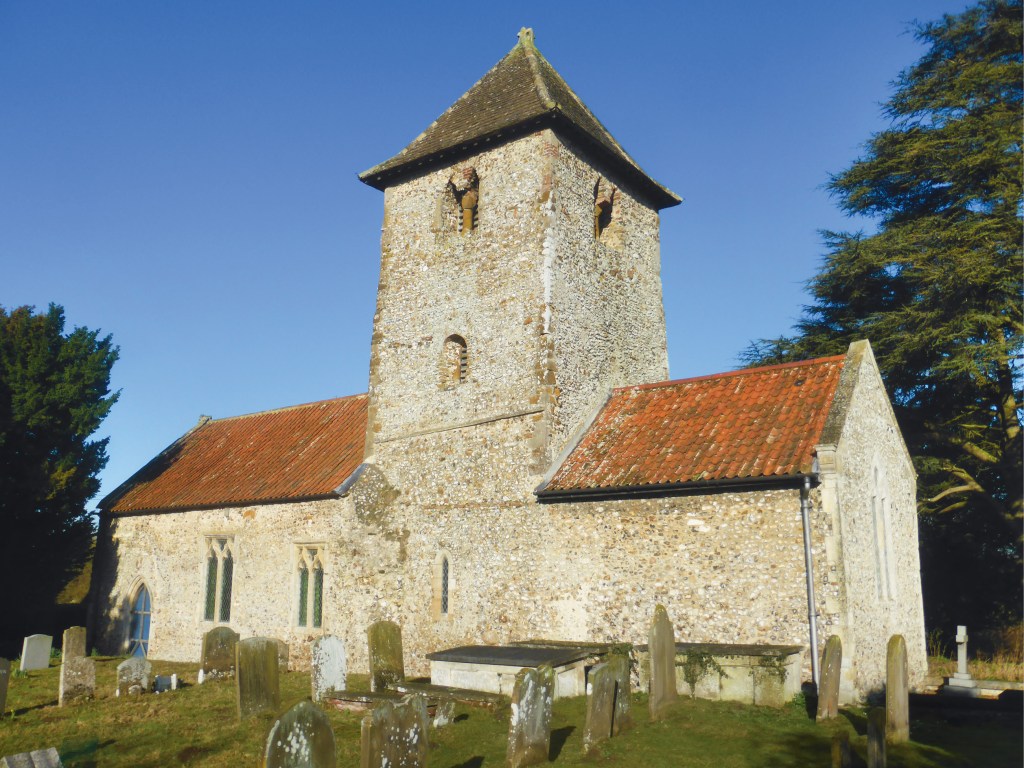
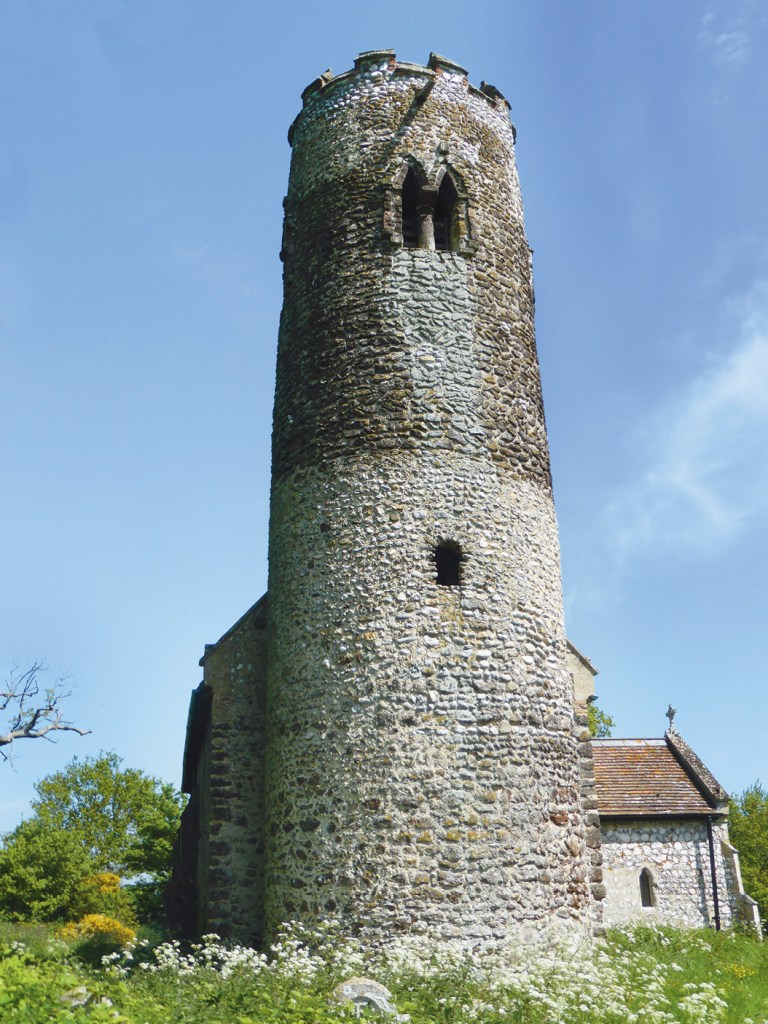
In Norfolk, at least until the oolitic limestone of the quarries at Caen, in Normandy, and Barnack, Lincolnshire, became more readily available and affordable in the later 12th century, stone principally meant flint. Other types of building stone were in short supply in the region, but flint is near ubiquitous, in the form of the bedrock seams interleaved with chalk that were exploited as early as the Neolithic (Grime’s Graves) or as weathered nodules in the topsoil. Early Norman churches, castles, and town walls rely on flint almost exclusively for their construction, laid in courses in deep mortar beds. But, while flint is useful as a bulk walling material, it is less suitable for forming corners (one reason for the number of round towers attached to early East Anglian churches) or for arches, windows, and doorways.

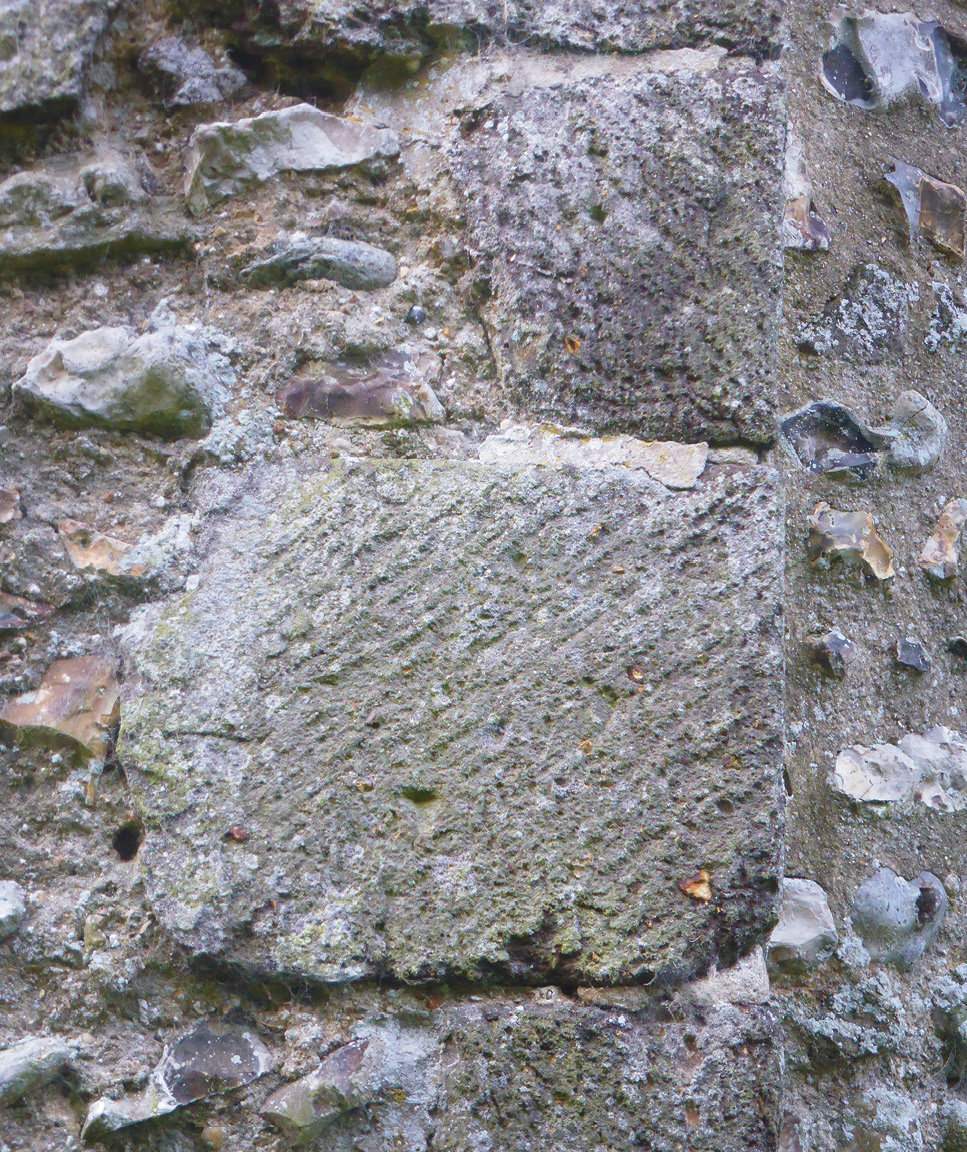
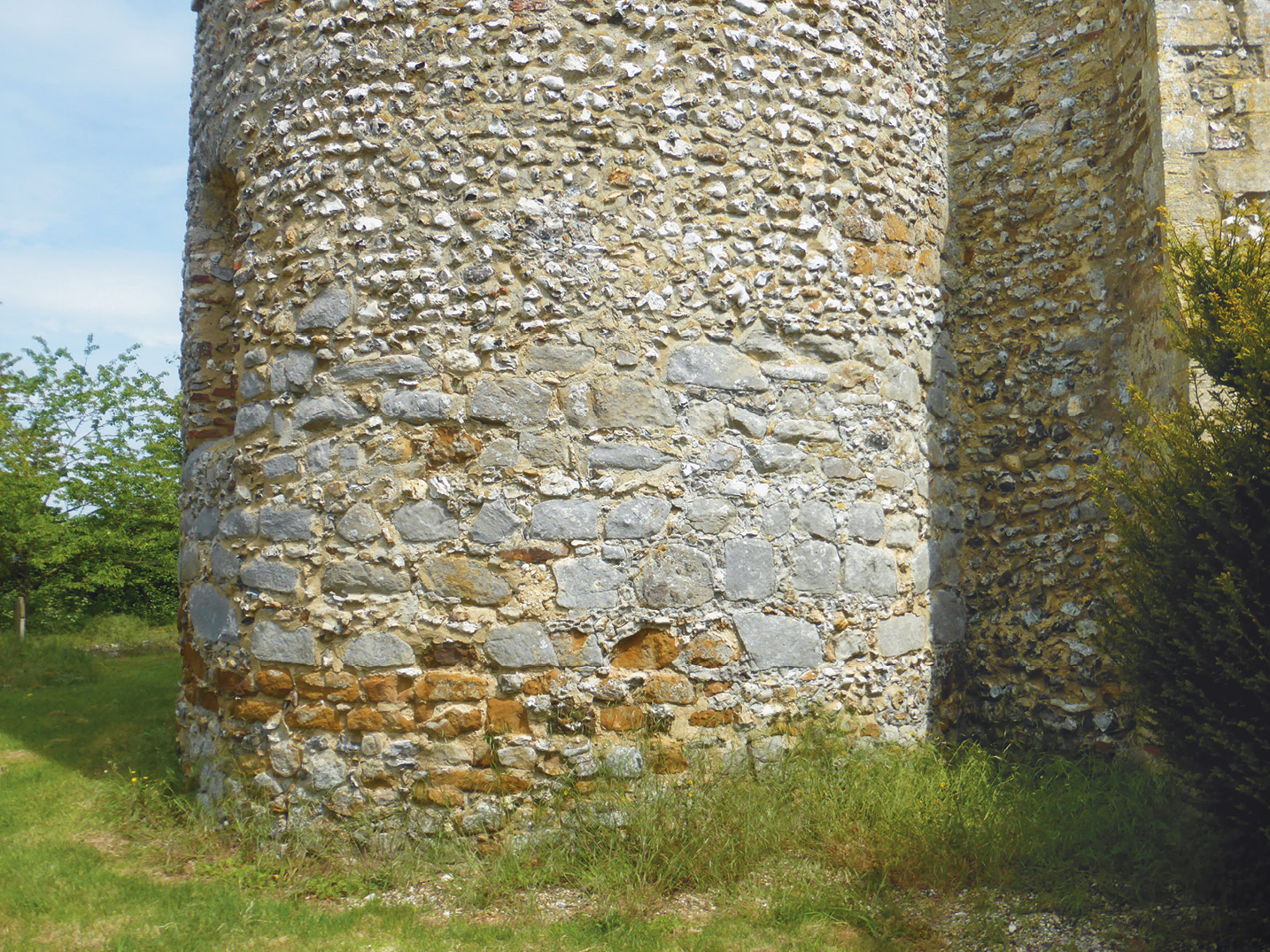
For these more decorative details, early Norman church-builders used a variety of different ferruginous (iron-bound) stones, consisting of glacial gravels and sands cemented together by iron oxide. They vary in colour from light sand and ochre to purple, dark brown, and almost black. Many previous writers on church architecture have lumped all these stones together as ‘Carstone’, though rust-brown Carstone is technically just one variety of what are best described under the general heading of ‘conglomerates’.
A conglomeration of materials
Conglomerates typically occur close to watercourses, in beds up to 1m thick at between 1m and 3m below the surface. When first quarried, they are friable, but they harden as they dry to form a robust building material. Some conglomerates are fine-grained enough to be suitable for carving, while others are more coarse-grained and contain pebbles, which makes them more suitable for shaping into blocks for quoins and voussoirs.
Based on his survey of Norfolk churches, Peter argues that the use of conglomerate is not by itself proof of an early date, because it was also used in later buildings, right up to the Victorian period. However, where it is clearly used as a primary building material, it is a good indicator of early church-building, and therefore of great value to architectural historians.
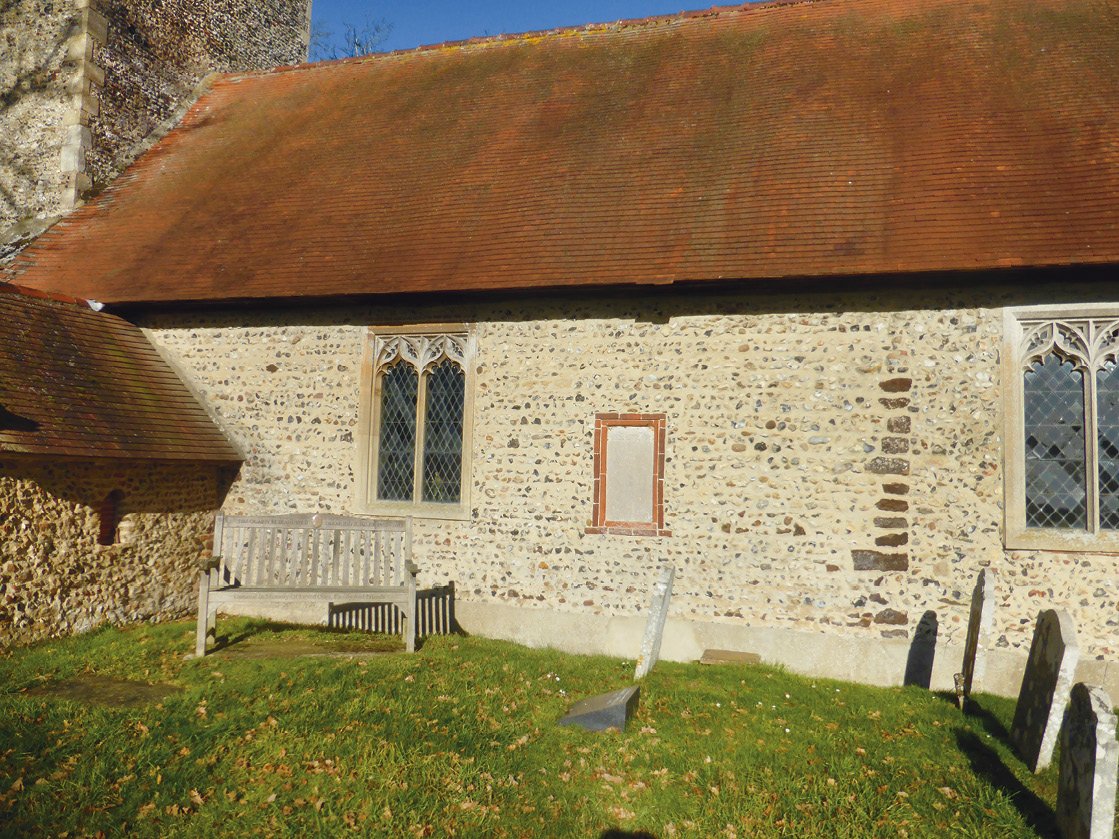
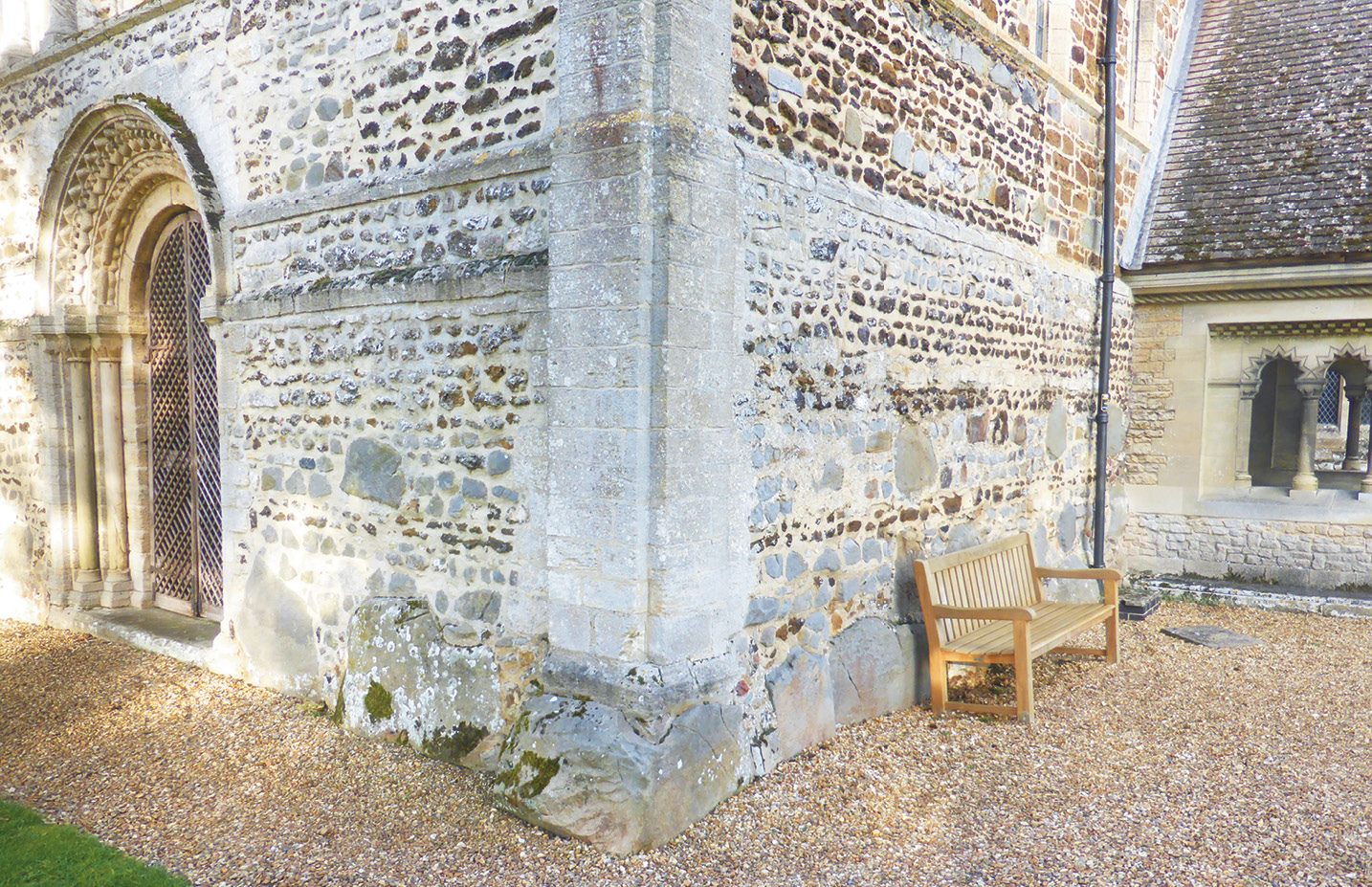
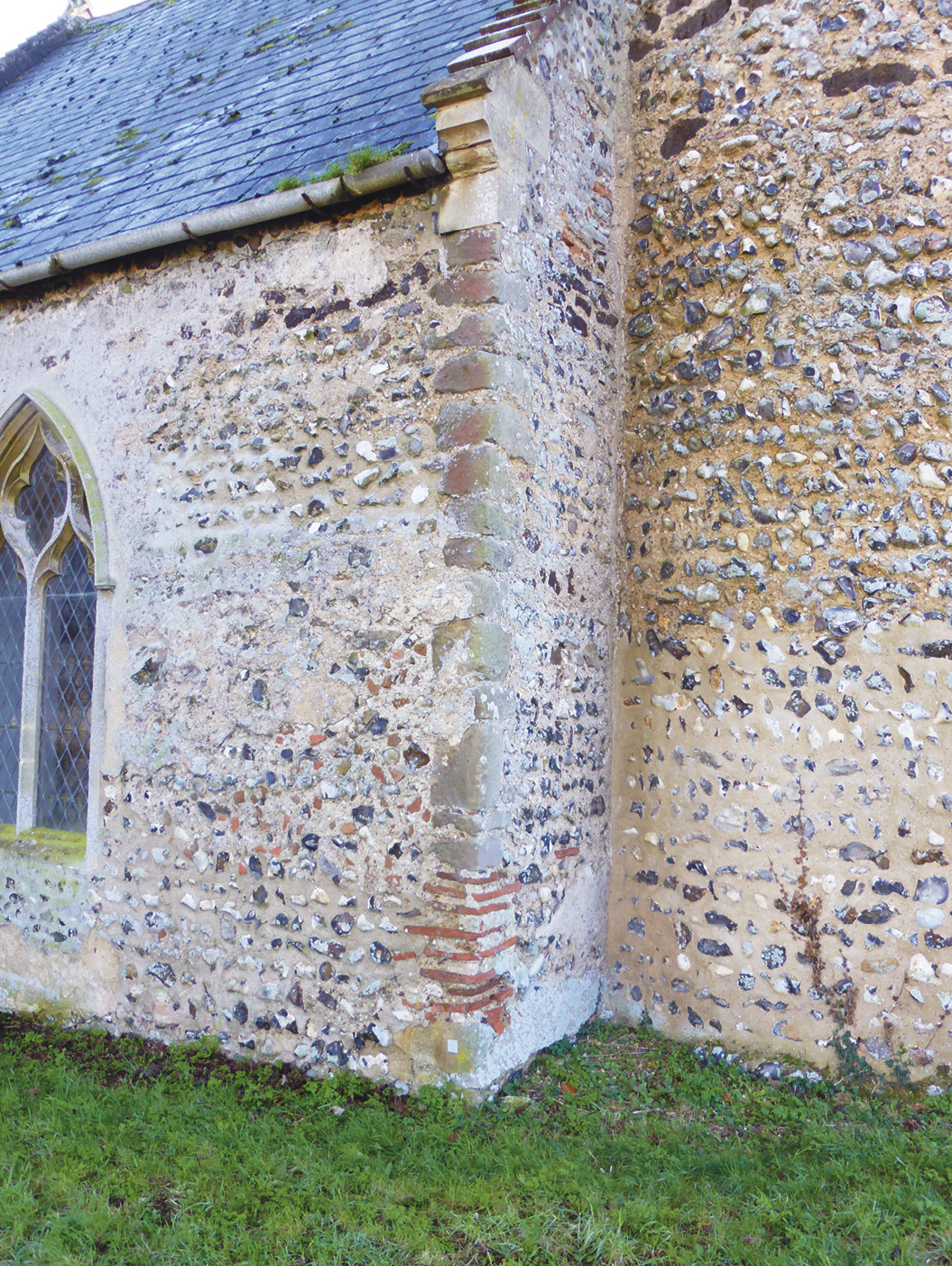
Conglomerate is most commonly used for corner quoins, and the first place to look for blocks of it is the western end of the nave, and especially the north-western corner, because the southern side of a church is often extended and rebuilt with the addition of aisles, chantries, and porches. The northern side, the west nave wall, and the west tower tend not to be altered so much, and are always a good place to start when assessing the early history of any church.
Where bands of conglomerate are seen in early walls, they are often concentrated in the lower levels. Peter interprets this as the result of a delivery of a load of conglomerate to the church site, which is then sorted and the best stone put aside for decorative work, while the rest is mixed in with flint and used up early in the building process. Bands of conglomerate higher in the wall might represent a fresh delivery of stone, or a season’s work – the pace of construction and the height of one season’s walling was dictated by how long it took for mortar to harden.
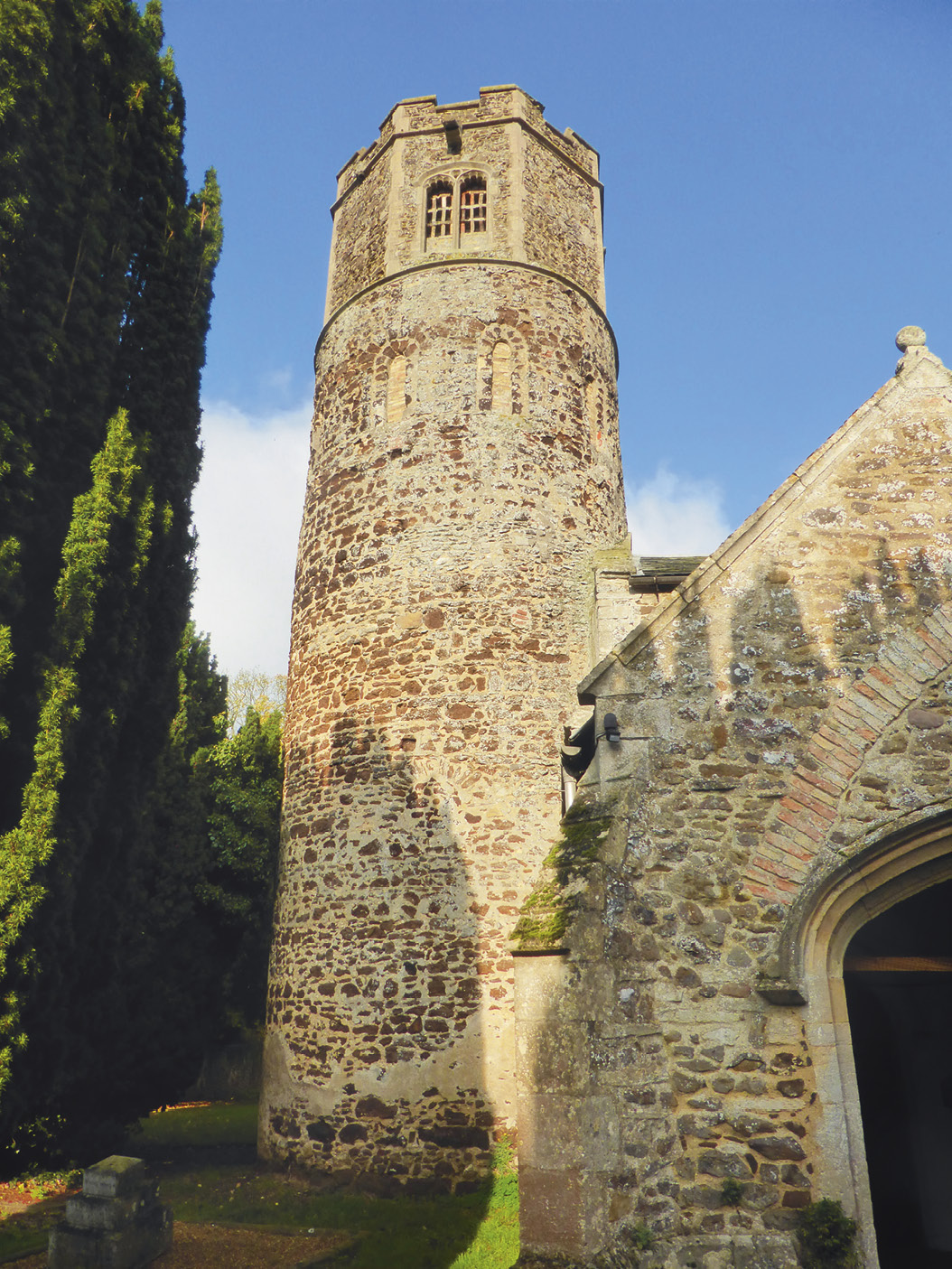
Use of conglomerate is by no means limited to Norfolk. John Potter (‘The London Basin’s Gravel Churches’ in Landscape History, 2001) shows a close correlation between the use of iron-bound gravels in early churches in the Thames Basin and the gravels in the vicinity of each church. The size of the pebble and gravel particles in the conglomerate diminishes as the river flows downstream, with larger particles deposited in the upper reaches and finer grains carried further down. This grading is clearly reflected in the church stonework that Potter studied, which suggests that the stone included in the church fabric was extracted on or close to the church site, probably from shallow pits. Potter also found that 46% of the 166 churches with conglomerate also contained reused Roman brick or tile, another indicator of an early date for these buildings.
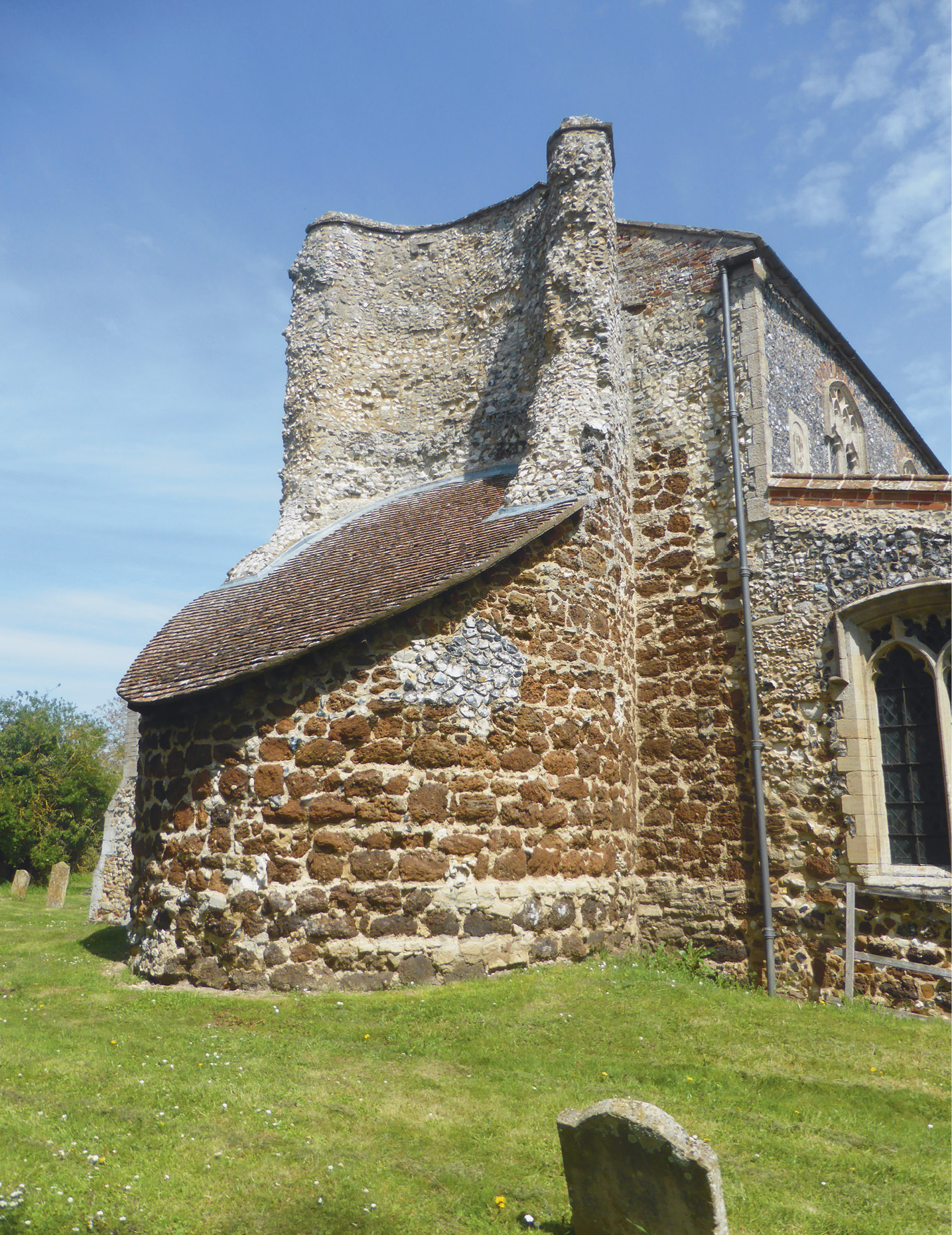
Local quarrying is therefore likely to account for most of the conglomerates used in Norfolk churches. That is the most logical explanation for the distribution map of conglomerate use, where it is much used by churches close to watercourses with river gravels and absent from those churches that are not. Conglomerate was extracted for iron-smelting as well as for building stone and there are archaeologically excavated examples of Saxon ironworking pits on the Cromer Ridge glacial deposits and at Laurel Farm on Mousehold Heath, near Norwich.
Another material occasionally encountered in the rubble of early church walling in Norfolk consists of pieces of broken lava quern. A survey carried out by Andrew Rogerson and others has found quern or millstone fragments in the walling of 425 of the county’s churches. Occasionally, the lava was used for quoins, or for imposts in early belfry windows; in the case of Buckenham, a large lava millstone, 1.1m across, was used to form the threshold of the south door. They are evidence of trade with the medieval Rhineland quarries at Mayen and Niedermendig, and all are distributed within the catchment area for the Great Yarmouth river system.
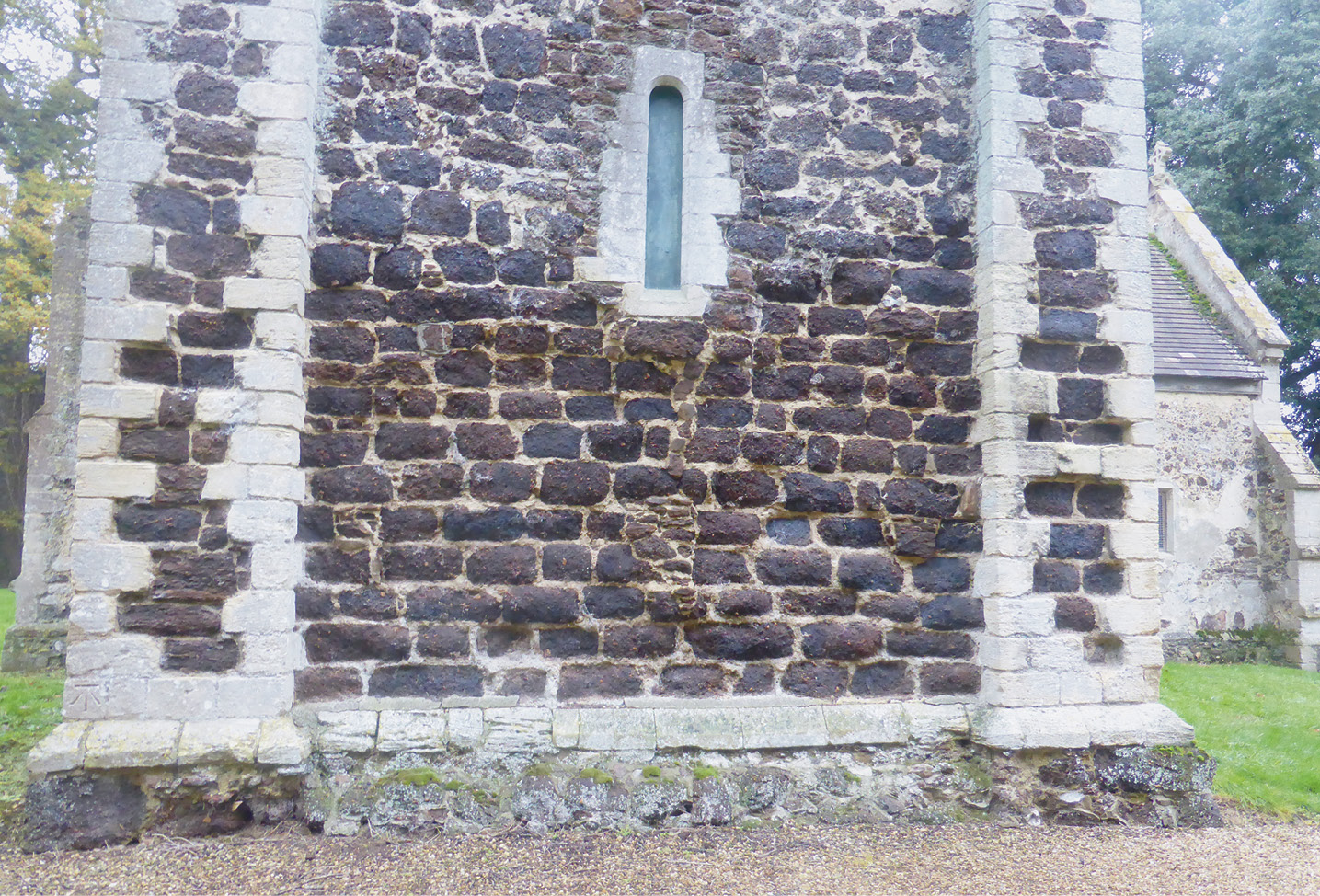
In combining flint, conglomerate, and lava quern, no great effort was made to create an aesthetically pleasing or homogenous wall – stone was mixed according to what was available. The survival of areas of lime plaster at some churches (Little Snoring, Yaxham, and North Elmham, for example) suggests that most stonework was rendered and not intended to be seen. Render also protected the more friable types of conglomerate from weathering.
Reuse of Roman material
Another kind of stone characteristic of early churches is grey quartzite. Twenty churches in and around Castle Rising incorporate this material, and their distribution coincides closely with a group of eight Roman villas stretching in a line from Gayton Thorpe in the south to Snettisham in the north, all close to the Icknield Way prehistoric trackway.
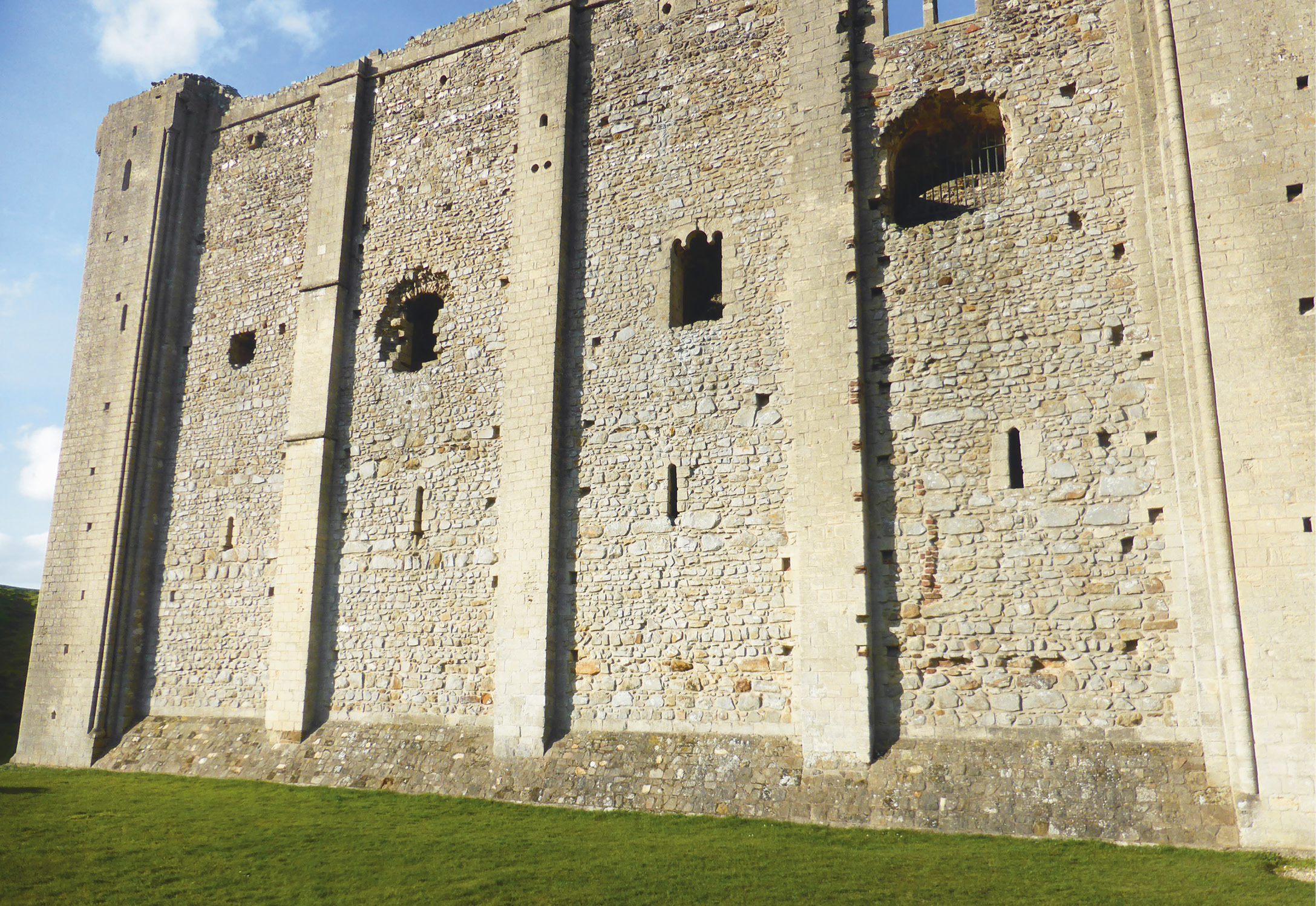
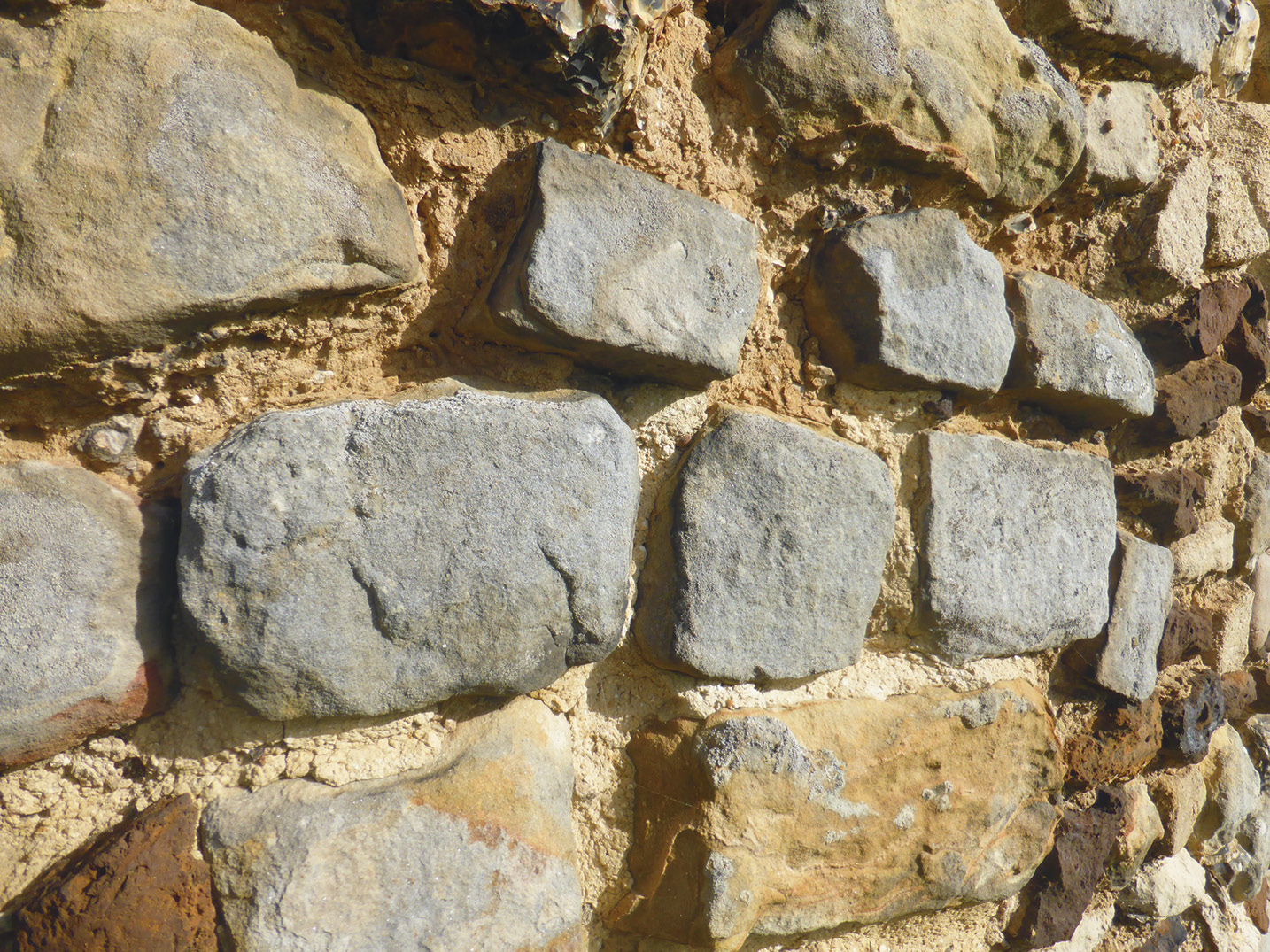
All these villas were partly built of squared or rectangular blocks of grey quartzite; all have been heavily robbed. Given the early medieval preference for building in wood, some villas may well have remained standing as ruins and available as quarries into the 11th and 12th centuries, though few villa walls now survive above foundation level. The use of grey quartzite to construct the churches close to these villas is striking, and in most cases the churches make use of Roman tile too, often with Roman mortar attached.
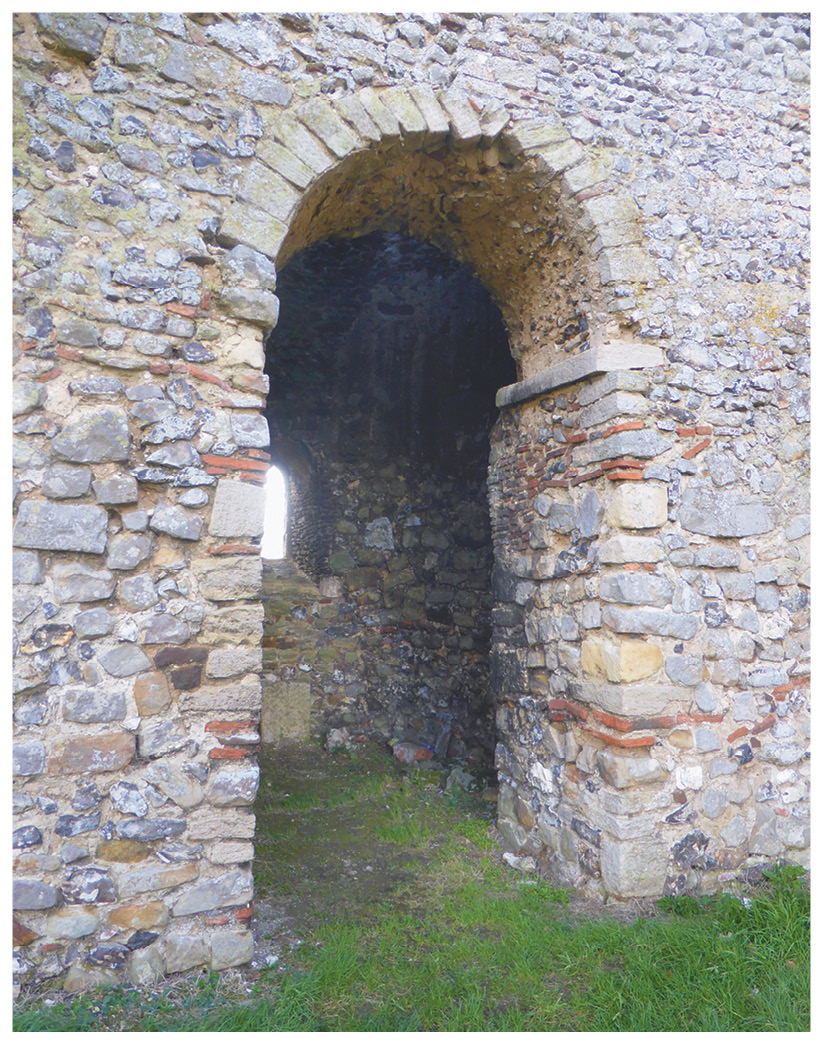
At Appleton, 4.5km north-east of Castle Rising, the round tower of the ruined church incorporates square and rectangular blocks of grey quartzite that are identical to those found at the Denbeck Wood Roman villa, excavated in 1947-1948 and located just 800m to the east of the church. Roman tile is also used in the Appleton tower arch. At Flitcham, 8km east of Castle Rising, grey quartzite is again used in the lower sections of the church tower along with Roman tile, while tile and a lump of Roman opus signinum plaster were used to construct the chancel arch.
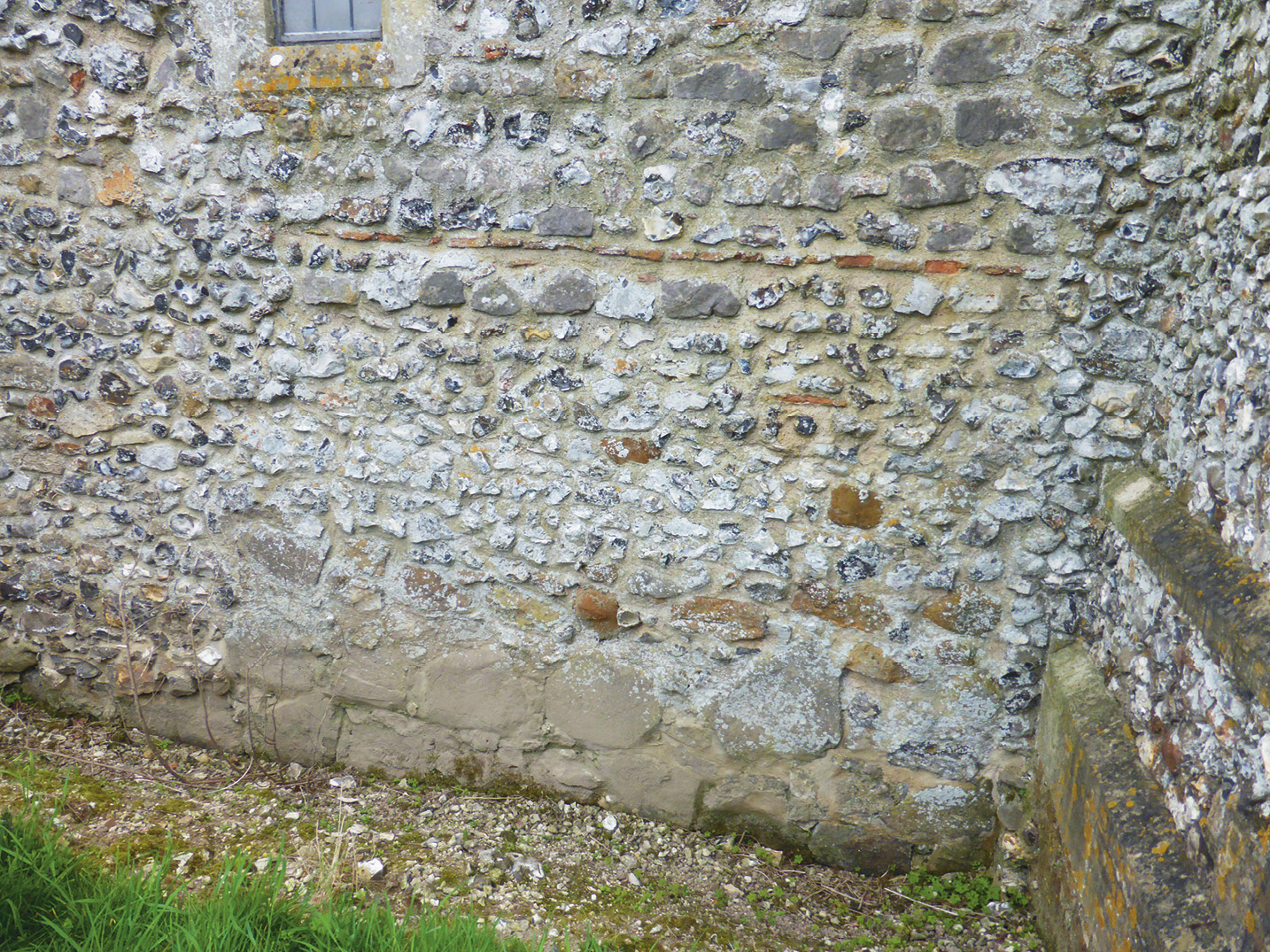
At Castle Rising itself, the partly buried church under the castle ringwork is almost exclusively built of this material, along with pieces of Roman tile, all with Roman mortar adhering to them, and the walls rest on foundations of Roman rubble. Large blocks of grey quartzite, up to 1.5m across, were used for the foundation course of the nave and tower of the parish church of St Lawrence, in Castle Rising village. Peter suggests that the very large blocks used for these two churches came from Roman buildings. By contrast, the same stone was used in smaller blocks to build the castle keep – irregular in shape by contrast with the squared Roman blocks – and these may well have been freshly extracted from quarries that the Romans had exploited, reopened to provide stone for the castle.
Two possible quarry sites have been identified: one at Ling Common, 1.4km south-west of Castle Rising church, consisting of a heavily pitted area of the Sandringham Sands, strewn with pieces of quartzite, plus one large boulder; the other is at White Hills Pit (the name itself is suggestive of a quarry), 3km east of the village. These, or other quarries in the area yet to be identified, seem also to have been the source of the stone used to construct the mid-3rd-century Saxon Shore Fort at Brancaster, some 35km north of Castle Rising, which were then recycled from the fort and incorporated into the fabric of the chancel at Brancaster church; the round tower and belfry windows at Burnham Deepdale; the tower at Titchwell; the south wall of Warham All Saints, and possibly the belfry windows at Weybourne.
Even more distant – some 130km from Castle Rising – is a group of eight churches around Reedham that also use grey quartzite to varying degrees. There is an impressive amount of quartzite in the walling at Reedham church itself, along with much use of Roman tile, laid in herring-bone fashion. Those who have studied the stones say that the similarities between the dressed and squared blocks from Reedham and Brancaster ‘would seem to represent material that expresses a single, Roman, masonic tradition’.
No Roman building has been identified for the Reedham material: the most likely source is a structure known from geophysical survey within the churchyard. Limited trial-trenching has uncovered walls of grey quartzite, mortared flint and Roman brick, but further investigation is hampered by the presence of numerous graves. Whatever building was here must have been important to justify bringing shiploads of stone round the coast and into the estuary of Breydon Water.
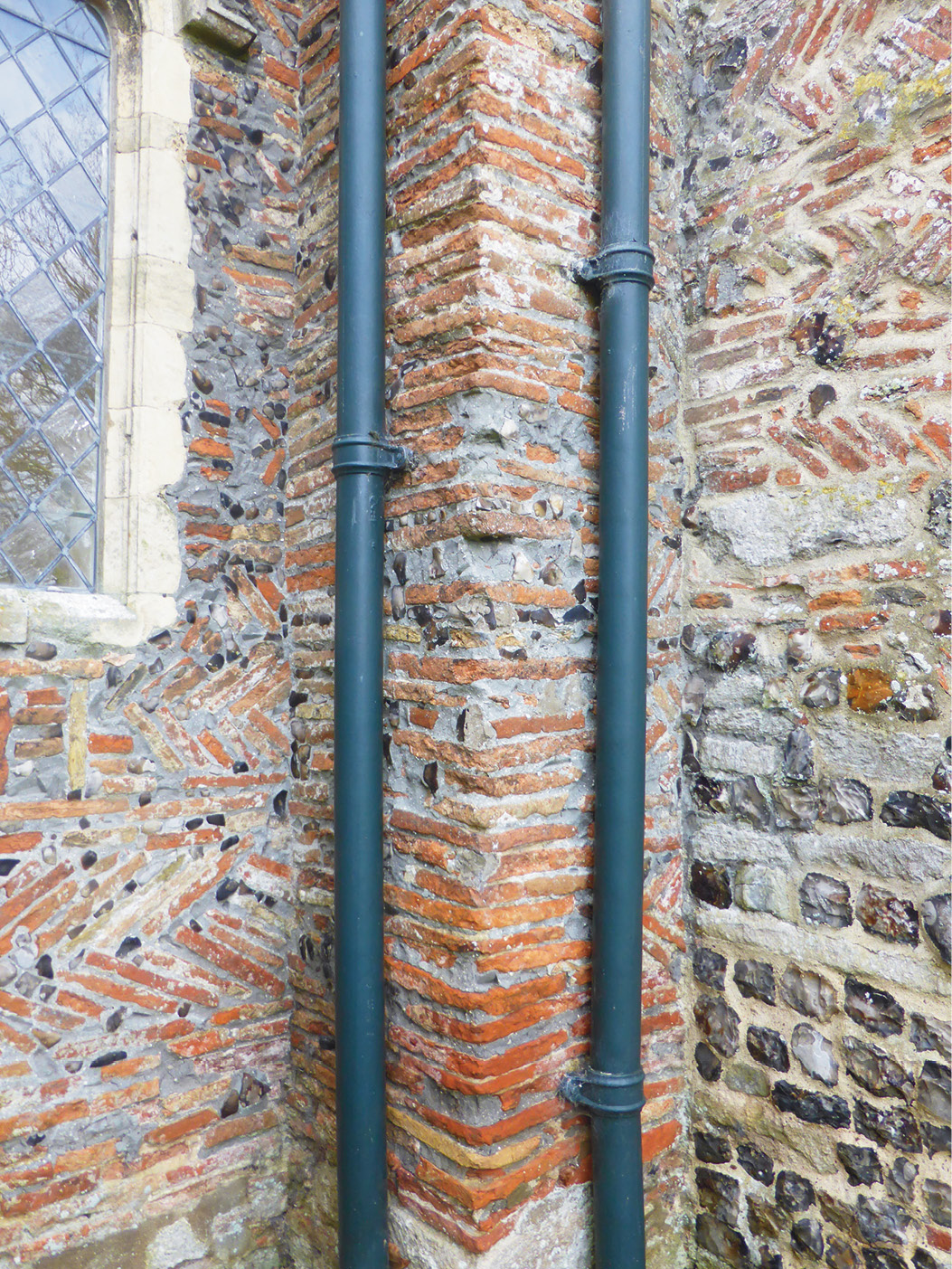
Such journeys were not unusual during the Roman period, as evidenced by the use of millstone grit to form the quoins of the north-western corner of St Peter’s church, Brampton, close to the Romano-British small town whose 140 kilns produced Brampton ware and Black Burnished ware in the 2nd and 3rd centuries AD. Millstone grit, from which much of Roman York was built, comes from the east Yorkshire Pennines, and it might well have reached inland Norfolk in the form of ballast in boats that were carrying cargos of wheat and pottery north to the army on Hadrian’s Wall.
Roman tile
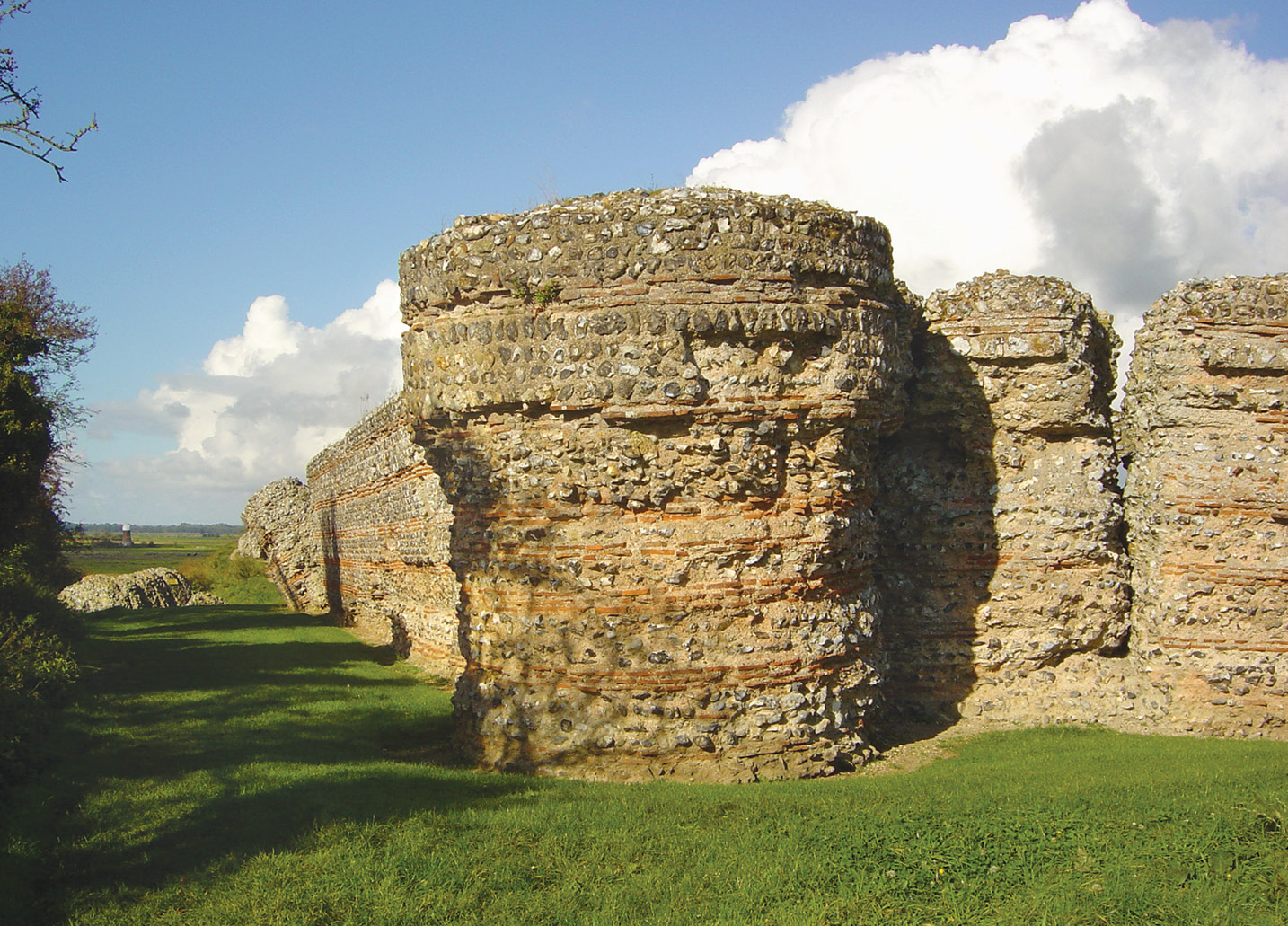
Roman tile was widely used in early medieval stone churches all over Norfolk to form arches, doorways, windows, and blind arcading. These construction materials were then disguised beneath a plaster coating and are sometimes only revealed when the plaster falls off (as at Houghton-on-the-Hill). Most commonly these were large flat tiles, originally used to support the raised floors of a hypocaust heating system, or as wall-bonding tiles in Roman structures, such as the bastions of Burgh Castle Roman fort. More rarely, Roman roof tiles are found embedded in medieval masonry, including pieces of tegula – a flat tile with upturned edges – and imbrex – the curved tile used to cover the gaps between two adjoining tegulae.
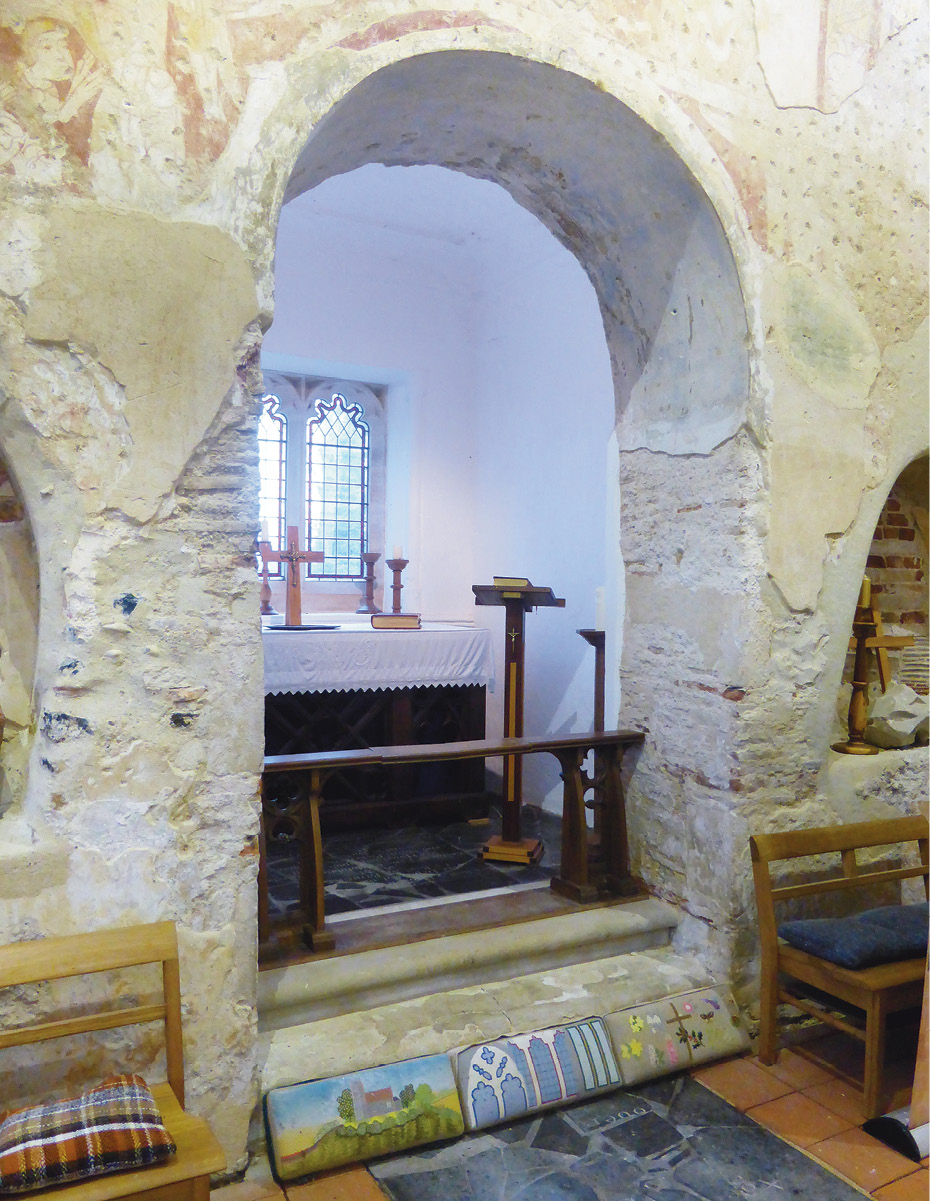
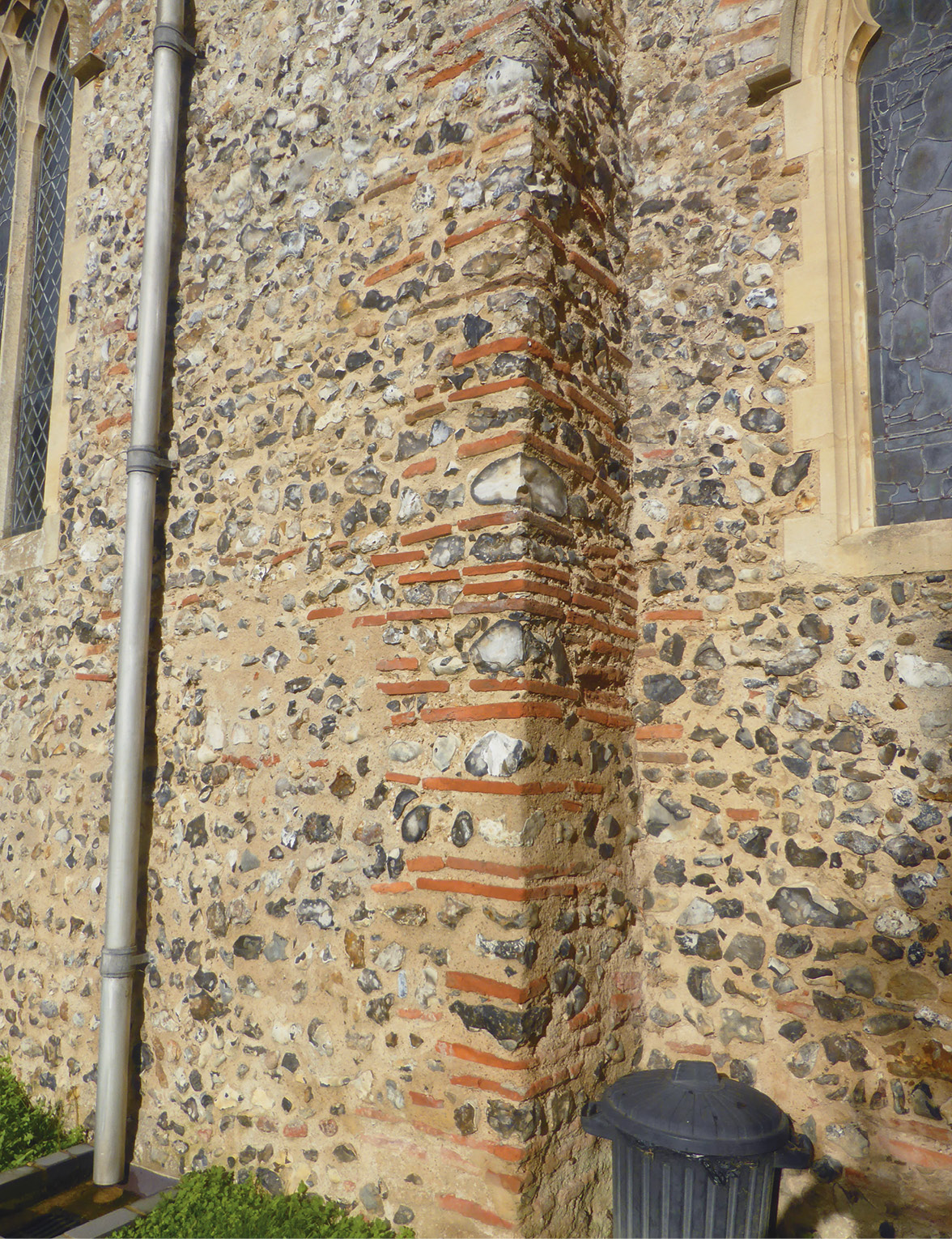
The best examples of Roman tile reuse in church-building is at Oxnead, close to Brampton, where they were used to form the south-western corner of the nave, and at Reedham where, as already mentioned, they form decorative herring-bone walling, as well as making up the north-eastern corner of the nave.
Roman tiles are typically 25mm to 40mm thick and up to 380mm wide, and so are quite distinct from medieval bricks, which are typically 40mm to 50mm thick, shorter, less well-fired, and often slightly twisted or fractured. On the other hand, 19th-century floor tiles, known as ‘pamments’ in Norfolk, can resemble Roman tiles, though they usually have crisper edges.
Peter’s overall conclusion is that context is all: Roman tile and conglomerate are strong indicators in Norfolk of an 11th- or 12th-century stone church, especially where they are used together in an undisturbed wall, but church-builders throughout the ages have recycled rubble in later rebuilding, including Victorian restorations, so care is needed when analysing church fabric. Even so, the results of Peter’s survey show that there are many early church buildings in Norfolk that have not been recognised as such and that the geology of building stones is potentially as useful a tool for archaeologists and architectural historians as the style of columns, capitals, arcades, mouldings, and window tracery.
Further reading: Peter Wade-Martins (2024) In Search of Norfolk’s First Stone Churches (BAR British Series 683, ISBN 978-1407361390, £52).
All images: Peter Wade-Martins