
Subscribe now for full access and no adverts
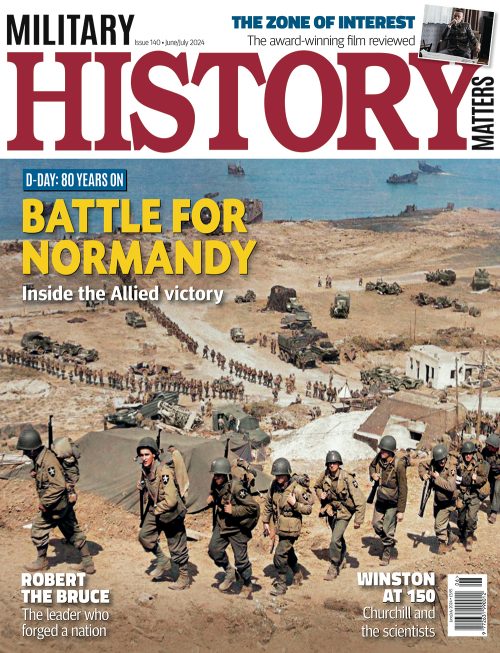
In the last issue of MHM, in the first of two special editions to mark the 80th anniversary of D-Day on 6 June 1944, we looked at some of the factors which would determine the operation’s success — from the brilliant Allied deception plan, which left Hitler unsure where an attack would come, to the flawed ‘Atlantic Wall’, which left German troops poorly placed to resist the greatest amphibious invasion force in history.
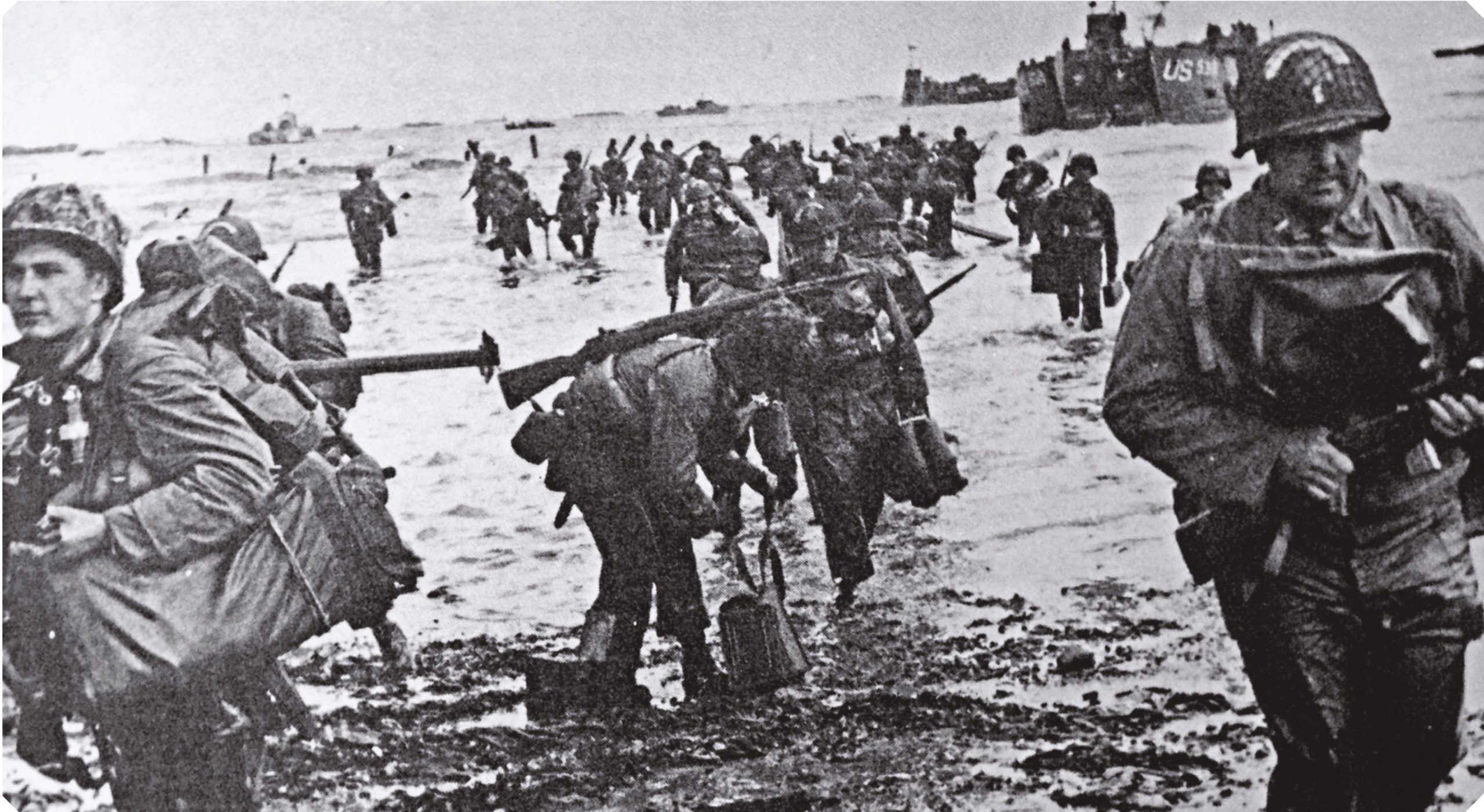
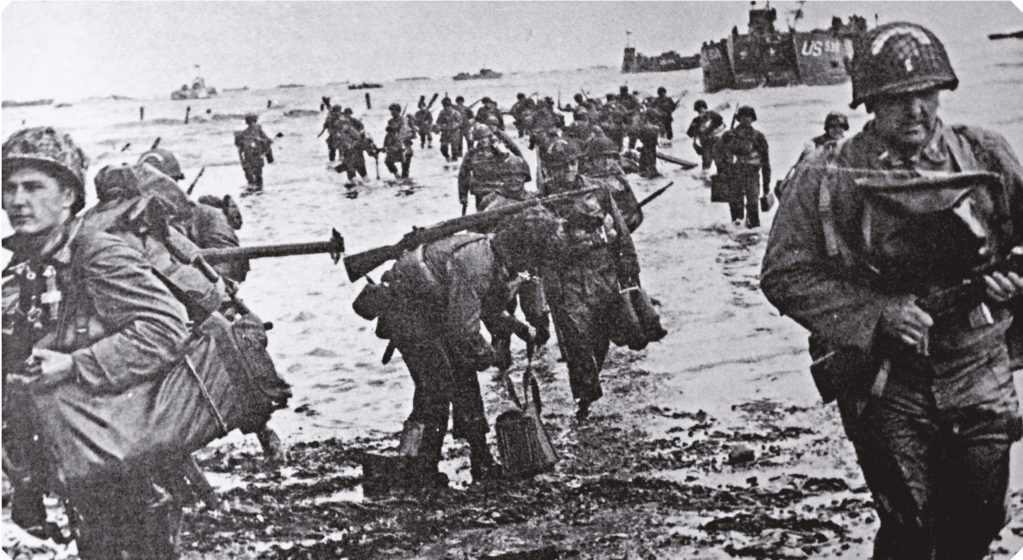
This time, we look in more detail at the landings themselves. First, we examine Allied preparations to deposit around 150,000 troops along a 50-mile stretch of Normandy coastline. David Porter reveals the mind-boggling feat of logistics required to dovetail land, sea, and air forces, and to keep an army that would soon swell to more than two million men fed, fuelled, armed, and equipped on the road to Paris.
Next, we focus in more closely, to understand what it was like for the ordinary soldiers who took part in Operation Overlord. In the second part of our special for this issue, Patrick Mercer reads diaries and personal accounts written by members of three British units — some of whom would be among the thousands to die during the initial landings or amid the meadows and hedges of northern France.
Finally, we look at what happened next. In the first of a regular new series of infographics, Calum Henderson traces the extraordinary events and hard-fought battles that would take the Allies from the beaches of Normandy to the liberation of Paris.
Planning for victory
‘The more I see of war, the more I realise how much it all depends on administration and transportation… It takes little skill or imagination to see where you would like your forces to be and when; it takes much knowledge and hard work to know where you can place your forces and whether you can maintain them there.’
Field Marshal Earl Wavell
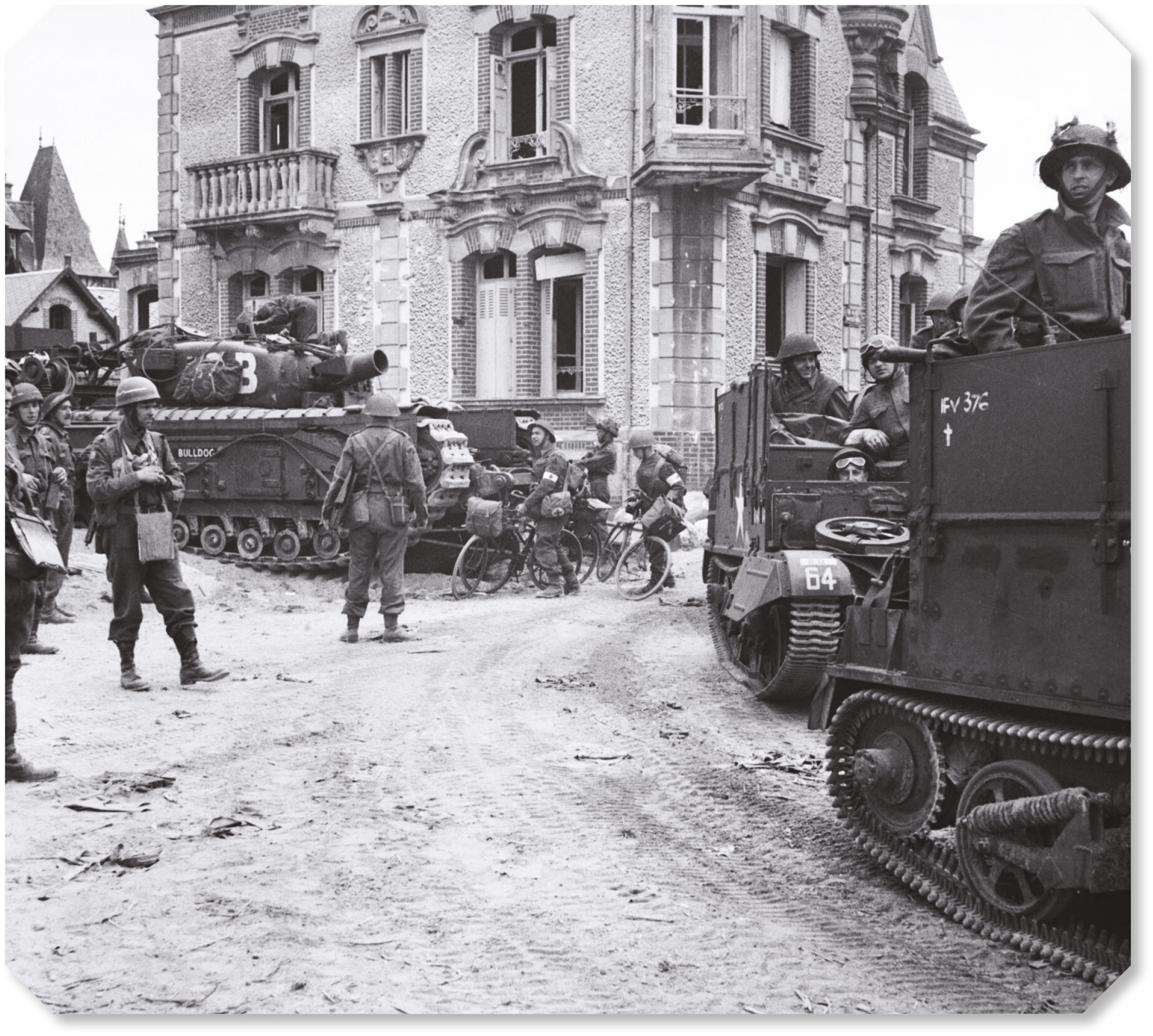
Serious planning for the Allied invasion of Europe (Operation Overlord) began on 12 April 1943, when Lieutenant General Sir Frederick Morgan was appointed Chief of Staff to the Supreme Allied Commander (COSSAC) pending SAC’s appointment. His options were severely limited by several factors, the most important of which were:
• Geography and meteorology: landings had to be made within the range of UK-based fighter cover over suitable beaches, which restricted the options to Normandy or the Pas de Calais. Morgan selected Normandy as the Pas de Calais was already heavily fortified and its garrison was steadily being reinforced. Tidal and weather conditions imposed further constraints. The assault landings had to be made on a rising tide to avoid the increasingly formidable beach defences along the high-water mark, while good weather was essential to allow the Allies to exploit their overwhelming air superiority.
• The limited assault forces initially assigned to the landings (three divisions).
• Shipping: the number of landing craft available was a constant headache for the planning staffs, especially after the decision to dramatically increase the scale of the landings. By April 1943, 8,719 had been built, ranging from landing ships of more than 4,000 tons capable of carrying 18 tanks – officially Landing Ships Tank, LS(T) – to small 13-ton landing craft that could carry 36 men. Over the following year, another 21,500 of all types were completed in American shipyards. It was an extraordinary feat of shipbuilding, but it proved to be only just sufficient to meet requirements.
• Air support: the ‘bomber barons’ of the RAF and USAAF were strongly opposed to diverting their heavy bombers from the strategic bombing of Germany.
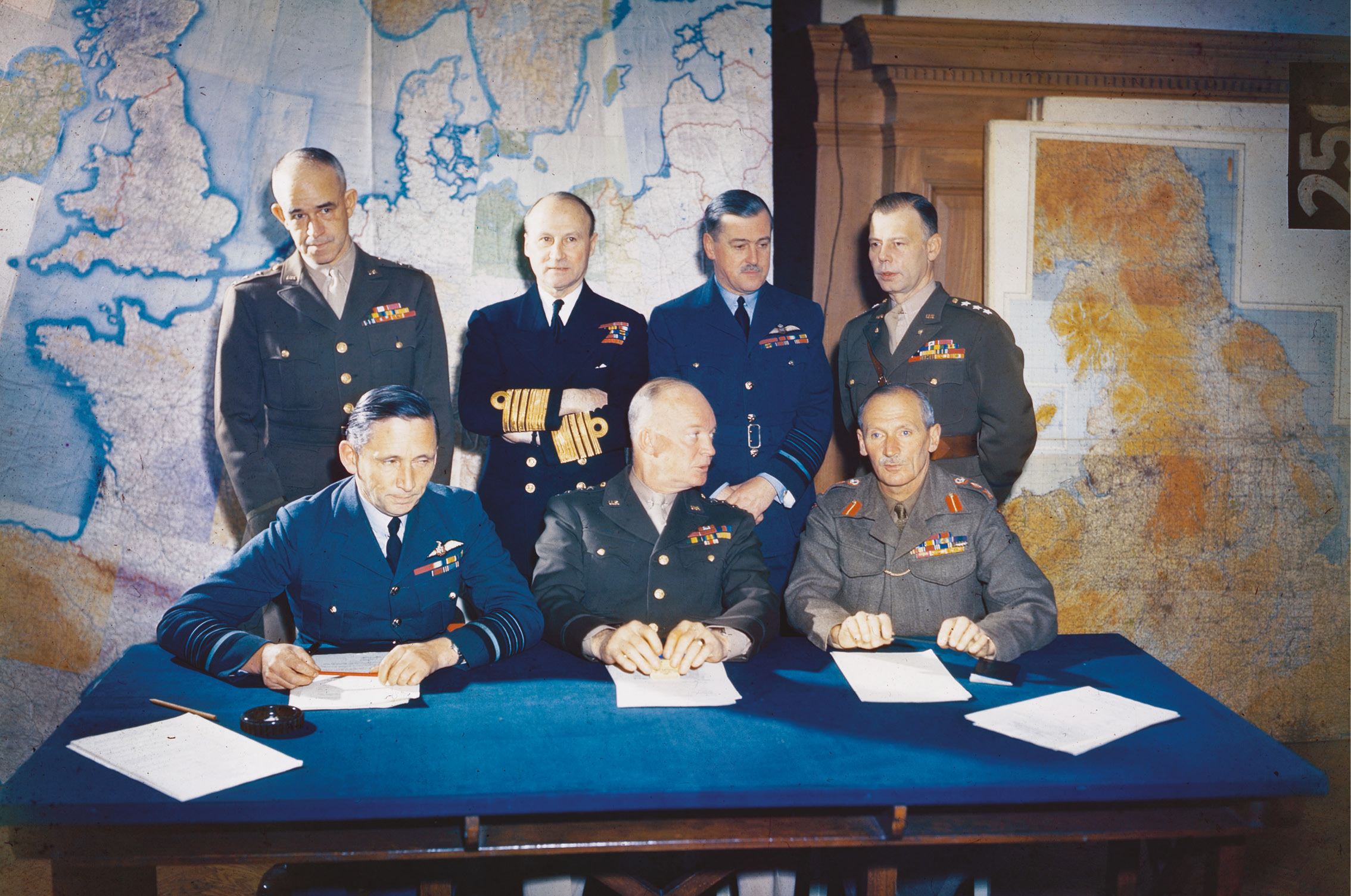
In December 1943, the post of COSSAC was abolished with the establishment of the Supreme Headquarters Allied Expeditionary Force (SHAEF). General Dwight D Eisenhower was appointed Supreme Allied Commander (SAC) with General Montgomery as his land forces commander, heading a staff that eventually grew to 6,750 officers and men. They were granted greater authority, which was vital in forcing through key elements of the final plans, especially the strengthening of the assault forces and air support. While they both agreed that the landings had to be made in Normandy, they insisted that the proposed three-division assault was dangerously weak and would be far too vulnerable to German counter-attacks. The logic of their case was irrefutable, and it was eventually accepted that eight divisions (including three airborne) would be essential.
Air support and bombing
The question of heavy bomber support for the invasion was much harder to resolve: it took months of intense pressure from Eisenhower to force RAF Bomber Command and the USAAF to agree to the Transportation Plan – a programme of attacks on the road and rail network supplying German forces in France. By D-Day, some 76,200 tons of bombs had been dropped on bridges, marshalling yards, and rail junctions, dramatically reducing the German capacity to supply and reinforce their units in Normandy. All bridges along the Seine from Rouen to Mantes-Gassicourt were destroyed before D-Day, and on 26 May all routes across the Seine north of Paris were closed to rail traffic and remained closed for the next month. A German Air Ministry report of 13 June 1944 stated that: ‘The raids… have caused the breakdown of all main lines; the coast defences have been cut off from the supply bases in the interior… producing a situation which threatens to have serious consequences.’ It added: ‘Large-scale strategic movement of troops by rail is practically impossible at the present time and must remain so while attacks are maintained at their present intensity.’
The bombing was supplemented by French Resistance attacks on the rail system, which destroyed or damaged 808 locomotives compared to the 387 claimed by the RAF and USAAF in the first three months of 1944. Between April and June 1944, the Resistance disabled 292 locomotives compared to 1,437 hit in air raids. During the six days following the D-Day landings, a total of around 5,000 German military trains were trapped somewhere along their routes due to damage caused by bombing or Resistance attacks.
By mid-1944, Allied air supremacy was so complete that the Luftwaffe was unable to mount effective reconnaissance sorties or offer any significant resistance to the pre-invasion air raids. The RAF and USAAF deployed almost 6,500 combat aircraft against the 481 operational aircraft of Luftflotte 3, only 100 of which were fighters. Although a further 670 Luftwaffe aircraft were flown in as reinforcements immediately after D-Day, they were quickly swamped by Allied fighters.

Naval support
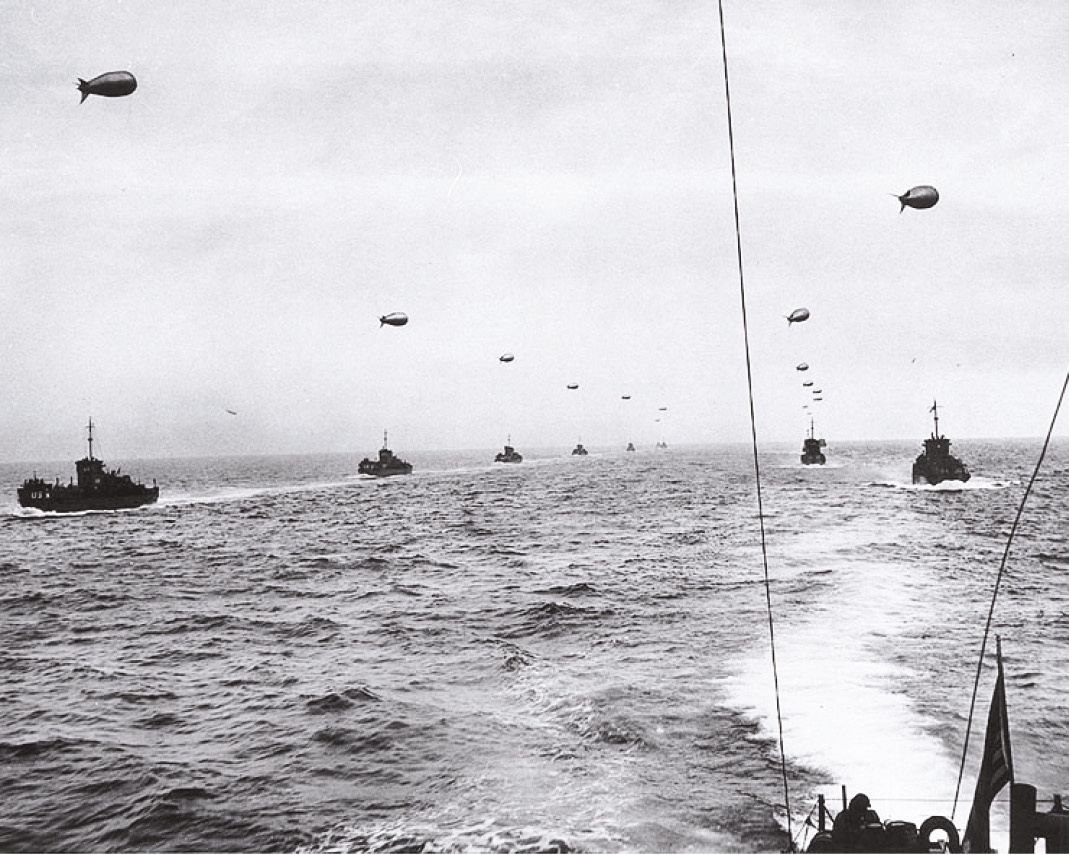
SHAEF’s expansion of the scale of the invasion increased the requirement for naval support, which finally totalled 1,200 naval vessels, including seven battleships and 23 cruisers. As D-Day approached, Allied minelaying was intensified, with a total of 7,000 mines laid in May and early June. The majority of these were laid between the Dutch port of IJmuiden and Brest in Brittany, sinking four merchant vessels, 14 minesweepers and a tug, as well as damaging five merchantmen, 22 minesweepers, and patrol craft, plus a torpedo boat and a U-boat. The damage inflicted and the disruption caused badly affected the Kriegsmarine’s freedom of action: German forces were rarely able to attack the vast array of targets presented by the build-up of invasion craft and were also prevented from completing their scheduled defensive minelaying programme. Just how effective such attacks could be was demonstrated during the night of 27-28 April 1944, when nine German S-boats from Cherbourg attacked an inadequately escorted convoy of American LS(T)s taking part in an invasion exercise and sank two of them with the loss of almost 1,000 troops.
Intelligence input
Intelligence was arguably the most challenging of SHAEF’s responsibilities. Superficially, it seemed that the Allies held all the advantages: their air supremacy meant that reconnaissance aircraft could produce detailed photographs of German defences and troop concentrations all along the ‘invasion coast’; and by 1943-1944, Bletchley Park’s cryptanalysts had broken the German Enigma and Lorenz codes, allowing almost all enemy radio traffic to be read within hours. However, these capabilities were not a ‘silver bullet’ – the landings on Omaha Beach almost ended in disaster as Allied intelligence was unaware that the low-grade 716th Infantry Division defending the sector had been heavily reinforced by elements of the far more formidable 352nd Infantry Division. (The 352nd had been formed in France in November 1943 from the remnants of the 268th, 321st, and 389th Infantry Divisions, all of which were veteran formations with long service on the Eastern Front.)
Even the effect of the Allied codebreaking capability was limited by the fact that the Germans had had four years to establish a secure military telephone and teleprinter network throughout occupied France. Encoded signals traffic sent over these systems was virtually immune to interception, and a special programme of Resistance attacks (Plan Violet) was devised which badly disrupted the network, forcing the Germans to use far less secure radios.
Security concerns
Security was a constant headache for SHAEF: the slightest lapse could potentially com-promise the entire Overlord operation. The most sensitive material was given a special security classification of ‘BIGOT’ (British Invasion of German Occupied Territory) and was issued on a strict need-to-know basis. Everyone with knowledge of aspects of the D-Day planning work, which included the landing beaches and the date of the invasion, were security cleared and were included on what was known as the ‘BIGOT list’. All those on the list were banned from travelling outside the UK in case they were captured and coerced into talking. However, even these precautions were not infallible, and one scare was caused by Major General Henry Miller, commanding the US 9th Air Force Service Command in Britain. On 18 April 1944, he attended a dinner party in the restaurant at the London hotel Claridge’s, where he casually mentioned that the invasion would begin before 15 June 1944. As soon as details of the incident were confirmed, General Eisenhower (who had been in Miller’s class at West Point) ordered his dismissal from his post. Demoted to Lieutenant Colonel, he was posted back to the United States.
Coming only ten days after Miller’s indiscretion, the security implications of the S-boat attack on the American LS(T) convoy (see ‘Naval support’ above) were potentially even more serious, as ten of the officers initially reported missing were on the BIGOT list. The fear that at least some of them had been captured prompted a massive search operation, which was only called off after the bodies of all ten were recovered.
Hobart’s funnies
The unsuccessful Dieppe raid of August 1942 had convinced British planners that specialised armoured fighting vehicles (AFVs) would be needed to break through the sophisticated German defences likely to be encountered along the Channel coast and further inland. From March 1943, Major General Percy Hobart’s 79th Armoured Division began conversion to an armoured engineer formation equipped with a variety of vehicles which soon became known as ‘Funnies’. These included:
• The Duplex Drive (DD) amphibious Sherman tank, equipped with a collapsible flotation screen and twin propellers.
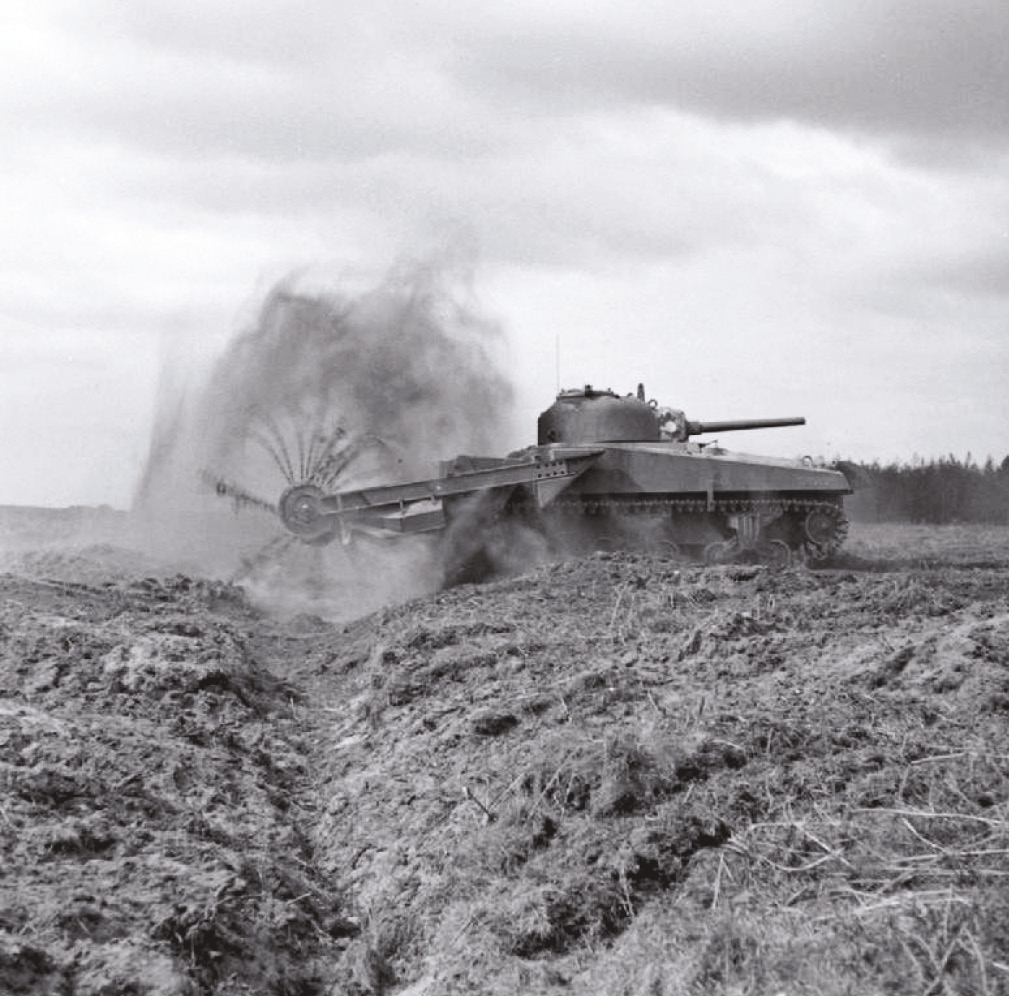
• The Sherman Crab: a Sherman carrying a rotating drum fitted with 43 heavy chains ending in fist-sized steel balls (flails). The drum was powered by the tank’s engine and rotated at 142rpm, the flails beating the ground to detonate any anti-tank or anti-personnel mines. (Rommel had planned to lay up to 100,000,000 mines along the Channel coast – the final total was ‘only’ 6,000,000, but they were highly effective in slowing the Allied advance and inflicted significant casualties.)
• The Churchill Armoured Vehicle Royal Engineers (AVRE): a heavily modified Churchill III or IV tank armed with the Petard, a 29mm spigot mortar, firing an 18kg (40lb) ‘Flying Dustbin’ demolition bomb.
• The Churchill Crocodile: a Churchill VII with the hull machine-gun replaced by a flamethrower fed with fuel from an armoured trailer.
Detachments from 79th Armoured Division were in constant demand to support Allied forces from D-Day until the end of the war, and greatly reduced the casualties incurred in assaulting German defences.
Logistical demands
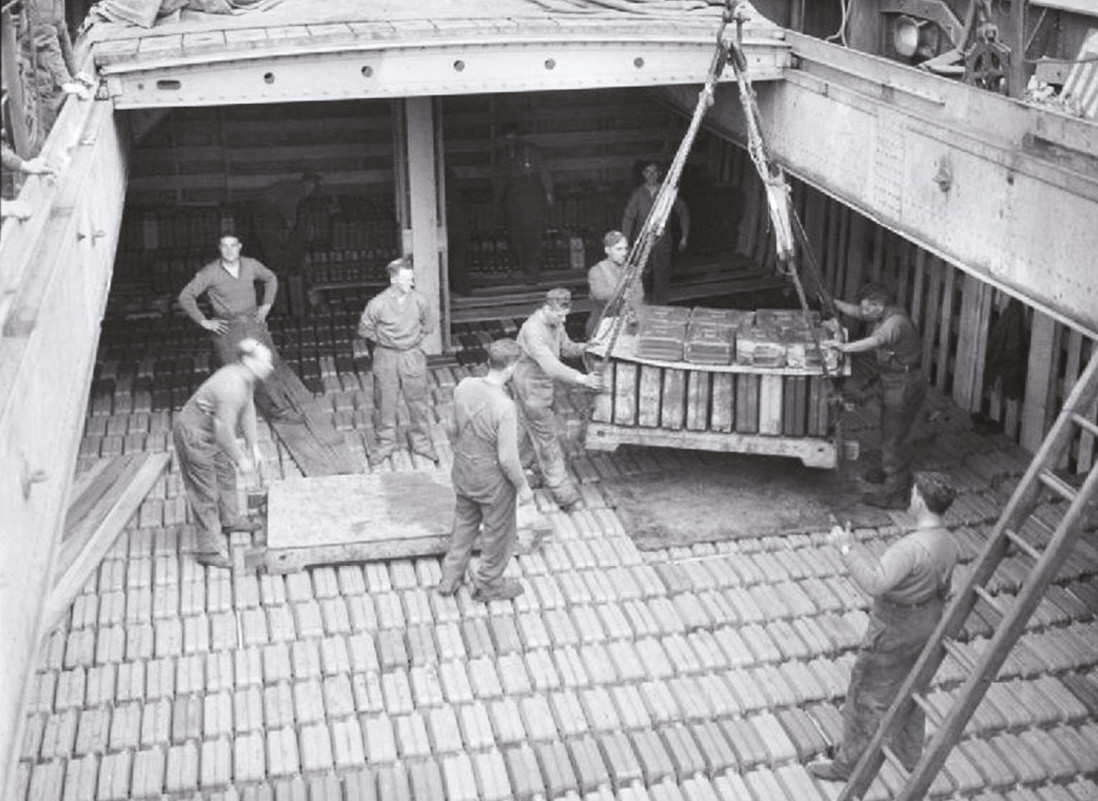
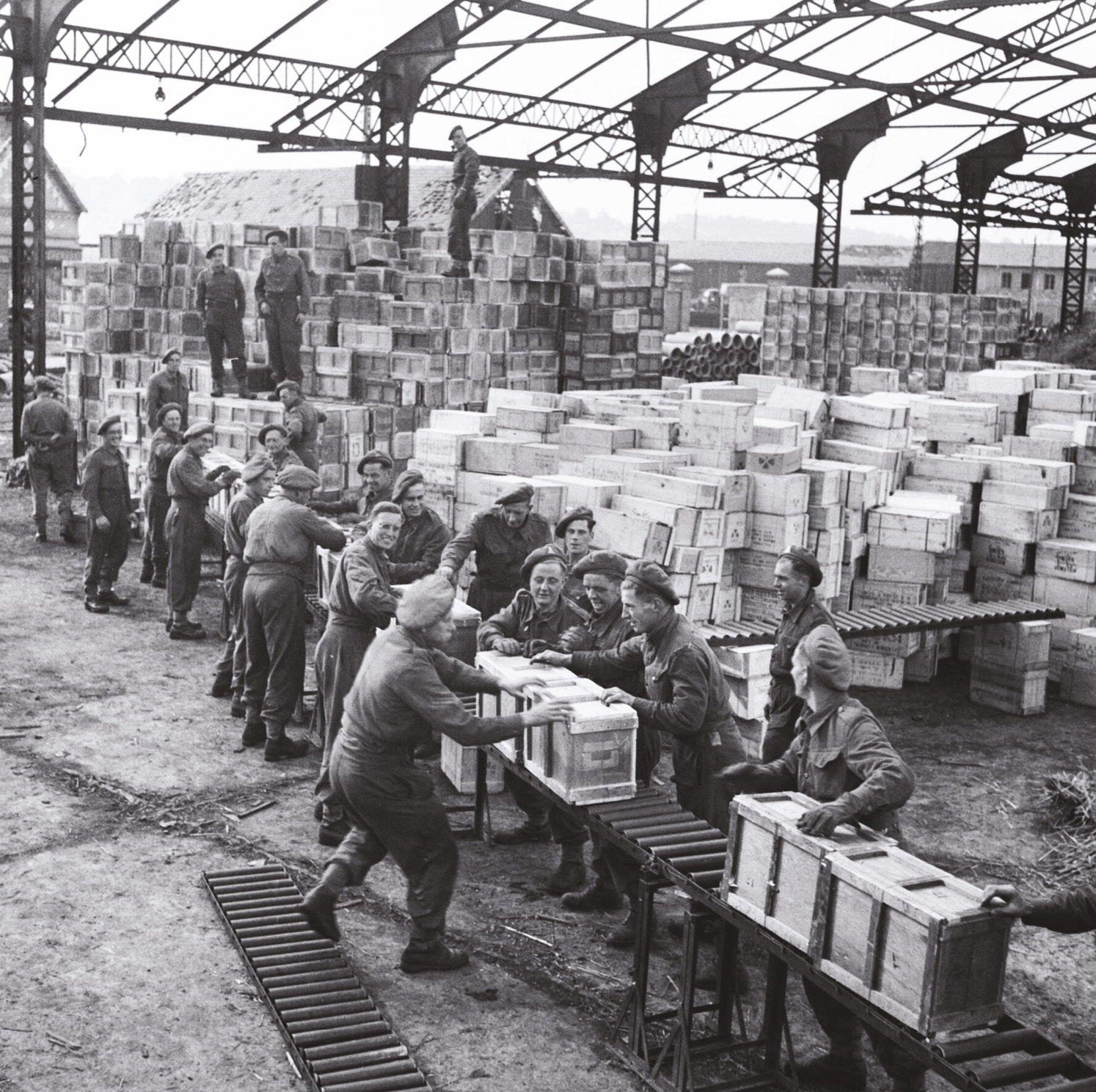
Logistics (transportation and supply) systems supporting the 156,000 men of the assault forces, and more than 1,350,000 reinforcements scheduled to land by 25 July, were crucial for the success of Overlord. The most basic items were needed in vast quantities: 7,500,000 British 24-hour ration packs were stockpiled, for instance, along with 60,000,000 assorted US ration packs.
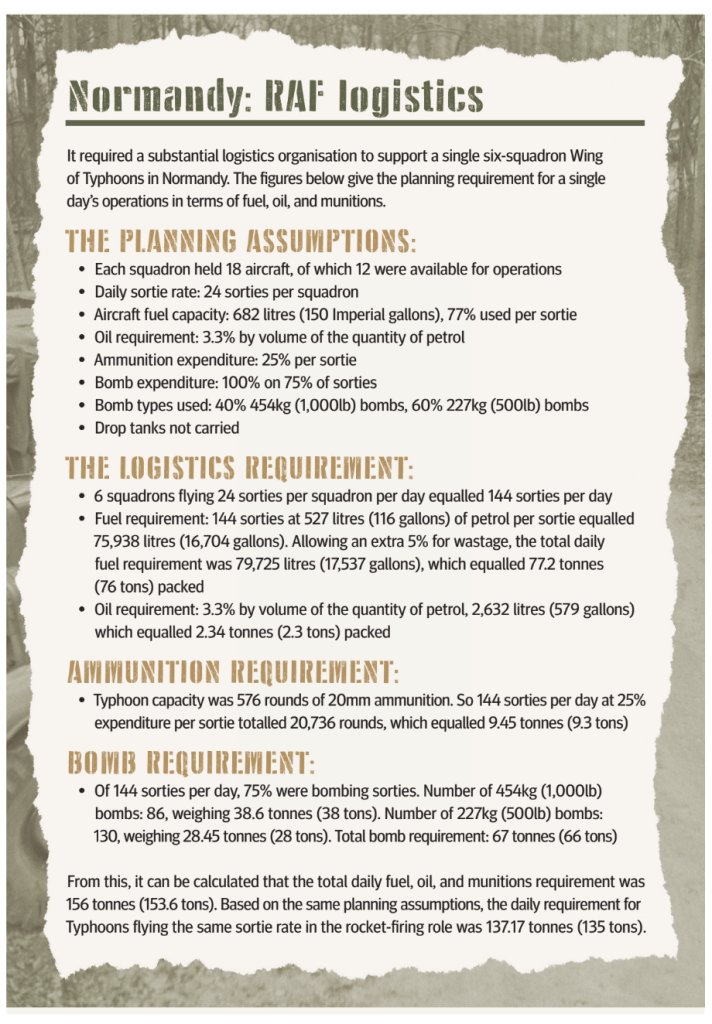
Fuel requirements were equally demanding, totalling 8,000 tons per day. At the frontline, much of this was distributed in 11,500,000 jerrycans, copied from the original German design, each holding 20 litres (4.4 gallons), and 200-litre (44-gallon) drums. Bulk fuel delivery posed an even greater problem, as all French harbours were heavily defended and demolitions were likely to make them unusable for weeks after they were finally captured. A total of 37 specially designed flat-bottomed 400-ton coastal oil tankers or CHANTs (Channel Tankers) were completed – these could be beached at low tide to discharge their cargoes and then refloated as the tide came in.
When the first French ports became operational, tanker deliveries were supplemented by Operation Pluto (Pipeline Under the Ocean). Fuel was pumped through two pipelines under the Channel: the first, codenamed ‘Bambi’, ran between Sandown on the Isle of Wight and Cherbourg; and the second, codenamed ‘Dumbo’, from Dungeness to Boulogne. Bambi gave constant trouble and was only operational for a few weeks before being closed down, but Dumbo was far more effective, carrying 820,000,000 litres (180,000,000 gallons) of fuel between October 1944 and August 1945.
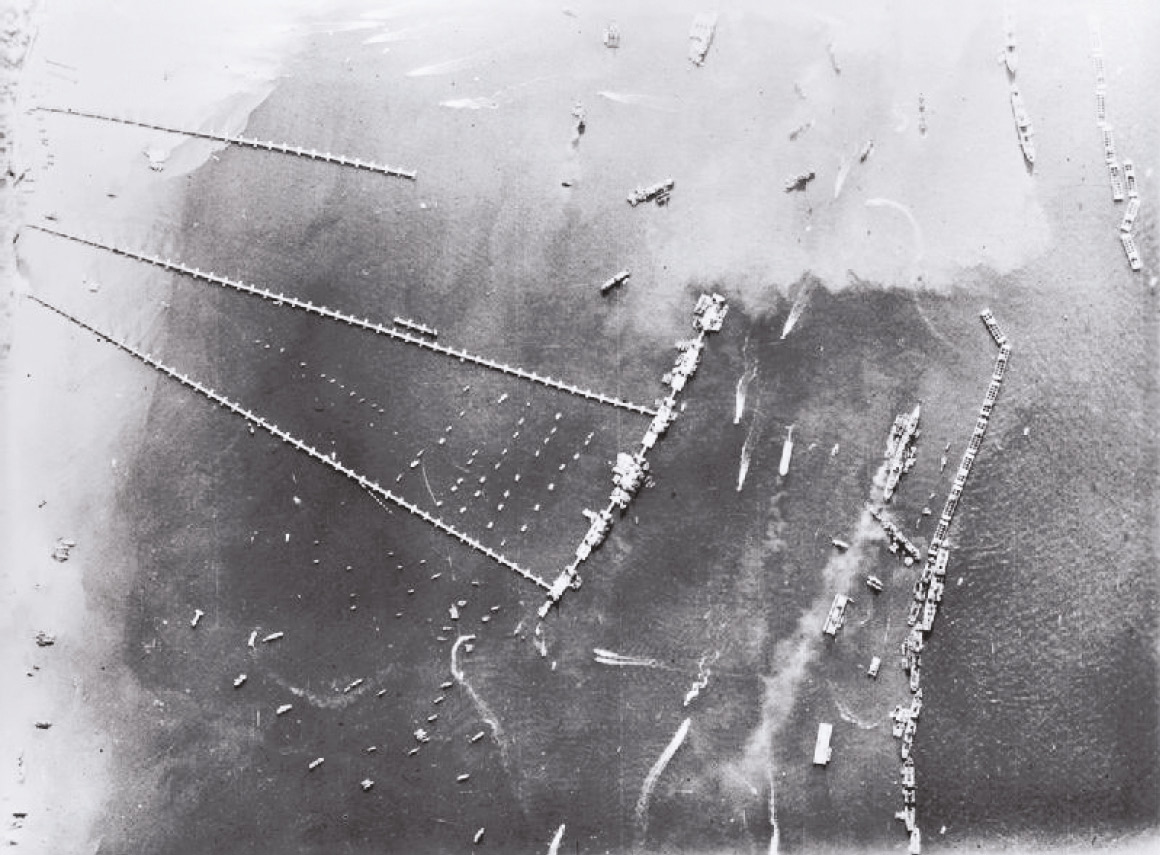
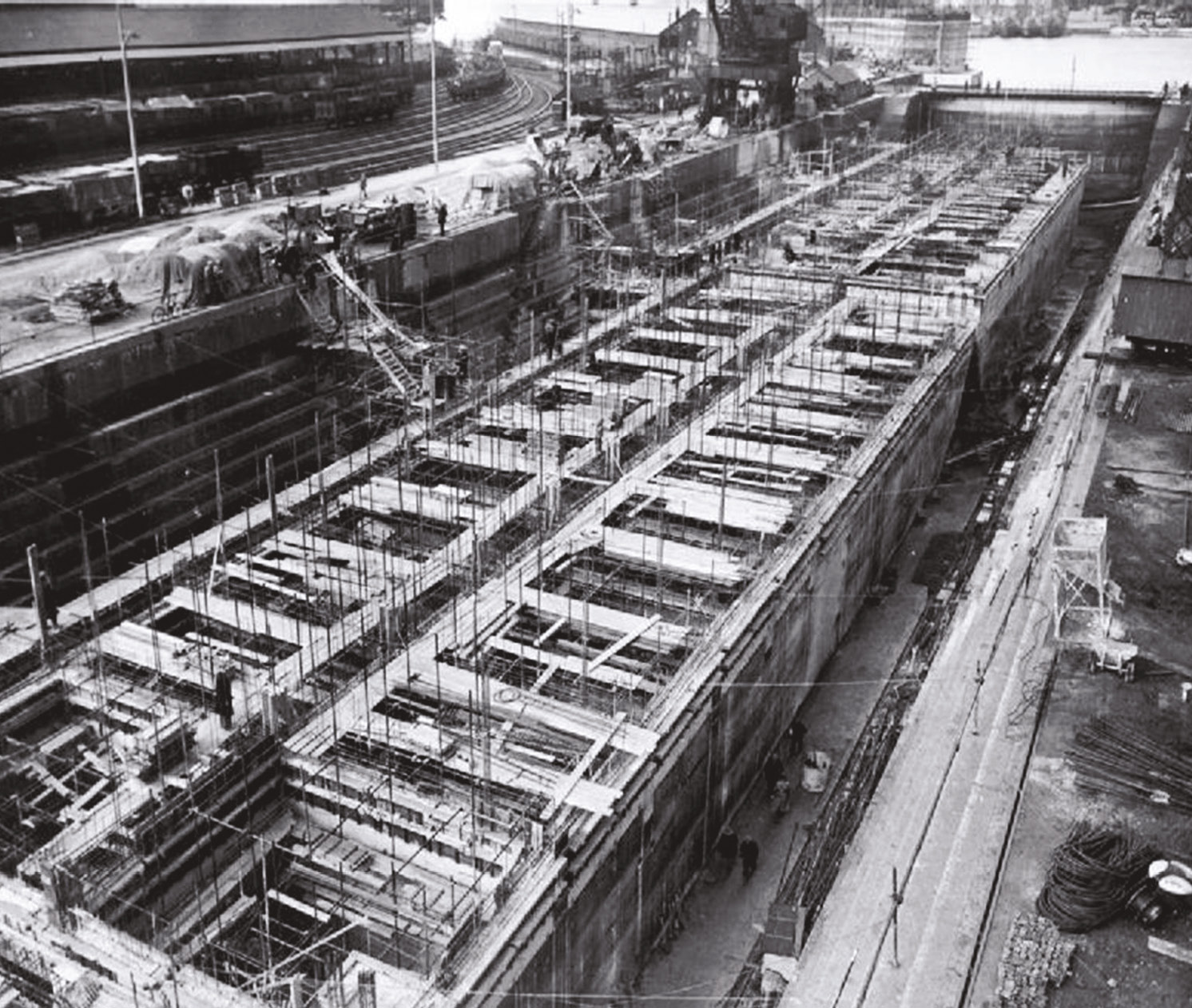
The anticipated delay in capturing and repairing harbours had led the COSSAC planners to commission two artificial ports, dubbed Mulberries, each of which could handle 7,000 tons of stores per day. Design work began in August 1943, and the deployment of more than 400 major components (blockships, breakwaters, pontoons, and floating piers) began on D-Day itself.
Mulberry A was assembled on Omaha Beach for use by US forces, and Mulberry B was set up on Gold Beach to supply British and Canadian troops. Both were working and nearing completion on 19 June, when they suffered major damage in the worst Channel storm for 40 years. Mulberry A was so thoroughly wrecked that it was judged to be irreparable, but Mulberry B (unofficially dubbed ‘Port Winston’) was repaired and handled a total of 2,500,000 men, 500,000 vehicles, and 4,000,000 tons of supplies over a period of ten months.
David Porter worked at the Ministry of Defence for 30 years, and is the author of 11 Second World War books, as well as numerous articles for MHM.
All images: Wikimedia Commons, unless otherwise stated
You can read the second part by Patrick Mercer here and find Calum Henderson's infographics here