Subscribe now for full access and no adverts
To Benito Mussolini, the Mediterranean was Mare Nostrum, ‘Our Sea’ — a term borrowed from the Romans, but reinvented by Italy’s fascist dictator to mean something akin to Hitler’s concept of Lebensraum, or ‘Living Space’. And on 10 June 1940 — the date on which Mussolini declared war on the Allies — both the Sea and the land surrounding it looked ripe for the taking.
Il Duce (‘the Leader’) had hesitated initially to enter the war, following Nazi Germany’s invasion of Poland on 1 September 1939. But now he believed the opportune moment had arrived to implement his so-called ‘Pact of Steel’ — the formal alliance he had signed with Hitler the previous year, linking the two countries politically and militarily. The astonishing German blitzkrieg in the West, and the resulting evacuation of Allied forces from Dunkirk, had left France on its knees, while Britain was also facing its darkest hour. Two weeks later — on 22 June — France would be forced to sign an armistice. It seemed as if the war was nearly over, and that Mussolini would soon take his place at the victor’s table.
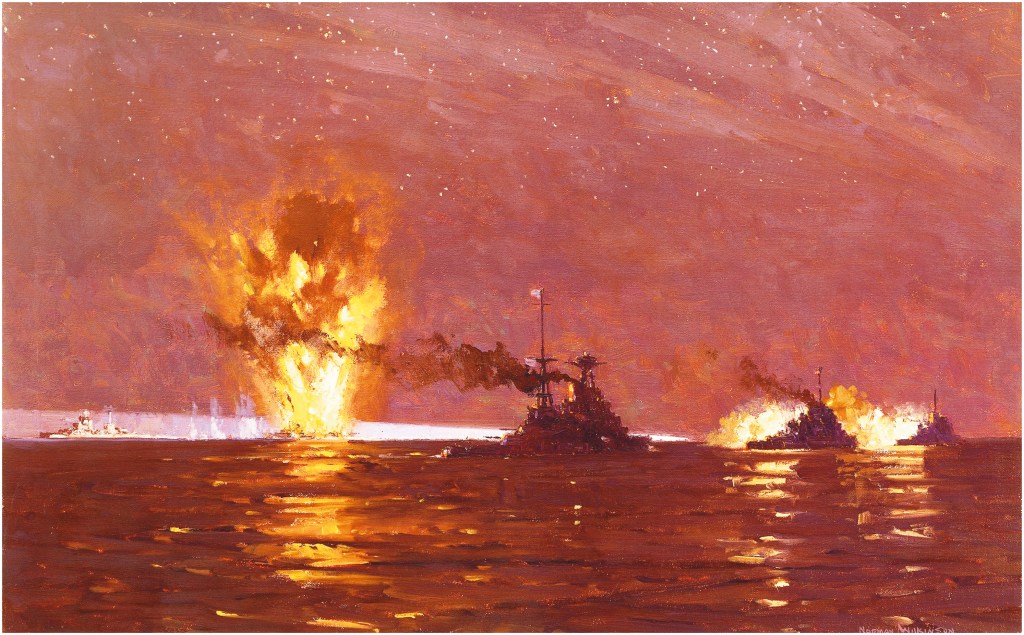
With France out of the equation, the Royal Navy found itself outnumbered in the Mediterranean as it was forced to confront the new threat of Mussolini’s large battle fleet alone. The region was crucial to the Allied war effort — not least because of the access it provided for vital resources (including oil) arriving via the Suez Canal. With its strong position in the centre, Italy was well-placed not only to disrupt vulnerable British supply routes from its bases in Sicily, the south, and Libya, but also to pursue Mussolini’s expansionist ambitions in North Africa. And with the Royal Air Force detained at home to defend against the threat of an imminent German invasion, it was left to the Royal Navy to take the offensive to the Italians at sea.
Fortunately, as we shall see, Britain had as the commander-in-chief of its Mediterranean Fleet perhaps its most gifted admiral since Nelson — a man with ‘a jawline like a battleship’s bow’, according to one biographer — who earned the unstinting respect and loyalty of his captains, and whose leadership would prove decisive at a time when Britain’s resources were stretched to the limit.
For our special this issue, Graham Goodlad analyses the achievements of Admiral Andrew Browne Cunningham, universally known to his peers as ‘ABC’. In the first part, he looks at Cunningham’s life and career, while in the second he offers a detailed commentary on the battle that is widely regarded as his masterpiece — when he inflicted a serious defeat on the Italian fleet at Cape Matapan, off the southern coast of Greece.
Master of the Mediterranean
For more than a century after the death of Nelson in 1805, Britain produced few truly first-rate naval leaders. There were innovative organisers, such as Admiral ‘Jacky’ Fisher, architect of the early 20th-century Dreadnought revolution in battleship design, and a handful of capable if sometimes flawed commanders, such as Jellicoe and Beatty, who fought the German navy to a draw at Jutland in 1916. But none possessed the combination of tactical skill, aggression, and inspirational leadership that is required for decisive victory at sea.
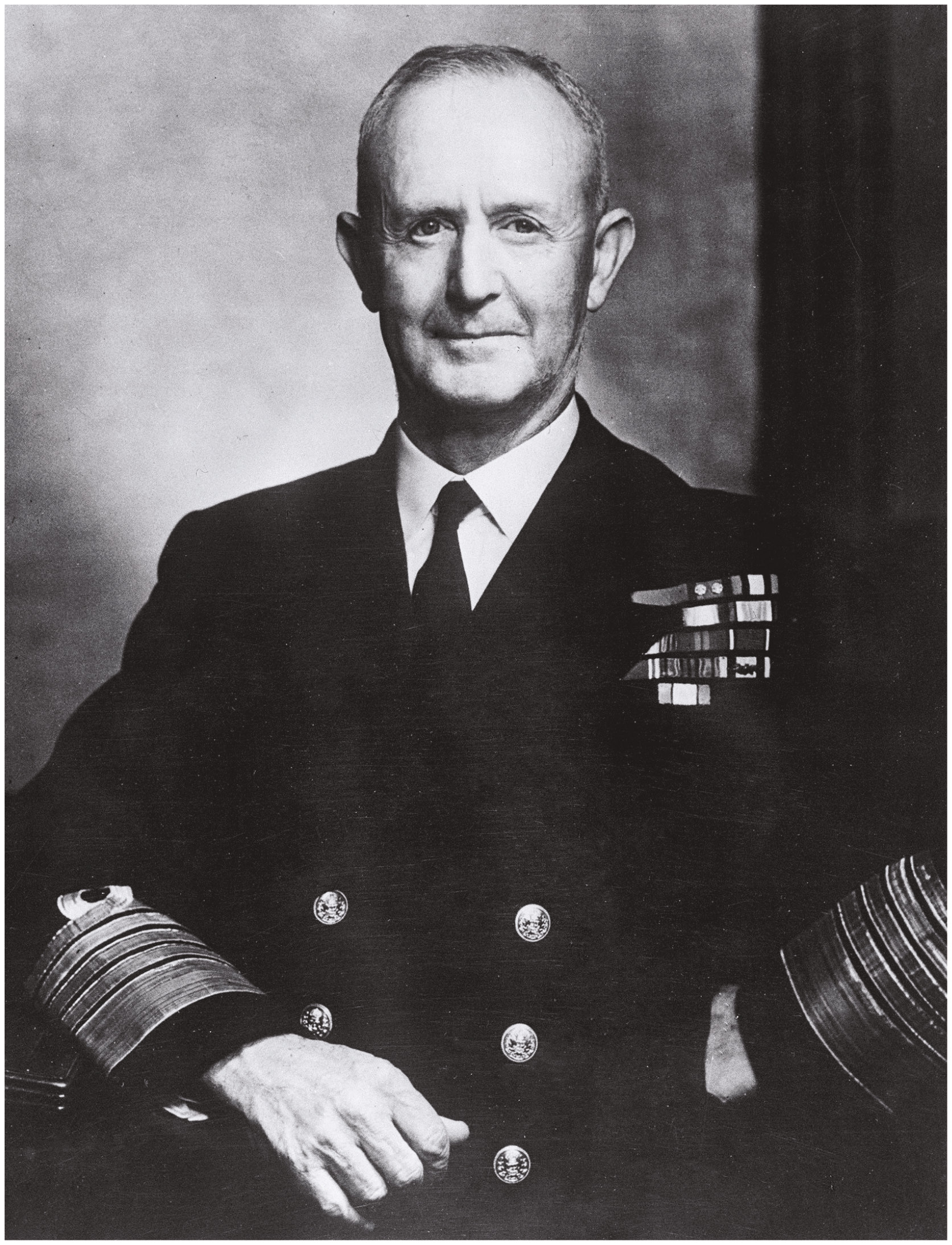
A notable exception to this unexceptional record is the career of Admiral Andrew Browne Cunningham, universally known to his peers as ‘ABC’. As commander-in-chief in the Mediterranean for much of the Second World War, he played a central part in the defeat of the Axis powers. The region was critical for the outcome of the war, with its proximity to vital oil resources and imperial communications through the Suez Canal.