
Subscribe now for full access and no adverts
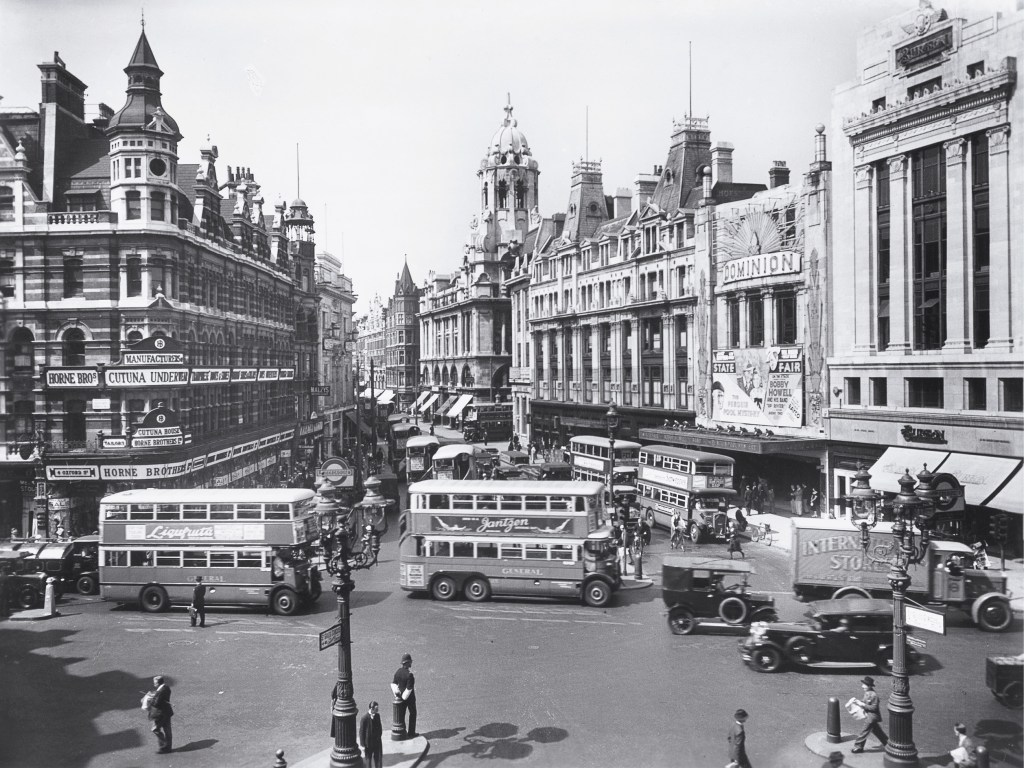
The ‘chain store’ has often been condemned by architectural historians for eroding local distinctiveness and for responding neither to context nor to local and regional building materials and styles. In 1955, The Architectural Review published the now-famous ‘Outrage’ essay by Ian Nairn, in which he recounted his journey by car from Southampton to Carlisle, visiting major towns along the route. He complained about the ‘nowhere sprawl’ that he found, reducing ‘all individuality of place to one uniform and mediocre pattern’. Subsequent critics have talked about ‘clone-town UK’, where high streets have become ‘bland identikit places dominated by a few bloated retail behemoths’.
Bravely, Kathryn Morrison’s new book Chain Stores in the Golden Age of the British High Street (see ‘Further reading’ below) dares to challenge this orthodoxy and argues that the story is much richer than that. The notion that shopping streets have become indistinguishable, one from the other, became something of an architectural historians’ trope as early as 1907, she says; one that mistakenly conflates retail uniformity with architectural uniformity.
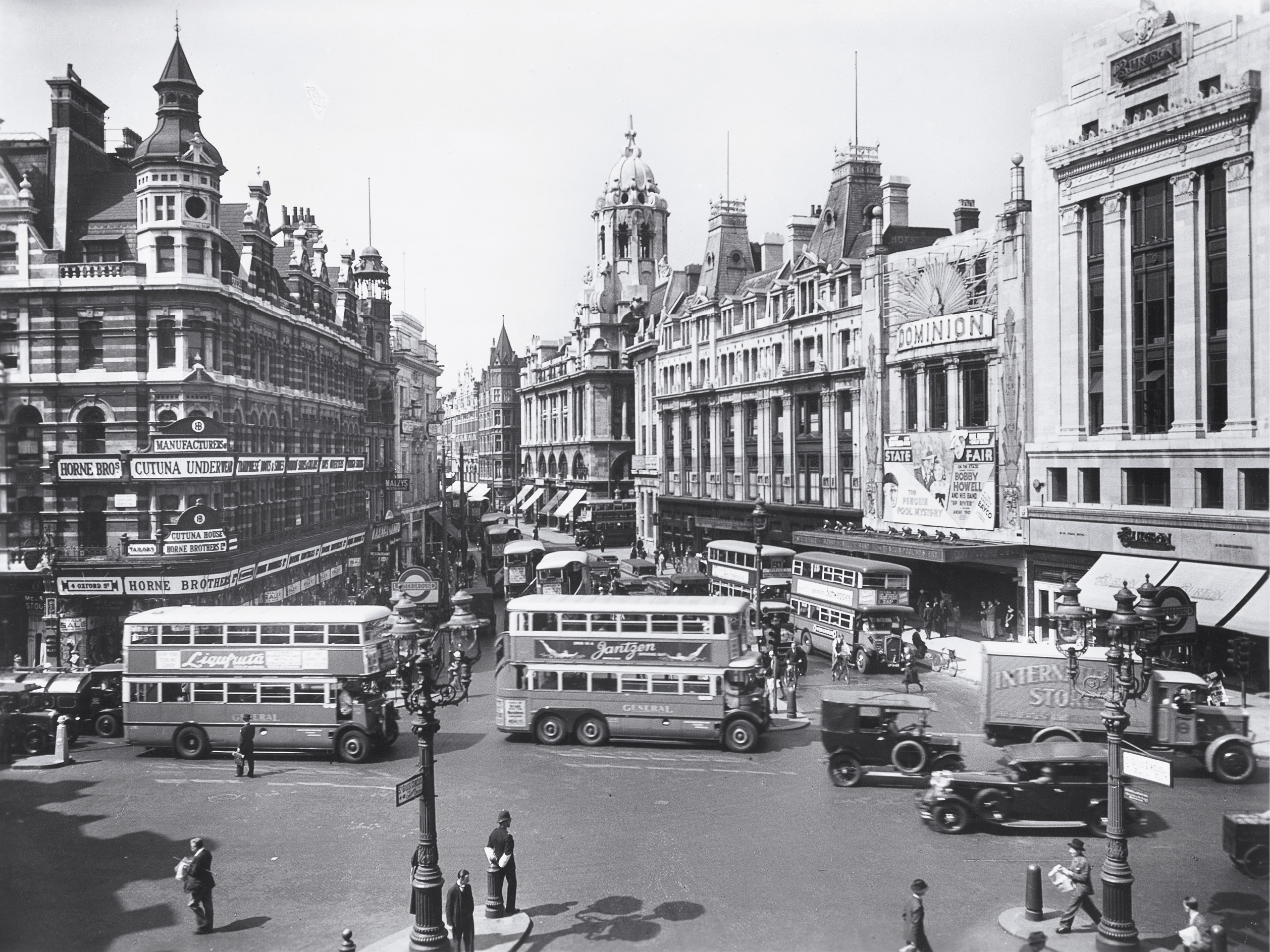
The rise of multiple retailing
The story of the transformation of the High Street into a land of chains rather than of independent retailers begins in the late 1820s. Banks were among the first of the nation’s business concerns to begin opening multiple branches. Another pioneer was the East India Tea Company, though initially the company established retail agencies throughout the country, rather than owning their own outlets.
The earliest ventures into multiple retailing began with several members of the Jewish community – notably Hyam Hyam (1775-1854), son of a Jewish pedlar, who established his first shop in Colchester in 1819, advertising ‘the Cheapest Clothes and Hat Establishment in England’. His sons and nephews subsequently opened branches in Bury St Edmunds (1826), Coventry (1830), Birmingham (1834), Manchester (1834), Liverpool and Leeds (1835), Bristol (1838), and London (1842). The chain’s success was built on selling large quantities at low margins, on a cash-only basis (no credit and no haggling); small-paned shop windows were replaced with plate glass, with well-lit window-displays of clearly priced goods.
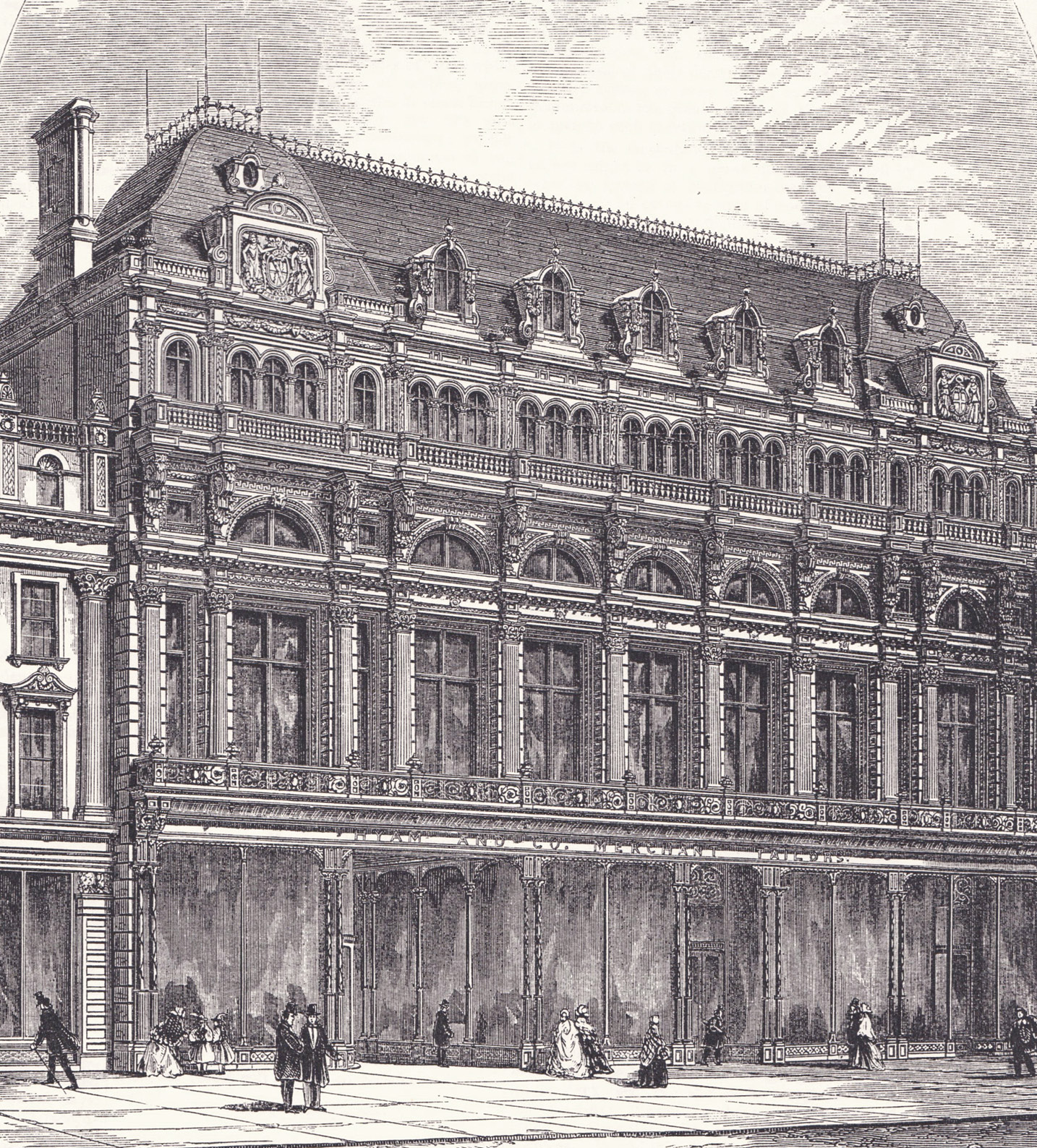
Hyam’s pricing policy was a novelty that appealed to shoppers on low incomes, who might previously have had to haggle with itinerant pedlars or market-stall dealers for their needs. Shops could be intimidating to all but the wealthy: nothing was marked with a price and customers had to ask an assistant to show them the goods. Assistants habitually made shoppers feel obliged to make a purchase if they asked to see the products. Hyam demystified this daunting process by listing prices in his newspaper advertisements. These were gushing in their descriptions of the goods he sold, but shoppers could enter his premises knowing in advance exactly what they could afford to buy.
By 1850, there were 13 Hyam stores, all run as independent enterprises by Hyam’s sons and nephews, but promoted as a coherent chain – as branches of the same concern. Some were more successful than others: Samuel Hyam prospered, and from rented premises in Birmingham went on to develop his own ‘Pantechnetheca’ store (from the Greek pan, techne, and theca, meaning ‘a depository of all the arts’). Located at 21-23 New Street, this had a fashionable French-Renaissance style mansard roof and was designed by the architect J J Bateman. Side units were leased to other businesses, while Hyam and Co. occupied the central block, with a lightwell topped by a lantern and galleries supported on cast-iron columns. Workmen’s clothing was sold in the basement, ready-made garments on the ground floor, bespoke on the first floor, and 200 people worked at sewing machines on the floor above.
Samuel went on to build a large department store at 66-67 Oxford Street in London. Designed by Sir Horace Jones (1819-1887; the architect of London Bridge, Smithfield Market, and Holborn Viaduct), the store had an all-glass shop front framed by reeded iron columns, and was the tallest on a street that was then dominated by the smaller establishments of drapers and ironmongers, together with silversmiths and jewellers who commonly doubled as pawnbrokers.
It was from that background – pawnbroking and dealing in second-hand clothes – that another early chain-store clothing enterprise arose. Elias Moses set up his first store in existing premises in Houndsditch and Bristol in 1828. By 1846, in partnership with his son Eleazor, Moses was able to build a new department store on the corner of Minories and Aldgate, on the eastern edge of the City of London. With a fully glazed street frontage and an inviting galleried interior (designed by J D Hopkins) lit by a giant gasolier, the shop sold hats, hosiery, and footwear as well as ready-to-wear men’s clothing and bespoke tailoring (customers for the latter were provided with their own discreet entrance).
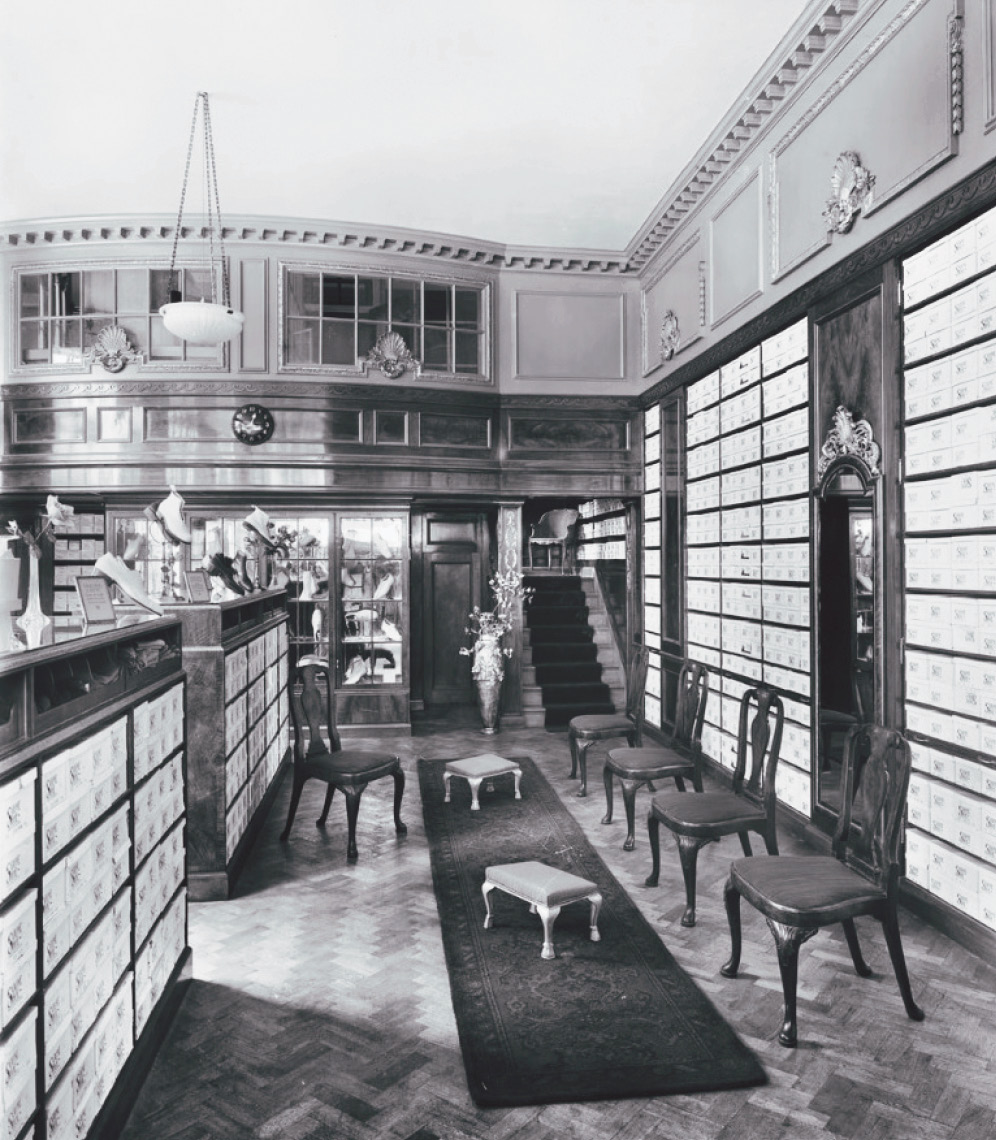

Image: Historic England Archive; Kathryn A Morrison
Further stores followed in 1849, opening in Sheffield and Bradford. Like Hyam, E Moses & Son not only created opulent premises, they invested heavily in promotion, spending as much as £10,000 a year on large and hyperbolic newspaper advertisements. They also spent a fortune on interior lighting. By 1853, E Moses & Son had opened in the West End, on the corner of Hart Street and New Oxford Street, and a German visitor described the theatrical effect created by ‘thousands of gas-flames, forming branches, foliage, and arabesques, and sending forth so dazzling a blaze that this fiery column of Moses is visible… at the distance of half a mile’. The visitor went on to comment on ‘the heavy expense [of] burning all that gas for so many hours’, but to conclude that ‘it pays somehow. Boldness carries the prize.’
Others were less impressed: when Building News reviewed Moses’ second West End branch, which opened at the top of Tottenham Court Road in 1860, it declared that these ‘celebrated outfitters had built considerably, but not well’. It scoffed at the ‘massive columns and vulgarly mounted detail’ and the ‘large squares of plate glass [with] the name of the owner written many times in brass’.
Where Hyam and Moses led, others were soon to follow. One company – Hart and Levy – gained a competitive advantage by opening on the Jewish Sabbath (unlike its rivals), thus benefiting from end-of-week pay packets; they also marked Christmas with elaborate window displays, though these were themed on fairy tales and children’s stories rather than the Nativity.

Period of professionalisation
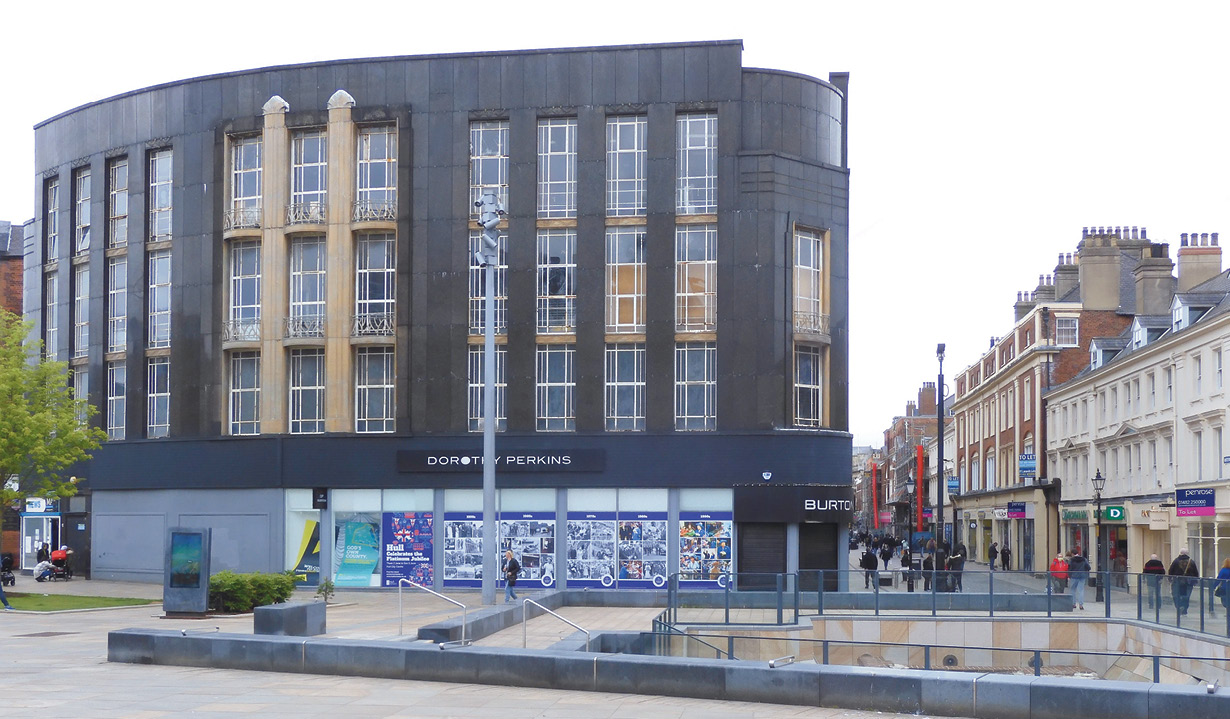
With competition for customers based on fixed prices and value for money, there was room eventually for a newcomer to offer something different to aspirational working-class men: enter Montague Burton, the self-styled ‘Tailor of Taste’, who emphasised ‘elegance’ and ‘style’, and reflected these values in the chain of shops he built from 1919.
Burton raised capital through share issues and debentures, and purchased freehold sites (favouring prominent corner plots), rapidly amassing an estate valued at £6 million. From 36 stores in 1919, he owned 595 in 1939 – one in every town of any size – and during that time he employed two in-house architects: Harry Wilson from 1923 to 1937, and Nathaniel Martin from 1937 until the 1950s. They ran a design department of more than 64 staff – in effect, one of the largest commercial architectural practices in the country.
Early Burton stores were designed in Neoclassical style, influenced by Art Deco, and clad in white glazed terracotta tiles or polished black granite. All had foundation stones laid by, and engraved with, the names of Montague Burton, his children, and occasionally his wife. A deep lobby with a mosaic floor led to double doors with coffin-shaped panels of etched glazing, giving entrance to a hushed interior with wooden floors. The windows in every shop were dressed identically, following strict instructions from head office.

Some had separate entrances leading to upper floors that Burton let on short leases to provide a secondary source of income. The preferred tenants were temperance billiard halls, where men relaxed without becoming intoxicated or rowdy – and when passing the shop window on their way to the hall, they might easily be tempted to enter and buy.
Burton set out to create stores that were instantly recognisable, using a combination of exterior and interior design, typography, and branding that was theirs and theirs alone. Occasionally, though, local authorities and civic societies refused to permit this standardised approach and demanded respect for traditional architectural styles – Burton’s store in Wigan has a half-timbered centrepiece, and the prominent Market Place shop in Newark is built in brick in Neo-Georgian style with small-paned windows.


Conceptually, the practice of running shops under salaried managers – and hence entrusting strangers with cash – was a definitive step on the way to multiplication, but in the early days chain stores were firmly under the control of the members of a single extended family. Millets (with 300 shops at their peak in the 1970s) was started by seven siblings who left Poland to settle in Portsmouth and Southampton in the 1880s, trading in army-surplus clothing after the Boer War and expanding after the First World War. They added motoring clothing and camping equipment to their stock when car ownership and outdoor pursuits expanded in the 1920s and 1930s. Unlike some firms that were dominated by the male members of the family (the Glucksteins and Salmons who founded Lyons Tea Houses excluded female relatives from all business matters), it was common for Millet women to be set up in a shop as a dowry.
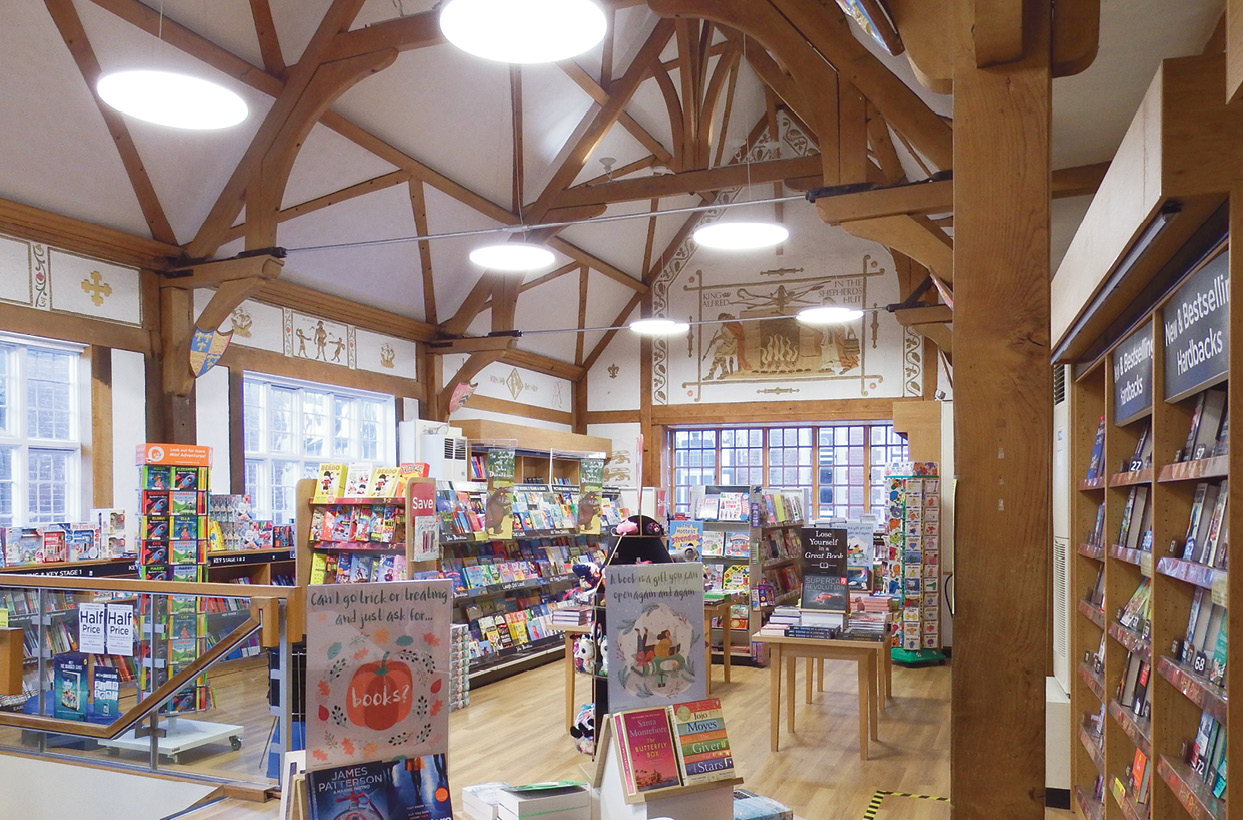
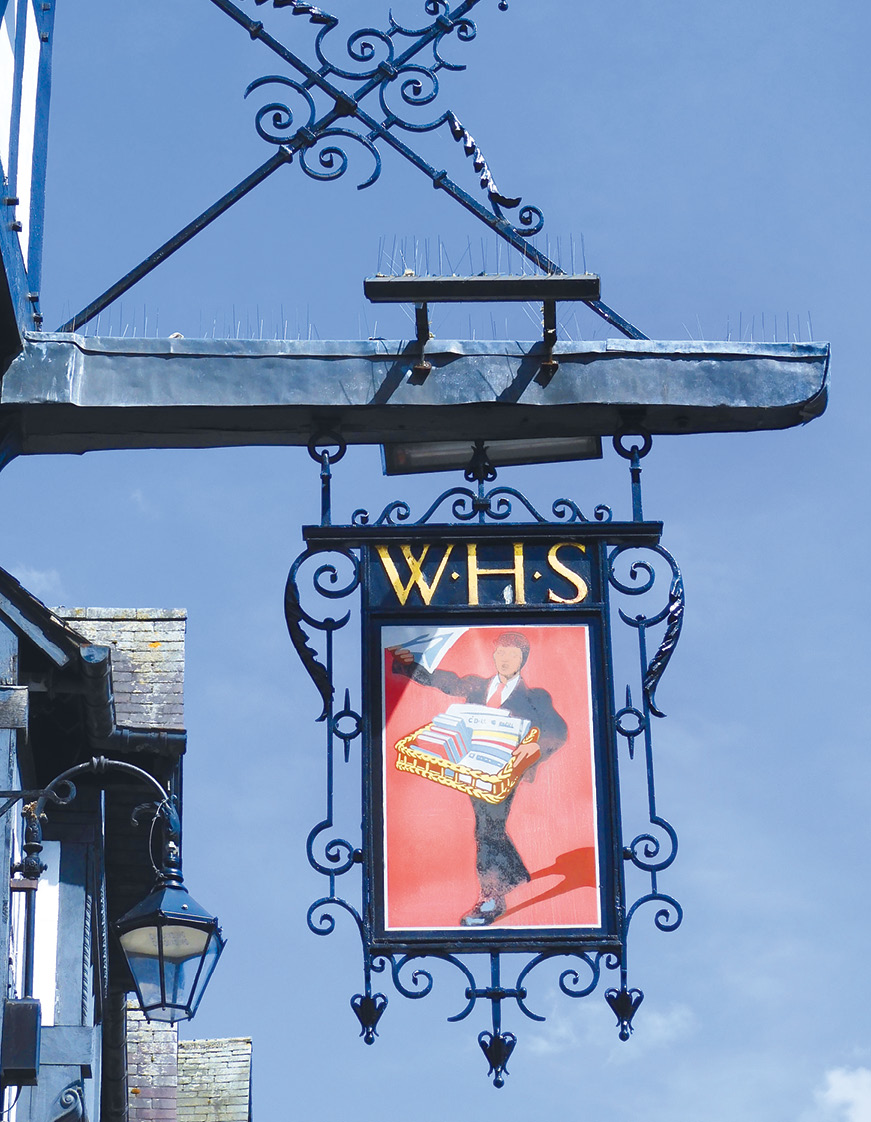
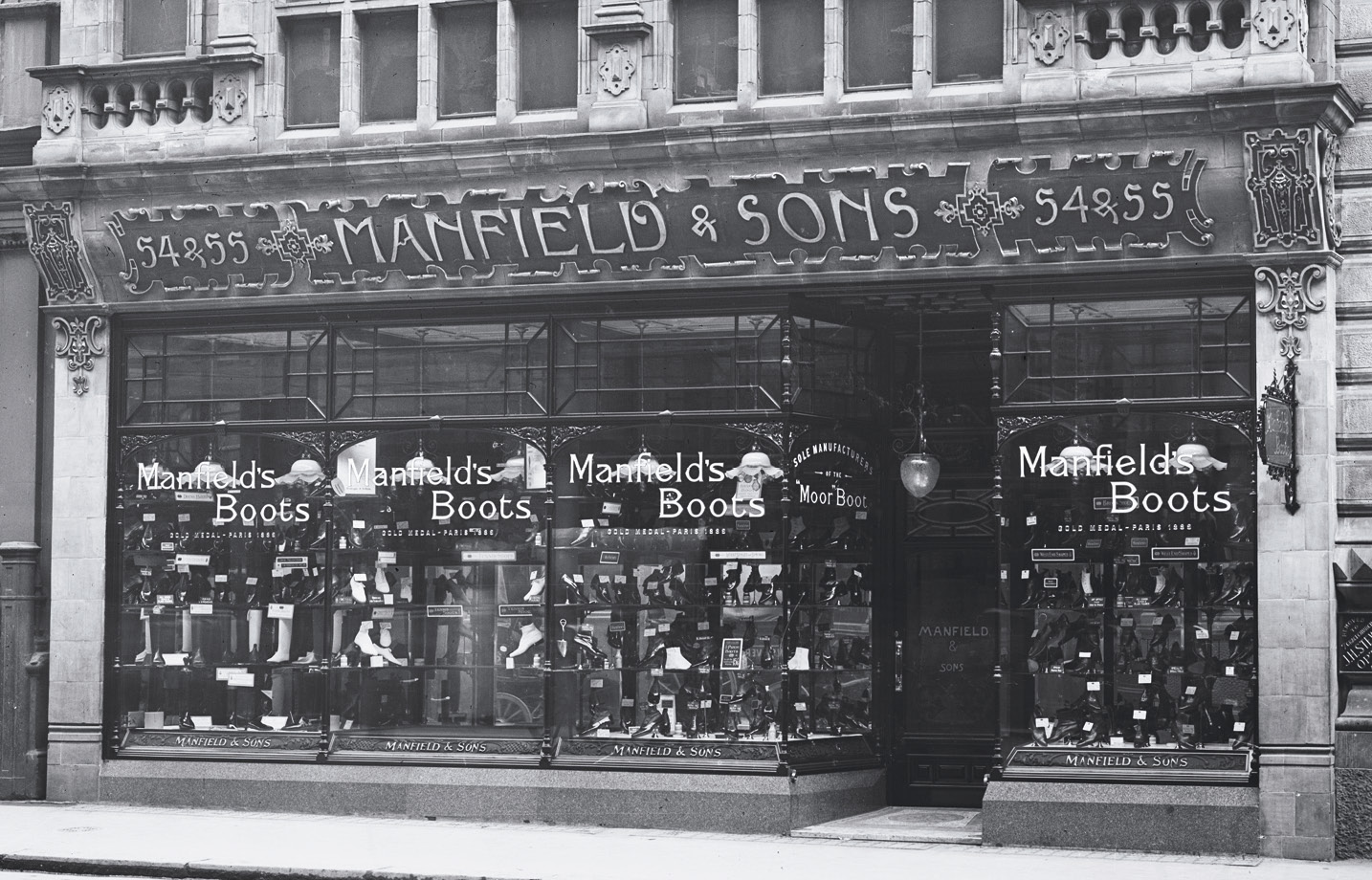
Another common trajectory was for manufacturers to venture into retailing. Shoe- and boot-makers – many of them based in Leicester or Northampton – originally sold their products through agents (either shopkeepers or market-stall holders), but they began opening their own shops in the 1860s. Leicester’s most successful firm was Freeman, Hardy & Willis, named after three of its original directors, who opened their first branch in Wandsworth, London, in 1877; by 1914 they had 460 shops. Other footwear names to appear on the principal streets of English towns around this time were the Swiss firm Bally, Lennards, the Public Benefit Boot Co, and Manfield & Sons.
Manfield grew partly by acquiring shops from formerly independent retailers, but in 1921 it opened its own sumptuous branch at 170 Regent Street in London, designed by G Crickmer & Sons to resemble an exclusive gentleman’s club. Its advertising promised: ‘no shoppiness or fuss, just large, beautifully decorated and furnished apartments, comfortably provided with divans, settees, writing tables, and everything that tends to make a congenial atmosphere while one decides on delicate questions of footwear apparel’. Regent Street was also the location of the finest of the 106 shops opened from 1902 by two brothers and former Manfield managers Frank and George Abbott, trading under the names Saxone (for men) and Sorosis (for women) – today combined into the one Saxone brand.

Contentious constructions
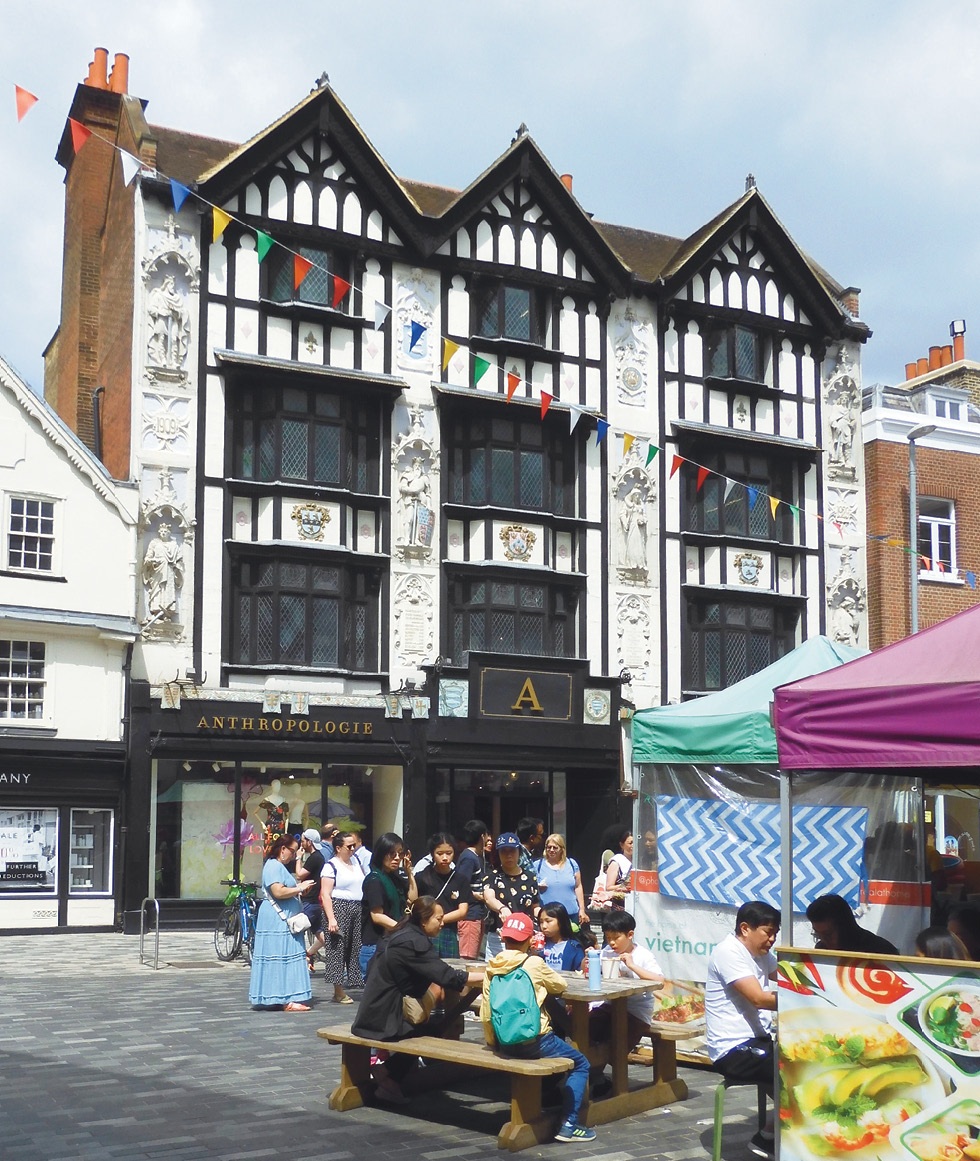
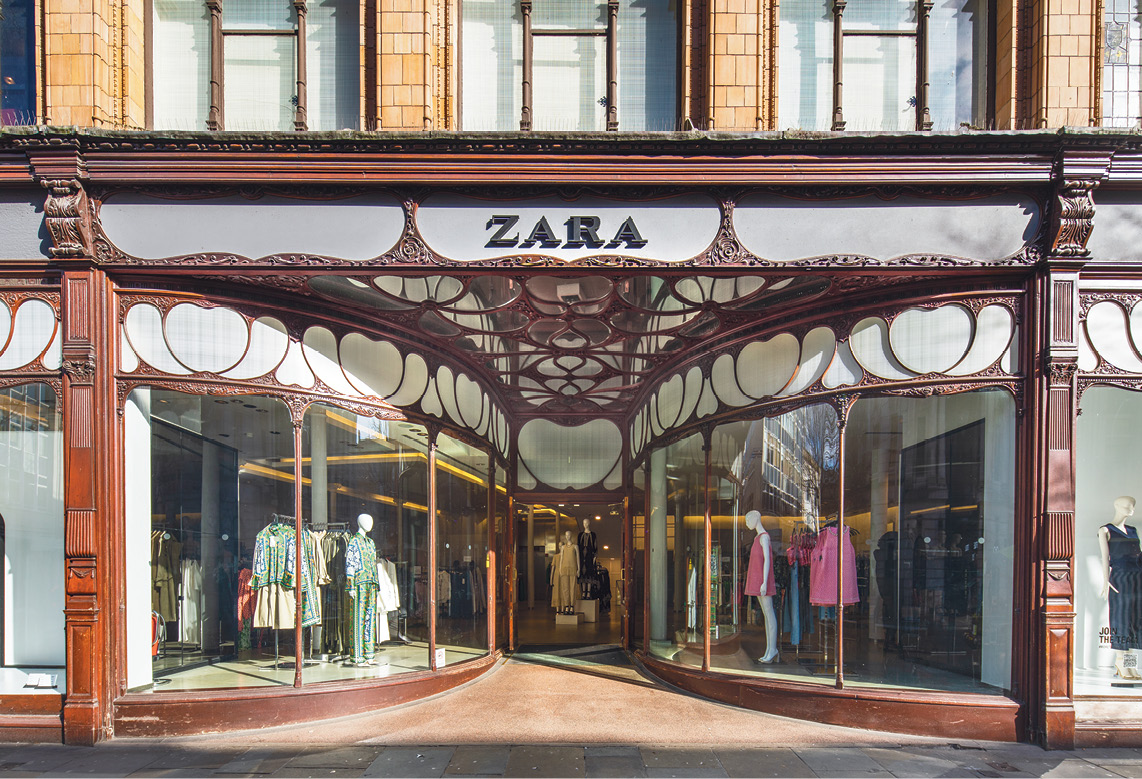
Right from the start there were chain stores like Burton that used architecture as a part of their branding, so that a Woolworths or an M&S would be instantly recognisable in any town, whereas others adapted existing buildings that remained largely intact but for the street-level shopfront. The founder of the Russell & Bromley footwear company, which grew from a single shop that opened in Eastbourne in 1877, took the view that ‘originality was likely to be a boomerang’ (that is, it would come back to bite).
By contrast his son, Keith Bromley (1902-2003), favoured shops with their own personality, opening 20 outlets in the mid-1930s, all designed by the young Modernist architect Clive Entwistle (1916-1976). Entwistle was self-taught and he designed the Ealing store when only 19 years of age. Later going on to collaborate with Le Corbusier (1887-1965), he was a pioneer of the Modernist preference for functionality, clean lines, and minimal ornamentation. The Ealing shop had armchairs designed for the firm by Alvar Aalto and the walls were decorated with murals, with shoeboxes being kept well out of sight.
Kathryn Morrison’s book is full of origin stories like these, and discussion of the architectural styles of the different types of retail chain that transformed the High Street during her Golden Age (from 1870 to 1970). The debate about whether these chain stores have had a positive, neutral, or negative impact on the High Street has been going on since the earliest days of the multiple, and continues to this day.
As multiples of every kind – grocers and chemists, confectioners and jewellers, hardware and department stores – began to spread across the land, it was the independent traders who were especially hostile, accusing them of adopting unfair practices, including sweated labour. One newspaper, in 1906, even drew an analogy between the chains and the independents as like ‘a pitched battle between trained soldiers… and some native tribe armed with slings and arrows’.
In bankruptcy proceedings, small concerns often blamed the chains for driving them out of business. In Canada and the USA, as well as closer to home in Germany, France, and Switzerland, legislation was proposed to introduce licensing and limit the numbers of multiples, or to subject them to penal levels of taxation.
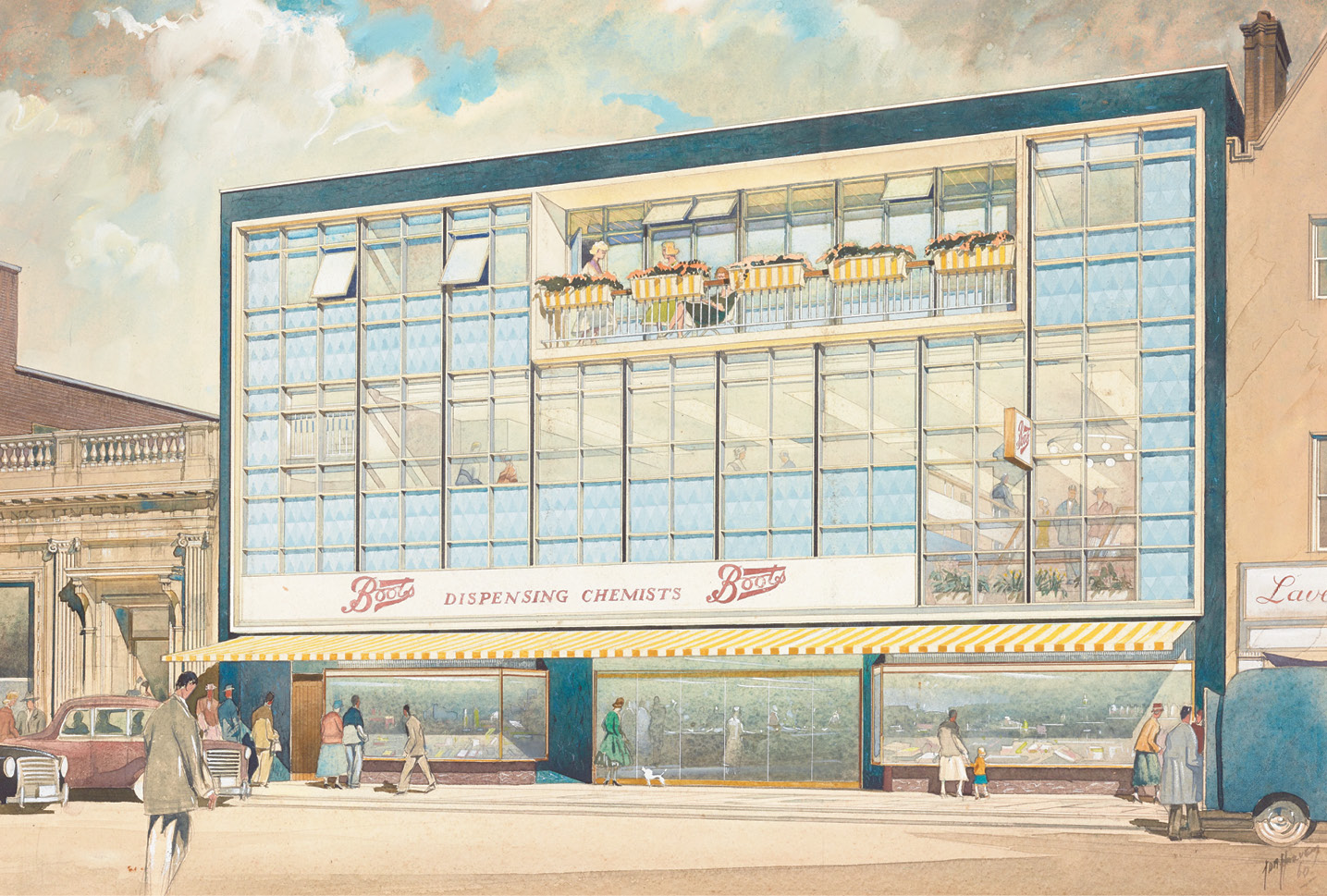
Local authorities tended to look favourably on the chains because of the investment and employment that they brought, and the transformation of the High Street from its untidy, if lively, mid-Victorian mix of small independent traders, market stalls, and street hawkers into hygienic shopping parades dominated by modern purpose-built retail outlets. Councillors in Chippenham in 1936 were divided between those who deplored Burton’s scheme for polished granite cladding because it would clash with the town’s oolitic limestone, and those – led by the Chairman of the Council – who considered the design ‘very nice and suitable’ and who wanted the town to be a ‘more commercialised place’. On this occasion, Burton’s capitulated and the building at 1 Market Place has a granite and plate glass ground floor, but a limestone-clad upper storey.
Some critics abhorred the intrusion of new buildings into the county towns and cathedral cities of Britain, arguing that they were upsetting the aesthetic balance of the High Street with their ‘big scale and big shop windows’, brashly lit with ‘blatantly vulgar’ facades. Typical of the anti-chain store polemic was the lament of architect Frederick Towndrow (1897-1977) for the loss of ‘well-mannered Georgian shopfronts’ and his scorn for ‘food and provision merchants who seem to have no regard for anything except procreating the same horrible child in every town’.
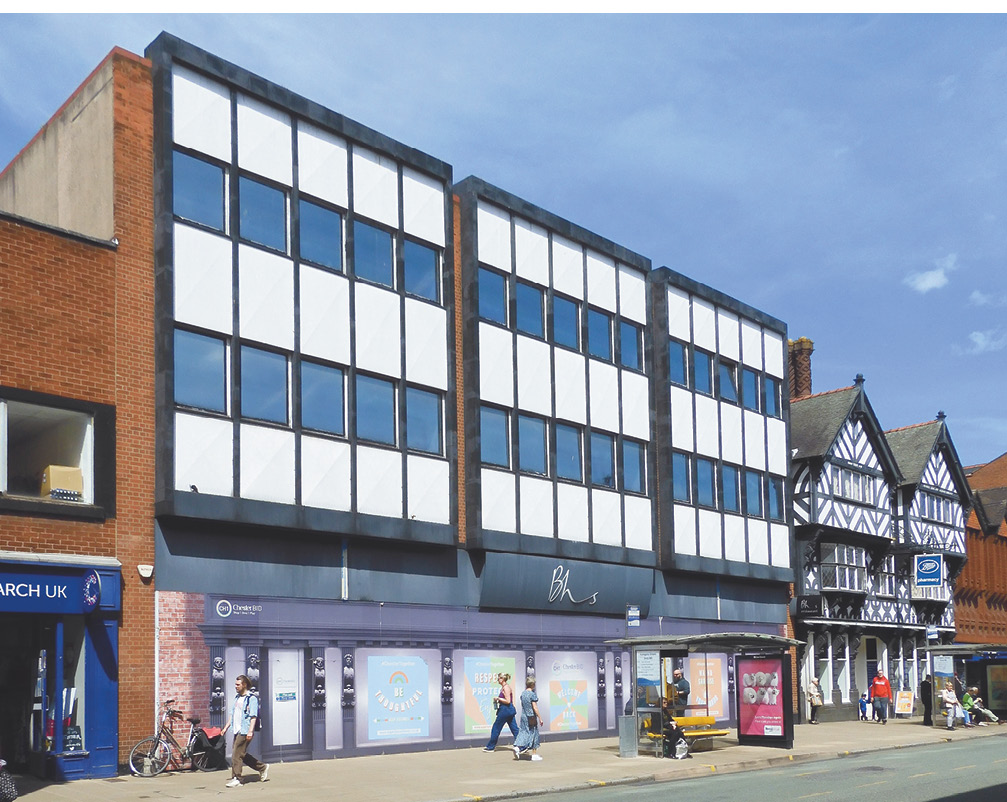
Civic societies and preservation societies were less concerned with the design, size, and materials of new stores than the loss of the historic buildings that were demolished to make way for them. As often as not, the result was a compromise: facades were retained while the plot behind was redeveloped. Some store groups insisted on standardisation, however, and Woolworths came in for particular criticism for its refusal to modify its elevations. Others, including M&S, developed generic architectural solutions for sensitive locations, the staple material being brick and the default style bland Neo-Georgian. In fact, Neo-Georgian became an acceptable idiom for many a town and suburb, hence the numerous such shopping parades that sprang up around larger cities in the 1930s, many of them designed by the developer rather than the retailer.
Forging a new future
As a rule, retailers had it their own way before the Second World War: they were free to design their own buildings, and the desire of the town or district council to attract business to the town would trump finer architectural considerations. That changed after the war when local authorities began to reconstruct bomb-damaged towns. The 1947 planning acts gave them greater powers to shape the public realm through design guidance aimed at controlling building heights, materials, architectural treatment, and the design of signage. At the same time, developers became increasingly involved in the comprehensive redesign of large urban sites. Rather than owning their own freeholds, some retailers began to lease space and to be reliant on developers for design of all but the facades of their stores.
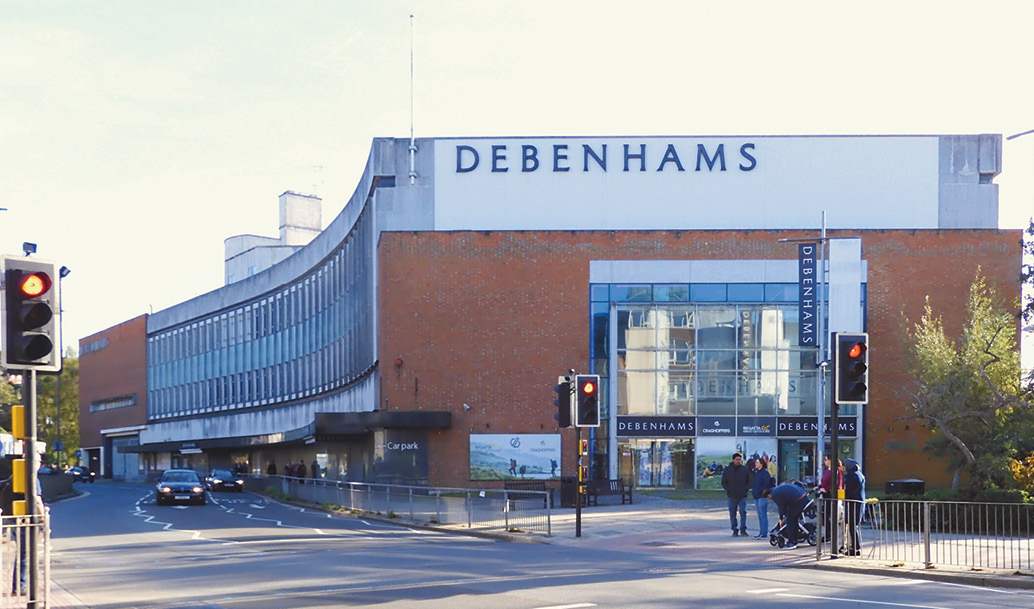
Despite their new powers, the march of the multiples continued, and a 1978 report by SAVE Britain’s Heritage highlighted the many ‘design crimes’ that it laid at the door of the chains, though in truth they were not unique to that class of retailer: oversized fascias, poor shopfront design, harsh lighting, low roofs that expose the scarred party walls and ventilation systems of neighbouring properties, all militating against a ‘decorous’ streetscape. Despite this, it was rare that High Streets would be entirely dominated by multiples or rebuilt wholesale (heavily bombed cities like Plymouth or Bristol are exceptions) and even when the multiples moved into small market towns, they rarely became so dominant as to justify the fretful criticisms of conservationists.
Instead, we have inherited a diverse High Street, often with a clear hierarchy of large purpose-built stores dominating the prime central shopping area, interspersed by smaller stores which tend to be inserted into an older building whose character survives at first-floor level and above; such stores constitute the main component at the fringes and along the side streets. However, every town is now faced with empty former bank buildings, department stores, and the premises of formerly high-profile but now-bankrupt retailers. Those chains that have survived the flight from bricks and mortar to online retailing generally prefer retail parks to high streets; ageing facades sprout buddleia, charity shops dominate, and in some towns empty shops outnumber those in use.
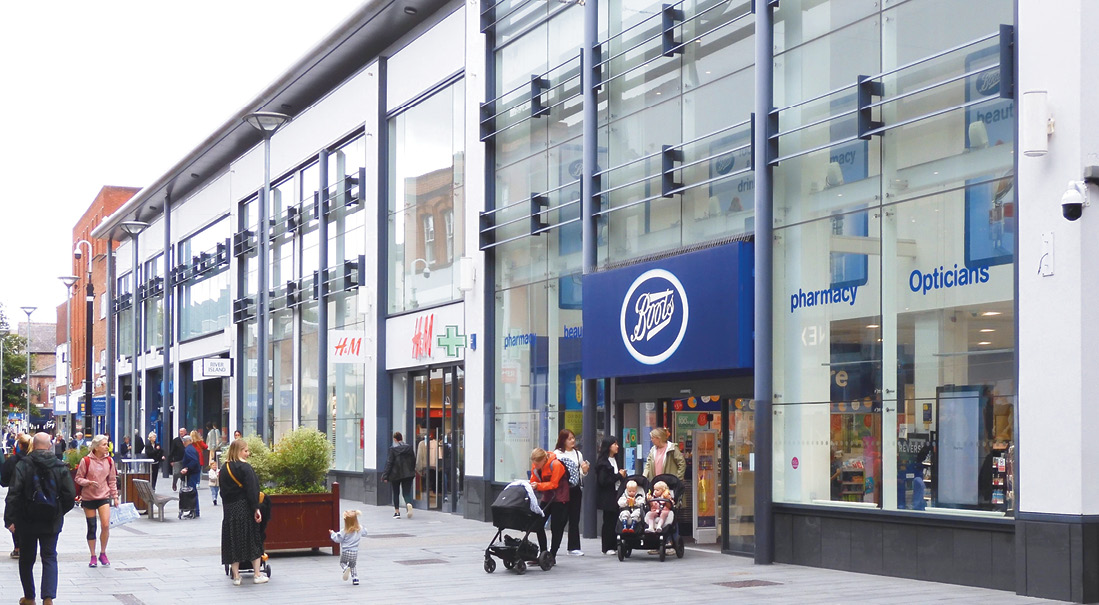
Many of the previously derided stores – especially those built between 1890 and 1939 – are now recognised as having their own architectural merit: impressive buildings that have redefined our town centres and that have been central to the formation of the nation’s High Streets. All our state heritage agencies – Historic England, Cadw, Historic Environment Scotland, and the Northern Ireland Environment Agency – are now concerned at the threat to High Street heritage and calling for greater investment in their regeneration.
The change of heart has been clearly signalled by the hard-fought campaign conducted by SAVE Britain’s Heritage to prevent the demolition of the M&S store on Oxford Street, London, partly on the basis of the architectural and historical significance of the building, partly in the interests of environmental sustainability. SAVE also published a report in 2022 called ‘Departing Stores: Emporia at Risk’, highlighting the threat to 46 landmark department stores, which it calls ‘cathedrals of commerce’, that are at risk of demolition.
The consensus now among heritage campaigners is that the shops of Kathryn Morrison’s Golden Age are at a crossroads: they could be the basis for housing developments, which in turn would bring a residential population back to town centres and provide the customers for small neighbourhood shops and cafés that are a characteristic of so many Continental towns. Or they can be neglected and continue to deteriorate. Or, worst of all, they could be demolished and replaced by the kind of placeless glass-box style of development that truly would justify the description of the UK as a nation of identikit towns.
Further reading: Kathryn A Morrison (2025) Chain Stores in the Golden Age of the British High Street (Liverpool University Press on behalf of Historic England, ISBN 978-1836244530, £40).