
Subscribe now for full access and no adverts
In AD 793, the island monastery of Lindisfarne suffered a devastating attack: the first recorded Viking raid on Britain. It would not be the last. Over the coming decades, countless coastal communities were struck by similar storms of slaughter and pillage: smash-and-grab assaults that saw the marauders’ longships disappearing back over the horizon as quickly as they had come (see CA 298). In 865, however, matters escalated dramatically. A remarkably laconic entry in the Anglo-Saxon Chronicle notes that this year saw the landing of ‘a great heathen army’ in East Anglia. Today known as the Viking Great Army, this was an unprecedentedly large force made up of war bands from across Scandinavia who had come together for a common purpose: invasion. Unlike earlier Viking incursions, these warriors were not just seeking loot – they also wanted land.
Progress was horrifyingly swift. Within a year, York had fallen under Scandinavian control, and as the Army swept across England, kingdoms toppled in its wake. By 878, only Wessex remained unconquered – and although Alfred the Great’s victory at the Battle of Edington finally halted this seemingly unstoppable momentum, the terms of this hard-won peace saw swathes of northern and eastern England given over to Viking control, forming the Danelaw. As well as redrawing the political map, successive waves of settlement into this area gave rise to a distinctive Anglo-Scandinavian culture whose traces can still be seen today. Across the region, Norse influences echo in dialect words, in place names, and in the archaeological record.

This theme forms the focus of a major new exhibition at the Yorkshire Museum, which traces the impact of the Viking Age across the north of England. Its displays bring together artefacts from the museum’s own collections with national and regional loans, many of which are on public display for the first time, and including famous finds and new discoveries. The museum is based in York, a key power centre for the Vikings. Then known as Jórvík, its well-preserved remains were famously uncovered during the Coppergate excavations of 1976-1981 (CA 58) and subsequent investigations within the city – but Viking North sets out to explore evidence of Scandinavian activity and influence beyond familiar urban environments, drawing on recent archaeological research.
Signs of settlement
When the Viking Great Army was still actively campaigning in England, its members passed the cold winter months in temporary camps that were occupied for only short periods before their inhabitants moved on. Helpfully, these mobile communities appear to have been a singularly untidy lot, leaving behind distinctive spreads of objects and refuse to help modern archaeologists relocate their long-abandoned bases. Illuminating evidence has been excavated at Repton in Derbyshire (CA 100) and Torksey in Lincolnshire (CA 281), while Viking North highlights a more recently identified camp at Aldwark, some 15 miles outside York.

While these sites lack evidence of any formal structures (their populations probably lived in tents), the ditches that encircled them, and waste pits dug by their occupants, do tend to survive. The enclosed area at Aldwark measured c.30ha (75 acres) which, coin evidence suggests, was occupied between 868 and 869. Beside an arresting digital flyover recreating how the camp may have looked, displays of artefacts from the site shed vivid light on the lives and livelihoods of its inhabitants, drawing on recent research by Professors Dawn Hadley and Julian Richards.
While mentions of a Viking camp might evoke images of fierce warriors, women and children were also present on such sites, and while hunkering down for the winter this community would have been much more interested in wielding a hammer or a spindle than a sword. Recovered objects speak of Aldwark’s inhabitants working with metal and wood, spinning wool and, in less industrious moments, playing with the hundreds of gaming pieces that have been found within the camp. They were processing the spoils of earlier expeditions, too – pieces of hack-silver and hack-gold represent precious metal objects being cut up for use as bullion, while other items were melted down in ceramic crucibles so that they could be cast into more conveniently portable ingots – and using lead weights for commercial transactions.
The impact of these early attacks is reflected not just by what the Viking Great Army left behind, though, but in the precious objects that local people buried, hoping to keep them out of the invaders’ hands – a tangible expression of the terror and turbulence that travelled in the warriors’ wake. One of the most famous objects on display in Viking North is the Coppergate Helmet, an ornate piece of 8th-century Anglian armour that was made a century before the Army arrived in England. When Scandinavian warriors threatened York, however, the helmet – by then perhaps a cherished heirloom – was not brought back into service to defend the Anglian settlement. Instead its cheek-pieces and chainmail neck-guard were carefully removed and tucked inside the finely made headgear, which was then buried upside-down in a pit.

In the exhibition, the helmet is displayed close to other examples of valued items that had been buried during the upheaval of the 860s-870s, including a coin hoard containing almost 2,000 copper-alloy stycas, all minted in Northumbria, which had been hidden in a pot close to Bolton Percy, and a hoard of silver strap-ends found near Nether Poppleton. Looming above these, in a case dominating the centre of the room, axes and swords offer a chilling reminder of the dire threat that had prompted such actions.
Stolen goods, stolen lives
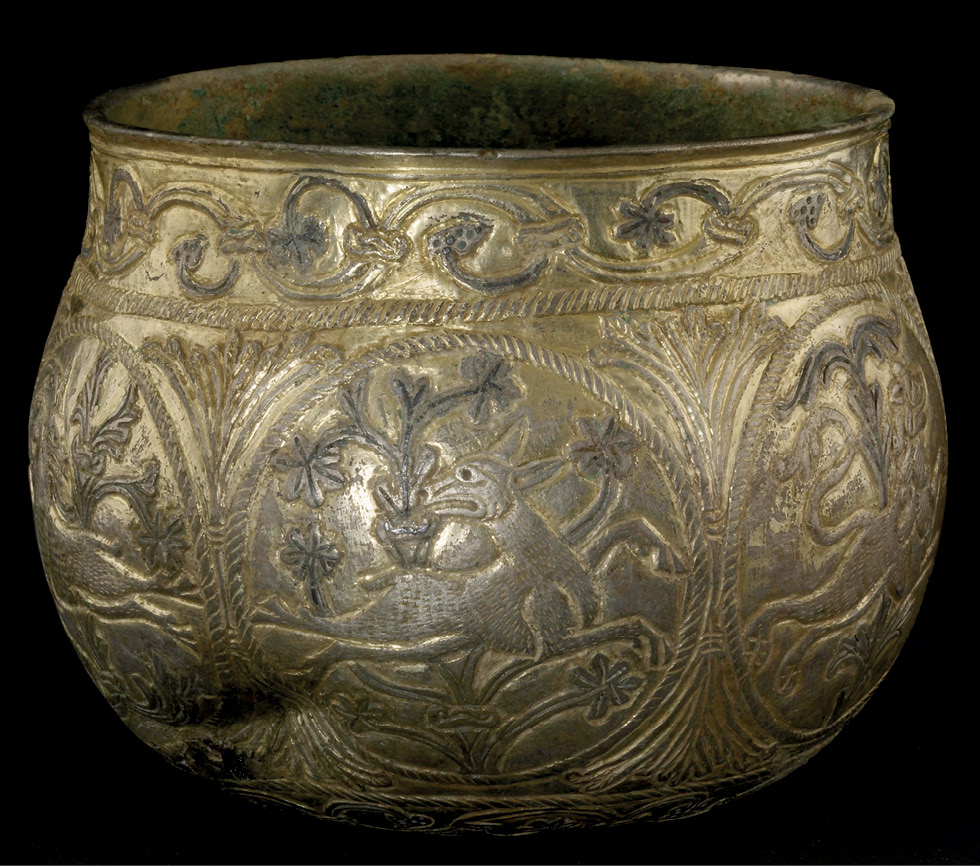
Not all hoards are associated with the victims of Vikings. Some are thought to have been buried by the warriors themselves, stashing stolen riches for safekeeping (CA 264). The contents of these caches testify to how lucrative raiding could be, as well as the wide-reaching commercial connections of the Viking world. Another piece of recent research featured in the exhibition focuses on the Bedale Hoard, a collection of 48 gold, silver, and iron objects that was buried in the late 9th century and rediscovered in 2012 (CA 279 and 300). Its diverse contents include a broad silver bracelet from Ireland, gold fittings stripped from an Anglo-Saxon sword, and a twisted neck-ring from Russia, while more subtle international connections have been revealed by Dr Jane Kershaw’s study of silver ingots within the hoard. Although these slender bars look fairly homogenous, lead-isotope analysis shows that their metals came from many different sources, including melted-down coins from the Islamic world, called dirhams. The contents of the Vale of York Hoard, some of which are displayed nearby, are equally cosmopolitan. Found in 2007 near Harrogate (after which it was originally named; CA 212), this early 10th-century cache also includes items from Ireland and Russia, as well as dirhams that were minted in what today are Iran, Afghanistan, and Uzbekistan.
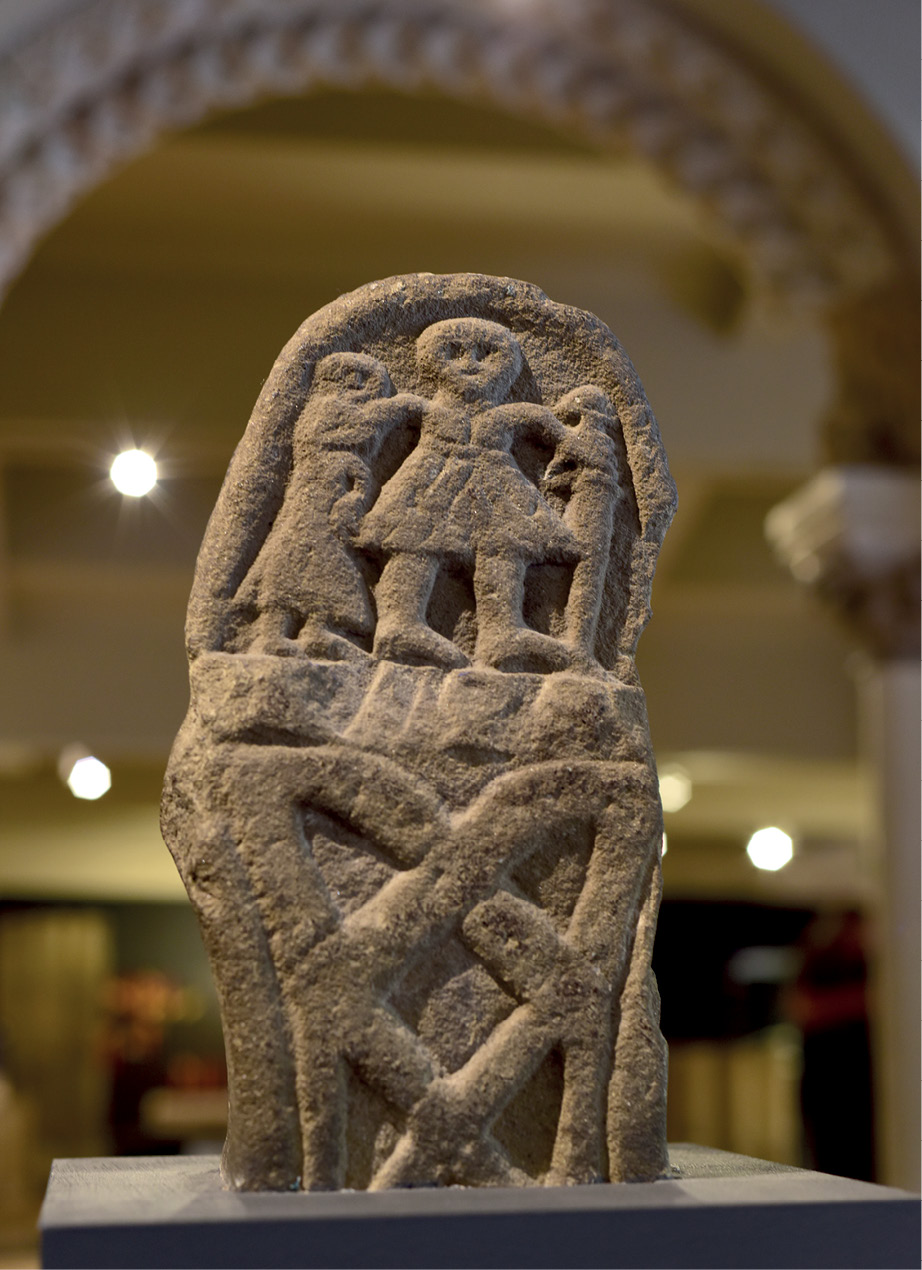
Through these far-reaching networks, areas of Scandinavian settlement could enjoy access to exotic new materials like Baltic amber, Shetland soapstone, and even silk (a remarkably complete cap from 10th-century Coppergate is included in the displays). These connections carried a heavy human cost, however. Viking raiders did not only amass valuable metalwork to sell on – they also took captives who were forced into servitude or concubinage back in Scandinavia, or sold as slaves abroad. Much of the Islamic silver that flooded into Anglo-Scandinavian England is thought to stem from this trade in human lives, which is described too by 10th-century chroniclers from what today are Iraq and Iran. The Norse Sagas and Irish sources also mention men and women being seized for sale; most of these narratives concern high-born individuals, but of the numberless, nameless ordinary people who suffered the same fate little trace can be found. One possible exception comes from a fragment of a carved cross that once stood at Weston, North Yorkshire. It includes an image of a large male figure clutching a sword in one hand, with his other arm flung out across the body of a woman. Previous interpretations of this scene have seen a rescue or a protective gesture – but another possible reading, favoured by Viking North’s curator Dr Adam Parker, is of a warrior capturing a woman for the slave trade.
Other forms of displacement can be seen at Cottam B, a rare rural settlement of this period whose remains were excavated in 1993 and 1995. Published by Professor Julian Richards in Internet Archaeology (https://intarch.ac.uk/journal/issue10/richards/excav.html), this site was home to an Anglian farmstead that was abandoned in the late 9th century, after which a new enclosed settlement was laid out around 100m (328ft) to the north. Occupied into the early 10th century, this second settlement had an unusually elaborate entrance, which would have been a highly visible signal of the new inhabitants’ status. Metal-detecting and field-walking has produced a range of characteristically Scandinavian items from the later farmstead, including brooches and buckles decorated with Jelling- and Borre-style ornamentation, and miniature six-sided bells, known as ‘Norse bells’, that are associated with Viking colonies. As there is no evidence of a violent takeover, the shifting settlement might reflect a reallocation of land following local political changes.

Exploring identities
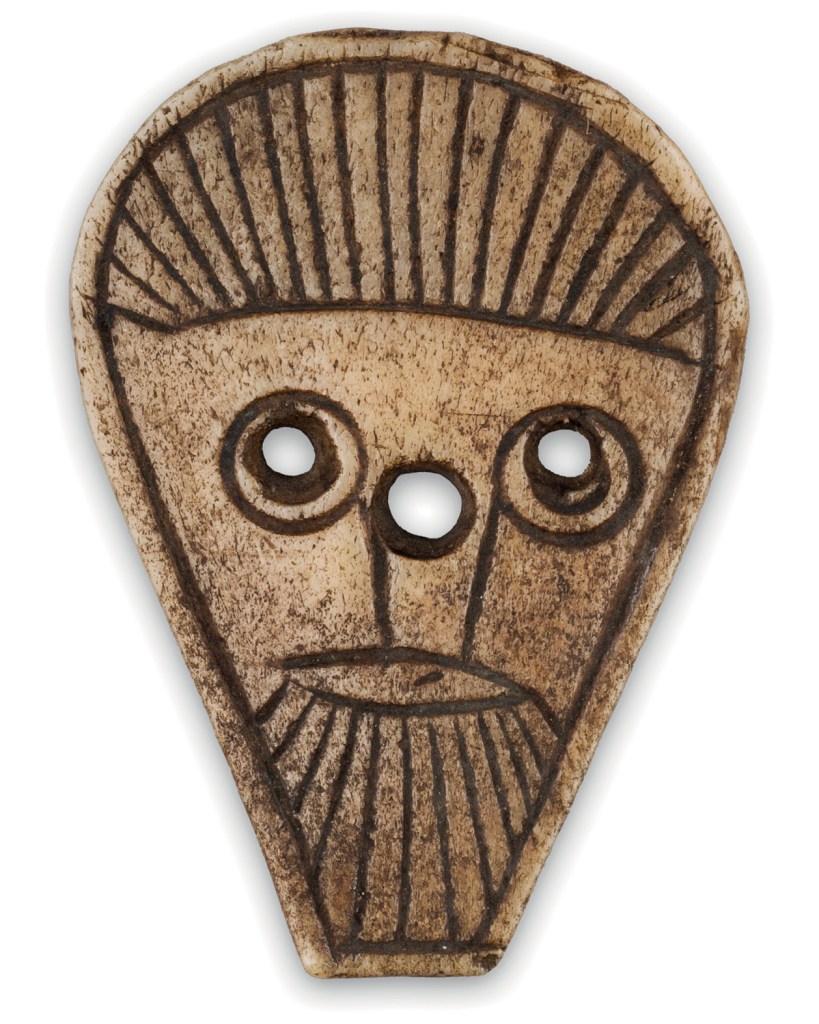
Across the Viking North, Anglian and Scandinavian ideas and artistic styles gradually blended to create distinctive hybrid forms of pottery, metalwork, and sculpture, as well as innovations unique to the region. Particularly striking are the grave markers, shaped like miniature longhouses and known as ‘hogbacks’, which are found from Derbyshire to central Scotland. Cultural influences also flowed both ways: inspired by the crosses worn by Christians, some Vikings began to wear Thor’s hammer pendants. One of these, recently discovered at Newton-le-Willows in North Yorkshire, is an eye-catching example with a miniature gold hammer inlaid within a larger silver one. Perhaps, far from home, its owner felt the need to assert their identity more visibly. Might a similar instinct have prompted someone to wear a lead pendant shaped like a longboat in 10th-century Coppergate, long after Scandinavian settlement in York had become an established reality? Another glimpse of how these people may have seen themselves is offered by one of the most characterful items in Viking North: a small bone plaque from York, which depicts a bearded male face – perhaps a Viking image of a Viking.
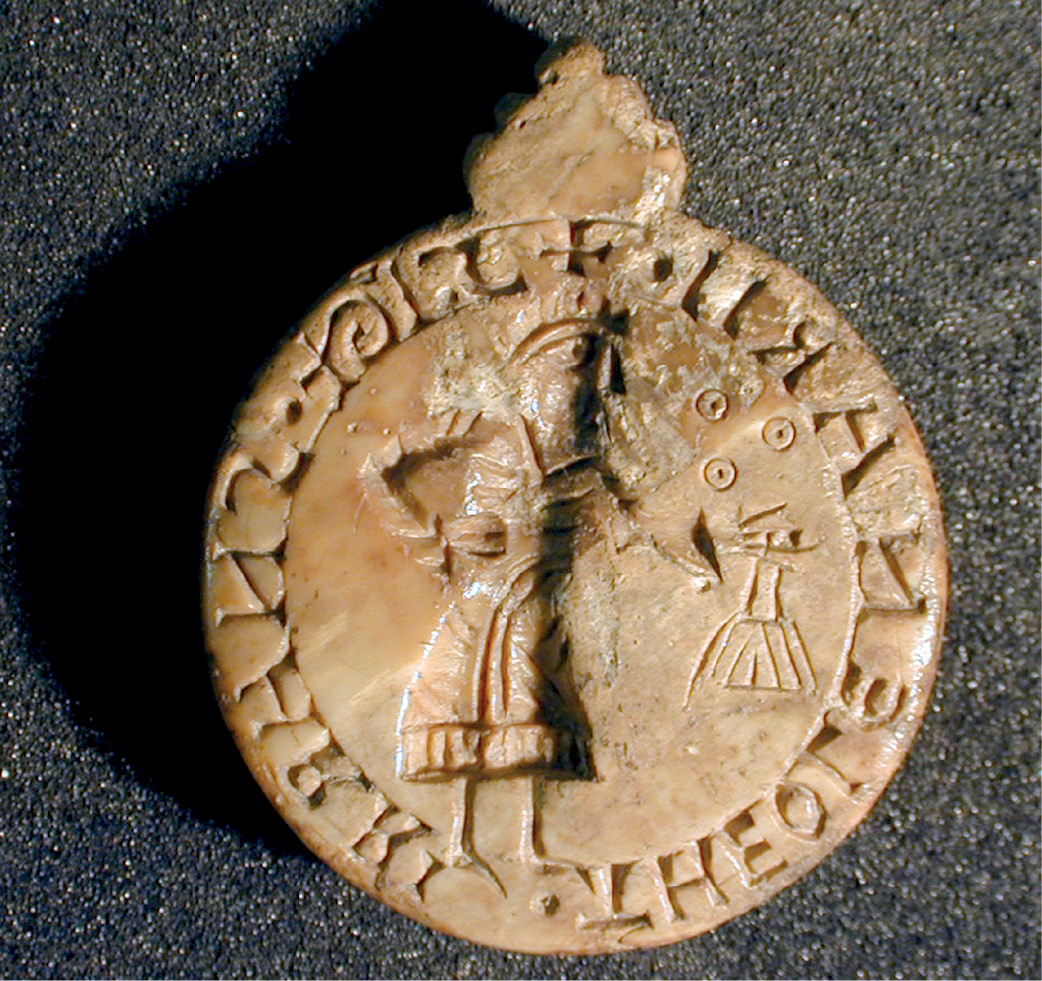
Today, Viking influences can still be seen across northern England: modern maps of the region are scattered with place names with Norse endings (such as -kirk, -keld, -by, and -thorpe) or preserving the names of Scandinavian founders, while the West, North, and East Ridings of Yorkshire come from the Old Norse þriðjungr, meaning ‘a third’, reflecting earlier territorial divisions. A more tactile representation of this enduring impact, however, comes towards the end of the exhibition. It is a seal, crafted from costly walrus ivory, that was found near one of York’s old city gates and had belonged to a toll collector who is depicted with his bag of coins. His name is given as Snarrus, a Latinised version of the Old Norse ‘Snorri’. Dating to the 12th century, it reflects how Scandinavian identities were still being expressed even after the Norman Conquest changed the political landscape once more – a watershed that was itself the work of the descendants of Vikings, whose name betrays their origins as ‘North Men’.
Further information:
Viking North will be at the Yorkshire Museum in York until July 2027. Entry to the exhibition is included in general admission; see http://www.yorkshiremuseum.org.uk/exhibition/viking-north for more details.
All images: courtesy of Yorkshire Museums Trust unless otherwise stated