
Subscribe now for full access and no adverts
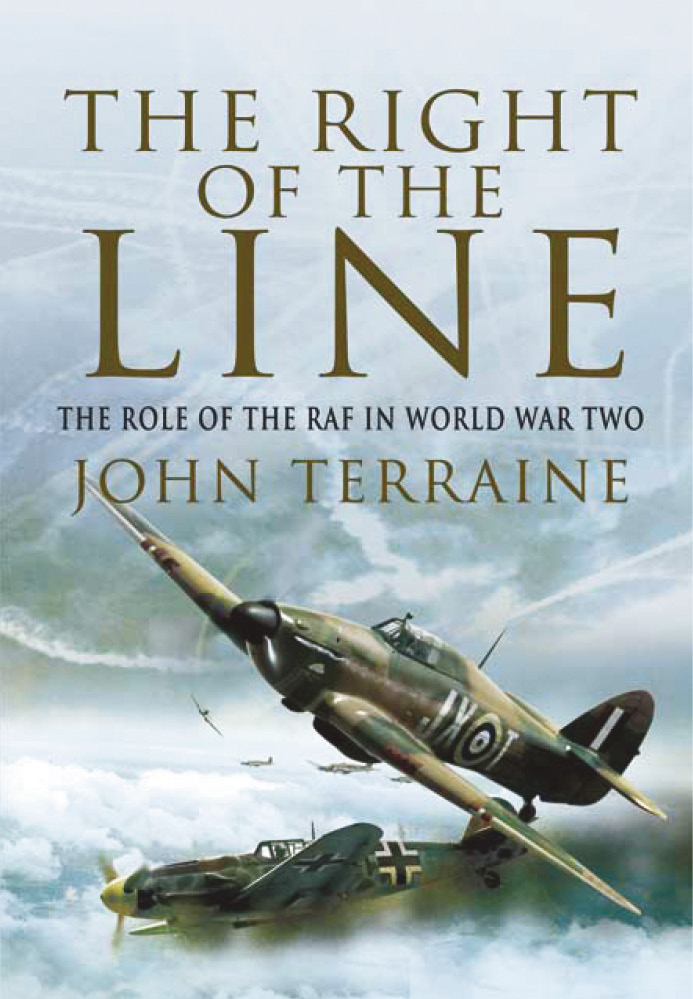
In ancient times, ‘the right of the line’ was the place simultaneously of greatest danger and of greatest honour for any military unit. This probably relates to the vulnerability of the unshielded right side of spear- and shield-bearing warriors. The tradition has persisted to this day, at least on ceremonial occasions.
As the historian John Terraine explains in his foreword to his classic 1985 book of the same name, it might seem odd to apply this term to the highly technical RAF, but his argument is that ‘the Royal Air Force found itself without option shouldering the burden of the war when the Army was in eclipse and the Royal Navy strained to its limits’.
This is a substantial book and it takes some 90 pages before the first aerial combats are described, but Terraine’s description of the interwar struggle to shape a war-ready air force is just as edgy and tense as the actual battles. In essence, the RAF that was formed in 1918 was stripped rapidly after the war of squadrons, planes, investment, technological development, and strategic direction. Even Germany’s rapid emergence as a powerful and aggressive force in the mid-1930s was met with complacency in some circles.
Terraine highlights the unsung heroes of this critical period. One is a Marshal of the Royal Air Force, Sir Edward Ellington, a name virtually unknown now. By all accounts, a dull and uninspiring man, he nevertheless in four brief years oversaw the specifications that led to the Spitfire and Hurricane, and later to the Stirling and Halifax; headed a substantial RAF expansion scheme; ordered major airfield construction in East Anglia; sped up purchasing of new planes ‘off the drawing board’; set up new factories; devised the Command system (Fighter Command, Coastal Command, and so on); and created the RAF Volunteer Reserve. His protégé Sir Henry Tizard (another name that will be obscure to some) was appointed to lead a scientific study committee, which in 1935 was tasked with considering a ‘death ray’. This concept was swiftly disproved, but the thorough Tizard ordered the continued investigation of radio pulses, which famously led to RDF – ‘Radio Direction Finding’, or radar.
An unformed embryo
Terraine is under no illusion, despite these strides, as to the state of the RAF in 1939: ‘So for the immediate purposes of war Britain possessed not so much an air force as an unformed embryo.’ Long-range bombers were numerous but didn’t have the trained pilots or equipment to come even close to hitting targets at night, and were massacred in the day. Light bombers were slow, poorly armed, and lacked the skills of cooperating with land forces that became such a given in 1944. Fighter Command had (just in time) acquired modern fighters, but was still gearing up tactically and organisationally for coordinated air defence.
Terraine skilfully narrates the progress of the bitter aerial campaigns, but what lifts this book into the extraordinary is his constant, penetrating analysis – of strategic decisions, tactics, training, organisation, and technology. We are told not just what happened, but why it happened. The RAF rarely seems to have the right balance of resources, especially in the first half of the war, and Terraine’s pithy judgements hit home: ‘One wonders at times, whether “Cinderella” is the right name for Coastal Command in 1939-40; Cinderella was supposed to be beautiful, and she did have a fairy godmother.’
The evolution of Bomber Command into the gigantic organisation it became is covered in two major sections, the first highlighting the total inadequacy of its planes and performance, at a huge cost in life. Terraine draws parallels with another area of his expertise, the Western Front in World War I:
Both the High Command of the first war, and the Air Staff of the second were operating under compulsion. The 1914-18 BEF and Bomber Command did what they had to do. What grates is the absolute assurance with which Sir Charles Portal and other Air Marshals announced their certainty that they could produce decisive results single-handed, when the inadequacy of their force was becoming daily more apparent, and they had clear evidence of its weakness in performance.
My own father, a Wellington co-pilot, ruefully testified to the wastefulness of these early raids. He was (thankfully) transferred to Malta and then Egypt, and Terraine’s section on the Mediterranean is full of fascinating detail, notably on the way a beleaguered command with obsolete planes evolved into a war-winning force. At first, biplane Gladiators and Italian Fiat CR42s clashed in a seeming re-run of 1914-1918 battles. But sheer tenacity plus steady growth with new planes stripped from home defence made Middle East Command a potent weapon. Crucial to this was the establishment of close cooperation between Army and Air Force.
Most books on aerial warfare focus on pilots, numbers of planes deployed, and numbers shot down. A key strength of Terraine is his knowledge of the logistics, particularly the fact that, at any one time, operational planes were often hugely outnumbered by planes in reserve, in crates, awaiting parts, cannibalised for spares, or simply abandoned. His talent for celebrating unsung heroes again comes to the fore, with Air Vice-Marshal G G Dawson described as ‘a ball of fire’ when tasked with overhauling the maintenance of the force’s hundreds of non-functioning planes.
What lifts this book into the extraordinary is Terraine’s constant, penetrating analysis.
Saving the country
The RAF, Terraine argues, took ‘the right of the line’ in varying contexts through the war: saving the country from invasion in 1940; underpinning the desert victory in 1942; and progressively overcoming the U-boat menace – perhaps the greatest battle of them all. ‘Coastal Command’s achievement stands for all time: starting with just two kills in 1941, by the end of the war its own unaided efforts had accounted for 169 German U-boats out of 326 destroyed by shore-based aircraft alone.’
Of course, it is the massive bomber offensive on Germany that most demonstrates the RAF’s power – for good or ill, depending on one’s point of view. Under Air Chief Marshal Sir Charles Portal and the famous ‘Bomber’ Harris, Bomber Command was presented first as the only way the country could strike back at Germany, and, from 1943, as a force so potent that it would batter the enemy into submission and allow ‘a relatively small land force’ to simply march in and take over.
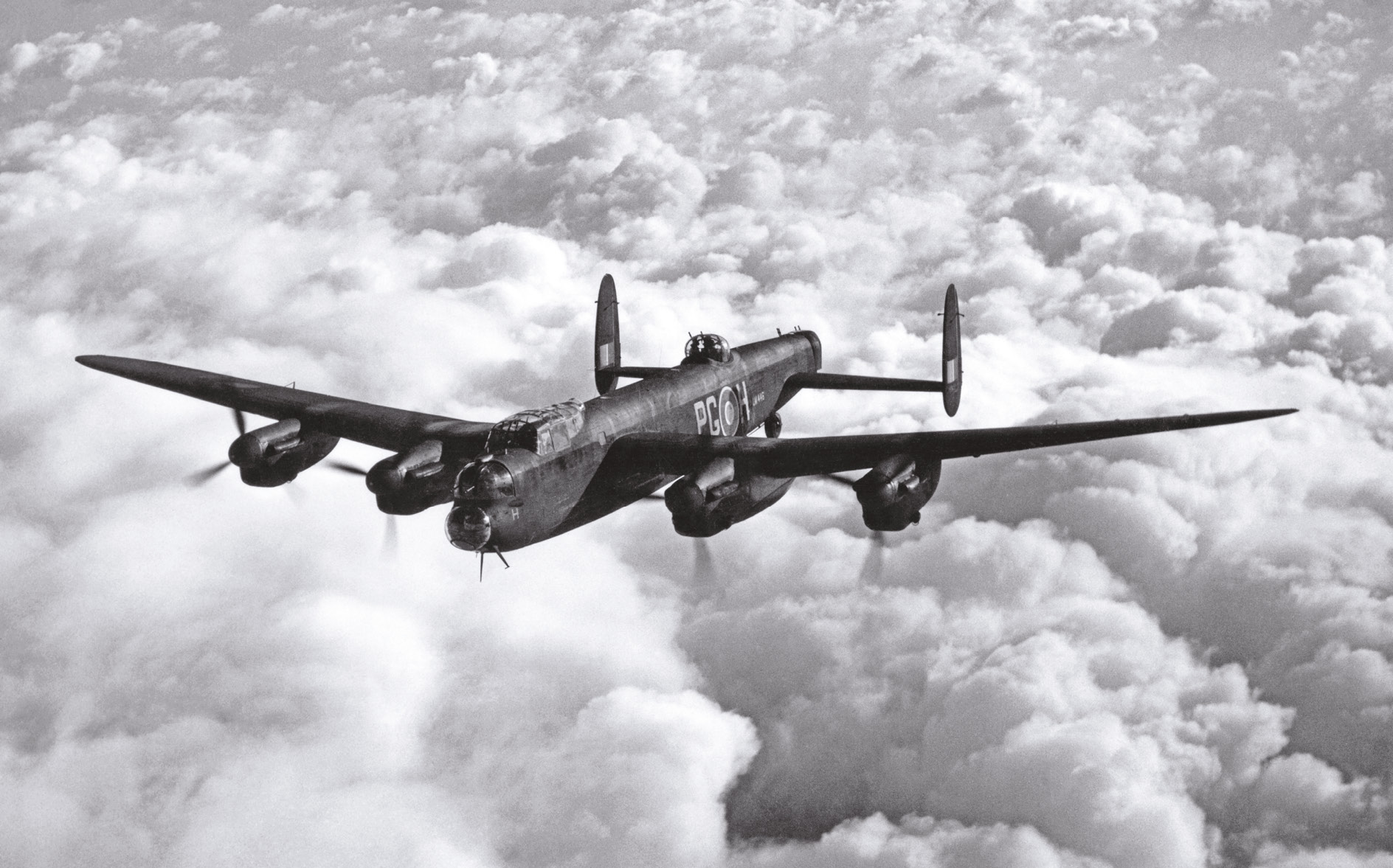
Thus was born the controversy that rages to this day: enormous loss of civilian life on the German side, coupled with extraordinary resilience and determination to keep fighting, and, on the RAF’s side, devastating losses of aircrew, exceeding (in percentage terms) any other branch of service. In a chapter headed ‘Moral Fibre’, Terraine marvels at how few crewmen serving their operational tours cracked under the strain. Nevertheless, full tribute is paid to the impact of strategic bombing in the closing months of the war, particularly in rendering the German army immobile through its devastation of the oil industry.
The other arena in which the RAF held ‘the right of the line’ was in laying the groundwork for the British Army – war-weary and short of recruits to fill the many gaps – to overcome the German Army in Normandy:
It was air power that paved the way into Europe; air power covered the landings and made it impossible for the Germans to concentrate against them; air power maintained interdiction, and pressure on the enemy when the ‘master plan’ failed; air power completed the overwhelming victory.
This is an epic history that never loses sight of the brave men and women who made victory possible. It is with particular pride in my father that I read Terraine’s closing tribute:
In those young men we may discern the many faces of courage, the constitution of heroes: in lonely cockpits at dizzy altitudes, quartering the treacherous and limitless sea, searching the Desert’s hostile glare, brushing the peaks of high mountains, in the ferocity of low-level attack or the long, tense haul of a bombing mission, in fog, in deadly cold, in storm… on fire… in a prison camp… in a skin-grafting hospital.
John Terraine
Born: 15 January 1921
Died: 28 December 2003
Nationality: British
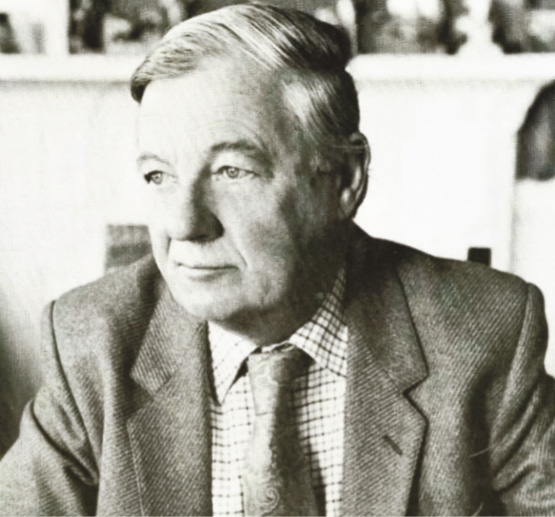
John Terraine was educated at Stamford School, Lincolnshire, and attended Keble College, Oxford. Prevented by poor health from joining the military, he went on to work for the BBC for 18 years, before becoming a freelance television screenwriter, most famously working as associate producer and principal scriptwriter on the 26-part BBC series The Great War (1963-1964). Terraine is also well known for his controversial defence of British generals such as Sir Douglas Haig during the period 1914-1918, but his historical writing covered a variety of topics related to the major European conflicts of the 20th century, including The Right of the Line, which won the Yorkshire Post Book of the Year award in 1985.
Image: Air Historical Branch – RAF/MOD