Subscribe now for full access and no adverts
Folk memory, songs, place names, and oral histories are being deployed by the Somerset Eel Recovery Project (SERP) in its work to bring this critically endangered species back to the Somerset Levels. Those stories and songs are a reminder that the Levels once teemed with eels – Sherds remembers visiting John Coles’ Sweet Track excavations in 1975 and seeing eels in the ditches and rhynes (the water channels used to drain the peatland meadows). Since then, the population of the European eel has dropped by more than 90 per cent in total, while eel numbers in Somerset’s Bridgwater Bay – once a thriving gateway for young eels carried on the Gulf Stream – has dropped by 99 per cent.
It was only in 1904 that scientists finally worked out that eels are born in the spawning grounds of the Sargasso Sea, east of Bermuda, from where ocean currents enable them to travel to northern Europe over a two- to three-year period. They then migrate up freshwater rivers and streams to spend 10 to 15 years growing to maturity, before returning to their saltwater birthplace to mate and die.
Folklore tells us that eels will climb walls, propel themselves across wet grass, or slither over each other in order to overcome obstacles. Based on this, SERP has experimented with the use of rope ladders to help the eels navigate river barriers such as hydro-electric dams. Engineered fish ladders are expensive and take time to plan and construct. Ropes woven from dried grass and straw and draped over weirs and dams have proved to be a successful way to provide a natural ladder that eels can use to move upstream. SERP now runs rope-making workshops, and citizen scientists regularly visit the weirs to count the migrating eels, helping to monitor how many make the journey.
SERP’s ‘Eels in the Classroom’ project has installed 60 eel tanks in local schools for lessons in eel husbandry, helping to replace the fear of eels with wonder and fascination at their remarkable life cycle and aiming to ‘repair our broken relationship with European eels and inspire a new generation of conservationists’. Andrew Kerr, SERP’s Chair, says eels once shaped place names, customs, and livelihoods; they were caught in their thousands, sung about in pubs, and paid as rent to Glastonbury Abbey. They are not just a ghost of the past or a memory, but a vital part of the living landscape.

Woodcraft Folk
Founded in 1925, the Woodcraft Folk was the brainchild of Leslie Allen Paul (1905-1985), who wanted to set up an alternative youth movement that would avoid the militarism and authoritarianism of the early Scouts (founded in 1910) and the Kindred of the Kibbo Kift (1920), in both of which Paul had once been deeply involved.
‘Folk’, in this case, was chosen to denote a community of people with shared values: those of ‘peace, equality, friendship, and social justice’, combined with ‘international understanding’ and ‘respect for the environment’. The ‘Woodcraft’ element refers to the movement’s emphasis on outdoor activities – camping, hiking, and survival skills – which were designed to foster cooperation and an understanding of nature.
The Woodcraft Folk have always had radical left-wing leanings. Paul was inspired by the socialism of William Morris, and H G Wells, founder of the Fabian Society, was an early supporter. The Labour Party recognised it as ‘an appropriate organisation for the children of its members’ and encouraged participation in their summer camps.
Under the leadership of Henry Fair in the 1930s, it played a key role in the Kindertransport scheme, working with Sir Nicholas Winton to help 669 Jewish children escape from Nazi-occupied Czechoslovakia, as well as finding homes for young refugees from the Spanish Civil War. According to the Woodcraft Folk’s own website, Henry Fair was dubbed ‘the second Schindler’ by the media for this work, and he was included on a Gestapo death list for his role in the evacuations.
The Woodcraft Folk are alive and well and celebrate their centenary this year. Researching the 100-year history of this fascinating organisation is made easier by the fact that a comprehensive archive was created for the 90th anniversary, funded by the National Lottery and housed at the UCL Institute of Education in London. Much of it is available to view online through the Woodcraft Folk’s heritage website (https://heritage.woodcraft.org.uk/home).
For the 100th anniversary, an exhibition is planned at the Rochdale Pioneers Museum (the birthplace of the Co-operative Movement – see CA 382) which is likely to be a colourful event given the role of art and graphic design in the organisation’s activities, resulting in striking costumes, banners, badges, magazines, newsletters, and logbooks.
The Association for Roman Archaeology
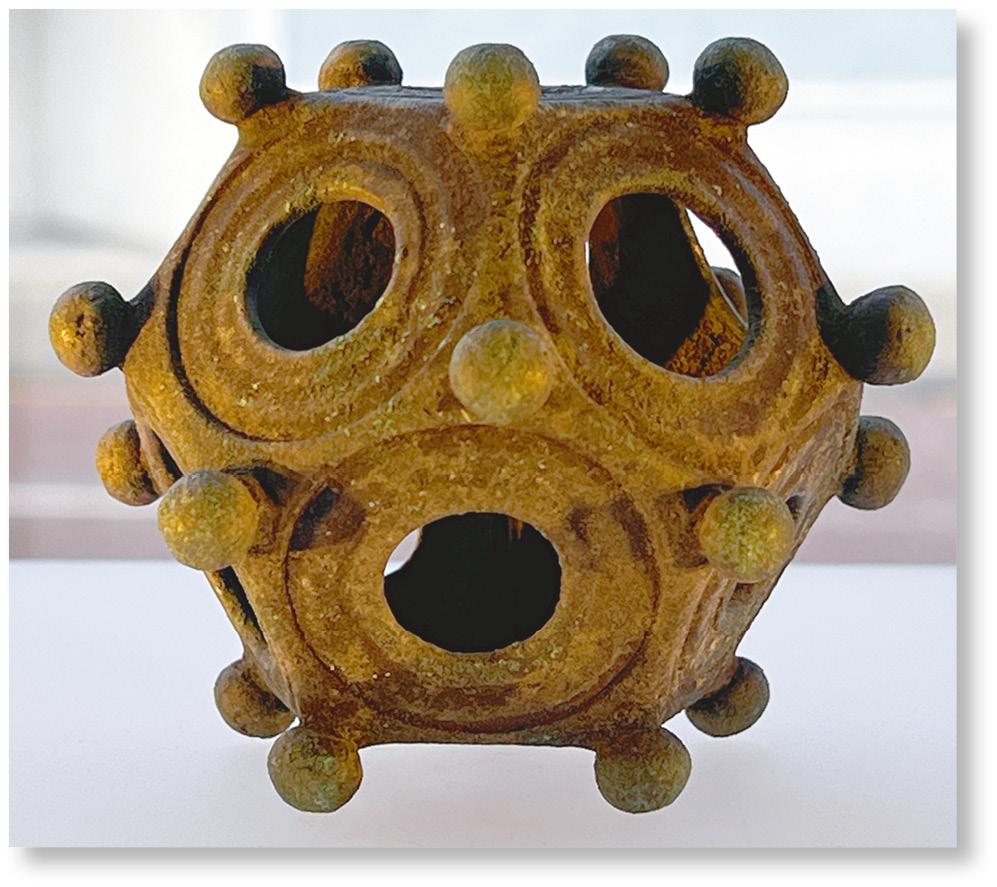
One benefit of membership in the Association for Roman Archaeology is the 64-page ARA News, which is always packed with interesting stories. In the latest issue, Martin Henig considers a well-preserved dodecahedron (excavated at Norton Disney, Lincolnshire, in 2023, and currently the focus of an exhibition at the University of Nottingham Museum) and suggests that these mysterious 12-sided bronze objects might have been used for divination – the number of sides mirroring the number of signs of the zodiac.
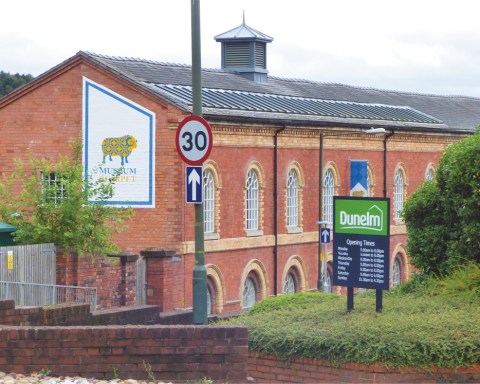
Stephen Cosh writes about early experiments in lifting Roman mosaics and recent research into the archives of William Clarke of Llandaff (north of Cardiff), a monumental mason who specialised in this kind of work. The firm was responsible for the raising in 1904 of the Mars mosaic from Fullerton Roman villa, Hampshire, now in the Museum of the Iron Age in Andover. The article sounds several notes of alarm: the Andover Museum is threatened with closure, there are many fine mosaics that have been lifted in the past but that are now languishing unappreciated in museum stores, and two other pieces of mosaic from Fullerton were sold at auction for the remarkable sum of £560,000 last year. This valuation is worrying, writes Stephen, if the ‘looting for profit that so frequently occurs with mosaics in the Middle East should come to our shores’.
In another article, Stephen Cosh considers the fate of Romano-British mosaics in Late Antiquity, when high-status residences were adapted for agricultural and industrial purposes. Some floors undoubtedly served as grain-dryers – the traditional interpretation – but Stephen asks whether more of them than we realise might have been used as malting floors (see CA 420), especially when it was the bath suite that was converted. The cold plunge baths would be ideal for the initial process of steeping the grain in water for a few hours before spreading it over the floor to germinate and then heating it to produce malt. Perhaps many a villa ended up as a brewery or pub – certainly the 4th-century writer Ammianus thought that some Gauls were excessively fond of beer: ‘the baser sort wander about aimlessly in a fuddled state of perpetual intoxication,’ he opined in his Historia Augusta (15.12).
Female leaders
A recently published paper in Nature (https://doi.org/10.1038/s41586-024-08409-6) suggests that we should place greater credence in the observations of Classical authors than has been fashionable in recent decades. In his Gallic Wars, for example, Caesar found it remarkable that women in Iron Age Britain could take multiple husbands and head up their communities. This certainly seems to have been true of women in southern Britain, where analysis of 57 ancient genomes from Durotrigian burial sites has found an extended kin group centred around a single maternal lineage (see ‘Science Notes’ in CA 421).
When the authors compared mitochondrial haplotype variation among European archaeological sites spanning six millennia, southern British Iron Age cemeteries stood out as having reduced diversity driven by dominant matrilines – in other words, reproduction was taking place within the kin group. The data also showed persistent cross-Channel genetic links, by contrast with most of Britain. In other words, as Caesar said, there was significant migration from Gaul into southern Britain, possibly of entire kin groups who then retained their own identity, the men breeding with a restricted number of female leaders.
Support for the idea of high female status comes from burial practice. Human remains from the Iron Age are rare, leading to the conclusion that excarnation and cremation were the dominant rites. The Durotriges, who occupied the central southern English coast around 100 BC to AD 100, were exceptional in depositing their dead in formal cemeteries of flexed inhumations – and it is women who are more commonly associated with a greater number and diversity of prestige burial goods.