Subscribe now for full access and no adverts
It is said that reading is to the mind what exercise is to the body, so as well as trying (but not always succeeding) to keep the body trim by going for a short run every day, Sherds also (more successfully) sets aside time to spend with a book in the evening.
Sherds’ current reading includes Michael Hall’s absorbing history of the National Trust, called A Queer Inheritance. In it, the author shows that not every property donated to the Trust during the post-war decades came from a distressed owner faced with punitive death duties, declining agricultural income, and ruinous maintenance bills. Instead, some of the Trust’s star properties were donated by ‘confirmed bachelors’ (of both sexes) who lavished money on their houses, gardens, and collections, and saw the National Trust as the means of gaining acclaim for their connoisseurship, as well as a permanent place in the annals of fine art history.
These aesthetically minded donors found a sympathetic ally in James Lees-Milne (a man described by Michael Hall as having his own ‘eventful’ love life), who was employed by the National Trust from 1936 to persuade owners of historic estates to donate them (along with a generous endowment). Many of today’s much-visited properties in the National Trust portfolio were acquired because of Lees-Milne’s persuasive influence on what he called in his diaries ‘an almost extinct generation of bien, high-to-middlebrow bachelors, endowed with money, privilege, and nice houses and possessions’.
Another pivotal figure in the acquisition of the Trust’s impressive list of country houses was Gervase Jackson-Stops, the National Trust’s Historic Buildings Advisor in the 1980s (who died far too young in 1995 from an AIDS-related illness). He is known for adding Canons Ashby (Northamptonshire), Calke Abbey (Derbyshire), Chastleton House (Oxfordshire), Kedleston Hall (Derbyshire), and Stowe Gardens (Buckinghamshire) to the portfolio.
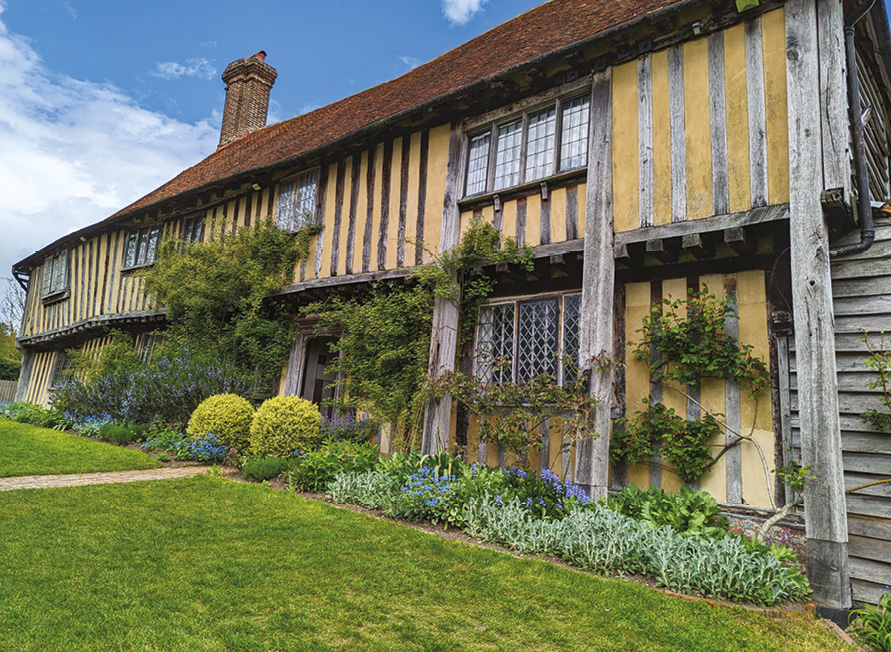
Michael Hall weaves a whole cast of colourful characters into this rich story, including the female members of ‘Ferguson’s Gang’, whose fundraising activities helped to acquire much of the land around Stonehenge; the Arts and Crafts pioneers Philip Webb and C R Ashbee; and the many actors, playwrights, musicians, and artists whose lives intersected at Smallhythe Place (Kent; see CA 410).
The core of the book consists of chapters analysing properties chosen not simply because they housed or were used by people who might be defined as queer (the author’s preferred term) but because they were ‘shaped’ by them. This matters because it impacts the ways in which a place is presented, understood, or remembered to this day. While sensitive and well-read visitors have long known the queer histories of Knole (Kent), Sissinghurst Castle (Kent), Monk’s House (East Sussex), Nymans (West Sussex), Plas Newydd (Anglesey), Lindisfarne Castle (Northumberland), Buscot Park (Oxfordshire), Lamb House (East Sussex), Anglesey Abbey (Cambridgeshire), or The Homewood (Surrey), to name just a few, guidebooks made no mention of their creators’ same-sex love affairs until 2008, and much still depends on the willingness of room stewards to discuss the subject if it is raised by visitors.
Spirit of place
Should the National Trust make more of this legacy, given the extent to which ‘queer’ sensibility has had such an influence on the collections of the National Trust? The charity used to be criticised for its ‘Trustification’ approach to property presentation, which led to every house having a similar feel. That changed from 2008, when the idea of ‘spirit of place’ was introduced as a guiding principle for decision-making, emphasising the essential character that makes each property different from any other.
That led to some simplistic and subjective ‘spirit of place’ definitions, and sometimes a narrow focus on one characteristic of a property and its history at the expense of all the others. The real reason why so many people cherish National Trust properties (apart from the cream teas) is their diversity and complexity – the intersection of house, garden, works of art, and furnishings with the centuries of history and the lives of the people who created, inhabited, and worked in these houses. Queer dimensions add another layer of colour and richness to our understanding of so many wonderful properties, and lead us away from deference to aristocrats and landed power and a pre-occupation with normative upper-class genealogies.
Oxbow ‘Reflections’
Also in Sherds’ reading pile at the moment are two books in a series called ‘Reflections’, newly launched by Oxbow. Grandly subtitled ‘The Bradley Collection’ and ‘The Whittle Collection’, they are books by leading archaeologists in which extracts from their works published by Oxbow over the decades are brought together in one volume to illuminate the key themes that they have pursued throughout their archaeological careers.
Each book begins with an introductory essay explaining how the texts were chosen and reflecting on the way in which the author’s thinking has developed over the course of time – an opportunity to amend earlier errors and (with the benefit of better dating techniques) review chronologies.
One of Richard Bradley’s themes is the relationship between prehistoric monuments and their setting in relation to landscape features and cosmic orientations. He makes the point that the direction faced by almost all late Neolithic and Bronze Age monuments is towards the midwinter solar arc, not the midsummer sunrise – something that those who gather at Stonehenge at midsummer have not taken on board. The timing of whatever rituals were enacted at these places has to do with the turning point of the year from darkness to light, and with ideas about death and renewal. It is also the season when people can take time off for festivities – in June they would have been too busy weeding their crops and fending off pests.
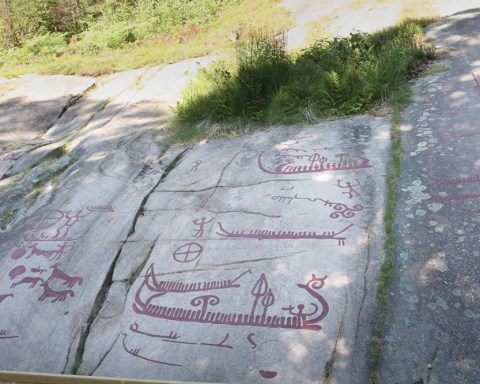
Richard’s reflections are also concerned with rock art, the kinds of exotic stone that were chosen as the material from which axes were crafted, and the formation and choice of material for riverine deposits, middens, and hoards. He makes a plea for archaeologists to be bolder in their speculations about the meaning of their discoveries, at the same time as observing scientific exactitude in reporting what they find so that others can offer alternative explanations.
Alasdair Whittle’s volume echoes that theme, dividing archaeologists into those who prefer to generalise and those who prefer particularisation, a distinction that he says goes ‘at least as far back as David Clarke and the search for “a comprehensive archaeological general theory”, and Christopher Hawkes who preferred “specific themes to general philosophical ones”.’
Alasdair himself sees huge scope for the future of archaeology in ‘taking the “pre” out of prehistory’. Using the many developments in the use of isotopic and aDNA analysis, along with Bayesian modelling of radiocarbon dates, he shows that it is now possible to assign monuments and people to explicit dates down to the scale of decades, and to explore the detailed life stories of individuals and their genetic relationships. Set against that particularity, he is keen to promote the benefits of big-picture narratives for the development of Neolithic lifeways and societies across Europe as a whole.
A burning question
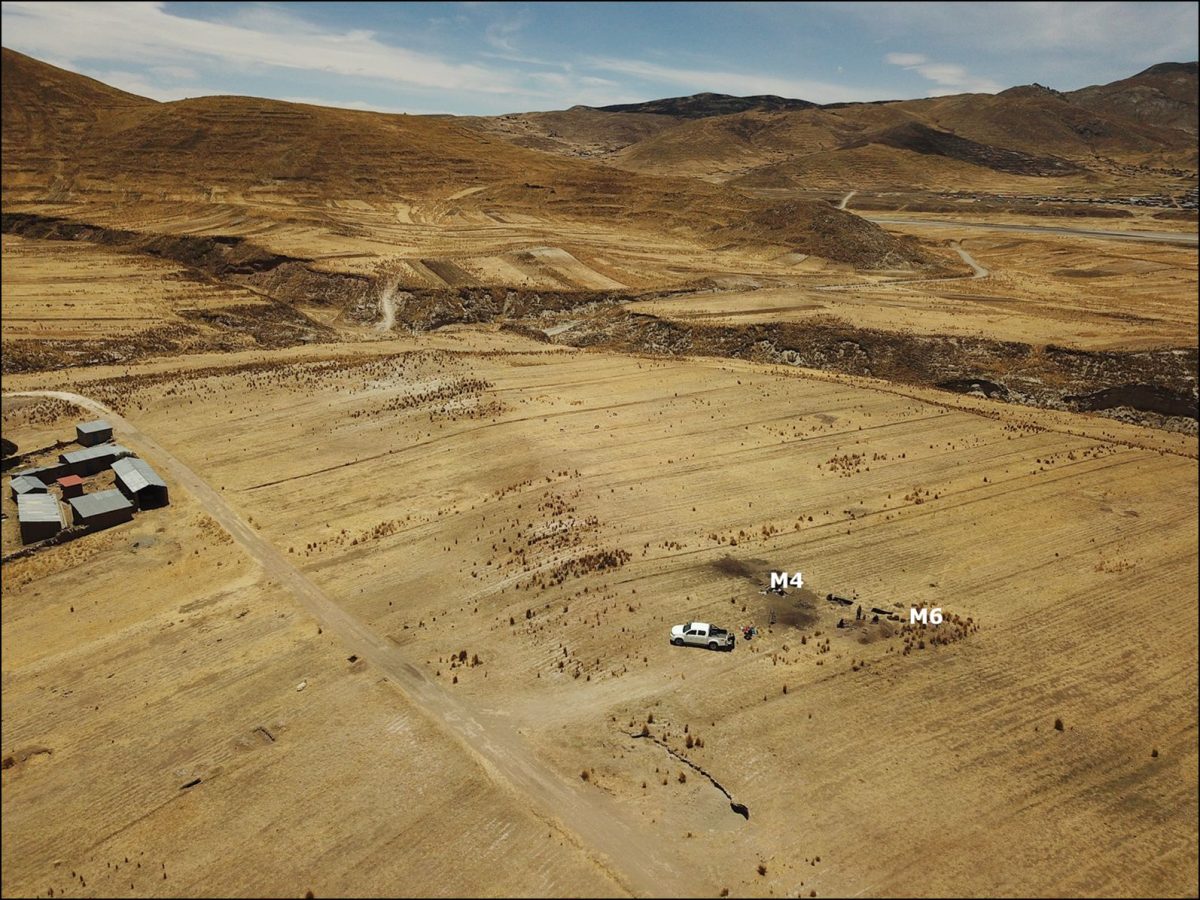
Cotswold Archaeology’s newly published monograph Burnt Mounds and the Bronze Age Exploitation of the Suffolk Claylands finally provides a plausible explanation for these large heaps of heat-cracked and shattered stones mixed with bone, charcoal, and flint, which are usually found in association with watercourses, springs, and wood-lined troughs.
Previous explanations have speculated that burnt mounds resulted from brewing, large-scale cooking and feasting, woodworking, textile production, or sauna‑style steam baths. Evidence from three sites excavated by Cotswold Archaeology in Suffolk now points to a consistent picture of their use in association with hide‑tanning (see CA 432 and 434).
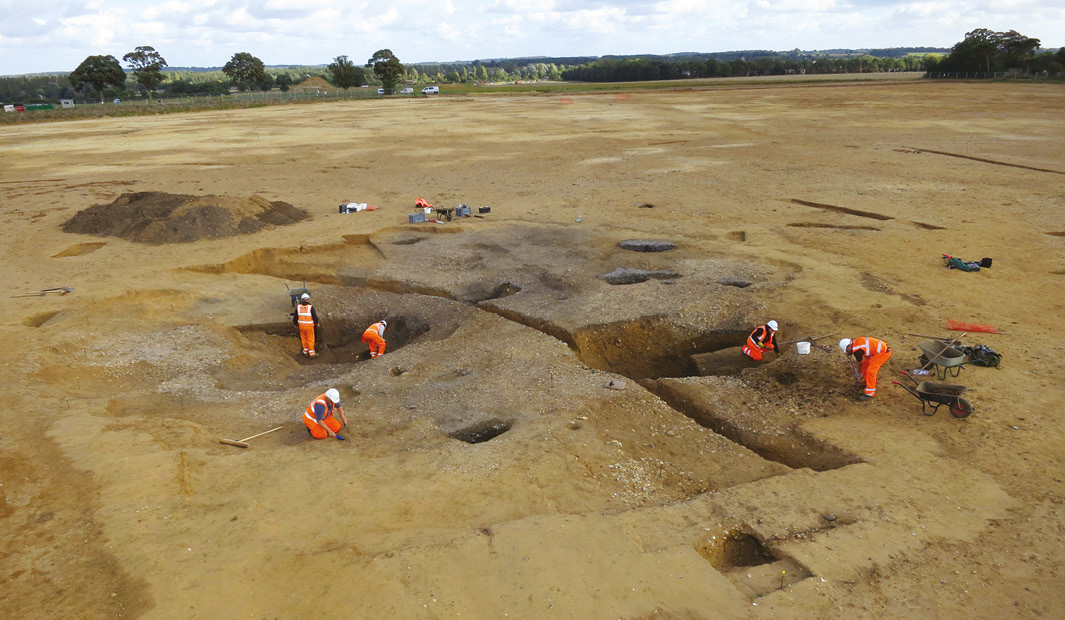
The bones in the mounds are predominantly from cattle, and flint microwear analysis reveals patterns resulting from scraping, piercing, and cutting dry hides. Chemical evidence adds further weight to this interpretation, with one trough containing a distinctive greasy fill identified as lipids from processing animal remains.
Pollen evidence from previously studied burnt mound sites across the country points to late summer/early autumn use, which is when communities would have been preparing hides after seasonal culling. And, given the noxious smell associated with tanning, it makes sense that these sites were located well away from settlements.
Cotswold Archaeology is to be congratulated on solving this long-standing mystery. These archaeological detectives might now be deployed to answer another long-standing puzzle: what exactly is the dark earth that is so often found in quantity overlying abandoned Romano-British urban sites?