Subscribe now for full access and no adverts
A sign that Sherds saw in a bookshop recently claimed that ‘reading is cheaper than therapy’, but universities in the UK are reporting the opposite: that students suffer stress when asked to read. Back in the last century, weekly essays were the norm, and this usually involved extensive reading, but universities are now having to offer ‘reading resilience’ courses to teach students how to concentrate long enough to read a book.
According to the academics quoted in a recent article in The Times, phones are partly to blame, but so is the way that English is taught. Robert Eaglestone, Professor of Contemporary Literature and Thought at Royal Holloway University, says that ‘terrible English GCSEs’ deter teenagers: ‘the literature is unbelievably boring and taught in a repetitive way to pass the exam’, he says. Academics also report that students in all subjects are less willing to tackle ‘older or more difficult books’ and that a gap has developed between degree studies and relatively undemanding A-levels that involve studying extracts rather than whole works.
One consequence is that the number of pupils taking English A-levels has plummeted from being the most popular subject a decade ago to being outside the top ten today. English Literature or Language A-levels were taken by 58,000 entrants in 2025, down from nearly 90,000 in 2015, while the numbers taking English degrees have fallen from 42,285 in 2019-2020 to 33,515 in 2023-2024.
The Department for Education has designated 2026 as ‘National Year of Reading’ in an attempt to reverse this decline and to ‘position reading as a powerful contemporary activity’, but is keen to redefine what being ‘literate’ means in modern terms, which includes audiobooks and reading digital works online. In a survey of 110,000 young people aged 5 to 18, 42% said they enjoyed listening to podcasts and audiobooks, versus 32% who said they read books for pleasure. Whatever the medium, the government campaign is emphasising the need to be more critical of the works they encounter, to ask ‘what is the evidence?’, to spot fake news and bias, and not to trust everything presented through generative AI.
No less a body than UNESCO has expressed similar concerns. It has teamed up with the University of Texas to offer an online course in ‘how to be a trusted voice online’, with modules on factchecking aimed at reducing the spread of misinformation by social media influencers. UNESCO’s survey of 500 content creators showed that six out of ten do not check the accuracy of the material they post online, relying instead on ‘personal experience’ and ‘the popularity of the source’ as criteria for judging the likely credibility. The report concludes that misinformation has ‘far-reaching consequences for public discourse and trust in the media’, but surely it is politicians and the media who need to be taught better behaviour, for they are responsible for generating the untruths in the first place.
Literary heritage
A further cause for concern among book lovers is the constant threat to places of literary significance. This month, the Royal Borough of Kensington and Chelsea has received more than 220 letters objecting to the redevelopment of St Wilfrid’s Convent on Tite Street, opposite Oscar Wilde’s former home (34 Tite Street, built in 1877 and one of a number of houses on the road that served as the homes of 19th-century artists and writers). Opponents of the development say the proposed building is ‘too high, too wide, too ugly’ and will tarnish the architectural character of the street.
In Hampshire, permission has been granted for the demolition of Ashe Park, a house that Jane Austen (who was born a mile away in Steventon Rectory) loved to visit, writing in her letters to her sister Cassandra about the balls she enjoyed there in the 1790s. The plan to replace the current building with a ‘traditional country house’ has been met with anger by local residents concerned about the loss of heritage and the environmental impact of demolition and rebuilding, but Historic England says that there is no evidence that the place visited by Austen is embedded in the current house of 1865 (which was built nearly 50 years after her death), nor that it had any direct influence on her literary output.
Wuthering windfarm
Anything that threatens the moorland that inspired Wuthering Heights (1847) is bound to cause an outcry, as is the case with proposals to build one of England’s biggest windfarms, consisting of 65 wind turbines, each 40m (130ft) tall, between Haworth and Hebden Bridge in West Yorkshire.
The Calderdale Wind Farm project is currently at the pre-application scoping stage, but it has already run into considerable opposition from the Royal Society for the Protection of Birds (RSPB), which has called the location ‘entirely inappropriate’. There are concerns, too, from local tourist enterprises, who say that ‘people come from all over the world to see where Cathy and Heathcliff lived’. (It is interesting to note that some come wearing red dresses, suggesting that they know Cathy’s story as much from the Kate Bush song of 1978 as from Emily Brontë’s classic novel.)
The developers must carry out a formal environmental impact assessment before they can submit a full planning application, and they have appointed Wessex Archaeology ‘to guide us in preserving local heritage sites, including the Brontë heritage’.
In 2024, the Victorian Society ran an unsuccessful campaign to prevent the demolition of outbuildings at Griff House, the home of George Eliot (1819-1880) for the first 22 years of her life. Located between Bedworth and Nuneaton in Warwickshire, the original farmhouse is now a hotel and pub, but the Griff Preservation Trust has permission to convert the dairy and assorted outbuildings, in which the future writer worked from the age of 16, into a George Eliot Visitor Centre and Museum. The Victorian Society supported the idea of a museum, but objected to the degree of demolition involved, arguing that ‘these agricultural buildings are authentic George Eliot artefacts, and every effort should be made to conserve and restore them’.
Poetic dwellings
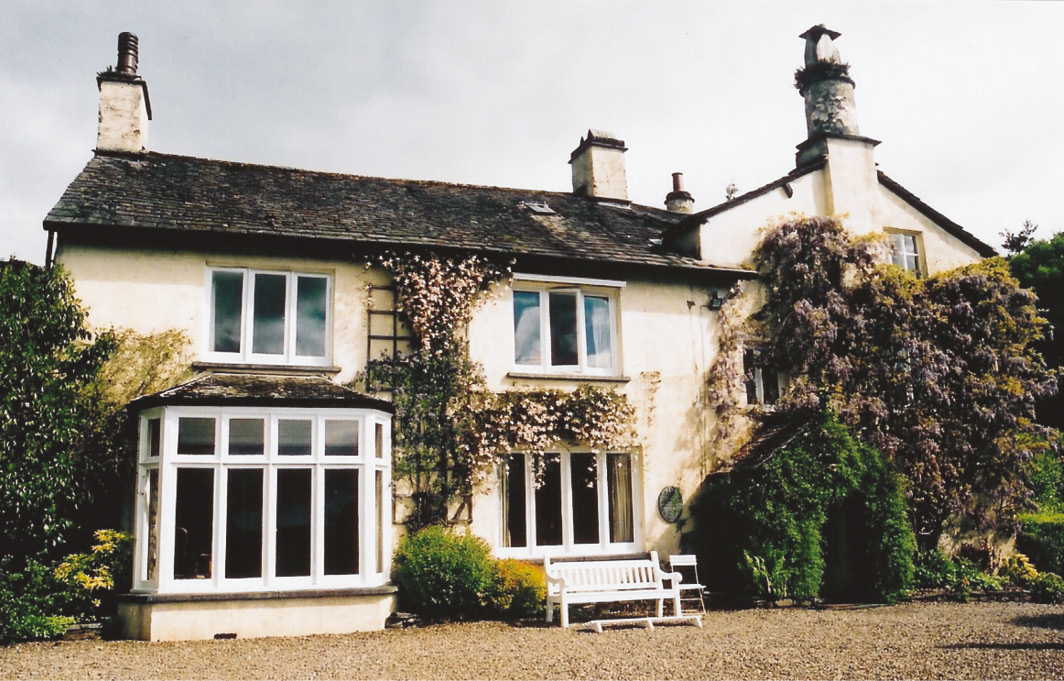
In the Lake District, the house at Rydal Mount, Ambleside, where Wordsworth (1770-1850) lived from 1813 until his death, has been put up for sale. The house, whose lawns in spring are bright with the golden daffodils celebrated in his best-known poem, has been open to the public for 50 years, and it also hosts weddings and events. The current owner, Christopher Wordsworth, however, said it was getting ‘harder and harder’ to manage the property, especially as visitor numbers have dropped post-COVID. A campaign group – Save Rydal Mount – is trying to raise the funds to purchase the property, with support from the poet’s descendants and many actors, artists, and literary figures.
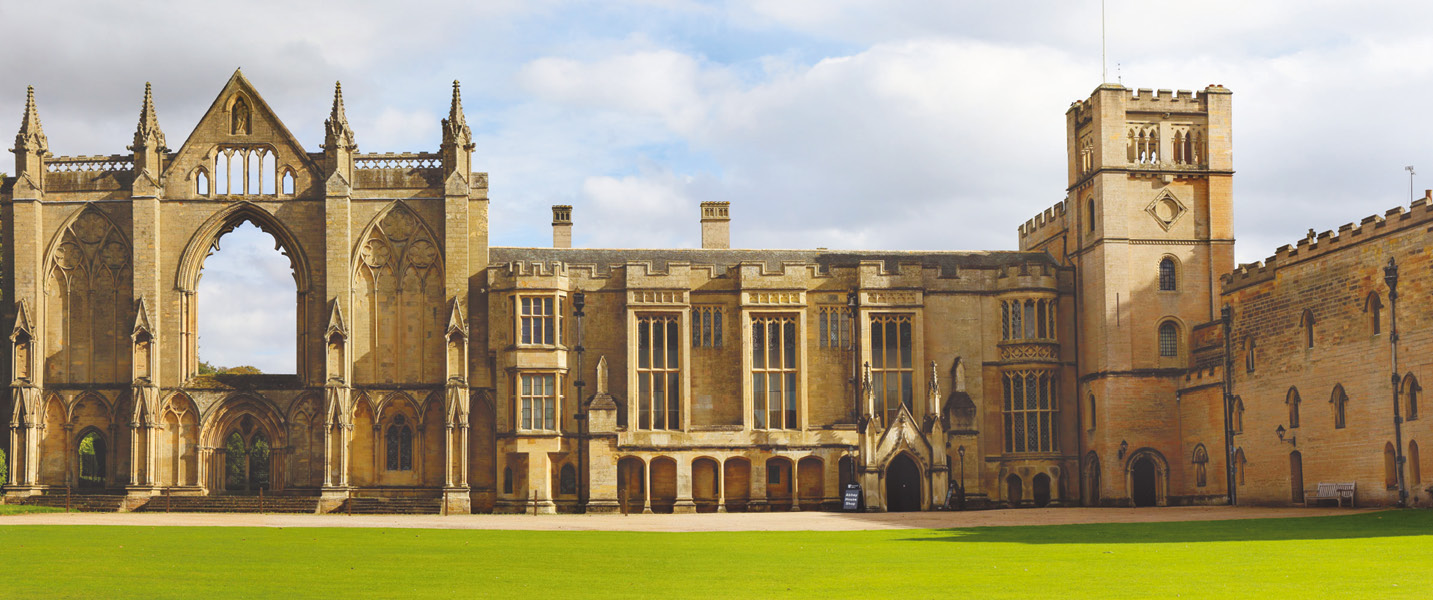
Finally, there is good news for Newstead Abbey, the former home of Wordsworth’s contemporary, the ‘mad, bad, and dangerous to know’ poet Lord Byron (1788-1824), which has been on the Historic England Heritage at Risk Register since 2004. The building, owned by Nottingham City Council, is to receive a grant of £100,000 from Historic England for roof and stonework repairs. It has also been awarded a c.£250,000 grant from the National Lottery Heritage Fund and £1.4 million from Arts Council England’s Museum Estate and Development Fund (MEND) for Phase 1 of an £8.5 million overall restoration plan for the abbey.
Though called an ‘abbey’, Newstead was founded as an Augustinian priory c.1163. It is described in the Buildings of England volume for Nottinghamshire as ‘absurdly big for just 15 to 20 canons, but this was a royal foundation, superbly located for hunting in Sherwood Forest’, hinting that Henry II had another motive for its foundation beside his stated intention of atonement for the murder by his men of the Archbishop of Canterbury, Thomas Becket, in 1170.
Byron was ten when he inherited the grand post-Dissolution country house that was built among the remains of the cloister, chapter house, prior’s hall, and church, all of which were already in a serious state of disrepair when the poet lived there between 1808 and 1814. Byron sold the property to a schoolfellow – Colonel Thomas Wildman – in 1817, and he and subsequent owners kept the house, of ‘rich and rare mix’d Gothic’ in good repair. Parts were opened to the public when tourists flocked following the poet’s death, and the park and public rooms, with their Byron memorabilia, continue to be a popular visitor attraction.