Subscribe now for full access and no adverts
Disease may explain the rapid shift in the genetic makeup of European populations as a result of Yamnaya migration some 5,000 years ago.
The Justinian Plague
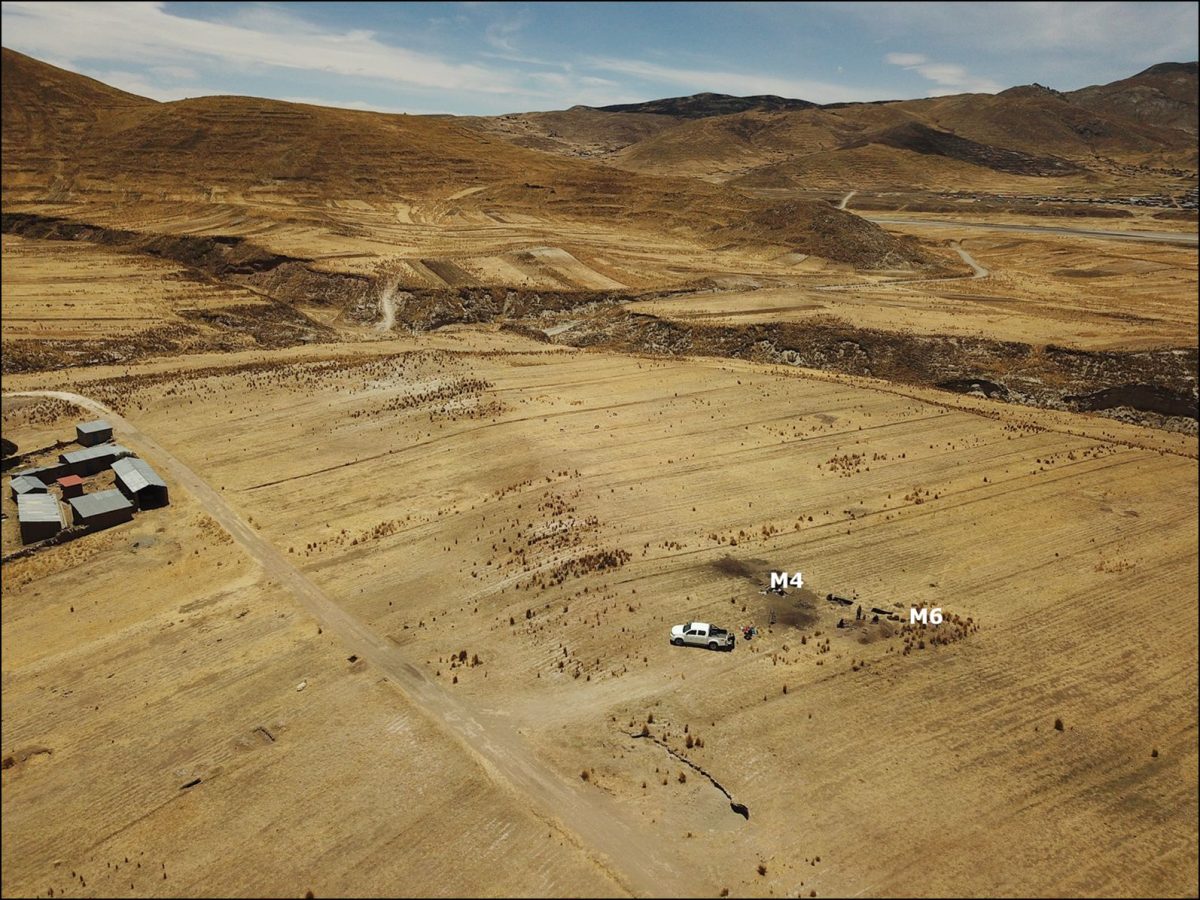
The discovery of a mass grave in the Jordanian city of Jerash (ancient Gerasa) has provided evidence of the impact on the population of the Justinian Plague. A newly published study of the burial site has revealed that at least 230 individuals were hastily buried on top of each other, rather than in individual graves, within the city’s abandoned hippodrome. The burials occurred within a short period of time – measured in days rather than weeks or years – in the mid-6th or early 7th century. The authors of the paper, published in the Journal of Archaeological Science (https://doi.org/10.1016/j.jas.2026.106473), describe this as ‘rapid, high-density deposition, with minimal funerary structuring, that closely parallels catastrophic plague pits of the later medieval period, making Jerash a uniquely well-preserved example from Late Antiquity’.
Some have calculated that the population of Gerasa reached a peak of c.25,000 in the 3rd century AD, with this declining to fewer than 10,000 by the end of the 6th century. If so, the burials represent about 1.5% of the city’s population at the time. Using biomolecular techniques, the multidisciplinary team from the University of South Florida confirmed that the cause of death was Yersinia pestis, or bubonic plague.
According to the historian Procopius (c.500 to c.565), the first case of plague was recorded in Pelusium, Egypt, in AD 541. The plague was spread by fleas on black rats travelling in cargo ships, reaching Constantinople (Istanbul), capital of the Eastern Empire, in AD 542, during the reign of the Byzantine Emperor Justinian I (r. AD 527-565). Historical accounts report that Justinian himself was infected by the disease, but recovered.
The plague recurred at intervals until the mid-8th century, and is estimated by some historians to have affected between 25 and 50 million people (half the population of the post-Roman world). The death toll was aggravated by a series of volcanic eruptions during Justinian’s reign that resulted in a decade-long climate crisis known as the Late Antique Little Ice Age.
Jerash is the first site where such a plague mass grave has been confirmed both archaeologically and genetically. Additional insights from scholars at Sydney University and the DNA lab at Florida Atlantic University revealed the genetic diversity of the city’s population at the time, showing that there was a high degree of mobility within the Mediterranean region in late antiquity.

Tower of London burials
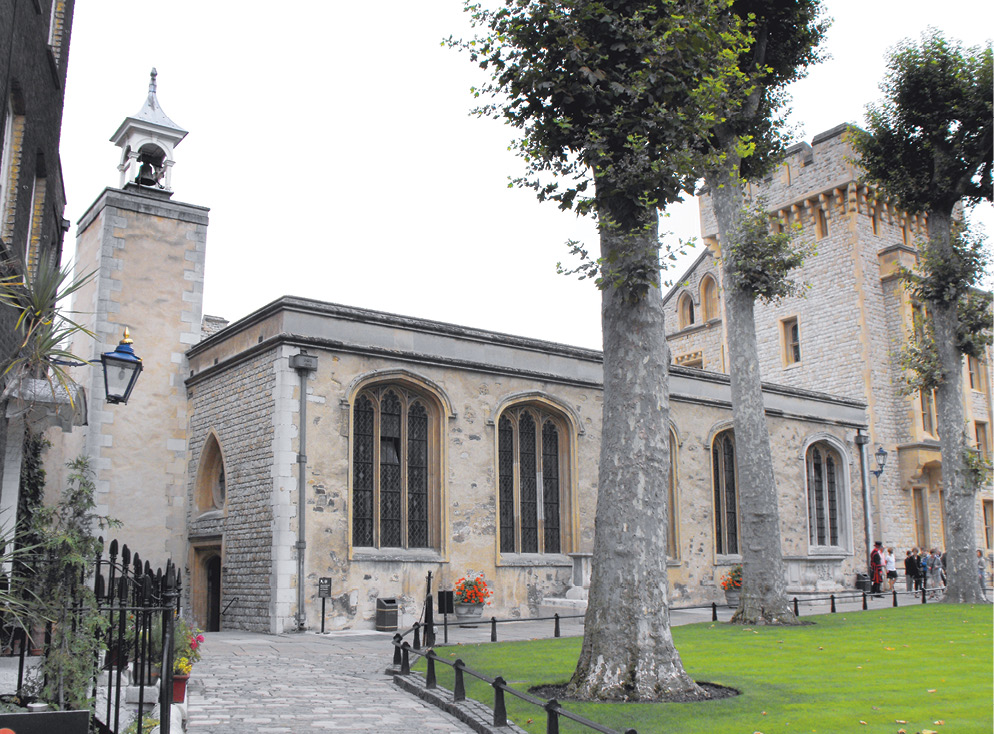
Excavations within the Tower of London have uncovered another series of graves that probably relate to the later medieval Black Death period, when an estimated 50 million people died in Europe between 1346 and 1353. The burials were found just outside the eastern end of the Chapel Royal of St Peter ad Vincula, which stands alongside the castle built by William the Conqueror to consolidate his hold on England’s primary centre of power.
The interior of the chapel holds the graves of Anne Boleyn, Catherine Howard, and Lady Jane Grey, and the saints John Fisher and Thomas More, all of whom were executed at the Tower, but the burials outside the chapel seem not to have been the victims of royal power. Alfred Hawkins, Curator of Historic Buildings at the Tower, described them as ‘the ordinary people who lived and worked in this famous place’.
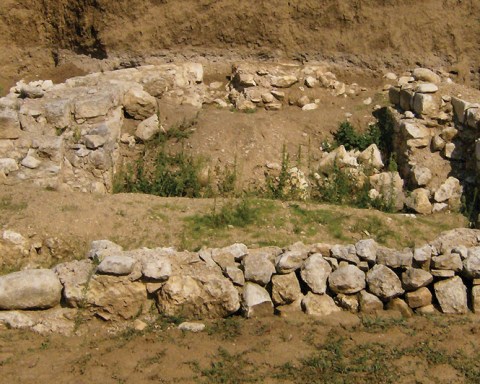
Evidence was found of the foundations of an earlier sequence of churches, too, pre-dating the current 16th-century chapel, including masonry from the chapel built by William the Conqueror’s fourth son Henry I (king from 1100 to 1135) and a layer of ash from the fire that destroyed the chapel built by Edward I (r. 1272 to 1307).
Britain’s post- Roman industry
Rather than experiencing a catastrophic decline when Roman control of Britain collapsed sometime around AD 410, metal production continued to expand steadily in the post-Roman period at Aldborough, in Yorkshire, until a sudden crash occurred c.AD 550-600, a date that also coincides with the Justinian Plague.
This conclusion is presented in a paper recently published in the journal Antiquity (https://doi.org/10.15184/aqy.2025.10175) reporting on the analysis of a 5m-long sediment core from Aldborough. According to lead author Professor Loveluck, of the University of Nottingham, this provides ‘the first continuous record of metal pollution and metal economic history in Britain from the 5th century to the present day, at the heart of a major metal-producing region’.
The study concludes that it was disease that had a significant impact on economic activity in the immediate post-Roman period, rather than the loss of technical expertise or economic collapse. Professor Loveluck said that the results offer ‘a revolutionary new insight into the economic history of Britain, which contradicts previous thought that all industrial-scale commodity production collapsed at the end of the Roman period’.
The sediment core displays several other fluctuations in metal-making activity over time that can be tied to historical events. For example, production slumped in the mid-16th century, when it became uneconomical to make fresh metal while large amounts were available to be recycled by stripping religious buildings of their iron, lead, and copper during the Dissolution of the Monasteries under Henry VIII. Large-scale production resumed in the later 16th century to provide resources for Elizabeth I’s Spanish and French wars.
The impact of the Yamnaya
Disease is also being cited as an explanation for the rapid shift in the genetic makeup of European populations as a result of Yamnaya migration some 5,000 years ago. Archaeologists are still trying to digest the implications of a Harvard-led study published in 2025 (https://doi.org/10.1038/s41586-024-08531-5), confirming the Yamnaya’s pivotal role in reshaping the genetic heritage of at least half of Eurasia. The study was based on analysing ancient DNA from 435 individuals dating from between 6400 and 2000 BC from archaeological sites in Russia, Ukraine, Moldova, and south-eastern Europe, along with data on nearly 1,000 previously reported ancient individuals.
One theory for the genetic dominance of the steppe people known as the Yamnaya is that they brought viruses and bacteria that killed many of the Mesolithic and Neolithic people they encountered as they migrated westwards, just as a vast percentage of the native peoples of the Americas died because they lacked immunity to the Old World diseases introduced by European colonisers in the 16th century.
An alternative theory is that the Yamnaya expansion out of the central Asian steppes was driven by violence, resulting in high levels of male mortality among the indigenous populations. Evidence of the use of lethal force during this period was found at a mass grave at the Eulau burial site in Saxony-Anhalt, Germany, where many of the men, as well as some women and children, had suffered cranial trauma, arrow wounds to the spine, and fractures of the forearm caused by attempts by the deceased to defend themselves from attack.
Whether disease or military advantage led to the rise of the Yamnaya, these nomadic cattle-herders are being held up as the bringers of technological innovations that are core to the development of Eurasian culture, including metallurgy, weapon-making, and the use of horses and wheeled wagons. To add to the tally, the same Harvard paper identifies the Yamnaya as the primary source of Proto-Indo-European, the ancestor tongue that developed into the 400 or so languages spoken by 40% of the world’s population today.
As early as the 16th century, writers had noted that some words (mother, father, brother, sister, cow, for example) were similar in many different languages, and by the 19th century scholars had worked out a series of rules for vowel and consonant shifts that accounted for the later differences, enabling them to work back to the hypothetical original Indo-European vocabulary. In the 1950s, archaeologists and linguists developed the steppe hypothesis, locating the original home of the pioneer speakers of Indo-European in the grasslands north of the Black and Caspian seas, which is also the homeland of the Yamnaya. The Harvard paper argues that language spread with genes, which are, said David Reich, one of the authors of the study, ‘like a tracer dye: you can actually see Yamnaya ancestry everywhere these languages went’.
That’s a huge claim for the influence of perhaps 2,000 individuals, and it is sobering and sad to think that the region that gave us so much is where some of the worst of the fighting between Russia and Ukraine is happening today.
Chris Catling is an archaeologist and writer, fascinated by the off-beat and the eccentric in the heritage world.