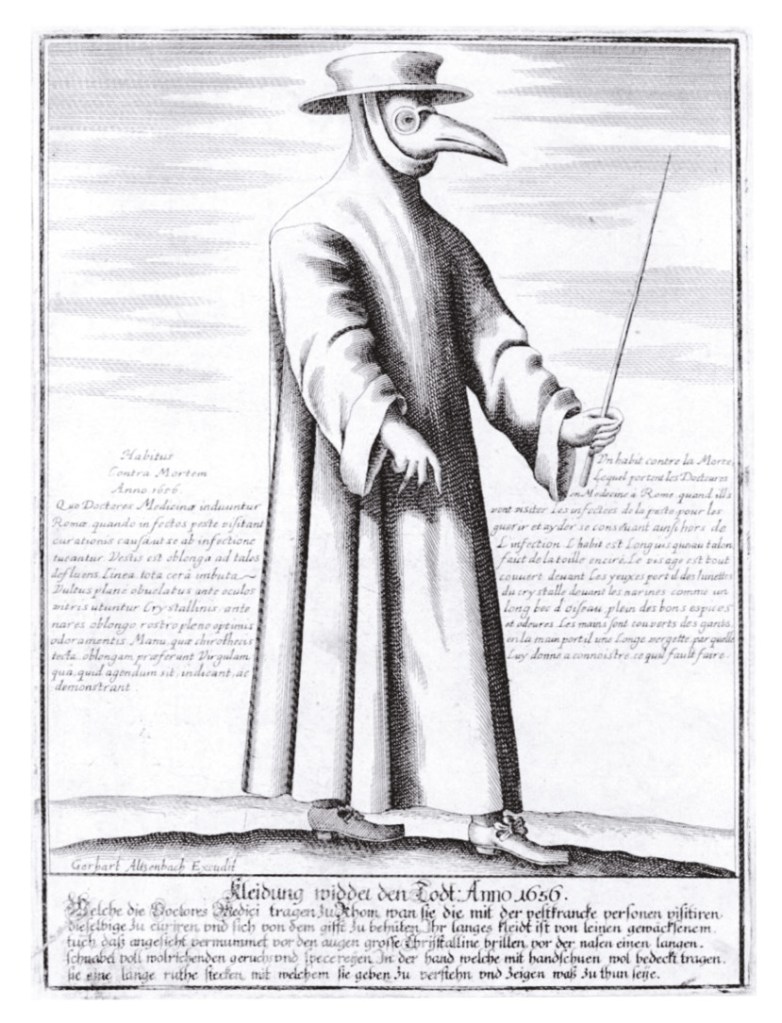
Bird-beaked masks

During the Black Death of 1347 to 1352, doctors wore bird-beaked masks filled with various herbs that were designed to protect the wearer from breathing poisoned air – or so we have been led to believe.

During the Black Death of 1347 to 1352, doctors wore bird-beaked masks filled with various herbs that were designed to protect the wearer from breathing poisoned air – or so we have been led to believe.


For my third and final column on the Palaeolithic, I will clamber into some of the most famous caves in the country. Even better – as I will outline at the end of this selection – the majority are open to the public, offering unparalleled opportunities to visit these stunning prehistoric sites.
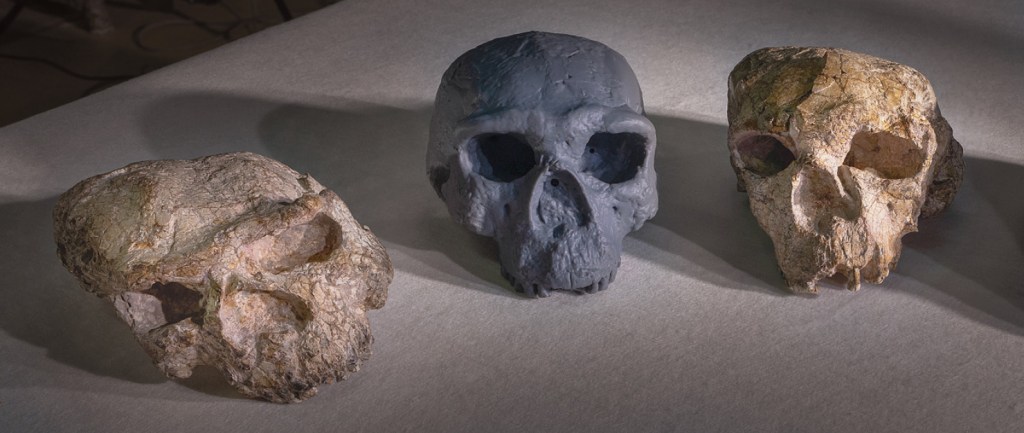
Human beings may have suddenly doubled their age thanks to some recent research on a group of fossilised skulls from China, known as Yunxian 1 and 2. Previously classified as Homo erectus, they have now been designated as belonging to the Denisovan group, based on skull shape.


If you happen to be among the many people who are born and raised in the countryside, chances are that you have found yourself at some point in your life quarrelling about city people who seemed to imagine themselves to be naturally more innovative and progressive than the rest of humankind, your good self included.

On 1 August 1960, I visited Mycenae for the first time. In my diary I described it as a terribly moving experience, seeing the shaft graves and the famed treasuries of Atreus and Clytemnestra. Looking back, what I recall most clearly was the romance of it all.


Nick Spenceley reconsiders The Right of the Line by John Terraine
Can you guess which of the following is a genuine university discipline: Strollology, Hedonia and Eudaimonia, or Happiness Studies? The answer is all of them.

In last month’s column, I explored Palaeolithic Norfolk and Suffolk, visiting some of the most important prehistoric sites not just in Britain but in the whole of western Europe. Here I will follow up on that review by moving south into Kent and Sussex
Folk memory, songs, place names, and oral histories are being deployed by the Somerset Eel Recovery Project (SERP) in its work to bring this critically endangered species back to the Somerset Levels. Those stories and songs are a reminder that the Levels once teemed with eels.

In the previous few columns I have explored some of the great towns of Roman Britain – so, as a change of pace, here I will begin a new mini-series on the country’s great prehistoric sites. I will commence this month with a series of locations in Norfolk and Suffolk.
Discovered as recently as 1989, the Neolithic settlement submerged beneath the waters of Lake Bracciano, at La Marmotta, near Rome, Italy, has yielded rich evidence of life 7,000 years ago. New analysis of the five boats found at the site suggest that they could have been used for the sea voyages that led to the spread of Neolithic practices to the islands of the Mediterranean.

A well-worn joke goes that archaeologists find their careers in ruins. This is sometimes literally true: at least since the 1970s, and in cities on all inhabited continents, crises sparked by deindustrialisation, decay, and dereliction have been an assured portent of large-scale excavations. It is not just that when business goes down, archaeology goes in.

Yesterday, I was able to cross off another archaeological site from my ‘must-see-one-day’ list. It was Hallstatt, the settlement that has given its name to the early Iron Age of Europe’s past. First, I was lucky to visit the Natural History Museum in Vienna, where there is a major section devoted to this site.
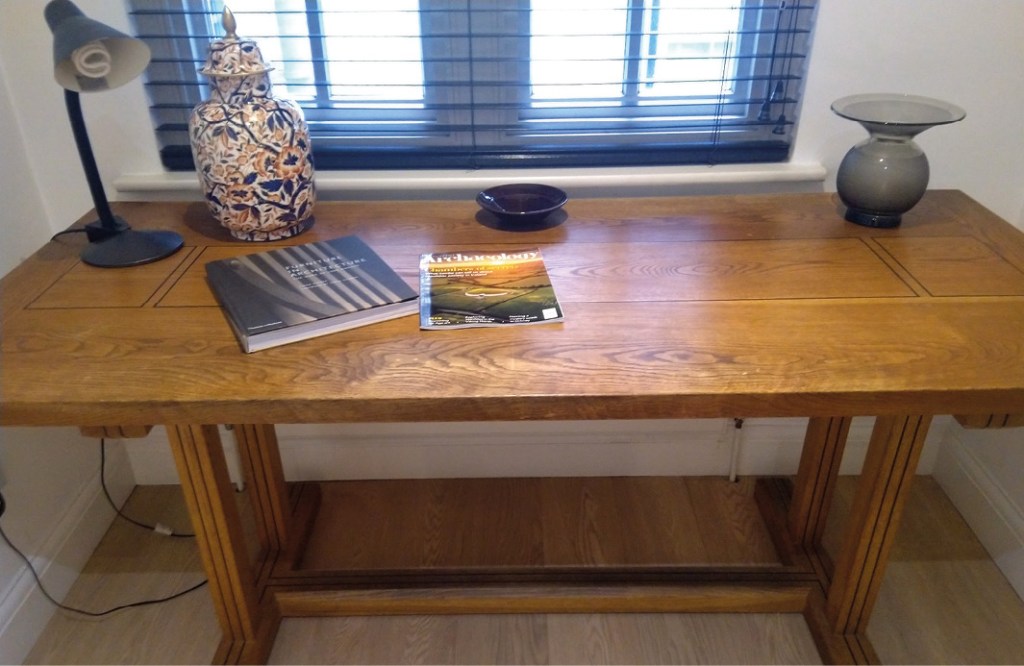
This year marks the 70th anniversary of the publication of a special edition of the prestigious Architectural Review. The June 1955 supplement was devoted to a now-famous single essay called ‘Outrage’, Ian Nairn’s critique of the ways in which Britain’s towns and cities were being rebuilt from the rubble and ruins of the Second World War.

To conclude my mini-series on the towns of Roman Britain, I will head to what may be the most famous Romano-British city of all: Verulamium, modern-day St Albans. With much of the city surviving, unexcavated, beneath modern-day park- and farmland, and upstanding elements visible alongside the award-winning museum that was founded by Tessa Verney Wheeler and Mortimer Wheeler in the 1930s .

Most of us associate prisoner-of-war camps with 20th-century conflicts, but an archaeological evaluation undertaken in July 2009 by Channel 4’s Time Team revealed that the first specially constructed camp dates to the late 18th century, when it was used for incarcerating thousands of enemy prisoners taken during the Napoleonic Wars of 1793-1815.
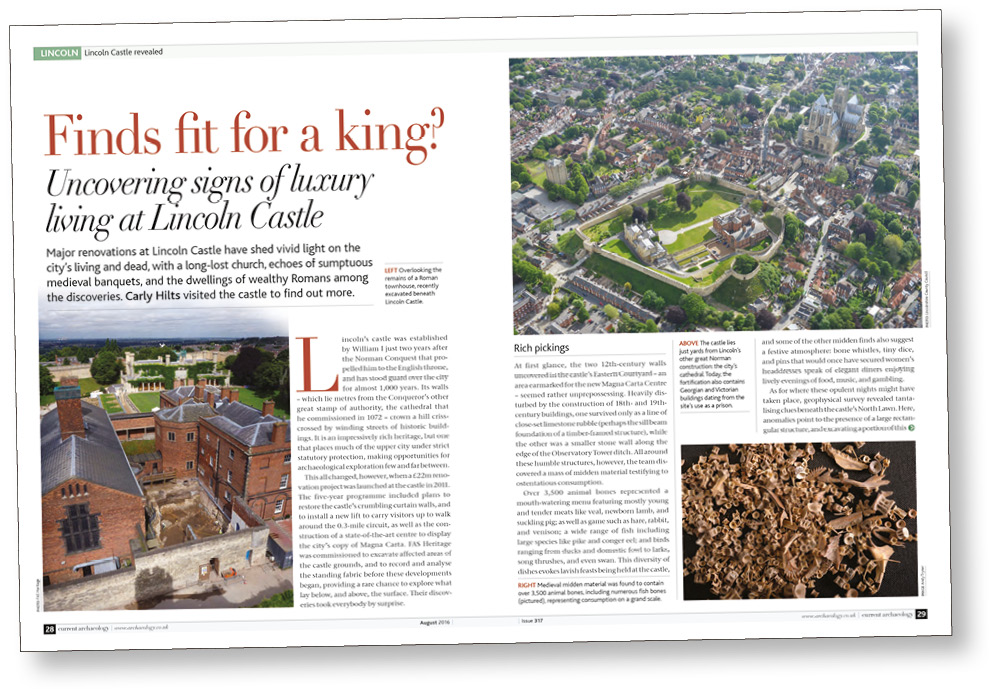
As part of my ongoing mini-series on the towns of Roman Britain, I will focus in this column on Roman Lincoln (Lindum), which was founded as a legionary fortress during the reign of Nero (AD 54-68), and subsequently developed into a colonia (a settlement for retired soldiers) after AD 86 during the reign of Domitian (AD 81-96).

In its annual ‘watchlist’ of threatened heritage sites, the World Monuments Fund (WMF) has cast its gaze beyond our own planet and declared that the surface of the Moon represents a vulnerable cultural landscape.

If you want to know how liveable a city is, you can ask the rats. The cosmopolitan rodents will know exactly how resource-rich and wasteful in nutrients their human co-habitants are.