Subscribe now for full access and no adverts
The World Monuments Fund has cast its gaze beyond our own planet
Lunar heritage
In its annual ‘watchlist’ of threatened heritage sites, the World Monuments Fund (WMF) has cast its gaze beyond our own planet and declared that the surface of the Moon represents a vulnerable cultural landscape. Bénédicte de Montlaur, the President and Chief Executive Officer of WMF, says that tourists visiting the Moon could wipe out the footprints left by Neil Armstrong and Buzz Aldrin, the first and second people to walk on the Moon, while souvenir hunters could damage or steal such artefacts as the camera that captured the televised Moon landing in July 1969, or the memorial disk placed on the lunar surface by Armstrong and Aldrin with goodwill messages from 73 world leaders.
State-funded research missions to the Moon are less of an issue, since they visit new sites and potentially create new heritage assets, though the south polar region, where the craters are permanently in shadow and could hold frozen water, face being littered with discarded rocket parts because of the number of missions planned for the region in the next ten years. Russia’s Luna-25 mission attempted a landing in this previously unexplored area on 19 August 2023, but crashed onto the Moon’s surface. Four days later, India’s Chandrayaan-3 mission achieved a soft landing and did indeed find traces of ice.
Japan landed a research module on the Moon in January 2024 and is now a partner in NASA’s Artemis III project, which aims to send two people to spend a week exploring the south pole in 2027, helped by a new landing system and advanced space suits. China has announced that it aims to land astronauts at the south pole by 2030, and its long-term goal is to establish a crewed research station in this region.
The first commercially funded Moon landing took place on 22 February 2024, when the American-made Odysseus craft landed near the south pole amid talk of ‘opening access to the Moon for the progress of humanity’ and ‘setting up a tourist visitor site’. Since then, SpaceX, founded by Elon Musk in 2002, has also launched two privately funded lunar landers.
All told, since the very first Moon landing on 14 September 1959 when Russia’s Luna-2 intentionally impacted the surface, there have been more than 140 Moon missions, and 12 astronauts have walked on the surface, all between 1968 and 1972. It is the remains of these earliest missions that WMF argues should be recognised as heritage assets and preserved as ‘testimony to humanity’s first steps beyond the Earth – a defining moment in our shared history’. In practical terms that means ‘adopting cooperative strategies’ to ensure that lunar heritage ‘is not threatened by accelerating private and governmental activities in space’.
Museum of the future
In London, the launch of a new approach to museum display is being hailed as the dawn of a radical new era for heritage collections, in which ‘the public takes control’. As its name suggests, V&A East Storehouse contains some 250,000 objects from the reserve collections of the Victoria and Albert Museum – material that is not on permanent display at the museum’s Kensington home, which opened in 1857 as a showcase of excellence in design following the Great Exhibition of 1851.
At the East Storehouse, visitors can not only gaze in contemplation at an astonishing range of material – including a complete Frank Lloyd Wright office interior (designed in 1929 for Edgar Kaufmann for his department store in Pittsburgh) and a 15th-century gilded wooden ceiling from the now lost Torrijos palace in Toledo, Spain – they can also go behind the scenes to engage with conservators while they are at work.
Many museums around the world have far more material in reserve than they have on display: the 100 galleries of the British Museum showcase a mere 1% of its collection (50,000 objects out of a total of 5 million) and the Louvre only has space for 7% (35,000 works out of 500,000).
Providing access to the reserves is not a new idea, though in general access is limited to scholars who have to make an appointment. The V&A has not only allowed free access to everyone in a new building set within the repurposed site of the 2012 Olympics Media and Broadcast Centre, it encourages visitors to ‘get close to the objects of your choice’, through its ‘Order an Object’ service.
This allows you to pick any object from the store and make an appointment to examine it up close just because you like it. Fashion items have proved very popular so far, as well as stage clothing worn by well-known musicians – and, in September 2025, V&A East Storehouse intends to launch the David Bowie Centre with a mix of displays and audiovisual installations based on the more than 90,000 items from the Bowie archive.

Exhibiting the body
The V&A has yet to follow the example of a French museum that recently took an even more radical step to engage new visitors. The macLYON (the Museum of Contemporary Art in Lyon) invited members of the French Naturist Federation to a visit an exhibition entitled Incarnations, consisting of works in the collection that depict the human body.
Open only to naked visitors, the occasion was designed to challenge the famous dictum of René Descartes, the 17th-century French philosopher, who declared ‘I think, therefore I am’. The exhibition curators wanted to emphasise that ‘there is no pure thought detached from the body’ – our perception of ourselves is integrally bound up in our awareness of bodies.
This is not the only French cultural institution to reach out to the country’s 2.6 million or so naturists. Naked visitors were invited to attend a touring exhibition in 2023 of 40 sculptures by leading international artists of the hyperrealism school that were shown at museums in Bilbao, Canberra, Rotterdam, Liège, Lyon, Brussels, and Paris. Critics said the sculptures of naked humans in the exhibition were so realistic that it was difficult to distinguish visitors from exhibits.
Chance finds
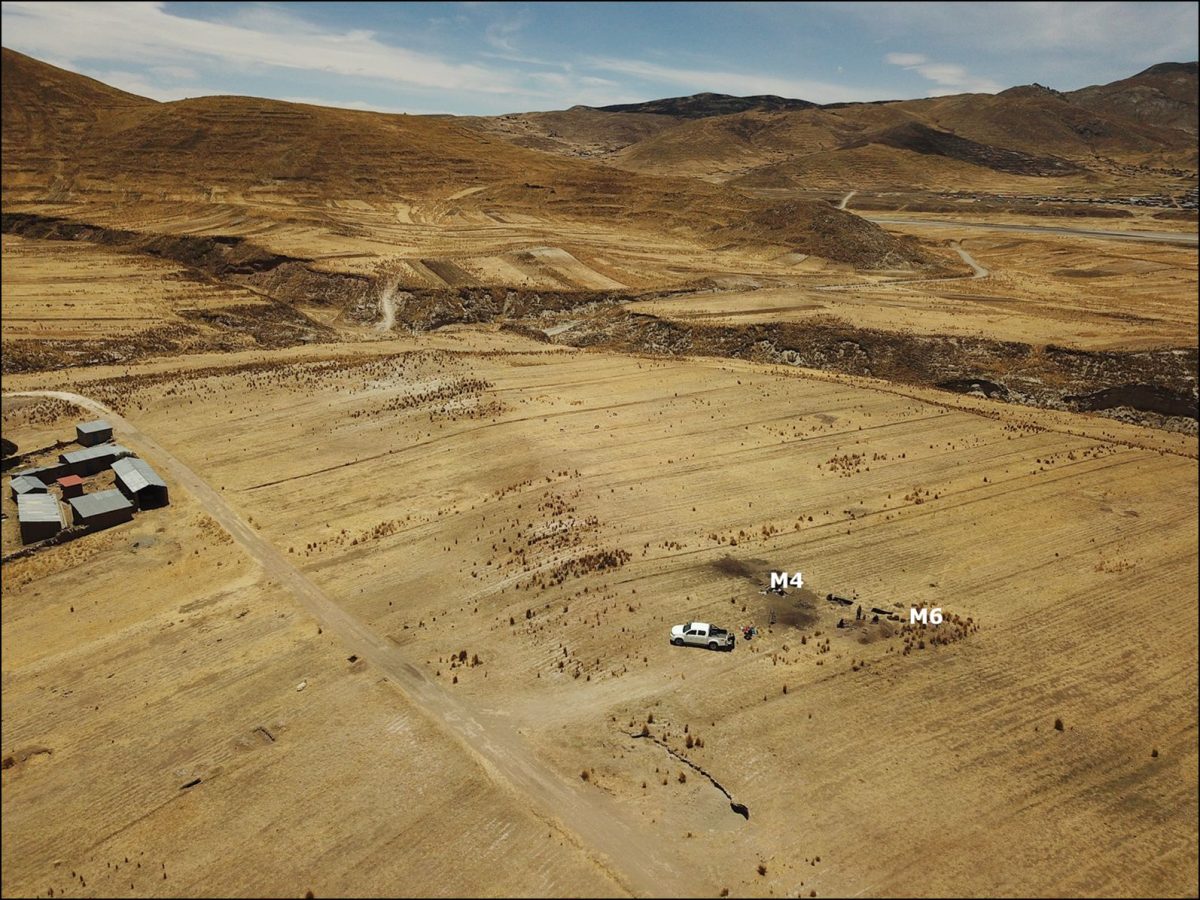
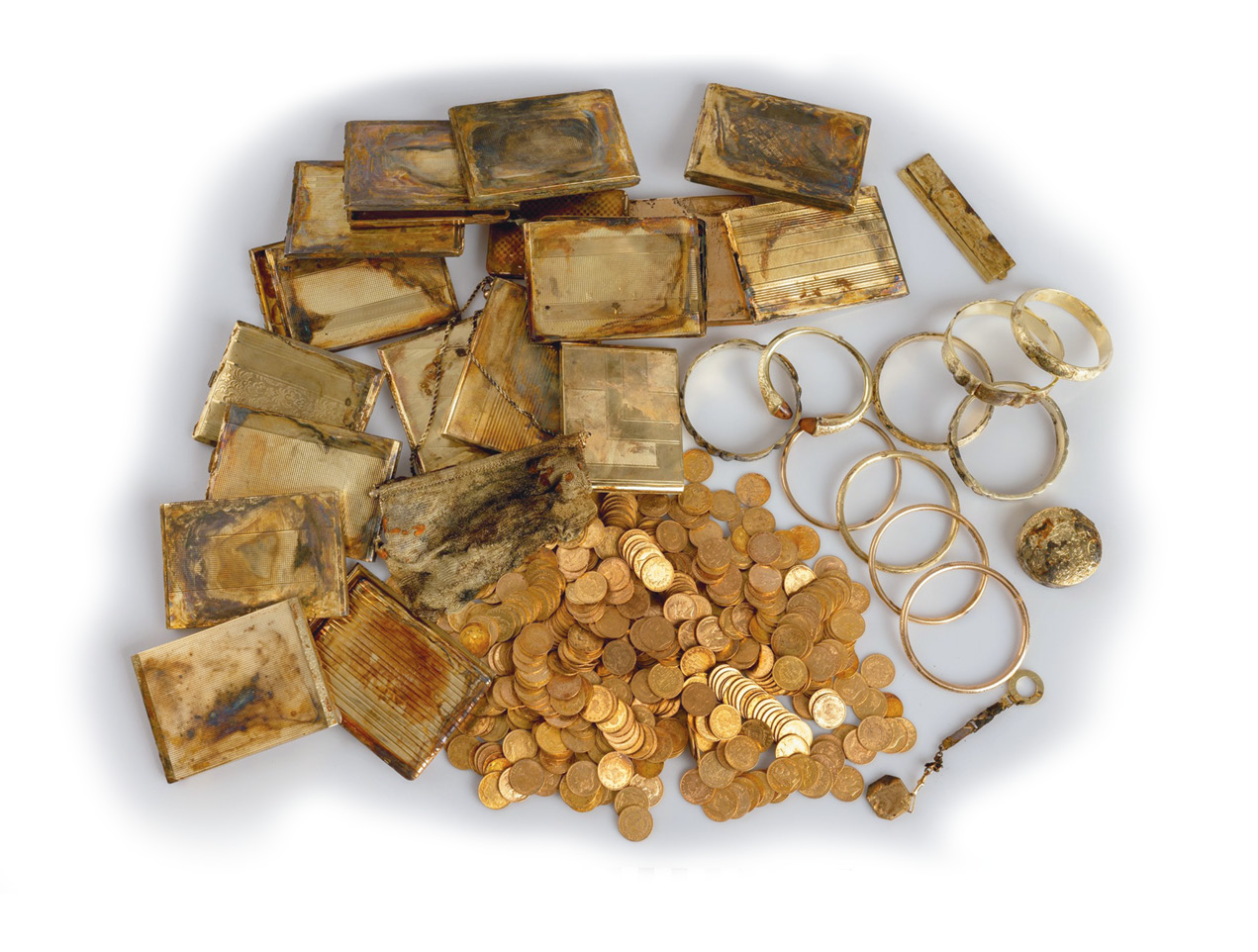
Curators at the Museum of Eastern Bohemia in the Czech Republic are trying to work out the provenance of a hoard of 598 gold coins, 10 gold bracelets, 17 cigar cases, a powder compact, and a comb found by chance by two hikers while walking in the Krkonoše Mountains. The hikers spotted an aluminium box sticking out of a stony wall and took it to the museum in the nearby town of Hradec Králové.
Miroslav Novák, the head of the archaeological department at the museum, said that the find was puzzling because there are no local coins in the mix. Hoards left in the hope of retrieving them at a later date are not unusual in a region located on the former ethnic border between the Czech and German populations and subject to sporadic forced migrations during the 20th century, but such finds mainly contain German and Czechoslovak coins. In this case, the majority of the coins are French, ranging in date from 1808 to 1915. Some, however, bear countermarks that indicate they were issued in the Austro-Hungarian Empire in an area of the Balkans encompassing modern-day Serbia and Bosnia and Herzegovina. The museum’s coin specialist Vojtech Brádle says, ‘I do not know of any other Czech find with these countermarks.’
Possible dates for the hoard include the turbulent period before and during the Second World War, when people forced to leave their homes might have hurriedly hidden valuables, or they could be war spoils concealed by fleeing occupation forces in 1945. Equally, says Miroslav Novák, they could have been hidden as a consequence of the monetary reform forced on Czechoslovakia by the Soviet Union in 1953, which involved a substantial reduction in the value of Czech currency, wiping out people’s bank savings.
Professor Mary Heimann, an expert in Czechoslovak history at the University of Cardiff in Wales, says that a later date seems unlikely as there would be more recent coins in the mix: instead, she points to 1921, the date of the latest coin in the hoard, as a year of financial crisis in Czechoslovakia, with widespread unemployment and economic hardship. Miroslav Novák hopes that, with local knowledge and archival research, the full story will emerge in due course.
Chris Catling is an archaeologist and writer, fascinated by the off-beat and the eccentric in the heritage world.