Subscribe now for full access and no adverts
Several recent reports have suggested that participation in cultural activities is good for one’s well-being. Under the headline ‘Daily dose of art as important to health as 5-a-day’, The Telegraph reported that cultural engagement not only slows down ageing, but is a ‘human necessity’. The Guardian, meanwhile, said that visiting a gallery or museum helps people age more slowly and stay biologically younger.
Both articles referred to a study published in the May 2026 issue of the journal Innovation in Aging, which concluded that reading, listening to music, or visiting a gallery or museum confers benefits similar to physical activity. The research that led to this conclusion was based on testing blood and saliva samples for the presence of molecules associated with ageing and decreased bodily function. The relatively new science of the epigenetic clock is being promoted as a way of distinguishing one’s biological age from one’s chronological age.
Such radical conclusions always raise the question of causation: does going to a museum have a direct biological impact, or is there a simple correlation between people who age more slowly and their lifestyles? The study suggests that there is a causative link: a busy cultural life leads to the cognitive and sensory stimulation regarded as essential for avoiding brain degeneration; while social interaction avoids the psychological impacts of loneliness. Other benefits include stress reduction and lower blood pressure.
Professor Daisy Fancourt, lead author of the research and head of the social biobehavioural research group at University College London, called for arts and cultural activities to be integrated into public health frameworks. Could some of the very generous spending on the National Health Service be ploughed instead into libraries, museums, arts centres – archaeology, even, which has the multiple health benefits of companionship, exercise in the open air, and intellectually stimulating activity?
Longevity as an archaeological correspondent
On the subject of archaeology and longevity, let us pay tribute to Norman Hammond who officially retired on 10 July 2026 as Archaeology Correspondent of The Times. That day also happened to be Norman’s 82nd birthday and the beginning of what would have been his 60th year with the paper. Norman was recruited in June 1967 by John Grant, then Managing Editor, as the successor to Dr Derek Roe, the paper’s first formal Archaeology Correspondent. Since then, he has published some 1,900 articles (just short of one a fortnight).
Norman is especially proud of his stories that made the front page, including a report in 1971 on the numbers of prehistoric pots in the British Museum, the Louvre, and the Metropolitan Museum of Art that were found to be modern fakes made in Turkey; the identification in 1987 of the possible remains of the Princes in the Tower in Westminster Abbey, and their dating to 1484, with clear implications for the guilt of Richard III; and the discovery in 1994 of Boxgrove Man, Britain’s first half-million-year-old human, in a report headlined ‘the oldest European is dug up in deepest Sussex’.
On a personal note, I remember asking Norman about 20 years ago if he would put in a good word for me as his successor if he was contemplating retirement. My request proved to be somewhat premature.
Pubs and culture
Norman says that he is probably one of the last of the ‘Black Friars’ – the Times journalists and editors who used to frequent the highly decorated Grade II* listed Arts and Crafts pub alongside Blackfriars Bridge and adjacent to the former home of the newspaper in Printing House Square.
This reminds Sherds of the Private Members’ Bill sponsored by Mike Wood, Conservative MP for Kingswinford and South Staffordshire, which aims to strengthen planning restrictions on the sale, alteration, or demolition of listed heritage pubs. His Heritage Public Houses Bill was inspired by the destruction of the Crooked House pub in his constituency, which was illegally demolished in August 2023. The proposed legislation would make it easier for historic pubs to be designated as assets of community value, giving local groups the right to buy them. The bill will receive its second reading on 16 October 2026.
The British Beer and Pub Association (BBPA) says that 161 pubs closed in the first three months of this year across England, Scotland, and Wales, and that 336 British pubs were closed in 2025. This is, according to Emma McClarkin, the Association’s Chief Executive, largely because of rising labour, energy, and tax costs, ‘despite pubs doing a brisk trade’. In June, the Government responded by announcing a 20% cut in business rates for pubs, social clubs, and live music venues in England, worth an average of £1,100 a year.

Cathedrals as centres of public life
By contrast with England and Scotland, Wales saw a modest net gain of three new pub openings in the first quarter of 2026. Commentators have attributed this to a combination of factors. Community-owned pubs are popular in Wales, giving them a built-in loyal customer base. The social media generation chooses pubs for their aesthetics, posting photos of characterful interiors. And an emphasis on family-friendly food based on local produce, barbecues, and special events is turning pubs into daytime venues rather than nightclubs.
According to a new report called ‘Living Stones: English cathedrals as sacred spaces in changing times’, three-quarters of England’s 42 Anglican cathedrals are operating in deficit. It warns that the gap between what cathedrals contribute and the support they need is widening.
Cathedrals function as unique public spaces, the report says. Cathedral communities maintain historic buildings, libraries, archives, and heritage craft traditions, while supporting local economies and place identity. These large, historic, and accessible buildings support worship alongside tourism, reflection, and public life. They also sustain a significant musical heritage, while hosting arts exhibitions, cultural programming, and community engagement.
These activities reach well beyond regular congregations, and the research suggests that cathedrals play a vital role in a changing religious landscape. England is less traditionally religious but more spiritually diverse, creating new patterns of connection beyond regular parish attendance. Chine McDonald, director of Theos, the think-tank that compiled the report, said that: ‘at a time when our society often prizes individualism and self-optimisation… cathedrals have something profoundly counter-cultural to offer, not only to churchgoers, but to society as a whole… now is the time for cathedrals to recognise the unique space they have in bridging the so-called divide between the sacred and the secular.’
The report notes that cathedrals are among the most-visited heritage sites in the country and contribute hundreds of millions of pounds to local economies, while mobilising thousands of volunteers and sustaining thousands of jobs. The numbers of people visiting cathedrals is comparable to those going to national museums and galleries, and more than those that attend live sporting events. The case has been made for greater recognition and support for cathedrals – perhaps, too, they could claim a stake in the National Health budget for their impact on well-being.
Back to power stations and cooling towers
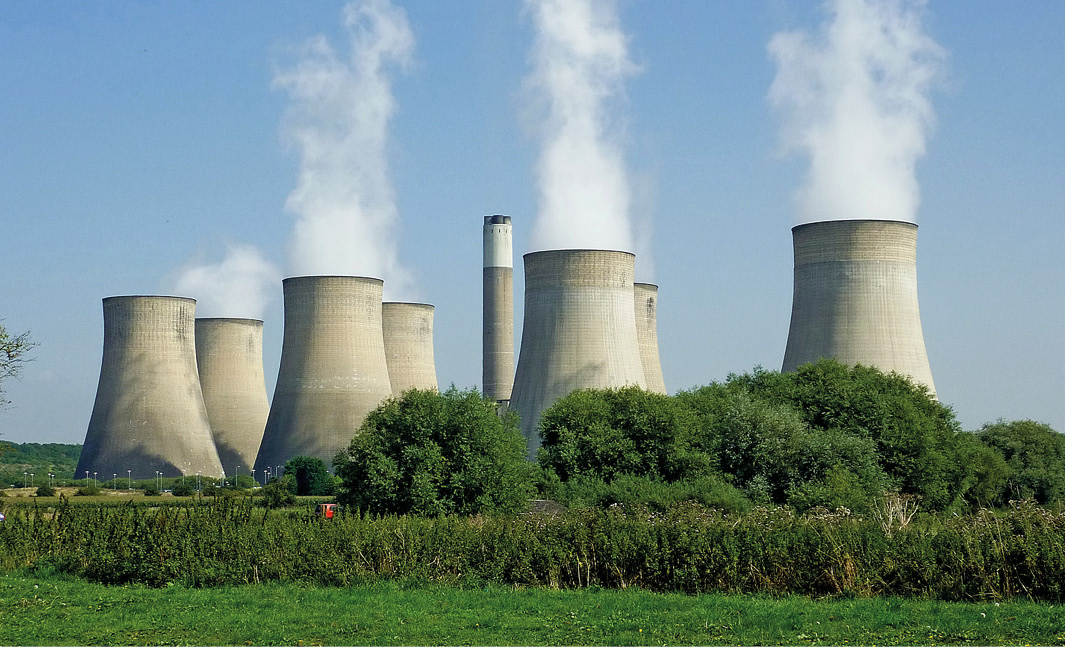
The Twentieth Century Society is appealing for at least one set of cooling towers to be preserved via listing designation and is calling on supporters to sign their online petition to this effect. They have submitted listing applications, too, for the cooling towers at the former West Burton and Ratcliffe-on-Soar power stations.
They argue that the landscape is dotted with the remnants of power generation and infrastructure from previous centuries, from smock windmills to mill chimney stacks, bottle kilns to gasholder frames. The cooling towers of post-war power stations are simply the latest example – ‘a majestic and invaluable part of our twentieth century industrial heritage’.
Historic England’s advice to the Government has been that cooling towers ‘do not have the architectural interest requisite for listing’, but that they will ‘work closely with power companies to ensure a photographic record is secured before loss’. Almost all remaining examples of cooling towers are covered by a Certificate of Immunity from listing, which legally prevents them from being designated for a period of five years. The Society says that it ‘profoundly disagrees with this approach’ and is urging all concerned to explore the alternatives, quoting the artist Sir Antony Gormley, who described cooling towers as a ‘wonderful relic of the Carbon Age, a memorial to Britain’s great, 200-year-long romance with the second law of thermodynamics’.