Subscribe now for full access and no adverts
His base was the local police post; his room had a bare concrete floor, a creaky chair, and a kerosene lantern.
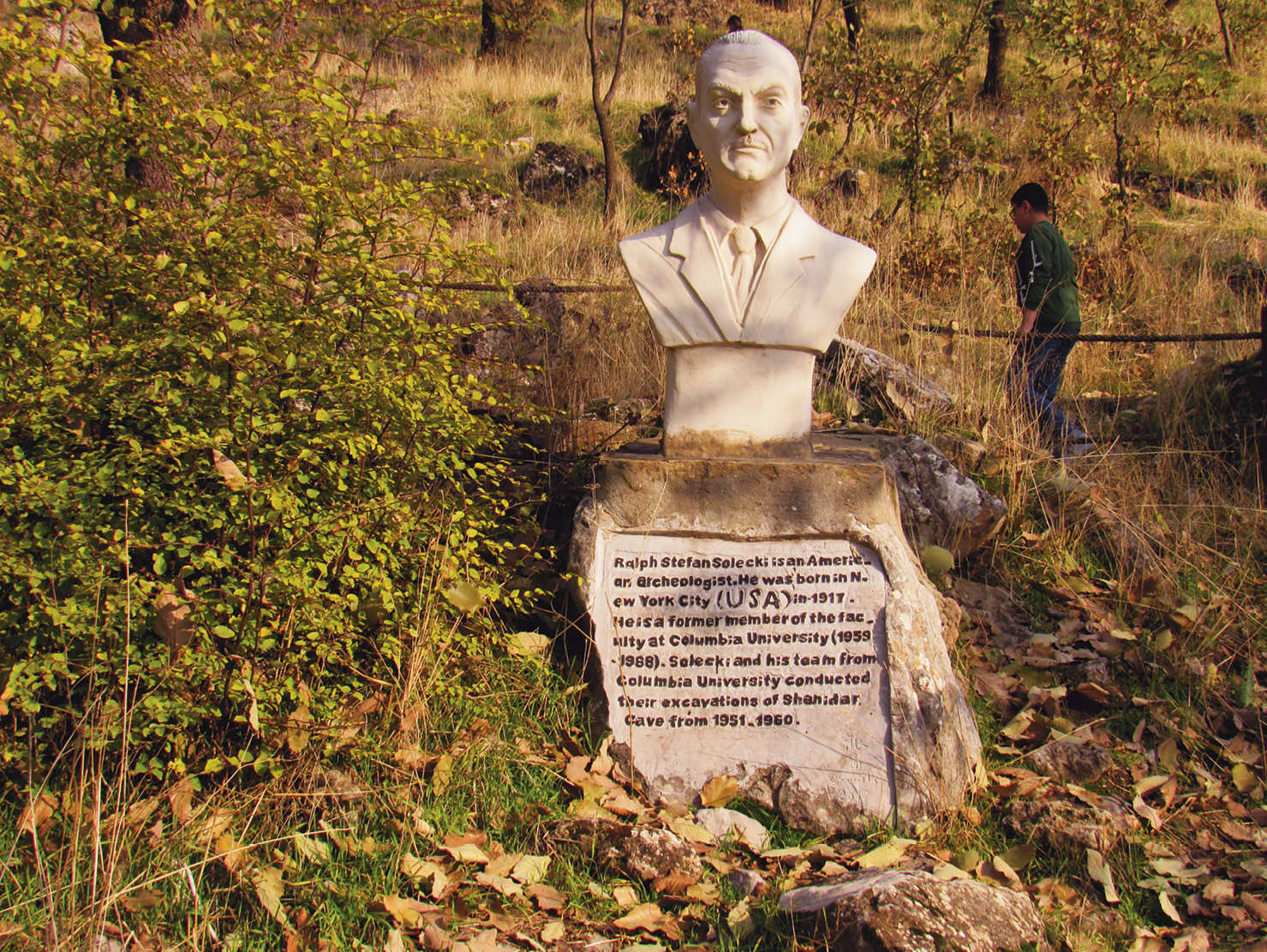
A recent Netflix documentary, Secrets of the Neanderthals, has attracted a massive worldwide audience, and taken a major step forward in dealing with the widespread myth that Neanderthals were brutish and backward. As we now know from comparing their DNA and ours, we can count them among our remote ancestors. The Netflix programme followed the course of a re-excavation of Shanidar Cave in Kurdistan, where, over four seasons from 1953 to 1961, Ralph Solecki led excavations that recovered the remains of ten Neanderthals, the most famous of which is known as ‘the flower burial’ from the pollen identified in the vicinity of the skeleton. This new investigation is led by Graeme Barker from Cambridge University, and follows on from his re-examination of two other iconic cave sites – Niah in Borneo and the Haua Fteah in Libya – applying all the new analytical techniques to recovering and evaluating what he found.
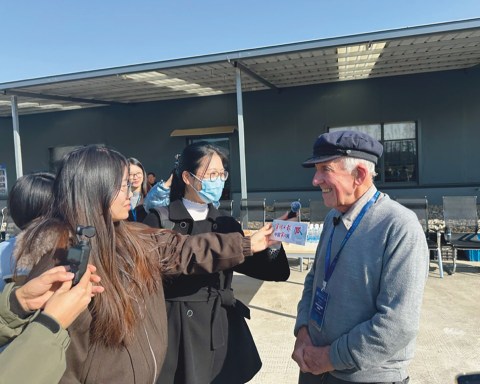
It was as a result of watching the Netflix programme that my eyes alighted on a book in my library entitled Shanidar: the humanity of Neanderthal man, published in 1971. I must have bought it about then, for it only cost £3. I cannot recall reading it, but should have done, because it is a fascinating personal account by Ralph Solecki of how he found the cave, and his experiences when excavating there. And, remarkably, he lived to see Graeme Barker’s return to the site, before dying aged 101. The book provides fascinating insights into life among the Kurds in that remote, mountainous, and often forbidding region. It was tough going, particularly when starting the excavations assisted only by an inexperienced local workforce. We can share his horror when, deep down in the cavern, there was a deep rumbling and shaking as an earthquake struck. But he was also fascinated by the seasonal movements of the Kurdish goat herders, particularly when they came to live in the cave as he was digging there.
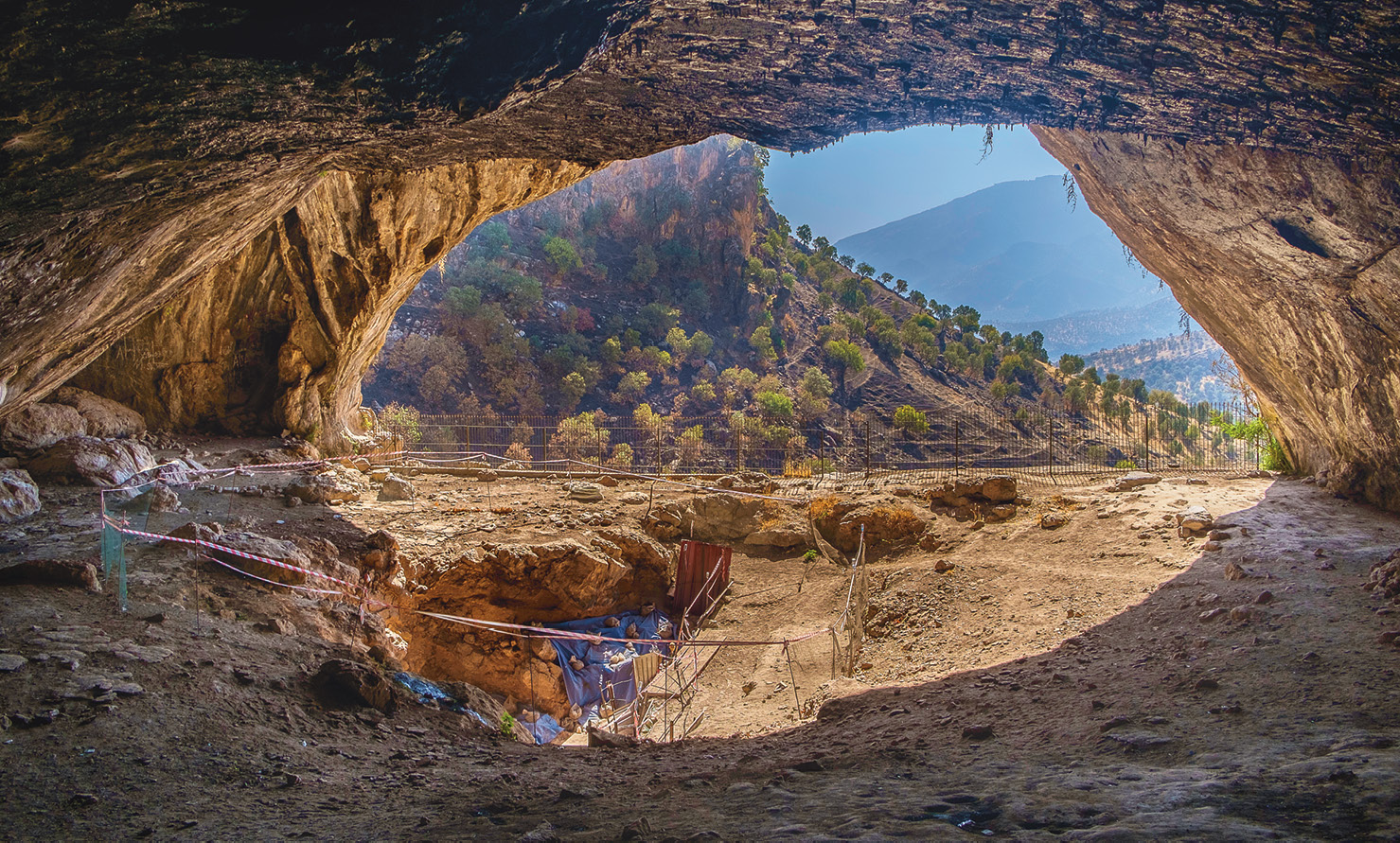
I firmly believe that every archaeologist fortunate enough to make breakthroughs as he did, should write for us all of how it was done. As Solecki describes, his experience was very much confined to North America before he was invited in 1950 to join an expedition to Iraq, not to look for Neanderthals, but to record inscriptions on stone stelae erected by the Kings of Urartu in about 800 BC. It was during this foray that, in conversation with Taha Heideri Beg, the district governor of Sidekan, Solecki learned of a great cave near the village of Shanidar. With an armed escort, for this was a brigand’s paradise, he found his way to the site, describing it as ‘a Shangri-La, in a mountain-ringed valley on the left bank of the Greater Zab River’. His visit lasted only ten minutes, but it made a very favourable impression as he speculated that there must be at least 3m to 5m of deposit under the thick layer of dusty animal dung that littered the floor.
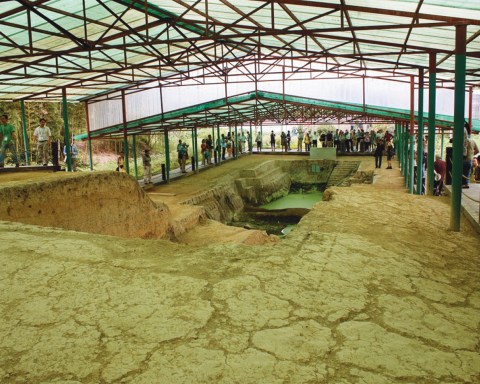
On 13 July 1951, he returned to Shanidar, armed with the necessary permits from Baghdad. His base was the local police post; his room had a bare concrete floor, a creaky chair, and a kerosene lantern. There was a cot against one wall, but it was so stiflingly hot that he slept on the roof. His account of that first season is laced with anecdotes, of fishing not with hook and line, but with a home-made bomb fashioned from a bottle of beer. Two local tribes were fighting each other, but he was accustomed to that, having survived stepping on a landmine during the Second World War. He began digging on the 9 October with just one Kurdish assistant, in a trench measuring 3m by 0.8m. With four more local men, he expanded this area and went on down, finding potsherds and flints.
During his second season, Ralph encountered a major problem: massive rocks that had fallen from the roof. All attempts to break them up manually failed, and in the end his only solution was to blow them up with ‘Nobel’s gelignite’. This certainly worked, but the impact it had on the sections was unpredictable. It allowed him to carry on down, and as he did so he uncovered four major layers, labelled A-D. The uppermost contained Neolithic potsherds, while in layer B, there was, as he described, Mesolithic to proto-Neolithic occupation dated between 12,000-10,650 BP, by the then novel radiocarbon-14 method. Layer C was clearly upper Palaeolithic, given the style of the flint artefacts. It was after showing some of these to Dorothy Garrod, the first female Professor at either Oxford or Cambridge, that she suggested they be named Baradostian after the local range of hills. Below, stretched layer D, down to the dizzying depth of nearly 14m and, according to his estimate, dating back at least 100,000 years.
Now supported by a Fulbright grant, Solecki returned in autumn 1952 to resume his excavation, with a total budget of $5,000. It was a breakthrough season, for 8m down and well into layer D, he found the remains of a Neanderthal infant. He wrote how he had a firm rule of being on the spot all the time, one that we should all follow. Of course, the bones were very fragile and had to be removed with great care, wrapped in cotton wool, and secured in a cigar box that happened to be lying about.
Neanderthal burials
Perhaps the news of the new Neanderthal leaked out, because for the third season that began on 18 October 1956, he had support from the Wenner-Gren Foundation, the National Science Foundation, and the Smithsonian, among others. The Iraq Petroleum Company also came to the party in the form of a Land Rover. This season was epochal, for he found the remains of three adult Neanderthals and, as a bonus, the Neolithic settlement nearby of Zawi Chemi. Two of the new finds were most probably killed by a rockfall, their bones being crushed and scattered. The fourth, however, was a virtually intact burial. In early 1957, two distinguished visitors arrived – Max Mallowan and Gordon Childe. That was also the year that I enrolled at the Institute of Archaeology to begin my life in archaeology, and Mallowan was one of my teachers. His wife Agatha Christie used to join us in the tearoom from time to time. I was so sorry not quite to overlap there with Childe, who had just retired and was on his way home to Australia to end his life by jumping from Govetts Leap in the Blue Mountains. Ralph Solecki waxed lyrical about the lovely spring flowers on the mountain slopes, and, with a forecast of what was to come, how the Kurds tucked the flowers into their turbans.
Removing the fragile bones within a coating of plaster was a delicate exercise. On one occasion, a skull in the expedition room was left unattended briefly, before a horrified director found that one of the local chickens was making itself at home among the fragmented remains. The bird was handed over to the cook.
On 3 August 1960, Solecki found Shanidar IV. Soil samples from the burial were sent for analysis to France. It was here that I was amazed to find that the pollen was identified by Arlette Leroi-Gourhan. She was working on the samples at about the same time that I was excavating in the Neanderthal layers at Arcy-sur-Cure and I knew her well there, as she joined us alongside our director André, her husband. In fact, it was about then that she saved me a trip to the local village barber by cutting my hair. What she found among the Shanidar material is one of the great breakthroughs in the history of investigating Neanderthals, for she identified pollen from seven plants, including hollyhocks, lilies, yarrow, ephedra, and groundsel. These not only have brilliant flowers, but are valued for their medicinal qualities, too. Hollyhocks provide relief from toothache and headaches. This renowned flower burial figured prominently in the final paragraph of his memoir, with the words ‘What person will mind having as an ancestor one of such good character, one who laid his dead to rest with flowers?’
Of course, this finding has been challenged. Could the pollen have been secreted in the grave by burrowing rodents? Might it have been bees that did it? Members of Graeme Barker’s team have minutely examined the evidence and come to the conclusion that the Neanderthals almost certainly were not responsible for the flower burial, but, even so, it is a very nice story.
Charles Higham is a Professor at Otago University in New Zealand, and an authority on Cambodia's Angkor civilisation and Ban Non Wat in Thailand.