Subscribe now for full access and no adverts
One has to imagine a prehistoric Venice – the inhabitants needed to use boats to move within the walls and beyond.
At the time of writing, I am anticipating a memorable occasion in December: the 6th Shanghai Archaeology Forum. These meetings begin with the announcement of the winning nominees in two categories: field discovery and research achievement. We then sit back and listen to presentations from the ten awardees in each section, before being given the choice of topic for further papers that literally cover the entire world of archaeology. A sumptuous banquet for hundreds is one highlight, another is the field trip. In 2013, at the inaugural forum, we were taken to Liangzhu, and it was memorable.
According to tradition, Chinese civilisation began in the Central Plains that flank the Yellow River, 800km north-west of Shanghai. The early historic writings refer to Xia, the First Dynasty, and name some of its rulers. The discovery of the city of Erlitou, just south of the Yellow River, has matched archaeology with the early texts, and today the majority opinion is that Erlitou might well have been the Xia capital. Dating from about 1900 BC, this city is best known for its palace buildings, royal-sponsored bronze workshops that turned out superb food and drink vessels, the jades, turquoise ornaments, and the first evidence for roads and wheeled vehicles. The rulers of Erlitou had a long reach for the raw materials they needed to display their social status. Copper, tin, and lead ores had to be sourced. Salt was needed. There were specialists in crafting turquoise ornaments, while cinnabar was vital for mortuary rituals. Erlitou was followed by the Shang Dynasty in around 1600 BC, with its best-known capitals at Zhengzhou and Anyang.
In the initial days of enquiry, research on early Chinese states certainly gave precedence to the Central Plains, but now studies have been revolutionised by what is turning up along the course of the mighty Yangtze River. We have already seen the unprecedented concentration of riches in the sacrificial pits of Sanxingdui. There, the bronzes are even more impressive than their contemporaries from Anyang. And, in the lower reaches of the river, we have at Liangzhu a state centre that flourished from 3300 BC, far earlier than Erlitou. So it was with a keen sense of anticipation that we boarded our buses for the short drive to our destination.
Before the First Dynasty
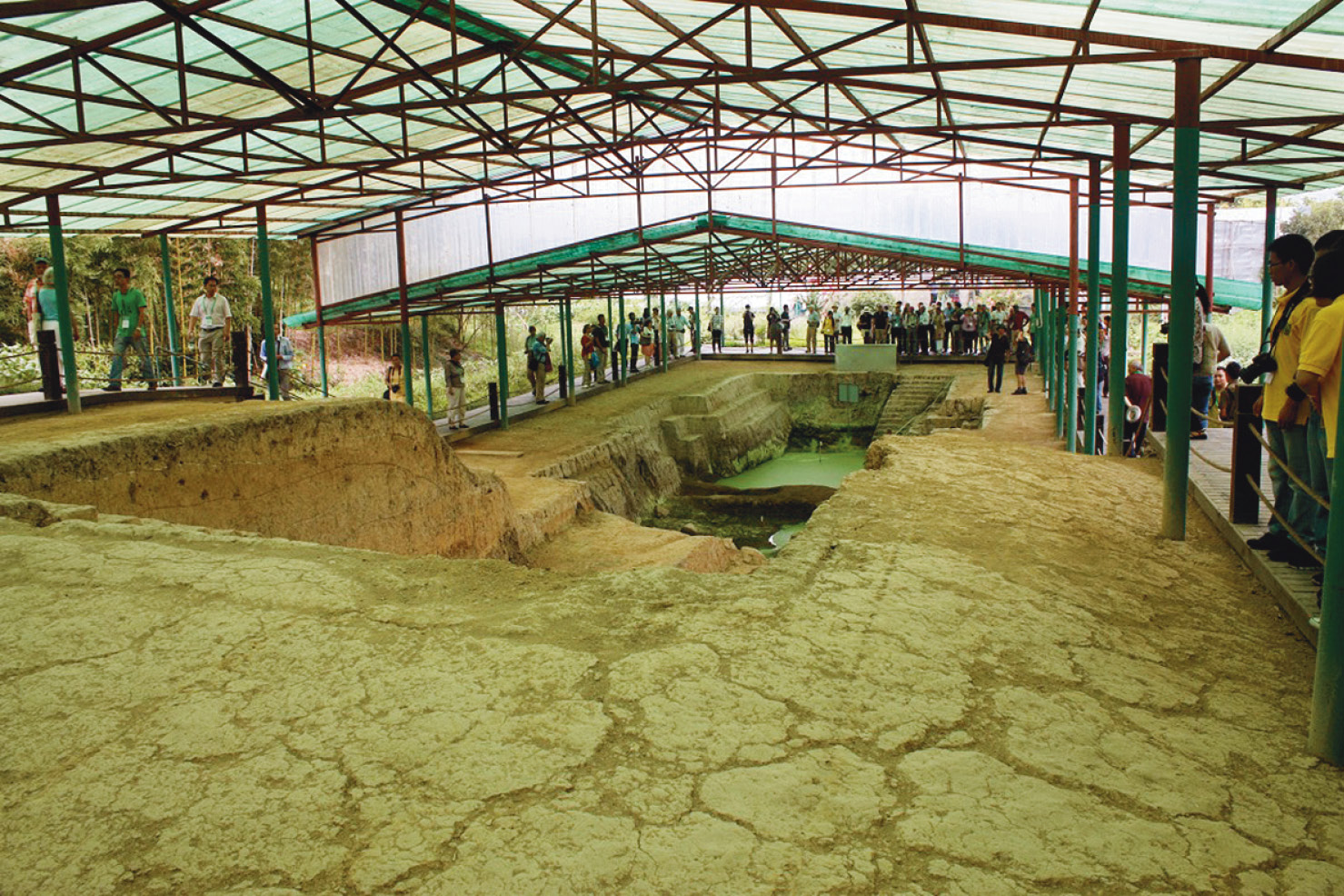
We were not disappointed. On arrival, we were first shown a section of the city wall, which enclosed an area of 323ha. It is very important to appreciate that Liangzhu was situated on a plain, south of uplands from which a series of rivers flowed down to and past the site. The city walls were severed by about eight water gates, and one has to imagine a prehistoric Venice, for the inhabitants would have needed to use boats to move both within the walls and beyond. The elite leaders of Liangzhu marshalled a considerable labour force, deployed to construct a whole series of dams to hold back and distribute the water from the monsoon rains, water that was also essential to ensure a rice harvest.
There was no known writing system, so it is to archaeology that we turn to find that, socially, Liangzhu was divided into a small ruling elite, with leaders who regulated the duties of administrators, craft specialists, and agricultural workers. The city interior incorporates raised rectangular platforms. One of these, known as Mojiashan, housed the royal palace. Other mounds were constructed as elite cemeteries; the graves stand out for the wealth of jade ornaments and weapons. Fanshan is one of the mounds that contains individual aristocrats interred with numerous jades, among which discs and cong dominate. These latter are artefacts that have a rectangular exterior, a central circular hole, and are regularly embellished with remarkably detailed engravings of a human and a monster. The graves also contain jades pierced for attachments, probably feathers, for the human engraving shows large and elaborate headdresses being worn. The dead, along with the jade offerings, were confined within painted wooden coffins. These outstandingly wealthy individuals interred in a raised mortuary structure contrast with the graves of the moderately wealthy and the poorer members of the Liangzhu polity.
Jade of exceptional quality was employed to advertise social status. It was quarried near Lake Tai to the north of the city, and converted in specialised workshops, presumably under the aegis of the social elite. One of these ateliers has been found to contain the jade blanks, anvils, and manufacturing tools used to produce the discs, cong, battleaxes, and a range of ornaments. The fine ceramics and lacquerware come in a range of forms that evidence the social role of feasting and drinking as indicators of social status. Rice, found copiously at Liangzhu, was key to prosperity, and it was also a principal ingredient for the alcoholic beverages that were part of the palace round of entertainment.
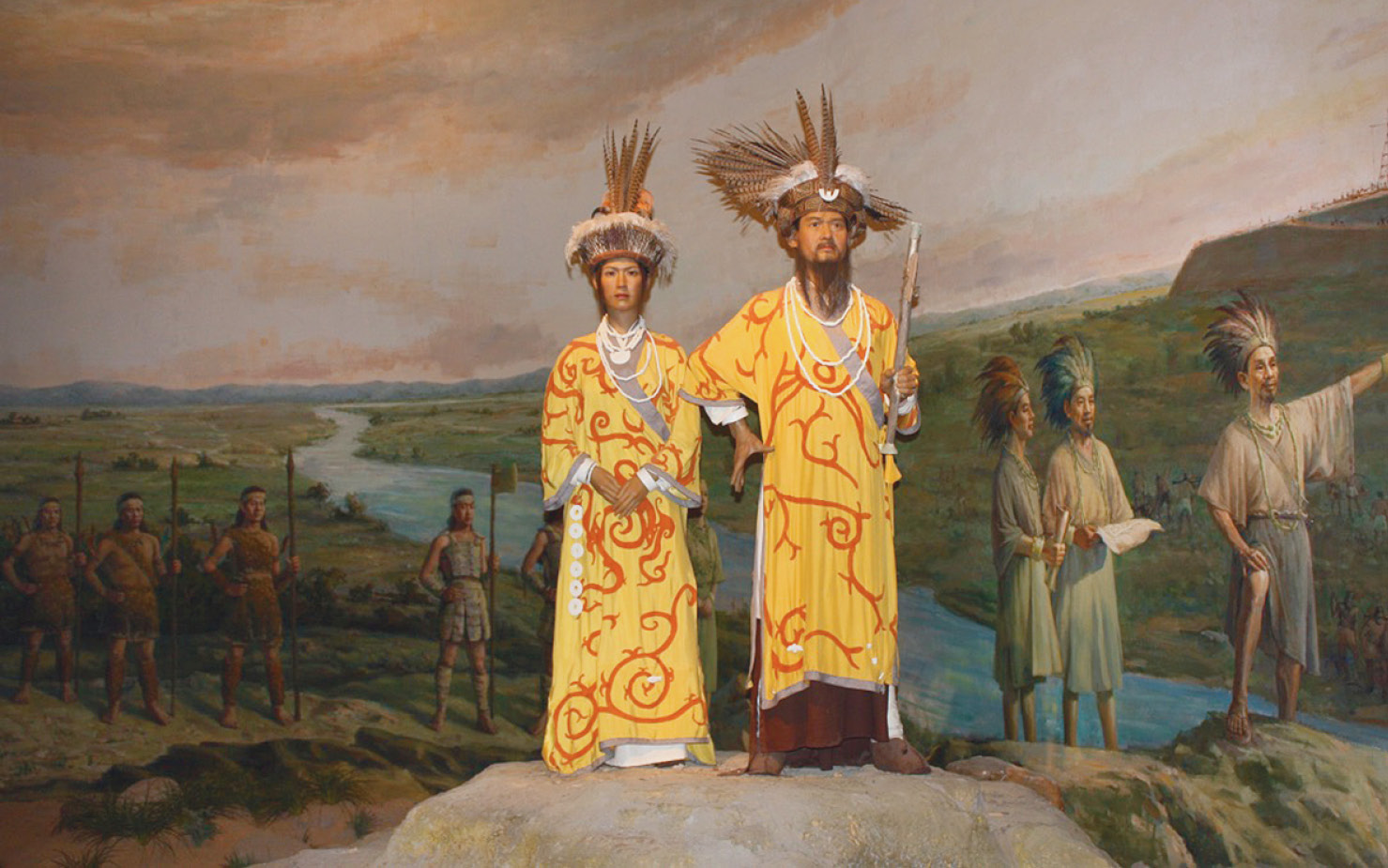
A visit to the award-winning Liangzhu museum came at the end of the visit. These Chinese museums are really impressive, which is hardly surprising given the many remarkable items available to display. One of these, more mundane than the jades perhaps, was a stone ploughshare that would have greatly increased the area brought under cultivation. The jade cong, discs, and battleaxes never fail to impress. The curators had brought home to visitors, too, the contrast between the elite leaders, finely dressed with their feathered headdresses and silk garments, and the workers, who toiled to construct their palaces and platform cemeteries, by constructing tableaux of scenes from daily life at the capital. We were also reminded by maps that Liangzhu did not function alone. There were regional centres dotted across the low-lying plains that border the lower reaches of the Yangtze River, and many smaller village communities.
By c.2600 BC, Liangzhu was declining, soon to be abandoned. For a complex urban society dependent on rice cultivation that required the control and provision of water, it was probably a major climatic event that precipitated this. The viability of rice cultivation in the lower Yangtze region is heavily influenced by the strength of summer monsoon rainfall. The ‘Holocene Event 3’ that set in about 4,500 years ago involved a major climatic deterioration that brought drought conditions to northwest China, but increased rainfall to Liangzhu. The leaders were dedicated to the control of water through their dams and canals, but the rise in precipitation that accompanied this climatic change led to irreversible flooding of some settlements and the abandonment of the others.
Each Shanghai Forum has a theme, and in 2023 it was archaeology and climate change. The more we learn of this, the more significant it appears. There is no doubt that it had a profound impact on China’s earliest state, but it was also a potent force in social unrest and the collapse of complex polities in the Central Plains. Dating between 2300 and 1800 BC, Shimao was an urban centre divided into an inner and outer city defined by stone walls, the former incorporating 11 artificially elevated platforms, rising to a height of 70m, that housed the palace of the elite leaders. It was one of a cluster of walled settlements at this strategic crossroads between the steppes and the Central Plains. Here, the climate change involved a period of very dry weather that seriously impacted the millet harvest. Indeed, when at last we have written records from the Shang kings at Anyang, we find that one of their regular questions posed to the ancestors through their oracles was the prospect of a good harvest.
Charles Higham is a Professor at Otago University in New Zealand, and an authority on Cambodia's Angkor civilisation and Ban Non Wat in Thailand.
Images: courtesy of Charles Higham