Subscribe now for full access and no adverts
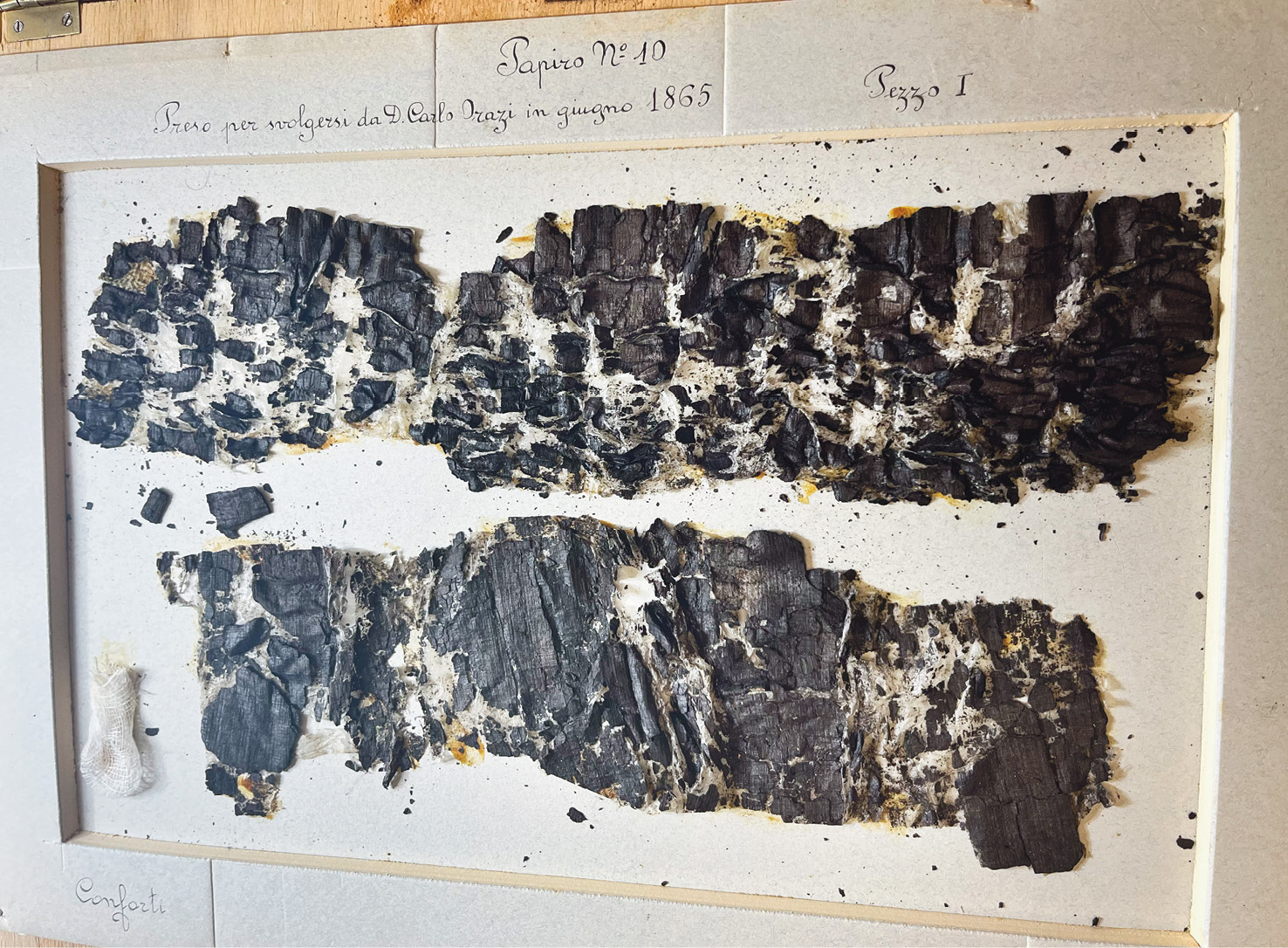
Few manuals offering guidance for the long-term preservation of a library are likely to recommend burning its contents. That, though, was the fate of hundreds of scrolls stored in a palatial villa to the north of Herculaneum in the autumn of AD 79. As Vesuvius erupted, a plume of dust and poisonous gases rose at least 3km into the atmosphere. Portions of this cloud periodically collapsed, cascading down the flanks of the volcano as pyroclastic flows. The first of these superheated avalanches is believed to have enveloped both Herculaneum and the neighbouring villa during the evening of the initial day of the eruption. The result was a human tragedy on an almost unimaginable scale, as hundreds of sheltering inhabitants were exposed to temperatures that have been calculated at 500°C. This lethal heat also carbonised food, fabrics, and furniture, as well as the papyrus scrolls in the villa. Over the following hours, more and more pyroclastic flows careered into the town. Having devastated Herculaneum, this volcanic material then protected its ruins by burying them deep. The rapidity and heat of the gases had sucked much of the oxygen out of this shroud, too, allowing the fragile artefacts within to endure undisturbed for centuries, awaiting rediscovery.

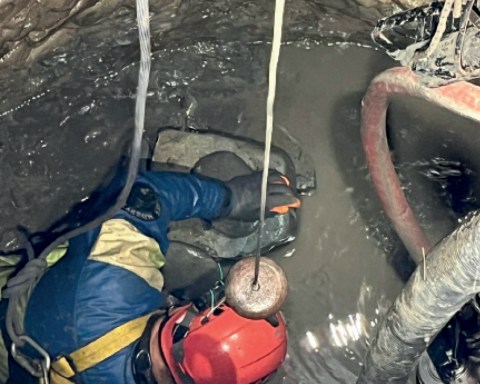
For the villa, that moment came in 1750, when well-digging operations struck not water, but a sumptuous marble pavement. The King of Naples, Charles VIII, was sufficiently enthused by the promise of buried marvels to order excavation of the site. This posed significant challenges, though, as the villa lay at a depth of 27m, meaning that investigations had to be conducted via subterranean tunnels. Karl Weber, a Swiss engineer, was engaged to lead the project, with a team of press-ganged convicts and labourers doing the digging. Although the king was eager for rapid results, Weber was not one to be rushed. The marble floor proved to belong to a belvedere set within a vineyard, and it was a full six months before the diggers reached the villa proper. Despite Weber’s brief, he was not interested in simply grabbing ancient masterpieces. Instead, he used the tunnels to compose a plan of the villa, marking the locations of key finds with such diligence that his work has been credited as the first true archaeological excavation. His investigations ultimately ran for 14 years, with the king’s patience rewarded by the recovery of treasures galore, including scores of bronze and marble sculptures, as well as frescoes and mosaics. Despite this abundance of wonders, the site owes its modern name to a collection of charred lumps that at first glance appeared distinctly underwhelming. These relics have been likened to coal and even, in more recent times, a burnt burrito. When first encountered in 1752, they were thought to be rolled up fabric or fishing nets. In reality, they were charred papyrus scrolls from the only library to survive intact from Classical antiquity.

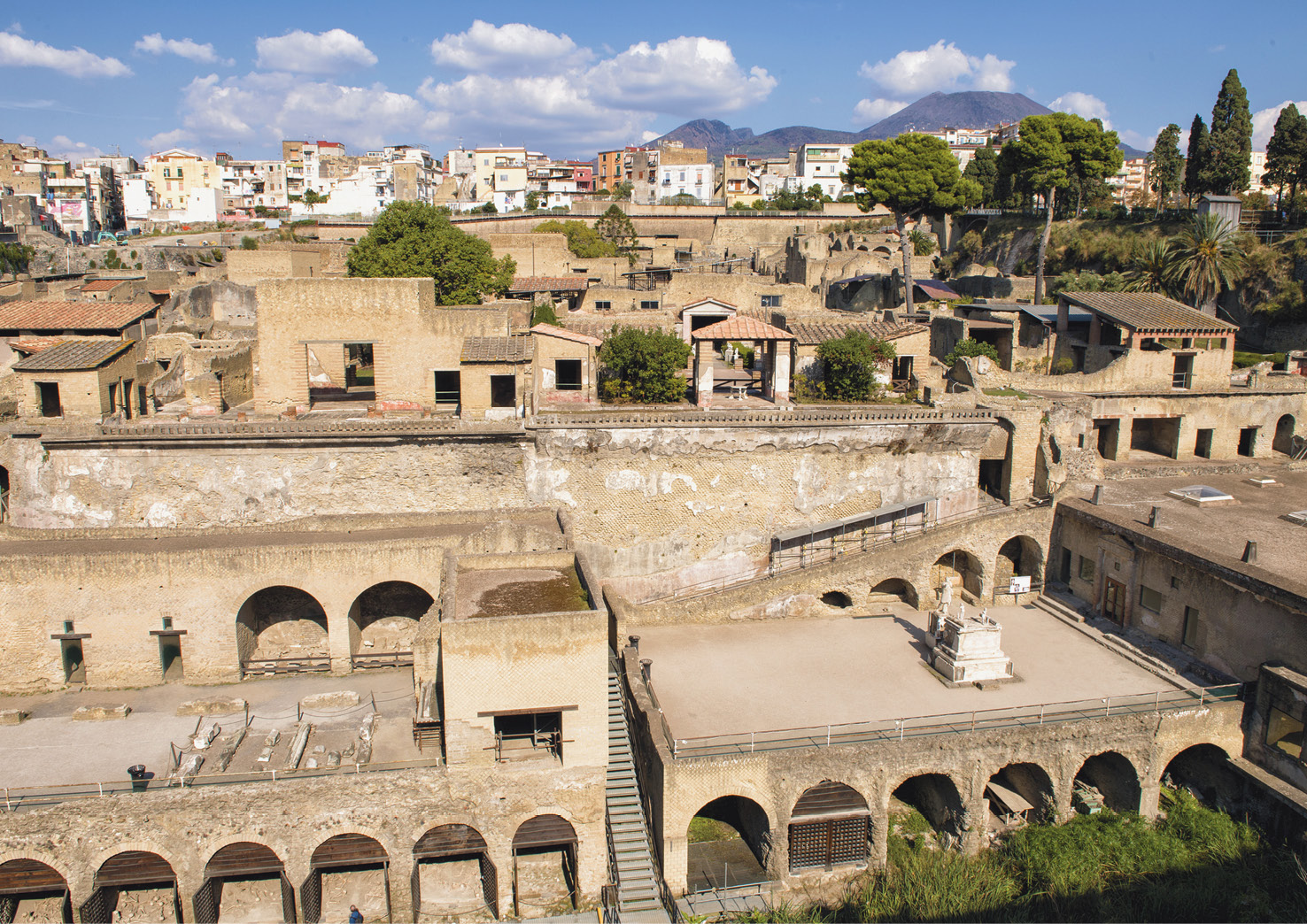

Villa dei Papiri
Camillo Paderni, who was in charge of conserving the villa finds, is often credited with appreciating the true nature of the scrolls. The possibility – indeed, probability – that they held lost texts from the ancient world occasioned considerable excitement. Such was their value that small numbers were even given away as diplomatic gifts, while the king established an august body, the Accademia Ercolanese, to tease out the priceless texts. This proved to be a task worthy of Hercules, as the burnt papyri were too brittle to unroll without fragmenting. How, then, could they be read? Early attempts to reveal their secrets veered from the disastrous to the destructive. Scrolls would often be cut open, with one approach relying on copying down any visible text, before scraping it away to reveal the next layer of papyrus below. Such transcription was often far from straightforward, as the blackened papyri were now the same hue as the ink on them, frequently rendering the text all-but invisible.
Despite these challenges, recoveries were made. One early achievement was reading part of a Latin poem featuring the death of Cleopatra. The first Herculaneum text to be printed, though, proved more representative of the wider collection. This emerged in 1793 and was a treatise in ancient Greek called On Music, which had been composed by Philodemus of Gadara. Philodemus was a poet and philosopher, who was already a known – if obscure – figure thanks to the existing ancient literature. As knowledge of the contents of the scrolls grew, so too it became more and more apparent that the nucleus of the library was a collection of works that must have belonged to a professional philosopher. The only plausible candidate was Philodemus himself, whose surviving body of work has been much expanded by the contents of the Villa dei Papiri. Indeed, one of his scrolls seems to contain the equivalent of final proof revisions to a text. This association also presents a strong candidate for the owner of the villa: the Roman aristocrat Lucius Calpurnius Piso Caesoninus. He was a friend and probable patron of Philodemus, as well as the father-in-law of Julius Caesar.