Subscribe now for full access and no adverts
The River Nile has always been important to Egypt. It provides water to irrigate the land for crops, for drinking, washing, catching fish, and building. But most of all it provides a means of transportation, and has done so for thousands of years. Until the advent of rail and motor vehicles, there was only one way to travel: by boat.
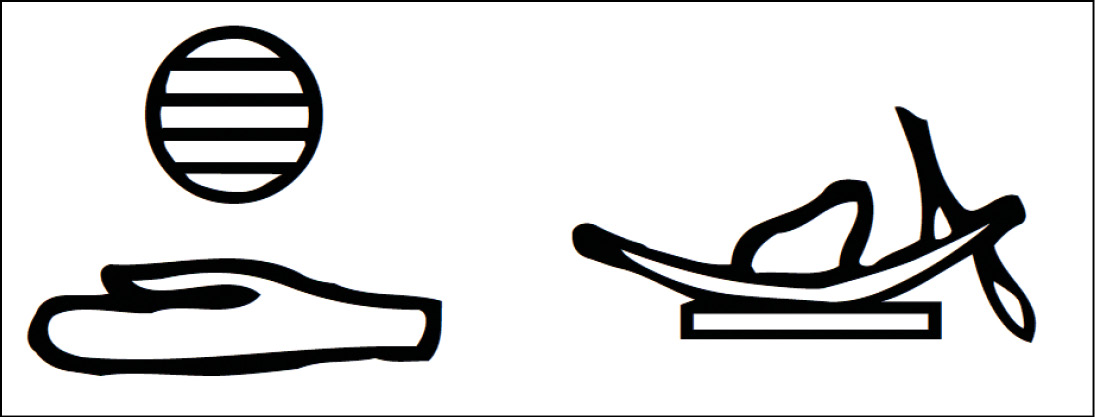
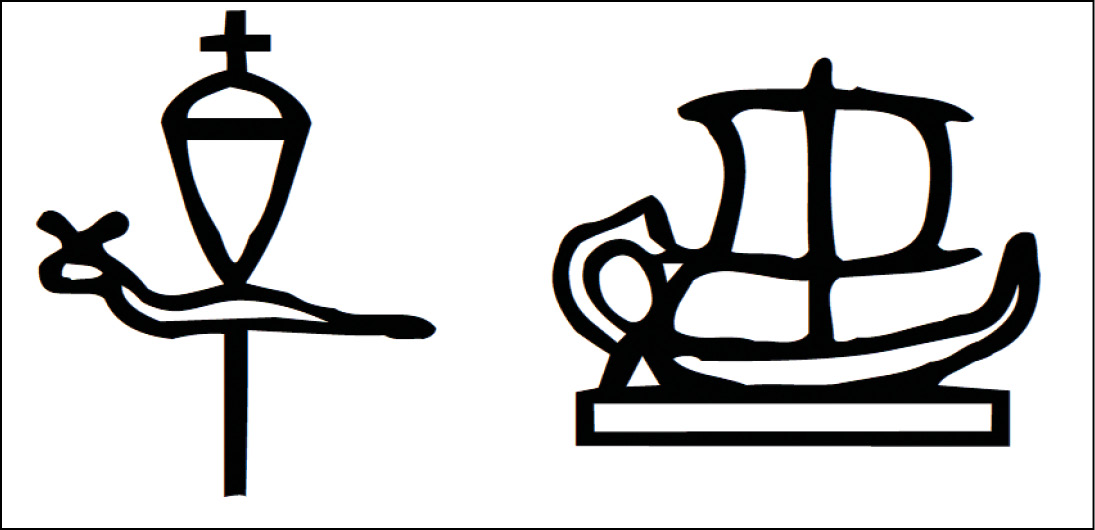
For much of the year, the wind blows from north to south, such that a craft under sail could travel from the Mediterranean via the Delta to the First Cataract at Aswan, returning with the current and sails taken down. This fact is even embedded into the written hieroglyphs and included in the phrase ‘travel north’ as hieroglyph P1, boat with sails down, or ‘travel south’ as P2, boat under sail (Gardiner notations).

Many tombs had model boats left with the deceased for their use, or even real examples. Tomb walls carried pictures of gods in boats, or ordinary people going about their daily river activities. Boats were used to carry gods during festival celebrations. They carried images of the dead from the East Bank to the Land of the Dead on the western shores, and they bore the gods in their journey across the heavens for the 12 hours of the night.
Papyrus boats
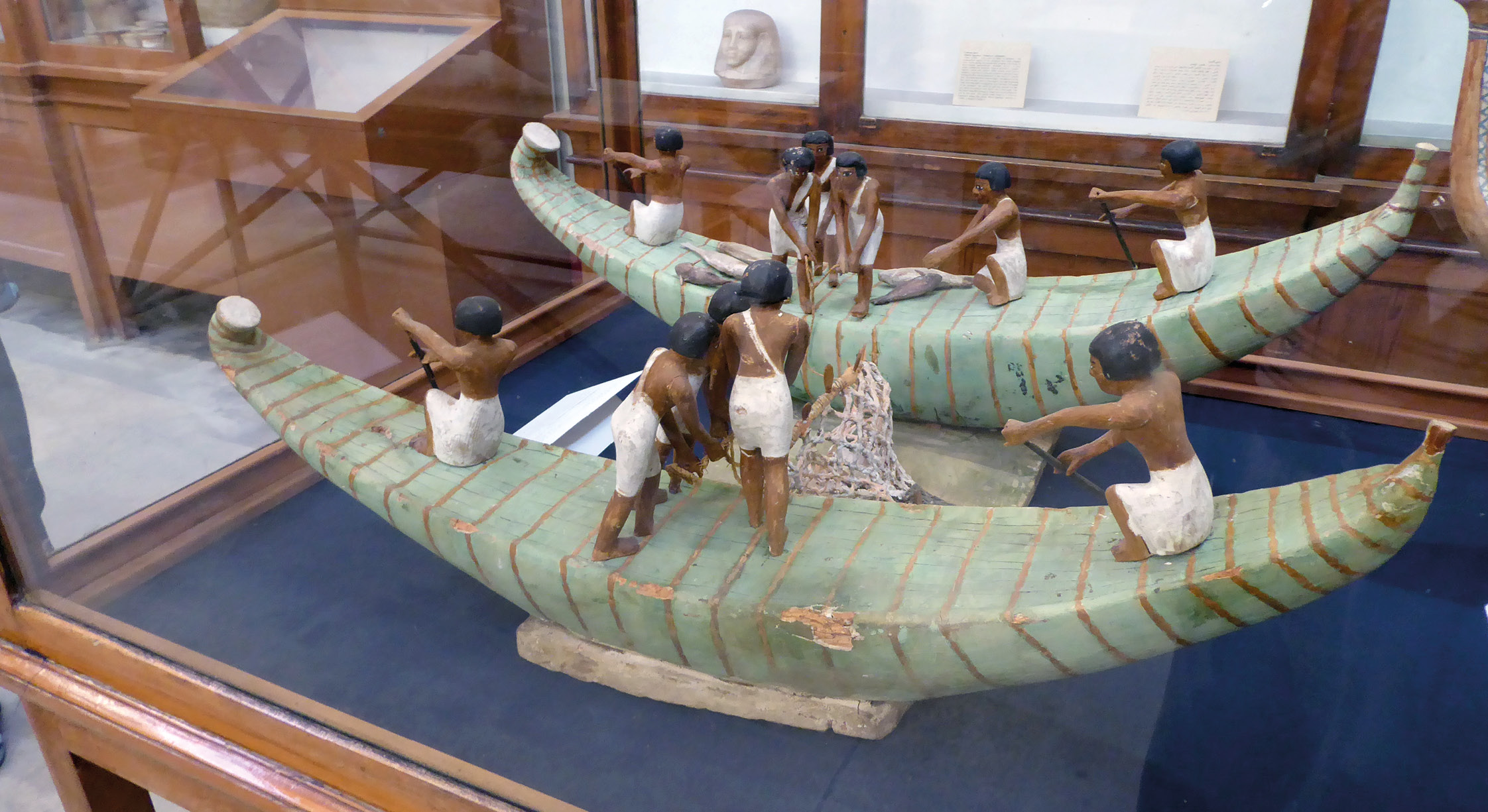
Egyptian boats differed from others because of the materials available to Nile boatbuilders. Unlike in many other parts of the world, there was not an unlimited supply of suitable timber. Local acacia and sycamore-fig trees (not the sycamore of northern climes) tended to produce shorter lengths of wood. The solution lay in the Delta and marshland of the Nile, where papyrus reeds then grew in abundance. While many primitive societies throughout the world initially built boats from hollowed-out tree trunks, the Egyptians tied bundles of papyrus reeds together. The bundles were light, they floated, and above all papyrus was freely available to replace a worn-out craft after a few months when it became waterlogged.
These small craft had a broad beam to help with instability, and were suitable only for the relatively calm waters of the river. In effect, they were little more than boat-shaped rafts. They were still in use in Egypt until about a thousand years ago, after which the papyrus reed-beds became exhausted.
Wooden boats
Ancient Egyptian civilisation developed slowly over a very long time. It relied on the annual predictability of the River Nile and on a culture that believed in the maintenance of maat, or ‘the stability and order of everything’. Because of this, there was a tendency to repeat what had gone before to solve problems, rather than look for innovation and change, which could perhaps threaten or destabilise maat. However, the use of all watercraft in the late New Kingdom and later dynastic periods did evolve slowly, initially internally within the somewhat isolated geography of Egypt, and later by means of interaction with other seaborne states.
While simple fishermen and local villagers used papyrus, this does not mean that locally available wood, or imported timber, was not used for larger vessels. There is evidence for the use of wooden boats on pottery from the Predynastic Naqada II Period (c.3500-3200 BC), and, by the Fourth Dynasty, cedar was being imported from Lebanon to construct the funerary boat of Pharaoh Khufu.
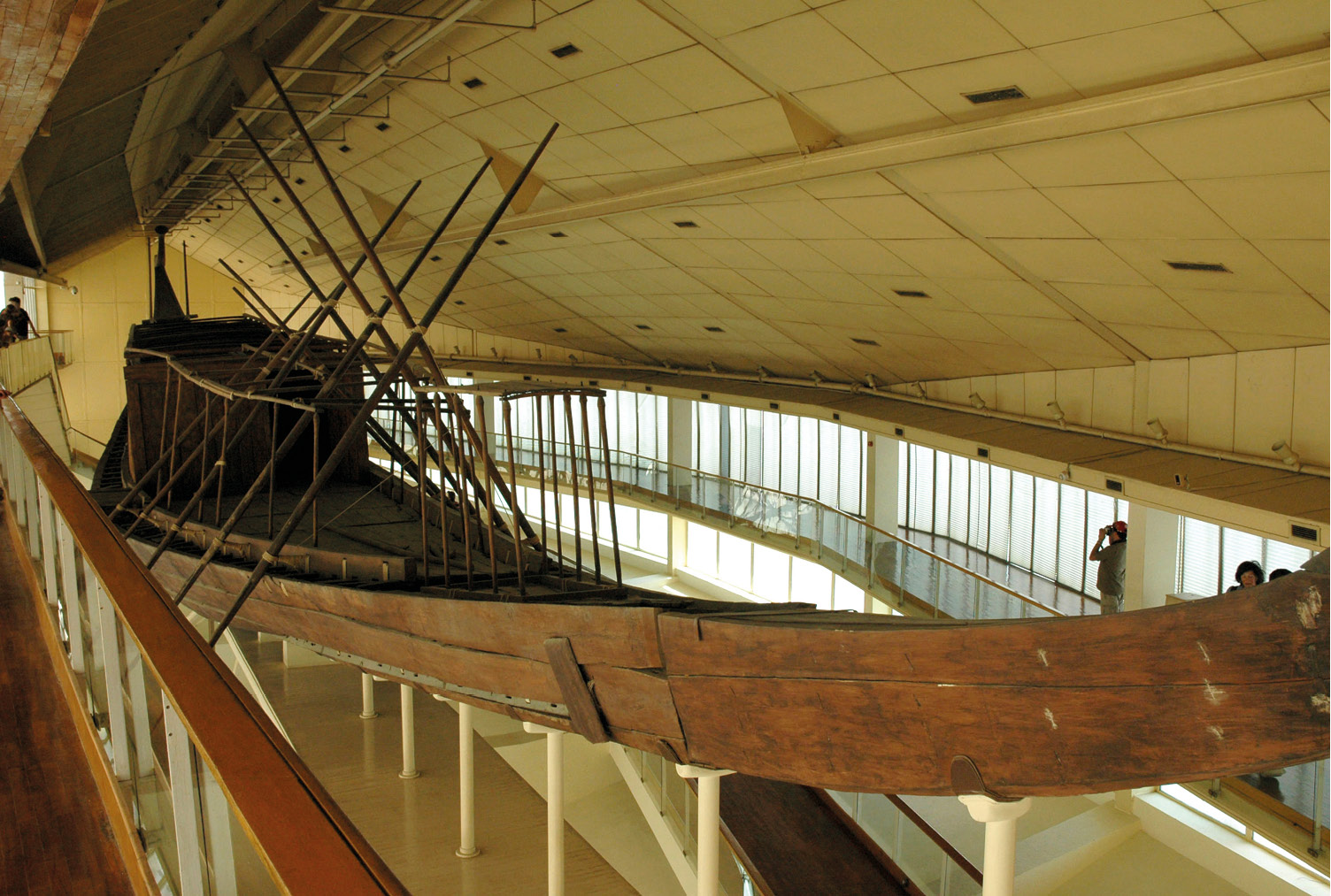
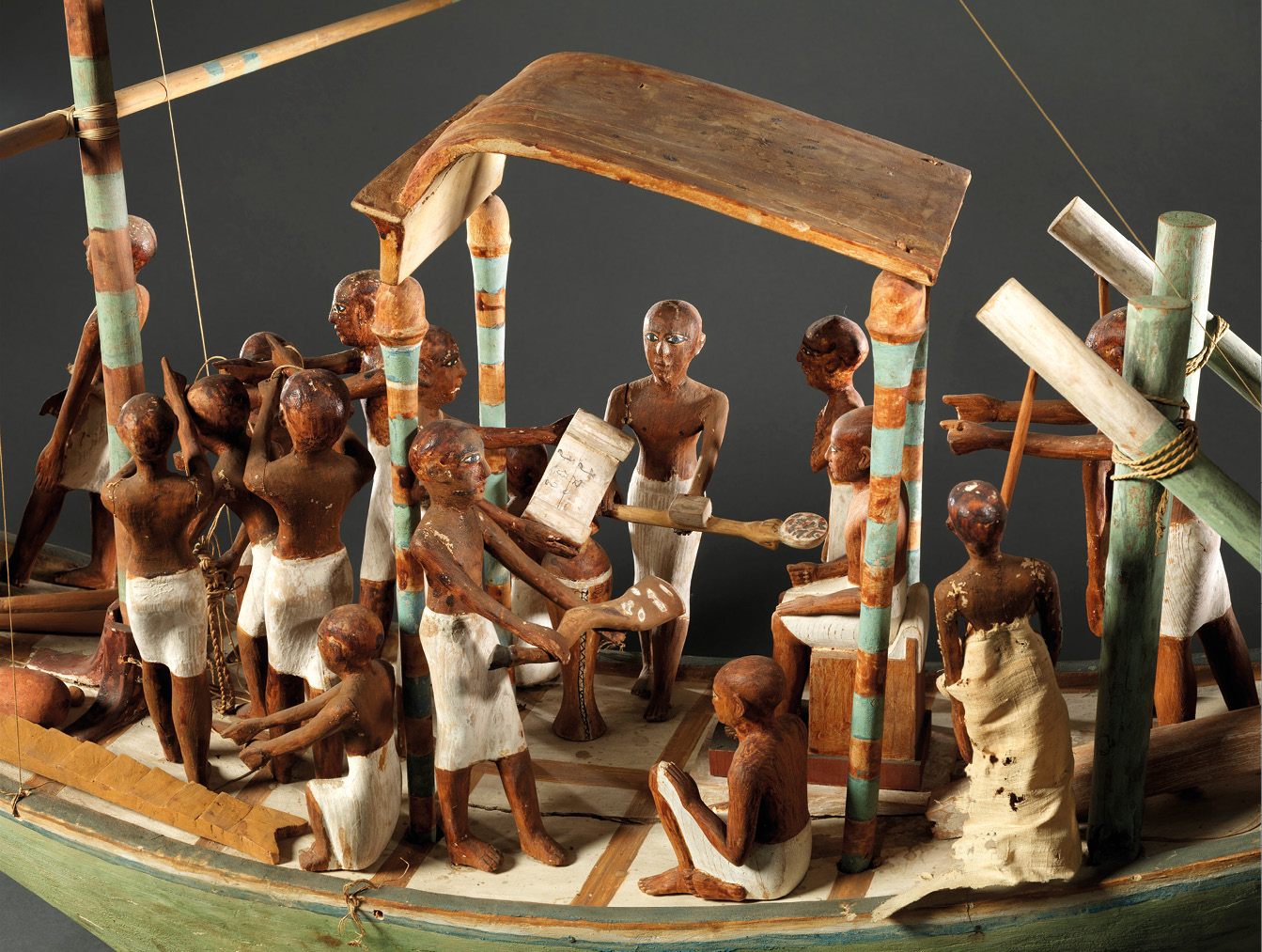
However, the ancient Egyptians used different techniques from other cultures. Many boats adopted what is called a ‘papyriform shape’, still influenced by the simple papyrus craft. The ends were turned upwards and made to look like papyrus bundles; they were often detachable. This is visible in Pharoah Khufu’s boat and in tomb models.
To construct boats of this type, the hull planks were lashed together and held with internal rope and wooden pegs, without any keel. The craft were flat-bottomed, so they could be drawn up on a beach or flat riverbank; no harbour or jetty was needed. Unlike modern boats (where a keel is laid first, followed by internal ribs, and lastly the outer planking), these craft were built with supported planking from the outside and partial ribs were added later. The upper deck’s longitudinal members supplied the ‘stiffness’ of the completed hull in place of a keel.
Only the central part of the deck of Khufu’s boat was planked between the main longitudinal beams. Between them and the edge planking, there was nothing, illustrating perhaps that the ship was never intended for anything but very calm water.
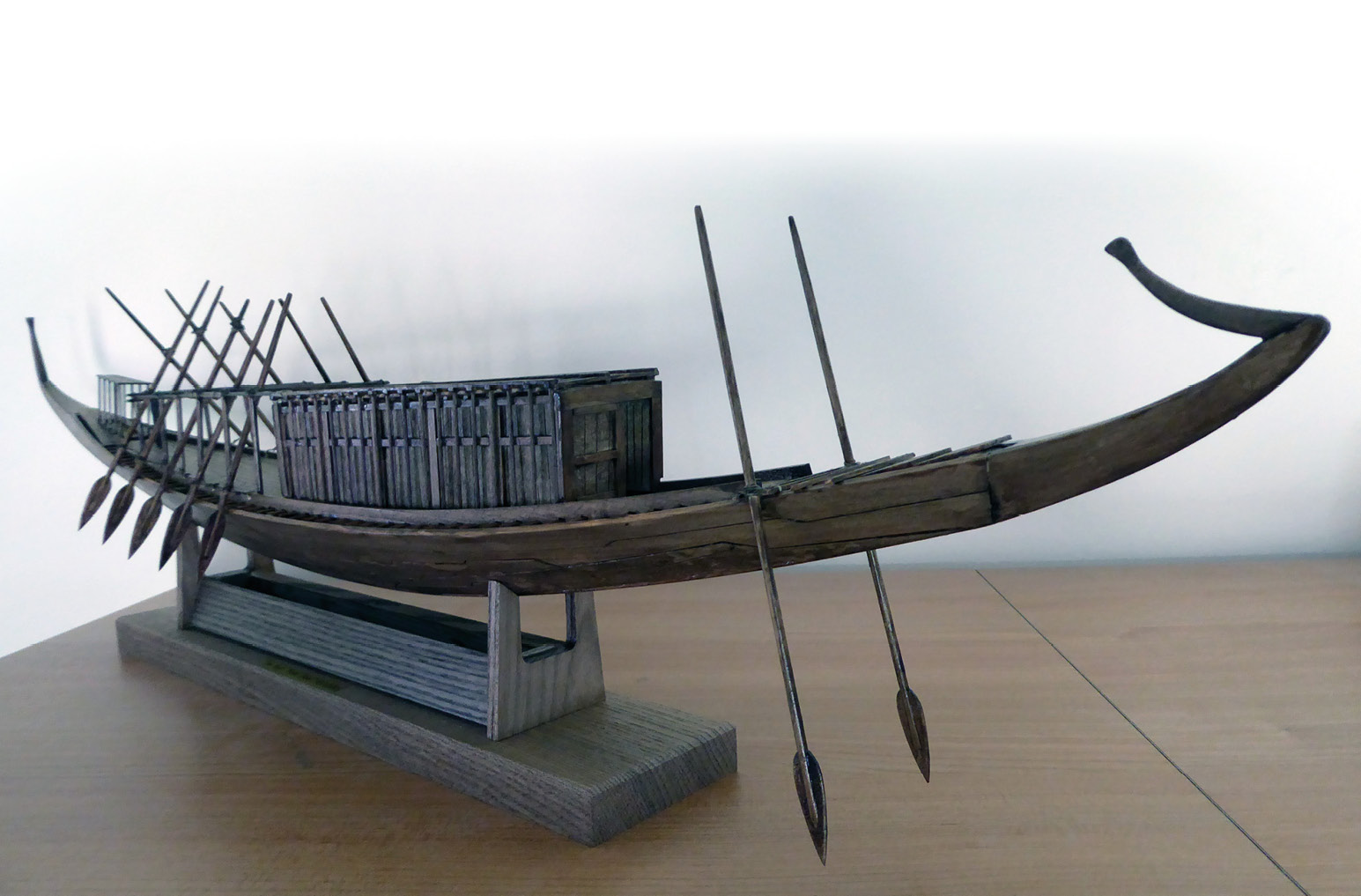
The stepped planking of the hull was sewn together on the inside and had tenons between the edges of the planks, but the method of joining the planks together changed over time. The Twelfth Dynasty boats found at Dahshur, buried with Senusret III, used short planks which were all fastened together with small double dovetail tenons.
This type of construction survived for many years. Herodotus compared the hull timbers to the overlapping bricks used in wall construction. There was little development for many centuries, mainly because the shipwrights’ technical ability matched the availability of materials and maritime needs at the time, rather than reflecting a period of stagnation.
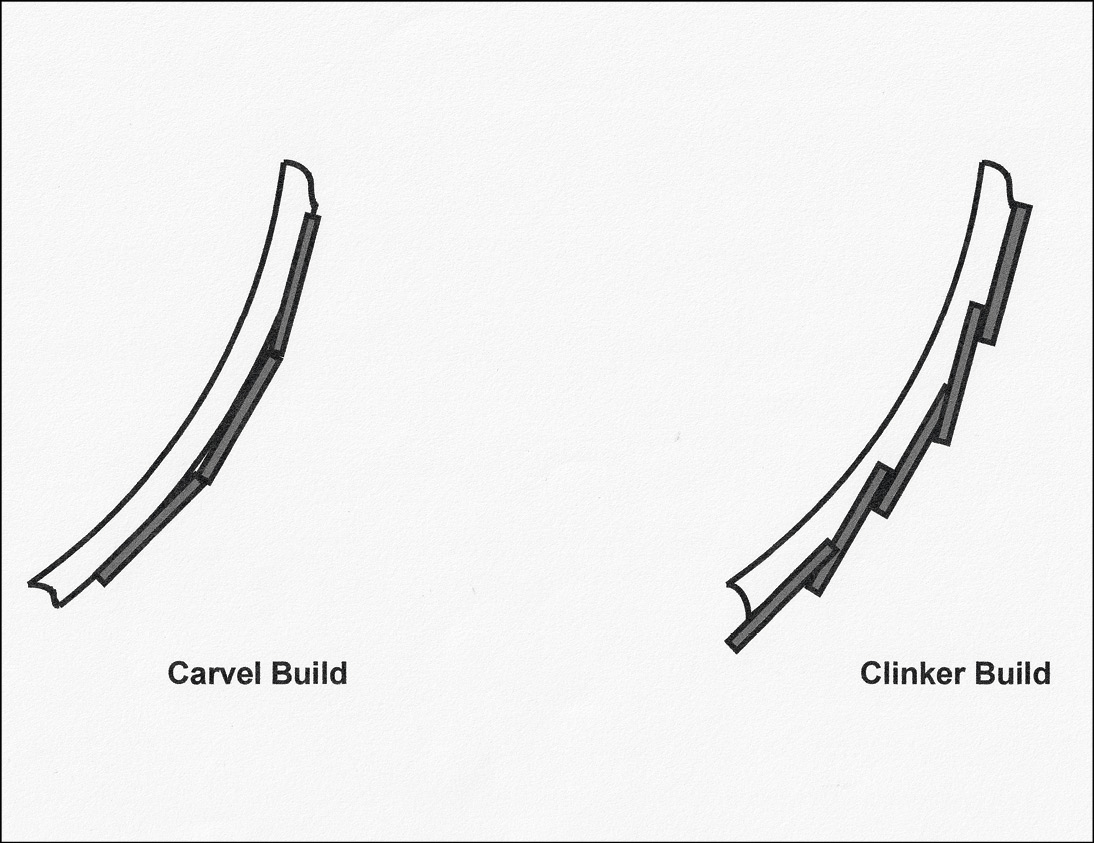
The ancient Egyptians had copper to make tools, but never made nails to fasten planking as did the Vikings in later years. All wooden craft had planks butt-jointed and pegged along their edges, termed ‘carvel’ construction. This gives a smoother outer skin, but the craft, although stronger, tended to be heavier and lower in the water, thus taking more effort to paddle. The planks in Khufu’s example were some 10cm thick.
The northern cultures of Europe used an overlapping and iron-riveted construction, termed ‘clinker’ build. This tends to be lighter, with less internal framing, and is less rigid.
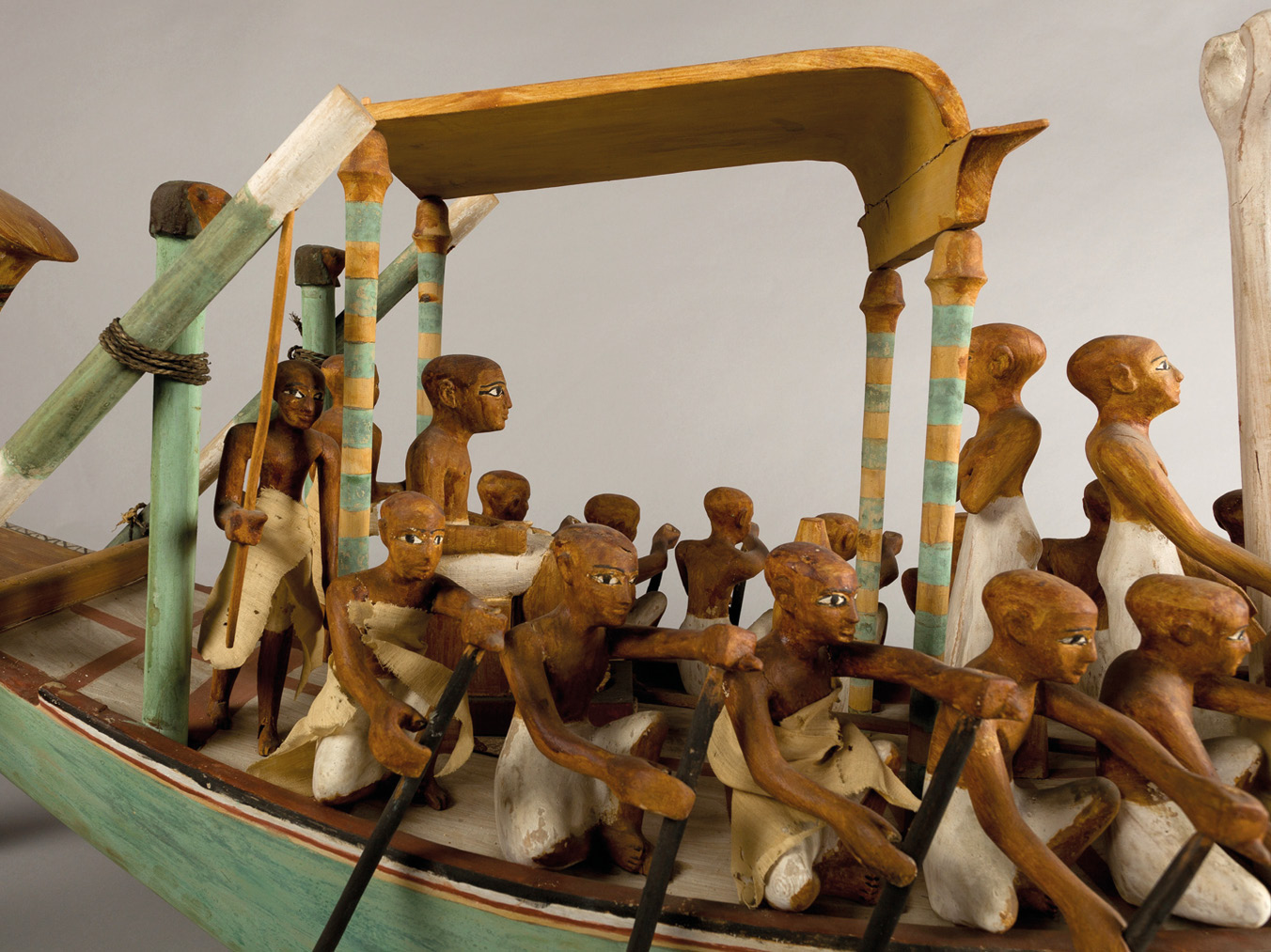
Above & below: Meketra’s tomb models of larger Middle Kingdom working boats known as ‘travelling boats’. They retain the papyriform shape but are probably constructed from timber, as can be seen (in the above image) from what appear to be internal thwarts (struts inserted from side to side) across the deck. The two large steering oars (in the image below) have tillers attached, and there is also a rest to accept the lowered mast. These models are now in the Metropolitan Museum of Art New York (MMA). Images: MMA
Seaworthy vessels
It is known that a trading journey to the land of Punt by ship via the Red Sea was undertaken from as early as the Fifth Dynasty by Pharaoh Sahura (c.2487-2475 BC). Similar voyages are recorded by Queen Hatshepsut of the Eighteenth Dynasty (c.1473-1458 BC), and by Ramesses III of the Twentieth Dynasty (c.1184-1153 BC). As these vessels travelled extensively up and down the Red Sea, it is realistic to assume that similar boats were used to travel around the Mediterranean.
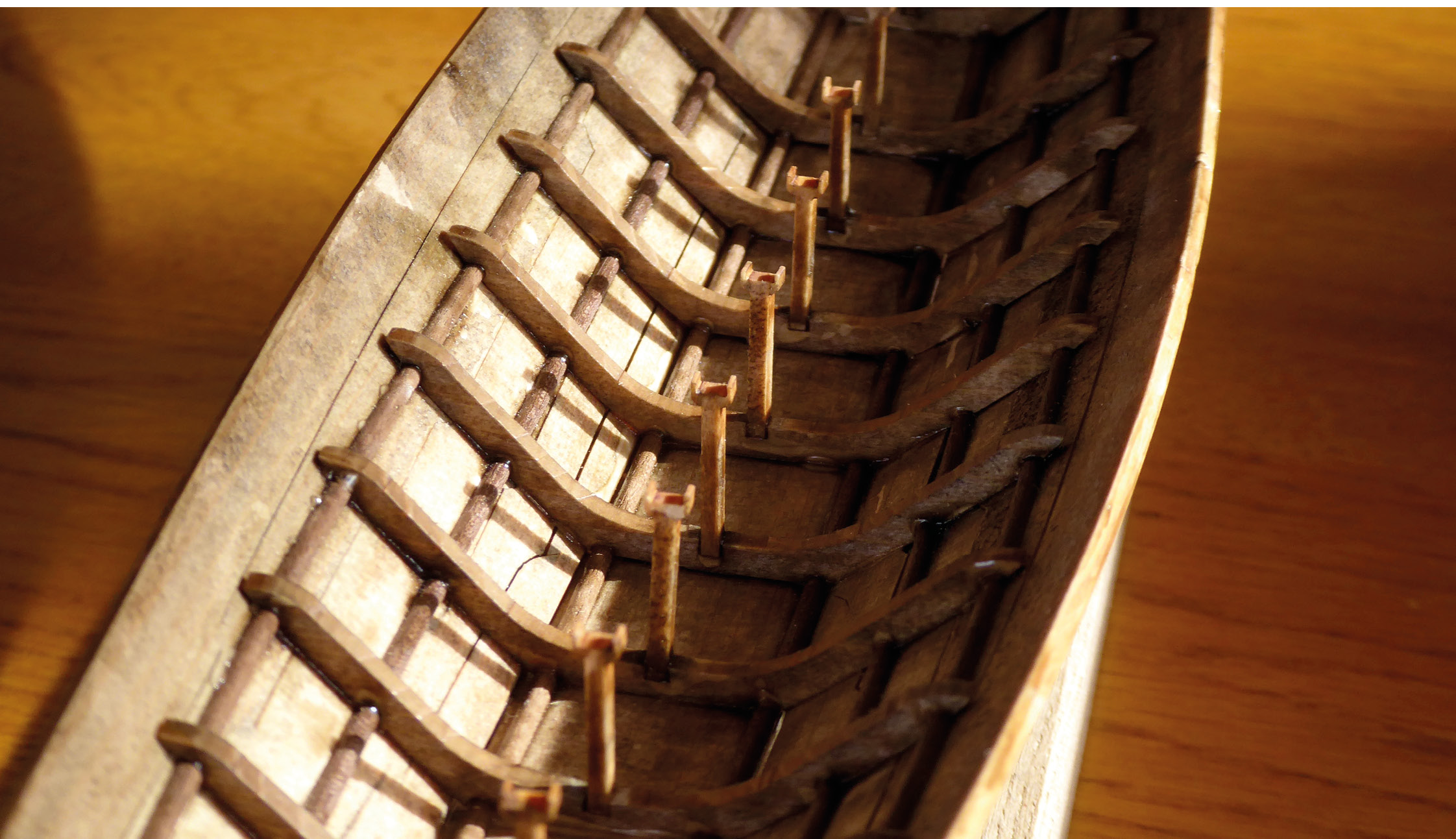
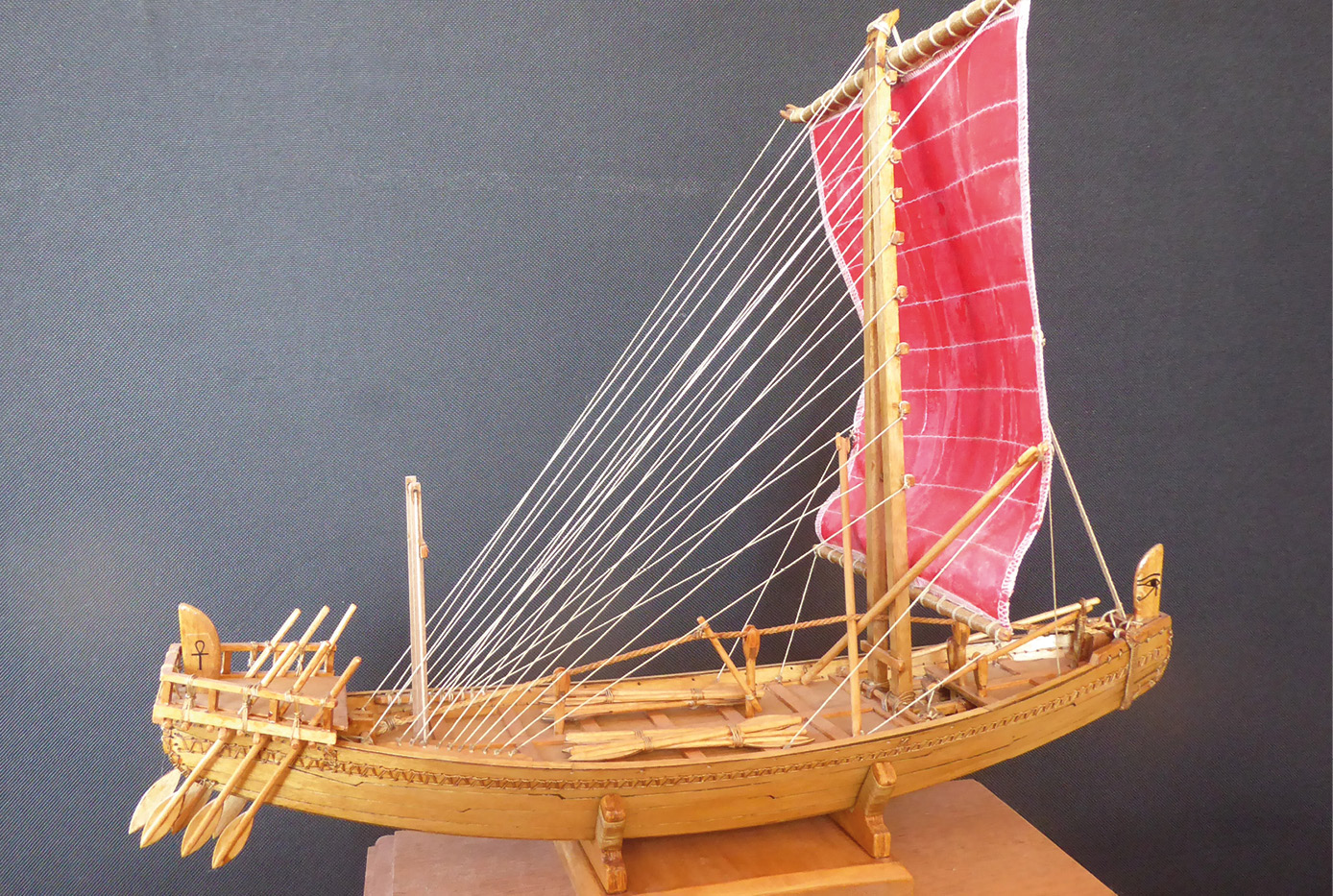
These ships had a bipod mast, like an ‘A’ frame, for stability without side shroud lines (ropes attached to the mast to prevent it moving from side to side) or stays, although there was a fore stay (a rope attached to the mast to prevent it from moving backward) and numerous back stays, as can be seen on the Sahura model. The mast could be lowered when travelling downstream when on the Nile, controlled by a large counterweight at the base of the mast. They also had a ‘hogging truss’ firmly tied fore and aft, with a lever inserted between the thick rope strands to twist and add more tension to the hull when used in open water. This was intended to stop the hull flexing when it passed over large waves. An additional ‘girdle truss’ around the outside of the hull gave further strength to stop the hull warping under stress when fully loaded.
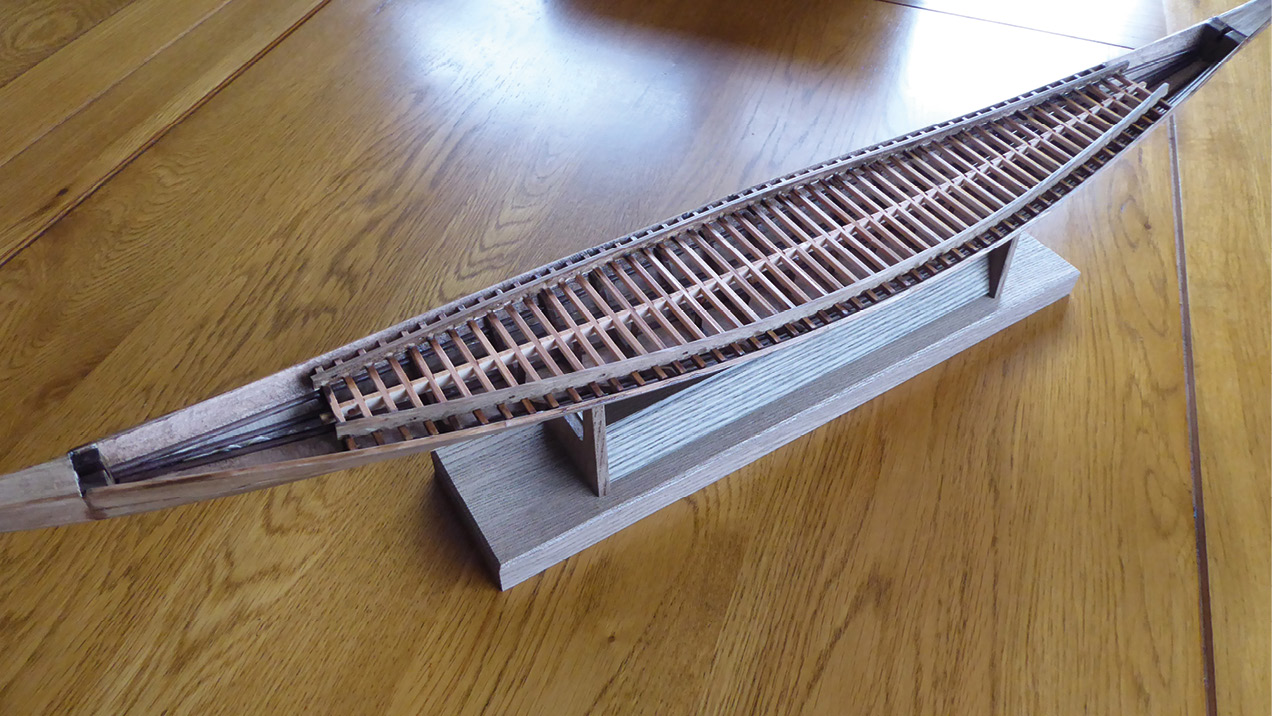

The lower boom, or yard, along the bottom of the sail was replaced by ‘brails’ (ropes to the top yard) by the time of Ramesses III, enabling the sail to be ‘brailed’ up to the top yard; this gave more sail control. By this period, the longitudinal deck stiffening had been replaced by a more conventional keel, and figureheads are noted on later wall carvings. The rigging and control of the sails, however, remained distinctive to the Egyptians, despite their interaction with the Greeks in the Mediterranean.
Obelisk barges
By the Eighteenth Dynasty, specially constructed barges for transporting obelisks had been developed. Their decks were reinforced by extending internal cross-beams out through the hull sides. Normally this was only a single line of extensions, but in the largest barges there were three rows to support the massive weight of the cargo.
Before the advent of ships with keels and internal bracing, it is easy to understand why most cargo was placed above the deck, even when there was only one row of cross-beams below the deck. It was simply not possible to have large access hatchways, as they would have weakened the hull.

Funerary boat pits
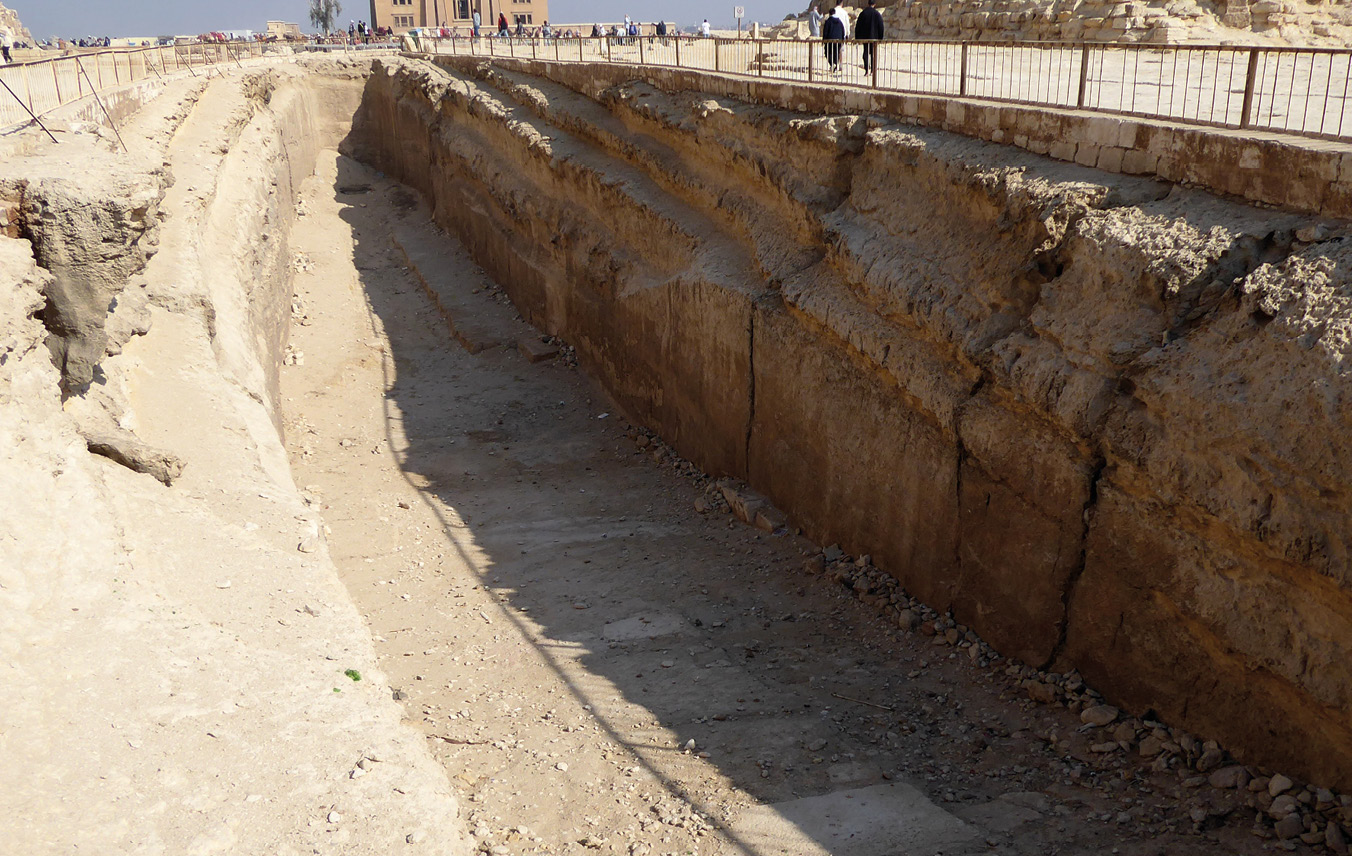
Pits were excavated around pyramids to accommodate funerary boats such as those of Khufu. After the disassembled boats were placed inside, the pits were closed with large stone blocks. This meant that the boats were in sealed chambers at a constant temperature and humidity, so they were almost perfectly preserved for thousands of years. Only when opened to the atmosphere, with moisture and insect attack, did they deteriorate more quickly.
Warships
In common with many early cultures, initially there would have been no such thing as a dedicated warship in ancient Egypt. In the event of conflict, whatever was available would either have been commandeered, or local people would have volunteered their craft. Ships at this time were used as a means of conveying soldiers, archers, and spearmen to the battle, rather than used in the battle as weapons; they were little more than troop-transports. Some had side panels, perhaps to protect rowers from incoming missiles or arrows; otherwise, they were normal commercial craft.
The most notable battle involving ships that has been recorded is against the ‘Sea People’. This is depicted at the funerary temple of Ramesses III, at Medinet Habu, and apparently took place in the Nile Delta. The ownership of the ships is uncertain, but ships on both sides of the conflict are shown with ‘brailed’ rigging for the sails. Many of the participants on the Egyptian side appear to be culturally connected to the Sea People, which may indicate that they were mercenaries hired by the Egyptians.
Evidence from the Book of the Dead
The Book of the Dead was a papyrus scroll of around 200 spells to help a deceased person travel through the rigours of the afterlife. Those who could afford it had a standardised one made up with blank spaces in which to insert their name. The scroll was then included in their tomb.
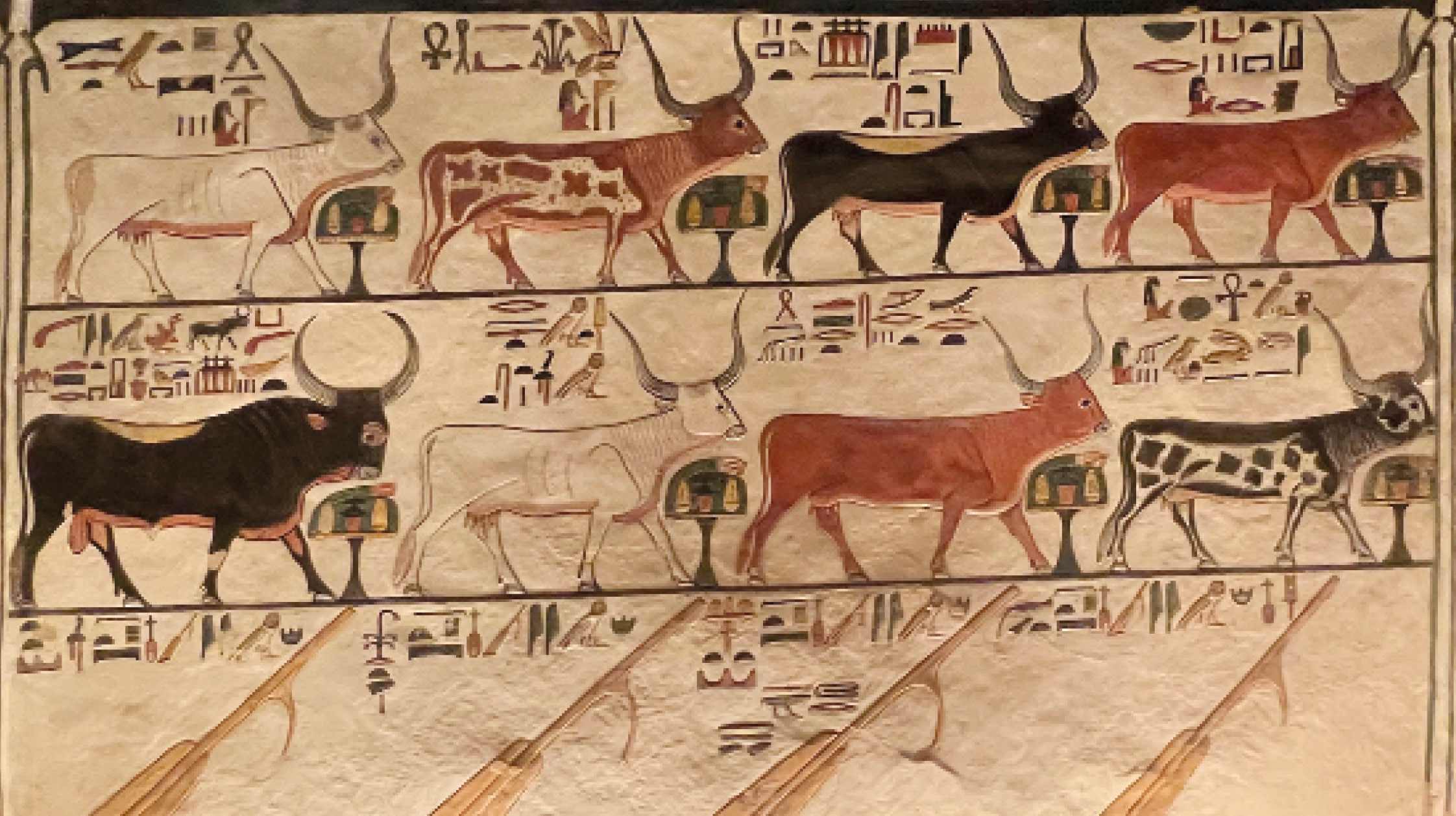
Passages from this book also adorned many tomb walls or coffins, including Nefertari’s Nineteenth Dynasty tomb QV66, in the Valley of the Queens. Spell 148 depicts the seven sacred cows and the bull in front of offering tables, and the four steering oars of the sky: north, west, east and south. Each oar has an attached tiller fitted to provide greater leverage for the operator – as blade areas increased with larger boats, simply twisting the steering oar by hand was not possible. As can be seen on the model of Khufu’s boat, the length of the oars, which are to scale, would make them difficult to operate on the real craft.
Paintings or engravings on tombs of celestial or solar boats were very common throughout all ancient Egyptian tombs.
Royal barges
Another form of ship was the large royal or diplomatic barge, designed to transport a pharaoh or senior official in splendour to demonstrate the power and opulence of the state. They seem to have developed early in the Ptolemaic Dynasty (332-30 BC). Most appear to have been influenced by Greek vessels, with multi-layered banks of oars (biremes, triremes, quadriremes and so on). They even had orchards, baths, and gymnasia on board.

Actium
The Battle of Actium (31 BC) was fought by Cleopatra VII and Mark Antony off the western coast of Greece, against the Roman leader then known as Octavian. The fleets consisted mainly of triremes and quadriremes. Antony’s ships were larger than those of Octavian. However, Octavian’s vessels were more numerous and more agile, so they could manoeuvre more quickly to gain advantage.
Sea battles were nothing more than land battles at sea, although ships were fitted with strong metal rams at the bow to strike and sink the enemy. Archers and spear throwers were used extensively to disable the opposition. At Actium, Cleopatra and her fleet were defeated; Rome was victorious.
This battle marked the death of Ptolemaic Egypt and the Roman occupation of the country. Egypt became merely a province of Rome, and Octavian – now Augustus – became Emperor of Rome.
It is ironic that the very factors that were essential catalysts in the creation of Egyptian civilisation, namely the Nile and the use of watercraft, finally led to its destruction at the Battle of Actium so many centuries later.
Gordon Longworth holds a Certificate in Egyptology from the University of Manchester. He has been to Egypt many times since the 1960s, particularly to study watercraft of the region. An avid model-maker and judge at model exhibitions for more than 40 years, he has written a number of related articles.
Further reading:
• N Jenkins (1980) The Boat Beneath the Pyramid (London: Thames & Hudson).
• D Jones (1995) Boats (London: British Museum Press).
• B Landström (1970) Ships of the Pharaohs (London: Allen & Unwin).
• M A Stephens (2012) A Categorisation and Examination of Egyptian Ships and Boats from the Rise of the Old to the End of the Middle Kingdom (Oxford: BAR Publishing).
• S Vinson (1994) Egyptian Boats & Ships (Shire Publications).
• S Vinson (2009) ‘Seafaring’ and (2013) ‘Boats (use of)’, in UCLA Encyclopedia of Egyptology (online).
• C Ward (2010) ‘Sailing in the wake of Hatshepsut’, Ancient Egypt 11(2): 20-27.
All images: the author, unless otherwise stated