

Subscribe now for full access and no adverts
It is sometimes suggested that the intermittent bloody conflict between king and Parliament that played out over nine years from 1642 – known variously as the English Civil War, the Wars of the Three Kingdoms, and the Great Rebellion – was the result of actions taken by Parliamentarians against Charles I. As historians of the complex events of this cataclysmic period point out, however, it would be more accurate to say the opposite – that it was above all the actions of the Stuart king, in declaring himself sovereign over Parliament, that set the nation on the road to civil war.
As the country divided into Roundheads and Cavaliers, Parliament’s access to resources and revenues ought to have given its supporters the upper hand. Yet the first pitched battle, at Edgehill in Warwickshire on 23 October 1642, proved inconclusive. The outcome – a nervy stalemate between two ill-equipped part-time armies – drew a withering assessment from one middle-aged observer: Oliver Cromwell, the MP for Cambridge, who at the time was an amateur captain at the head of a cavalry troop raised from among his own constituents. ‘Your troopers are most of them old, decayed serving-men and tapsters,’ he wrote to one of the Parliamentary leaders, ‘You must get men of a spirit… or else I am sure you will be beaten still.’
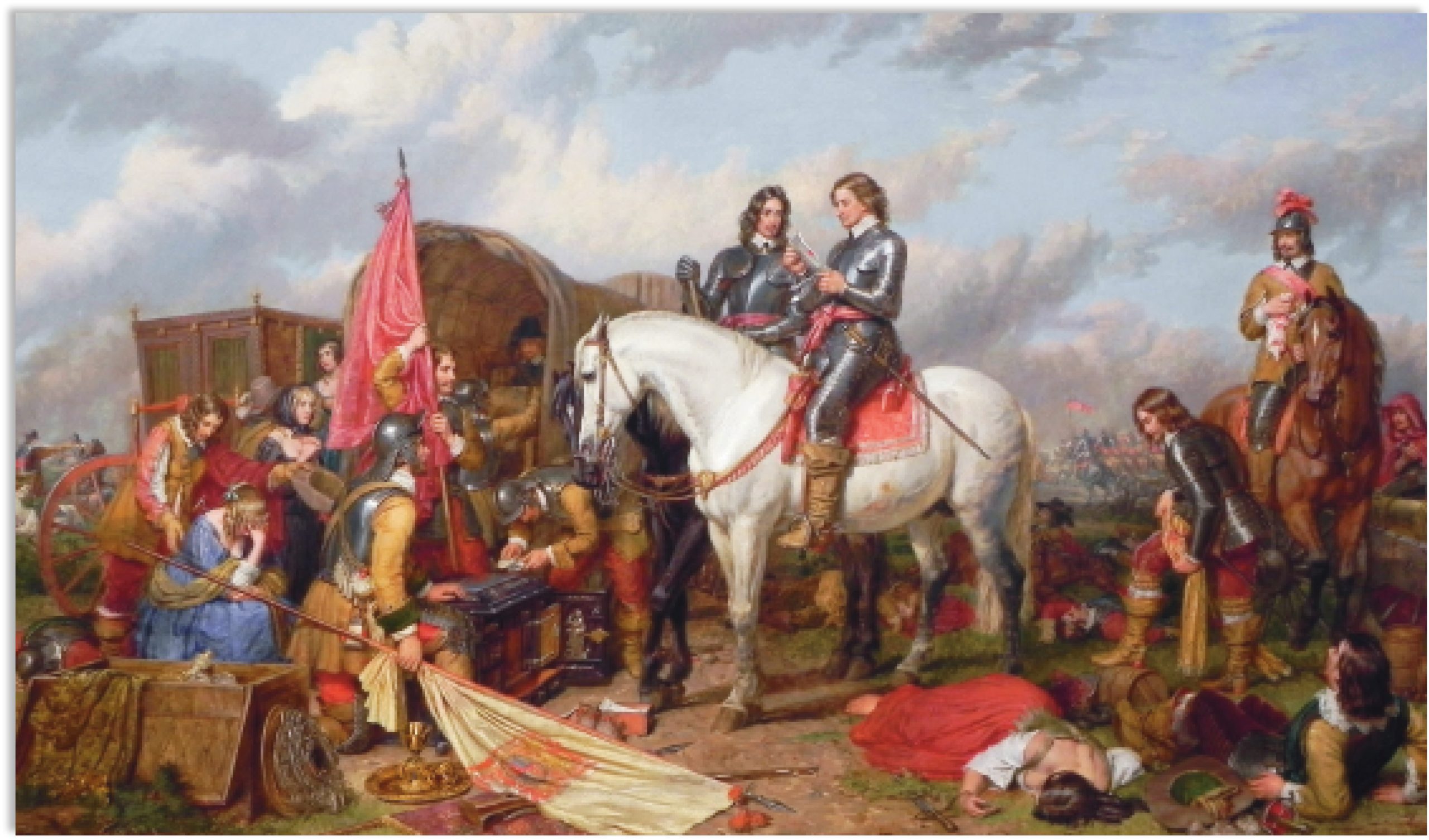
With hindsight, it is easy to see in Cromwell’s plea some of the thought-processes that would lead a little more than two years later to the establishment of the New Model Army – the finest professional military force of the age, and often described as the precursor to the modern-day British Army. The New Model would eventually win the Civil War for Parliament – and help establish Cromwell as one of the most significant figures in British history. But, as we shall see, its creation was not due to Old Ironsides alone.
As we discover in our two-part special for this issue, the New Model Army was in fact the joint creation of Cromwell and the often-overlooked figure of Sir Thomas Fairfax – a man 13 years his junior, who became the Army’s first commander-in-chief, and did much to mould it into the disciplined fighting force it became. Graham Goodlad first reveals how two such different men came to forge a partnership that would break the Royalist cause; then looks in detail at Marston Moor, the decisive victory on 2 July 1644 that enabled Parliament to win control of northern England.
A most effective partnership: Oliver Cromwell and Sir Thomas Fairfax
If asked to identify the most important contributor to Parliament’s victory in the English Civil War, without doubt most people would name Oliver Cromwell. In historical memory, he dominates the convulsive decades of the mid-17th century. His rise was as unpredictable as it was striking – from obscure fenland squire to outstanding cavalry commander and finally republican head of state. He was the prime mover in the trial and execution of King Charles I and the main architect of England’s most radical experiment in government. He is unquestionably one of a handful of individuals who changed the course of his country’s history.
Yet for the greater part of the military struggle, Cromwell was the subordinate of an often-overlooked figure, Sir Thomas Fairfax, his junior by 13 years. The New Model Army that defeated the king was their joint creation. Victory in the great set-piece battles of the war, at Marston Moor in 1644 and Naseby a year later, was the outcome of their increasingly effective partnership.
It is politics rather than war that explains why Fairfax has largely faded from the national consciousness. Less ambitious than Cromwell, he became estranged from his colleague in the turbulent post-war years, as the victors strove for a workable political settlement. He retired into the obscurity of private life while Cromwell intrigued, struggled, and rose to become Lord Protector. Yet it was the joint efforts of Fairfax and Cromwell on the battlefield that had made possible this cataclysmic upheaval.