

Subscribe now for full access and no adverts
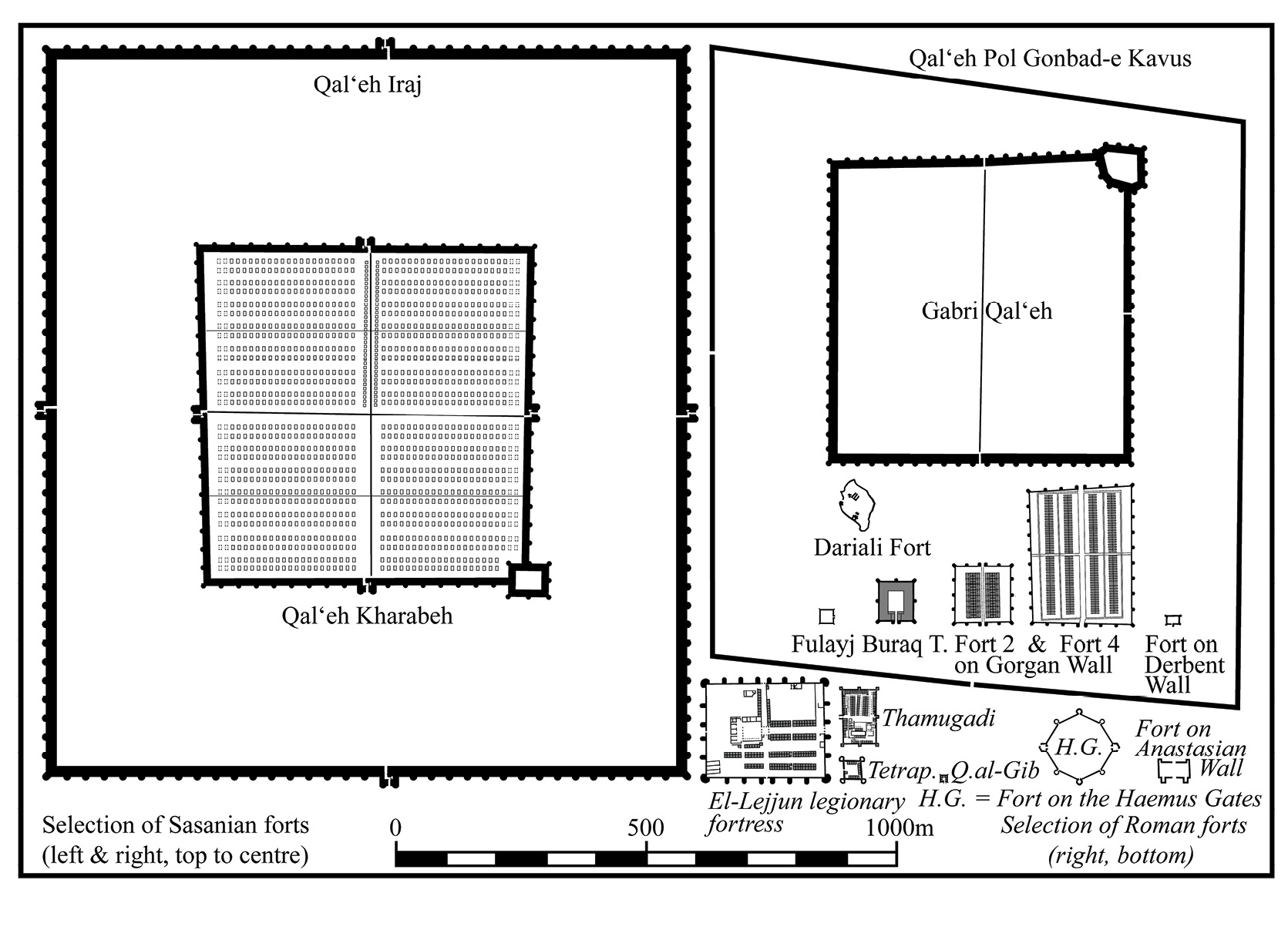
Who built the ancient world’s largest fortresses? Many would probably point to the Roman army as the likely answer. Its legionary fortresses cover on average 15-25ha, while Britain’s largest Roman fortification – a temporary camp erected to protect a campaigning army – reached a size of 70ha. After the 3rd century AD, however, Rome ceased to erect well-entrenched camps, and late Roman legionary fortresses shrank to as little as 5ha in size. But even the largest Roman military compounds are dwarfed by Persian fortresses, which have a footprint of up to c.200ha – a size that is only reached elsewhere in the ancient world by cities or thinly occupied hilltop refuges. Yet not all of Persia’s giant geometric fortresses were cities. Instead, some sheltered vast armies living in tents. These fortifications contained no urban amenities or dwellings, and were accessible only via heavily guarded and narrow zigzag gateways. Why, then, were such exceptional fortifications constructed in late antique Persia?
From the 3rd century AD to the rise of Islam in the 7th century, Persia was ruled by the Sasanian dynasty. From the first decades of Sasanian rule, Persia proved capable of inflicting defeats on Rome, took major cities by storm and erected a siege camp at Hatra in Iraq, which is more than twice the size of any known Roman camp. Thanks to its military feats, the Persian Empire expanded to the Caucasus passes in the north and the River Indus in modern Pakistan in the east.

It was in the 4th century that the Huns and related groups moved westwards from central Asia. Sasanian and Roman territories came under attack from these northern steppe warriors and other ethnic groups pushed out of their former domiciles. The onslaught caused Germanic tribes to migrate to Roman territory, forcing the Western Roman Empire to shrink in size and eventually cease to exist. How did Persia, closer to the epicentre of these large-scale population movements of the Migration Era, face up to the challenges that annihilated Western Europe’s dominant power? The answer included the construction of impressive fortifications, including both strongholds and great long walls, on its northern frontiers.

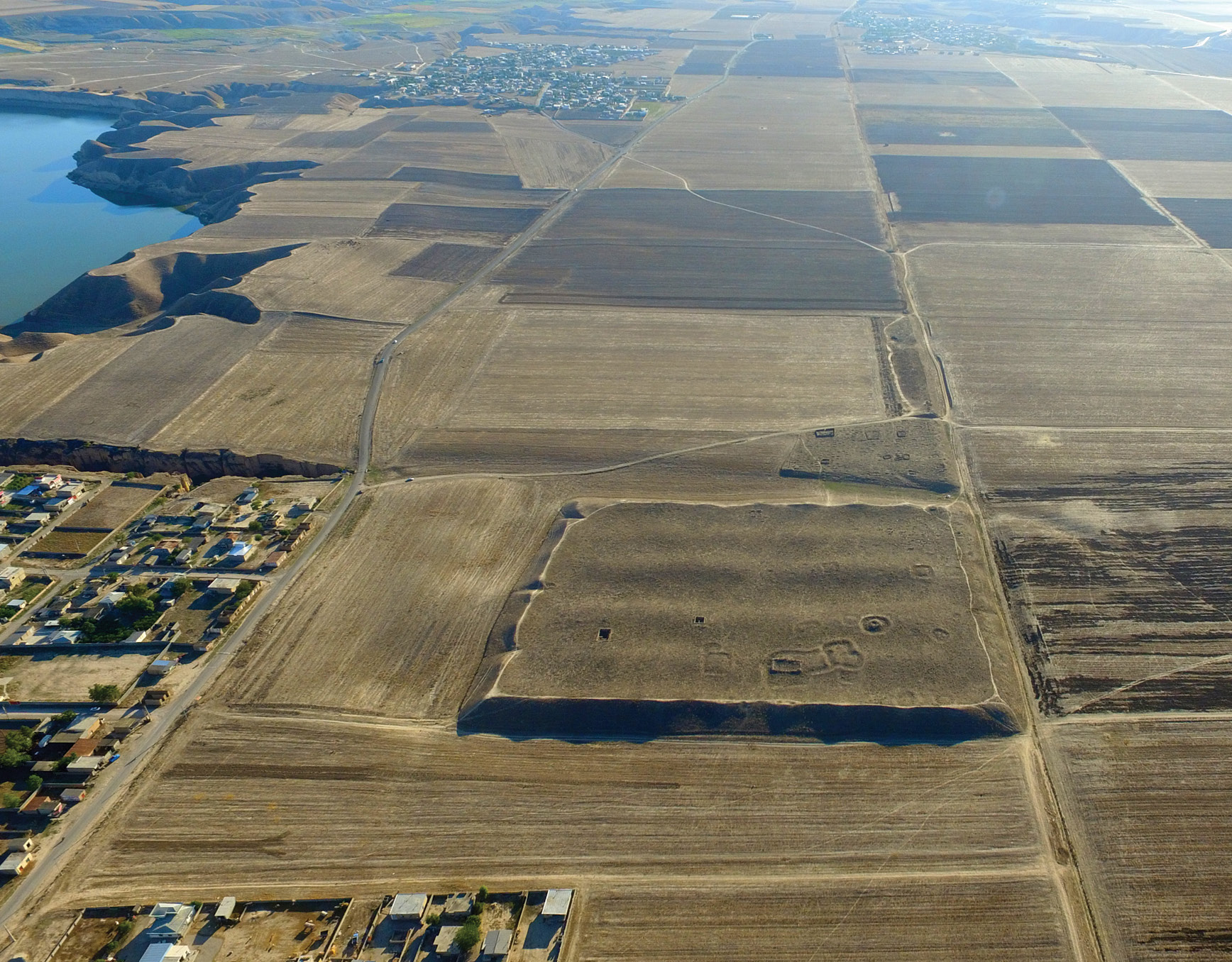
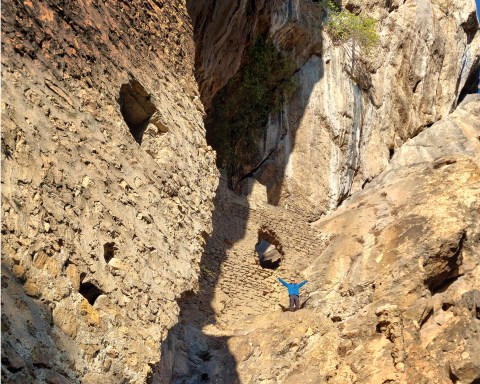
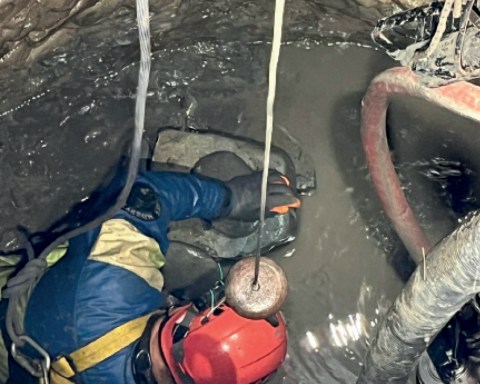
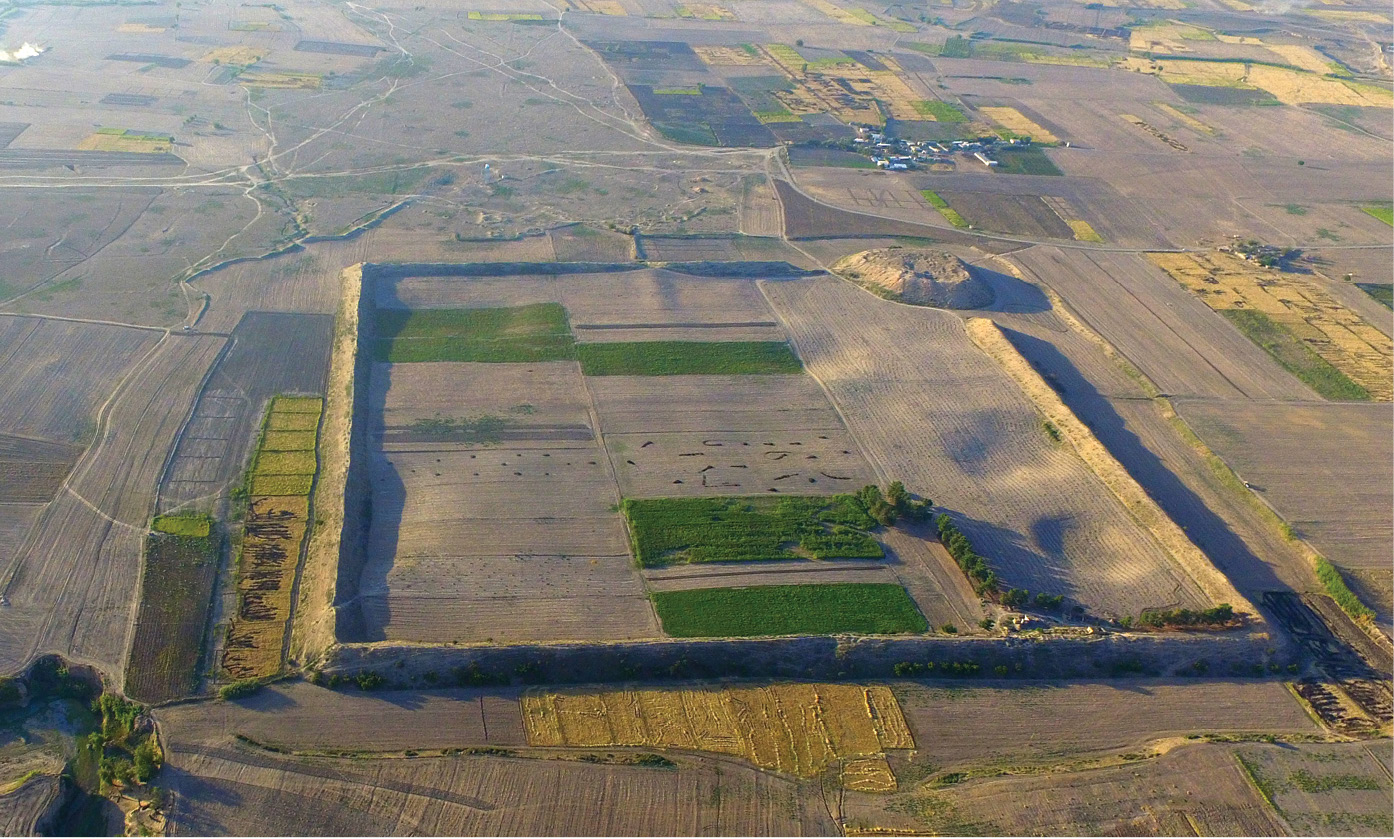
It was in 2005 that our joint team first explored the Great Wall of Gorgan and the Wall of Tammisheh in northern Iran, as well as some of the large fortresses in their hinterland (CWA 27). These walls are lined by more than 30 forts and thousands of brick kilns. We succeeded in dating their construction to the AD 420s-530s, most likely to the first half of this period. We have since excavated Sasanian fortifications built at the edge of rocky precipices in the Caucasus in Georgia to control traffic crossing Europe’s highest and most formidable mountain chain (CWA 80). The Sasanian Empire evidently invested heavily in its northern defences, and had the vision and skill to block the viable routes across its mountainous natural frontiers in the north. Yet it is our recent work in Iran that has thrown the sheer scale of Sasanian fortresses into sharp relief. Prior to 2016, the largest fortress scientifically dated to the Sasanian era covered a little over 40ha. It has now risen to 187ha, with a compound that is just one of several geometric fortifications extending over 1km2 in size. Richard Bates has also discovered previously unknown stretches of the Sasanian Walls submerged under the waters of the Caspian Sea. This is the world’s largest inland sea, and its rising and falling levels provide fascinating insights into climate change over the millennia. Our recent fieldwork has also provided us with a much better understanding of life in Sasanian forts.
Life on Persia’s frontiers
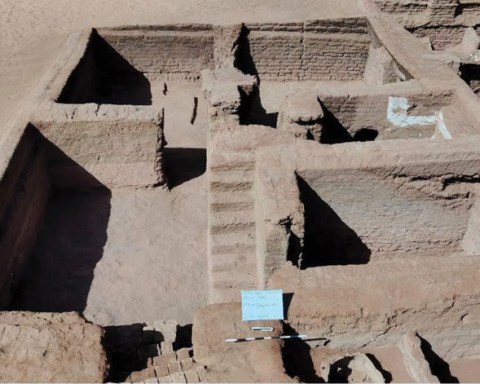
In 2006-2007, we dug two small trenches in one of the compounds, known as Fort 4, positioned along the Gorgan Wall. One of these excavations unearthed a small portion of two adjacent rooms within one of eight internal barracks, each some 116m long and at least an estimated 16m wide. In 2015-2016, we opened another trench across the entire width of a barrack block at a different site, Fort 2. To our surprise, we found that annexes had been added to the original barracks, almost tripling their width. When we last reported in CWA, we thought Sasanian barracks in forts on the Gorgan Wall were just two room-units wide. We now know that they were often six room-units (c.30m) wide and 80-120m long. The annexes were lightly built and probably single-storey, as opposed to the solid, double-storey original barracks. Even so, they doubled the floor-space available for accommodation and covered storage.