Subscribe now for full access and no adverts
The recent COP26 meeting in Glasgow has helped concentrate many minds on climate change. Projections of future temperatures and their impact on world sea levels pose complex challenges for the present. At the same time, a new study by the United Nations’ Intergovernmental Panel on Climate Change (IPCC) reveals that our past is also at risk. The report (https://www.ipcc.ch/report/ar6/wg1) presents chilling scenarios about the impact of sea-level rises on great archaeological sites in the Mediterranean. These projections are spurring decision makers to ponder a fundamental question: can we seek to confront it? At the ancient city of Butrint in Albania, plans are afoot to achieve exactly that.
Dire warnings
The August 2021 IPCC report is unequivocal in its conclusion that since the start of the Industrial Revolution changes in the atmosphere, ocean, cryosphere, and biosphere have occurred with increasing rapidity and intensity, particularly over the last 20 or so years. The cumulative effect can be seen in phenomena such as the retreat of glaciers and ice sheets, heatwaves, droughts, cyclones, wildfires, increased rainfall, and the movement of climate zones poleward. The scale of these changes is unprecedented in recorded history. Many of these climatic effects, including extreme temperatures – with the potential for both wildfires and drought – are of concern at Butrint, but by far the most significant is the rising sea level. The IPCC report states that, ‘Many changes due to past and future greenhouse gas emissions are irreversible for centuries to millennia, especially changes in the ocean, ice sheets and global sea level.’
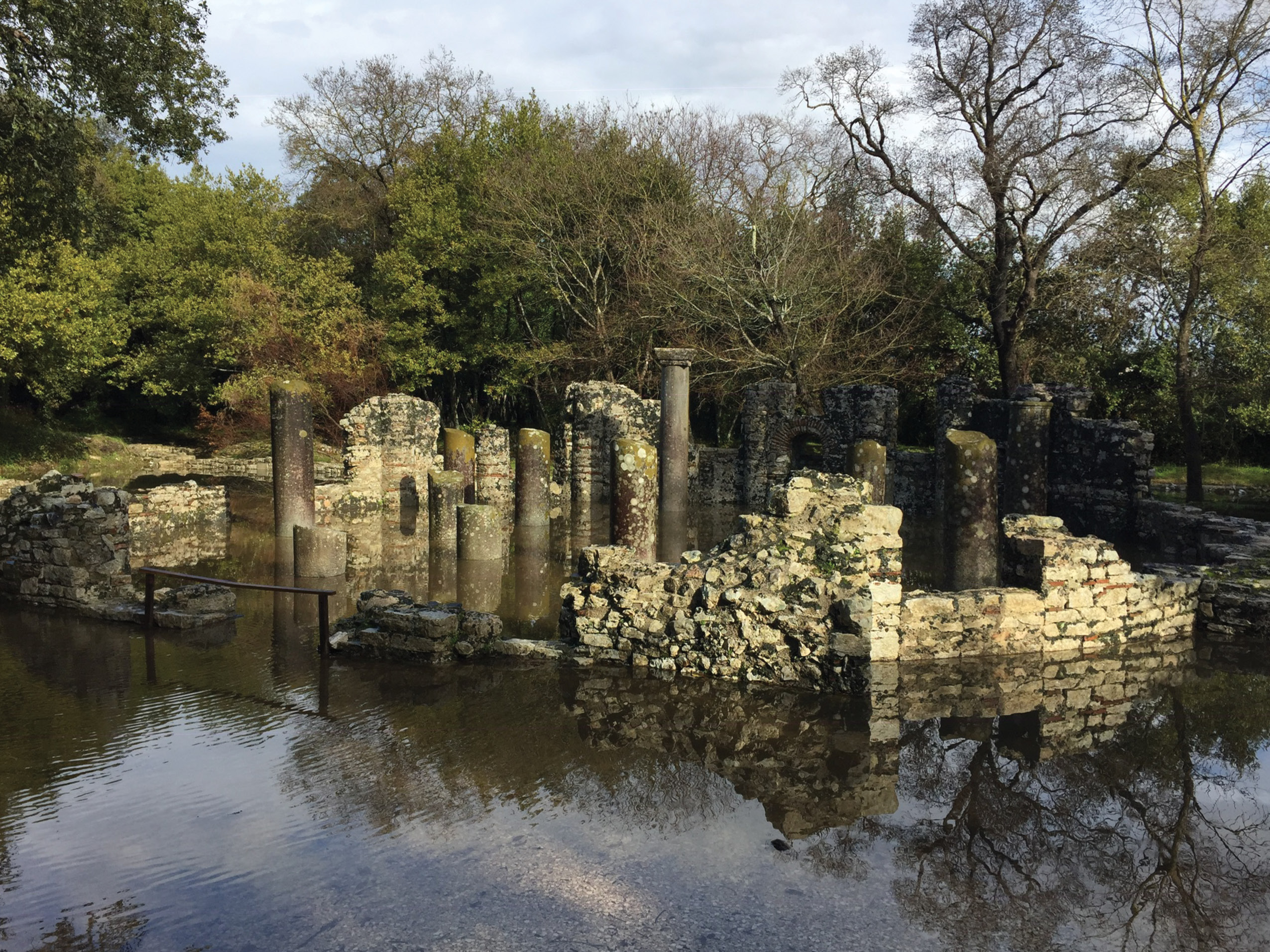
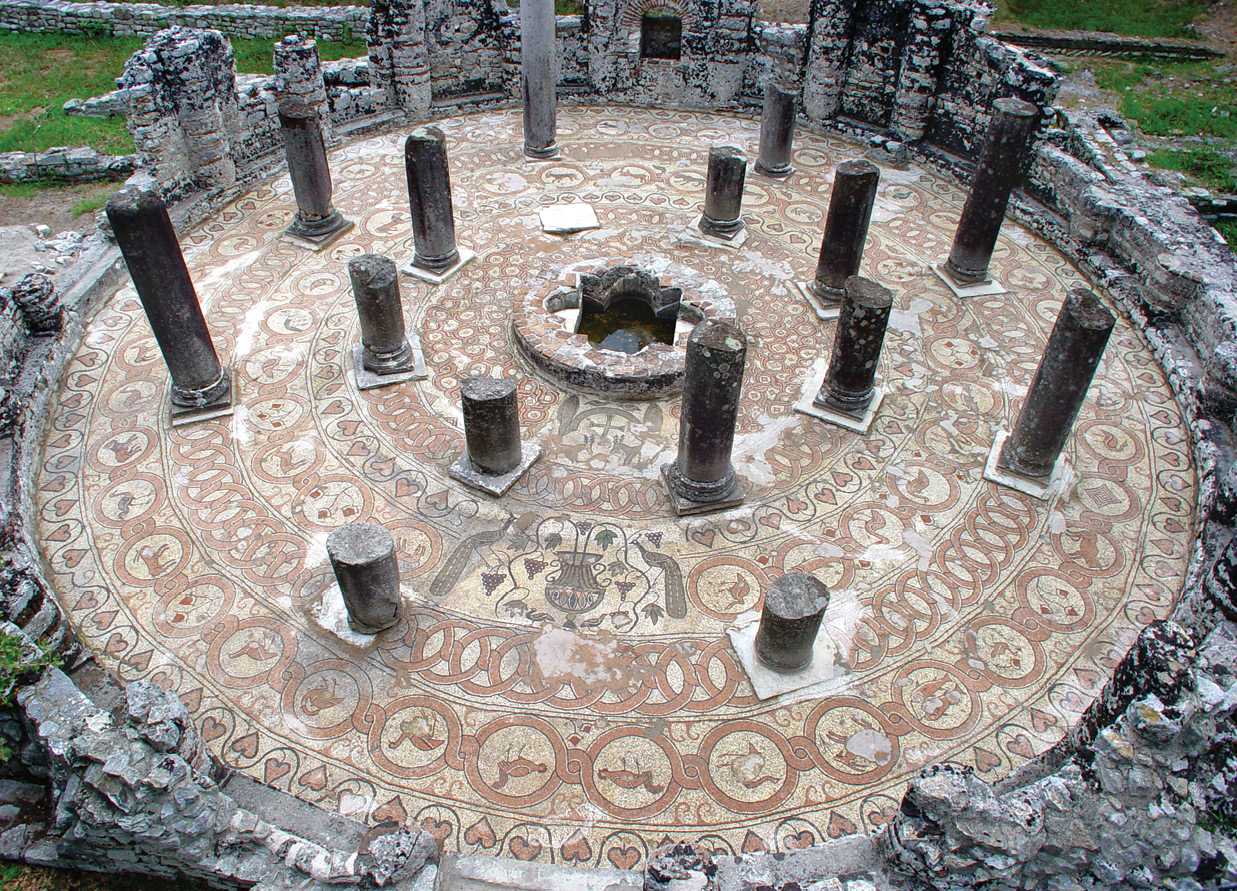
Global mean sea-level rise approaching +2.0m by 2100 – 78 years away – cannot be ruled out due to deep uncertainty over ice-sheet processes. The impact of such sea-rise would vary from region to region. UNESCO, however, has concluded that the eastern Mediterranean is at risk particularly from flood, erosion, and gradual inundation due to rising water tables. Considering the Mediterranean more widely, the list of sites threatened by the changing sea levels includes some of the most well-known sites in the region (see box, above right).
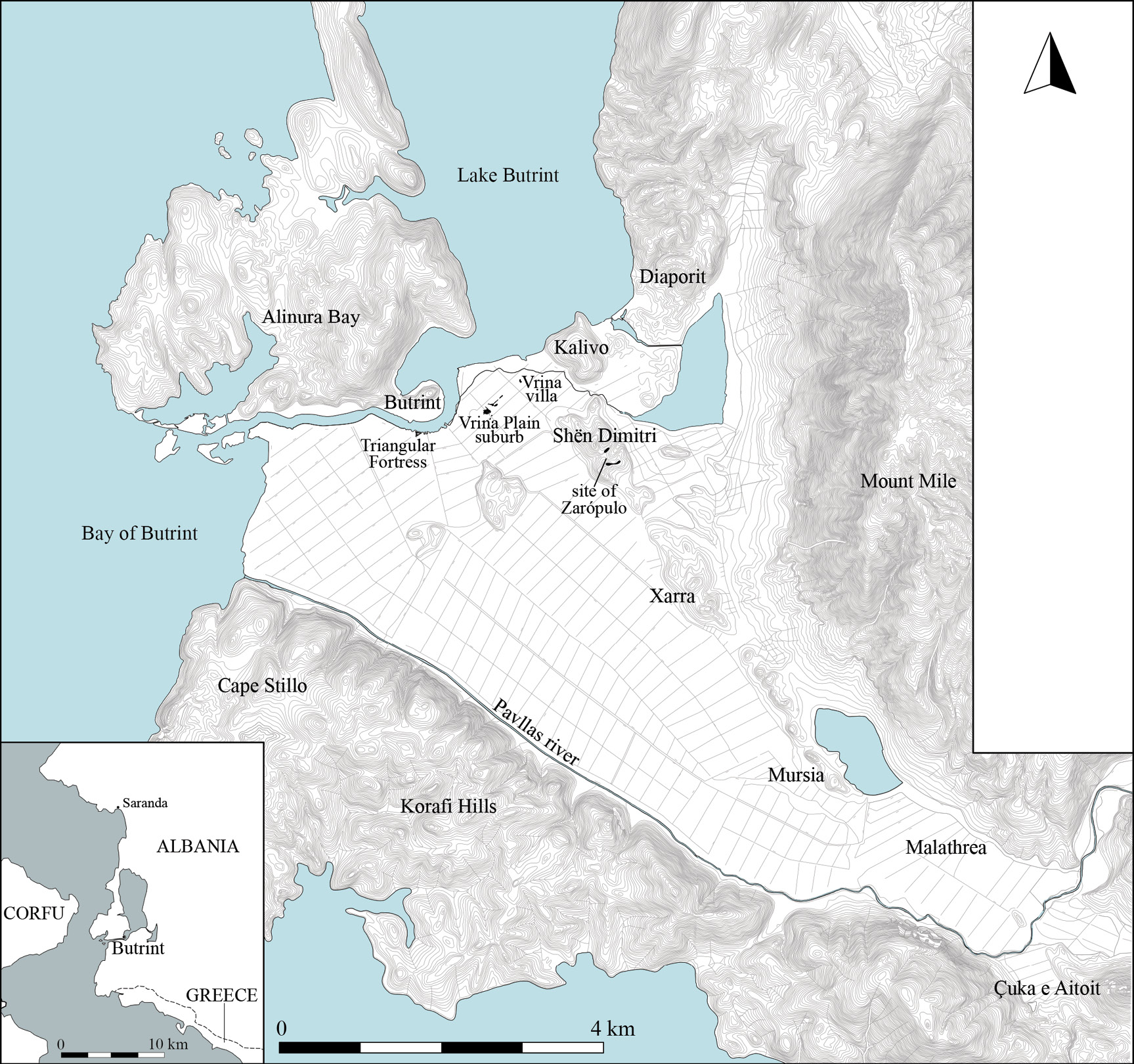
At Butrint, where the new Butrint Management Foundation exists, there is the will to confront this anticipated calamity.
Butrint’s environmental resilience
The UNESCO World Heritage Site preserves some 650ha of archaeological remains, primarily from the Hellenistic and Roman periods, with significant overlaying, principally Venetian, monuments. As a Ramsar Site (a wetland of international importance designated by the Ramsar Convention on Wetlands for its unique wetland assemblages conserving biological diversity) and sitting within the Butrint National Park created in 2000, the ancient site offers a unique combination of archaeology and rich ecology in what has been described as a classically ‘Homeric landscape’. There can be no doubt that the mix of landscape, seascape, archaeology, woodland, wetland ecology, history, mythology, and aesthetics makes Butrint one of the Mediterranean’s most magical historic places.