
Subscribe now for full access and no adverts
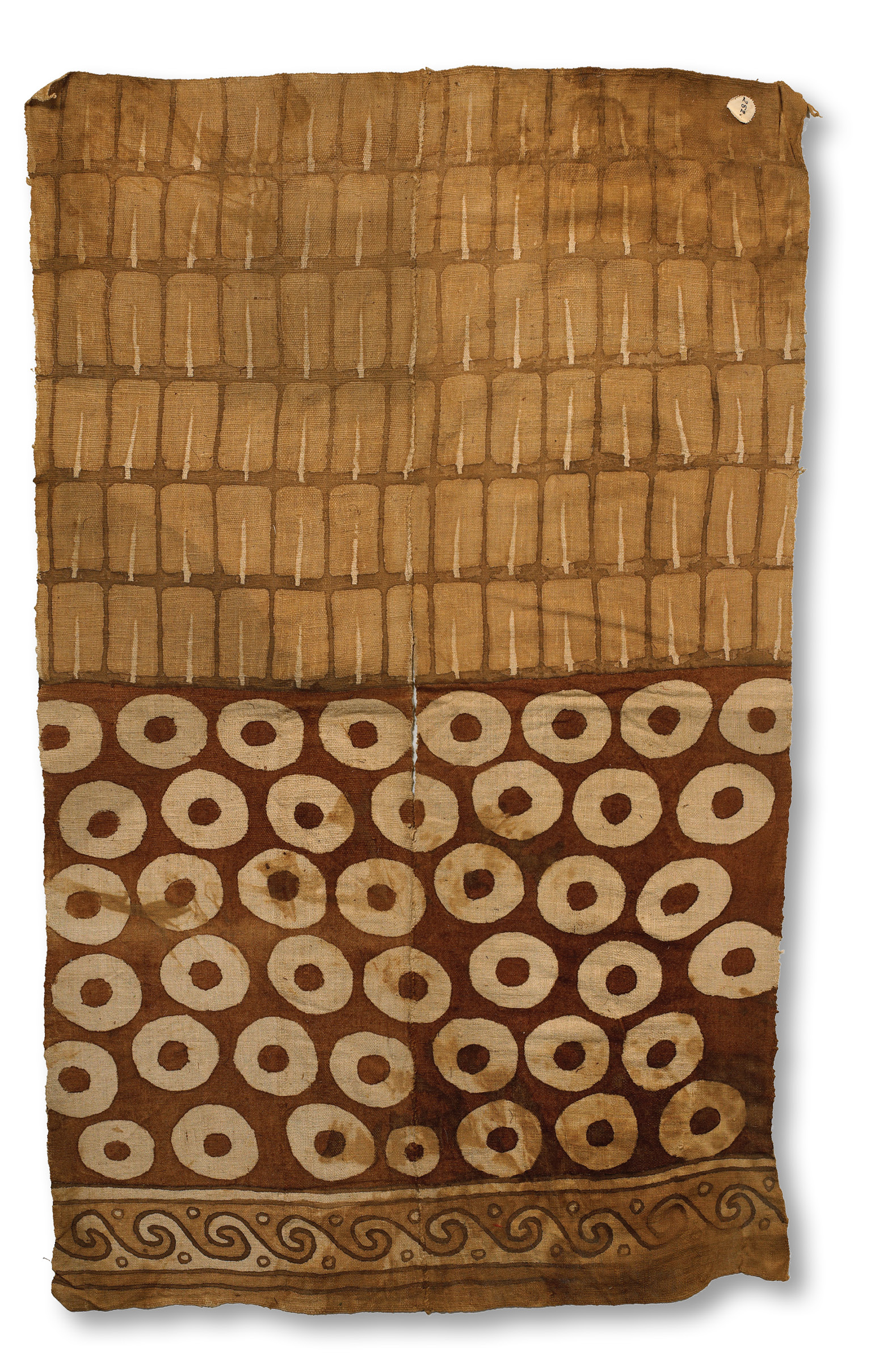
Roughly 1,000 years ago, the finishing touches were being made to a rectangular length of fabric. At first glance, the textile resembles a modern tablecloth, but a slit in the centre betrays that it was designed to be worn as a tunic. This was no ordinary work-a-day garment, though, as the once-vibrant painted decoration suggests some kind of ceremonial role. It would be easy to see the painted rectangles, circles, and waves as little more than pleasing abstract patterns, but the man or woman who added these motifs had a very particular aim in mind. The rectangles represent stylised feathers, while the circles are mountain lagoons, and the waves evoke the ocean. Far from being meaningless decoration, the imagery on the tunic presented a transect of about 100km across the Andes, running from the Amazon, with its exotic birds, to the roaring surf of the Pacific.
Our craftsman or -woman was a member of the Chancay, a group that lived on the central Peruvian coast and was destined to be absorbed by the expanding Inca Empire. The Chancay were not alone in taking a keen interest in the varied habitats that make up the central Andes. This region is home to one of the most complex environments on Earth, with the dramatic landscape incorporating rainforest, mountains that rise almost 7,000m above sea level, coastal desert, and the rich resources of the Pacific. While the tunic decoration reflects the connections that were woven through this terrain, the groups living there could also face particular challenges. One is the periodic impact of El Niño, when warming ocean waters create lengthy spells of increased rain, which can devastate crops. At the other end of the scale, a drier climate risked an expansion of desert.

Mastering such conditions required both ingenuity and a keen knowledge of how to draw maximum advantage from local resources. Success enabled a succession of dazzling cultures to flourish at different times and places in the central Andes, with at least some seemingly collapsing when the climate turned sour. Despite these periods of rise and fall, a thread can be traced all the way back to 1200 BC and a group known as the Chavín, through to the famous but short-lived Inca Empire of AD 1400-1532. Although the intervening societies all had their own styles, a fascinating new British Museum exhibition (see ‘Further information’ box) demonstrates how certain themes can be followed for more than 3,000 years. Indeed, one of the most intriguing features of these societies is their comparative isolation. While archaeologists working in Europe, Africa, and Asia delight in demonstrating how groups living on these continents could influence each other, the situation in the central Andes was unique. Its societies developed more or less independently of influences from the wider world, fashioning a way of life that came without currency, writing, or even a belief in the one-way flow of time. The results challenge common preconceptions about the basic building blocks required for a successful society.
Here today, here tomorrow
‘In the West, we often think of time as a line, where the past is behind us, we sit in the present, and the future stretches out ahead,’ says Jago Cooper, Head of the Americas at the British Museum and co-curator of the exhibition. ‘We know, from a mixture of anthropological work, archaeology, ethnohistorical sources, art, and linguistics, that among Andean societies, time was conceived completely differently. They believed that past, present, and future were all happening in the same moment. Because of this, the past isn’t fixed in stone and the future is not unwritten, both can be changed by activities in the present. This is a game-changing difference for how individuals made decisions, because believing that the past is still active and alive fundamentally alters your view of the world. It removes the basic concept of cause and effect, which is what underpins Western science. Without that, the whole structure of science changes. It means that you can create a web of relationships across time, allowing the present, future, and past to alter. That lack of a clear temporal order could create huge uncertainty, and all Andean cultures took steps to try to gain control of time.’
‘This interest in time is apparent in the archaeology of the Andes in various ways,’ says Cecilia Pardo, exhibition co-curator. ‘Of course, the details differ between cultures. But people knew that different states had existed there in the past, and they could make objects that referenced images created by those earlier groups. Another way that the past, present, and future were connected was through funerary practices. After bodies had been buried, we know that they could be taken out – so the past was brought into the present – and we can see that in one of my favourite pieces in the whole exhibition. It is an architectural model that seems to show a palace in Chan Chan, which is a city that developed in the Peruvian coastal desert. This model is interesting for many reasons, including its representation of people participating in a ceremony. Music is being played, maize beer prepared, and there are also three funerary bundles – that is, corpses buried in the foetal position and wrapped in textiles – who were placed on a stage to supervise and organise the ceremony. This brings us to the idea of ancestrals. Once a person dies, they become a guiding figure in the life of a community. In a way, they become alive again.’